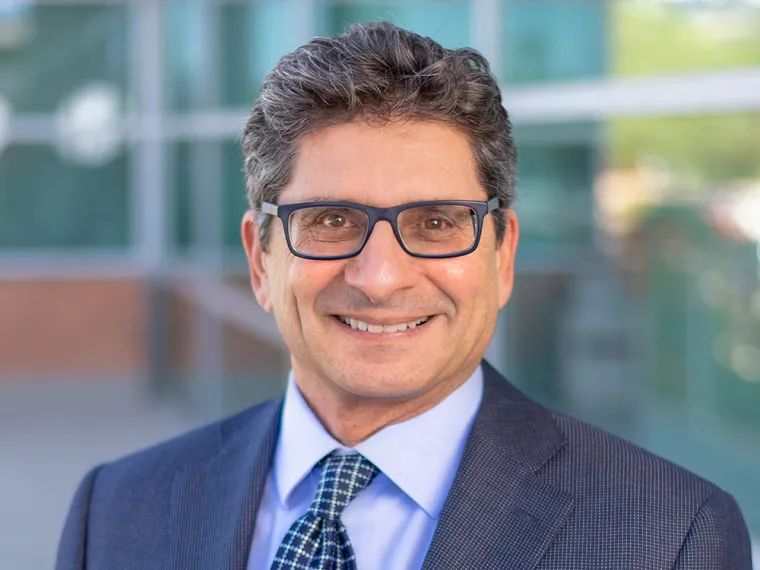
Dr. Luca Castiglione is a Research Associate in Resilience and Safety to Cyber Attacks at the Department of Computing, part of the Faculty of Engineering at Imperial College London. His work focuses on interdisciplinary cybersecurity challenges in cyber-physical systems (CPS), emphasizing the intersection of safety and security. Research interests include threat modeling for CPS, hazard analysis in smart grids and aviation systems, and secure file storage in cloud environments. His methodologies often combine systems theory with practical frameworks like assurance case generation and cooperative communication protocols over 5G. Recent publications explore automated detection of safety-critical attacks, impact analysis of cyber threats on flight management systems, and security-aware hazard analysis for infrastructure systems. While no awards or grants are explicitly mentioned, his research demonstrates expertise in cross-disciplinary approaches to system resilience. His location is listed as the Huxley Building on the South Kensington Campus, though no email or educational background details are provided in the available text.
Dr. Udayanto Atmojo is a Staff Scientist in the Department of Electrical Engineering and Automation at Aalto University. His research focuses on industrial automation systems, distributed control architectures, and IEC 61499 standard implementation. He holds a doctoral degree in Engineering from the University of Auckland. Research Focus: Distributed control systems using IEC 61499 standard OPC-UA integration for industrial interoperability Cybersecurity in Industry 5.0 environments Digital twin applications in industrial settings His publications demonstrate strong emphasis on industrial automation standards, secure data exchange, and virtual commissioning. Recent work addresses security challenges in human-intensive automated factories and confidential data sharing for life cycle assessments in process industries. Projects and Recognition: Principal investigator for TwinFlow project on distributed control systems (2024-2026) Contributor to CloViC project on cloud virtual commissioning Finalist in World Challenge Finland 2018 competition He develops laboratory test procedures for industrial applications and contributes to open science initiatives including FAIR principles for research software.
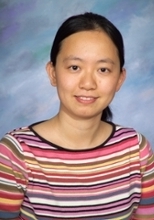
Dr. Wenjuan Yu is a Lecturer at the School of Computing and Communications (SCC), InfoLab21, Lancaster University, UK. She holds a PhD in Communication Systems from Lancaster University and has held prior roles, including Research Fellow at the 5G Innovation Centre (5GIC), University of Surrey (2018–2020), and part-time Research Officer at the University of Essex (2017–2018). She is a Fellow of the Higher Education Academy and a Senior Member of IEEE. Her research focuses on communication systems, with emphasis on radio resource management, mMTC, low-latency communications, B5G/6G, MEC, and machine learning. She actively contributes to IEEE conferences as a Technical Program Committee (TPC) member and holds editorial roles, including Executive Editor for Transactions on Emerging Telecommunications Technologies (2019–2022). Current teaching includes CNSCC141 Professionalism in Practice and CNSCC365 Advanced Networking . Dr. Yu supervises PhD students in EE/CS, particularly welcoming applicants from China via CSC scholarships. Her projects include DSI-funded initiatives on sustainable AI-driven resource allocation for 6G and Smart Multi-RAT Traffic Steering for V2X systems. She leads research groups in Security Lancaster (Networks, Systems, Distributed Systems).
Lin Cai is a Professor in the Department of Electrical & Computer Engineering at the University of Victoria, Canada. She holds prestigious fellowships including NSERC Steacie, IEEE, CAE, and Royal Society of Canada. Her research focuses on wireless communications, networking, and mobile computing, with emphasis on protocols for multimedia and IoT systems. She has led projects in vehicular networks, UAV-assisted systems, and federated learning for edge intelligence. Dr. Cai has advised over 20 students, many of whom have received awards and prominent roles in academia and industry. She has authored numerous high-impact papers, secured grants from NSERC, CFI, and industry partners, and serves in leadership roles at IEEE and educational institutions. Notable contributions include work on congestion control, network security, and autonomous systems. Education: BEng (Nanjing U. of Sci. & Tech.), MASc/PhD (University of Waterloo) Affiliations: IEEE Vehicular Technology Society Board of Governors, IEEE ComSoc Distinguished Lecturer Awards: 2020 IEEE N2Women 'Star in Networking', RSC Fellow 2024, Best Paper Awards (ICC 2008, WCNC 2011) Research Labs: Connected Autonomous Vehicles (CAV) Lab, AI-driven Networking Group Her work integrates networking, AI, and control theory to address challenges in 6G, IoT, and smart transportation. She actively promotes diversity through initiatives like the 'Riko-chan' STEM manga series.
Dr. Randa Herzallah is an Associate Professor at the University of Warwick with interdisciplinary expertise spanning control systems, quantum engineering, and machine learning. Her research develops probabilistic frameworks for complex systems control. Research interests focus on probabilistic control methods applied to energy grids, quantum systems, and biomedical applications. Recent work integrates machine learning with control theory for smart grid optimization and quantum system management. Publication analysis shows consistent focus on probabilistic control frameworks, with recent expansion into quantum applications and deep learning for industrial applications. Research funding includes EPSRC and Leverhulme Trust grants supporting quantum control and energy systems projects. Leads research in probabilistic control methodologies with industrial applications.
Dr. Md Noor-A-Rahim is an Assistant Professor (Lecturer-Above the Bar) at the School of Computer Science and Information Technology, University College Cork (Ireland). He previously served as a Senior Researcher and Marie Curie Fellow at the same institution. His academic journey includes a PhD from the University of South Australia (2015) and the prestigious Michael Miller Medal for his outstanding thesis on wireless communication systems. His research focuses on Intelligent Transportation Systems, Machine Learning, IoT, Wireless Networks, and DNA-based data storage. He has published extensively on topics like 6G-V2X systems, time-sensitive networking, and error characterization in DNA storage. His work integrates cutting-edge technologies such as intelligent reflecting surfaces (IRS), federated learning, and ultra-reliable low-latency communication (URLLC). Research Interests : Dr. Rahim's research bridges theoretical advancements and real-world applications in vehicular networks, smart manufacturing, and next-generation communication systems. He explores challenges in autonomous driving, edge computing, and bio-constrained data storage. His contributions include novel coding schemes for anytime transmission and frameworks for mitigating big vehicle shadowing in V2X communications. Key Publications : His recent work includes a comprehensive survey on wireless TSN (2025), analysis of 6G-V2X systems (2022), and breakthrough studies on DNA data storage error modeling (2023). These publications highlight his expertise in both foundational research and industry-relevant solutions. Awards : Recipient of the Michael Miller Medal (2015) for doctoral research excellence. Grants & Labs : While specific grants are not listed in the text, his research portfolio suggests involvement in collaborative projects with industry partners and funding bodies. He leads interdisciplinary efforts in smart manufacturing and vehicular communication systems.
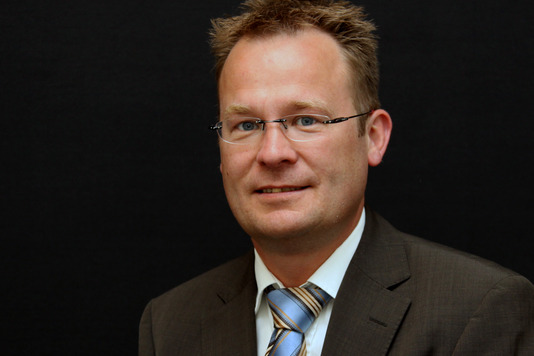
Prof. Dr.-Ing. habil. Gerd Terörde is a Professor of Electrical Drive Technology at Osnabrück University of Applied Sciences, affiliated with the Faculty of Management, Culture and Technology. He holds a Diplom in Electrical Engineering from RWTH Aachen and a Dr.-Ing. habil. from TU Berlin. His career includes research at RWTH Aachen, KU Leuven, and TU Berlin, as well as industry roles as a project leader at Atlas Copco Airpower in Belgium. Education: 1989–1996: Diploma in Electrical Engineering (RWTH Aachen) 2002: PhD in Electrical Engineering (KU Leuven) 2008: Habilitation in Electrical Drive Technology (TU Berlin) Research focuses on electrical drives, power electronics, and control systems, with emphasis on sensorless control, renewable energy integration, and high-performance drive systems. He teaches courses on electrical machines, power electronics, control theory, and regenerative energy systems. Publications include a textbook on electrical drives and numerous patents/contributions to international journals and conferences. His work addresses topics like inverter systems, motion control algorithms, and energy-efficient drive solutions. Labs/Teams: Active in university research groups focusing on electrical drives and energy systems within the Faculty of Management, Culture and Technology.
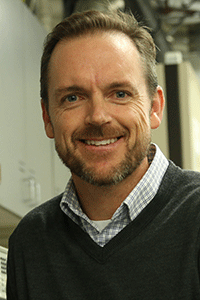
Ioan Raicu is a Professor in the Department of Computer Science at Illinois Institute of Technology (IIT) and a guest research faculty at Argonne National Laboratory's Math and Computer Science Division. He leads the Data-Intensive Distributed Systems Laboratory (DataSys) at IIT, focusing on distributed systems, cloud computing, and high-performance computing. His work is primarily funded by the NSF and DOE. Research interests include distributed systems, many-task computing, and data-intensive applications. Over 140 peer-reviewed publications have yielded a H-index of 46, with top papers addressing cloud vs. grid computing comparisons, Globus GridFTP, Swift workflow systems, and Falkon frameworks. Recent projects explore fine-grained parallelism, scalable indexing, and energy-efficient blockchain algorithms. Awards include NSF grants and recognition for lab innovations. Advised PhD students include Alexandru Orhean and Poornima Nookala. The DataSys lab has won the Grainger Computing Innovation Prize and leads initiatives like the BigDataX REU program. Active in conferences such as SC and IEEE IPDPS, Raicu's work bridges theory and practice in extreme-scale computing systems.
Klaus Moeltner is a Professor in the Department of Agricultural and Applied Economics at Virginia Tech since 2015. He previously held positions at the University of Nevada, Reno, including Associate and Assistant Professor roles. His expertise lies in environmental economics, natural resource valuation, and applied econometrics. He has secured over $6 million in grants as PI or Co-PI and contributes to interdisciplinary research through the Global Change Center and Remote Sensing Program at Virginia Tech. Education: Ph.D., Economics, University of Washington, 2000 M.A., Economics, University of Washington, 1998 M.A., International Policy Studies, Monterey Institute of International Studies, 1994 M.S., Environmental Planning & Engineering, University of Agriculture and Forestry, Vienna, Austria, 1990 Research Interests: Dr. Moeltner’s work focuses on environmental and natural resource economics, including water quality valuation, wildfire health impacts, urban water use, and coastal flooding risks. His research employs advanced econometric methods, such as Bayesian modeling and meta-regression, to inform policy decisions. Current projects include analyzing the economic benefits of stream restoration, harmful algal bloom forecasts, and offshore wind farm co-location opportunities. Awards: 2023: Distinguished Graduate Teaching Award (AAEA) 2014: Best Paper in Environmental and Resource Economics (EAERE) 2004: CABNR Outstanding Instructor Award Advising & Grants: Advised 6 Ph.D. students and secured over $6 million in grants. Research collaborations include USDA-NIFA, EPA, and the European Union. Labs & Teams: Active in interdisciplinary groups like the Global Change Center and Remote Sensing Program at Virginia Tech.
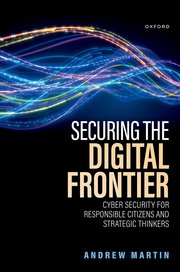
Professor Andrew Martin is a leading academic in Systems Security at the Department of Computer Science, University of Oxford, and a Governing Body Fellow at Kellogg College. His research focuses on trusted computing, cybersecurity, and secure distributed systems, with applications in cloud computing, IoT, and smart grids. He has been instrumental in advancing secure architectures using hardware-based trust mechanisms such as Intel SGX and Trusted Platform Modules. Research Interests: His work spans Systems Security , Trusted Computing , Confidential Computing , Secure Multi-Party Computation , and Privacy in Distributed Systems . He investigates how hardware-enforced security can mitigate risks in large-scale environments, particularly where privacy and trust are paramount. Publication Trends: His recent publications reveal a strong focus on Trusted Execution Environments (TEEs), remote attestation, and secure cloud architectures. He critically examines the feasibility of using hardware enclaves for both defensive and offensive security, emphasizing architectural soundness and real-world applicability. Scientific Awards: No specific awards mentioned in the provided text. Advising and Grants: Professor Martin has supervised numerous PhD and Master’s students in cybersecurity and systems research. His projects include CRANE , Trustworthy Logging , webinos , TCLOUDS , and Secure Networking by Design (SNbD) . He has secured funding for research in trusted computing and secure distributed systems, contributing to both theoretical foundations and practical implementations. Labs and Teams: He leads a research group focused on systems security and trusted computing, collaborating with industry and academic partners on large-scale security challenges. His team works on developing secure middleware, analyzing vulnerabilities in consumer devices, and designing privacy-preserving protocols for smart infrastructure.
Professor Carsten Rudolph serves as Deputy Dean at Monash University's Faculty of Information Technology and directs the Oceania Cyber Security Centre (OCSC). He holds a PhD in Information Security from Queensland University of Technology (2002) and a Diplom in Computer Science from Goethe University Frankfurt (1997). His interdisciplinary research focuses on cybersecurity foundations, including cryptographic protocols, AI-driven security, human factors, and national cybersecurity policy. Key areas include securing smart grids, digital health systems, and transnational energy networks. Notable contributions include establishing the OCSC, leading Pacific region cybersecurity maturity reviews with Oxford University, and advancing frameworks for firmware security in virtual power plants. He chairs major projects like RAI4IoE (Responsible AI for Energy) and Post-Quantum Cryptography initiatives. Teaching responsibilities include cybersecurity modules like FIT3173 and FIT3168. Rudolph's research outputs (137+ publications) emphasize phishing detection via AI, blockchain-based energy trading, and resilient smart grid systems. He collaborates internationally on policy development and has advised 12 major research projects funded by agencies like the U.S. Bureau of East Asia and Pacific Affairs.
Henner Busch is an Associate Professor at LUCSUS (Lund University Centre for Sustainability Studies), part of Lund University's Faculty of Social Sciences. His academic journey includes a background in Governmental Studies from Erfurt, Germany, an MSc in Environmental Studies and Sustainability Science (LUMES) from Lund University (2010), and a PhD in Sustainability Science from Lund University (2016). Before his current position, he worked at the Department of Human Geography at Lund University from February 2018 to November 2020, and as a researcher at LUCSUS from 2016 to 2017. His previous professional experience includes work at the Leibniz Institute for Agricultural Engineering in Potsdam-Bornim, Germany. Busch's research primarily focuses on the intersection between energy systems, climate policies, and society, with particular emphasis on questions of justice within energy transitions. His work examines who benefits from energy projects and who bears the burden, whose interests are served by different energy developments, and who has power to shape debates on future energy systems. He approaches these questions through multiple ongoing projects including JUSTIT (Just Swedish Transport Industry Transitions), Workers as Agents of a Green and Just Transition, Burying problems? Imaginaries of Carbon Capture and Storage in Scandinavia, and Of People, PV, Power Lines: Energy Islands in the Nordics. His research spans theoretical frameworks including energy justice, community energy development, urban climate governance, and the social dimensions of carbon capture and storage. Analysis of Busch's recent publications reveals a strong focus on energy justice frameworks across multiple contexts - from coal phase-outs to community energy initiatives and carbon capture technologies. His work consistently examines the distributional, procedural, and recognition dimensions of justice within energy transitions, with particular attention to Scandinavian and European contexts. The publications demonstrate interdisciplinary approaches combining political science, environmental sociology, and sustainability science to address complex questions of power, representation, and equity in energy systems. Researcher at LUCSUS (Lund University Centre for Sustainability Studies) Associate Professor at Lund University Member of LUCID research school (Lund University Centre of Excellence for Integration of Social and Natural Dimensions of Sustainability) Busch actively engages in teaching at undergraduate, master's, and PhD levels, with supervisory experience spanning approximately 40 master's theses on topics ranging from community energy to urban development and climate change depictions in video games. His educational approach integrates methodology-oriented content such as systems thinking and energy justice with empirical examinations of energy systems and globalization. His work contributes to multiple United Nations Sustainable Development Goals, particularly those related to sustainable cities and communities, affordable and clean energy, and climate action.
Shad Roundy is an Associate Professor at the University of Utah , holding dual appointments in the Department of Mechanical Engineering and Department of Electrical and Computer Engineering within the College of Engineering . He directs the Integrated Self-Powered Sensing Lab , focusing on energy harvesting, wireless power transfer, and ubiquitous sensing systems. PhD in Mechanical Engineering, University of California, Berkeley (2003) Senior Lecturer, Australian National University (postdoctoral) His research bridges mechanical design , smart materials , and sensor networks , with significant contributions to: Self-powered biomedical implants Wearable health-monitoring devices Underground agricultural sensor networks MEMS sensor development His 15 most recent publications demonstrate interdisciplinary work spanning wireless power transfer for soil sensors, flexoelectric materials, and disease severity assessment via wearables. Articles emphasize energy efficiency , novel transducer designs , and environmental sensor applications . Scientific recognition includes: NSF CAREER Award for magnetoelectric implant powering Associate Editor, Smart Materials and Structures and International Journal of Precision Engineering and Manufacturing-Green Technology Research funded by National Science Foundation , NASA , and industry partners through the ASSIST Engineering Research Center . Publications highlight collaborations across biomedical, agricultural, and wearable technology domains.
Hussein T. Mouftah is a Professor at the University of Ottawa , affiliated with the College of Engineering and Computer Science and the Department of Electrical and Computer Engineering . He is a leading figure in Intelligent Transportation Systems , Wireless Networks , and Smart Cities research. His research spans vehicular ad hoc networks (VANETs) , autonomous electric vehicles (CAEV) , edge computing , IoT security , and 5G/6G-enabled infrastructure . He pioneers dynamic wireless charging , deep reinforcement learning , and federated learning for mobility solutions. The 15 most recent articles highlight his work in edge computing (4 entries), vehicular networks (5 entries), machine learning (3 entries), and blockchain (2 entries), with sub-fields including UAV energy management , real-time task offloading , multi-modal fusion , and smart grid integration . His methodology combines deep RL for autonomous driving , federated learning for decentralized energy trading , and blockchain to secure ITS systems . He collaborates extensively with researchers like Parisa Fard Moshiri , Burak Kantarci , and Binod Vaidya on smart city infrastructure and vehicular security projects.
Barry Goldman serves as Associate Professor of Management and Organizations at the University of Arizona's Eller College of Management, where he has held faculty position since 1998. His academic home resides within the Department of Management and Organizations, focusing on the intersection of legal frameworks and organizational behavior. Previously, he practiced as an attorney with the U.S. General Accounting Office and private law firms before transitioning to academia. His educational background includes dual advanced degrees from the University of Maryland: a PhD in Human Resources and Organizational Behavior alongside a Juris Doctor (JD). This unique combination forms the foundation of his interdisciplinary research approach. Goldman's research centers on human resource management, conflict resolution, and organizational justice, with particular emphasis on employee legal-claiming behaviors , negotiation dynamics , and social exchange theory . His work examines how individuals perceive fairness in workplace disputes, the psychological underpinnings of negotiation approaches across professional groups, and the complex interplay between legal systems and organizational justice. Recent publications increasingly address diversity issues in hiring practices and systemic justice reform. Analysis of his publication trajectory reveals consistent focus on workplace dispute resolution mechanisms, with growing attention to intersectional discrimination and technology-mediated conflicts. His research bridges psychological theory with practical legal applications, demonstrating how social exchange principles shape responses to perceived injustice. His scientific recognition includes: Top 1 percent (#40) Most Cited Management Author (2000-2004) Best Paper Award in International Journal of Conflict Management (2017) Highly Commended Award from International Journal of Conflict Management Goldman maintains active professional engagement through editorial roles at Journal of Applied Psychology and Journal of Management, while serving as Senior Book Editor for International Journal of Conflict Management. His practical application extends to extensive executive education consulting and expert witness activities in employment law cases, demonstrating the real-world impact of his theoretical work. He previously chaired the Conflict Management Division of the Academy of Management for a five-year term.