Diego Sevilla Ruiz is an Associate Professor at the University of Murcia's Faculty of Informatics, Department of Computer Engineering and Technology, where he leads initiatives in Software Engineering research. He completed his PhD in 2008 on distributed component models (CORBA-LC). His research focuses on database technologies, particularly schema evolution in NoSQL and relational databases, model-driven engineering approaches, and unified metamodeling. Recent work develops Skiql (a schema query language), Athena (schema definition language), and methodologies for referential integrity in graph databases. His publications advance database abstraction techniques, schema migration frameworks, and automated tools for database management and modernization.
Kuuipo Walsh is the GIScience Program Director and Senior Lecturer I at Oregon State University's College of Earth, Ocean, and Atmospheric Sciences (CEOAS). She oversees the GIScience certificate program, advising over 200 students annually on course selection, career paths, and academic plans. Her research focuses on GIS, metadata standards, digital libraries, and coastal atlases. She teaches advanced undergraduate and graduate courses in GIScience via Ecampus, including GIScience I-III and Geospatial Perspectives on Intelligence. Education: B.S. in Computer Science (California Polytechnic State University, 1993) and M.S. in Marine Resource Management (Oregon State University, 2002). Her publications emphasize spatial data infrastructure, coastal data networks, and usability in geospatial tools, with notable contributions to the Oregon Spatial Data Library and Virtual Oregon projects. She has no listed scientific awards but maintains active engagement in geospatial education and professional advising. Lab/Team Affiliation: Directs the GIScience certificate program and collaborates on geospatial initiatives within CEOAS.
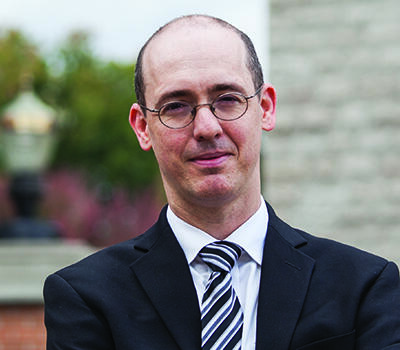
Stephen Ramsey, an Associate Professor at Oregon State University, holds dual appointments in the School of Electrical Engineering and Computer Science (College of Engineering) and the Department of Biomedical Sciences (Carlson College of Veterinary Medicine). With a PhD in Physics from the University of Maryland, his postdoctoral training in computational genomics at the University of Washington, and professional experience at the Institute for Systems Biology and Center for Infectious Disease Research, Ramsey bridges computational methods with biomedical applications. Education : Ph.D., Physics, University of Maryland; M.S., Physics, University of Maryland; Sc.B., Mathematical Physics, Brown University Ramsey specializes in computational systems biology , focusing on bioinformatics , biomedical knowledge graphs , and precision medicine . His research integrates machine learning , gene regulatory network modeling , and multi-omics data analysis to address challenges in rare disease diagnostics , drug monitoring , and inflammatory disease mechanisms . Current work includes AI-driven biomedical translation and electrochemical biosensor development for non-invasive diagnostics . Recent publications highlight knowledge graph applications in translational biomedicine , causal network inference in clinical-environmental data integration , and cross-species cancer transcriptomics . His team develops tools like RTX-KG2 and PloverDB to standardize biomedical data sharing and semantic reasoning . Scientific Awards : 2019 Zoetis Award (Carlson College of Veterinary Medicine) 2016 NSF CAREER Award 2016 PhRMA New Investigator Award 2010 NIH K25 Mentored Quantitative Research Award Ramsey advises in computational biology courses (CS 446/546) and contributes to biomedical AI through projects like mediKanren for rare disease diagnostics . His NSF-funded research explores gene expression noise and regulatory network dynamics , while NIH and PhRMA grants support his translational medicine initiatives. He leads the Ramsey Laboratory , which develops graph-based reasoning tools for biomedical data translation and multi-omics integration . The lab's work spans comparative oncology models, electrochemical biosensors , and knowledge graph infrastructure for clinical decision support .
Lukasz Ziarek is an Associate Professor in the Department of Computer Science and Engineering at the University at Buffalo, and serves as the Associate Dean for Academic Affairs in the School of Engineering and Applied Sciences. His research focuses on concurrency, real-time systems, distributed systems, and formal verification. He holds a PhD from Purdue University (2011) and a BS from the University of Chicago (2003). His research explores topics such as real-time Java implementations, session types for distributed protocols, and visual debugging techniques. Recent work includes formal models for secure multiparty computation, IoT device validation, and optimizing visual SLAM systems for robotics applications. He has contributed to frameworks like Juav (a Java-based UAV autopilot) and RTDroid (a real-time Android extension). Ziarek has received notable awards including the 2023 IEEE Technological Innovation Award, 2022 Meyerson Teaching Award, and 2018 NSF CAREER Award. His grants include collaborative research on UAV software infrastructure and real-time communication protocols. He actively develops tools like PTDETECTOR for JavaScript library analysis and Anodize for mixed-criticality systems. His work integrates formal methods with practical systems, addressing challenges in embedded systems security, compiler optimization, and real-time programming language design. He maintains a lab focused on advancing reliable software for autonomous systems and distributed computing environments.
Tilmann Rabl is a Professor affiliated with the Hasso Plattner Institute (HPI) at the University of Potsdam, Germany. His research focuses on database systems, distributed computing, and scalable data processing. He leads projects exploring serverless cloud infrastructure, stream processing, and machine learning integration with databases. Key areas of research include optimizing GPU-based data processing, developing benchmarks like TPCx-IoT and TPCx-AI, and advancing techniques for distributed systems, including RDMA and NVLink-based architectures. His work emphasizes practical systems, such as Skyrise (serverless data processing), Rhino (distributed state management), and PROTEUS (scalable machine learning). Rabl has contributed to foundational tools like BlockJoin for matrix partitioning and has explored performance trade-offs in persistent memory and CXL device memory. His collaborative projects address challenges in real-time data analytics, sensor data coherence, and interoperable data science workflows.
Minos Garofalakis is a Professor at the School of Electronic & Computer Engineering at the Technical University of Crete, specializing in data stream management, complex event processing, and privacy-preserving analytics. His work bridges theoretical and applied computer science, with a focus on scalable algorithms for high-velocity data. Best Paper Award at VLDB 2024 for 'OmniSketch' Leader in sketch-based and distributed stream processing Pioneer in differential privacy for relational data Research interests span stream analytics , probabilistic databases , and interactive query systems . Recent work includes oblivious parallel joins (2025), relational data synthesis under privacy constraints (2024), and cross-platform analytics frameworks (2020). His publications demonstrate a consistent focus on error-controlled approximations and real-time distributed processing. Scientific contributions have been recognized at premier conferences like VLDB, with awards highlighting innovations in multi-dimensional stream analysis and privacy-preserving operations . Collaborations span academia and industry, particularly in bioinformatics and distributed systems.
Amélie Marian is a Professor in the Department of Computer Science at Rutgers University. She maintains an active research program with numerous recent publications and research projects. Her office is located in CoRE 324 on the Busch Campus, and she can be reached at amelie.marian@rutgers.edu or by phone at (848) 445-8324. Dr. Marian's primary research interests focus on Data Management and Algorithms, with specific emphasis on Accountability and Transparency of Algorithms for Decision-Making, Explainable Rankings, Personal Information Management, Data Integration, and Data Corroboration. Her work bridges theoretical computer science with practical applications in decision systems, personal data management, and privacy-preserving technologies. She leads several major research initiatives including YourDigitalSelf (connecting, searching, and understanding personal digital traces), Explainable Rankings (toward transparent ranking functions), and Decentralized Collaborative Filtering (privacy-aware personal recommendations). Analyzing her recent publications reveals a clear trajectory toward increasingly important societal challenges in algorithmic transparency and accountability. Her work spans technical aspects of database systems and information retrieval while addressing critical social implications of algorithmic decision-making. The research shows strong interdisciplinary connections between computer science, social choice theory, human-computer interaction, and public policy. Microsoft Live Labs Award (2006) Google Research Awards (2008, 2010, 2012) NSF CAREER award (2009) NSF MCA Grant Award for Transparent and Accountable Decision Systems (2022) Multiple Google Research Awards for projects including Remembrance of Data Past and PERSEUS Dr. Marian actively mentors graduate students including PhD candidates Yehuda Gale and Shuchang Liu, and MS student Shuyuan Xu. Her research has been supported by significant grants including multiple NSF awards (NSF-SES 2218975, NSF-IIS 0844935, BCS-CDI-Type I 1027801), Google Research Awards, and Microsoft funding. She leads the YourDigitalSelf research group focused on personal information management systems and has established collaborative projects with researchers across multiple institutions.
Artem Barger is a researcher specializing in blockchain technology, distributed systems, and database optimization. With affiliations primarily in blockchain development and academic research, he has contributed extensively to Hyperledger Fabric enhancements and decentralized information systems. Research Interests Optimizing state databases for blockchain platforms Byzantine Fault Tolerance in distributed networks Permissioned blockchain architectures Tokenization of real-world assets AI applications in soft skills evaluation Recent Publications Barger's work focuses on improving blockchain scalability and security through techniques like certification blocks, Patricia Merkle tries, and verifiable randomness. He has also explored tokenization applications in charity and energy sectors.
Abigail Polin is a theoretical and computational astrophysicist and Professor of Physics and Astronomy at Purdue University. Her research focuses on astrophysical transients, particularly Type Ia supernovae and stellar explosions. She utilizes hydrodynamical simulations and radiative transport calculations to bridge theory with observational data. Polin holds a PhD from UC Berkeley (2020), where she worked under Peter Nugent and Dan Kasen, and previously served as a postdoctoral fellow at Carnegie Observatories and Caltech. Her work has been recognized with the NERSC Early Career Award (2025) for modeling sub-Chandrasekhar mass Type Ia supernovae. Polin's research spans observational astronomy, numerical modeling, and instrument design, including proposals for CubeSat missions like UVIa to study ultraviolet signatures of supernovae. She collaborates extensively with international teams on projects like the Carnegie Supernova Project-II and Zwicky Transient Facility surveys. Key research themes include: Explosion mechanisms for calcium-rich transients and Iax/Ia supernovae Stellar progenitor systems and detonation processes Anisotropy studies in supernova remnants Multi-wavelength observations using JWST and ground-based facilities Her recent work emphasizes late-time NIR spectroscopy, forbidden line emission analysis, and the connection between theoretical models and observational data from transient surveys. Polin actively participates in transient classification efforts like POISE and contributes to both observational campaigns and numerical simulation frameworks.
Professor Ajit Singh is a faculty member in the Department of Electrical and Computer Engineering at the University of Waterloo , affiliated with the Faculty of Engineering . His expertise spans Parallel and Distributed Computing , Database Systems , Network-Centric Computing , and Software Architecture and Design . Education: BSc (BIT, India) MPhil (Jawaharlal Nehru University, New Delhi) MSc and PhD (University of Alberta) Research & Industrial Work: Founded SlipStream Data (acquired by Research in Motion/BlackBerry) to accelerate internet content delivery on low-bandwidth networks. Consulted for IBM Canada, Bell Canada, Nortel, and other tech firms. Current projects include Energy Efficient Mobile Computing and Processing Data Streams . Advising & Students: Current advisees: Liton Chakraborty, Mohammad Mursalin Akon, Rajesh Palit, Tan Wang. Past students include Dhrubajyoti Goswami, Afzal Mawji, and others. Research Themes: Focuses on scalable caching, distributed systems, and energy-efficient computing. Explores disk-based optimization for stream joins and parallel architectures.
Ali José Mashtizadeh is an Associate Professor at the Cheriton School of Computer Science, University of Waterloo. His research focuses on operating systems, distributed systems, and storage, with expertise in system reliability, network optimization, and concurrent programming. Education: Ph.D., Computer Science, Stanford University (2017) M.S., Computer Science, Stanford University (2017) M.Eng., Electrical Engineering and Computer Science, MIT (2007) B.S., Electrical Engineering, MIT (2006) His research centers on designing scalable and reliable systems, with recent publications exploring TCP network frameworks, in-memory data persistence, and microsecond-scale scheduling. Key themes include optimizing tail latency, neutralization-based memory reclamation, and fault-tolerant distributed services. His articles consistently demonstrate innovations in low-latency networking, operating system architecture, and cloud infrastructure, with recent emphasis on serverless benchmarks and processor customization. No scientific awards or advising relationships are detailed in the provided materials.
Professor Adrian Barnett is a Professor in the School of Public Health & Social Work at Queensland University of Technology (QUT). He holds a BSc in Statistics from University College London (1994) and a PhD in Mathematics from the University of Queensland (2002). His research focuses on meta-research, research funding, data sharing, and improving the value of health and medical research. He is the past president of the Statistical Society of Australia and current president of the Association for Interdisciplinary Meta-Research and Open Science (AIMOS). His work emphasizes reducing research waste and enhancing research integrity through methodological improvements, policy analysis, and evidence-based practices. He has authored or co-authored over 40 peer-reviewed articles, with recent contributions addressing statistical methodologies, clinical prediction models, and pandemic-related healthcare challenges. Barnett’s leadership includes advocating for open science, transparent reporting, and ethical research practices. He currently oversees the Australian Centre for Health Services and Innovation and is actively involved in supervising postgraduate students across Honours, Masters, and PhD programs.
Reinhard Pichler is a Full Professor at the Vienna University of Technology (TU Wien), affiliated with the Faculty of Informatics and the Department of Databases and Artificial Intelligence . His research focuses on Database Theory , Computational Logic , and Parameterized Complexity . He leads multiple research projects like DeConquer (2023–2027) and HyperTrac (2018–2022), addressing challenges in query optimization and hypergraph decompositions. He holds the prestigious START Prize (2014–2022) for young researchers. His work spans theoretical foundations (e.g., hypertree decompositions) and practical applications (e.g., SPARQL query processing systems like SparqLog). He contributes to academic governance, serving on faculty councils and curriculum commissions. His research innovations bridge algorithmic theory and real-world database systems, emphasizing efficient query evaluation and tractability analysis. Key contributions include advancing fractional hypertree decompositions , SPARQL query optimization , and consistent query answering . His projects often involve collaborations with industry and international funders like the Austrian Science Fund (FWF) and Vienna Science and Technology Fund (WWTF). He actively publishes in top venues like Journal of the ACM , ACM Transactions on Database Systems , and Proceedings of the VLDB Endowment . His academic leadership extends to course design, teaching advanced topics like Complexity Theory and Theoretical Computer Science . He mentors doctoral students and oversees research teams exploring cutting-edge areas like uncertain databases and cloud-based computational social choice .
Michael A. Rasheed is a leading marine ecologist at James Cook University , specializing in seagrass ecosystem monitoring and conservation. His work focuses on seagrass resilience , herbivory impacts , and coastal environmental management across Queensland's Great Barrier Reef and Torres Strait regions. Key research themes include: Seagrass monitoring in industrial ports (Gladstone, Townsville, Weipa) Deep-water seagrass light thresholds for dredging management Herbivore exclusion experiments to study ecosystem structuring Blue carbon stock assessments and climate vulnerability analyses His publications (2016–2025) demonstrate consistent ecosystem monitoring using long-term datasets and spatial analysis to inform marine conservation policies . Collaborations span multi-institutional teams including TropWATER, Reef and Rainforest Research Centre, and Australian Marine Science Association.
Luis Antunes Veiga is an Associate Professor and Senior Researcher at INESC-ID Lisbon, affiliated with the Distributed Systems Group and the Computing Systems and Communication Networks Laboratory. His research focuses on Cloud Computing, Edge Computing, Distributed Systems, and Big Data processing. He teaches courses such as 'Cloud Computing and Virtualization' and 'Operating Systems, Virtualization and Cloud Computing.' His work emphasizes scalable systems, network-aware workflows, and resource-efficient data processing. Research Interests: His primary areas include distributed systems architectures, edge computing frameworks, graph processing algorithms, and software-defined systems. He explores topics like latency-aware network design, resource auction mechanisms for edge environments, and interoperable service workflows. His contributions span theoretical frameworks and practical implementations, such as the RATEE system for edge resource trading and the VeilGraph incremental graph processing framework. Publications: His recent work addresses challenges in distributed systems, such as elastic scaling of stream processing, efficient graph processing in Spark, and latency optimization in internet-scale workflows. These publications reflect a trend toward integrating software-defined approaches with edge and cloud infrastructures. Notable Awards: Best Young Researcher INESC-ID, Excellence in Teaching (IST 2012), and a Best-Paper Award at ACM/IFIP/Usenix Middleware 2007. Labs & Teams: Active in the Computing Systems and Communication Networks Laboratory, leading projects on edge computing and distributed systems.