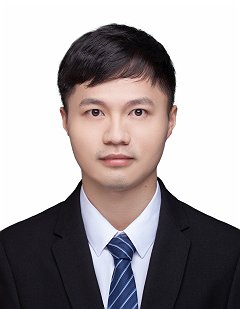
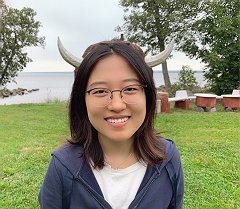
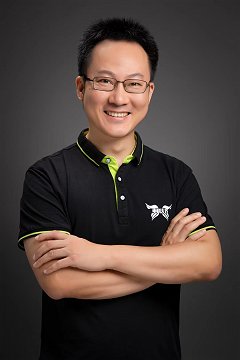
Anton Dignös is a professor at the Free University of Bozen-Bolzano , specializing in temporal databases , time series analysis , and database systems . His research focuses on efficient query processing for interval data, temporal joins, and schema design, with significant contributions to in-memory and time series databases. Key research areas include: Temporal Data Management : Advanced techniques for interval and duration queries. Time Series Analytics : Machine learning integration and pattern detection. Schema Optimization : Automated design and tuning of database schemas. Visual Analytics : Tools for period data comparison and correlation analysis. His work spans collaborations with researchers like Johann Gamper and Michael H. Böhlen , addressing challenges in healthcare systems, industrial applications, and financial data analytics. Notable contributions include algorithms for temporal anti-joins , range-duration queries , and machine learning-based anomaly detection .
Paolo G. Giarrusso is a researcher at the Institute for Programming Languages and Software Engineering within the Faculty of Informatics at the University of Tübingen . Previously, he was a Ph.D. student at the University of Marburg , where he defended his thesis Optimizing and Incrementalizing Collection Queries by AST Transformation in January 2018.
Junior Professor Dr.-Ing. Constantin Pohl is a faculty member in the Faculty of Informatics at Schmalkalden University of Applied Sciences, where he holds the position of Junior Professor of Data Analytics since October 2022. His academic journey began with a Bachelor's degree in Computer Science from TU Ilmenau (2010-2013), followed by a Master's degree from the same institution (2013-2016). Professor Pohl's research and teaching expertise spans multiple domains in computer science, with a recognized specialization in Adaptive Signal Analysis at Schmalkalden University. His technical interests include Data Analytics, Programming, Databases, Distributed and Parallel Systems, and Artificial Intelligence. His career progression shows a steady development from Research Assistant at TU Ilmenau (2016-2019) to Lecturer (2019-2020) and Research Assistant at Schmalkalden University (2020-2022), where he contributed to significant projects including AutoServIoT and EduPLEx_API, before attaining his current professorship. Current Position: Junior Professor of Data Analytics Research Focus: Adaptive Signal Analysis (recognized university research focus) Technical Expertise: Data Analytics, Programming, Databases, Distributed Systems, AI Professor Pohl maintains an active role in both teaching and research, with office hours available upon request in Building B, Room 0212 at the university campus.
Jingyue Li is a Professor in the Department of Computer Science at the Norwegian University of Science and Technology (NTNU), within the Faculty of Information Technology and Electrical Engineering. She earned her Ph.D. in Software Engineering from NTNU in 2006 and has extensive industrial experience including positions at IBM and DNV Research and Innovation. Her educational background includes: Ph.D. in Software Engineering from NTNU (2006) Professor Li's research spans several key areas in software engineering with a focus on both theoretical and practical applications. Her work bridges traditional software engineering practices with emerging technologies, particularly in the domain of security and blockchain systems. She has conducted extensive empirical research and applied design science methodologies to develop innovative tools and approaches. Her recent publications demonstrate a strong trend toward blockchain technologies, software security, and the intersection of AI with software engineering. The research shows increasing focus on practical applications of blockchain in decentralized autonomous organizations, consensus protocols, and security vulnerabilities in smart contracts. There's also significant work on integrating security practices into DevOps (DevSecOps) and applying machine learning techniques to software engineering problems. Professor Li has received recognition through her leadership roles in major conferences: General Chair for FSE 2025 (The ACM International Conference on Foundations of Software Engineering) Member of the EASE (International Conference on Evaluation and Assessment in Software Engineering) steering committee In terms of research leadership, Professor Li has served as Principal Investigator (PI) or Key Scientist on numerous research projects including TRACE4EU (2023-2025), PaaSforChain (2020-2023), CyberSmart (2017-2020), and several others focused on blockchain, security, and software engineering. She has also conducted research visits to institutions including University College London, University of Washington, Hiroshima University, and Peking University. Her research group appears to be actively engaged in both theoretical and applied research, with strong industry connections through projects like CyberSmart and SecureCyber that address real-world challenges in cybersecurity and smart city infrastructure.
Dr. Kim André Vanselow is a Privatdozent (equivalent to Associate Professor) and currently serves as Scientific Staff Member and Head of Office at the Institute of Geography, Friedrich-Alexander University Erlangen-Nuremberg. His academic career has been deeply rooted at FAU, where he completed his PhD in 2011 and Habilitation in 2022. He has also held part-time positions at the University of Salzburg and teaching assignments at Freie Universität Berlin and University of Vienna. Dr. Vanselow's research focuses on biogeography, geoecology, and human-environment relationships, with particular expertise in pasture ecology in arid and high mountain regions. His work extensively covers the Pamir Mountains in Central Asia, investigating vegetation dynamics, land cover change, and sustainable pasture management using remote sensing and statistical modeling approaches. His research spans multiple continents, with field work conducted in Tajikistan, Kyrgyzstan, Southern Morocco, Honduras, and Ecuador. Current Position: Scientific Staff Member and Head of Office, Institute of Geography, FAU (since April 2024) Habilitation: Completed June 2022, venia legendi granted March 2023 PhD: 2011, FAU Erlangen-Nuremberg Research Funding: DFG, Volkswagen Foundation, Schmauser Foundation Dr. Vanselow's recent publications demonstrate a consistent interdisciplinary approach that bridges physical geography, ecology, and social sciences to address pressing environmental challenges. His work on land cover change in mountain regions, soil science in arid environments, and biodiversity assessment shows methodological innovation and regional expertise. His research has significant implications for sustainable resource management in vulnerable ecosystems facing climate change. Over 30 peer-reviewed publications since 2007 Regular presentations at international conferences Active member of International Biogeography Society and European Geosciences Union As an educator, Dr. Vanselow teaches courses in physical geography, including regional lectures, seminars on biogeography, and field methods. His administrative role in the Department for Teaching and Studies (2017-2024) demonstrates his commitment to academic leadership and curriculum development. His research program continues to expand, with growing emphasis on interdisciplinary approaches that integrate ecological, social, and cultural dimensions of sustainability in mountain regions worldwide.
Dr. Salam Traboulsi is a Researcher at Stuttgart University of Applied Sciences (HFT Stuttgart), affiliated with the Competence Center for Digitalization in Research, Teaching & Economics since 2019. She holds a PhD in Computer Science from the University of Toulouse, France (2008). Her work bridges technology and urban innovation, with a focus on developing scalable solutions for modern cities. Research Focus: Dr. Traboulsi specializes in: Smart City ecosystems integrating IoT and 5G Precision technologies for urban positioning and navigation Data management frameworks for large-scale sensor networks Open-source IoT platforms for building efficiency and environmental monitoring Cloud and grid computing infrastructures Key Projects: She leads/contributes to: iCity 2: UDigiT4iCity – Developing urban digital twins using IoT building data and 5G sensor networks iCity 1 – Foundational research on intelligent urban infrastructure systems Publication Trends: Her recent work (2020-2024) emphasizes 5G-enabled urban solutions, including fleet management optimization, indoor positioning systems, and IoT analytics for smart buildings. Earlier research (2005-2013) focused on distributed computing, storage virtualization, and information retrieval systems, demonstrating consistent expertise in large-scale data infrastructure. Academic Engagement: She serves as a scientific reviewer for journals and conferences and teaches in the surveying study area at HFT Stuttgart.
Xiao Yu is a Research Fellow (Assistant Research Professor) at the State Key Laboratory of Blockchain and Data Security, Zhejiang University, Hangzhou, China. Previously, they were a Postdoctoral Researcher at Huawei under Prof. Xin Xia. They hold dual PhD degrees: from Wuhan University's School of Computer Science (December 2020) supervised by Prof. Jin Liu, and from City University of Hong Kong's Department of Computer Science (March 2021) supervised by Prof. Qing Li and Prof. Jacky Wai Keung. Research focuses on three interconnected domains: LLMs Data Governance and Evaluation addressing hallucination phenomena and task-specific LLM evaluation in software engineering; Intelligent Software Engineering leveraging deep learning for code generation, annotation, and maintenance; and Software Security and Reliability investigating vulnerability detection, log anomaly identification, and security bug classification. Their work bridges theoretical advancements with industrial applications, particularly in blockchain and data security contexts. Recent publications demonstrate strong trends in realistic LLM evaluation (RealisticCodeBench), vulnerability detection using semi-supervised learning, and industrial anomaly detection. Key thematic areas include effort-aware defect prediction, code smell detection, and the practical application of large language models in software engineering tasks, with increasing emphasis on data quality and privacy considerations. Xiao Yu actively contributes to the academic community through extensive service roles including journal reviewing for ACM Transactions on Software Engineering and Methodology, IEEE Transactions on Dependable and Secure Computing, and serving on program committees for major conferences like APSEC 2025 and ASE 2025. They have supervised numerous graduate students as evidenced by authorship patterns in publications. Based at Zhejiang University's State Key Laboratory of Blockchain and Data Security, their research operates at the intersection of academic rigor and industrial relevance, with strong collaborations spanning multiple institutions including Huawei, Wuhan University, and City University of Hong Kong.
Xiaoning Du is a Senior Lecturer (equivalent to U.S. Associate Professor) at the Department of Software Systems and Cybersecurity within the Faculty of Information Technology at Monash University, Australia. She was promoted to this position effective July 1, 2025, having previously served as a Lecturer (Assistant Professor) since joining Monash in February 2021. Her research bridges the gap between theory and practical applications of program analysis and formal methods in evaluating traditional and AI-assisted software systems. Dr. Du's educational background includes: PhD from Nanyang Technological University (2020) Bachelor's degree from Fudan University (2014) Dr. Du specializes in software engineering, artificial intelligence, and cybersecurity , with particular focus on SE4AI (Software Engineering for AI), software analysis and testing . Her research has made significant contributions to the security and quality assurance of intelligent software systems, especially intelligent software engineering tools. She is best known for her work on Devign , BigCodeBench , DeepStellar , and SimPy , which have advanced the fields of code generation, program analysis, and AI security. Her approach consistently bridges theoretical foundations with practical applications to improve software quality and security. Dr. Du's recent publications demonstrate a strong focus on the intersection of software engineering and AI, particularly examining how large language models interact with source code. Her work addresses critical challenges in code generation efficiency, security vulnerabilities in AI-assisted development, and fairness in AI systems. She has made significant contributions to benchmarking frameworks like BigCodeBench and has pioneered research on watermarking techniques to protect code datasets from misuse by neural code completion models. Dr. Du has received numerous prestigious awards and recognitions: 2024 Google Research Scholar Award in Software Engineering ACM SIGSOFT Distinguished Paper Award (ISSTA'24) ICLR Oral presentation (2025) 2024 FIT Dean's Early Career Researcher of the Year Award Multiple FIT ECR Seed Grants (2021-2023) Dr. Du actively mentors PhD students, with notable successes including Terry (2024-2025 IBM PhD Fellowship Award recipient) and Zhensu (2024 Bytedance Scholarship Award recipient). She is currently seeking self-motivated PhD students with strong programming skills and relevant research experience, offering full scholarship support. Her research has been supported by multiple grants including the Google Research Scholar Program award and several FIT ECR Seed Grants that have enabled her team to pursue innovative research in software security and AI-assisted development. Dr. Du leads a research group focused on intelligent software systems security and quality assurance. Her team has developed several influential tools and benchmarks including Devign, BigCodeBench, DeepStellar, and SimPy. These resources have become important assets for researchers and practitioners working at the intersection of software engineering and artificial intelligence, particularly in the areas of code generation, program analysis, and security testing of AI systems.
Jie Lu is an Associate Professor at the Institute of Computing Technology of the Chinese Academy of Sciences (ICT, CAS), where he leads research in software security and program analysis. His work focuses on developing advanced program analysis techniques to improve software reliability and security, with applications in cloud systems, distributed environments, and modern web applications. Dr. Lu's research interests include: Software Security: Focusing on vulnerability detection and prevention in open-source software Program Analysis: Specializing in static/dynamic analysis techniques and context-sensitive pointer analysis Cloud Systems: Researching distributed system security, crash-recovery, and concurrency bug detection His recent publications demonstrate a strong focus on practical security solutions for real-world systems. The research spans Kubernetes ecosystems, PHP applications, Linux kernel security, Java web applications, and Windows IPC systems. A notable trend is the development of precise static analysis techniques that balance efficiency with accuracy, addressing the longstanding challenge in program analysis. His work often bridges theoretical advances with practical implementations that have been adopted by industry. Dr. Lu has received several prestigious awards: ACM SIGSOFT Distinguished Paper Award 2025 Best Paper Honorable Mention at CCS 2022 Chinese Academy of Sciences Outstanding Doctoral Dissertation 2021 Chinese Academy of Sciences President's Special Award 2020 ICT New Hundred Stars 2020 Dr. Lu actively mentors students and researchers, recruiting PhD candidates, Master students, and research interns interested in software security and program analysis. His research has been supported by the National Natural Science Foundation of China, CCF-Huawei Innovation Research Plan, and CCF-Ant Research Fund. The Program Analysis Group (ICT-PAG) at the National Key Laboratory of Processor has successfully identified numerous errors and vulnerabilities in popular open-source applications, with over 200 severe bugs confirmed by the open-source community and assigned more than 100 CVE numbers. His research group, the Program Analysis Group (ICT-PAG), is based in the National Key Laboratory of Processor at ICT, CAS. The group has achieved significant impact through both academic publications in top venues (SOSP, CCS, USENIX Security, NDSS, OOPSLA, ISSTA, FSE, ASE, TSE) and practical applications in leading IT companies and government organizations.
Lian Li is a Professor in the Institute of Computing Technology at the Chinese Academy of Sciences, where he leads the program analysis research group. He holds a PhD from the University of New South Wales, Australia, and a Bachelor's degree from Tsinghua University in Engineering Physics. His research focuses on developing innovative program analysis techniques and tools to enhance software reliability and security. His educational background includes a PhD in Computer Science from the University of New South Wales (2003-2007) with a thesis on "ScratchPad Management for Static Data Aggregates" under Professor Jinling Xue, and a Bachelor's degree in Engineering Physics from Tsinghua University (1993-1998). Lian Li's research primarily centers on program analysis techniques, particularly static analysis methods for software security and reliability. His group developed Wukong, a static analysis and detection system capable of identifying deep security vulnerabilities across functions, components, and complex dependencies in C/C++, Java, and Android applications. This tool has discovered thousands of errors in popular open-source software including Google Chromium, Bash, sed, and Hadoop, with hundreds confirmed by developers and over 50 CVEs assigned. His publication record shows a strong focus on program analysis, particularly context-sensitive pointer analysis, taint analysis, and vulnerability detection. His recent work (2021-2024) demonstrates continued innovation in context-free language reachability, efficient IFDS algorithms, and specialized analysis for generics and authorization vulnerabilities. His research spans cybersecurity, programming languages, and software engineering domains, with emphasis on practical applications for real-world software systems. ASE 2019 Distinguished Paper Award CCS 2022 Best Paper Honorable Mention Lian Li has guided numerous PhD and Master's students in computer system architecture and software theory. His research group maintains active collaborations across various software analysis domains, with funding supporting their work on tools like Wukong. They have developed significant intellectual property including multiple patents related to program analysis techniques. The program analysis research group he leads focuses on developing practical tools for software reliability and security. Their work bridges theoretical program analysis with real-world applications, particularly through the Wukong analysis system which has been successfully applied to major open-source projects.
Professor Kristina Schädler is a faculty member at the West Coast University of Applied Sciences (FH Westküste), where she serves as Professor of Data Processing within the School of Technology. She has been with the university since 2005 and also served as Dean of the Department of Technology. Her academic background includes a PhD in machine learning from TU Berlin, where she was awarded the Chorafas Research Prize for young scientists. West Coast University of Applied Sciences (since 2005) TU Berlin, Institute of Computer Science (1994-1999) Martin Luther University Halle/Wittenberg (1990-1994) Professor Schädler's research focuses on artificial intelligence and machine learning applications, particularly in image processing and data analysis. Her work spans multiple domains including industrial automation, agricultural technology, renewable energy, and animal husbandry. She has led numerous research projects that bridge academic theory with practical industrial applications, with particular emphasis on developing robust image processing systems that can be deployed in real-world settings. Her research portfolio demonstrates a consistent pattern of applying advanced machine learning techniques to solve practical problems across diverse industries. The ANIMET project, which developed facial recognition for horses, and the MaviSeg system for multichannel image segmentation represent her innovative approach to adapting computer vision technologies for specialized applications. Her work often involves close collaboration with industry partners to ensure practical relevance and implementation. Chorafas Research Prize for young scientists Innovationspreis at Equitana (2013) for the ANIMET project Professor Schädler has supervised numerous student theses that have resulted in practical applications across various domains. Her research group has secured funding from multiple sources including the European Commission, BMBF, and regional development agencies. She has established the CICAD project as a sustainable competence center for industrial image processing, which has trained multiple doctoral students through cooperative programs with the University of Lübeck. Her work demonstrates strong industry connections with companies like HIT Hinrichs Innovation + Technik, MBJ Solutions, and Fischer und Tausche Kondensatoren. Her research laboratory focuses on industrial image processing applications, with specialized equipment for 2D/3D imaging, spectral analysis, and machine learning implementation. The CICAD project established a dedicated competence center that continues to develop new applications of image processing technology across multiple industries.