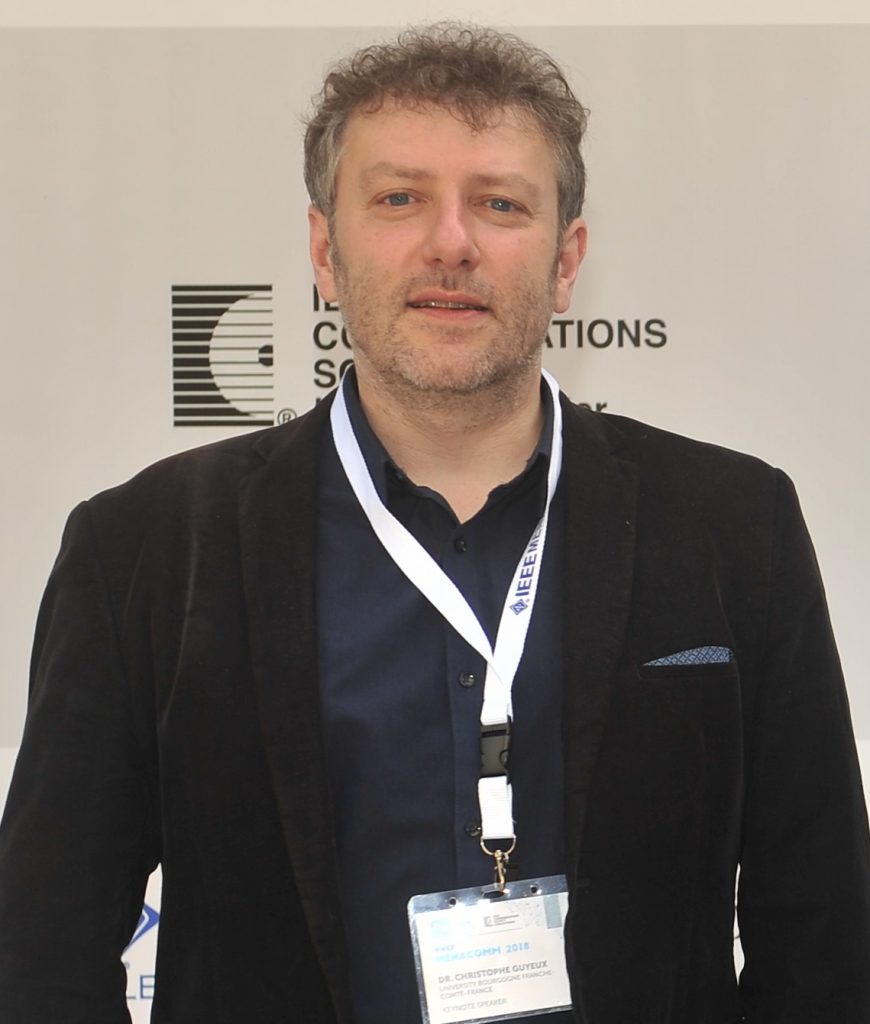
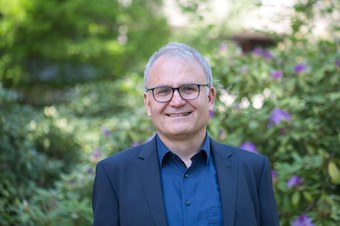
Raul Castro Fernandez is a prominent researcher in data management and database systems, with a focus on data discovery, integration, and marketplaces. He has collaborated extensively with leading institutions and researchers, contributing to projects like Data Station and Nexus for secure data sharing. His work bridges theoretical innovation with practical implementations in cloud optimization, differential privacy, and LLM-driven data tools. Key Contributions : Data market frameworks, LLM applications in databases, differential privacy platforms Collaborators : Yue Gong, Samuel Madden, Michael Stonebraker, Eugene Wu, Kyle Chard Research Themes Fernandez explores automated metadata management for data catalogs, spatiotemporal data sharing with privacy guarantees, and LLM-based data discovery . His work on stateful stream processing (e.g., SABER system) and cost optimization in cloud analytics shows technical depth. Recent Trends 2023-2025 publications highlight his pivot toward LLM applications in data management, including tabular data representation and hypothesis assessment tools. He also investigates sustainability in HPC through carbon credit systems.
Sihem Amer-Yahia is a distinguished Research Professor at the University of Grenoble Alpes (affiliated with Grenoble Informatics Laboratory ), with significant contributions to database systems , data exploration , and fairness in AI . Her work bridges human-computer interaction and machine learning to create systems that enhance data-driven decision-making. Research Pillars : Algorithmic fairness, interactive data mining, recommender systems, and human-AI collaboration Recent Advances : 2023-2025 publications focus on statistically sound hypothesis testing , multi-objective recommendation , and conversational analytics Leadership : Co-organized major conferences (DASFAA 2024) and led DEI initiatives in database communities Her 15 most recent articles (2020-2025) span topics like producer fairness in recommendation , statistical hypothesis frameworks , and AI-powered education systems , with keywords covering database optimization , reinforcement learning , and ethical data mining . She actively contributes to ACM/IEEE journals and VLDB/SIGMOD conferences.
Eric Pardede is a professor at the School of Computing and Mathematics of Western Sydney University . He has an extensive publication record in data management, cybersecurity, and technology-enhanced learning, often collaborating with researchers like Wenny Rahayu, David Taniar, and A. S. M. Kayes. Research Focus: XML database systems, cloud computing security, data stream mining, and educational technology Award-Winning Contributions: Notable work on IoT security frameworks, blockchain risk assessment, and adaptive learning systems Recent Publications: 15 articles from 2021-2025 address topics like concept drift adaptation, cybersecurity in multi-cloud environments, and smart education tools Key Collaborations: Frequent partnerships with researchers in Australia, Indonesia, and Austria
Carlo Curino is a researcher at Microsoft Research , focusing on database systems, cloud computing, and machine learning integration. He has collaborated extensively with institutions including MIT, Microsoft, and the University of Wisconsin-Madison. His research spans Geo-distributed data analytics Automated configuration tuning Tensor-based database systems Data lake optimization Spark performance engineering Recent publications highlight his work on AI-driven systems like MotherNet and Rockhopper , alongside contributions to query processing over compressed data and log-structured tables. Collaborators include prominent figures such as Raghu Ramakrishnan and Jesús Camacho-Rodríguez . Key projects involve LST-Bench (cloud storage benchmarking), AutoComp (data compaction), and PyFroid (commodity workstation analytics). His work bridges database optimization with modern machine learning demands in enterprise environments.
Philipp Cimiano is a Professor at the Faculty of Engineering, Bielefeld University, and leads the Semantic Databases Group. He holds additional roles as Coordinator of the Cognitive Interaction Technology Center (CITEC) and Director of the Joint Artificial Intelligence Institute (JAII). His research focuses on the intersection of language, semantics, and knowledge representation, with applications in Explainable AI , Knowledge Graphs , and AI in Medicine . Education: University of Stuttgart, University of South Australia, Karlsruhe Institute of Technology (KIT) Key Research Areas: Knowledge Representation, Ontologies, Explainable AI, Clinical Decision Support His recent work emphasizes dialogue-based XAI , federated learning , and semantic data integration . He has secured funding from the German Research Foundation (DFG) and the European Union for projects like TRR 318 "Constructing Explainability" and Pret-a-LLOD. Scientific Awards Carl Adam Petrie Prize, KIT Faculty of Business and Economics Editorial Roles Co-editor, Journal of Applied Ontology Area Editor, Semantic Web Journal Editorial Board, Journal of Web Semantics Notable Projects TRR 318 (Subprojects B01, C05, INF) 3B: Bots Building Bridges for online deliberation LLM4KMU: Open Source LLMs for SMEs
Christoph Düsing is a researcher at the Semantic Databases Group within the Faculty of Engineering at Universität Bielefeld . He also contributes to the Center for Cognitive Interaction Technology (CITEC) and provides academic advising for the Master Data Science program at the Faculty of Business Administration and Economics . Research Interests: Federated Learning and distributed AI systems Explainable AI (XAI) for clinical applications Clinical Decision Support Systems for sepsis treatment Graph Neural Networks for social influence modeling Data imbalance and client contribution analysis in collaborative AI Impact of AI on labor market dynamics Recent Publications focus on federated learning applications in healthcare, explainability mechanisms, and graph-based AI solutions. Key themes include sepsis management, antibiotic therapy optimization, and social commerce platform analysis. Labs & Collaborations: Semantic Databases Group, Faculty of Engineering Center for Cognitive Interaction Technology (CITEC) Interdisciplinary projects with healthcare institutions
Volker Dürr is a Professor of Biological Cybernetics at Bielefeld University , Faculty of Biology, and a member of the Center for Cognitive Interaction Technology (CITEC) . His work focuses on sensory control of locomotion , active tactile sensing in insects , and biomimetic modeling of movement systems. Education : Habilitation in Zoology (University of Cologne, 2008; Bielefeld, 2005), PhD in Biology (Bielefeld, 1998), Diploma in Biology (Tübingen, 1994) Academic Career : Professor at Bielefeld (2009-present), Junior Research Group Leader (University of Cologne, 2007-2009), Research Assistant (Bielefeld, 1998-2006) His research investigates how insects use antennal mechanosensory systems and proprioception to control locomotion in complex environments. Key themes include goal-directed movements , sensorimotor integration , and biomimetic robotics . Publications emphasize tactile sensing (15/23 articles), neural control of movement (9/23), biomechanical modeling (7/23), and cross-species locomotion analysis (4/23). Recent work explores virtual reality paradigms for locomotion studies and spiking neural networks for proprioceptive modeling.
Prof. Dr.-Ing. Thomas Preuß is a Professor for Network Computing and Information Systems at the Brandenburg University of Technology (BTU). He has been actively contributing to academic and industry domains since 2001, with a focus on cloud computing, system architectures, and enterprise application integration. Education: Diploma in Computer Science from University of Magdeburg (1993) Key Expertise: Cloud computing, Multi-tenant applications, Message Oriented Middleware (MOM), System integration Teaching: Web computing, Basics of Cloud Computing, Databases, Object-oriented scripting languages Certifications: AWS Certified Solutions Architect – Associate (2018, 2021), AWS Accredited Educator (2021)
Prof. Dr. Hagen Voß is a Professor at Georg Agricola University of Applied Sciences since 1995, specializing in Physics, Mathematics, Databases, and Modeling. His research focuses on applied modeling and simulation of heterogeneous systems, object-oriented software engineering, and development of embedded and real-time systems. He is affiliated with the German Physical Society. Born in Bremen (1959), studied Physics at the University of Bremen (1979-1985) Doctorate in Physics (1991) for work on nonlinear partial differential equations Industry experience in aerospace engineering (MBB/ERNO) and medical information systems Research Areas: Hagen Voß's work bridges computational methods with physical systems, focusing on tool-supported co-simulation of heterogeneous systems, software architectures for embedded devices, and numerical methods in theoretical physics. His expertise includes distributed database applications and systems analysis. Teaching: Covers advanced topics in physics, higher mathematics, numerical methods, and systems modeling. His educational philosophy integrates computational techniques with practical engineering applications.
Cédric du Mouza is a full Professor within the CEDRIC Laboratory at the Conservatoire National des Arts et Métiers (CNAM) in Paris, France. His research activities lie at the intersection of database systems, data mining, and digital humanities, with a strong emphasis on social network analysis, knowledge base population, and spatial/temporal data management. Education details are not explicitly provided in the source material. His research interests can be summarized as follows: Database Technologies: scalable indexing, distributed repositories, spatial and temporal data structures. Data Mining & Machine Learning: community detection, influence maximization, recommender systems. Digital Humanities: prosopographic databases, historical social networks, credibility assessment of historical sources. Social Media Analytics: Twitter user profiling, early detection of popular accounts, reducing filter bubbles. Across more than two decades, Prof. du Mouza has produced a rich scholarly record that blends theoretical advances with practical applications. Recent publications (2020-2024) highlight a methodological shift toward end-to-end evaluation frameworks for knowledge base population, uncertainty modeling in historical corpora, and real-time influence maximization in advertising ecosystems. These works are published in premier venues such as SIGIR , VLDB Journal , WISE , CIKM , and leading French conferences (EGC, BDA). No specific scientific awards, funded projects, or doctoral student names are mentioned in the supplied text. Prof. du Mouza collaborates extensively within interdisciplinary teams involving historians, computer scientists, and statisticians, reflecting CEDRIC’s integrative research culture. While no dedicated laboratory or team name is provided, his continuous affiliation with CEDRIC/CNAM confirms an active and ongoing role in both research and graduate-level education.
Samira Si-Said Cherfi is a Professor at the Centre d'études et de recherche en informatique et communications (CEDRIC) within the Conservatoire National des Arts et Métiers (CNAM) in Paris. With a research career spanning over 25 years, she has established herself as a leading expert in data quality, conceptual modeling, and ontology engineering. Her work bridges theoretical computer science with practical applications in healthcare systems, business process management, and knowledge representation. Her research interests focus on data quality assessment , conceptual modeling methodologies , ontology engineering for complex systems , and cyber-physical security in healthcare infrastructures . She has pioneered approaches for evaluating RDF data completeness, developing quality metrics for conceptual schemas, and creating ontologies for healthcare security. Her work demonstrates how formal modeling techniques can solve real-world problems in information systems. Analysis of her recent publications reveals a strong trend toward cyber-physical security and healthcare information systems , where she applies semantic technologies to address cascading effects in critical infrastructures. Her work consistently connects theoretical foundations in conceptual modeling with practical applications in knowledge graphs and data integration. She has made significant contributions to understanding how OWL semantics can be effectively utilized in RDF-based knowledge graphs. As an active member of the academic community, she has served as guest editor for special journal issues and contributed to major international conferences including RCIS, CAiSE, and EDOC. Her leadership in the field is evident through her editorial roles and collaborative research projects. Professor Si-Said Cherfi leads research within the CEDRIC laboratory, specifically contributing to the 'Complex data, machine learning and representations' and 'Data mining and statistics' research teams. Her work often involves interdisciplinary collaboration with healthcare professionals, security experts, and industry partners to address complex challenges in information systems security and data quality.
Prof. Dr.-Ing. habil. Dr. hc Sahin Albayrak is a distinguished academic and entrepreneur at the Technical University of Berlin , where he founded and directs the Distributed Artificial Intelligence Laboratory (DAI Laboratory) . He leads the Agent Technologies in Business Applications and Telecommunications research group and serves as founding member of Deutsche Telekom Laboratories (2004) and European Center for ICT (EICT) (2005). As initiator of Connected Living e.V. (2009) and managing director of German-Turkish Advanced Research Center for ICT (2012), he bridges international collaborations. He also founded IOLITE GmbH (2014) and other startups. Research Focus: Agent technology, autonomous driving, smart cities, cyber security, machine learning, and AI applications in energy systems Awards: Federal Cross of Merit (2014), multiple Best Paper Awards Leadership: Director of DAI Laboratory, head of research group at TU Berlin His 20+ recent publications (2022-2025) demonstrate expertise in agent-based architectures , smart mobility solutions , context-aware computing , and AI-driven security systems . Notable trends include integrating large language models into database interfaces, optimizing multi-agent coordination for logistics, and advancing explainable AI through feature attribution frameworks. Scientific Contributions: Recipient of Germany's Bundesverdienstkreuz for German-Turkish cooperation Best Paper Award at Smart Grid Architectures conference
Danijela Dimitrijević is a Postdoctoral Researcher in the Chair of Palaeontology at Friedrich-Alexander-Universität Erlangen-Nürnberg (FAU). Her work focuses on the evolutionary and ecological dynamics of marine reef communities across deep time, particularly the morphological trait evolution of scleractinian corals and their responses to climate upheavals. Education: PhD in Paleontology (FAU, 2024) International Master in Geosciences: Palaeobiology (FAU, 2021) International Master in Applied Ecology (EMMC-IMAE, 2015) BSc in Geospatial and Environmental Science (University of Belgrade, 2011) Research Interests: Danijela investigates coral reef evolution , trait-based extinction risk , and marine community responses to hyperthermal events . Her projects integrate quantitative trait analysis (e.g., corallite size) with paleoclimatic data to assess long-term ecological resilience. She also co-developed the Ancient Reef Traits (ART) database for global reef-building organism data. Publication Trends: Recent work spans census-based reef carbonate production , bioerosion patterns in Triassic corals , and trait decoupling in extinction events . She emphasizes open science and data equity in paleontological research. Fieldwork & Collaboration: Active in field studies (e.g., Silurian reefs in Sweden) and international collaborations, Danijela bridges geological history with modern conservation challenges through interdisciplinary research and science communication initiatives.
Helmut Breitmeier has been Professor of International Relations at the Institute of Political Science, Justus Liebig University Giessen, since 2013. In parallel he serves on the project management board of the DAAD-funded SDGnexus Network (since 2020), on the board of directors of the LOEWE Cluster “Minority Studies: Language and Identity” (since 2019) and on the board of the Center for international Development and Environmental Research (ZEU) at JLU (since 2019). From 2008-2013 he was Professor of Political Science at the Open University Hagen, and previously held positions at TU Darmstadt, University of Stuttgart, University of Mannheim and the International Institute for Applied Systems Analysis (IIASA). Education 1994 – Dr. phil., University of Tübingen (dissertation on formation of global environmental regimes) 2004 – Habilitation & Venia Legendi, TU Darmstadt (topic: legitimacy of international regimes) M.A. Political Science & Contemporary History, University of Tübingen / Uppsala University Research Interests Prof. Breitmeier’s work centres on global governance and the effectiveness and legitimacy of international institutions. He analyses how state and non-state actors jointly address global problems, with particular attention to: Environmental and climate governance (international regimes, regime effectiveness, compliance) Food system governance (sustainability norms, SDG 2 implementation, regime complexity) Transnational security threats (climate-conflict nexus, prevention of violence) Role of religion and non-state actors in global politics Methodological focus on quantitative and qualitative comparative regime analysis Across these themes he investigates questions of democratic legitimacy, distributive justice and policy learning. Publication Profile His recent peer-reviewed articles (2021-2009) map the evolution of global sustainability governance. Collectively they trace how inter-institutional arrangements align (or misalign) norm understandings on food security and climate change, how non-state actors enhance or challenge regime legitimacy, and how quantitative regime analysis can assess problem-solving effectiveness and equity. The work combines large-n database analysis (International Regimes Database) with case-based inquiry, producing policy-relevant insights for scholars and practitioners. Grants & Scientific Service Project Management Board, DAAD “exceed” SDGnexus Network (2020-) Board of Directors, LOEWE Cluster “Minority Studies” (2019-) Board Member, Center for international Development and Environmental Research (ZEU) (2019-) Chair, Doctoral Committee Faculty 02 (2015-2020) Deputy Chair, Development and Peace Foundation (SEF) (2015-2020) Member, Scholarship Selection Committee, German Federal Foundation for Ecology (2008-2013) Teaching & Supervision At JLU he teaches undergraduate and graduate courses on global governance, climate politics, the United Nations, minority issues and development theory. He supervises bachelor and master theses and emphasises early, structured consultation with students.
David Bani-Harouni is a researcher at the Chair of Computer Aided Medical Procedures at Technische Universität München (TUM). His work focuses on Medical Informatics , Artificial Intelligence , and Deep Learning , with an emphasis on Clinical Decision Support and Medical Image Analysis . Research Interests : Large Language Models (LLMs), Vision Language Models (VLMs), interpretability in deep learning, multimodal clinical decision support, and medical image analysis. Teaching : He contributes to lectures and practical courses such as Computer Aided Medical Procedures I , Medical Augmented Reality , and Deep Learning for Medical Applications . Publications : His research spans reinforcement learning for clinical decision-making, multimodal operating room datasets, toxin prediction systems (e.g., ToxNet), and graph convolutional networks for intoxication prediction. Contact : david.bani-harouni@tum.de