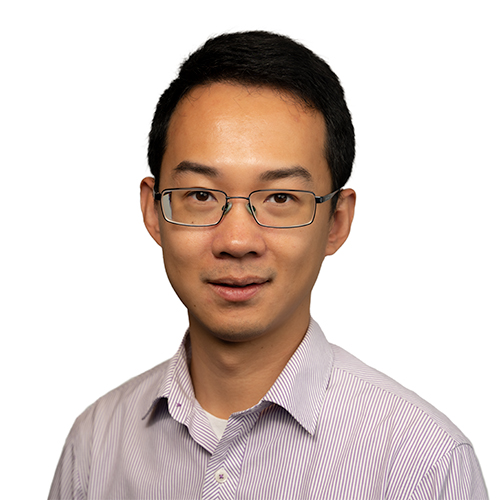
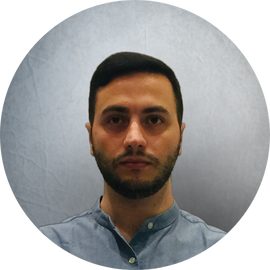
Thomas Neumann is a full-time Professor at the Department of Database Systems within the TUM School of Computation, Information and Technology at the Technical University of Munich . Research Focus : Query optimization and processing in database systems Hardware-aware database engine design Scalable RDF/semantic data management Hybrid OLTP/OLAP processing Join optimization algorithms Scientific Recognition : Gottfried Wilhelm Leibniz Prize (2020), Germany's most prestigious research award Academic Contributions : His recent publications focus on high-performance query execution strategies, hybrid transactional/analytical systems using virtual memory snapshots, and scalable graph processing techniques. These works demonstrate consistent advancements in database engine optimization for modern hardware architectures and large-scale semantic data management.
Wenwen Wang is an Associate Professor in the School of Computing at the University of Georgia's Franklin College of Arts & Sciences. His research focuses on computer systems, compiler design, and embedded systems security. He holds a Ph.D. in Computer Science from the University of Chinese Academy of Sciences (2014). Education: Ph.D., Computer Science, University of Chinese Academy of Sciences, 2014 His research emphasizes dynamic binary translation, compiler optimization, and secure embedded systems. Notable contributions include frameworks like JavART (JIT compiler optimization) and BSan (memory error detection). He received the 2021 M. G. Michael Award for Sciences from the Franklin College. Wang has secured two NSF grants totaling $1.2 million, including CSR: Small grants for FALCON (2023–2027) and Modernizing Dynamic Binary Translation Systems (2023–2027). He advises three graduate students: Ruili Fang, Yage Hu, and Boyang Yi. His work addresses challenges in cross-architecture virtualization, GPU-based graph computing, and hardware-triggered security mechanisms. Recent projects include Liberator (GPU graph processing) and InvisiGuard (embedded device integrity).
Gagan Agrawal is the UGA Foundation Professorship in Computing and a Professor at the School of Computing, University of Georgia. He serves as Director of the School and is affiliated with the Franklin College of Arts & Sciences. Agrawal holds a PhD and MS in Computer Science from the University of Maryland (1994-1996). His research focuses on high-performance computing, parallel algorithms, compiler optimization for deep learning, GPU acceleration, and interdisciplinary applications in health informatics. Notable contributions include frameworks like ForensiBlock (blockchain for data forensics) and DELITE (tensorized instruction compilation). Agrawal has secured over $2.5M in NSF grants for projects addressing extreme-scale computing challenges. Recent grants include: SHF: Small: Memory Hierarchy Optimizations Meet Transformers (MITTEN) ($600K, 2024-2027) DELITE compilation system for deep learning models ($600K, 2023-2026) Publications span parallel computing methodologies, cybersecurity frameworks, and health outcomes analysis. His work on social determinants of health in cancer survival has been systematically reviewed in top-tier medical journals. Agrawal leads UGA's computing initiatives, emphasizing interdisciplinary research and student mentorship in HPC and AI domains.
Jingling Xue is a Scientia Professor at the School of Computer Science and Engineering at the University of New South Wales (UNSW) in Sydney, Australia. As an IEEE Fellow of the Computer Society, he leads the Programming Languages and Compilers research group, focusing on practical applications of compiler optimization and program analysis techniques. His work bridges theoretical foundations with real-world software systems, particularly in developing open-source tools for large-scale program analysis. Professor Xue received his B.Eng and M.Eng degrees from Tsinghua University in 1984 and 1987, respectively, followed by a PhD from the University of Edinburgh in 1992. His academic journey has established him as a leading figure in programming languages and compiler technology. Xue's research spans programming languages, compiler technology, and program analysis with emphasis on practical relevance. His current projects include compiler techniques for improving parallelism and locality, pointer/alias analysis for million-line-scale programs, and static/dynamic analysis for detecting bugs and security vulnerabilities in real-world applications like web browsers and Android apps. His group actively develops open-source tools to support scientific replicability and reproducibility in these areas. His recent publications demonstrate a strong focus on applying program analysis techniques to modern challenges including AI compilers, homomorphic encryption, security vulnerability detection, and graph processing systems. The work shows evolution from traditional compiler optimization to addressing emerging domains like privacy-preserving computation and deep learning systems while maintaining rigorous theoretical foundations. Scientific Awards: Best Paper Award at CGO'13 Best Paper Award at CGO'16 Distinguished Paper Award at ECOOP'16 Distinguished Paper Award at ICSE'18 Distinguished Paper Award at ISSTA'19 Distinguished Paper Award at ASE'19 Distinguished Artifact Award at ISSTA'23 Best Artifact Award at FSE'23 Distinguished Paper Award at ASE'23 Test-of-Time Award at CGO'21 Professor Xue has successfully supervised 30 PhD students to completion, many of whom now work as professors or researchers in academia and industry. He has served as Program Chair for major conferences including LCTES'13, CC'18, CGO'20, and General Chair for LCTES'20. His group currently focuses on memory safety in Rust, smart contract analysis, AI compilers, compilation for privacy-preserving computation, and adversarial attacks in deep learning. The Programming Languages and Compilers group maintains strong connections with industry partners, translating theoretical advances into practical tools for real-world software development challenges. Their work on pointer analysis, memory safety, and compiler optimizations continues to influence both academic research and industrial practice.
Dr. Kenneth Salem is a Professor at the University of Waterloo, Canada , with a distinguished career spanning over three decades in database systems, distributed computing, and data management. His work has significantly influenced transaction processing, replication, and scalability in modern databases. Institution: University of Waterloo Collaborations: Frequent co-author with Hector Garcia-Molina, Ashraf Aboulnaga, Umar Farooq Minhas, Khuzaima Daudjee Research Interests: Dr. Salem’s research focuses on database systems, particularly in transaction processing , distributed databases , cloud computing , and energy-efficient data storage . He has pioneered techniques for schema design in NoSQL , adaptive caching , and RDMA-based data transfer . His work often addresses challenges in high availability , workload-aware optimization , and cardinality estimation . Recent Article Trends: His latest publications (2023-2025) explore ad hoc transactions , eventual durability , and summary-based cardinality estimation , emphasizing practical solutions for real-world database scalability and consistency. Earlier works (2018-2022) covered memory power optimization , RDMA abstractions , and workload-aware CPU scaling , reflecting a sustained focus on performance and efficiency. Advising and Collaborations: Dr. Salem has mentored numerous co-authors in database research, including Ashraf Aboulnaga, Umar Farooq Minhas, and Khuzaima Daudjee. His collaborative projects span Apache Spark caching , RemusDB high availability , and DimmStore memory optimization . Labs and Teams: He has been a key contributor to the DaMoN and Versatile Database Systems workshops, focusing on hardware-aware database design. His work with teams at Waterloo and collaborations with institutions like ETH Zurich and MIT has advanced self-managing databases and edge replication technologies.
Professor Gareth Taylor is a Professor of Power Systems and Director of the Brunel Interdisciplinary Power Systems (BIPS) Research Centre at Brunel University London's College of Engineering, Design and Physical Sciences. He serves as Module Leader for the MSc Sustainable Electrical Power program and has been actively involved with the university since May 2000, progressing from National Grid Post-doctoral Scholar to his current position as Professor (appointed in 2012). He previously served as Head of the Department of Electronic and Electrical Engineering from May 2019 to June 2023 and holds a Visiting Professor position at Imperial College London (2023-2026). Professor Taylor earned his BSc in Applied Physics from Royal Holloway College, University of London (1987), followed by an MSc in Scientific and Engineering Software Technology from the University of Greenwich (1992), and completed his PhD in Computational Solid Mechanics at the University of Greenwich in March 1997. His doctoral research focused on finite volume methods for material non-linearity within multi-physics frameworks. His research spans power systems engineering with particular emphasis on smart grid technologies, renewable energy integration, and advanced computational methods. Professor Taylor has contributed to over 250 research publications in areas including power system operation and management, reactive power control, voltage regulation, and high-performance computing applications in electrical power systems. His work addresses critical challenges in modern power systems, particularly those related to the integration of renewable energy sources and the development of more resilient grid infrastructure. Analysis of his recent publications reveals a strong focus on addressing contemporary power system challenges, particularly the integration of renewable energy sources, smart grid technologies, and advanced computational methods. His work spans from fundamental power system analysis to practical applications in grid operation, with increasing emphasis on cybersecurity aspects of power system monitoring and the challenges posed by reduced system inertia in grids with high renewable penetration. Senior Member of IEEE Fellow of the Institute of Engineering and Technology (FIET) Chartered Engineer Fellow of the Higher Education Academy (FHEA) UK Regular Member for CIGRE Study Committee D2 (2016-2022) Member of Strategic Advisory Group for CIGRE Study Committee D2 (2023) Professor Taylor has led numerous significant research projects including TDX-ASSIST (€5.2M), e-HIGHWAY2050 (€8.2M), and HiPerDNO (€5.4M), with funding from EPSRC, European Commission, National Grid, and other major organizations. His current research portfolio includes projects on novel decoupled active/reactive power oscillation response, digitalization of power systems operation, and examining net zero policy in European energy markets. He also directs the BIPS Research Centre, which focuses on interdisciplinary power systems research with strong industry connections.
Marco Aldinucci is a Full Professor and Head of the Parallel Computing group at the University of Torino's Computer Science Department. He leads the HPC Key Technologies and Tools (HPC-KTT) national lab under CINI, involving 38 Italian universities. His expertise spans parallel programming models, HPC systems, federated learning, and energy-efficient computing. Aldinucci has secured over €10M in EU research funding, contributed to frameworks like Fastflow and Streamflow, and pioneered initiatives like the HPC4AI lab and the CINI HPC-KTT lab. His research focuses on advancing exascale computing, cloud-HPC integration, and AI-driven medical solutions. Notable projects include the Gaia AVU-GSR solver for exascale systems and the DeepHealth Toolkit for medical AI. He has held governance roles in EuroHPC and chairs the Observatory on Trends and Applications of Supercomputing in Italy. Aldinucci’s publications (150+) address parallel algorithms, distributed learning, and sustainable HPC infrastructure. His work has been recognized with awards from HPC Advisory Council, NVIDIA, IBM, and Autodesk. Current initiatives include the Software & Integration lab at the Italian National HPC Centre (ICSC) and leadership in the OpenScience working group at Torino. His advising includes Iacopo Colonelli, whose thesis won CINI’s 2023 best award. He actively engages in EU projects, workflow systems, and standards for hybrid computing environments. Aldinucci’s labs and collaborations drive innovations in HPC portability, energy efficiency, and AI scalability.
Hantao Cui is an Associate Professor in the Department of Electrical and Computer Engineering at NC State University. He previously served as an Assistant Professor at Oklahoma State University (2021–2024) and earned his Ph.D. in Electrical Engineering from the University of Tennessee, Knoxville (2018). His research focuses on applying mathematical and computational methods to model, simulate, and analyze modern power systems, particularly those dominated by renewable energy sources and inverter-based technologies. He is the author of the ANDES simulation tool and a recipient of the NSF CAREER Award (2024) and the 2020 R&D 100 Award for his work on the CURENT Large-Scale Testbed. His expertise spans power electronics, grid stability, and cyber-physical system integration. Education: Ph.D. in Electrical Engineering, University of Tennessee, Knoxville (2018) M.S. in Electrical Engineering, Southeast University, China (2013) B.S. in Electrical Engineering, Southeast University, China (2011) Research Interests: Large-scale power system simulation and modeling Inverter-based resource control and grid stability Renewable energy integration and optimization Cyber-physical system testbed development Open-source software tools for power systems analysis Key Contributions: Developed ANDES, an open-source framework for power systems modeling Advanced virtual inertia scheduling (VIS) techniques for microgrids Pioneered data-driven adaptive control strategies for grid-forming inverters Awards & Honors: NSF CAREER Award (2024) R&D 100 Award (2020) Best Paper Award at IEEE PES General Meeting (2022) Senior Member of IEEE (2020) Grants & Labs: Principal Investigator for NSF-funded research on inverter-based grid stability Core contributor to the CURENT Large-Scale Testbed project
Niclas Jansson is a researcher at the PDC Center for High Performance Computing at KTH Royal Institute of Technology. He holds an M.S. in Computer Science (2008) and a Ph.D. in Numerical Analysis (2013) from KTH. His career spans roles such as postdoctoral researcher at RIKEN Advanced Institute for Computational Science (2013-2016) and visiting scientist at RIKEN (2018-2021), where he contributed to the Japanese exascale program Flagship 2020. A core focus of his research involves extreme-scale computing and numerical method development. He is a key developer of RIKEN's multiphysics framework CUBE , the HPC branch of FEniCS , and the spectral element flow solver Neko . His work is currently supported by a Swedish Research Council Starting Grant aimed at enhancing high-order spectral element methods for exascale fluid simulations. Niclas has published extensively on topics such as GPU acceleration , adaptive finite element methods , in situ visualization , and extreme-scale turbulence modeling . He also teaches Computational Fluid Dynamics (SG2212) at KTH.
Siegmar Sommer is a Researcher at the Humboldt University of Berlin , affiliated with the Institute of Computer Science under the Faculty of Mathematics and Natural Sciences . He has worked at the university since 1986 in various technical and scientific roles. Dipl.-Ing. in Computer Engineering (1982) Dr.-Ing. in Computer Science (1986) Postgraduate studies in Higher Education (1990) His research focuses on networking , distributed systems , and network security , with historical contributions to optical information transmission , LAN protocols , and security-relevant systems . His work bridges hardware-software co-design and educational theory in technical disciplines. The 1980s-1990s articles highlight expertise in LAN architecture, optical communication, and security frameworks. Keywords span Networking , Operating Systems , and Education , with subfields like Fiber Optic Networks , CSMA/CD Protocols , and Higher Education Curriculum . He contributed to the Computer Engineering Group and holds a patent for " Bus Access Method for a Local Computer Network " (1986). His teaching legacy includes courses on programming languages (BASIC, PASCAL, PEARL), computer graphics, and modern topics like Wireless Communication Systems and Reliable Distributed Systems . Contact: Email: sommer@informatik.hu-berlin.de Phone: +49 30 2093-41256 Office: Room IV.303, Rudower Chaussee 25, Berlin-Adlershof
Marcus Norrgård is a Professor of Law at the University of Helsinki , leading the Vaasa Unit of Legal Studies within the Faculty of Law. His expertise spans intellectual property law , copyright , design law , and the ethical implications of AI and 3D printing on legal frameworks. He actively contributes to Nordic legal research and EU copyright harmonization , with recent projects focusing on AI-generated content and virtue ethics in private law . His 15 most recent articles analyze topics such as Nordic copyright legislation , AI training data protection , and design law harmonization , reflecting his work with foundations like Harry Schaumans Stiftelse and Vaasan Aktiasäätiö . Norrgård serves on doctoral committees and as an opponent in thesis defenses , while advising Finnish parliamentary committees on copyright and telecommunications reforms . He has held leadership roles including Chairman of the Finnish Copyright Council (2008–2020) and Director of the IPR University Center (2018–2021).
Professor Sang-Woo Jun is a leading researcher in systems and software for big data analytics, focusing on FPGA-based hardware acceleration and non-volatile memory (NVM) storage. His work spans applications such as graph analytics and bioinformatics, with a strong emphasis on cost-effective, high-performance computing architectures. He advises PhD students like Shengquan Ni and Yicong Huang, both of whom have achieved notable milestones (e.g., thesis defense, fellowship awards). Research Interests: Hardware Acceleration for Big Data FPGA-Based System Architectures Non-Volatile Memory Systems Graph Analytics and Bioinformatics Edge Computing and Low-Power Systems Recent Contributions: His articles highlight innovations in edge accelerators (e.g., IceSpy, Eciton), genomics acceleration (Bancroft), and scalable graph processing (Durin, Sting). These works emphasize reconfigurable systems, privacy-preserving techniques, and energy-efficient designs. Lab & Team: As part of the Intelligent Systems Group (ISG), he collaborates on events like the Southern California Database Day. His research bridges hardware-software co-design with real-world applications in IoT, environmental monitoring, and genomics.
Michele Lanza is a Full Professor at the Faculty of Informatics, Università della Svizzera italiana (USI), Lugano, where he co-founded the faculty in 2004. He is the founder and director of the Software Institute (since 2017) and leads the REVEAL research group, focusing on software visualization, evolution, and analytics. He holds a PhD from the University of Bern (2003), where he also earned his MSc (1999), and was a postdoctoral researcher at the University of Zurich. Research Interests: Software Engineering Software Visualization (notably the 'City Metaphor') Mining Software Repositories (MSR) Software Evolution and Analytics Program Comprehension Reverse Engineering and Architecture Recovery His recent publications (2023–2025) emphasize immersive software visualization in virtual reality, automated documentation, code refactoring, and empirical studies on developer behavior and documentation. There is a strong trend toward human-centric, visual, and data-driven approaches, often leveraging VR and interactive tools for deeper software understanding. Scientific Awards: Ernst Denert Award (2003) Credit Suisse Teaching Award (2007, 2009) Best Paper Awards (SANER 2024, VISSOFT 2022, ICPC 2016) Most Influential Paper Award (MSR 2010) Advising and Grants: Prof. Lanza has supervised over 13 PhD students and numerous MSc and BSc theses, fostering a vibrant research group. He leads multiple funded projects, including SNF grants (FORCE, TUML, INSTINCT, PROBE, ESSENTIALS, BIGDATA), FFL (CSRD), and industry R&D initiatives. Funding supports travel, hardware, software, and PhD positions, enabling cutting-edge research in software engineering. Labs and Teams: He leads the REVEAL research group and the Software Institute at USI, which serve as hubs for innovation in software visualization, mining, and evolution. These teams are highly collaborative, interdisciplinary, and active in top-tier conferences (ICSE, FSE, ICSME, MSR, VISSOFT).
Alessandro Fogli is a PhD Student at Imperial College London in the Department of Computing, affiliated with the Large-Scale Data & Systems (LSDS) Group . His research focuses on systems support for data analytics in cloud environments, including distributed systems, resource management, and query processing. Education PhD in Computer Science, 2019–Present, Imperial College London MSc in Computer Science, 2015–2017, Roma Tre University BSc in Computer Science, 2012–2015, Roma Tre University His research spans Distributed Systems , Databases , Data Analytics , and Modern Hardware . Recent work examines chiplet-based processor architectures and runtime mapping systems, with applications in performance optimization and hardware-aware query execution. Scientific Contributions Co-developed CHARM (2025), a runtime mapping system for chiplet heterogeneity Published in VLDB (2024) on OLAP processing for chiplet-based CPUs Contributed to HeatWave at Oracle Labs, improving query offloading to in-memory accelerators
Guangya Yang is an Associate Professor at the Department of Wind and Energy Systems, Technical University of Denmark (DTU), with expertise in power system stability, control, and protection of low-inertia systems, particularly in offshore wind applications. He has worked full-time as an electrical design and simulation specialist at Ørsted (2020-2021) and maintains active roles in IEEE, IEC standardization, and editorial work as lead editor for IEEE Access PES. PhD in Electrical Engineering (University of Queensland, 2008) Senior Member of IEEE Former expert member of European Technology & Innovation Platform for solar PV His research focuses on electromagnetic transient simulation, cyber-physical energy systems, and grid compliance for wind power plants. He leads the Horizon 2020 InnoCyPES project (€12m+ grants), training 15 early-stage researchers in cyber-physical energy systems. Key contributions include validating synchronous condensers for low-inertia systems and developing industry training programs on offshore wind control strategies. Coordinated Hardware-in-the-Loop test bench standards (IEC61400-21-5) Advances in grid-forming converter stability and fault ride-through assessment Developed digital twins for power grid validation Scientific Recognition: World’s Top 2% Scientists (Elsevier/Stanford, 2024) Advising & Grants: Supervises 5 PhD students in projects related to machine learning, digital twins, and predictive maintenance. Coordinates €12m+ in research grants, including Horizon 2020’s InnoCyPES. Labs & Collaborations: Works with Ørsted, industry partners, and international universities on offshore wind validation and digitalization.