Peter Bühlmann is a Professor at ETH Zürich within the Seminar für Statistik , focusing on high-dimensional statistics, causal inference, and machine learning. His work bridges theoretical advancements with practical software implementations in R packages like pcalg , mboost , and glmmlasso , impacting fields such as genomics, proteomics, and intensive care analytics. Key Contributions : Causal structure learning, stability selection, anchor regression, and deconfounding. Software : Developed widely used R packages for statistical modeling and causal inference. Teaching : Courses on high-dimensional statistics at ETH Zürich and international institutions. Research Trends : Recent articles emphasize causal robustness, domain adaptation, and applications in medicine. His work addresses challenges in heterogeneous data, missing values, and covariate shifts using methods like spectral deconfounding and residual prediction tests. Scientific Recognition : Co-author of a paper designated as a New Hot Paper (Meinshausen and Bühlmann, 2006) by Essential Science Indicators, indicating significant impact in high-dimensional multiple testing.
Katja Hose is a Full Professor of Data Management at TU Wien's DBAI research unit, heading the Data Management and Knowledge-Driven AI Lab. She previously held a Poul Due Jensen Foundation Professorship at Aalborg University. Her research focuses on data and knowledge engineering, including graph databases, knowledge graphs, querying, analytics, and machine learning, with interdisciplinary applications in bioscience, healthcare, and environmental assessment. Education: PhD in Computer Science (Ilmenau University of Technology, 2009), Postdoc at Max Planck Institute for Informatics (2009–2012). Academic roles include Program Co-Chair for ISWC 2024 and EDBT 2023, and editorial board membership at VLDBJ and TGDK. She leads projects like TARGET (health virtual twins) and ARMADA (data management). Research Interests: Knowledge Graphs, Semantic Web, Big Data, Machine Learning, Data Integration, and Provenance Systems. Key contributions include SHACL shape extraction, conversational data analytics, and environmental knowledge graphs. Awards include the 2025 Distinguished Meta-Reviewer Award and 2024 Manfred Paul Award. Advising and Grants: Supervised students including E. Pürmayr (Diploma Thesis 2025). Active in EU projects (TARGET, ARMADA) and grant coordination. Labs/Teams: DMKI Lab at TU Wien, collaborating with interdisciplinary teams in healthcare and environmental science.
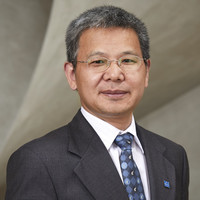
Zhonghai Lu is a Professor of Electronic Systems Design (specializing in Dependable and Autonomous Systems) at KTH Royal Institute of Technology, part of the Department of Electrical Engineering in the School of Electrical Engineering and Computer Science (EECS). He serves as Program Director for KTH's Embedded Systems master's program and Director of Studies at the Division of Electronics and Embedded Systems. His research focuses on Network-on-Chip (NoC), computer architecture, embedded systems, and Prognostics and Health Management (PHM) of power electronics. He leads a research group exploring in-network processing and embedded intelligence, transforming passive networks into active computational frameworks. Lu holds a BSc from Beijing Normal University (1989), MSc and PhD from KTH (2002, 2007), and an MBA in Innovation and Growth from the University of Turku (2012). He has authored over 240 scientific papers, including journal articles and peer-reviewed conferences, with notable recognitions such as Best Paper Awards at NOCS’2015 and EU HiPEAC, and a Featured Paper in IEEE Transactions on Computers (2020). He serves as Associate Editor for ACM Transactions on Architecture and Code Optimization (TACO) and has chaired major conferences like HiPEAC’2017 and NOCS’2018. His research group’s recent work includes integrating AI into hardware acceleration, fault-tolerant neural networks, and RUL estimation for power electronics using recurrent neural networks. Lu has secured grants from the Swedish Research Council and Intel Corporation and developed courses like IL2230 (Hardware Architectures for Deep Learning) and IL2233 (Embedded Intelligence), pioneering embedded AI education at KTH. Education: BSc (Beijing Normal University), MSc/PhD (KTH), MBA (University of Turku) Awards: Best Paper Awards (NOCS, EU HiPEAC), Swedish Research Council Grants, Intel Research Gifts Labs/Teams: Research Group on In-Network Processing and Embedded Intelligence
Thomas Hacker is a Professor in the Department of Computer and Information Technology at Purdue Polytechnic Institute, Purdue University. His research focuses on cloud computing, high-performance computing, operating systems, computer networking, and cyber infrastructure . He holds a Ph.D. and M.S. in Computer Science & Engineering from the University of Michigan, along with dual B.S. degrees in Computer Science and Physics from Oakland University. Education: PhD (Computer Science & Engineering), University of Michigan (2004) MS (Computer Science & Engineering), University of Michigan (1993) BS (Computer Science, Mathematics Minor), Oakland University (1989) BS (Physics), Oakland University (1989) Dr. Hacker's research spans cloud and grid computing, operating systems, and distributed systems , with applications in earthquake engineering data systems and AI-driven infrastructure analysis. His recent work explores extended layer 2 networking for bare-metal provisioning ( 2023 IEEE Cloud Summit ) and machine-supported bridge inspection using artificial intelligence ( Transportation Research Record, 2023 ). Notable scientific contributions include 15+ publications on topics like cyberinfrastructure for earthquake engineering, container-based virtualization, and data-intensive systems. His work has been recognized with awards such as the NSF CAREER Award (2010) and multiple Purdue Seed for Success Awards . Key Scientific Awards: NSF CAREER Award (2010) Purdue Seed for Success Awards (2008-2013) ASEE Information Systems Division Best Paper Award (2012) College of Technology Outstanding Faculty in Discovery Award (2010) He has held leadership roles at Purdue, including Department Head (2018-2021) and Interim Department Head (2011-2016) . His career spans academic positions at Indiana University, University of Michigan, and industry roles at Storage Technology Corporation.
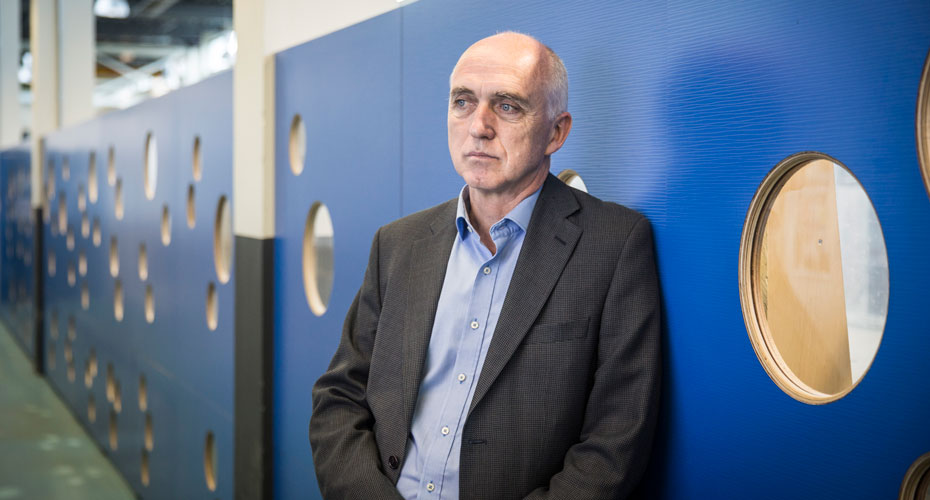
Professor Eugene O'Brien serves as Professor of Civil Engineering within the School of Civil Engineering at University College Dublin's College of Engineering and Architecture. His research focuses on critical structural assessment methodologies for long-span bridges, with particular expertise in traffic load modeling and bridge safety evaluation. His research interests center on structural engineering challenges related to bridge infrastructure, specifically traffic load assessment for long-span bridges , structural health monitoring systems , and sustainable infrastructure management . Professor O'Brien pioneered camera-based monitoring techniques to overcome limitations of traditional Weigh-in-Motion sensors during congested traffic conditions, enabling more accurate safety assessments of aging bridge infrastructure. His work addresses the critical gap in quantifying traffic loading on bridges with spans up to 2 kilometers, where conventional methods fail during stop-and-go traffic scenarios. Analysis of his 15 most recent publications reveals a consistent research trajectory focused on probabilistic modeling of traffic loads, with increasing sophistication in handling extreme events and long-term infrastructure performance. His work spans fundamental statistical methods for load effect prediction, practical applications in real-world bridge assessments, and environmental considerations regarding infrastructure carbon footprints. The research demonstrates strong methodological evolution from basic traffic modeling to comprehensive lifetime assessment frameworks incorporating sustainability metrics. As co-founder and director of Roughan O'Donovan's subsidiary Innovative Solutions (ROD-IS), Professor O'Brien has translated research into practice through significant projects including the Malahide Railway Viaduct assessment (2009), EU-funded bridge lifespan simulation tools (2011), vibration reduction systems for bridge cables, and structural assessments for major international projects including the Ting Kau Bridge in Hong Kong, the Forth Road Bridge in Scotland, and the Chacao Channel Bridge in Chile. His consultancy work demonstrates direct application of academic research to critical infrastructure challenges worldwide. Professor O'Brien's research group operates at the intersection of structural engineering and sustainable infrastructure management, with particular emphasis on extending bridge service life through accurate safety assessment. Their work on the Chacao Channel Bridge demonstrates practical implementation of traffic monitoring systems using toll data to manage truck loads, while their environmental impact analysis shows how accurate safety assessments reduce unnecessary bridge replacements, thereby lowering the carbon footprint of transportation infrastructure through extended service life of carbon-intensive materials like concrete and steel.
Oana Balmau is an Assistant Professor in the School of Computer Science at McGill University, where she leads the Data-Intensive Storage and Computer Systems Laboratory (DISCS Lab). She also holds a status-only appointment at the University of Toronto and serves as a working group chair for MLPerf Storage. Her research focuses on creating storage infrastructure that enables fast and energy-conscious insights from data, with particular emphasis on storage and persistent memory technologies for machine learning, data science, and edge computing workloads. Dr. Balmau's research interests span computer systems, with specific focus on: Design and implementation of efficient key-value stores Storage systems for machine learning workloads Edge computing infrastructure Persistent memory technologies Performance optimization of data-intensive systems Her recent work has led to significant contributions in storage benchmarking through the MLPerf Storage benchmark and in edge computing frameworks. The MLPerf Storage benchmark has become an industry standard for evaluating storage performance in machine learning environments, while her work on hierarchical edge computing addresses security and performance challenges in distributed edge environments. Her publications show consistent high-impact contributions to top systems venues, with recent work focusing on processing-in-memory virtualization, stream processing reconfiguration, and efficient data preprocessing pipelines. Dr. Balmau has received numerous awards for her research, including: SEC 2024 Best Paper Award for "Falcon: Live Reconfiguration for Stateful Stream Processing on the Edge" MLCommons Hero Award 2023 for leadership as MLPerf Storage working group chair ACM SIGOPS Dennis M. Ritchie Doctoral Dissertation Award 2021 Honorable Mention CORE John Makepeace Bennett Award 2021 for the best Computer Science doctoral dissertation in Australia and New Zealand USENIX ATC 2019 Best Paper Award for "SILK: Preventing Latency Spikes in Log-Structured Merge Key-Value Stores" As an educator, Dr. Balmau teaches courses on advanced computer systems, operating systems, and principles of computer systems design at McGill University. She has served on program committees for top systems conferences including SOSP, SIGMOD, FAST, and EuroSys, and has co-organized workshops on resource-efficient machine learning and edge computing. She leads the DISCS Lab, which focuses on two main research directions: Systems for ML (including the MLPerf Storage benchmark) and Edge computing (including frameworks for fast and secure edge computing in hierarchical edge environments).
Claudia R. Binder is Full Professor at EPFL's School of Architecture, Civil and Environmental Engineering, leading the Laboratory for Human-Environment Relations in Urban Systems (HERUS) since 2016. Previously, she held professorships at the University of Munich (2011-2016), University of Graz (2009-2011), and University of Zurich (2006-2009). She served as Dean of EPFL's ENAC School from 2020-2023 and holds advisory roles with Swiss federal institutions including the Mercator Foundation since 2024. Her academic foundation includes a Biochemistry degree and PhD in Environmental Sciences from ETH Zurich, followed by postdoctoral research at the University of Maryland. This interdisciplinary background underpins her research approach spanning natural and social sciences. Professor Binder's work centers on urban sustainability transitions, examining urban metabolism dynamics through systems science frameworks. She investigates energy-food-transport interdependencies in cities using transdisciplinary methods that integrate material flow analysis, spatial modeling, and socio-technical assessments. Her research particularly emphasizes regulatory mechanisms and transformation drivers in human-environment systems, with case studies across Swiss and global urban contexts. Recent publications reveal evolving focus from foundational urban metabolism studies toward actionable transition strategies. Her 2024-2025 work increasingly addresses social tipping dynamics, circular decarbonization, and spatially explicit waste management, demonstrating methodological innovation through geo-referenced material flow analysis and participatory backcasting frameworks. Key thematic clusters include energy innovation diffusion, plastic waste governance, and demand-side flexibility in residential systems. She actively mentors 7 current PhD candidates while supervising 11 graduates since 2018, with research spanning urban metabolism modeling, sustainability assessment, and transition governance. Her leadership extends to Swiss National Science Foundation committees and National Research Program 71 on energy consumption management. At EPFL, she directs the HERUS laboratory which develops the Sustainability Solution Space methodology for urban assessment. The lab operates at the intersection of data science, environmental engineering, and social theory, maintaining strong field connections in Switzerland, Indonesia, and Germany for empirical validation of transition models.
Prof. Martin Boeker is a Professor of Medical Informatics at the Technical University of Munich (TUM), affiliated with the TUM School of Medicine and Health. His work focuses on advancing healthcare through AI-driven solutions, interoperability frameworks, and precision medicine initiatives. Key projects include the German Medical Text Corpus (GeMTeX) and the MIRACUM DIFUTURE Alignment Hub. Expertise: Medical Informatics, AI in Healthcare, Federated Learning, Health Data Integration Key Contributions: FHIR-based systems, clinical decision support, patient-centered outcomes research Leadership: Director of the Institute for AI and Informatics in Medicine at TUM Hospital Right of the Isar Research emphasizes bridging clinical practice and data science through projects like modular health crawlers, automated guideline adherence monitoring, and cross-institutional medical NLP solutions. His work spans oncology informatics, rare disease management, and pandemic response data ecosystems. Recent articles highlight innovations in digital twins for precision oncology, federated analysis in oncology, and German-language medical NLP challenges. He collaborates internationally on EHR standardization and healthcare interoperability, contributing to the Medical Informatics Initiative (MII) and pandemic evidence ecosystems. Grants and collaborations involve the German Federal Ministry of Education and Research, European initiatives, and industry partnerships. Educational efforts focus on training future medical informatics professionals through MII competency programs.
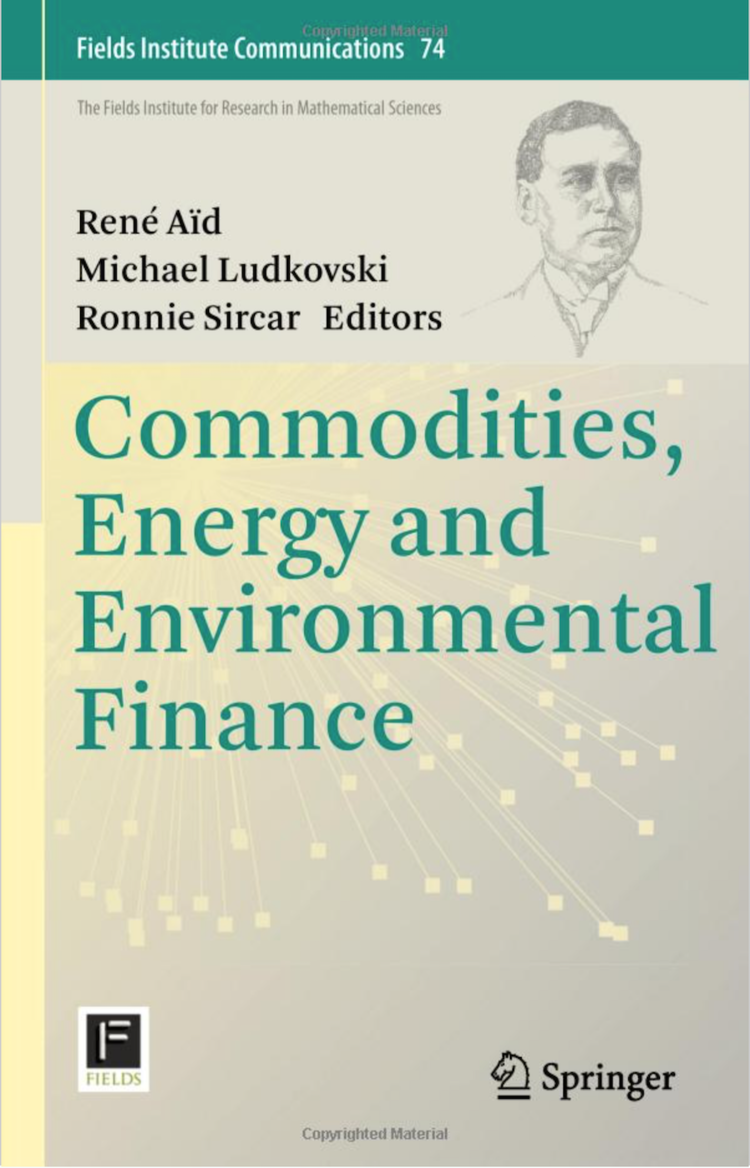
Ronnie Sircar is the Eugene Higgins Professor of Operations Research and Financial Engineering at Princeton University , where he contributes to the Department of Operations Research and Financial Engineering (ORFE). His work spans financial mathematics, stochastic modeling, and applied probability, with a focus on market volatility, optimal investment strategies, and dynamic game theory. Email: sircar@princeton.edu Office: Sherrerd Hall, Room 208, Princeton, NJ 08544 His research interests include: Stochastic Volatility: Asymptotic analysis, calibration, and impact on option pricing and portfolio optimization. Mean Field Games: Applications to cryptocurrency mining, energy markets, and interbank network formation. Portfolio Theory: Forward performance processes, drawdown constraints, and risk-averse strategies. Credit Risk: Multi-name credit derivatives, CDO valuation, and risk measures. Energy Systems: Renewable reliability, unit commitment, and electricity market design. Recent publications emphasize mean field games in energy and blockchain, stochastic volatility in portfolio optimization, and machine learning applications for financial engineering. He has advised graduate students such as Giulia Crippa, Nicolas Garcia, and Burak Aydin, often collaborating with researchers including M. Soner, P. Chan, and A.M. Reppen.
Andrew Rice is a Professor of Computer Science at the University of Cambridge's Department of Computer Science and Technology, and holds the Hassabis Fellowship in Computer Science. He is also the Director of Studies in Computer Science at Queens' College. His research focuses on programming languages, software engineering, and machine learning applications in software development. He leads projects like Isaac Computer Science and ALTA (Automated Language Teaching and Assessment), advancing adaptive learning technologies. His work includes static analysis tools such as Error Prone at Google, energy efficiency studies in computing infrastructure, and contributions to the Computing for the Future of the Planet initiative. His teaching emphasizes practical skill development through flipped classrooms and video lectures, earning him the 2014 Pilkington Prize for teaching excellence. He has held visiting roles at Google and collaborated on energy consumption research for mobile devices and data centers. His research spans systems, networking, and natural language processing, with a strong focus on applying computational methods to real-world challenges. Key Projects: Isaac Physics/Computer Science, ALTA, Error Prone Static Analysis Research Themes: Programming Languages, Machine Learning, Energy Efficiency Awards: Pilkington Prize (2014)
Dr. Rajkumar Buyya is a Redmond Barry Distinguished Professor at the University of Melbourne and Founder & CEO of Manjrasoft , a spin-off commercializing cloud innovations. He has held visiting roles at Imperial College London , University of Birmingham , and Tsinghua University . Research Interests : His work spans Cloud Computing , Edge Computing , Grid Systems , and Energy-Efficient Computing , focusing on utility-driven resource allocation, simulation tools, and scalable IoT application frameworks. He pioneered the CloudSim toolkit and Aneka Cloud technologies. Scientific Awards : IEEE Fellow (2015), Web of Science Highly Cited Researcher (2016-2021) Khwarizmi International Award (2020), Scopus Researcher of the Year (2017) Frost & Sullivan New Product Innovation Award (2010), IEEE TCSC Medal (2009) Impact : Authored over 850 publications, including the widely adopted textbook Mastering Cloud Computing . Graduated 54 PhD students now in leadership roles at institutions like Newcastle University and companies such as IBM , Google , and Amazon . His research has driven global adoption of cloud/edge technologies in 50+ countries.
Prof. Alexander Pretschner is a Professor of Software & Systems Engineering at the Technical University of Munich (TUM) and Founding Director of the Bavarian Research Institute for Digital Transformation (bidt). He also serves as Scientific Director of fortiss, a Bavarian research institute for software-intensive systems. His research focuses on software engineering, testing, information security, and ethical software development. Pretschner holds a PhD from TUM and has held academic positions at Karlsruhe Institute of Technology (KIT) and TU Kaiserslautern. He is a co-editor of several prestigious journals, including IEEE Transactions on Reliability and the Journal of Software Testing, Verification and Reliability. Education: PhD in Computer Science, Technical University of Munich MSc in Computer Science, University of Kansas (on Fulbright Scholarship) Diplom in Computer Science, RWTH Aachen University Research Interests: His work spans testing methodologies, secure software design, and ethical considerations in agile development. Notable contributions include frameworks for metamorphic testing, distributed data usage control, and accountability mechanisms for cyber-physical systems. Awards: IBM Faculty Award (2012, 2013) Google Focused Research Award (2011, 2012) EARTO Innovation Prize (2014) 2nd Platz Supervisory Award (2020) Advising & Grants: Pretschner has supervised numerous PhD and Master’s students, contributing to over 200 publications. He leads projects like EDAP (Ethical Deliberation in Agile Processes) and collaborates with industry partners on cybersecurity and AI ethics initiatives. Labs & Teams: His work is anchored in bidt, fortiss, and TUM’s Chair of Software & Systems Engineering, focusing on societal impacts of digitalization and trustworthy AI systems.
Gunnar Kusch is a Senior Research Associate at the Department of Materials Science & Metallurgy, University of Cambridge. His research focuses on defects in semiconductors, porous AlGaN materials, and advanced characterization techniques like cathodoluminescence (CL) and atom probe tomography (APT). He holds a PhD from the University of Strathclyde and leads projects on UV-B LED optimization, nanoscale defect behavior analysis, and semiconductor device design. His work bridges materials synthesis, characterization, and device performance, with applications in energy-efficient lighting and solar cell technology. Key research areas include: Defect engineering in III-nitride semiconductors Porous AlGaN templates for high-efficiency UV emitters Correlative microscopy techniques (CL, EBSD, APT) Composition-structure-property relationships in photovoltaic materials Notable contributions include developing CL-based methods for nanoscale defect analysis and demonstrating improved Cu(In,Ga)S₂ solar cell efficiencies through compositional engineering. His laboratory focuses on translating microscopic insights into macroscopic device improvements.
Professor Alessandra Russo leads the Structured and Probabilistic Knowledge Engineering (SPIKE) research group at Imperial College London's Department of Computing. With expertise spanning computational logic, symbolic machine learning, and neuro-symbolic AI, she develops foundational AI techniques applied to security, network management, healthcare, and adaptive systems. Professor Russo holds a PhD in Computing from Imperial College London and an MSc in Computer Science from Ionian University. Her research pioneers logic-based learning systems for intelligent adaptive technologies, with projects including declarative networking for security management, privacy-preserving federated learning, and hybrid neuro-symbolic approaches for robust reasoning. Her current work focuses on developing interpretable AI systems through neuro-symbolic integration, creating frameworks that combine neural networks with symbolic reasoning for explainable decision-making. Recent publications explore rule learning from knowledge graphs, transformer-based world models, and formal methods for representation learning. Professor Russo teaches courses on Logic-Based Learning and AI Applications, and has received the Google PhD Fellowship for her research contributions. She mentors numerous PhD students in areas spanning theoretical foundations and practical applications of computational logic and machine learning.
Dr Anandadeep Mandal is an Associate Professor in Finance and the Scotcoin Distinguished Chair of Digital Finance at the University of Birmingham , within the Birmingham Business School and the Department of Finance . He is the founding director of the MSc Financial Technology programme and the Programme Director for the MBA (Distance Learning), demonstrating significant leadership in academic program development. Education: PhD in Probability Distribution Fitting, Cranfield University (2016) MRes in Management Science, Cranfield University (2012) MSc in Finance and Investments, Durham University (2008) Bachelor’s in Electronics Engineering Research Interests: Dr Mandal’s interdisciplinary research lies at the intersection of mathematical modelling, artificial intelligence, finance, and digital innovation . His work focuses on AI-enabled investment strategies , blockchain for financial transparency , ESG performance measurement , and the development of the Sustainable Efficiency Index (SEI) . He also pioneers AI applications in digital education , including a patent-pending platform for automated grading of multi-modal student submissions using ensemble AI methods. Publication Trends: His recent scholarly output spans high-impact journals and conferences, reflecting a strong focus on digital finance , climate and social media analytics , cryptocurrency regulation , and AI in financial forecasting . His work combines advanced data science techniques with real-world policy and financial applications, particularly in sustainability and public health. Scientific Awards: No specific awards are mentioned in the provided text. Advising and Grants: Dr Mandal has secured over £2 million in research funding from sources including UKRI, UoB QR Funding, and industry partners. While specific students are not listed, his role as programme director and research leader suggests active mentorship. His research has direct policy impact through collaborations with the NHS Trusts , NIHR , and the UK Government . Labs, Teams, and Impact: Dr Mandal leads a research agenda that bridges academia and public policy. His work extends beyond the university through public engagement at science festivals, outreach for young learners, and expert contributions to UK Parliamentary consultations on AI, sustainability, and financial innovation. He is a key figure in advancing digital finance education and research at the University of Birmingham.