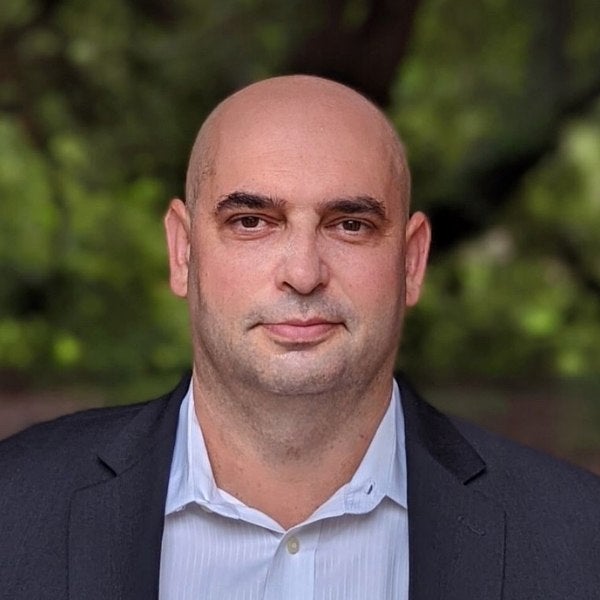
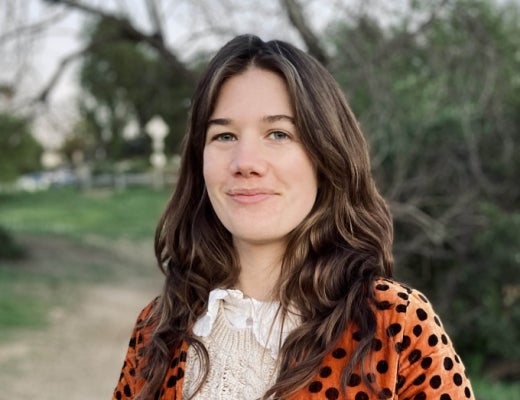
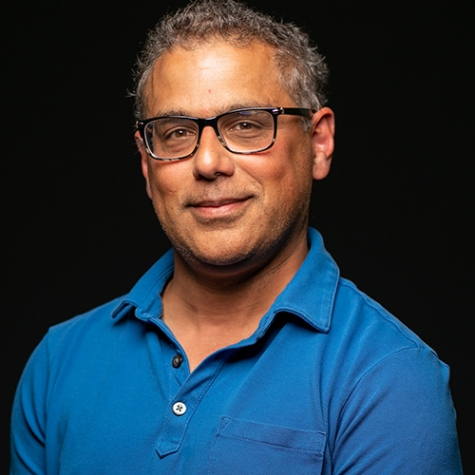
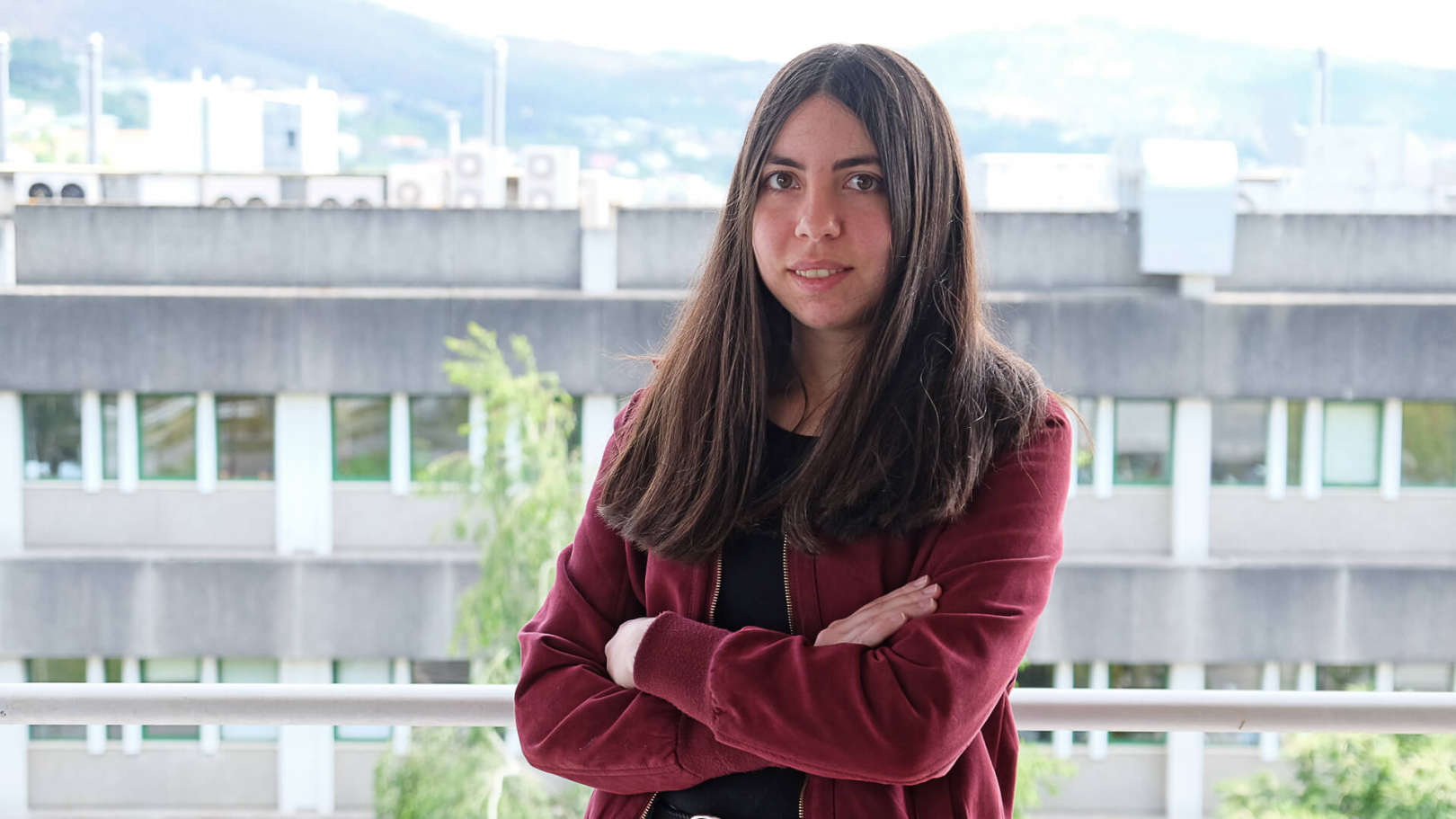
Adele Mennerat is an Associate Professor in Animal Ecology at the Department of Biological Sciences (BIO), University of Bergen (UiB). Her research focuses on evolutionary and ecological processes, particularly host-parasite interactions, behavioral ecology, and the impacts of environmental changes on wildlife populations. She is affiliated with the Evolutionary Ecology research group and the Ecological and Environmental Change Research Group. Her work combines experimental approaches with field studies to address questions such as how parasites influence host behavior and life history traits, the evolutionary consequences of intensive farming on pathogens, and the role of biodiversity in ecosystem resilience. Recent studies include investigations into salmon lice virulence dynamics, the effects of repeated parasite exposure on Atlantic salmon, and the ecological implications of climate change on avian parasite intensity. Mennerat has contributed to interdisciplinary projects like the SPI-Birds data hub, enhancing long-term ecological data integration. Her publications also address societal issues, such as the gender productivity gap in academia during the pandemic, and public health concerns like vaccine resistance dynamics. Her research spans diverse taxa, from marine fish to terrestrial birds (e.g., blue tits), and applies methods ranging from molecular ecology to behavioral conditioning experiments. She collaborates internationally and engages in science communication through platforms like ResearchGate and Twitter.
Ernst Gunnar Gran is an Associate Professor at the Department of Information Security and Communication Technology at the Norwegian University of Science and Technology (NTNU), where he leads the communication technology discipline. He also holds an adjunct research scientist position at Simula Research Laboratory, focusing on High Performance Computing (HPC) and cloud computing. Education: M.Sc. and Ph.D. in Computer Science from the University of Oslo (2007, 2014) Research: Intersections of HPC, interconnection networks, enterprise data centers, cloud computing, and data-intensive multi-cloud processing His recent work addresses real-time anomaly detection in IoT systems, traffic speed prediction for transportation networks, and adaptive routing in HPC environments. Articles span machine learning, network security, and distributed computing, with a focus on lightweight, self-adaptive algorithms. Current projects include leadership of the RCN-funded eX3 infrastructure project and contributions to the EU H2020 Melodic initiative. He has designed the NorNet Core testbed and holds patents in network reconfiguration and cloud architecture.
Anders Kofod-Petersen is Professor at NTNU's Department of Computer Science and CEO of PiedBoeuf implementing industrial AI solutions. His research develops knowledge-intensive case-based reasoning systems for complex problem-solving. With doctorate from NTNU, he focuses on knowledge modeling, mobile informatics, and cognitive systems. He teaches AI/ML courses and has 20+ years experience commercializing AI through startups. Industrial applications: Manufacturing optimization, predictive maintenance, and intelligent mobile services.
John Stockie is a Professor in the Department of Mathematics at Simon Fraser University (SFU), part of the Faculty of Science. He earned his Ph.D. in Applied Mathematics from the University of British Columbia in 1997. His research focuses on fluid dynamics, industrial mathematics, and scientific computing, with an emphasis on developing numerical methods for solving complex physical systems governed by nonlinear PDEs. He combines asymptotic analysis, finite volume methods, and adaptive mesh techniques to address applications in fuel cells, biofluid dynamics, and porous media flow. Stockie’s work bridges theoretical and applied mathematics, addressing real-world challenges such as hydrogen fuel cell efficiency, tree sap exudation mechanisms, and glacier dynamics. His teaching includes courses like MACM 316 Numerical Analysis I. He has contributed to open-access educational resources, including a clicker question bank for numerical analysis. His research trends span environmental modeling (e.g., atmospheric dispersion, glacier simulation), biomedical applications (biofilm dynamics), and industrial problems (emission estimation). He emphasizes interdisciplinary collaboration, often involving computational tools like level set methods and Bayesian inversion approaches. Stockie’s lab focuses on developing robust numerical algorithms and their application to fluid-structure interactions, multiphase flows, and environmental systems. His work has implications for climate science, biomedical engineering, and sustainable energy technologies.
Vladimir Braverman is a Professor of Computer Science at Johns Hopkins University and an Adjunct Professor at Rice University. He holds secondary appointments in the Department of Applied Mathematics and Statistics at Johns Hopkins. His research focuses on sublinear algorithms, machine learning applications in healthcare and genomics, and data science. Braverman leads projects at the Johns Hopkins Mathematical Institute for Data Science (MINDS) and the Institute for Data Intensive Engineering and Science (IDIES). He has held visiting roles at Google Research and previously led a research group at HyperRoll (acquired by Oracle in 2009). Education : PhD in Computer Science, University of California, Los Angeles (UCLA), 2011 MSc in Computer Science, UCLA, 2009 MSc in Computer Science, Ben-Gurion University of the Negev, Israel, 2004 BSc in Computer Science (cum laude), Ben-Gurion University of the Negev, Israel, 1998 Research Interests : Braverman’s work bridges algorithm design and real-world applications. His lab develops efficient algorithms for large-scale data (e.g., sketches, coresets) with applications in radiomics, genomics, and systems. Notable areas include adversarial machine learning, continual learning for medical imaging, and federated learning systems. Awards : NSF CAREER Award (2017) Best Paper Award, FAST 2019 Google Faculty Award (2014) Cisco Faculty Award Grants and Labs : Active grants include NSF and industry partnerships. Braverman collaborates across disciplines, including physics, oncology, and radiology, through MINDS and IDIES. His work emphasizes translational AI for healthcare and scalable systems. Key Projects : Development of coreset-based algorithms for efficient LLM training Medical AI fairness and adversarial robustness in radiology Federated learning frameworks for cross-domain medical data
Professor Ashiq Anjum is a Professor of Distributed Systems at the University of Leicester and Director of Enterprise and Impact for the School of Computing and Mathematical Sciences. Previously, he led the Data Science Research Centre. His research focuses on data-intensive distributed systems, AI-driven digital twins for cyber-physical systems, and physics-informed machine learning models. He leads the £60M METEOR project at Space Park Leicester and collaborates with CERN on LHC data analytics. Research Areas: Digital Twins, Distributed Machine Learning, High-Performance Analytics Funding: EPSRC (EP/Y00597X/1, EP/Y018281/1), EU, Innovate UK Industry Partnerships: Rolls Royce, BT, Airbus, Siemens, Microsoft His work includes developing self-learning digital twins for infrastructure optimization and precision medicine. He secured over £5M in industrial grants and led 15 Knowledge Transfer Partnerships with SMEs.
Frances Corry is an Assistant Professor in the Department of Information Culture & Data Stewardship at the University of Pittsburgh’s School of Computing and Information. Previously, she was a Postdoctoral Fellow at the University of Pennsylvania’s Center on Digital Culture and Society. She holds a PhD and MA in Communication from the University of Southern California. Her research employs critical-historical approaches to examine the prehistories and afterlives of data-intensive systems, focusing on social media platforms, cultural memory, and technological obsolescence. Current projects include analyzing platform closure’s impact on cultural memory and developing frameworks for ethical dataset deprecation. She collaborates with institutions such as Harvard’s Library Innovation Lab and serves on the editorial board of the IEEE Annals of the History of Computing. Teaching focuses on courses like Digital Humanities and Critical Information Studies at both undergraduate and graduate levels. Her work bridges communication studies, information science, and science-technology-society (STS) frameworks, incorporating methods like archival research, network analysis, and critical cultural analysis. Publications span venues including Convergence, FAccT, Feminist Media Studies, and First Monday. She frequently engages in public discourse on technology’s societal impacts through media outlets like the New York Times and Los Angeles Times.
Dr. Qin Xiaosheng is an Associate Professor at the School of Civil and Environmental Engineering, Nanyang Technological University (NTU), Singapore, where he has been serving since 2009 (as Assistant Professor until 2015, then promoted to Associate Professor). He leads the Environmental Process Modeling Centre (EPMC) at NEWRI and has held various leadership roles including Associate Chair (Students) at the School of CEE. His academic journey includes a Ph.D. from the University of Regina, Canada (2008), and both M.Sc. and B.Eng. degrees from Hunan University, China. Dr. Qin's research focuses on three interconnected areas: Hydrological Modeling and Extreme Weather Analysis , where he employs advanced modeling techniques to understand hydrological systems and analyze extreme weather phenomena; Climate Change Impact Assessment and Adaptive Planning , developing methods for climate data assimilation, regional climate downscaling, and risk assessment; and Water Resources and Environmental Systems Planning , devising innovative methodologies for cost-effective management strategies amidst complexities and uncertainties. His work often integrates statistical and computational approaches to address regional environmental and water resources issues, with particular emphasis on Singapore and Southeast Asia. His research output demonstrates a clear trend toward increasingly sophisticated modeling of climate change impacts on water resources, with a focus on extreme events, urban hydrology, and sustainable water management. Recent publications show expansion into multi-criteria decision frameworks for water infrastructure planning and advanced statistical techniques for analyzing climate extremes. His work bridges theoretical advances in hydrological and climate modeling with practical applications for urban water security in Southeast Asia. Nanyang Education Award (School), NTU, August 2024 15 Years Long Service Award, NTU, July 2024 Tan Chin Tuan Exchange Fellowship, NTU, June 2016 Nanyang Education Award (School), NTU, March 2016 Young Scientist Paper Award, 6th International Conference on Environmental Science and Technology, 2012 Best Practice-Oriented Paper Award (ASCE), World Water & Environmental Resources Congress, 2004 Chinese Government Award for Outstanding Self-Financed Students Abroad, 2007 Dr. Qin has successfully supervised numerous graduate students, including over 15 PhD candidates and multiple Master's students, many of whom have gone on to pursue research careers in water resources and environmental engineering. His research has been supported by significant grants from Singapore governmental agencies including MND, BCA, MOE, JTC, NParks, EOS, and EWI, reflecting the practical relevance of his work to national water security challenges. As Principal Investigator for projects at the Earth Observatory of Singapore, he has contributed to understanding regional climate impacts on water resources. Dr. Qin leads an active research group comprising multiple post-doctoral fellows and research associates at NTU's Environmental Process Modeling Centre. His team collaborates extensively with international partners, particularly with Chinese institutions through visiting PhD students sponsored by the China Scholarship Council. Current research focuses on climate change impacts on urban hydrology, advanced rainfall modeling, and sustainable water resources management systems for Southeast Asia.
Hao Wang is an Assistant Researcher in the Department of Computer Science and Technology at Nanjing University, China. He is affiliated with the Reasoning & Learning Group and conducts research at the intersection of data management and machine learning. Bachelor of Mathematics, Nanjing University (2005) Master of Computer Science, Nanjing University (2008) Ph.D. in Computer Science, The University of Hong Kong (2014) His research interests span Data Management and Machine Learning , with recent focus on rank-aware query processing, recommender systems (especially location-based), reinforcement learning, and transfer learning. His work often integrates user behavior modeling, efficient indexing, and scalable algorithms for large-scale data. Hao Wang's publication record shows a consistent trend in solving practical problems in data-intensive AI systems. His recent articles focus on personalized location recommendation , crowdsourced data labeling , distributed learning for imbalanced data , and reinforcement learning transfer . These works appear in top venues such as VLDB, SIGMOD, ICDM, AAAI, and journals like TKDE and GeoInformatica, indicating strong technical depth and interdisciplinary impact. Hao Wang has not been explicitly mentioned as receiving scientific awards in the provided text. He has collaborated extensively with researchers such as Yang Gao, Nikos Mamoulis, and David Cheung. While no formal advisees are listed, his involvement in supervising PhD work (as co-supervisor) and publishing with students suggests an active mentoring role. His research has been supported through academic collaborations and institutional affiliations, though specific grant details are not provided. Hao Wang is a member of the Reasoning & Learning Group at Nanjing University, where he contributes to advancing intelligent systems that combine logical reasoning with statistical learning. The group focuses on foundational and applied aspects of AI, particularly in data mining, knowledge discovery, and autonomous decision-making.
Franck Cappello is a distinguished computer scientist currently serving as a Project Manager and Senior Computer Scientist at Argonne National Laboratory and as an Adjunct Research Professor at the University of Illinois at Urbana-Champaign. With over 30 years of research experience, he has made significant contributions to high-performance computing, particularly in the areas of resilience and fault tolerance at extreme scale, lossy compression of scientific data, and AI for science. Dr. Cappello received his Ph.D. from the University of Paris XI in 1994 with highest honors ("très honorable avec les félicitations du jury"). His academic journey includes positions as a Junior Researcher at CNRS (1994-2003), Senior Researcher at INRIA (2003-2013), and Visiting Research Professor at the University of Illinois (2009-2013). His research interests focus on high-performance parallel and distributed computing, resilience and fault tolerance at extreme scale, lossy compression of scientific data, and AI for science. Cappello has pioneered several high-impact software tools including XtremWeb (one of the first Desktop Grid software systems), MPICH-V fault tolerance MPI library, VeloC multilevel checkpointing environment, and SZ lossy compressor for scientific data. His work on the Grid'5000 project has enabled hundreds of researchers to conduct experiments in parallel and distributed computing, resulting in over 2000 research publications and supporting 300+ Ph.D. theses. Dr. Cappello's recent publication record shows a strong integration of AI techniques with traditional HPC approaches, particularly in lossy compression, workflow management, and energy efficiency. His research demonstrates a consistent focus on practical solutions for real-world scientific computing challenges with emphasis on maintaining data fidelity while achieving significant data reduction. The publications reveal growing interest in GPU acceleration, wafer-scale engines, federated learning, and energy trade-offs in compressed I/O systems. IEEE Fellow (2017) 2024 IEEE CS Charles Babbage Award 2024 Europar Achievement Award 2022 ACM HPDC Achievement Award 2021 IEEE Transactions of Computer Award for Editorial Service and Excellence 2018 IEEE TCPP Outstanding Service Award Two R&D 100 awards (2019 and 2021) for innovative software 12 Best papers Finalists/Awards Dr. Cappello has advised 22 Ph.D. students and served on 58 Ph.D. defense juries. He has secured over 60 research grants as main PI or Co-PI, including numerous DOE ECP projects, NSF grants, and European projects. His leadership extends to directing the Joint Laboratory on Extreme-Scale Computing (JLESC), which brings together seven prominent research centers in supercomputing. Currently, he leads the AuroraGPT Evaluation Group, focusing on evaluation methods for Large Language Models as research assistants, and continues to lead resilience and compression research at Argonne's Mathematics and Computer Science Division. Dr. Cappello directs several significant research initiatives including the Joint Laboratory on Extreme-Scale Computing and leads resilience and compression research at Argonne's Mathematics and Computer Science Division. His teams have developed groundbreaking software frameworks like SZ and VeloC that are deployed on exascale systems. Through his leadership of the Grid'5000 project and JLESC, he has fostered international collaboration among researchers working on the frontiers of supercomputing. His current work on error-bounded lossy compression, resilient workflow management, and energy-efficient computing represents the cutting edge of scientific computing research with practical applications across numerous scientific domains.
George K. Thiruvathukal is a Professor in the Department of Computer Science at Loyola University Chicago, with a concurrent research affiliation at Argonne National Laboratory as a Guest Faculty Research Participant. His work bridges computer science and interdisciplinary domains, focusing on scalable computing systems and software innovation. Research Interests: High-Performance Computing, Distributed Systems, and Clouds Software Engineering and Teamwork in Research Software Machine Learning and Computer Vision Cyber-Physical Systems History of Computing and Digital Humanities Computing Education and Broadening Participation Ethical, Legal, and Social Implications of Computing Interdisciplinary and Transdisciplinary Approaches His research integrates technical innovation with societal and educational impact, particularly in advancing equitable and sustainable computing practices. While no specific publications are listed here, his work spans systems, software, and societal aspects of computing. He is also engaged in computing education and the historical context of technological development. Scientific Awards: No awards listed in the provided text. Dr. Thiruvathukal advises students in computer science and related fields, though specific advisees are not named. He has not been described as leading any formal grants in the text, but his affiliation with Argonne National Laboratory suggests active involvement in large-scale research initiatives. He contributes to interdisciplinary teams focused on high-performance and cloud computing systems. He is associated with research teams at Argonne National Laboratory, particularly in high-performance and distributed computing environments, supporting scientific computing and data-intensive applications.
Tânia Esteves is a Researcher at INESC TEC since April 2018, with a PhD in Informatics (2024) from the University of Minho. Her work focuses on designing observability tools for diagnosing I/O behavior in data-centric applications and distributed systems. Doctoral Program in Informatics (PDINF), University of Minho PhD Thesis: Flexible Tracing and Analysis of Applications' I/O Behavior Her research spans three key areas: I/O Diagnosis: Creating tools like DIO and CRIBA to analyze storage interactions and ransomware patterns. Fault Injection: Developing LAZYFS to reproduce data durability bugs in critical systems. Sustainability: Contributing to FranchetAI project combining AI and privacy-preserving carbon footprint analysis. Recent publications demonstrate her focus on solving performance, security, and correctness issues in data-intensive systems through innovative tooling approaches. Her work has been applied to systems like PostgreSQL, Redis, and Linux ransomware families. Contact: tania.c.araujo@inesctec.pt | Personal Web Page
Professor Wei Jie is a faculty member in the School of Computing and Engineering at the University of West London. His research focuses on distributed computing, data analytics, and computing security, with significant contributions to cloud and grid computing, big data, and e-Science. He has secured substantial research funding from organizations such as the Royal Society, Innovate UK, JISC, and AWS. PhD in Computer Science (exact institution and year not specified) Extensive research experience in grid and cloud computing infrastructure Professor Jie's research interests center on distributed systems, cybersecurity, and data-intensive computing. He has published extensively in top-tier journals and conferences, with a strong emphasis on practical applications in cloud environments, remote sensing, and intelligent monitoring systems. His work integrates parallel computing, swarm intelligence, and real-time analytics to solve complex computing challenges. The recent publications of Professor Jie reflect a consistent focus on distributed computing, data analytics, and security. His work spans cloud infrastructure optimization, trajectory data compression, remote sensing data management, and secure computing environments. Key themes include scalability, real-time processing, and intelligent system design, with applications in environmental monitoring, healthcare, and network security. Successfully attracted research funding from the Royal Society, Innovate UK, JISC, and AWS Professor Jie has supervised numerous research projects and contributed to major collaborative efforts in grid and cloud computing. He has led the development of secure information services, resource management frameworks, and large-scale data processing platforms. His research has been supported by significant grants and has resulted in impactful publications and systems. Professor Jie has been instrumental in developing academic programs at UWL, including the BSc Cyber Security and leading the MSc Cyber Security course. He teaches across various computing disciplines, including data science, distributed systems, and cybersecurity, contributing to undergraduate and postgraduate education.
Professor Eram Rizvi is a faculty member at Queen Mary University of London in the School of Physical and Chemical Sciences, holding a position in the Centre for Fundamental Physics and Centre for Experimental and Applied Physics. He specializes in high-energy physics, focusing on particle physics experiments at the Large Hadron Collider (LHC) through the ATLAS Collaboration. His research includes precision measurements of quark and gluon dynamics within protons, electroweak interactions, and quantum gravity phenomena such as micro black holes and extra dimensions. Teaching responsibilities include leading undergraduate and graduate courses in nuclear physics, experimental techniques, and data-intensive science training through the DISCNet CDT. He has pioneered flipped classroom methods and been recognized with an Innovative Teaching Prize (2012). His leadership roles include Director of Training for the DISCNet Centre for Doctoral Training. Research highlights include developing the BlackMax simulation tool for quantum gravity signatures at the LHC, studies of proton structure via parton distribution functions, and searches for new physics beyond the Standard Model. His work spans experimental collaborations at ATLAS, HERA, and theoretical frameworks exploring Higgs boson decays, dark matter interactions, and top-quark physics. Key contributions include over 150 peer-reviewed publications, with recent focus areas including vector boson scattering, dark matter mediator searches, and heavy ion collisions. His work integrates advanced computing techniques and machine learning for data analysis.
Angelos Bilas is a Professor in the Department of Computer Science at the University of Crete and a collaborating researcher at FORTH-ICS. He holds a B.Eng. from the University of Patras (1993), and M.A. and Ph.D. from Princeton University (1995, 1998). His research focuses on computer systems, storage systems, and computer architecture, with recent emphasis on optimizing memory management and storage efficiency. Bilas has held roles such as Chair of the Department of Computer Science (2016–2020) and coordinated the FP7 EU project IOLanes (2010–2013). He serves on editorial boards, including ACM Transactions on Storage since 2016. His work has been recognized with awards like the Marie Curie Excellent Teams Award (2005–2009) and patents in storage and networking. Current affiliations: University of Crete (Professor), FORTH-ICS (Researcher) Educations: Ph.D. (Princeton, 1998), M.A. (Princeton, 1995), B.Eng. (Patras, 1993) His research interests span storage systems, parallel architectures, and runtime systems. Recent work includes TeraHeap (ASPLOS'23) for big data frameworks and Tebis (EuroSys'22) for LSM key-value stores. His publications emphasize optimization in memory-mapped I/O, storage efficiency, and heterogeneous acceleration. Awards include the Marie Curie Excellent Teams Award and four patents. He has supervised 35+ master's and 8+ Ph.D. students, contributing to over 45 EU/nationally funded projects. Current initiatives include the EVOLVE H2020 project (2019–2021) for HPC and big data integration. Labs/Teams: Active in FORTH-ICS and collaborations with industry on storage and cloud-HPC convergence.