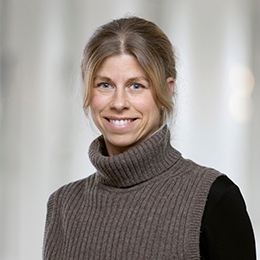
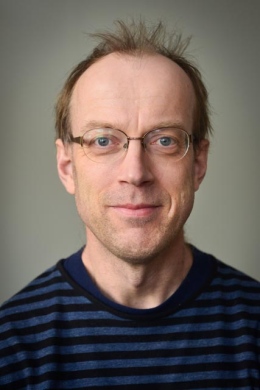
Mohit Kumar Gupta is a Senior Lecturer at University West , affiliated with the Department of Engineering Science . He holds a PhD in Production Technology (2015) and serves part-time as an International Coordinator for India at the university. Research focus: Thermal Spraying of Ceramic Coatings , Suspension Plasma Spraying (SPS) for Thermal Barrier Coatings (TBCs) and Solid Oxide Fuel Cells (SOFCs) . Teaching: Advanced Production Technology (XX5797) , Finite Element Analysis (FMB300) , Heat Transfer (VFD900) , and other mechanical engineering courses. Labs: Active in the Division of Subtractive and Additive Manufacturing and Division of Mechanical Engineering , collaborating with industrial partners like GKN Aerospace and Oerlikon Metco . His work bridges thermal spray technology with computational modeling , emphasizing coating microstructure optimization and lifetime assessment for high-temperature applications.
Jakob Evertsson is an Associate Professor at both Uppsala University (2021) and Åbo Akademi University (2015) in Church History. Affiliated with the Department of History under the Faculty of Arts at Uppsala, he focuses on historical intersections of education, religion, and material culture. His research spans history of education , material culture , and church-state dynamics , particularly examining elementary school reforms in Sweden (1861–1930), school inspection systems, and the professionalization of educators. His Swedish Research Council-funded project (2020–2022) analyzes how inspection mechanisms shaped early Swedish public schooling. Recent publications dissect gender dynamics in 19th-century Swedish education ( "Making teaching cheap" ), transitions from religious to secular curricula ( "Från katekes till naturlära" ), and the role of visual aids like wallcharts ( "Materiality, Wallcharts..." ). His work bridges educational policy and religious history , with a focus on Sweden’s institutional evolution.
Erik Lidman is a Professor at Stockholm University's Department of Law (appointed June 5, 2025), specializing in corporate governance and capital markets regulation. He also maintains an academic position at the University of Gothenburg and serves as co-director of the Swedish Corporate Governance Institute (SCGI). His research focuses on corporate governance in listed companies, capital market regulation, and corporate bond markets, employing Law & Economics methodology. Current research projects examine market abuse and disclosure, the EU Capital Market Union, takeovers, dual class share structures, and corporate bond regulation. Lidman teaches company law and stock market regulation to law students and economists at bachelor, master, and PhD levels, including PhD supervision. His recent publications span corporate bond regulation, sustainable governance, dual class shares, and EU regulatory frameworks, reflecting his expertise at the intersection of debt and equity capital markets. He has received significant recognition through leadership positions including editor of the Nordic Journal of Corporate Law, manager for the Corporate Governance Forum, vice chair for the Global Corporate Governance Colloquia, and board member of the Nordic Corporate Governance Network. Professionally, Lidman serves as executive of the Swedish Takeover Panel, Sweden's representative in ESMA's Takeover Bids Network, member of the OECD Corporate Governance Committee, and Secretary to both the Nasdaq Stockholm Disciplinary Committee and Swedish Corporate Governance Board. He has consulted for the OECD, World Bank, and various law firms.
Sebastian Dalleiger is an Assistant Professor at the Division of Theoretical Computer Science, Kungliga Tekniska Högskolan (KTH Royal Institute of Technology). His research focuses on theoretical foundations of machine learning, data mining, and graph theory, with particular expertise in matrix factorization, pattern discovery, and hypergraph analysis. Current affiliation: KTH Royal Institute of Technology Department: Theoretical Computer Science Email: sdall@kth.se His recent work explores federated learning architectures, non-negative matrix factorization, and structural analysis of stochastic block models across multiple graphs. He develops algorithms combining proximal optimization with privacy-preserving techniques, addressing challenges in distributed data analysis. Publications demonstrate interdisciplinary applications in network science, information theory, and computational geometry. Key contributions include novel frameworks for Ollivier-Ricci curvature in hypergraphs and sequential false discovery control for pattern mining.
Markus Hidell is an Associate Professor at the Royal Institute of Technology (KTH) , specializing in computer networks, IoT systems, and network security. His teaching includes courses like Advanced Internet Technology and Security and Data Privacy on the Internet , where he serves as examiner or teacher. Research Focus : IoT architectures, energy-efficient networking, and security in distributed systems. Recent Publications : Investigate IoT scalability, buffer management algorithms, SDN security, and LTE vulnerabilities. Key Technical Areas : Network virtualization, delay-tolerant systems, and smart city infrastructure.
Yifei Jin is a WASP Industrial PhD student at KTH Royal Institute of Technology's School of Electrical Engineering and Computer Science, specifically within the Division of Theoretical Computer Science. They are supervised by Professor Aristides Gionis and Associate Professor Sarunas Girdzijauskas at KTH, and also serve as an Experienced Researcher at Ericsson Research and a Visiting Researcher at Yale University under Rex Ying and Leandros Tassiulas. Yifei's research focuses on graph mining , network analysis , and graph representation learning , particularly applied to crowdsourcing data and wireless communication systems. Their work intersects telecommunications network optimization machine learning for graph-structured data AI-driven wireless resource management edge computing and distributed AI as evidenced by their publications spanning 2017–2025. Their academic contributions include 15 recent papers exploring topics such as neural surrogates for voltage drop estimation, wireless ray-tracing models, scalable distributed AI deployment, and vehicle platooning coordination. These publications demonstrate expertise in network traffic reduction KPI conflict analysis graph convolutional networks hyperbolic embeddings for ontologies real-time network diagnostics .
Voravit Tanyingyong is a Lecturer at Kungliga Tekniska Högskolan (KTH Royal Institute of Technology) working in the Division of Communication Systems within the School of Electrical Engineering and Computer Science. He has been working at KTH since 2003, demonstrating a long-standing commitment to the institution. His contact information includes telephone number +46 8 790 42 08 and email voravit@kth.se, with his office located at Malvinas Väg 10. Dr. Tanyingyong received his PhD in Information and Communication Technology from KTH in 2021, with his doctoral thesis titled "Performance, Availability, and Scalability in Open Networking Platforms for Internet Services." Prior to that, he completed his Licentiate thesis at KTH in 2014 titled "Performance and Reliability in Open Router Platforms for Software-Defined Networking," establishing a strong foundation in networking research. Dr. Tanyingyong's research interests span computer systems, network applications, protocols, architectures, and the Internet of Things (IoT). His work demonstrates a consistent focus on practical implementations of networking technologies with applications in various domains including environmental monitoring, healthcare, and smart grids. His research bridges theoretical networking concepts with real-world implementations, particularly in the area of IoT systems where he has developed testbeds for air quality monitoring and smart grid applications. A significant portion of his work addresses performance, reliability, and scalability challenges in modern networking environments. Analysis of Dr. Tanyingyong's publication history reveals a clear evolution in his research focus. Early work centered on router/server performance and OpenFlow switching, reflecting the emergence of Software-Defined Networking. More recently, his research has shifted toward IoT applications, with publications on scalable IoT sensing systems, air quality monitoring, and IoT for smart DC grids. His work consistently addresses practical implementation challenges while maintaining theoretical rigor, with a particular emphasis on system performance, reliability, and scalability. The interdisciplinary nature of his research connects computer networking with environmental science, healthcare, and energy systems. Advanced Internetworking (IK2215) - Teacher Internet of Things (IK1332) - Teacher Networks and Communication (IK1203) - Teacher Ethics and Sustainable Development for Engineers (II2210) - Course Responsible Projects and Project Methods (II1302) - Course Responsible Multiple degree projects as examiner across Computer Engineering, Computer Science and Electrical Engineering specializations Dr. Tanyingyong has established himself as a dedicated educator who bridges theoretical networking concepts with practical implementations. His teaching portfolio reflects his research expertise while covering essential networking fundamentals and emerging IoT technologies. As course responsible for Ethics and Sustainable Development for Engineers, he demonstrates commitment to broader engineering principles beyond technical skills.
Omkar Salunkhe is a Postdoc researcher at Chalmers University of Technology, working within the Department of Industrial and Materials Science, specifically in the Production Systems division. His research focuses on advanced manufacturing systems, human-robot collaboration, and Industry 4.0 technologies, with particular emphasis on practical applications in wire harness assembly and final assembly processes. Salunkhe's research interests span multiple areas of modern manufacturing and automation. He specializes in collaborative robotics applications, particularly in wire harness assembly processes. His work explores task allocation between humans and robots, cost-benefit analysis of collaborative workstations, and the integration of computer vision systems in manufacturing environments. He also investigates operational flexibility in final assembly using Industry 4.0 enabling technologies, with applications in automotive and other manufacturing sectors. His research bridges theoretical concepts with practical industrial implementation, focusing on human-centered approaches to automation that maintain economic viability. Analysis of Salunkhe's publication record reveals a strong trajectory from foundational work on operational flexibility (2018-2020) to increasingly specialized research on collaborative robotics in wire harness assembly (2022-2024). His work demonstrates a clear evolution from general Industry 4.0 applications to targeted solutions for specific manufacturing challenges, with a consistent focus on the human element in automated systems. The 2025 MAXLabs project represents a significant expansion of his research into integrated cyber-physical testbeds for broader manufacturing research. Salunkhe has been actively involved in multiple research projects funded by VINNOVA, the European Commission, and other organizations. These include MAXLabs, EWASS (Empowering Human Workers for Assembly of Wire Harnesses), PLENUM, and Digital work Instructions for cognitive work. His collaborative network includes prominent researchers such as Johan Stahre, Anna Syberfeldt, and David Romero, reflecting strong interdisciplinary and industry-connected research activities.
Jörgen Blennow is an Associate Professor in High Voltage Engineering at Chalmers University of Technology, Sweden, where he also serves as Vice-Rector for Education. His research focuses on electrical insulation systems , partial discharge measurement , and dielectric response analysis under high-voltage conditions. Key Research Areas: High Voltage Engineering Electrical Insulation Systems Partial Discharge Detection Dielectric Response in Oil-Impregnated Paper Electrical Treeing in Polyethylene Current Damage in Wind Turbine Bearings Notable Projects: Integrerat lärande - Expert Learning Lab (2023–2025, VINNOVA) Karakterisering av åldring i isolationssystem (2014–2016, Trafikverket) Lagerströmaktivitet (2011–2016, Swedish Wind Power Centre) His work has been published in journals such as IEEE Transactions on Dielectrics and Electrical Insulation and Conference on Electrical Insulation and Dielectric Phenomena . Current research includes applications in renewable energy systems and power electronics . As Vice-Rector, he plays a pivotal role in shaping educational strategies at Chalmers. His method of monitoring losses and diagnostic techniques for transformers and wind turbine systems have advanced condition monitoring and smart grid technologies .
Roles and Affiliation: Emelie Shanks is a Senior Lecturer and Associate Professor at Stockholm University , affiliated with the Department of Social Work . She serves as Vice Head of Department and co-leads the research group on Marketisation and Competitive Tendering for Social Work . Research Interests: Her work focuses on the implications of marketisation and privatisation for social work, including: Marketisation of municipal social services Workforce management and agency workers in public social services Residential care for children and youth Workplace violence in home-based and non-institutional social work Organisational conditions for social work managers Publication Trends: Recent articles examine client-initiated violence in home care, privatisation of child residential care, and the role of market logic in therapeutic content decisions. Her work spans both empirical studies and theoretical analyses of professional identity under managerialism. Leadership and Collaborations: Dr. Shanks collaborates with researchers like Tommy Lundström and David Pålsson. She contributes to interdisciplinary projects such as Social services as an arena for crime prevention , which involves the Department of Criminology and the Social Affairs Administration of Stockholm.
Rodrigo Caballero Augi is Professor of Dynamic Meteorology at Stockholm University's Department of Meteorology (MISU), where he leads research on atmospheric dynamics and climate systems. His work spans from planetary-scale waves to cloud droplet motion, examining how these processes shape past, present, and future climates. He maintains strong affiliations with the Bolin Center for Climate Research and the Swedish e-Science Research Centre. Caballero received his Laurea in Physics (1994) and PhD in Physics (1998) from La Sapienza University in Rome, Italy, under the guidance of Alfonso Sutera. His academic journey continued with postdoctoral positions at the University of Copenhagen and University of Chicago, followed by faculty roles at University College Dublin before joining Stockholm University in 2011. His research focuses on understanding atmospheric dynamics in the context of climate change, with particular emphasis on Arctic climate where warming occurs at more than twice the global average rate. His group investigates circulation systems that co-evolve with ice sheets, mountain ranges, and carbon redistributions between climate system compartments. Using a combination of simple models, general circulation models, observational data analysis, and statistical modeling, his team explores how atmospheric dynamics influences energy and material exchanges across the climate system. Recent publications reveal a strong focus on Arctic climate processes, particularly moist intrusions, cloud feedbacks, and polar amplification mechanisms. His work spans multiple disciplines including atmospheric physics, climate dynamics, and polar meteorology, with significant contributions to understanding storm tracks, cloud albedo asymmetries, and energy transport mechanisms in changing climates. Caballero has mentored numerous PhD students and postdocs who have gone on to successful careers at institutions worldwide, including University of Arizona, Uppsala University, Chalmers University of Technology, and UQAM in Montreal. His research group continues to investigate critical climate questions through projects like Arctic Climate Across Scales, North Atlantic Deep-Water formation, and storm track-cloud feedback relationships.
Johan Ehrlén is a Professor at Stockholm University working in the Department of Ecology, Environment and Botany. His research focuses on understanding the environmental factors that drive natural selection and plant population dynamics, with particular emphasis on phenology, climate adaptation, and species interactions. Professor Ehrlén leads the "Group Ehrlen" research group, investigating complex relationships between plants, environment, and other organisms. His primary research interests include: Plant ecology and population dynamics Phenological responses to climate change Natural selection processes in plant populations Local adaptation along environmental gradients Plant-microbe-insect interactions Invasive species ecology, particularly Lupinus polyphyllus Microclimate effects on plant adaptation His research employs field experiments, long-term monitoring, and modeling approaches, with significant work conducted along natural geothermal gradients as climate change analogues. He has extensively studied flowering phenology, examining both genetic and plastic components of flowering time variation and their fitness consequences. His work often integrates experimental and observational data to understand immediate responses and evolutionary adaptation potential. Analysis of Professor Ehrlén's recent publications reveals a strong focus on climate change impacts across multiple scales - from individual plant responses to community dynamics. Key themes include biotic-abiotic interactions shaping plant fitness, microclimate buffering against climate change, and evolutionary consequences of changing environments. His research on geothermal gradients has provided valuable insights into trade-offs in plant adaptation, such as increased heat tolerance coming at the cost of reduced performance under cooler conditions. Professor Ehrlén leads several significant projects including long-term studies of bastard moths in southern Östergötland (ongoing since 2012), development of cost-effective methods to control invasive Lupinus polyphyllus, and investigations into natural selection on flowering time. His work combines field work in boreal forests and geothermal areas in Iceland with advanced monitoring techniques including temperature data loggers to understand plant responses to environmental change.
Joakim Bood is a Professor at Lund University specializing in Combustion Physics and Laser Diagnostics. He contributes to the LTH Profile Area: The Energy Transition and Photon Science and Technology , as well as the LU Profile Area: Light and Materials . His research focuses on sustainable combustion technologies, CO2 neutral energy conversion, and advanced optical diagnostics in reactive flows. Current projects include LAC (Non-Linear Laser Imaging) and COCALD (CO2 Neutral Combustion Modeling) Manages Femtosecond and Picosecond Laser Systems in Combustion Physics infrastructure His work spans flame diagnostics, quantum control in spectroscopy, and ultrafast imaging techniques. Publications highlight collaborative efforts with researchers like Marcus Aldén and Anders Ehn across combustion and photon science domains. While active in supervision and infrastructure leadership, no specific awards are documented in the provided materials.
Peter Hambäck is a Professor at Stockholm University 's Department of Ecology, Environment and Botany. His research focuses on insect ecology and evolution with special emphasis on trophic interactions . Key research areas Coevolution in host-parasitoid systems Ecological immunology Gut microbiome transferability Wetland biodiversity management Spider ecological roles Recent publications analyze immune gene expression in beetles , plant-insect-herbivore dynamics , and marine subsidy effects on terrestrial food webs . Collaborators include researchers from Stockholm University, Swedish Environmental Protection Agency, and Hushållningssällskapet. Current PhD students under his supervision include Xuyue Yang , David Åhlén , and Yueqing An . Previous advisees have completed studies on topics ranging from tritrophic coevolution to agroecological pest control . Research projects examine evolutionary arms races between hosts and parasitoids, optimal wetland restoration using hydrogeodesy , and ecosystem service synergies in constructed vs natural wetlands. Funded by Swedish Research Council (Vetenskapsrådet) and Formas .
David Pallarès is a Professor at the Department of Energy Technology, Chalmers University of Technology. His research focuses on the application of fluidized bed technology in energy conversion processes contributing to sustainability and climate change mitigation. He synergizes the development and validation of fluidized bed models with experimental research mainly focused on the dedicated advanced measurement of fluid-dynamics. Since 2018, he has served as vice-Head of Department for doctoral studies, and since 2021, he represents Sweden in the International Energy Agency's work group for Fluidized Bed Conversion. Professor Pallarès' research interests span multiple areas of energy technology with a strong emphasis on fluidized bed systems. His work encompasses the fundamental understanding of fluid-dynamics in fluidized beds, development of advanced measurement techniques for solids flow, and application of these technologies to sustainable energy conversion processes. He has made significant contributions to the understanding of particle transport phenomena, solids mixing, and heat transfer in bubbling and circulating fluidized beds. His research also extends to carbon capture technologies, particularly sorbent-based direct air capture and calcium looping, as well as thermochemical energy storage systems that can integrate with district heating networks. With 132 publications and involvement in 16 research projects, Professor Pallarès has established himself as a leading expert in fluidized bed technology. His recent work shows a strong trend toward addressing climate change challenges through innovative energy technologies, with increasing focus on carbon capture, utilization and storage (CCUS) solutions and renewable energy integration. The interdisciplinary nature of his research bridges chemical engineering, energy technology, and environmental science to develop practical solutions for sustainable energy systems. As vice-Head of Department for doctoral studies since 2018, Professor Pallarès plays a key role in guiding and mentoring PhD students at Chalmers. His leadership extends internationally through his representation of Sweden in the International Energy Agency's work group for Fluidized Bed Conversion since 2021. His research portfolio includes diverse funding sources, with projects supported by the European Commission, Swedish Research Council, Swedish Energy Agency, and industry partners like Valmet.