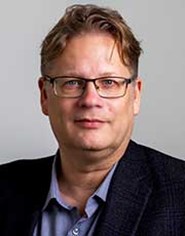
Roger Herbert is a Senior Lecturer in Hydrology and Associate Professor in Biogeochemistry at the Department of Earth Sciences, Uppsala University, where he also serves as Director of the Civil Engineering program in Environmental and Water Engineering. His research is centered on biogeochemical processes in water-saturated systems, particularly focusing on denitrification in bioreactors, groundwater remediation, and contaminant transport in double porosity media. His research interests include: Denitrification in woodchip and biochar bioreactors Groundwater and mine drainage treatment Reactive transport modeling in porous media Arsenic speciation and uptake in plants Silica nanoparticle interactions in soil-plant-water systems Microbial controls on nitrogen cycling and greenhouse gas emissions His recent publications (2023–2025) demonstrate a strong focus on innovative bioremediation technologies for wastewater and mine drainage, particularly using biochar and woodchip systems. These works emphasize modeling, microbial ecology, and field-scale applications, showing a consistent trend toward sustainable and scalable solutions for water quality challenges in cold climates and industrial settings. Roger Herbert leads the EIT RawMaterials project NITREM, which aims to upscale bioreactor technology for the mining and quarrying industry. He has supervised or collaborated on numerous studies related to mine waste treatment and environmental impact mitigation. He is actively involved in collaborative research projects and has published extensively in high-impact journals such as Water Research , Journal of Environmental Quality , and Environmental Science & Technology . His work bridges experimental studies, field applications, and numerical modeling, contributing significantly to environmental engineering and hydrogeology.
Malin Göteman is an Associate Professor at the Department of Electrical Engineering, Uppsala University. Her research focuses on offshore renewable energy systems, particularly modeling and optimizing large-scale wave power farms and analyzing their resilience to extreme weather conditions. Deputy Director, Center for Natural Disaster Studies (CNDS), Sweden Specialized in wave energy converter dynamics and hybrid offshore energy systems Collaborates on SPH-based numerical wave-current tanks and CFD validation Research Interests: She investigates wave energy farm interactions, hydrodynamic performance of floating platforms, extreme wave load modeling, and survivability strategies using machine learning. Her work spans renewable energy integration, coastal protection, and power system stability under extreme conditions. Recent Publications: Her 2025 articles address resilience of offshore energy systems to metocean extremes and reduced-order modeling via Bayesian design. Earlier works (2023-2024) cover SPH validations for floating wind-wave systems, neural network survivability approaches, and hybrid energy-water supply solutions. Collaborations: She works with international teams on projects like Lysekil wave energy test sites and DeepCwind floating platforms. Key areas include grid-connected wave parks, multi-fidelity surrogate modeling, and comparative studies on offshore wind dependencies.
Jonny Holmström serves as Professor at Umeå University's Department of Informatics and directs the Swedish Center for Digital Innovation (SCDI), which he co-founded. He holds an additional affiliation as Professor at the Centre for Transdisciplinary AI, focusing on bridging theoretical research with practical AI applications across sectors including forestry, banking, and public services. His work appears in premier journals such as MIS Quarterly, Information Systems Journal, and Journal of Information Technology. His research centers on digital innovation, transformation, and entrepreneurship, examining how organizations navigate digital change through platform governance, AI integration, and entrepreneurial storytelling. Recent work investigates generative AI's impact on business model design, data work practices, and organizational transformation, emphasizing practical frameworks for managing digital transitions while addressing resistance and ethical considerations. Analysis of his 15 most recent publications (2024-2026) reveals a dominant focus on generative AI's organizational implications, particularly its role in reshaping platform governance, facilitating innovation through prompting, and transforming business models. Concurrent themes include digital platform evolution, data flow management in innovation networks, and citizen-centric digital government design, reflecting a consistent emphasis on practical implementation challenges in real-world contexts. Holmström leads significant research initiatives including a 28 MSEK program at Umeå University and the Kempe Foundation-funded SCDI AI Business Lab. His current project 'Using No-Code AI to Teach Machine Learning in Higher Education' (2024) aims to democratize AI education. He serves on editorial boards for CAIS, EJIS, Information and Organization, and JAIS, and heads the Swedish Center for Digital Innovation research group while participating in 'AI and society' collaborations. He founded and directs the Swedish Center for Digital Innovation (SCDI), which operates the SCDI AI Business Lab exploring practical AI applications for businesses. His work integrates with the Centre for Transdisciplinary AI to advance cross-sector AI implementation, particularly in public services and sustainable business models within the circular economy framework.
Zebo Peng is a Professor and Deputy Head of Department at Linköping University's Department of Computer and Information Science (IDA), leading the Software and Systems (SAS) division. His research focuses on embedded systems design, electronic design automation, SoC testing, and real-time systems with emphasis on fault tolerance and hardware/software co-design. He has contributed to projects like the ASTECC initiative, funded by the Swedish Foundation for Strategic Research, addressing adaptive software in edge-cloud continuum systems. Key research interests include cyber-physical systems security, time-sensitive networking (TSN), and optimization techniques using genetic algorithms. Recent work explores thermal-aware design for reliability, security-aware scheduling, and stability guarantees in control systems. His publications span journals like IEEE TPDS and ACM TECS, alongside conference contributions on topics like resource management and fault detection in distributed systems. Prof. Peng collaborates extensively within the SAS division, which bridges academic and industrial research in software engineering and computer systems. His team's projects address challenges in real-time systems, embedded security, and parallel computing architectures.
Pedro Roque is a Postdoctoral Researcher at KTH Royal Institute of Technology in Stockholm, affiliated with the Wallenberg AI, Autonomous Systems and Software Program (WASP) and associated with the Division of Decision and Control Systems (DCS). He obtained his Ph.D. in 2024 from the same division under the supervision of Prof. Dimos Dimarogonas, Prof. Mikael Johansson, and Prof. Jana Tumova. His research focuses on practically applicable theoretical results in robotics and control, with emphasis on space and aerial systems. Dr. Roque is particularly interested in developing algorithms that directly contribute to system performance and enhanced capabilities. He currently leads the setup of a Space Robotics Laboratory at KTH, associated with the Space Center and the WASP NEST DISCOWER project. He is an advocate for open-source software and hardware, contributing to NASA Astrobee and PX4 projects, with his research tested on the International Space Station and indoor flight arenas. Dr. Roque's work demonstrates a clear progression from theoretical foundations to practical implementation in space environments. His recent publications show an increasing focus on multi-agent coordination in microgravity, with significant contributions to model predictive control for space robotics applications. The research spans from fundamental control theory to complete system implementation, reflecting his commitment to bridging theory and practice. ICRA 2022 Outstanding Coordination Award for work on decentralized model predictive control for collaborative UAV bar transportation Dr. Roque actively mentors Master's students in Space Robotics, Control, and Vision, with supervision details available on his personal website. He has collaborated extensively with NASA Astrobee and PX4 projects, and his DISCOWER project involves collaboration with 3 Ph.D. students, 2 Master's students, 6 Professors, and one Post-doc. He also completed a 4-month internship at JPL within the Maritime and Multi-Agent Systems group. He leads the Space Robotics Laboratory at KTH, associated with the Space Center and the WASP NEST DISCOWER project, which has already demonstrated capabilities to Digital Futures, SAAB AB, SAAB Inc., and Purdue scholars. The laboratory focuses on weightless robotics, collaborative robotics (Space Cobot), and exploration robotics (MoonHopper), with practical testing on the International Space Station.
Edith C. H. Ngai is an Associate Professor in the Department of Information Technology at Uppsala University, Sweden. She leads the Smart City Arena initiative and serves as project leader for the national GreenIoT project on energy-efficient IoT for sustainable city development funded by Vinnova. Her academic career spans multiple prestigious institutions including Chinese University of Hong Kong, Imperial College London, Simon Fraser University, UCLA, and Tsinghua University. Dr. Ngai's research focuses on Internet-of-Things, mobile crowdsensing, network security and privacy, cloud computing, and data analytics, with particular applications in smart cities and healthcare. Her work bridges theoretical foundations with practical implementations for sustainable development. She has pioneered research in energy-efficient IoT systems, data privacy in participatory sensing, and mobile health monitoring applications. Her recent publications demonstrate strong trends in IoT for smart cities, privacy-preserving techniques in social sensing, and energy-efficient data collection systems. The research spans both theoretical contributions and practical implementations, with applications ranging from urban environmental monitoring to healthcare solutions. Her work consistently addresses the tension between functionality and privacy in connected systems. Professional recognition includes: ACM Senior Member (2016) IEEE Senior Member (2015) ACM/IEEE IPSN Best Paper Runner-Up (2013) IEEE IWQoS Best Paper Runner-Up (2010) VINNMER Fellow from Swedish government agency (2009) Dr. Ngai actively mentors PhD and Master's students, with numerous graduates working at leading technology companies including Google. She serves as Associate Editor for IEEE Access, IEEE Transactions on Industrial Informatics, and IEEE Internet-of-Things Journal. Her current research projects include EU SimpliCITY, EU CRUNCH, and the GreenIoT platform for sustainable development, with funding from European Commission, Swedish Research Council, and Vinnova. She leads the Uppsala Urban Computing Lab, which focuses on IoT and mobile crowdsensing for smart cities, network security and data privacy, and smart sensing for healthcare applications. The lab develops integrated decision support tools for smart cities and citizen engagement platforms.
Gerardo Schneider is a Full Professor in Computer Science at the University of Gothenburg, Sweden, and holds a joint appointment at Chalmers University of Technology. He serves as Head of the Data Science and Artificial Intelligence (DSAI) Division and has previously led the Formal Methods Division and acted as Director of Graduate Studies. University of Gothenburg: 2009–present Chalmers University of Technology: 2009–present Uppsala University: 2002–2003 University of Oslo: 2005–2009 His research focuses on formal methods for software engineering, including contract specification and analysis , privacy policy formalization , model checking , and runtime verification . He works on verification of real-time systems, embedded systems (e.g., smart Java cards), and blockchain-based smart contracts. Key projects include: X-LEGAL (2020–2023): Smart Legal Contracts (Swedish Research Council) PolUser (2016–2019): User-Controlled Privacy Policies (Swedish Research Council) ARVI (2014–2018): Runtime Verification Beyond Monitoring (ICT COST Action) ReMU (2013–2017): Reliable Multilingual Digital Communication (Swedish Research Council) He has supervised numerous PhD and Master’s students in formal methods, blockchain security, and privacy compliance. His tools include SPeeDI (Polygonal Hybrid Systems Verification), CLAN (Contract Normative Conflict Detection), and AnaCon (Controlled Natural Language Analysis).
Damir Isovic is an Associate Professor and Vice-Chancellor for Internationalization at Mälardalen University's Academy of Innovation, Design and Technology. Previously, he served as Dean of the School of Innovation, Design and Engineering. His roles include leadership in academic administration and participation in national boards. He holds a PhD and has extensive international teaching experience. Research focuses on real-time systems, embedded systems design, and scheduling algorithms. Notable contributions include seminal work in real-time scheduling recognized by the IEEE Technical Community on Real-Time Systems. He has organized major conferences and delivered keynotes globally. His publications emphasize hybrid scheduling approaches, real-time operating systems (RTOS), media processing in resource-constrained systems, and MPEG standards. Recent work integrates memetic algorithms with fuzzy controllers and explores multi-core scheduling fairness. His research bridges theoretical scheduling models with practical embedded system implementations. No scientific awards explicitly listed in the text. Advising activities include supervising PhD students, though specific names are not provided. Lab affiliations include the Division of Networked and Embedded Systems, where he develops frameworks like GENESIS for embedded system engineering. His work emphasizes cross-disciplinary collaboration and industry partnerships in education and technology development.
Andreas J. Kassler is a Full Professor of Computer Science at Karlstad University, Sweden, where he has been since 2005. He co-chairs the Distributed Systems and Communication (DISCO) group and focuses on networking, cloud computing, and wireless networks. His research includes software-defined networking, future internet architectures, and network optimization. He has authored/co-authored over 130 peer-reviewed publications, holds 6 patents, and serves on editorial boards of journals like Journal of Internet Engineering . Education : Ph.D. in Computer Science, Universität Ulm (2002) Docent (Habilitation), Karlstad University (2007) M.Sc. in Mathematics/Computer Science, Universität Augsburg (1995) Research Interests : Software Defined Networking (SDN) Programmable Dataplanes Wireless Mesh Networks Time-Sensitive Networking (TSN) Edge Computing Machine Learning for Network Optimization Recent Directions : His work spans TSN scheduling, hybrid P4 solutions for 5G, and explainable AI in energy communities. He explores network resilience, latency optimization, and multi-objective control in microgrids. Service Contributions : Track co-chair for VTC 2015 General chair for Wired/Wireless Internet Communications (WWIC) 2013 Editor-in-Chief of IARIA Journal on Advances in Internet Technology Labs/Teams : Leads DISCO group at Karlstad University. Collaborates with global teams on projects like mmWave backhaul networks and SDN-enabled industrial control systems.
Daniel Lundin is a Senior Associate Professor and Head of Unit at Linköping University's Department of Physics, Chemistry and Biology, where he leads the Thin Film Physics (TUNNF) division. He also holds a Guest Professor position in the Coatings & Plasma Physics Division. Lundin earned his Ph.D. from Linköping University in 2010 and has conducted research at the Royal Institute of Technology (KTH), Kiel University (Germany), and CNRS/Paris-Saclay University (France). He is the co-founder of Ionautics, a Swedish thin film technology company. Lundin's research focuses on plasma discharge development and characterization, particularly High Power Impulse Magnetron Sputtering (HiPIMS). His current investigations include: Plasma process control for reactive gas deposition (oxygen/nitrogen) Non-invasive real-time plasma diagnostics Digitalization of deposition processes for Industry 4.0 integration Ionized flux control for enhanced thin film properties His publications demonstrate a consistent focus on plasma discharge optimization, thin film deposition mechanisms, and advanced materials characterization. Recent work emphasizes process control, plasma diagnostics, and the development of high-performance functional coatings for industrial applications. Awards and recognitions: Author of the first comprehensive book on HiPIMS (Elsevier, 2020) IOP Trusted Reviewer recognition Winner of Mentor4Research award Lundin leads research in plasma physics and thin film technology at Linköping University, driving innovations in deposition techniques while collaborating with industry through Ionautics. His work bridges fundamental plasma physics with industrial thin film applications.
Jannis Angelis is an Associate Professor at the Department of Industrial Economics and Management (Indek), Royal Institute of Technology (KTH), with a focus on interdisciplinary research bridging technology and management. His educational background includes a PhD in Operations Management from the University of Cambridge, MPhil in Political Economy from Cambridge, MA in China Studies from SOAS, Certificate in Medical Innovation from Oxford, and MSc in International Relations from Stockholm University. His research explores operational flexibility, digital transformation, and sustainable competitiveness across industries. Key themes include: Blockchain 4.0 for value-added services in business ecosystems Strategies to manage EV battery material scarcity via circular economy Data-driven performance management in healthcare and pandemic scenarios Lean operations and servitization in knowledge-intensive sectors His work has been supported by a Vinnova-funded project on blockchain in automotive sectors and collaborations with organizations like Cling Systems and William Bergh. He has supervised nine PhD students and 400+ student projects. Scientific awards include: Shingo Prize for Lean and Operational Excellence Skinner Best Paper Award Voss Best Paper Award Recent publications analyze blockchain applications, circular supply chains, and AI-driven management systems, reflecting his commitment to advancing digital and sustainable operational frameworks.
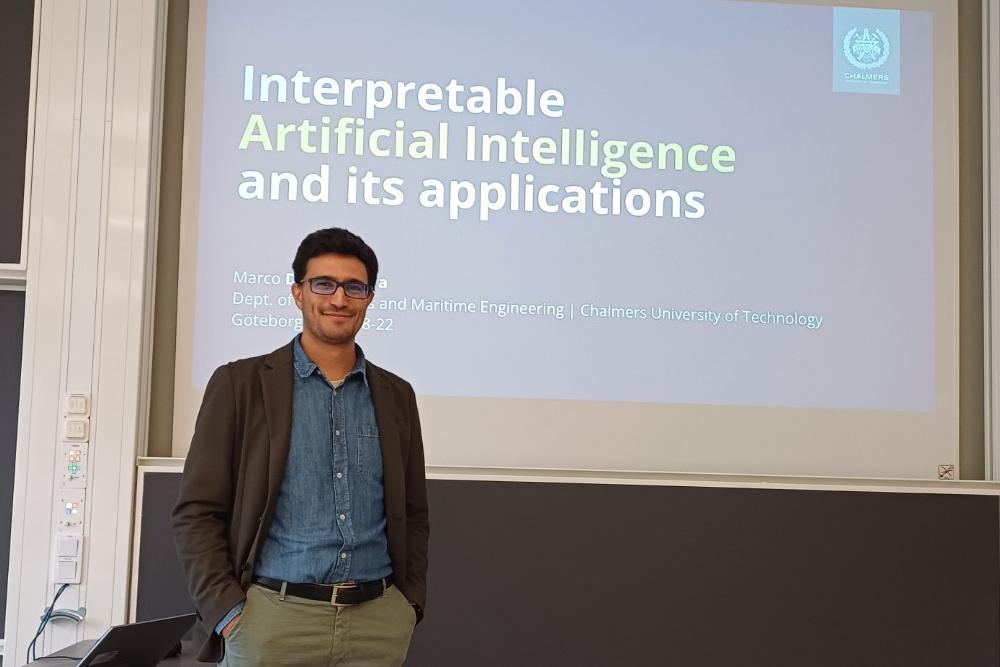
Marco L. Della Vedova is a Senior Lecturer in Applied Artificial Intelligence at Chalmers University of Technology, Sweden. He works in the Vehicle Engineering and Autonomous Systems division within the Department of Mechanics and Maritime Sciences, as part of Prof. Mattias Wahde's research group. Since 2025, he has served as Director of the Data Science and AI master's programme (MPDSC) at Chalmers, where he teaches courses including Introduction to Artificial Intelligence and Digitalization in Sports. Dr. Della Vedova earned his academic foundation at the University of Pavia, Italy, where he completed his BSc (2006), MSc (2009), and PhD (2013) in Computer Engineering. His doctoral research focused on "Real-Time Physical Systems and Electric Load Scheduling" under Prof. Tullio Facchinetti. During his PhD studies, he spent a year at U.C. Berkeley hosted by Prof. Francesco Borrelli at the Model Based Predictive and Distributed Control Lab. His research spans multiple AI domains with a strong emphasis on interpretability. Dr. Della Vedova develops interpretable methods for conversational AI, naturalness evaluation of forests using canopy height models, and geospatial applications. His work bridges theoretical AI with practical societal benefits, particularly in environmental monitoring, transportation systems, and orienteering. He has previously contributed to cloud computing, hate speech detection, and cyber-physical energy systems, demonstrating his interdisciplinary approach to AI research. Dr. Della Vedova's publication record reveals a consistent trajectory of impactful research across multiple domains of artificial intelligence. His recent work shows a strong focus on interpretability in AI systems, with significant contributions to natural language processing, geospatial analysis, and causal inference. The research demonstrates both theoretical depth and practical applications, particularly in environmental monitoring and social media analysis. His methodology often combines traditional machine learning approaches with novel interpretability techniques, creating bridges between complex AI systems and human understanding. Dr. Della Vedova has received several prestigious recognitions for his work: Best PhD thesis award from the Order of the Engineers of Bergamo (2013) Italian champion of Il Cervellone (2012) Top Italian performer in IEEEXtreme 6.0 programming competition (148th overall globally, 2012) Premio Arturo Schena award from Fondazione Credito Valtellinese (2010) With over 50 students supervised through bachelor's and master's theses, Dr. Della Vedova has established himself as a dedicated mentor in the AI community. His current PhD students include Minerva Suvanto working on interpretable NLP and Vivien Lacorre developing AI for railway infrastructure inspection. His supervision spans diverse topics from forest naturalness evaluation to hate speech detection and transportation optimization. Beyond formal supervision, he actively contributes to educational initiatives including serving as Director of Chalmers' Data Science and AI master's program and developing innovative teaching methods that connect theoretical concepts with real-world applications. Dr. Della Vedova is deeply embedded in both academic and professional communities. He leads the Applied Artificial Intelligence research group at Chalmers while maintaining strong connections with European research networks through projects like the ERASMUS+ EUrienteering initiative. His interdisciplinary approach is reflected in collaborations across computer science, environmental science, and social sciences. Notably, he applies his AI expertise to orienteering both as a researcher developing localization methods and as a licensed Event Advisor for the International Orienteering Federation, demonstrating how his professional and personal interests converge in innovative ways.
Peiyuan Chen is an Associate Professor at the Department of Electric Power Engineering, Chalmers University of Technology. He holds a B.Eng. from Zhejiang University (2004), an M.Sc. from Chalmers (2006), and a Ph.D. from Aalborg University (2010). His research focuses on power system operation and planning with wind power integration, emphasizing time series modeling, statistical analysis, and optimization. He contributes to projects on grid-forming converters, inertia estimation, frequency control, and renewable energy system stability. Research Interests: • Power Systems and Renewable Integration • Grid-Forming Converters and Stability Analysis • Time Series Modeling and Statistical Methods • Machine Learning for Energy Applications • Frequency Control and Synthetic Inertia Recent Publication Trends include studies on deep learning for heating load classification, wind turbine type optimization, fault ride-through capabilities, and inertia estimation in converter-dominated grids. His work bridges theoretical power system analysis with practical implementations in Nordic and European energy networks. Projects (2017-2024) include grants from the Swedish Energy Agency, Swedish Research Council (VR), and collaborations with institutions in Sweden, China, and Italy. Key areas: grid strength metrics, multiport converter applications, and citizen energy communities.
Nikolaos Kourentzes is a Professor of Informatics at the University of Skövde , specializing in forecasting and operations research. His work bridges theoretical advancements in time series analysis with practical applications in supply chain management, tourism demand, and renewable energy forecasting. Academic Rank: Professor Department: Department of Information Technology Research Interests: His research focuses on hierarchical and temporal forecasting methodologies, integrating macroeconomic indicators into demand planning, inventory optimization, and machine learning applications. He explores forecast reconciliation, shrinkage estimators, and the role of expert judgment in predictive analytics. Recent Publications: Highlights include advances in hierarchical forecasting with leading indicators, probabilistic forecasts during crises like the pandemic, and complex smoothing techniques. His work spans journals such as Omega , International Journal of Forecasting , and European Journal of Operational Research . Collaborations: Kourentzes collaborates with researchers globally, including George Athanasopoulos, Rob Hyndman, and Robert Fildes, across domains like tourism analytics, tire industry forecasting, and public health modeling.
Andreas Johnsson is an Adjunct Senior Lecturer at the Department of Information Technology , Uppsala University, Sweden. His research spans Machine Learning , Network Performance , and IoT Security in the context of 5G/6G Networks and Edge Computing . Research interests include federated learning, transfer learning, and network optimization techniques. His recent work (2024-2021) focuses on self-regulated learning models for 6G, multi-objective neural architecture search, IoT intrusion detection generalizability, and delay prediction in heterogeneous networks. He has co-authored over 15 publications in high-impact venues like IEEE Transactions on Machine Learning in Communications and Networking and IEEE NOMS . Andreas actively collaborates with researchers such as Jalil Taghia, Farnaz Moradi, and Hannes Larsson. His contributions extend to change detection algorithms, policy adaptation frameworks, and feature selection methodologies in dynamic network environments. No formal scientific awards or student advisement details are currently documented.