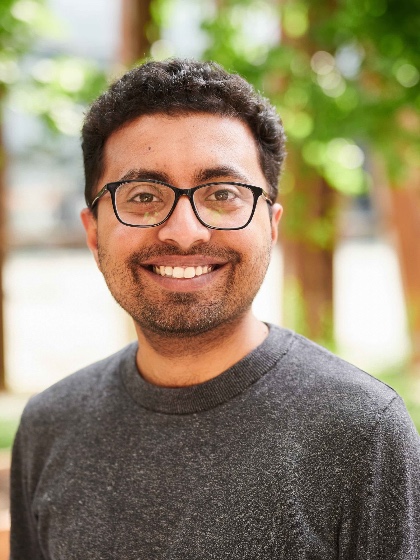
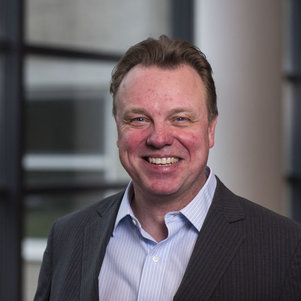
Willem Jonker is a Full Professor at the Digital Society Institute, specializing in Semantics, Cybersecurity & Services. His research focuses on encryption schemes, access control, and privacy-preserving technologies. He has contributed to over 120 publications, with recent work addressing CVE-to-CWE mapping, anomaly detection in network traffic, and functional encryption systems. His expertise aligns with UN Sustainable Development Goals related to secure digital systems and privacy. Jonker has supervised 10 students and actively participates in academic conferences, presenting on topics like secure data management and cryptographic protocols. Research interests include cryptographic protocols, secure data management, and cybersecurity solutions. Notable projects involve developing methods for detecting covert channels, enhancing data privacy in healthcare, and improving secure search over encrypted data. He has also contributed to standards in digital rights management and forensic image recognition.
Dr. Yara Khaluf is an Assistant Professor in the Information Technology Group at Wageningen University & Research, Department of Social Sciences. She holds a PhD (2014, Paderborn University, cum laude) on robot swarm task allocation, followed by postdoctoral research at Paderborn University (2014–2015) and Ghent University’s IDLab (2015–2021). Her work focuses on computational social science, hybrid human-agent societies, and distributed artificial cognition, leveraging agent-based modeling and systems dynamics for behavior prediction/modulation. She leads European-funded projects like ChronoPilot (EU Horizon2020 FET) and DELICIOS (FWO, 2019–2022). Her research explores interactions between artificial agents and humans, developing cognitive capacities for seamless interaction via social feedback networks. Notable contributions include collective foraging algorithms, time perception modeling, and agent-based simulations for public health interventions. Awards include competitive IGS and DFG fellowships. She collaborates with leading experts in swarm intelligence (Dorigo, Stuetzle), collective decision-making (Hamann, Marshall), and experimental psychology (Johansson, Vatakis). Current projects investigate modulating human time perception and delegation of conflict-of-interest decisions to AI agents. Teaching includes courses on model thinking, agent-based modeling of complex systems, and data science applications in food/consumer science. Her work bridges computational methods with societal challenges, emphasizing scalable solutions for hybrid systems.
Han La Poutré is a Professor at Delft University of Technology and a Senior Researcher/Manager at CWI's Intelligent and Autonomous Systems group. His research focuses on multi-agent systems, computational intelligence, and optimization techniques for Smart Energy Systems (SES), integrating electrical engineering and economics frameworks. M.Sc. in Mathematics (1986, TU Eindhoven) Ph.D. in Computer Science (1991, Utrecht University) His work spans game theory , reinforcement learning , and market mechanism design for energy grid optimization, addressing challenges in congestion management, demand-side bidding, and AI-driven media sector innovation. Recent projects include AI, Media & Democracy Lab and RESCUE (Cyber-Physical Energy Security). Key trends in his 2020-2025 publications include: Hybrid fairness/welfare frameworks for grid congestion Double-sided auction mechanisms for heat/power markets Deep reinforcement learning in discrete action spaces Game-theoretical cybersecurity modeling Multi-temporal demand response coordination Scientific Awards 2015: Best paper award at GECCO-2015 He has led NWO-funded projects like Computational Capacity Planning in Electricity Networks and served as Vice President of ERCIM. Current affiliations include ACM Transactions on Intelligent Systems editorial board.
Marc C.W. Geilen is an Associate Professor at the Electronic Systems group , Eindhoven University of Technology. He leads the Model-Based Design Lab and contributes to the CompSOC Lab and High Tech Systems Center . His work focuses on model-based design methods, design automation, and optimization for real-time and embedded systems. Research Keywords: Cyber-Physical Systems, Real-Time Systems, Embedded Systems, Performance Analysis, Design Automation Key Collaborations: EU ECSEL TRANSACT project, SAM-FMS project, Arrowhead Tools initiative His recent publications address weakly-hard timing constraints in server-based systems, hybrid performance modeling for cyber-physical systems, and neural network optimization for communication. Article trends span Real-Time Scheduling , Trustworthy Modeling , Neural Network Efficiency , and Resource Allocation in distributed environments. Scientific Awards : Partial-Order Reduction for Performance Analysis (2018) Teaching activities include courses in Computational Modeling , Embedded Signal Processing , and Discrete Mathematics . He collaborates across projects like TRANSACT, SAM-FMS, and Arrowhead Tools, focusing on flexible manufacturing and cloud-to-edge transitions.
A.A.J. (Erjen) Lefeber is an Assistant Professor in the Department of Mechanical Engineering at Eindhoven University of Technology (TU/e). His research focuses on control systems, cooperative driving, vehicle dynamics, and autonomous systems. He is affiliated with the EAISI Mobility cluster and the ICMS Core group, emphasizing interdisciplinary collaboration. Dr. Lefeber has contributed to over 150 research outputs, including peer-reviewed articles, conference contributions, and datasets. His work addresses challenges in platooning systems, model predictive control (MPC), cybersecurity in cooperative vehicles, and multi-agent systems. Research interests include cooperative adaptive cruise control (CACC), decentralized control strategies, and robust control against adversarial attacks. His projects integrate theoretical analysis with experimental validation, such as testing heterogeneous platoons with actuation delays. Dr. Lefeber has received the AVEC '24 Best Paper Award for contributions to vehicle platooning control. He teaches courses on nonlinear control, manufacturing networks, and mechanical engineering fundamentals. Collaborations span academia and industry, focusing on sustainable transportation and automation. Current efforts explore online learning for interaction dynamics in multi-agent systems and high-performance MPC for aerial robotics. His research aligns with UN Sustainable Development Goals, particularly addressing safe and efficient mobility solutions.
O.J. Luiten is Full Professor in the Coherence and Quantum Technology group at Eindhoven University of Technology. His research focuses on fundamental quantum physics, materials science, nanotechnology, and life sciences, with emphasis on improving temporal resolution in electron microscopy and developing ultracold electron sources. He leads the Coherence and Quantum Technology group and is a core member of ICMS. His research interests center on quantum materials, ultrafast electron microscopy, and coherent light-electron interactions. Key areas include: Ultracold plasma applications for high-coherence electron sources Coherent manipulation of electron beams using laser light X-ray generation via electron beams His publications demonstrate a consistent focus on advancing charged particle beam technologies and light-matter interactions, with recent work emphasizing compact X-ray sources, ultrafast microscopy, and quantum electron manipulation. Scientific Awards: Smart*Light: Een tafelmodel synchrotron (2016) He leads multiple research projects including 'ICS-SAXS: Hard X-ray metrology' and 'Smart*Light 2.0', collaborating with institutions like ASML. Manages labs for ultrafast electron microscopy and quantum beam technology.
Ashish Cherukuri is an Associate Professor at the University of Groningen's Faculty of Science and Engineering, affiliated with the Optimization and Decision Systems group. His research focuses on optimization-based control, game theory, and multi-agent systems applied to energy, transportation, and robotics. He holds a Ph.D. from UC San Diego and postdoctoral experience at ETH Zurich. Education: Ph.D., University of California, San Diego (2012–2017) M.Sc., ETH Zurich (2008–2010) B.Tech, Indian Institute of Technology Delhi (2004–2008) Research Interests: Data-driven optimization, distributed algorithms, networked cyber-physical systems, and uncertainty handling in energy and transportation systems. Recent work emphasizes stochastic optimization, game-theoretic routing, and risk-aware control. Awards: Robert E. Skelton Dissertation Award (2017) Outstanding Graduate Student Award (2016) Focht-Powell Fellowship (2012–2015) Grants & Service: Editor for the IEEE Control Systems Society, organizer of Energy-Open 2019, and member of professional societies (IEEE, INFORMS, SIAM). Active in conference organization and academic leadership roles. Labs/Teams: Part of the Jan C. Willems Center for Systems and Control and the Engineering and Technology Institute Groningen (ENTEG). Research integrates theoretical advancements with practical applications in energy networks and smart systems.
Nicola Calabretta is a Full Professor in Electro-Optical Communication Systems and Senior Research Fellow at Eindhoven University of Technology (TU/e). His work focuses on smart optical networks, high-speed electronics, FPGA implementations for scheduling algorithms, and photonic integrated circuits. He holds a PhD from TU/e (2004) and previously conducted research at DTU Fotonik and the Sant'Anna School of Advanced Studies. His expertise spans optical signal processing, multi-level modulation formats, and applications in data center and metro networks. Key research areas include optical switching architectures (e.g., SOA-based switches), WDM systems, and low-latency interconnect networks. He has led projects like ADAPTOR (resource optimization), SmartTWO (future telecom technologies), and 5G-MOBIX (cross-border mobility). His courses include 'Optical Fibre Communication Technology' and 'Optical Interconnection Networks.' Collaborations involve institutions globally, with recent work emphasizing photonic integration for neural networks, ultra-fast switching, and edge computing. His contributions align with UN SDGs through sustainable telecom infrastructure advancements.
Robert Verburg is an Associate Professor in Technology and Innovation Management at Delft University of Technology, Faculty of Technology, Policy and Management. He is affiliated with the Department of Values, Technology and Innovation and the Section of Economics of Technology and Innovation. He currently serves as the director of the international Master of Technology (MOT) program and teaches courses such as Leadership and Technology Management and strategic leadership for responsible innovation. His research focuses on leadership, managing people, knowledge management, and the future of management, with a strong emphasis on responsible innovation and sustainability. His work bridges qualitative and quantitative methodologies and has been published in leading management journals including the Journal of Management , Leadership Quarterly , and International Journal of Project Management . His recent publications explore organizational trust, innovation barriers in financial firms, virtual project management, and knowledge sharing networks. These works reflect consistent themes in responsible innovation, leadership in technological contexts, and strategic human resource practices. Associate Professor, TU Delft Director, MSc Management of Technology Researcher in Leadership & Innovation Robert Verburg has supervised over 100 Master’s thesis projects and has been involved in curriculum development for the MOT program. He leads an online course on strategic leadership for responsible innovation offered through KIVI. He has participated in the NWO project on Sustainable Business Models, a collaboration between Delft, Erasmus, and Leiden universities, focusing on transformational leadership and shared value measurement. He is affiliated with the research group on Economics of Technology and Innovation and contributes to advancing responsible innovation through both research and education. His work supports the integration of ethical, sustainable, and strategic leadership practices in technology-driven organizations.
Rudie P.J. Kunnen is an Associate Professor at the Faculty of Applied Physics and Science Education , Eindhoven University of Technology, leading the Turbulent and Multiphase Flows group. His research focuses on heat, mass, and particulate transport in turbulent flows, with applications in geophysics and industry. Active in UN Sustainable Development Goals related to environmental protection Collaborator in projects like Active Contamination Control for Equipment and SubstrateS Research Interests : Turbulent flow dynamics, rotating convection, vortex structures, thermophoresis, plasma-liquid interactions, and geostrophic turbulence. His work combines experimental and numerical approaches (e.g., direct numerical simulation, particle image velocimetry). Scientific Awards : NWO Vici Prize (2024) Advising and Collaborations : Supervised multiple BSc and MSc theses at TU/e. Collaborates with researchers like F. Toschi and H.J.H. Clercx on turbulence projects.
Marcel A.M. Hendrix is an Assistant Professor in the Department of Electrical Engineering at Eindhoven University of Technology (TU/e), specializing in high-precision power electronics and analog circuitry. He is affiliated with the Electromechanics and Power Electronics group and the Power Electronics Lab. Currently employed at Signify, he holds a part-time role at TU/e since 1998. His work integrates design automation, cloud computing, and IC development with system simulation and modeling. Education: MSc in Electronic Circuit Design from TU/e (1981) Research Focus: Hendrix’s research emphasizes hybrid switched-capacitor power conversion, discrete-time control techniques, and large-scale computing. His contributions include advancements in LED driver efficiency and grid-connected converter optimization. He is a key contributor to NGSPICE, an open-source circuit simulator. Advising & Grants: Supervised 33 academic works, including F.N. Hooge ’s thesis on sinus/cosinus generators. Recipient of 4417 citations across 120+ publications. Labs & Teams: Active in the Power Electronics Lab and collaborates on projects involving sustainable energy systems aligned with UN SDG goals.
Rémy Jacquemond is a Postdoctoral Researcher at Eindhoven University of Technology's Department of Chemical Engineering and Chemistry, working within both the Membrane Materials and Processes Group and Electrochemical Materials and Systems Group. His research focuses on developing advanced materials for next-generation redox flow batteries, with particular emphasis on membrane technology and electrode engineering. His academic background includes: BSc in General Chemical Sciences from Institut Universitaire de Technologie (IUT), Montpellier, France MSc in Chemical Engineering with materials science specialization from Ecole Nationale Superieure de Chimie de Montpellier (ENSCM), France Second MSc in Nanoscience, Materials and Processes from Universitat Rovira I Virgili (URV), Tarragona, Spain PhD in Chemical Engineering and Chemistry from Eindhoven University of Technology (2023) His research centers on solving critical challenges in redox flow battery technology, particularly the development of ion exchange membranes stable in organic solvents and engineered porous electrodes. He pioneers the application of neutron radiography for in-situ diagnostics of battery operation and employs non-solvent induced phase separation techniques for precise electrode microstructure control. His work directly contributes to UN Sustainable Development Goals related to clean energy and responsible consumption. Analysis of his publication record reveals a strong trajectory in advanced battery diagnostics and materials engineering, with increasing focus on neutron-based visualization techniques and microstructure-controlled electrode fabrication. His 2024 Nature Communications paper on concentration distribution mapping represents a methodological breakthrough, while his consistent development of phase separation techniques for electrode engineering demonstrates systematic innovation in manufacturing approaches. He has received significant recognition for his contributions: Energy Technology Division Graduate Student Award sponsored by Bio-Logic for work on porous carbon electrodes As an active postdoctoral researcher, Jacquemond contributes to research supervision and project leadership within his groups. His current work focuses on membrane diagnostics and novel porous materials development, with emphasis on improving battery efficiency, longevity, and compatibility with organic electrolytes. He maintains strong industry and academic collaborations, evidenced by multiple co-authored publications with international research teams. He operates within Eindhoven University of Technology's cutting-edge research infrastructure, utilizing specialized facilities for membrane synthesis, electrode fabrication, and advanced characterization including neutron imaging capabilities through partnerships with major research facilities. His work bridges fundamental materials science with practical energy storage applications.
Dr. Caroline E. Paul is an Associate Professor in the Department of Biotechnology at Delft University of Technology (TU Delft) , Faculty of Applied Sciences. She leads an active research group focused on biocatalysis, enzyme engineering, and biomimetic cofactor systems. Education: PhD in Bioorganic Chemistry, University of Oviedo, Spain MSc in Chemical Synthesis and Reactivity, University of Oviedo MSc in Biological Chemistry, University of Toronto Honours BSc in Biological Chemistry, University of Toronto Research Interests: Dr. Paul’s research centers on enzyme discovery and engineering , particularly in flavoprotein monooxygenases and ene reductases. Her group explores biomimetic cofactors to replace natural NAD(P)H, enabling more efficient and sustainable biocatalytic processes. A major focus is the development of one-pot enzymatic cascades for asymmetric synthesis, such as azidohydroxylation and allylic oxidation, with applications in pharmaceutical and fine chemical synthesis. She also investigates metalloproteomics using MIRAGE to study metal distribution in biological systems. Publication Trends: Her recent publications (2020–2024) demonstrate a consistent focus on biocatalytic cascade reactions , cofactor engineering , and enzyme mechanism elucidation . There is a strong emphasis on green chemistry and sustainable synthesis using enzymatic systems. Her work frequently involves the use of biomimetic reductants like BNAH and the integration of photochemical or hydrogen-driven cofactor regeneration. The research bridges fundamental enzymology with practical applications in organic synthesis. Scientific Awards and Grants: ERC Starting Grant (2020) KNCV Gold Medal (2024) Chemistry Europe Fellow (2022–2023) NWO ENW XL Grant (2022) NWO VENI Grant (2015) FP7 Marie Curie Intra-European Fellowship (2013) Delft Technology Fellowship (2018) Advising and Funding: Dr. Paul has successfully secured multiple competitive grants, including from the European Commission (ERC, HORIZON) and the Dutch Research Council (NWO), supporting her research on non-canonical cofactors and biocatalytic cascades. She co-founded NextGenBiocat , an international symposium promoting early-career researchers in biocatalysis, indicating her commitment to mentoring and academic community building. While specific students are not listed, her active funding and group leadership imply ongoing supervision of PhD and postdoctoral researchers. Labs and Teams: She leads the Caroline Paul Group within the Biocatalysis section at TU Delft. Her research involves collaborations with groups across Europe, including Wageningen University, Ruhr-Universität Bochum, and Enzymicals AG. Her lab employs advanced techniques such as isothermal titration calorimetry, stopped-flow spectroscopy, and microsecond freeze-quenching to study enzyme kinetics and mechanisms.
Rianne van den Ham is an Assistant Professor at Utrecht University's Faculty of Science, specializing in Pharmacoepidemiology and Clinical Pharmacology. She serves as Managing Director of the Utrecht WHO Collaborating Centre for Pharmaceutical Policy and Regulation and coordinates the HTA Research Network with Erasmus School of Health Policy & Management and the Dutch Health Care Institute. Her work bridges research and education, teaching in Pharmacy programs and the interdisciplinary Zorg, Gezondheid en Samenleving (Health, Health, and Society) program. Research Focus: Access to medicines, pharmaceutical pricing policies, health systems analysis, essential medicines lists, and medication safety. Publications: Over 70 works analyzing medicine availability in low-income settings, anticoagulant safety, pharmaceutical regulation, and health policy effectiveness. Key Collaborations: Partnerships with WHO, European Access Academy, and institutions in Kenya, Uganda, and Albania. She contributes to Pharmacoepidemiology and Drug Safety as Associate Editor. Her work addresses SDG3 targets for equitable medicine access through empirical studies and policy frameworks.
Maarten van Steen is a Professor active in the fields of Distributed Systems , Artificial Intelligence , and Cybersecurity . With an h-index of 35 and over 5,400 citations, his work focuses on Edge AI , Privacy Preservation , and WiFi-Based Sensing . His research emphasizes non-intrusive authentication, anonymization techniques, and crowd monitoring without compromising individual privacy. Key research areas: Distributed Systems, Privacy Preservation, WiFi Security Recent projects: RoomKey, LocKey, FlowPrint Crowd-monitoring applications: Subway travelers, pedestrian dynamics Van Steen's work combines Machine Learning with Homomorphic Encryption to develop privacy-first solutions. He has contributed to mobile app fingerprinting , WiFi authentication , and blockchain scalability challenges. His 2024–2025 publications reveal trends in contextual security , crowd behavior analysis , and automated threat intelligence . Notable methods include Bloom Filters, automata learning, and WiFi beacon frame analysis. Dutch Cyber Security Best Research Paper Award 2024 Runner-up (shared prize) Van Steen supervises research teams and collaborates on datasets like Code for Threat Intelligence Processing and DeepCASE . His work spans 20+ years , with 208 total research outputs and significant contributions to decentralized systems, network traffic analysis, and urban mobility.