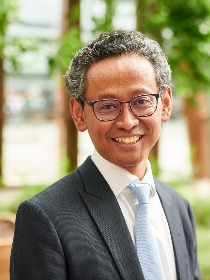
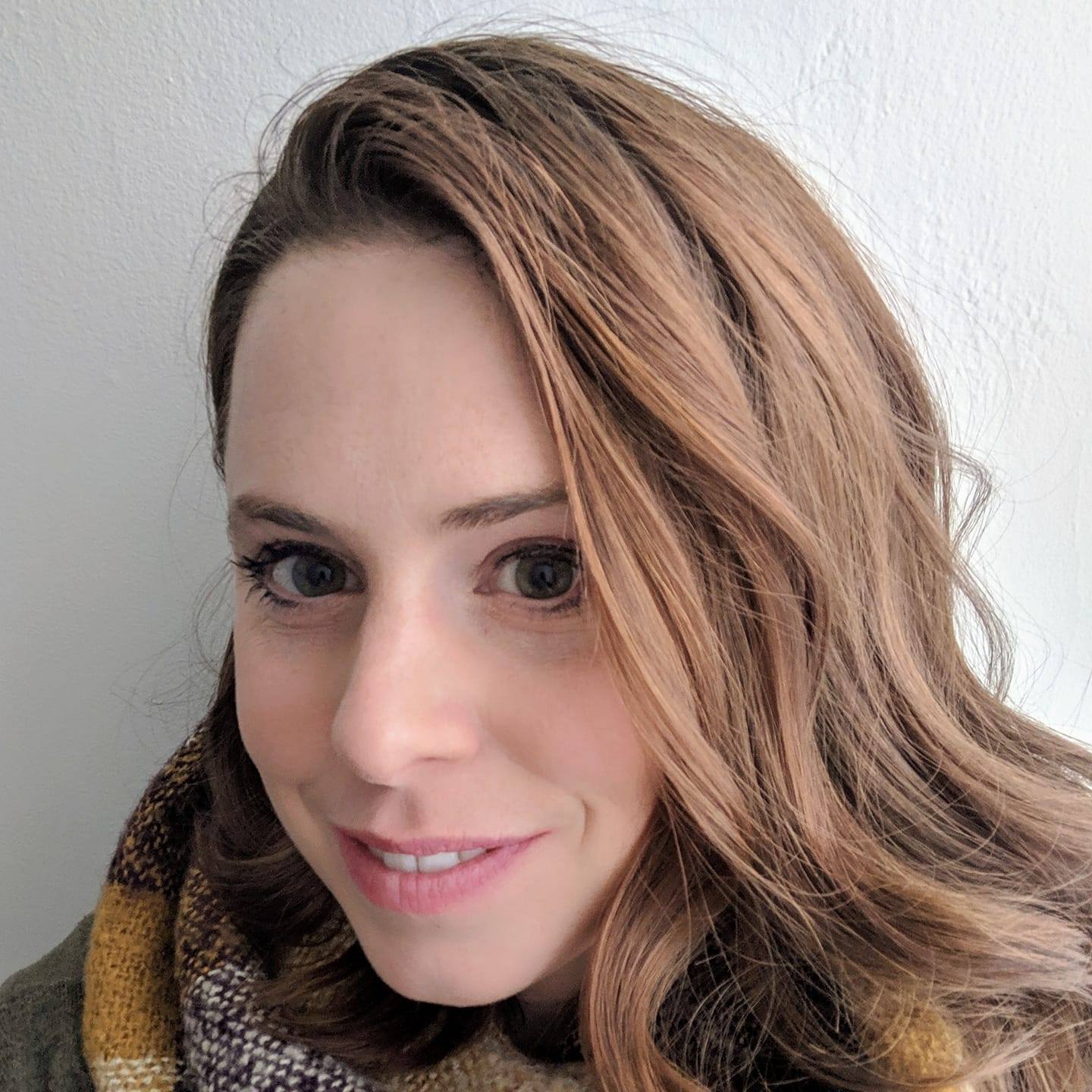
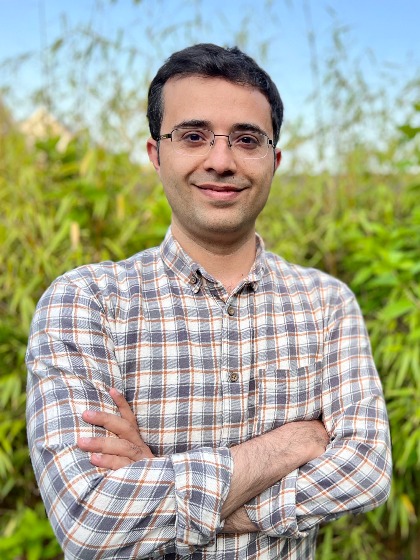
Muharrem Bayraktar is an Assistant Professor at the MESA+ Institute for Nanotechnology at the University of Twente, specializing in XUV Optics. His research focuses on extreme ultraviolet (EUV) optics, plasma spectroscopy, and adaptive optical systems. He leads projects involving EUV source metrology, piezoelectric thin film actuators, and laser-driven plasma diagnostics. Research Interests: Bayraktar’s work centers on developing advanced EUV light sources for nanolithography applications. He investigates plasma physics in tin-based EUV emitters, optimizing thin film materials for adaptive optics, and improving spectral characterization techniques. His group explores piezoelectric thin films for precision wafer tables and multilayer mirror systems to enhance EUV beam control. Awards: 3rd Place in Simon Stevin Fellow Contest (2016) Best poster award (2018) Best poster award (2019) Advising & Activities: Supervises research on EUV source development and piezoelectric actuators. Engages in international collaborations on plasma diagnostics and adaptive optics. Active in presenting at conferences on topics like ‘EUV Source Metrology’ and ‘Nanolithography Systems’. Labs/Teams: Leads the XUV Optics team within MESA+, collaborating with industry partners on EUV lithography systems and advanced optical components.
Bart J. Hengeveld is an Assistant Professor at Eindhoven University of Technology (TU/e), affiliated with the Industrial Design department within the Faculty of Industrial Design. He leads the Future Everyday research cluster, focusing on the intersection of sound design and IoT systems. His work explores how embedded technologies can communicate through sound and tangible interaction in ways that enhance human experience. Education: BSc/MSc in Industrial Design Engineering, Delft University of Technology (2003) PhD in Industrial Design, TU/e (2011), with concurrent training in double bass at Codarts Conservatory Research Interests: Acoustic communication in IoT systems Tangible interaction design Social implications of ubiquitous computing Sound as a medium for human-technology interaction Recent Research Trends: Focus on multimodal interfaces combining sound/light/haptics Studies on sound design for healthcare and smart living environments Investigations into ethical and inclusive IoT soundscapes Awards: Two Teacher of the Year awards at TU/e, reflecting his commitment to pedagogical excellence. Advising & Projects: Supervised 113 student projects including interactive installations like 'Naktis' and 'Sonostapp' Leading the €1.5M 'Role of Sound in Hybrid Work Environments' project (2023–2026) Organized TEI 2016 conference and serves on its steering committee Teams/Labs: Core member of TU/e's Future Everyday cluster, collaborating with multidisciplinary teams on embodied interaction research.
Prof. Bayu Jayawardhana is a Full Professor in Mechatronics and Control of Nonlinear Systems at the University of Groningen, affiliated with the Faculty of Science and Engineering. He leads the Jayawardhana Group focusing on opto-mechatronics and advanced nonlinear control theories. His roles include Director of Engineering and Scientific Director of the Engineering and Technology Institute Groningen. He holds editorial positions in journals like International Journal of Robust and Nonlinear Control and European Journal of Control . Education: PhD in Control and Power Group from Imperial College London (2006), M.Eng from Nanyang Technological University (2003), and B.Eng from Institut Teknologi Bandung (2000). Research interests span opto-mechatronics for high-tech systems, nonlinear control, and systems biology. Key projects include digital twins for energy optimization, control of ocean energy systems, and modeling of cryogenic actuators for telescopes. His work integrates AI and model-based methods for high-performance systems. Notable awards include the 2016 FSE Faculty Teacher of the Year Award and the Ben Feringa Impact Award (2020). He advises on ventures like Ocean Grazer B.V. and Sencilia B.V. Teaching includes graduate courses on nonlinear control, opto-mechatronics, and fitting dynamical models to data. His research labs include the Groningen Centre for Systems and Control and the Data Science and Systems Complexity Center.
Dongsheng Yang is an Assistant Professor with the Electrical Energy Systems Group at the Department of Electrical Engineering of Eindhoven University of Technology (TU/e). He has been working at TU/e since 2019, focusing on power electronics and renewable energy integration, and previously served as Assistant Professor at Aalborg University's Department of Energy Technology (2018-2019). Dr. Yang received his B.S., M.S., and Ph.D. degrees in electrical engineering from Nanjing University of Aeronautics and Astronautics, Nanjing, China, in 2008, 2011, and 2016, respectively. His academic journey progressed from postdoctoral researcher at Aalborg University (2016) to faculty positions at both institutions. Dr. Yang's research focuses on the modeling, analysis, control, and design of power electronics dominated power systems , with the goal of safely accommodating high-penetrations of renewable energy sources and energy-efficient end-uses. His work spans several critical areas in modern power systems: Power electronics dominated grid stability and control Renewable energy integration and grid synchronization EV fast-charging infrastructure development Hydrogen production systems Medium-frequency transformer design and modeling AI applications in power electronics Analysis of Dr. Yang's recent publications reveals a strategic research trajectory toward developing advanced control strategies for power converters, improving modeling techniques through AI approaches, and addressing practical implementation challenges for renewable energy systems. His work spans both theoretical developments and practical applications, with increasing emphasis on neural network frameworks for magnetic modeling, safety boundaries for EV charging architectures, and enhanced fault ride-through capabilities for grid-connected systems. This progression demonstrates his commitment to solving real-world engineering challenges in the transition to renewable energy. Dr. Yang has received professional recognition including: Senior Member of IEEE Corresponding Member of CIGRE Working Group C4.56 Topic chair, technical committee member, and reviewer for top-level conferences and journals in power electronics Dr. Yang actively supervises doctoral candidates and postdoctoral researchers, including Xiao Yang (working on AI for power electronics), Saizhao Yang (postdoc), and L.A. Vlaar. He serves as project manager for multiple significant research initiatives totaling over €5 million in funding: REDCON (2023-2028) - Reconfigurable power electronics testbench Flexible Offshore Wind Hydrogen Power Plant Module (2022-2026) Sectorplan-DCES-Y.D.inv.: Reconfigurable power electronics testbench (2021-2029) E2GO-RDC Cost-reduction of EV fast-charging station (2021-2026) CW620863 System impact analysis for large scale renewable hydrogen production (2022-2023) Dr. Yang leads research within the Electrical Energy Systems group at TU/e's High Tech Systems Center, focusing on power conversion technologies. His work connects with multiple research teams across Europe through collaborative projects focused on renewable energy integration, EV infrastructure, and hydrogen production systems. He also teaches the course 'Dynamic control of power conversion in renewable energy systems' and contributes to the UN Sustainable Development Goals related to affordable and clean energy.
Sara Magliacane is an Assistant Professor at the University of Amsterdam , affiliated with the Amsterdam Machine Learning Lab (AMLab) and the Informatics Institute . She also holds a Research Scientist position at the MIT-IBM Watson AI Lab and has been an ELLIS Scholar since 2022. Education PhD in Artificial Intelligence (2017), VU Amsterdam MSc in Computer Engineering (2011), Politecnico di Milano BSc in Computer Engineering (2008), Università degli Studi di Trieste Research Focus : At the intersection of Causality and Machine Learning , her work addresses Causal Representation Learning from high-dimensional data (images, sequences) Causal Discovery in latent confounder scenarios Causality-inspired Reinforcement Learning for robustness and adaptability Neurosymbolic AI for theoretical guarantees Publication Trends : Her recent work explores Factored adaptation in non-stationary environments (NeurIPS 2022) Temporal causal identifiability (ICML 2022) Binary interaction-based causal discovery (UAI 2023) Safe exploration in visual RL (HSCC 2021) Structure learning lower bounds (NeurIPS 2020) Scientific Recognition : ELLIS Scholar (2022–present) Spotlight presentations at ICML 2022 and ICLR 2022 Advising & Collaborations : Currently supervising 6 PhD students at the University of Amsterdam and AUMC, with 12 alumni advisees. Collaborates with researchers at MIT-IBM Watson AI Lab, Simons Institute, and TUM.
Nicolas Cambier is a Visiting Professor at Vrije Universiteit Amsterdam, affiliated with the Faculty of Science's Artificial Intelligence department and the Network Institute. His research focuses on swarm robotics, collective behavior, and evolutionary systems. He explores topics like emergent communication, modular robotics, and prosociality in robotic swarms. Key areas include task-driven language evolution, adaptive decision-making, and environmental interaction in constrained environments. His work bridges theoretical models with practical implementations, emphasizing self-organization and cultural evolution in synthetic systems. Recent contributions address challenges in heterogeneous swarms, skill acquisition in modular robots, and decision-making without prior knowledge. He collaborates widely, with publications in IEEE Robotics and Automation Letters, Nature Communications, and top conferences like GECCO and Distributed Autonomous Robotic Systems. Research interests span robotics, artificial intelligence, and evolutionary computation, with applications to both theoretical frameworks and real-world robotic systems. His studies often involve agent-based simulations and embodied evolution approaches to understand complex collective phenomena.
Nima Monshizadeh Naini is a Professor in the Faculty of Science and Engineering at the University of Groningen. He holds the position of Chair of the IEM Program Committee and serves on the boards of ENTEG and YSEN. His academic journey includes a PhD in Control Systems from the University of Groningen (2013, Cum Laude), followed by postdoctoral research at the University of Cambridge (2016-2017) and the University of Groningen (2014). He has been an Assistant Professor since 2018 and was awarded the NWO Open Competition Grant in 2021. His research focuses on Cyber-Physical Human Systems (CPHS) , addressing two core areas: (1) Coordination of self-interested users in power systems and traffic networks using dynamic information design and game-theoretic mechanisms; and (2) Privacy-aware control and optimization with tailored encryption methods for dynamic systems. Applications include energy markets, microgrids, and smart grids. He has published extensively in top venues like IEEE CDC and Automatica, with key topics including privacy-preserving algorithms, distributed control, and optimal intervention design. His work contributes to UN Sustainable Development Goals related to affordable energy and responsible consumption. Education: PhD in Control Systems, University of Groningen (2013) Research Associate, University of Cambridge (2016-2017) Postdoctoral Researcher, University of Groningen (2014) Awards: Cum Laude distinction for PhD thesis (2013) NWO Open Competition Grant (2021) Advising & Grants: Supervised 5 PhD students Editorial roles in IEEE journals and conference proceedings Labs/Teams: Leading the Cyber-physical systems group within the Smart Manufacturing Systems institute.
Dr. Gualbert Oude Essink is an Associate Professor at the Faculty of Geosciences , Department of Physical Geography at Utrecht University . He is also a senior hydrogeologist at Deltares, specializing in coastal groundwater systems, saltwater intrusion, and delta sustainability. His work focuses on improving freshwater availability in vulnerable coastal zones under climate change, subsidence, and anthropogenic pressures. Dr. Essink holds a PhD in Civil Engineering from Delft University of Technology and has extensive experience in applied hydrogeology. He leads research projects globally, including in the Netherlands, Egypt (Nile Delta), Bangladesh (Kulna region), Singapore, and Vietnam (Mekong Delta). Key initiatives include GO-FRESH (Aquifer Storage and Recovery) and Rise and Fall (Mekong Delta subsidence strategies). His research integrates modeling, geophysical surveys, and stakeholder engagement. Notable areas include variable-density groundwater flow, airborne electromagnetic surveys for salinity mapping, and sustainable groundwater management. He supervises multiple PhD candidates and teaches at IHE Delft, contributing to global water education. Dr. Essink has authored over 100 peer-reviewed articles, focusing on delta sustainability, climate impacts, and groundwater systems. His work bridges academia and practice, addressing freshwater security challenges in coastal regions through innovative solutions like managed aquifer recharge and saltwater intrusion mitigation.
Prof. Geert-Jan P.M. Houben is a Professor at Delft University of Technology's Web Information Systems Department within the Faculty of Electrical Engineering, Mathematics and Computer Science. His research focuses on AI ethics, machine learning, data integration, and decision support systems. He has published over 165 works and supervised 24 students. Notable contributions include frameworks for meaningful human control in AI systems and methodologies for bias mitigation in data-driven systems. Editorial roles: Editor for CEUR-WS, Springer, and other publishers since 2012 Awards: Royal Honours from TU Delft (2025) Research emphasizes ethical AI, data engineering, and scalable systems. Recent work addresses AI governance, bias in analytics, and interactive data discovery in modern data ecosystems. He actively contributes to conferences like ACM Web Science and VLDB.
Dr. Darshan Vigneswaran is a Visiting Professor at the Faculty of Social and Behavioural Sciences , University of Amsterdam, affiliated with the Transnational Configurations, Conflict and Governance programme group. His research focuses on migration studies, international relations, and urban governance in Africa and beyond. Institution: University of Amsterdam Programme: Transnational Configurations, Conflict and Governance Contact: D.V.Vigneswaran@uva.nl Research Interests: Vigneswaran examines migration control, biopolitics, and territoriality through critical lenses, often challenging conventional frameworks in international relations and urban governance. His work spans empirical studies on deportation systems, mobility regimes, and the intersection of technology with migration enforcement. Scientific Trends: His recent publications analyze European migration policies, the terrestrial bias in international relations, and the socio-political dimensions of gentrification and mobilities. Notable subfields include refugee governance, urban violence prevention, and historical migration narratives.
Dr. Tarek Alskaif is an Associate Professor of Energy Informatics at Wageningen University & Research, specializing in the intersection of information technology and energy systems. He leads research on smart energy systems, focusing on electricity markets, distributed energy resources, and AI-driven solutions. His work integrates modeling, optimization, and big data analytics to advance the sustainable energy transition. Education: PhD in Energy Informatics (2012–2016, Cum Laude) from Universitat Politècnica de Catalunya, Spain. Postdoc at Utrecht University’s Copernicus Institute (2016–2020). Current roles include coordinating the BSc Data Science Minor and teaching Python and Big Data courses. Research interests emphasize leveraging digitalization for energy systems, including smart grids, electric mobility, and battery storage. Notable projects include HighLO Energy Markets (EU-funded, using particle physics and AI for market transparency) and MESSM (coordinated via TKI Urban Energy). He also leads the AI ELSA Lab (NWO-funded). Editorial roles include Associate Editor for IEEE Transactions on Smart Grid and IEEE Power Engineering Letters . Member of IEEE, the Netherlands Institute for Research on ICT (4TU.NIRICT), and the Technical Program Committee for IEEE SmartGridComm and PSCC 2026. Has supervised over 50 students (MSc/BSc) and 7 PhDs. Projects address challenges like grid congestion, EV charging optimization, and decentralized energy trading. His work bridges academic research with industry collaborations, including partnerships with CERN and ACER.
Sofie Haesaert is an Assistant Professor in the Control Systems group at the Department of Electrical Engineering, Eindhoven University of Technology. Her work focuses on formal verification and control synthesis methods for cyber-physical systems, particularly through stochastic simulation relations and temporal logic specifications. Education: BSc (cum laude) and MSc (cum laude) in Mechanical Engineering and Systems & Control from Delft University of Technology; PhD from Eindhoven University of Technology (2017) Experience: Postdoctoral researcher at Caltech (2017-2018), then returned to TU/e as Assistant Professor Her research interests include: Cyber-physical systems verification Stochastic control methods Temporal logic specification Markov decision processes Formal methods in control engineering Model abstractions and simulation relations Recent publications show strong focus on: Stochastic temporal logic control Robust and risk-aware control Multi-agent system verification Formal synthesis via simulation relations AI integration in control systems Software tools for formal control Scientific achievements: Veni Grant recipient (2020) Co-developer of the SySCoRe toolset for stochastic control synthesis Contributor to formal verification benchmarks through ARCH-COMP reports She contributes to education through courses on: Control principles for engineered systems Control challenges in autonomous racing Supervisory control of cyber-physical systems Haesaert collaborates across disciplines including computer science, applied mathematics, and robotics, with over 750 citations and significant contributions to formal control theory for stochastic systems. Her work bridges theoretical developments with practical applications in autonomous systems and complex control architectures.
Anuj Pathania serves as an Assistant Professor in the Parallel Computing Systems (PCS) group within the Informatics Institute at the University of Amsterdam's Faculty of Science. His research pioneers sustainable computing systems operating under severe power, thermal, and reliability constraints, with significant contributions to energy-efficient hardware design and embedded systems. Education: PhD in Computer Science (2018), Karlsruhe Institute of Technology MSc in Computer Science (2012), National University of Singapore B.Tech in Computer Science (2009), Maharaja Agrasen Institute of Technology Pathania's research centers on low-power design and sustainable systems for constrained environments, with particular expertise in thermal management of 3D-stacked architectures and energy-efficient machine learning inference . His work bridges electronic design automation with real-world reliability challenges, developing novel power budgeting techniques like T-TSP that incorporate transient temperature effects ignored by conventional methods. Current projects include EU-funded initiatives on energy labeling for digital services, addressing ecological impacts through technological, behavioral, and legal frameworks. His publication trajectory reveals a strategic evolution toward zero-waste computing , with recent work (2023-2025) focusing on hardware-software co-design for edge AI, energy modeling across computing continua, and parameter-efficient neural adaptation. Key themes include thermal-aware scheduling for S-NUCA many-cores, cooperative processor utilization in heterogeneous systems, and sustainability metrics for digital services. Scientific Recognition: Best Paper Award Nomination at IEEE Computer Society Annual Symposium on VLSI 2023 for 3D-TTP power budgeting technique Pathania actively mentors 4 PhD students (Ehsan Aghapour, Saeedeh Baneshi, Sudam Wasala, Yixian Shen) and has successfully supervised 5 Master's theses (including Cum Laude defenses by Joris op ten Berg and Jurre Wolff). His research is supported by major grants including Energy Labels for Ecologically Sustainable Digital Services (2023-2024) and Towards Zero-Waste Computing (2021-2025), developing simulation frameworks like HotSniper and CoMeT for thermal analysis. The PCS group maintains strong industry collaborations with ARM and NVIDIA, particularly through tools like ARM-CO-UP for heterogeneous processor utilization.
Marcus Gerhold is an Assistant Professor in the Formal Methods and Tools group at the University of Twente's Faculty of Electrical Engineering, Mathematics and Computer Science. His research focuses on model-based testing for software reliability in critical infrastructures, particularly railway systems, alongside significant contributions to game design and programming language analysis. His educational background includes: PhD in Computer Science from University of Twente (2018): Choice and Chance: Model-based Testing of Stochastic Behaviour MSc in Mathematics from Friedrich Schiller Universität Jena (2013): Embeddings of Weighted Morrey Spaces BSc in Mathematics from Friedrich Schiller Universität Jena (2011): Entropy-, Approximation- and Kolmogorov Numbers on Quasi-Banach Spaces Gerhold's research integrates theoretical model-based testing with practical critical infrastructure applications . His work on railway conformance testing addresses EULYNX controller validation, while his game design research explores affective mirroring in NPCs and procedural dungeon generation. The code modernity analysis stream leverages static analysis to quantify legacy code evolution across languages like Python and PHP, revealing version identification challenges through deep learning. Publication trends show consistent focus on model-based testing methodologies (40%), railway safety applications (25%), and innovative game design/code analysis (35%). Recent work increasingly incorporates AI/ML techniques for UML assessment and Python version identification, while maintaining rigorous formal methods foundations. He actively mentors 63 students across all academic levels and contributes to major research initiatives: STORM_SAFE (ERDF, 2024): Daily Supervisor for WP1/WP2 on software reliability for critical infrastructures ZORRO (KIC grant, 2023): Daily Supervisor for WP4 on zero downtime in cyber-physical systems MISSION (MSCA RISE, 2021-2025): Interim coordinator (early 2024) for space systems modeling As part of the Formal Methods and Tools research group, Gerhold participates in European collaborations while serving on SAC-SVT 2024 and FormaliSE 2023 program committees.
Jan C. Fransoo is a Full Professor of Operations and Logistics Management at Tilburg University's School of Economics and Management, with visiting appointments at Eindhoven University of Technology and MIT. His research advances supply chain decision-making in retail, transport, and sustainable logistics. Education: PhD in Operations Management & Logistics (Eindhoven University of Technology) MSc in Industrial Engineering Research Focus: Fransoo's work addresses global supply chain challenges: Retail distribution in emerging megacities (nanostores) Intermodal container transport optimization Sustainability and social responsibility in supply chains Logistics for developing economies Methodologies combine empirical analysis, mathematical modeling, and field studies. Publication Trends: Recent research focuses on distribution channel strategies in emerging economies and sustainable logistics. Earlier work established foundational models for container logistics and supply chain resilience. Awards: Royal Netherlands Academy of Sciences Fellowship (post-PhD) Advising & Research Leadership: Supervises PhD candidates in logistics and supply chain management. Founded the MSc in Operations Management & Logistics at TU/e. Served as academic member of the Strategic Platform for Logistics setting national research agendas. Grants & Projects: Led the €3M ULTIMATE project (2010-2014) on efficient multimodal hinterland networks. Consultant to World Bank and national governments on logistics policy. Laboratories & Teams: Directs research on sustainable supply chains and global logistics systems. Collaborates with Tsinghua University, MIT, and industry partners worldwide.