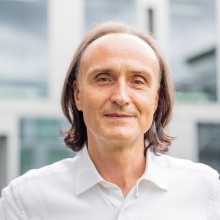
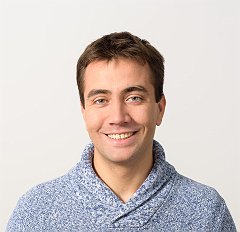
Frank Leymann is a Professor at the Institute for Architecture of Application Systems, University of Stuttgart. His research spans quantum computing, cloud systems, middleware, and business process management. Affiliation: University of Stuttgart, Institute for Architecture of Application Systems Key Projects: PlanQK, EniQmA, OpenTOSCA, SeQuenC Academic Recognition: Over 30 years of publications in service computing and quantum technologies Research Interests: His work focuses on quantum software engineering , hybrid quantum-classical systems , and cloud application architectures . Notable contributions include TOSCA standardization for cloud deployment and systematic studies on quantum optimization. Recent Publications: 2025-2024 articles emphasize quantum algorithm expressivity , cross-chain blockchain transactions , and post-quantum security . Earlier works (2023-2021) address quantum workflow provenance , QAOA optimization , and IoT platform architectures . Technical Leadership: Director of a multidisciplinary team developing frameworks like OpenTOSCA and tools for quantum application deployment.
Masood Parvania is the Roger P. Webb Endowed Professor at the University of Utah in Electrical and Computer Engineering. He serves as Director of the Utah Smart Energy Laboratory (U-Smart) and Co-Director of the NSF WIRED Global Center . His research focuses on mathematical optimization , control theory , and machine learning applications in power system operation, resilience, and interdependent infrastructure modeling. His work addresses critical challenges including: Equity-aware grid restoration Climate-resilient energy systems Cyber-physical security analysis Hybrid energy storage coordination Extreme heat event mitigation strategies Key research trends across his 15 most recent publications reveal deep integration of: Renewable energy with storage systems Machine learning in real-time grid operation Cybersecurity frameworks for critical infrastructure Equity metrics in energy distribution Honors include: IEEE Outstanding Associate Editor Award (2022) University of Utah Presidential Scholar (2020) IEEE Utah Section Outstanding Educator Award (2017) Multiple Best Reviewer and Distinguished Service Awards As Associate Editor for IEEE Transactions on Power Systems , he actively shapes energy research discourse while leading NSF-funded initiatives like: U.S.-Canada Climate-Resilient Grid Center ($90M+ Western EV Infrastructure Scale-Up Wasatch Multi-Modal Corridor Electrification
Andrew Schwarz is a Professor at Louisiana State University in the Stephenson Department of Entrepreneurship & Information Systems within the E. J. Ourso College of Business. He holds the Francis M. "Dud" Coates Professor of Humanities distinction and serves as MBA Online Advisor for the Flores MBA Program. His industry background includes market research for Fortune 500 firms developing advertising campaigns and forecasting models. His educational credentials include a PhD in Management Information Systems from the University of Houston (2003) and a BA in Social Psychology from Florida Atlantic University (1997). Professor Schwarz maintains exceptional research productivity, ranked in the top 1% globally for publications in premier journals. Research focuses span four interconnected domains: IT acceptance and use (post-adoption behavior, usage inhibitors), IT management (governance, boundary choice, alignment), technology implementation (multilevel diffusion, virtual worlds), and emerging technology trends . His work bridges theoretical rigor with practical business applications, particularly in healthcare IT adoption. His recent publications demonstrate consistent output in top-tier outlets including MIS Quarterly and Information Systems Research, with strong emphasis on methodological innovation (e.g., process-based acceptance models, 3C virtual world framework) and real-world impact (e.g., EMR adoption by physicians). Major recognitions include: ATLAS Award and IS World Net Challenge Award (Association for Information Systems) E. J. Ourso College Research Excellence Awards (2013, 2014) Baton Rouge Business Report "Top 40 Under 40" Invitation to MIS Camp (Association for Information Systems) Ranked top 1% globally for research productivity Professor Schwarz actively mentors MBA students as Online Advisor and leads the Mobility and Measurement Enhancement research lab, supported by Louisiana Board of Regents funding. His service includes DATA BASE journal editorship (2012-2016), AMCIS leadership (2011-2018), and current role as Co-Editor-in-Chief of International Journal of Information Management (2025). The Mobility and Measurement Enhancement lab provides students opportunities to work on funded projects, publish in top journals, and address real-world challenges in healthcare IT, enterprise architecture, and emerging technologies through interdisciplinary collaboration.
Sébastien Le Digabel is a Full Professor in the Department of Mathematics and Industrial Engineering at Polytechnique Montréal. He holds affiliations with GERAD (Groupe d'études et de recherche en analyse des décisions) and IVADO (Institut de valorisation des données), where he contributes to research in optimization and artificial intelligence. Professor Le Digabel's research focuses on black-box optimization and derivative-free methods, particularly the Mesh Adaptive Direct Search (MADS) algorithm. His work spans three main areas: development of optimization methods, application to engineering problems, and development of optimization software. He has made significant contributions to extending MADS for constrained optimization, mixed-variable problems, multiobjective optimization, and stochastic optimization. His recent publications (2023-2025) demonstrate continued innovation in handling complex optimization challenges including categorical variables, hierarchical constraints, and multi-fidelity approaches. These works appear in top journals like Computational Optimization and Applications, SIAM Journal on Optimization, and Optimization and Engineering. Professor Le Digabel actively supervises graduate students, having completed 8 PhD theses and 10 Master's theses with topics spanning multiobjective optimization, hyperparameter tuning, smart grid applications, and power systems optimization. His research is supported by diverse funding sources including NSERC, FRQNT, InnovÉÉ, IVADO, Hydro-Québec, Rio Tinto, and Huawei-Canada, reflecting the broad applicability of his work across academic and industrial domains. Professor Le Digabel leads the NOMAD Research Group and is the primary developer of the NOMAD optimization software, which implements the MADS algorithm and serves as a standard tool in the derivative-free optimization community. The software is available at www.gerad.ca/nomad and continues to evolve with new capabilities for challenging optimization problems.
Pilar Ripoll Botella is an Associate Professor of Work and Organizational Psychology at the University of Valencia, Spain, where she is a member of the Institute of Human Resources Psychology, Organizational Development and Quality of Working Life (IDOCAL). She teaches in the Erasmus Mundus Master of Work, Organization and Personnel Psychology and the Doctoral Program of Psychology of Human Resources at the Faculty of Psychology and Speech Therapy, Department of Social Psychology. Dr. Ripoll earned her PhD in Psychology with an exceptional award from the University of Valencia. Her primary research interests focus on Work and Organizational Psychology, with special emphasis on emotional intelligence, leadership development, virtual team effectiveness, and career transitions. Her work explores how psychological factors influence workplace behavior, team dynamics, and employee well-being. She has made significant contributions to understanding the socialization process of young workers entering the job market and the impact of communication technologies on group performance. Her publication record shows a consistent trajectory of high-quality research in organizational psychology, with a growing focus on emotional intelligence applications in the workplace. Her recent work examines the relationship between emotional intelligence and burnout, entrepreneurial intention, and leadership effectiveness. She has also maintained a strong interest in virtual teams and communication technologies, investigating how different communication channels affect group dynamics and performance. Exceptional PhD Award, University of Valencia Professor Ripoll has directed multiple PhD theses, including work on emotional competences in unemployment contexts and authentic leadership effects. She has participated in several granted research projects examining workplace psychology phenomena, with particular focus on emotional intelligence applications, career development, and virtual team dynamics. Her research has been published in high-impact journals across psychology and organizational behavior fields. As a member of IDOCAL (Institute of Human Resources Psychology, Organizational Development and Quality of Working Life), she collaborates with a multidisciplinary team of researchers investigating workplace psychology, organizational development, and quality of working life issues. Her work contributes to both theoretical advancements and practical applications in human resources management and organizational psychology.
Corinne LUCET-VASSEUR is a University Professor at Université de Picardie Jules Verne (UPJV), leading Research Unit UR 4290 (OCIA - Optimisation Combinatoire, Images et Applications). Her office (Room 302, Tel: 5900) serves as the hub for her research group focused on combinatorial optimization and artificial intelligence applications. Her research spans: Combinatorial Optimization : Developing metaheuristics for NP-hard problems Healthcare Logistics : Patient flow optimization, facility location, simulation training Logistics Engineering : Parcel distribution, vehicle routing with time windows Algorithm Design : Ant Colony Optimization, Adaptive Large Neighborhood Search, portfolio methods She applies these methodologies to solve complex real-world problems, particularly in healthcare systems where resource constraints and scheduling complexity demand innovative optimization approaches. Her work bridges theoretical advances with practical implementation through industrial partnerships. Current research projects include: SMILE PICK UP (CIFRE industrial partnership) Simusanté (healthcare simulation) LORH (logistics optimization) These projects secure ongoing funding and provide doctoral training opportunities through industry collaboration. Her publication record demonstrates consistent methodological innovation applied to healthcare and logistics challenges across multiple European conferences and journals. Professor Lucet-Vasseur actively mentors junior researchers through co-authorship on conference papers and journal articles. Her supervision style emphasizes practical problem-solving with industry relevance, preparing students for both academic and industrial careers in optimization. The OCIA research unit provides a collaborative environment for tackling complex combinatorial problems with real-world impact. The OCIA laboratory serves as UPJV's center for combinatorial optimization research, specializing in metaheuristic development for healthcare and logistics applications. The lab maintains strong industry connections through CIFRE contracts and applied projects, ensuring research relevance while providing students with exposure to real business challenges. Current focus areas include adaptive algorithm selection using reinforcement learning and fitness landscape analysis for optimization problems.
Dr. Hatem Ahriz is a Professor at Robert Gordon University's School of Computing, Engineering & Technology, with a distinguished career spanning over 25 years in artificial intelligence and cybersecurity research. His academic journey began with a BSc in Computer Science (1987-1992), followed by an MSc (1993-1994) and PhD in Artificial Intelligence (1994-1998). Dr. Ahriz's research has evolved from constraint satisfaction and optimization problems to cutting-edge cybersecurity applications, with particular expertise in Advanced Persistent Threats (APTs). His work combines artificial intelligence, machine learning, and security frameworks to develop innovative solutions for threat detection and cyber defense systems. His recent publications (2019-2024) show a clear shift toward cybersecurity applications, with multiple papers on APT detection frameworks, machine learning approaches for threat analysis, and cyber physical systems security. This represents a natural progression from his earlier foundational work on distributed constraint satisfaction problems. Active supervision of PhD students in cybersecurity Current research project on AI-powered vulnerability detection systems Teaching expertise in database systems and information security Dr. Ahriz maintains active collaborations with industry partners, as evidenced by his project with CyberShell Solutions to develop a SaaS platform for Cyber Threat Intelligence. His research bridges theoretical computer science with practical applications in critical infrastructure protection and enterprise security.
Khaoula Raboudi serves as an Associate Professor at the Higher Institute of Multimedia Arts of Manouba in Tunisia and is an active member of the CRESSON research team within the AAU Laboratory. Her institutional affiliations extend to the Joint Research Unit (UMR) comprising CNRS, UGA, ENSA Nantes, ENSA Grenoble, and Centrale Nantes, with significant collaborative work at the Grenoble Computer Science Laboratory. Professor Raboudi's research centers on the innovative application of generative techniques and machine learning in architectural and urban design. She specializes in developing solar control systems and sustainable building morphologies that address contemporary challenges in energy efficiency and user well-being. Her work uniquely integrates technical computational approaches with qualitative design dimensions, creating solutions that are both scientifically rigorous and human-centered. Analysis of her publication record from 2011-2024 reveals consistent research evolution from foundational solar envelope modeling to advanced machine learning applications. Her recent work shows increasing focus on artificial intelligence in environmental design, with notable contributions to both physical architecture and digital environments like animated films. The research demonstrates strong interdisciplinary connections between architecture, computer science, and environmental engineering. Professor Raboudi maintains an active research profile with regular conference presentations and journal publications. Her work with the CRESSON team demonstrates commitment to advancing architectural knowledge through computational methods, particularly in sustainability-focused design applications. Current projects like AMaL (Ambiances Machine Learning) indicate continued innovation at the intersection of architecture and artificial intelligence. Her research methodology combines theoretical architectural knowledge with practical computational techniques, often collaborating with computer scientists to develop specialized tools for solar analysis and morphological generation. This approach has produced valuable contributions to sustainable design practices and educational resources for architectural computation.
Professor William Holderbaum is a faculty member at the School of Science, Engineering & Environment at the University of Salford, with additional affiliation to the Centre for Future Engineering. His academic career demonstrates sustained research productivity with 46 documented research outputs spanning from 2012 to 2025. Professor Holderbaum's research interests encompass several interconnected domains: Control Systems Theory and Applications Hybrid Dynamical Systems (particularly power converters) Robotics (Geometric Control, nonholonomic systems, Reinforcement Learning) Rehabilitation Engineering (Robust Control Design) Energy Management (Electric Vehicles, Smart Grids, Multiple Agent Systems) Autonomous Vehicles (Motion planning, AI) His recent publication activity (11 papers in 2025, 13 in 2024) reveals a strong emphasis on power systems protection challenges, particularly addressing microgrid protection issues arising from distributed generation integration. He has developed innovative approaches for overcurrent relay coordination, microgrid frequency stability, and protection schemes for inverter-dominated grids. His work also extends to robotics applications in textile manufacturing, wearable sensor technology for gesture recognition, and digital twin applications for power system protection. Professor Holderbaum maintains an active research program with significant recent output, demonstrating continued scholarly productivity and relevance in his fields of expertise. His interdisciplinary approach bridges theoretical control systems with practical engineering applications across multiple domains.
Brice Chardin is an Associate Professor in Data Engineering at ISAE-ENSMA since 2013, affiliated with the LIAS (Laboratoire d'Ingénierie des Applications de la Connaissance et des Systèmes) Data and Model Engineering team. His work bridges academic research and industrial applications, focusing on data management solutions for critical systems. His research spans clustering algorithms under dissimilarity constraints , RDF query relaxation for explaining empty/overabundant results, pattern mining through the RQL language, and energy data management . Key projects include Chronos (a NoSQL system for industrial sensor data) and collaborations with energy companies SRD and Nexeya for predictive consumption analysis. Recent publications (2021-2024) emphasize constrained clustering techniques and cooperative query processing for RDF knowledge bases, revealing a strong trend toward practical solutions for industrial data challenges. His work integrates machine learning with database theory to address real-world data imperfections. PhD in Computer Science from INSA Lyon (2011) Postdoctoral position at LIRIS (2012-2013) on ANR DAG project Specialized in industrial data management since 2011 EDF collaboration Chardin actively supervises academic projects including drone simulation with Ardupilot and Smart Data mining initiatives. His industrial partnerships focus on energy sector applications, particularly predictive analysis for electricity distribution and storage systems. Current work involves developing clustering algorithms with error bounds and query relaxation frameworks for semantic web technologies.
Đorđe Žikelić is an Assistant Professor of Computer Science at the School of Computing and Information Systems at Singapore Management University (SMU) in Singapore. He completed his PhD in 2023 at the Institute of Science and Technology Austria (ISTA) under Krishnendu Chatterjee and Petr Novotný, receiving both Outstanding PhD Thesis and Outstanding Scientific Achievement awards. Prior to his doctorate, he earned bachelor's and master's degrees in mathematics from the University of Cambridge. His educational background includes: PhD in Computer Science, Institute of Science and Technology Austria (ISTA), 2023 Bachelor's and Master's in Mathematics, University of Cambridge Dr. Žikelić's research focuses on advancing formal methods to ensure software and AI systems are correct, safe, and trustworthy. His work bridges theoretical aspects of formal reasoning about probabilistic systems with practical automated verification methods. His primary research interests span three interconnected areas: Program Analysis and Verification: He develops techniques for analyzing probabilistic programs, numerical programs, and efficient quantifier elimination methods, addressing fundamental challenges in verifying complex software systems. Trustworthy AI and Safe Autonomy: He creates formal verification frameworks for learning-enabled control systems and neural networks, ensuring AI operates safely in uncertain environments through methods like runtime monitoring and certificate repair. Probabilistic System Verification: He explores broader applications including bidding games on graphs and blockchain protocol analysis, extending formal methods to novel domains beyond traditional finite-state verification. His publication trajectory shows a consistent progression from theoretical foundations to practical applications, with recent work increasingly focused on integrating formal verification with machine learning. His 2024-2025 publications demonstrate growing expertise in verifying learning-based systems and developing practical tools like PolyQEnt for quantified entailment solving. His scientific achievements have been recognized with: Outstanding PhD Thesis Award at ISTA Outstanding Scientific Achievement Award at ISTA Distinguished Paper Award at FM 2024 Dr. Žikelić serves on program committees for major conferences including TACAS, PLDI, AAAI, and CAV. He actively mentors through the Programming Languages Mentoring Workshop (PLMW) at PLDI 2025. His research group at SMU focuses on developing novel algorithms for verifying correctness of programs and AI systems, with current projects spanning formal methods, artificial intelligence, and programming languages.