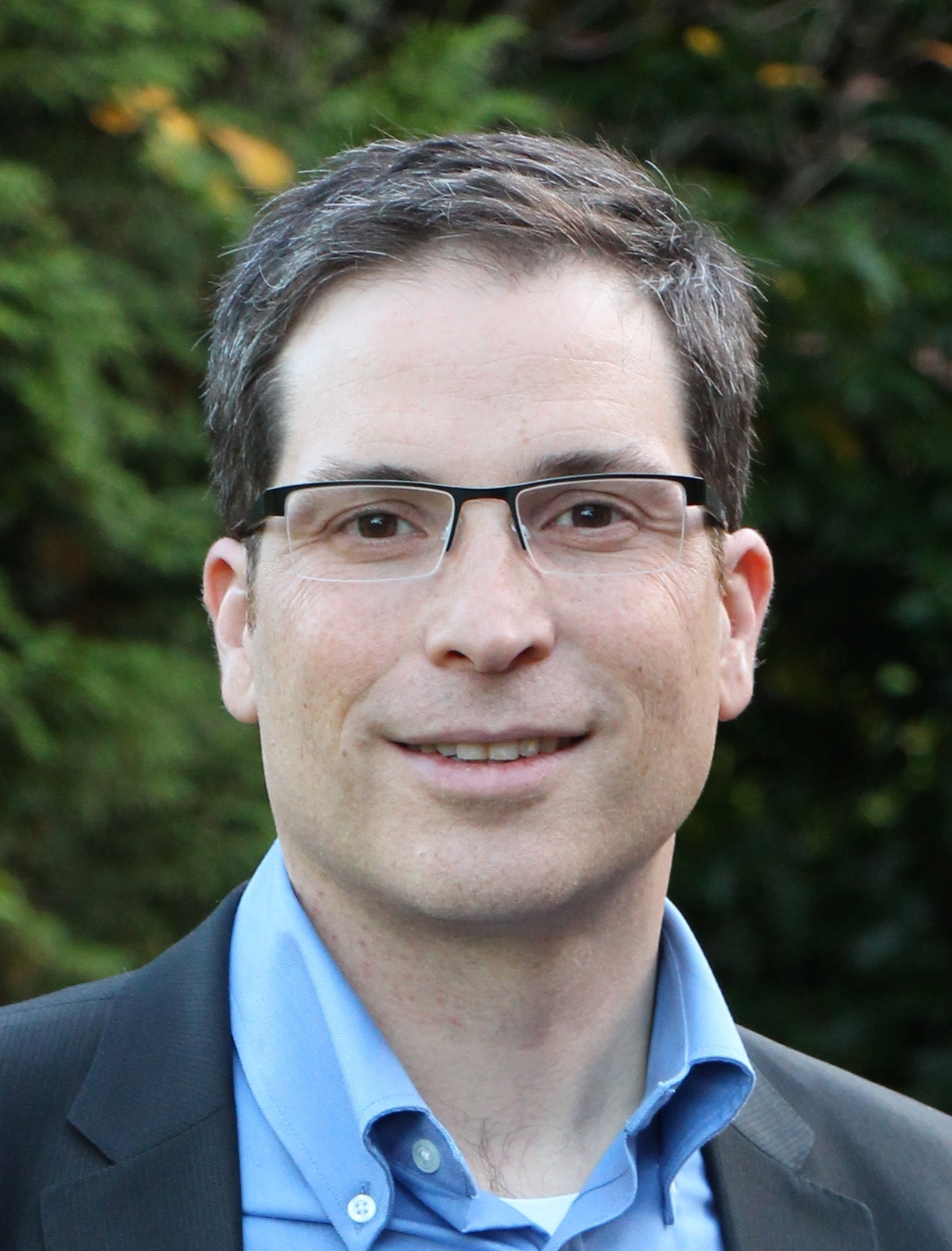
Dr. Maximilian Löffel serves as a Lecturer at ETH Zurich's Department of Management, Technology, and Economics (D-MTEC), affiliated with the Chair of Logistics Management (Professur für Logistikmanagement). Based at WEV F 121, Weinbergstrasse 56/58 in Zurich, Switzerland, he contributes to the institution's academic mission in quantitative management sciences. His research spans critical domains in modern logistics systems: Mathematical optimization of supply chains Digital transformation in transportation networks Sustainability-driven logistics modeling Technology-economics interfaces in global trade Real-time decision architectures for distribution systems Dr. Löffel's work integrates computational methods with economic theory to address complex logistical challenges in industrial and humanitarian contexts. His teaching focuses on analytical frameworks for logistics engineering within D-MTEC's curriculum. No scientific awards were documented in available sources. Information regarding student supervision, research grants, or laboratory affiliations remains unspecified in current institutional records.
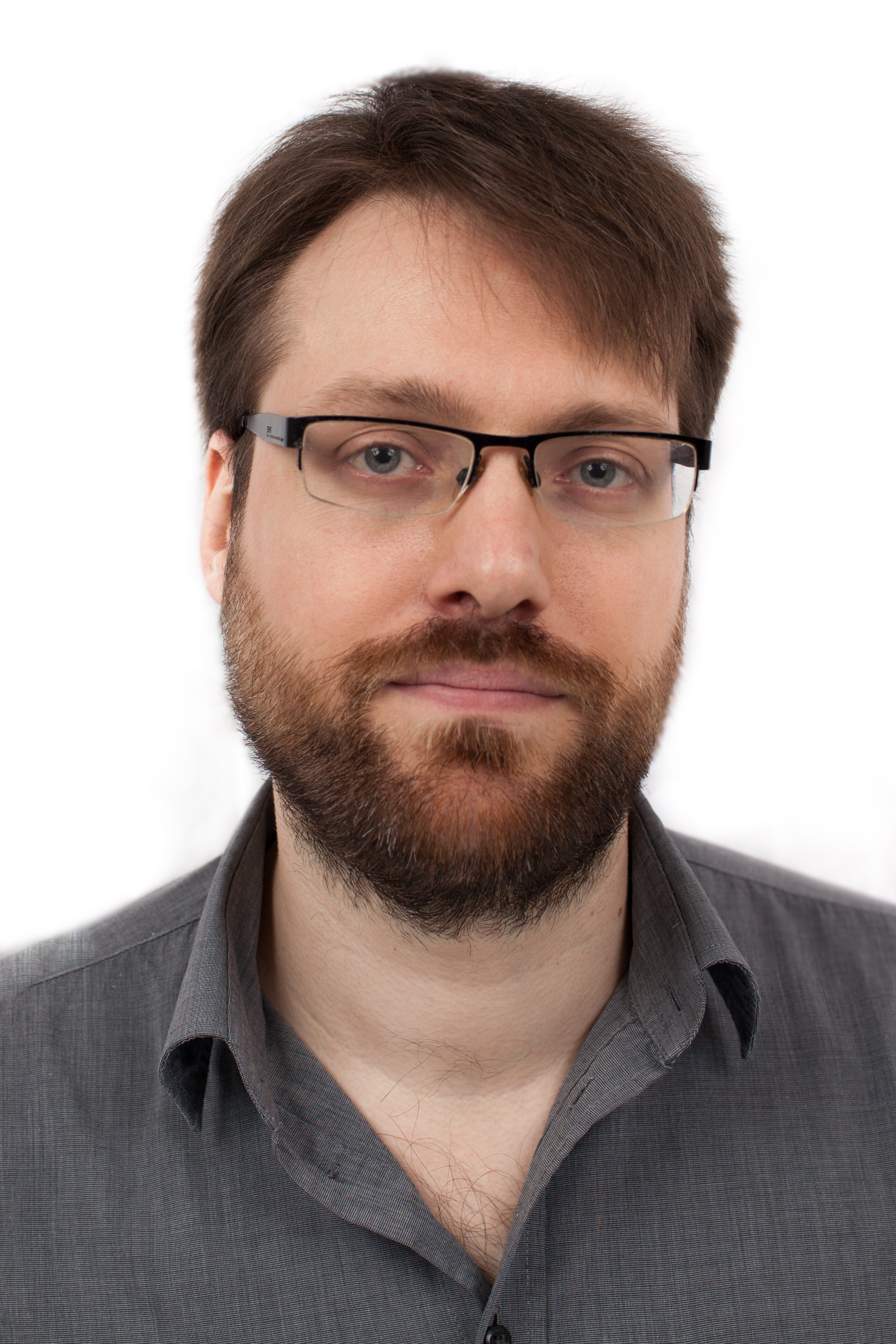
Luca Verginer is a Lecturer at the Department of Management, Technology, and Economics within ETH Zurich. His work bridges empirical economics and network science, focusing on pharmaceutical supply chains, patent dynamics, and social network impacts. Current affiliation: ETH Zurich (School of Management and Social Sciences) Academic rank: Lecturer His research integrates causal inference, advanced econometrics, and deep learning methods like Graph Neural Networks (GNN) and Natural Language Processing (NLP) to address policy and strategic challenges in healthcare and innovation. Key trends in his publications include: Quantifying supply chain resilience through reroute flexibility Analyzing scientist mobility networks and global cities' dominance Studying social dynamics in online radicalization and migration Methodologically, he employs agent-based modeling, big data analytics, and empirical validation across diverse domains from opioid distribution to academic collaboration. His work demonstrates strong interdisciplinary focus, combining economics, computational methods, and policy analysis to tackle real-world challenges in healthcare systems and knowledge production networks.
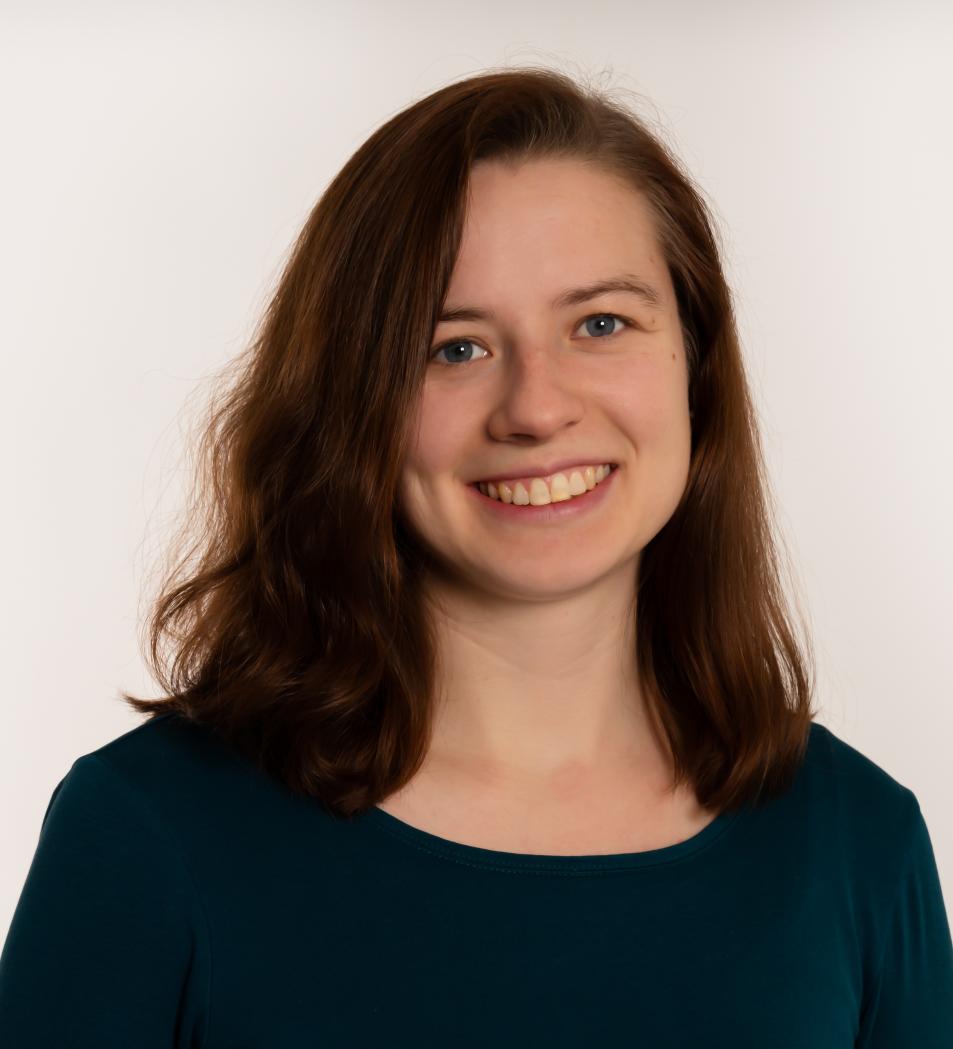
Kieran James Walsh is a Lecturer at the Department of Management, Technology, and Economics of ETH Zürich, affiliated with the KOF Swiss Economic Institute. His primary research focuses on macroeconomics, international finance and trade, finance, and applied econometrics. He has published extensively on topics such as competitive equilibrium uniqueness, fiscal stimulus effects, and asset pricing models. Key Research Areas: Macroeconomic modeling with DSGE frameworks Equilibrium multiplicity and stability in general economic models Climatic and geopolitical risk analysis for economic systems Wealth inequality and financial market dynamics Recent Publications: His 2025 work includes a model of expenditure shocks and heterogeneity analysis in fiscal stimulus responses. Earlier works explore topics like the equity premium puzzle (2020) and climate risk pricing in municipal bonds (2024).
Abraham Bernstein is a Full Professor of Informatics at the University of Zurich (UZH), where he serves as Head of the Dynamic and Distributed Information Systems Group and Director of the UZH Digital Society Initiative. He leads a university-wide initiative with over 180 faculty members investigating the interplay between society and digitalization. His work bridges social science foundations (organizational psychology/sociology/economics) and technical disciplines (computer science, artificial intelligence), creating a unique interdisciplinary approach to digital transformation challenges. Education: Diploma in Computer Science from ETH Zurich Ph.D. in Management with concentration in Information Technologies from MIT's Sloan School of Management Professor Bernstein's research spans the Semantic Web, data mining/machine learning, recommender systems, crowd computing, and collective intelligence. His work uniquely integrates social science perspectives with technical computer science approaches, examining how social and technical elements interact in digital systems. Recent work focuses on explainable AI, ethical decision-making with AI systems, and the societal implications of digital transformation, reflecting his commitment to addressing both technical challenges and their broader societal context. His publication record shows a strong trajectory in multimodal information retrieval, knowledge representation, and human-AI collaboration, with increasing focus on ethical considerations and societal impact of AI technologies. The research demonstrates consistent innovation in bridging technical AI capabilities with human-centered design principles, particularly in areas like explainable recommender systems and democratic applications of AI. Scientific Recognition: Nominated Digital Shaper by Bilanz magazine (2017) Professor Bernstein has supervised over 30 PhD students whose work spans semantic technologies, data mining, recommender systems, and human-AI interaction. His research group has secured significant funding for projects related to digital society, knowledge representation, and AI ethics. As Director of the Digital Society Initiative, he coordinates cross-disciplinary research across UZH's faculties, bringing together scholars from humanities, social sciences, law, economics, and STEM fields to address complex digital transformation challenges. He leads the Dynamic and Distributed Information Systems Group at UZH, which maintains strong international collaborations and contributes significantly to both theoretical advances and practical applications in information systems. The group's work has influenced standards in semantic web technologies and continues to shape discourse on responsible AI development and deployment in society.
Markus Knecht is a part-time Researcher at the University of Applied Sciences Northwestern Switzerland (FHNW) within the Institute for Mobile and Distributed Systems (IMVS). Additionally, he is pursuing a fast-track PhD at the University of Zurich (UZH) under the mentorship of Prof. Dr. Burkhard Stiller in the Communication Systems Group (CSG). Education: Master of Science in Engineering (MSE) , University of Applied Sciences Northwestern Switzerland (FHNW), 2014 Research Interests: Blockchain Smart Contracts Security Programming Language Design Publications: Markus has co-authored a key publication in 2017, focusing on smart contract deployment and security protocols in blockchain platforms. Contact: Email: markus.knecht2@uzh.ch
Pia Ruttner-Jansen is an External Doctoral Student at the WSL Institute for Snow and Avalanche Research SLF and affiliated with the GSEG group at ETH Zurich since March 2021. Her work focuses on remote sensing and geomatics applications in snow and avalanche research . Education : BSc in Geodesy and Geoinformation (Technical University of Vienna, 2018) MSc in Geomatic Engineering (ETH Zurich, 2021) Her research explores high-resolution snow depth monitoring using drones, terrestrial laser scanning (TLS) , and GNSS technologies to improve avalanche risk assessment and infrastructure safety in alpine regions. Key methodologies include: Low-cost lidar and optical sensors for snow depth mapping Probability-based avalanche run-out modeling Machine learning integration for GNSS residual analysis Recent publications highlight her contributions to automated railway infrastructure monitoring , avalanche core-powder cloud simulation , and keypoint-based TLS deformation detection . Her work emphasizes practical applications for mountain hazard mitigation . Current affiliations include: PhD Student at WSL Institute for Snow and Avalanche Research SLF PhD Student at ETH Zurich's Department of Civil, Environmental and Geomatic Engineering
Olivier Lévêque is a Senior Scientist at the École Polytechnique Fédérale de Lausanne (EPFL), affiliated with the School of Computer and Communication Sciences. He conducts research at the Laboratory of Information Theory (LTHI) and holds teaching responsibilities in both Communication Systems (SSC) and Computer Science (SIN) sections. Additionally, he contributes to the Interface EPFL-Gymnases initiative. Lévêque obtained his Physics diploma (1995) and PhD in Mathematics (2001) from EPFL, with a visiting lectureship at Stanford University's Electrical Engineering Department in 2005-2006. His research explores fundamental aspects of information theory , random matrices , and stochastic calculus , with applications in wireless communications and network theory. Key interests include capacity scaling laws in ad hoc networks, diversity-multiplexing tradeoffs, and mathematical frameworks for communication systems. Recent publications demonstrate broad interdisciplinary engagement, spanning computational thinking assessment (2022), digital education frameworks (2019), satellite positioning systems (2018), and theoretical advances in probability (2018). His work consistently integrates mathematical rigor with practical communication challenges, particularly in wireless network optimization and information-theoretic security. He has supervised four doctoral students at EPFL and teaches courses including Information, Computation, Communication , Markov Chains and Algorithmic Applications , and Cryptography . Lévêque leads research activities within the Laboratory of Information Theory, focusing on theoretical foundations of modern communication systems.
Matthias Grossglauser is a Full Professor at the School of Computer and Communication Sciences at École Polytechnique Fédérale de Lausanne (EPFL), where he co-directs the Information and Network Dynamics lab. He serves on the Federal Communications Commission (ComCom), Switzerland's telecommunications regulatory authority, and previously directed EPFL's Doctoral School in Computer and Communication Sciences (2016-2019). His career includes positions at Nokia Research Center (Internet Laboratory lead), AT&T Research, and EPFL (Assistant Professor). Education Ph.D. in Computer Science from Sorbonne Universités M.Sc. in Electrical Engineering from Georgia Institute of Technology Engineering degree in Communication Systems from EPFL Research Focus Grossglauser's research integrates machine learning, stochastic networks, and discrete choice models to address challenges in artificial intelligence, network science, computational social sciences, and recommender systems. His work emphasizes both theoretical foundations and practical applications, including political forecasting, climate communication, and network dynamics. Publication Trends Recent articles demonstrate strong focus on causal inference, optimal learning algorithms, and social network analysis. Dominant themes include reinforcement learning optimization, graph-based modeling, and NLP applications in political science. Methodological innovations in matrix factorization, Bayesian modeling, and stochastic processes recur throughout. Awards & Honors Fellow of IEEE and ELLIS Cor Baayen Award (1998) CoNEXT/SIGCOMM Rising Star Award (2006) Best Paper Awards: ACM COSN (2014), IEEE INFOCOM (2001) Nokia Mobile Data Challenge Winner (2012) Academic Leadership Has advised 16+ PhD students to completion and currently supervises 4 doctoral candidates. Secured research funding for projects including dynamic recommender systems, network alignment algorithms, and computational social science tools (e.g., Predikon.ch vote prediction platform). Leads the Information and Network Dynamics lab, focusing on AI-driven network analysis.
Prof. Mackenzie Weygandt Mathis is Tenure-Track Assistant Professor and Bertarelli Foundation Chair of Integrative Neuroscience at EPFL’s Brain Mind Institute . Leading the Mathis Lab since 2020, she unites machine learning and systems neuroscience to decipher how brains learn and control movement. Education : PhD in Neuroscience, Harvard University (2017, advisor Naoshige Uchida) Post-doctoral training, University of Tübingen with Matthias Bethge (2017) Rowland Fellow, Harvard University (2017-2020) Research Focus : the lab develops open-source AI tools ( DeepLabCut , CEBRA , AmadeusGPT ) and combines them with large-scale neural recordings in behaving mice to uncover the neural basis of adaptive motor control. Core themes include sensorimotor learning, proprioception, and brain-inspired algorithms for robotics. Publications Trend : recent work spans robust machine-learning methods (ICLR, AISTATS 2025), foundational models for pose estimation ( SuperAnimal , 2024), and integrative studies linking neural population dynamics to muscle-level control ( Nature 2023, Cell 2024). Scientific Awards : Swiss Science Prize Latsis 2024 Robert Bing Prize 2024 Eric Kandel Young Neuroscientist Prize 2023 FENS EJN Young Investigator Prize 2022 Vallee Scholar, ELLIS Scholar, NSF Graduate Fellow Advising & Funding : she mentors 4 current PhD students and several postdocs, supported by SNSF Starting Grant (1.5 M CHF), CZI, Novartis, Radala Foundation, and Kavli Foundation grants. Labs & Teams : the Mathis Lab is located at Campus Biotech , Geneva, and actively collaborates with the Alexander Mathis group, Allen Institute, and international consortiums on open-source neuroscience tools.
Dr. Lukas Keller is a Researcher at the Zurich University of Applied Sciences (ZHAW), School of Engineering, within the Department of ICP Multiphysics Modeling and Imaging. He leads multiple projects focused on clay rock characterization, including ongoing work on fracture sealing in clay rock and completed studies on gas transport mechanisms in clay materials. His research centers on the geophysical and mechanical properties of clay formations, particularly Opalinus Clay. Key interests include 3D microstructure analysis using X-ray computed tomography (XCT), hydromechanical behavior of fractures, permeability modeling, and pore-scale simulations. His work bridges experimental data with computational approaches to understand fluid flow, elastic properties, and transport phenomena in geological materials. Keller's publications (2014-2023) demonstrate consistent focus on clay microstructure, digital rock physics, and multiscale modeling. Recent articles explore pore geometry effects on rock elasticity, anisotropy in shale mechanics, and advanced tomography techniques. His research provides critical insights for applications in nuclear waste containment and geotechnical engineering.
Dr. Tobias Schripp is a Scientist/Team Leader at the ZHAW School of Engineering 's Meteorology and Air Transport division since March 2024. Previously, he worked at the German Aerospace Center (DLR) 's Institute of Combustion Technology (2016-2024) and Fraunhofer WKI (2006-2016). His research focuses on sustainable aviation fuels , aircraft engine emissions , and climate impacts of contrails through projects like Understanding Non-CO2 Impact for deCarbonized aviation and Renewable Fuels and Chemicals for Switzerland . Key Research Areas : Emission measurements, air quality, sustainable aviation fuels, contrail climate forcing, particle characterization, atmospheric pollution Methodologies : Chamber studies, field measurements, computational modeling (CoCiP), emission test cells His 2025-2024 publications analyze SAF blending effects on aircraft emissions and contrail properties, showing significant reductions in nonvolatile particulate matter (−52%) and contrail radiative forcing (−44%). Recent work demonstrates that targeted SAF deployment on flights with warming contrails can multiply climate benefits by 9–15 times compared to uniform distribution. Network Affiliations : Society for Aerosol Research (GAeF) ORCID: 0000-0002-1594-7331
Celina Tabea Vetter is a researcher at Zurich University of Applied Sciences (ZHAW), School of Engineering, Department of Human Factors. Her work focuses on human-machine collaboration, evidence-based training, and psychophysiological data analysis in aviation contexts. Research Interests: Human Factors in Aviation Artificial Situational Awareness Eye-Tracking Analysis Automation-Team Dynamics Competence Training via Performance Feedback Projects: Deputy project leader for both ongoing "Achieving Human-Machine Collaboration with Artificial Situational Awareness" and completed "Foundation for Advancing Automation." Scientific Awards: Best of Track Award (Human Factors), DASC 2024 Connect via LinkedIn or email celina.vetter@zhaw.ch for collaboration.
Prof. Dr. Kurt Stockinger is a Professor of Computer Science at ZHAW School of Engineering and holds a doctorate at the University of Zurich . He serves as Head of the MAS Data Science program and co-leads the ZHAW Datalab . His research focuses on Intelligent Information Systems , bridging information systems, natural language processing, and machine learning. Affiliated with the University of Zurich, he contributes to Quantum Machine Learning and Open Data Exploration initiatives. Stockinger's educational background includes a PhD in Computer Science (University of Vienna & CERN), a Master in Business Informatics (University of Vienna), and a CAS in Didactics & Methodology (ZHAW). He has taught courses in Quantum Computing , Big Data for Natural Sciences , and Data Science programs at ZHAW and University of Zurich. His research spans Data Science , Big Data , Natural Language Query Processing , Knowledge Graphs , and Quantum Machine Learning . Recent publications focus on quantum autoencoders , hybrid quantum neural networks , and prompt engineering for knowledge graph question answering. He has developed frameworks like ScienceBenchmark for real-world NL-to-SQL evaluation and NQuest for natural language query exploration. Scientific awards include the Best Paper Award at 7th Swiss Conference on Data Science (2020) He leads major projects such as DataGEMS (Data Discovery Platform, Horizon Europe) Digital Health Zurich (Clinical Innovation Lab) INODE4StatBot.swiss (NL-to-SQL Translation) GraphQueryML (Graph Database Optimization) ScienceBenchmark (NL-to-SQL Evaluation) Stockinger's work intersects with computer vision , biomedical data , and industrial applications , demonstrated through collaborations with institutions like Lawrence Berkeley National Laboratory, CERN, and University of Washington. He has contributed to establishing QuantumBasel and ZHAW Datalab as research hubs.
Prof. Dr. habil. Mathias Bonmarin is a Professor and Head of the Sensors and Measuring Systems Group at the Zurich University of Applied Sciences (ZHAW) School of Engineering since 2019. He also holds a Visiting Professor position at Tufts University (2023-2024) and was a Fulbright Visiting Research Scholar at the University of Cincinnati (2023-2024). His academic journey includes a Habilitation in Experimental Medicine from the University of Basel (2022-2024), a PhD in Physical Chemistry (2006-2010), and multiple master’s degrees in Optics, Biomedical Engineering, and Economics. Research Focus: Sensors, thermal imaging, photothermal therapy, biomedical device development Key Collaborations: IEEE, Swiss Innovation Agency (Innosuisse), UZH Digital Society Initiative Scientific Awards include the Outstanding Employer Award , Distinguished Lecturer and Faculty Course Development Award from IEEE, DIZH Fellow , and multiple Lab Science Awards as thesis supervisor. He has authored over 20 peer-reviewed publications and holds 7 patents related to skin sensors and photothermal systems.
Vera Colombo is a Senior Researcher at the Center for Dental Medicine of the University of Zurich, where she leads the Physiology and Biomechanics Group within the Clinic of Masticatory Disorders and Dental Biomaterials . Her work focuses on biomechanical factors in temporomandibular joint (TMJ) disorders and orofacial pain, utilizing interdisciplinary approaches such as computational models and in vitro soft tissue testing. Research Highlights: She develops innovative biosignal assessment methods for masticatory muscle activity, with applications in both laboratory and field settings. Her projects include the implementation of a Sensor Data Analysis Pipeline and collaborative work on the UZH Entrepreneur Fellowship -winning MutaDent initiative. Her publications span from 2008 to 2024, emphasizing TMJ kinematics, dental biomaterials, and pain monitoring technologies. Scientific Collaborations: Her research frequently involves partnerships with key figures like Prof. Mutlu Özcan and Dr. Aleksandra Zumbrunn Wojczyńska, reflecting her integrated role in the Faculty of Medicine at the University of Zurich.