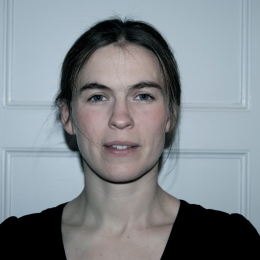
Emma von Essen is an Associate Professor at Stockholm University, affiliated with the Swedish Institute for Social Research and the GAINS (Gender Analysis and Interdisciplinary Research Network, Stockholm) group. She also holds positions at Aarhus University (Department of Economics and Business) and Uppsala University (Department of Sociology). Research Focus: Experimental economics, labor economics, gender economics, and socioeconomic status Teaching: Labor economics, gender economics, quantitative methods, and behavioral economics Key Collaborators: Mahmood Arai, Anne Boschini, Gustaf Bruze, Anna Dreber, Lina Eklund Her research explores gender disparities in corporate governance, labor markets, and health outcomes, with a particular emphasis on transgender populations and socioeconomic factors. She investigates how anonymity affects online behavior and the interplay between professional networks and gender in leadership roles. Her publications examine topics such as labor market discrimination, gender dynamics in corporate board appointments, and the impact of inheritance reforms on family dynamics. She has conducted field experiments on online marketplaces and behavioral studies on children's risk preferences across cultures.
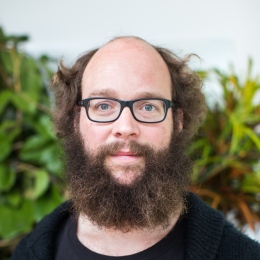
Lukas Bähner is a doctoral student at the Division of Electromagnetic Engineering and Fusion Science at Royal Institute of Technology (KTH), supervised by Associate Professor Thomas Jonsson. His research focuses on ion cyclotron resonance heating (ICRH) in tokamaks, utilizing theoretical models and computer simulations, particularly through a Fokker-Planck code to predict particle velocity distributions under ICRH radiation. He is also involved in teaching electromagnetic theory and supervising Bachelor's and Master's thesis projects. B.Sc. : Electrical Engineering and Information Technology at RWTH Aachen M.Sc. : Electromagnetics, Fusion and Space Engineering at KTH Stockholm Research Interests : Ion Cyclotron Resonance Heating (ICRH) in Tokamaks Theoretical Plasma Physics Computational Modeling of Fusion Processes Contact : Email: bahner@kth.se Room: 5415 Address: Division of Electromagnetic Engineering and Fusion Science, Teknikringen 29, Royal Institute of Technology
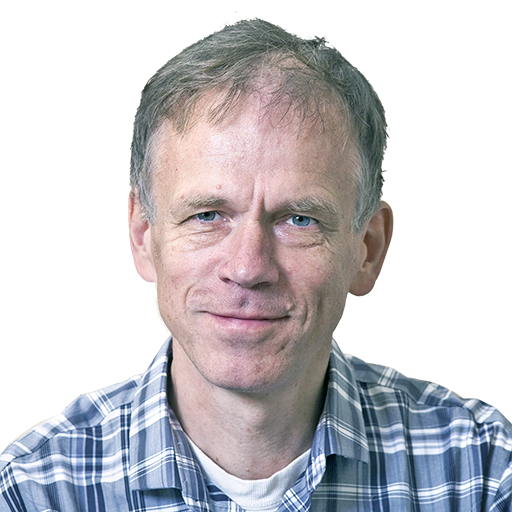
Ayco Tack is a Professor at the Department of Ecology, Environment and Plant Sciences in Stockholm University . The research primarily focuses on plant-microbe-insect interactions , with special emphasis on spatial and eco-evolutionary dynamics across both natural and agricultural systems. Current research includes oak tree ( Quercus robur ) communities Plantago lanceolata below/aboveground interactions Semi-wild coffee systems in SW Ethiopia Teaching activities encompass: Coordinating Statistics for Biologists III (7.5 ECTS) Co-organizing Interactions in Ecological Communities (15 ECTS) Lecturing on Molecular Plant-Microbe Interactions Opportunities exist for: Master's projects in Sweden/Ethiopia PhD supervision in ecological community dynamics Field research across multiple ecosystems
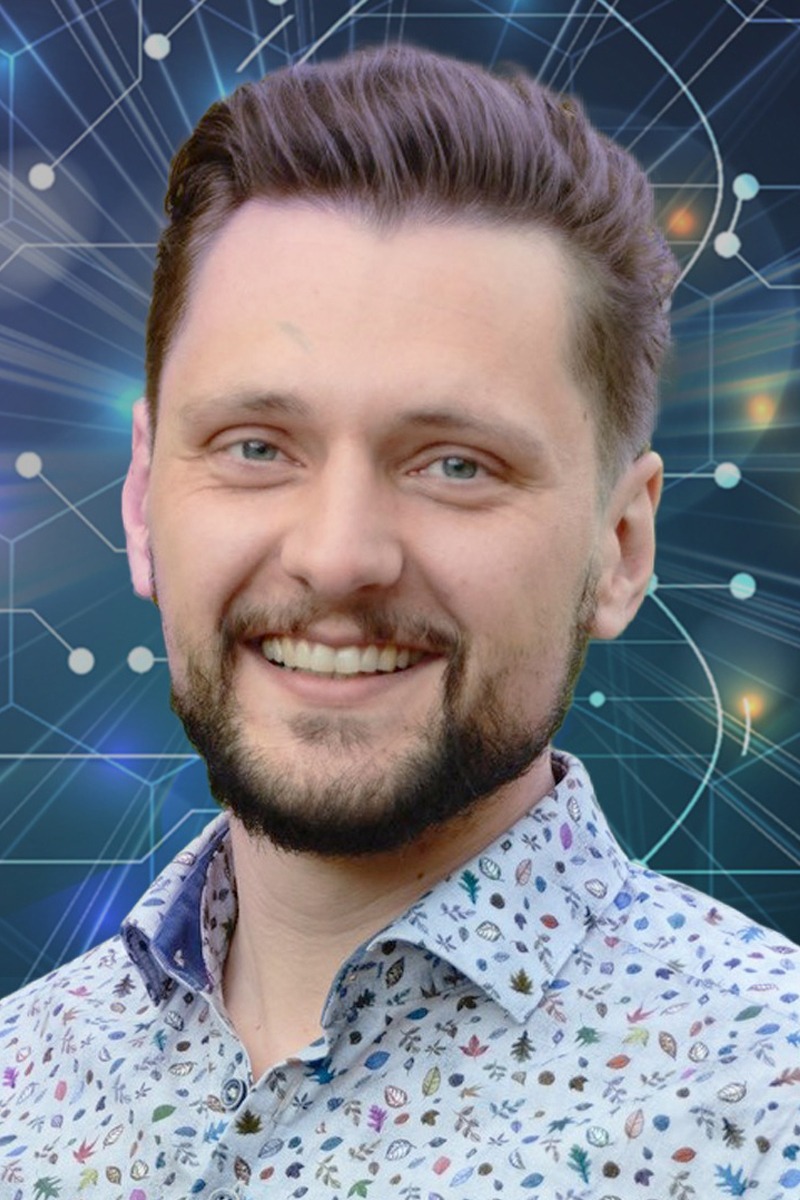
Tobias Andermann is a DDLS Fellow and Principal Investigator at Uppsala University's Evolutionary Biology Centre (EBC), affiliated with SciLifeLab. His research develops quantifiable biodiversity metrics to address the global biodiversity crisis through environmental DNA (eDNA) sampling and machine learning integration. His work focuses on Biodiversity , Bioinformatics , and Environmental DNA analysis, with expertise in Machine Learning , Remote Sensing , and Spatial Analysis . He pioneers eDNA protocols to reconstruct species diversity across the tree of life—particularly for fungi, insects, and protists—using satellite imagery and airborne laser-scan data to model biodiversity patterns. Publications reveal a strong emphasis on deep learning applications for biodiversity assessment, including extinction risk modeling (IUCNN), habitat evolution analysis, and human impact quantification on mammalian diversity. His work bridges computational methods with ecological data to create actionable conservation metrics. Scientific awards: DDLS Fellowship As Principal Investigator, Andermann mentors PhD students Adrian Baggström and Monica Guilera Recoder, and Master's student Mirjam Lichtner. His research receives primary support from SciLifeLab's Digital and Data-Driven Science program, enabling collaborations with taxonomic experts for comprehensive eDNA analysis. His research group at the Evolutionary Biology Centre builds biodiversity databases by integrating eDNA samples with biotic/abiotic predictors, developing machine learning models to predict species distributions and extinction risks while addressing overlooked taxonomic groups through specialized lab protocols.
Kanar Alkass is a Docent (Associate Professor equivalent) at Karolinska Institutet, affiliated with the Department of Oncology-Pathology. She is a key member of Henrik Druid's Forensic Medicine research group, focusing on interdisciplinary research spanning cell biology, forensic science, and clinical medicine. Research Interests Dr. Alkass's research spans several interconnected fields including Cell and Molecular Biology, Clinical Laboratory Medicine, and Forensic Science. Her work particularly focuses on understanding cell turnover dynamics in human tissues, forensic identification methods, and the biological mechanisms underlying various diseases. She has made significant contributions to the understanding of neurogenesis, cardiomyocyte regeneration, and cancer biology through innovative methodologies that combine advanced molecular techniques with forensic applications. Recent Publications Dr. Alkass's recent publications (2023-2025) demonstrate a strong interdisciplinary approach, with work spanning neuroscience, cardiology, oncology, and forensic medicine. Her research often involves large collaborative efforts across multiple institutions, reflecting the broad impact and relevance of her work. The publications show consistent application of radiocarbon dating and molecular techniques to address fundamental questions in human biology, with increasing incorporation of computational methods like deep learning for tissue analysis. Awards and Recognition Awarded Docent title from Karolinska Institutet (2022) Advising and Grants As a Docent at Karolinska Institutet, Dr. Alkass participates in graduate student supervision and contributes to research training. Her extensive publication record in high-impact journals including Nature, Cell, and Circulation indicates successful grant funding for her research activities. Her work shows consistent funding for interdisciplinary projects bridging basic science, clinical medicine, and forensic applications. Laboratory and Research Team Dr. Alkass works within Henrik Druid's Forensic Medicine research group at Karolinska Institutet. Her research involves interdisciplinary collaborations across multiple departments and institutions, focusing on innovative approaches to studying human tissue dynamics and forensic identification. The group maintains strong connections with both clinical departments and basic science research units, facilitating translational research from bench to forensic application.
Julia Höglund is a Postdoctoral Researcher based at the Centre for Palaeogenetics, affiliated with the Department of Zoology at Stockholm University and collaborating with Wageningen University and Research. Her primary research focuses on genomic sequence annotation, mutational load quantification, and the role of genetic variation in evolution and disease. She works on endangered species like the arctic fox and extinct species such as the woolly mammoth. BSc in Biology, Lund University (2012-2015) MSc in Biology, Lund University (2015-2017) MSc in Bioinformatics, Lund University (2015-2017) PhD in Medical Sciences (Statistical Genetics), Uppsala University (2018-2022) Her research spans genetic epidemiology , inflammatory disease mechanisms , and conservation genomics , with expertise in whole-genome sequencing, polygenic risk scores, and evolutionary adaptation studies. Key projects include developing the FlyCADD model for variant scoring, analyzing estradiol's genetic impact on cancer, and exploring owl vision genetics. Recent publications reveal trends in inflammatory disease genetics (2019-2022), variant annotation (2025), and conservation genomics (2017-2019). Her work bridges computational biology, statistical genetics, and evolutionary applications. No scientific awards are explicitly mentioned in the available text. Julia works jointly with Dr. Mirte Bosse at Wageningen University and Research, focusing on genomic models for endangered and extinct species. Her lab affiliations include the Centre for Palaeogenetics and Stockholm University's Department of Zoology.
David Pallarès is a Professor at the Department of Energy Technology, Chalmers University of Technology. His research focuses on the application of fluidized bed technology in energy conversion processes contributing to sustainability and climate change mitigation. He synergizes the development and validation of fluidized bed models with experimental research mainly focused on the dedicated advanced measurement of fluid-dynamics. Since 2018, he has served as vice-Head of Department for doctoral studies, and since 2021, he represents Sweden in the International Energy Agency's work group for Fluidized Bed Conversion. Professor Pallarès' research interests span multiple areas of energy technology with a strong emphasis on fluidized bed systems. His work encompasses the fundamental understanding of fluid-dynamics in fluidized beds, development of advanced measurement techniques for solids flow, and application of these technologies to sustainable energy conversion processes. He has made significant contributions to the understanding of particle transport phenomena, solids mixing, and heat transfer in bubbling and circulating fluidized beds. His research also extends to carbon capture technologies, particularly sorbent-based direct air capture and calcium looping, as well as thermochemical energy storage systems that can integrate with district heating networks. With 132 publications and involvement in 16 research projects, Professor Pallarès has established himself as a leading expert in fluidized bed technology. His recent work shows a strong trend toward addressing climate change challenges through innovative energy technologies, with increasing focus on carbon capture, utilization and storage (CCUS) solutions and renewable energy integration. The interdisciplinary nature of his research bridges chemical engineering, energy technology, and environmental science to develop practical solutions for sustainable energy systems. As vice-Head of Department for doctoral studies since 2018, Professor Pallarès plays a key role in guiding and mentoring PhD students at Chalmers. His leadership extends internationally through his representation of Sweden in the International Energy Agency's work group for Fluidized Bed Conversion since 2021. His research portfolio includes diverse funding sources, with projects supported by the European Commission, Swedish Research Council, Swedish Energy Agency, and industry partners like Valmet.
Mårten Palme is a Professor at the Department of Economics, Stockholm University. His research focuses on labor economics and empirical public finance, with particular emphasis on intergenerational mobility, health inequality, private health care insurance, and pension system redistribution. Key Research Areas: Labor Economics Empirical Public Finance Health Inequality Intergenerational Mobility Pension System Analysis Recent Publications: 2025: Income gradients in life expectancy 2024: Judicial identity analysis, parental education-health gradients 2023: IVF policy impacts, pension reform incentives
Axel Brandenburg serves as Nordita Professor and Deputy Director at Nordita, hosted by Stockholm University, where he holds a professorship in the Department of Astronomy. Educational and career trajectory: PhD from University of Helsinki (1990) Postdoctoral positions at Nordita (Copenhagen) and High Altitude Observatory (Boulder, Colorado) Assistant Professor at Nordita (1990s) Full Professor of Applied Mathematics at University of Newcastle upon Tyne (1996) Returned to Nordita as full Professor (2000) Professor at Stockholm University Department of Astronomy following Nordita's relocation to Sweden (2007) His research centers on astrophysical fluid dynamics with emphasis on magnetic field generation through turbulent dynamos. Key contributions include demonstrating magneto-rotational/dynamo instability feedback in accretion discs and resolving suppression mechanisms for large-scale dynamo effects. Applications span solar/stellar magnetism, galactic fields, and early Universe cosmology. He maintains the Pencil Code—a public-domain astrophysical fluid dynamics simulation tool optimized for distributed-memory clusters—with applications in turbulence and magnetic field modeling. Secured a €2.22M European Research Council Advanced Grant (2009) for Astrophysical Dynamos research, funding 4 PhD students, 4 postdocs, 1 assistant professor, and senior visitors. This project significantly advanced computational modeling of cosmic magnetism while training next-generation researchers. As Deputy Director of Nordita, he leads scientific programming including workshops, schools, and collaborative research initiatives in theoretical physics, fostering Nordic and international partnerships in astrophysics and related fields.
Håkan Grahn is a Professor of Computer Engineering at the Department of Computer Science, School of Computing, Blekinge Institute of Technology (BTH) in Sweden. He has been a faculty member since 1996, becoming a full professor in 2007. His academic leadership includes serving as Head of Department (1999-2002) and Dean of Research (2011-2013) at BTH. He leads multiple significant research projects including GPAI (General Purpose AI Computing) and Green Clouds, with funding from ELLIIT, the Knowledge Foundation, and Vinnova. His educational background includes: M.Sc. in Computer Science and Engineering (1990) from Lund University Ph.D. in Computer Engineering (1995) from Lund University Håkan's research spans several interconnected domains in computer science and engineering, with a strong emphasis on practical applications. His work in computer architecture focuses on optimizing system performance through innovative cache coherence protocols and memory management techniques. In the realm of parallel computing , he investigates multicore systems, GPU computing, and thread-level speculation to enhance computational efficiency. His research in AI and machine learning addresses energy efficiency, data stream mining, and practical applications in areas like district heating systems and airborne networks. The integration of image processing with machine learning forms another significant strand of his work, particularly in historical document analysis and medical imaging applications. These research areas converge in his leadership of major initiatives like BigData@BTH and GPAI, where he bridges theoretical advances with real-world implementation challenges. Analysis of Håkan's recent publications reveals a clear trajectory toward increasingly applied research with strong industry connections. While maintaining foundational work in computer architecture, his output increasingly focuses on practical AI applications, energy efficiency in computing, and domain-specific implementations in sectors like telecommunications, energy systems, and defense. The interdisciplinary nature of his work is evident in collaborations spanning computer science, engineering, and domain-specific applications, with a growing emphasis on sustainability and resource optimization in computing systems. Håkan has successfully supervised numerous doctoral students, with ten graduates and six current Ph.D. candidates. His research has been supported by substantial funding from: The Knowledge Foundation (BigData@BTH, HINTS, Green Clouds) ELLIIT (GPAI project) Vinnova (FANET-MCA, Directed COM & EW) Industry partners including Ericsson, Saab, Telenor, and Fortnox He is actively involved in multiple research groups including DISL (Distributed and Intelligent Systems Lab), CCS-Lab (Communication and Computer Systems Research Lab), and previously PAARTS (Parallel Architectures and Applications for Real-Time Systems). His leadership extends to organizing academic events like the Nordic workshop on Multi-Core Computing and the Swedish Artificial Intelligence Society workshop.
Christer Åhlund is a Professor and Head of Subject in Pervasive and Mobile Computing at Luleå University of Technology, Department of Computer Science, Electrical and Space Engineering. He is based in Skellefteå and leads research in distributed computer systems. University: Luleå University of Technology School: Department of Computer Science, Electrical and Space Engineering Department: Computer Science Position: Professor and Head of Subject Professor Åhlund's research interests span network protocols, IoT, cloud-based and distributed data processing, AI/ML, performance analysis, and cybersecurity. For over a decade, his research has focused on digital solutions for societal functions, particularly 'Smart Cities/Regions.' His work integrates theoretical foundations with practical applications to address real-world challenges in urban and regional development. His approach combines technical expertise with an understanding of societal needs, creating solutions that are both innovative and implementable in real-world settings. His research demonstrates a strong trend toward integrating AI/ML techniques with distributed systems to create intelligent, responsive infrastructure. The focus on Quality of Experience (QoE) in heterogeneous networks shows his commitment to user-centered design in technical systems. His recent work on anomaly detection in energy systems and XR applications demonstrates the expanding scope of his research into new application domains. ENiSDA project ESUDA project ACECyberSafe project SSiO project Professor Åhlund has supervised numerous PhD students whose work focuses on smart applications, IoT, machine learning in various contexts, and network resource management. His leadership extends beyond direct supervision to establishing research centers, including 'Security in Society and Critical Infrastructures' at LTU in 2016. He previously served as Scientific Director for LTU's 'Enabling ICT' research and innovation area from 2013-2019 and as department head from 2003-2012. He currently teaches Applied Computer Security, Internet Security, Data Science programming, and Advanced Computer Networks, drawing on his extensive industry experience (12 years in ICT) to bridge theory and practice for students.
Professor Karin Hårding is a marine ecologist at the Department of Biology and Environmental Sciences, University of Gothenburg, where she leads the Seal Population Dynamics Research Group. Her work focuses on population biology of marine mammals, particularly seal species in the Baltic Sea and Skagerrak regions. Her research examines how environmental factors including climate change, disease outbreaks, hunting pressure, and pollution affect population dynamics. Key methodologies include mathematical modeling, drone-based monitoring, and long-term ecological data analysis. Current projects investigate PCB contamination effects, ecosystem changes, and innovative population assessment techniques. Professor Hårding's publication record shows consistent output in high-impact journals including Journal of Animal Ecology , Marine Mammal Science , and Environment International . Her work demonstrates strong interdisciplinary collaboration across European institutions. Notable research contributions include: Development of toxicokinetic models for pollutant impacts on seal populations Drone-based monitoring systems for pinniped body size assessment Long-term analysis of 120+ years of Baltic grey seal data Genomic studies of harbor seal population structure Her research directly informs marine conservation policy through population viability assessments and identification of extinction risks from multiple stressors. The Seal Population Dynamics group maintains active field projects in the Baltic region with international collaborations.
Peter Dahlin is a Senior Lecturer at Mälardalen University's School of Business Society and Engineering, where he teaches in the Division of Economy and Political Science. Concurrently, he serves as a Visiting Scholar at the University of Exeter, maintaining affiliations with their Business School, Institute for Data Science and Artificial Intelligence, and Exeter Center for Social Networks. His research program centers on: Big Data infrastructure development and analysis methodologies Network analysis of business ecosystems and organizational structures Innovation processes and performance metrics in companies Determinants of startup survival and failure Advanced data collection techniques including distributed systems He directs the Business Research Data Lab, which operates a custom-built distributed system for continuous large-scale data acquisition. His research using network analytics has produced significant findings regarding regional business variations, board appointment discrimination mechanisms, and startup viability factors.
Dr. Chen-Wei Yang is a Senior Lecturer at Luleå University of Technology specializing in Dependable Communication and Computation Systems. He works within the Department of Computer Science, Electrical and Space Engineering, focusing on the intersection of computer science and energy systems. His research interests include: Engineering Smart Energy Systems Systems engineering of cyber-physical systems Data and communication interoperability Distributed automation system design Semantic modelling Dr. Yang has developed significant expertise in substation automation systems (IEC 61850) and distributed automation systems (IEC 61499) for industrial applications. His recent publications show a strong focus on energy automation systems, smart grid technologies, and digital twin implementations for energy infrastructure. His work spans both theoretical research and practical implementation, with emphasis on maintainability, interoperability, and real-time performance. Professional affiliations include: IEEE IES TCII - Sub-TC Chair on Smart Energy and Smart Grids IEEE P2805.1 WG - Self-Management Protocols for Edge Computing Node Luleå Toastmasters - Vice-president of Education Dr. Yang actively supervises PhD students and teaches multiple undergraduate and graduate courses related to programming, software design, and real-time systems. His approach combines strong theoretical foundations with practical applications in the energy sector.
Daswin De Silva serves as a Visiting Professor at Luleå University of Technology within the Department of Computer Science, Electrical and Space Engineering. His academic role centers on advancing research in dependable communication and computation systems, contributing specialized expertise through teaching and collaborative projects. His research focuses on designing robust communication infrastructures and computational frameworks that maintain functionality under failure conditions or adverse environments. Key areas include fault-tolerant network architectures, distributed system reliability, and resilient computing models applicable to critical infrastructure and aerospace systems. This work bridges theoretical computer science with practical engineering solutions for high-stakes operational scenarios. As a visiting academic, Dr. De Silva engages in knowledge exchange with faculty and researchers, enhancing the department's capabilities in system dependability. His current appointment reflects active collaboration with LTU's research ecosystem, though specific laboratory affiliations or team structures remain undocumented in available sources. The absence of publication records in provided materials suggests his primary contributions may emphasize pedagogical engagement and short-term research partnerships during this visiting tenure.