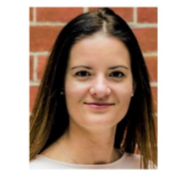
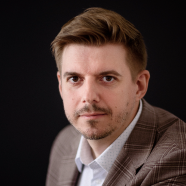
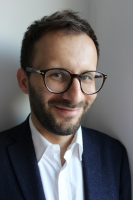
Michał Wójcik serves as Assistant Lecturer in the Department of Computer Systems Architecture within the Faculty of Electronics, Telecommunications and Informatics at Gdańsk University of Technology. Concurrently, he holds a technical role as Senior Specialist – Design Programmer in the Team for Development and Maintenance of Central University Systems (CUI), operating from Building A of the Faculty (room 523) with contact number 583471867. His research bridges computer science with environmental and business applications, focusing on Software Engineering (RESTful systems, Jakarta EE), High Performance Computing (parallel application simulation), and Environmental Informatics (marine forecasting, benthic habitat mapping). Key projects include the FindFISH numerical forecasting platform for fisheries and MERPSYS simulation environment for HPC systems, demonstrating strong interdisciplinary collaboration. Analysis of his 2017-2024 publications reveals evolving expertise from core HPC simulation toward applied environmental informatics, with recent work emphasizing open innovation competence profiling and marine ecosystem modeling. His publications consistently address real-world problems through computational solutions, particularly in Baltic Sea environmental monitoring and multi-partner innovation ecosystems.
Agata Siemaszko is an Assistant Lecturer at the Department of Building Engineering, Faculty of Civil and Environmental Engineering, Gdańsk University of Technology. She maintains an active research profile while contributing to academic instruction in civil engineering disciplines. Dr. Siemaszko's research interests span multiple critical areas of modern civil engineering: Bayesian Networks applications in construction management Risk assessment methodologies for urban construction projects Metaheuristic optimization techniques for engineering decision-making Life cycle assessment and cost analysis of building systems Traffic-induced structural vibrations and safety assessment Decision support systems for engineering management under uncertainty Her publication record reveals a clear evolution from foundational risk assessment research to sophisticated computational approaches integrating Bayesian Networks with metaheuristic optimization. This progression demonstrates her commitment to developing practical tools that address the complex, multi-criteria challenges inherent in modern construction management where stakeholders often have conflicting interests. Her most recent work continues to push boundaries with 2025 publications focusing on optimization techniques for building project management. Dr. Siemaszko has earned recognition for her scholarly contributions through several prestigious awards: Second Prize for outstanding publication 'Problems of maintenance of historic bridge structures' at the 14th Scientific Conference of Doctoral Students of Civil Engineering Departments (2014) Winner of the competition for best scientific works concerning the Żuławy region of the Vistula Delta (2012) Third place in the competition for master's and doctoral theses thematically related to the Vistula River (2010) Her research activities include grant-supported work such as the Miniatura 7 grant DEC-2023/07/X/ST8/00317 for vibration measurements of residential buildings. She has contributed to numerous research projects addressing risk management, construction optimization, and structural safety assessment in challenging urban environments. Dr. Siemaszko's laboratory work focuses on structural vibration testing and monitoring, particularly examining how traffic-induced vibrations affect residential buildings. Her approach combines empirical measurement with advanced probabilistic modeling to develop practical risk assessment frameworks for building safety and longevity.
Dr. Robert Ostrowski serves as an Assistant Professor at the Department of Algorithms and System Modeling within the Faculty of Electronics, Telecommunications and Informatics at Gdańsk University of Technology. His academic work focuses on theoretical computer science with emphasis on graph-based network problems. His research primarily explores graph theory and distributed algorithms , specializing in multi-agent systems for network security applications. Key investigation areas include heterogeneous agent searching, energy-constrained mobile agents in tree networks, and non-monotone graph searching strategies where traditional monotonicity assumptions do not hold. His work bridges theoretical foundations with practical network security implementations. Dr. Ostrowski's publication record demonstrates consistent focus on algorithmic solutions for network problems. His recent work shows increasing specialization in heterogeneous agent models and energy-aware protocols, with publications appearing in journals like Journal of Computer and System Sciences and Theoretical Computer Science . His academic advising and grant activities are not publicly documented in available sources. Similarly, no scientific awards or fellowships are mentioned in the provided materials.
Dr. Jakub Wszołek is an Assistant Professor at Gdańsk University of Technology, working in the Department of Decision Systems and Robotics within the Faculty of Electronics, Telecommunications and Informatics. His research focuses on intelligent systems, robotics, and network-based monitoring solutions for complex industrial applications. Dr. Wszołek's research interests include: Robotics and decision systems Intelligent building management systems Network monitoring and distributed control systems Electrical circuit design and analysis Economic lighting analysis for transportation infrastructure Web-based simulation environments His work demonstrates a strong focus on practical applications of intelligent systems in building management, industrial monitoring, and electrical engineering. Dr. Wszołek has developed innovative solutions like the Network Object Monitor (SMO) for autonomous diagnostic, monitoring, control and management systems for intelligent buildings, as well as web-based tools like SchematicLab for electrical circuit design. Professional recognitions: No specific awards mentioned in available information Dr. Wszołek actively contributes to research in intelligent systems and has collaborated with researchers like Z. Kowalczuk and A. Cichosz on various projects related to network monitoring, intelligent building management, and electrical circuit design tools. He is involved with research projects focused on developing simulation environments for economic lighting analysis of highways and creating web-based tools for electrical circuit design and analysis.
Radosław Idzikowski is a researcher at Wrocław University of Science and Technology, specializing in distributed intelligence and computational optimization. His work intersects quantum computing, parallel programming, and artificial intelligence, with a focus on solving complex problems like task scheduling and vehicle routing. He holds a Doctor of Engineering (Dr. Eng.) degree and maintains active academic engagement through lectures and consultations. His contact email is radoslaw.idzikowski@pwr.edu.pl , and he holds office hours on Thursdays from 11:00 to 13:00 in room 231A, building C-3, at Janiszewskiego 7 Street, Wrocław.
Dr. Katarzyna Wyrzykowska is an Assistant Professor at the Institute of Philosophy and Sociology of the Polish Academy of Sciences (IFiS PAN) in Warsaw, where she conducts research on the sociology of music, cultural stratification, and lifestyle studies. She is a member of the Team for Research on Social Structure and has held significant leadership positions within the Polish Sociological Association, including her current role as a Member of the Board of the Art Sociology Section since 2025. Dr. Wyrzykowska earned her PhD from the School of Social Sciences at IFiS PAN with a dissertation on youth participation in musical culture as an element of lifestyle. Her academic journey began with a Master's degree in Sociology from the University Cardinal Stefan Wyszynski in Warsaw, where she specialized in intercultural communication and completed research on Erasmus program participation and cross-cultural perception. Her research primarily focuses on how musical tastes function as markers of social distinction in contemporary Poland. In her current OPUS13 grant project 'Musical Distinctions,' she examines the relationship between musical preferences and social stratification, investigating how historical transformations since 1989 have shaped Polish musical culture. Her work challenges simplistic notions of cultural democratization, revealing complex patterns where musical taste continues to function as a mechanism of social distinction despite apparent cultural leveling. Dr. Wyrzykowska's publications demonstrate a consistent trajectory of scholarly contribution to the sociology of culture, with particular emphasis on music. Her recent work explores topics such as class distances in Polish television consumption, educational practices and cultural transmission in families, and the homology of musical tastes in Poland. 'Wszyscy ludzie są równi, a ja nie jestem snobem…': O strategiach różnicowania i oceny w obszarze muzyki (2025) Dla kogo Thermomix, a dla kogo Bentley? Symboliczne i "obiektywne" dystanse klasowe w Polsce (2025) Seriale telewizyjne a dystanse klasowe w Polsce (2023) Praktyki wychowawcze a transmisja wzorów kulturowych w rodzinie (2022) The Homology of Musical Tastes in Poland (2020) As an educator, Dr. Wyrzykowska has taught sociology students at the University Cardinal Stefan Wyszynski (2012-2016) and the Polish-Japanese Academy of Computer Techniques (2016). Her teaching experience spans cultural anthropology, contemporary sociological theories, and social informatics, demonstrating her commitment to sharing knowledge about cultural sociology with students across disciplines. Dr. Wyrzykowska is also an active participant in academic discourse, regularly presenting at national and international conferences on topics ranging from the sociology of music to cultural participation and social stratification. Her research has practical implications for cultural policy and music education in Poland, bridging theoretical insights with real-world applications.
Paweł Sitkiewicz is an Associate Professor at the Department of Film and Media within the Institute of Culture Studies, Faculty of Languages, University of Gdańsk. Appointed professor UG in 2014, he has held significant academic roles including vice-dean for education (2016-2020) and coordinator of Erasmus+ programs (2011-2012), while currently serving as scientific advisor for the student Film Studies Club. His academic journey began with a Master's in Polish Philology from UG (2004), followed by a PhD in Film Studies (2007) and habilitation (2013) based on his seminal work 'Polish School of Animation'. MA Polish Philology, University of Gdańsk (2004) PhD in Film Studies, UG Faculty of Philology and History (2007) Habilitation, UG Faculty of Philology (2013) Sitkiewicz's research centers on animation history with particular emphasis on Polish animation, interwar mass culture, and silent cinema. His work explores cinema as social practice (movie-going), experimental film techniques, and intermedial connections between film, literature, and visual arts. He has pioneered studies on pre-war Polish animation, Disney's reception in Poland, and the cultural history of comics, often contextualizing these within broader European frameworks. Key research pillars: Historical analysis of animation techniques, Cultural reception of cinema, Interwar visual culture, Comics historiography. His publication portfolio reveals a consistent focus on historical and cultural dimensions of film and animation, with recurring themes of Polish cinematic identity, technological transitions (e.g., digital revolution's impact on animation), and cross-media influences. The works demonstrate deep engagement with primary sources from interwar Poland while connecting to contemporary theoretical frameworks in film studies. Scientific recognition includes: Nominations for Bolesław Michałek Award (2010, 2012) Distinction in UG 'Teacher of the Year' competition (2016) Finalist for Gdynia Literary Award (2020) Finalist for Warsaw Literary Award (2020) UG Rector's First Degree Award (2020) As an academic mentor, Sitkiewicz supervised the Film Studies Student Club for nine years (2007-2016). His grant leadership includes Erasmus+ coordination, National Classification Frameworks development, and EU-funded ProUG project management (2018-2020), alongside contributions to UG's e-learning initiatives (2016-2020). These projects focused on educational innovation and institutional development within humanities. He maintains active roles in the Polish Society for Film and Media Studies, Literary Society of Adam Mickiewicz, and serves on editorial boards for 'Panoptikum' and 'Zeszyty Komiksowe'. His participation in the 'Anatomia Fantastyki' Scientific Council and comics studies forums demonstrates commitment to interdisciplinary dialogue between film, animation, and graphic narrative communities.