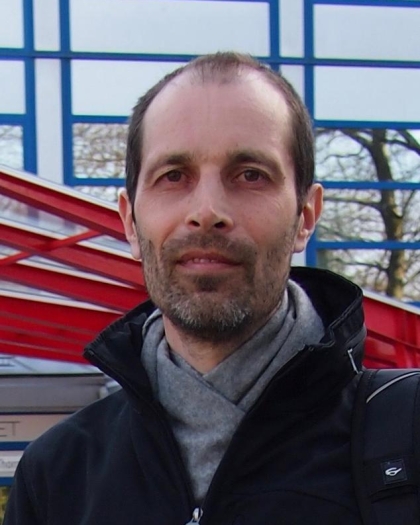
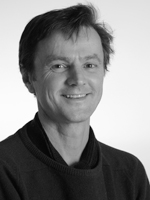
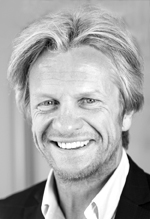
Ajit Jha is an Associate Professor at the Department of Engineering Sciences , University of Agder , Norway, with research expertise in photonic sensing, robotics, machine learning, and sensor fusion. His work bridges theoretical advancements with real-world applications in autonomous systems, industrial automation, and biomedical imaging. Research Areas: Photonic sensing, Robotics, Machine Learning, Computer Vision, Sensor Fusion, Mechatronics Recent Publications demonstrate innovative applications of deep learning to thermal imaging (gesture recognition), reinforcement learning for drone landing, and sensor fusion techniques for autonomous navigation. His interdisciplinary approach combines photonics, radar systems, and AI to solve complex engineering problems.
Ingrid Mann is a Professor in Space Physics at the UiT The Arctic University of Norway , Department of Physics and Technology. She leads and participates in multiple externally funded research initiatives including the Cosmic dust injection into the upper Earth atmosphere , MXD 2 rocket project to study the mesosphere , and EISCAT Research infrastructure project . ORCID: 0000-0002-2805-3265 Member of research group Space Physics Member of projects: Intermittent fluctuations in physical systems , Maxidusty-2 , CASCADE , Codia , Boosting Space Business , and Forskningsparken 1 A216 Her research spans space and atmospheric physics , focusing on dusty plasmas , cosmic dust dynamics , and polar atmosphere interactions . She employs spacecraft observations , EISCAT radar , rocket experiments , and machine learning for data analysis. Recent publications highlight cosmic dust detection with Parker Solar Probe and Solar Orbiter , PMSE multilayer properties , and dust impact signal modeling . Her work integrates radar , optical , and spacecraft data to understand polar atmospheric systems. She teaches FYS-2000 Kvantemekanikk , FYS-2019 Sun, Planets, and Space , and supervises G-Chaser student rocket projects . Her research group contributes to EISCAT_3D infrastructure and interplanetary dust modeling . Co-edited books: Nanodust in the Solar System (2012) Small Bodies in Planetary Systems (2008) Modern Meteor Science (2005)
Dag Johansen is a Professor in the Department of Informatics at UiT The Arctic University of Norway, Tromso campus. His work spans multiple research areas at the intersection of computer science, sports science, medicine, health technology, and nutrition science. He leads the interdisciplinary "Corpore Sano" research center and is actively involved in several research groups including the Cyber Security Group (CSG) and Crime Control and Security Law. Professor Johansen's research focuses on developing fundamental software solutions for secure and error-free data processing in heterogeneous distributed systems, ranging from lightweight "Internet of Things" devices and mobile phones to large-scale cloud solutions. His work particularly emphasizes applications in sports technology, edge computing, and compliance technology. His research interests include distributed systems, cybersecurity, sports technology, edge computing, data privacy, AI for sports analytics, multimedia forensics, and compliance technology. His recent publication trends show a strong focus on AI applications for sports video analysis, particularly in soccer and ice hockey, where his team has developed AI-based cropping systems for social media representations. He also has significant work in data privacy and GDPR compliance, especially regarding the "third country problem," as well as applications of AI in sustainable fishing practices. His 2024-2025 publications demonstrate continued work in self-healing microservices, lightweight encryption for video feeds, and virtual reality training environments. Professor Johansen is actively involved in mentoring students and research collaborators, as evidenced by his extensive publication record with numerous co-authors including doctoral students and postdoctoral researchers. His work has received funding through various research projects focused on data analytics, privacy technology, cybersecurity, and sports technology applications. He leads the interdisciplinary "Corpore Sano" center, which brings together researchers from computer science, sports science, medicine, health technology, and nutrition science. His work also involves collaboration with the "Njord" project focused on sustainable fishing through AI applications, and he's involved in developing the "Áika" distributed edge system for AI inference.
Sergej Stoppel is currently a researcher (PostDoc) in the visualization group at the University of Bergen. His academic background includes a Mathematics master's degree (2014) and a PhD in 2018, both from the University of Bergen. His research focuses on visual data science, with an emphasis on interactive visualization techniques, human-computer interaction, and physical visualization systems. He has authored/co-authored numerous papers on topics such as hexagonal map enhancements, spatio-temporal data interaction, and low-cost physical art generation. Education: M.Sc. Mathematics (2014), University of Bergen PhD in Visualization (2018), University of Bergen Research Interests: His work spans data visualization, scientific visualization, and interactive techniques. Notable contributions include Vol²velle (printable interactive volume visualization widgets), Firefly (virtual illumination drones), and LinesLab (low-cost art generation systems). He explores methods to bridge the gap between virtual and physical visual representations, emphasizing user-centric design. Publications: His recent work includes advancements in hexagonal map visualization (2022), spatio-temporal selection techniques (2020), and illumination automation (2019). These contributions highlight his focus on enhancing data interpretation through novel interaction paradigms. Labs/Teams: Active member of the VisGroup at the University of Bergen, collaborating on projects like MetaVis and VIDI. His work is supported by grants involving visualization and medical imaging applications.
Jaakko Timo Henrik Järvi is a Professor in the Department of Informatics at the University of Bergen, Norway, with additional affiliations at the University of Turku, Finland. His research focuses on programming language design, generic programming, and human-computer interaction, particularly in GUI frameworks and software reuse. His research interests include generic programming, programming language design (especially the Magnolia language), high-performance computing, array programming, and GUI engineering. He emphasizes formal methods and algebraic specifications to build reusable and efficient software systems. His work bridges theoretical foundations with practical applications in software development and education. The recent publications highlight a strong trend in declarative GUI frameworks, multi-selection models, and generic programming. His work explores domain-specific languages for GUI structure manipulation, reusable selection semantics across platforms, and optimizing array computations using the Mathematics of Arrays. These efforts reflect a consistent focus on software abstraction, correctness, and reusability. Jaakko Järvi has supervised doctoral students, including Tetiana Yarygina, whose dissertation explored microservice security. While no specific grants are detailed, his work on VisAST was supported by the Research Council of Norway (Project 250683), indicating active external funding. He frequently collaborates with researchers like Magne Haveraaen, Knut Anders Stokke, and Sean Parent. He contributes to tools and frameworks such as the MultiselectJS library and the VisAST educational tool. These are outcomes of collaborative research teams focused on improving software development practices and computer science education.
Jo Herstad is an Associate Professor in the Department of Information Systems Design at the University of Oslo , where she has worked since 2002. With a background in industry at Ericsson (1990-2003), Herstad bridges technical expertise with academic rigor. She teaches courses including: IN1030 - Introduction to Design, Use, Interaction (since 2017) IN2000 - Software Engineering with Project Work IN5480 - Interaction with AI and Autonomous Systems Research Focus: Her work explores Human-Computer Interaction through: Universal Design principles in digital environments Human-Robot Interaction for domestic applications Inclusive Technology across diverse populations Participatory Design methodologies Privacy Dynamics in smart homes Multimodal Systems for elderly care Key Publications (2017-2024) examine motion profiling in robotics, equitable digital feedback, and socio-technical systems. Her supervision includes 15+ master's theses on topics ranging from chatbot ethics to universal design in education. Current projects focus on: Artificial Intelligence and Sensor Technology Multimodal Elderly Care Systems (MECS) Podcast Accessibility (PUD) RHYME: Music Technology for All
**Daniel Romero** is a **Professor** in the **Department of Information and Communication Technology** at the **University of Agder**, Norway. His research focuses on UAV communications, time-series analysis using machine learning and network science, and decentralized processing for sensor networks. He holds a Ph.D. in Signal Theory and Communications from the University of Vigo (2015), an M.Sc. in Signal Theory (2011), and a Telecommunication Engineering degree (2009). **Education**: Ph.D. in Signal Theory and Communications, University of Vigo (2015) M.Sc. in Signal Theory and Communications, University of Vigo (2011) Telecommunication Engineering, University of Vigo (2009) **Research Interests**: His work spans UAV communication systems (focusing on low-latency, high-reliability networks), time-series analysis for complex systems (using ML and network science), and decentralized computation in sensor networks to improve robustness and hardware efficiency. Recent projects include radio map estimation for mmWave beam alignment, spoofing detection via graph neural networks, and aerial base station placement optimization. **Publications**: Over 30+ peer-reviewed articles in top venues like IEEE Transactions on Wireless Communications and ICC. Recent trends emphasize radio map estimation (2023–2024), UAV-enabled spectrum surveying (2022), and robust D2D communications (2022). **Advising & Grants**: Teaches PhD courses (Statistical Signal Processing, Advanced Optimization) and leads the **Advanced Signal Processing Lab (ASL)**. Collaborates with the **CIEM (Center for Integrated Emergency Management)** on crisis-related communication systems. **Labs/Teams**: Directs the Advanced Signal Processing Lab (ASL.uia.no) and contributes to CIEM, applying ML and signal processing to emergency management challenges.
Tor Skeie is a Professor at the University of Oslo's Department of Informatics, specializing in networks and distributed systems. His research focuses on high-performance networking, InfiniBand technologies, and adaptive routing systems. Current investigations include automated parameter tuning for reservoir simulations, adaptive routing in InfiniBand hardware, and modeling WiFi quality attenuation. His work develops efficient solutions for virtualized HPC environments and cloud computing infrastructures. Recent publications demonstrate innovations in network modeling, adaptive routing algorithms, and performance analysis of distributed systems. Research collaborations span European projects on high-performance networking infrastructures. Leads the Networks and Distributed Systems (ND) research group investigating fault-tolerant routing, network virtualization, and congestion control mechanisms.
Stefano Nichele is a Professor at the Department of Computer Science and Communication, Østfold University College, Norway. He holds additional roles as Professor II at OsloMet and has served in leading academic positions since 2014. His research focuses on Artificial Life (ALife), Neuro-Inspired AI, and Machine Learning, with a particular emphasis on cellular automata, reservoir computing, and neuro-inspired substrates. Nichele co-directs the Østfold AI (ØAI) hub and is an active member of IEEE, ELLIS, and the Norwegian AI Research Consortium (NORA). He earned his PhD in Computer Science from NTNU (2015) and completed his MSc at the University of Insubria, Italy. His work bridges computational systems and biological substrates, exploring criticality in neural networks and quantum-evolutionary algorithm interactions. He has received prestigious awards, including the Young Research Talent grant (2019) and the Distinguished Early-Career Investigator award (2024). Nichele’s research spans theoretical and applied domains, with over 50 publications on cellular automata dynamics, neuro-inspired robotics, and AI ethics. His recent projects include studying in vitro neural networks for computational capacity assessment and developing frameworks for body-brain co-evolution in soft robotics. Education: PhD in Computer Science, NTNU (2015) MSc in Computer Science, University of Insubria (2009) Awards: Young Research Talent grant (2019) Distinguished Early-Career Investigator (2024) Grants & Roles: Co-director of the Østfold AI hub Board member of NORA (Norwegian AI Research Consortium) Labs & Collaborations: Focus on neuro-inspired AI systems and unconventional computing Partnerships with institutions like Simula Metropolitan and the International Society for Artificial Life (ISAL)
Dr. Hongbin Liu is a Senior Lecturer at the Department of Informatics, King’s College London, UK, affiliated with the Centre for Robotics Research. His work focuses on robotic tactile sensing, soft robot design, and haptic exploration. Research Interests: Robotic tactile sensing Learning objects by touch Soft and flexible robot design Modelling of soft interactions Dr. Liu’s recent publications highlight advancements in robotics and sensor technology , particularly in tactile perception, medical device design, and continuum robot navigation. His work integrates Bayesian classifiers for autonomous object recognition, polymer-based optical waveguides for triaxial tactile sensors, and deep learning for medical diagnostics. Collaborations span institutions like Imperial College London, The University of Hong Kong, and Medical University of Vienna. Professional Affiliation: King’s College London Department of Informatics Centre for Robotics Research (research group)
Abbas Roozbahani is an Associate Professor in the Department of Building and Environmental Technology at the Faculty of Science and Technology, Norwegian University of Life Sciences (NMBU). His academic expertise lies in Water Infrastructure Engineering, where he contributes to research, teaching, and project leadership in sustainable urban water systems. His research interests include: Sustainable water management Urban water transport systems (drinking water, wastewater, stormwater) Risk assessment of water infrastructure Simulation and optimization of water systems Hydroinformatics and artificial intelligence Asset management for urban water infrastructure The analysis of his recent publications (2022–2025) reveals a strong focus on integrating advanced computational methods—such as Bayesian Networks, Fault Tree Analysis, machine learning (e.g., LSTM), and multi-criteria decision-making (MCDM)—into water resources management. His work frequently addresses urban stormwater optimization, drought and climate change risk assessment, groundwater forecasting, and the water-food-energy nexus, demonstrating a consistent trend toward data-driven, risk-informed, and sustainable solutions for complex water systems. Dr. Roozbahani teaches graduate-level courses including: THT301 - Asset Management for Urban Water Infrastructure THT302 - Analysis and Design of Water Distribution Networks THT261 - Introduction to Water and Wastewater Systems (co-instructor) THT313 - Water Management in Changing Conditions (co-instructor) THT390 - Preparations for the Master's Thesis (co-instructor) He has supervised multiple MSc and PhD students and led projects funded by academic and private institutions. His collaborative research spans international institutions, with frequent co-authorship on topics related to risk modeling, AI in hydrology, and sustainable infrastructure planning.
Fedor Fomin is a Professor in the Department of Informatics at the University of Bergen. His research focuses on Theoretical Computer Science, including Graph Algorithms, Parameterized Complexity, Combinatorics, and Combinatorial Games. He is affiliated with the Norwegian Academy of Science and Letters, the Norwegian Academy of Technological Sciences, and the Academia Europaea, and holds fellowships from ACM and EATCS. His work has been recognized with the EATCS Nerode Prize in 2015 and 2017. Dr. Fomin has authored influential books such as Kernelization: Theory of Parameterized Preprocessing and Parameterized Algorithms , which are foundational in the field of algorithm design. His recent publications explore cutting-edge topics in parameterized complexity, graph theory, and distributed computing, with contributions to approximation algorithms, kernelization, and combinatorial optimization. His awards and honors reflect his significant impact on theoretical computer science. Fomin has been awarded an ERC Advanced Grant and has mentored numerous researchers, contributing to the advancement of algorithmic techniques and their applications.
Dr. Jacob Joseph Lamb is an Associate Professor at the Norwegian University of Science and Technology (NTNU), affiliated with the Department of Energy and Process Engineering within the Faculty of Engineering. He serves as the Study Program Manager for the Bachelor of Engineering in Renewable Energy (BIFOREN) and leads the Digital Energy Systems laboratory group. His roles include WP8 leadership in the FME Battery initiative and Theme Leader for Efficient Energy Use at ENERSENSE. Education: PhD in Energy and Process Engineering, NTNU (2013–2016) MSc in Chemical Engineering, University of Otago, New Zealand (2011–2012) BSc in Chemical Engineering, University of Otago, New Zealand (2008–2010) Research Interests: Dr. Lamb focuses on sustainable energy systems, particularly lithium-ion battery technologies , redox flow batteries , bioenergy , and digitization of energy systems . He explores sensor technologies for real-time monitoring and optimization of energy storage devices. His work integrates machine learning with physics-based models to enhance battery performance and reliability. Key Projects: FME Battery: Norwegian research initiative for advanced battery technologies ReZinc: Zinc-air flow battery development for stationary storage HeaLiSelf: Self-healing lithium-ion batteries using optical sensing and data analytics Computational studies on pre-lithiation processes and cold-climate battery performance Publications: His recent work emphasizes lithium-ion battery digitalization , SoC estimation , and electrode structuring . He bridges experimental and computational methods to address challenges in energy storage scalability and safety. Affiliations: ENERSENSE (Efficient Energy Use Theme) NTNU Thermal Engineering Laboratories
Bjarte Hannisdal is an Associate Professor in the Department of Geosciences at the University of Bergen, Norway, and affiliated with the Bjerknes Centre for Climate Research. He plays a key leadership role in iEarth, a national Centre of Excellence in geoscience education, serving as the iEarth Education Chair and Head of Focus Area 1, which aims to develop innovative frameworks for higher education in geosciences. Department of Geosciences, University of Bergen Bjerknes Centre for Climate Research iEarth – Centre of Excellence in Geoscience Education His research lies at the intersection of geobiology, paleontology, and Earth system science, with a strong focus on quantitative methods. He investigates Earth system evolution, causality in dynamical systems, and the co-evolution of life and the planet using advanced statistical and information-theoretic approaches applied to geological and fossil records. His work spans microbial ecology in deep-sea sediments, paleoclimatology through isotope analysis, and the detection of causal interactions in deep time. Hannisdal has made significant contributions through a high-impact publication record, with articles in top journals such as Science , Nature Geoscience , PNAS , and Physical Review E . His recent publications highlight trends in applying machine learning and information theory to geoscience problems, including microbial responses to oxygen, causality detection in incomplete records, and the calibration of geochemical proxies. These works reflect a strong interdisciplinary trend, integrating biology, physics, and computational methods into Earth sciences. He is actively involved in higher education, having developed and taught courses such as GEOV114 (Introduction to Geobiology) and GEOV302 (Data Analysis in Geosciences), and contributes to others like GEOV344 and BIO318. His educational research explores student-centered learning and computational skill development. He has supervised doctoral research, including Dario Blumenschein’s project on educational change. His work is supported by funding from the Research Council of Norway, Trond Mohn Foundation, and EU Horizon 2020. Hannisdal collaborates widely across institutions and disciplines, as evidenced by his co-authorship with researchers from Norway, the US, Germany, and others.
Rolf Steier serves as Professor at Oslo Metropolitan University within the Faculty of Education and International Studies, Department of Primary and Secondary Teacher Education, holding the position of Head of Studies for Area of Responsibility 5. His office is located at Pilestredet 52, 0167 Oslo (B534), with contact details including mobile +47 906 92 626, office +47 672 36 014, and email rolf.steier@oslomet.no. He actively contributes to the Digital Learning Arenas research group, focusing on technology-enhanced educational environments. Steier's research centers on computer-supported collaborative learning (CSCL) and virtual reality applications in education, with specific expertise in embodied cognition, science education, museum learning, and narrative structures in STEM. His work examines how learners co-construct knowledge through digital interactions, particularly investigating the role of physical embodiment in virtual environments and the integration of narrative techniques to facilitate engagement in informal learning contexts. Recent projects explore immersive VR experiences for collaborative meaning-making and the adaptation of interaction analysis methodologies for technology-mediated educational research. Analysis of Steier's 2021-2025 publications reveals a clear trajectory toward increasingly sophisticated integration of virtual reality in educational research, with growing emphasis on interdisciplinary applications in science education. Key thematic developments include the refinement of interaction analysis frameworks for digital contexts, the exploration of perspective-taking across blended realities, and the strategic use of narrative to enhance STEM engagement in informal settings. His work consistently bridges theoretical learning science with practical educational technology implementation. The Digital Learning Arenas research group serves as the primary platform for Steier's collaborative work, functioning as an interdisciplinary hub for developing and studying innovative digital learning solutions. This group facilitates partnerships across educational sectors to transform teaching practices through emerging technologies, with recent focus on VR-based collaborative learning environments and cross-contextual knowledge transfer.