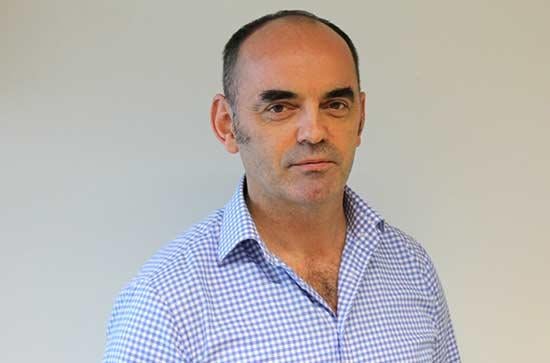
John O'Raw is a Lecturer in the Department of Computing at Donegal Letterkenny. His academic focus spans network security, time synchronization, and critical infrastructure protection, with emphasis on power systems, GNSS spoofing detection, and industrial IoT security. His research explores Precision Time Protocol (PTP) optimization in distributed networks Threat mitigation for GNSS-based timing systems Secure data communications in energy infrastructure Human behavior modeling for emergency evacuation planning His publications analyze cybersecurity frameworks for electrical substations, industrial IoT vulnerabilities, and practical implementations of standards like IEC 61850 and OAuth 2.0, with recent work on microwave IP networks and LinuxPTP for time synchronization.
Hisain Elshaafi is a Lecturer in the Department of Computing at SETU Carlow. His research focuses on ICT security, privacy, trust, and service composition. He holds a PhD from Waterford Institute of Technology (WIT) and has contributed to EU-funded projects like sTRUST and CoMiFin. His work emphasizes composite service trustworthiness, security metrics, and critical infrastructure protection. Education: PhD: 'Establishment and Maintenance of Trustworthy Composite Services', WIT (2014) MSc: Master of Arts in Teaching and Learning, WIT (2020) BSc: Computer Science (Honours), Dublin Institute of Technology Research Interests: Elshaafi investigates secure service composition, attack surface analysis, smart grid cybersecurity, and trustworthiness metrics. His projects address challenges in distributed systems reliability, multi-tenant service trust, and cost-effective security frameworks. Recent work explores multi-agent smart grid architectures and collaborative trust assessment. Projects & Grants: Lead roles in Irish/EU projects: sTRUST, CoMiFin, Pripare, Aniketos Consultancy for SMEs and enterprises Focus on bridging academic research with industry needs Labs/Teams: Collaborates with WIT's TSSG and contributes to multi-institutional projects focused on trust management and service-oriented systems.
Joseph Timoney is a professor at the Department of Computer Science , Maynooth International Engineering College , Maynooth University. He teaches undergraduate programs in Computer Science and Music Technology, with expertise in audio signal processing, musical sound synthesis, and digital modeling of analog subtractive synthesis. His research spans sound synthesis algorithms, audio watermarking, and ubiquitous music ecosystems.
Tim McCarthy is a Professor in the Department of Computer Science at Maynooth University's Faculty of Science & Engineering. He serves as Principal Investigator at the National Centre for Geocomputation (NCG) and co-PI in over 32 externally funded projects totaling €28 million. His work focuses on Earth Observation, geospatial data science, and autonomous systems with applications in environmental monitoring, precision agriculture, and emergency management. Developed Terrain-AI for greenhouse gas emission monitoring Led CoPilot-AI for wildfire response systems Contributed to Copernicus Academy as Irish National Delegate Created U-Flyte drone research program His geospatial research integrates satellite, airborne, and terrestrial sensor data with machine learning for petabyte-scale environmental analytics. Applications span critical infrastructure, climate change mitigation, and marine coastal management through projects like MaCoBioS . He has spun out 2 university companies and supervises 4 current PhD/MRes students. Scientific Awards : 2023 SFI Defence Organisation Innovation Challenge 2022 US-Ireland Research Innovation Award 2021 AI Awards (Social Good) 2012 Copernicus Masters 2011 Maynooth Commercialisation Award Active in EU committees like the Copernicus Earth Observation program and Irish drone policy development through the Aerial and Drone Oversight Committee . His outreach includes media engagements with RTE, Sunday Times, and Silicon Republic on geospatial AI and drone technology.
Viet Quoc Pham is an Assistant Professor in Networks and Distributed Systems at Trinity College Dublin's School of Computer Science and Statistics and a CONNECT Associate Investigator. His research integrates convex optimization, game theory, and machine learning to advance edge computing, wireless AI, and next-generation networking for 6G, IoT, and blockchain applications. Education: PhD in Telecommunications Engineering, Inje University, Korea (2017) His work centers on three interconnected thrusts: (1) Computing innovations in edge AI, aerial computing, and edge of things; (2) Intelligence through wireless AI and federated learning; and (3) Networking advancements in 6G, IoT, intelligent surfaces, metaverse, and blockchain. This cross-disciplinary approach optimizes cloud-edge systems and wireless infrastructure using mathematical frameworks. Recent publications (2021-2024) demonstrate applied impact across security (smart speaker intrusion detection), environmental science (satellite carbon monitoring), healthcare (mental disorder detection), and e-commerce (basket recommendation systems), reflecting his methodology of adapting AI/optimization to domain-specific challenges. Scientific Awards: Korea NRF funding for outstanding young researchers (2019-2024) Best Ph.D. Dissertation Award, Inje University (2017) Top Reviewer Award, IEEE Transactions on Vehicular Technology (2020) Golden Globe Award, Vietnam Ministry of Science (2021) IEEE ATC Best Paper Award (2022) Enterprise Ireland Coordination Support Award (2023) Dr. Pham secured competitive funding including Korea NRF and Enterprise Ireland grants. As Editor for Journal of Network and Computer Applications and Scientific Reports, and Lead/Guest Editor for IEEE Internet of Things Journal, IEEE Transactions on Consumer Electronics, and Computer Communications, he shapes discourse in networking and computer systems through rigorous peer review and special issues. Through the CONNECT Centre, he collaborates with industry partners on Ireland's national research initiative for future networks, focusing on practical implementations of 6G architectures, IoT security protocols, and edge AI frameworks for real-world deployment.
Dr. Paolo Palmieri is a Senior Lecturer in Cyber Security at the University College Cork (UCC) , affiliated with the School of Computer Science & IT . He serves as a Funded Investigator in Insight and CONNECT research centers, Supervisor in ADVANCE and AI Centres for Research Training, and co-Investigator in DTIF-Holistics and SFI-Spoke on Blended Autonomous Vehicles . PhD in Cryptography (2013), Université catholique de Louvain Prior positions: Lecturer at Cranfield University and Bournemouth University (UK), Post-Doctoral Researcher at Delft University of Technology (Netherlands) Research spans cryptography, privacy, and security , with focus on: Secure multi-party computation Homomorphic encryption Location privacy mechanisms Spatial Bloom filters Smart city security Blockchain applications in IoT Recent publications highlight advancements in blockchain-based healthcare authentication , privacy-preserving vehicular networks , and homomorphic encryption for sentiment analysis . He chairs Malicious Software and Hardware in Internet of Things (Mal-IoT) and Location Privacy Workshop (LPW) . Active in PhD supervision , he currently advises students in cryptographic protocols for location-based services. Collaborates with Smart City Lab at the University of Bologna and participates in international research networks .
Ehsan Namjoo serves as a Research Fellow in the Department of Electronics & Computer Engineering at the University of Limerick, with a primary affiliation at Lero – the Irish Software Research Centre. His multidisciplinary work bridges theoretical signal processing, machine learning applications, and hardware implementation for real-world systems. His research spans signal processing (DOA estimation under non-ideal noise conditions, EEG source imaging), machine learning (explainable AI for medical diagnostics, feature selection in cancer detection), and computer engineering (polar code decoders, visible light communication systems). Notable biomedical applications include breast cancer diagnosis and epileptic source analysis, while cybersecurity work focuses on intrusion detection in cloud environments. Recent publications (2021-2025) reveal a consistent trajectory toward developing lightweight, interpretable models for tabular medical data alongside robust signal processing frameworks for communication systems. His work increasingly integrates hardware-aware algorithms, particularly in polar coding implementations, and emphasizes practical validation through experimental demonstrations in visible light networks. As an active Lero researcher, Namjoo participates in Ireland's national software research ecosystem, contributing to interdisciplinary projects that connect theoretical innovations with healthcare, communications, and security applications through collaborative frameworks.
Dr. Vikram Pakrashi is an Associate Professor in Mechanical Engineering and Director of the Dynamical Systems and Risk Laboratory (DSRL) at University College Dublin. He specializes in structural dynamics, structural health monitoring (SHM), vibration control, and renewable energy systems. His work bridges industry and academia, focusing on infrastructure resilience and emerging technologies. Education: BEng (1st Class Hons) from Jadavpur University; PhD from Trinity College Dublin. Research interests include dynamical systems, risk analysis, and smart structures. He leads interdisciplinary projects funded by industry and agencies like SEAI and the EU. Recent research trends emphasize renewable energy infrastructure (e.g., offshore wind, wave energy devices) and innovative SHM techniques using machine learning and sensor networks. His articles highlight advancements in wave measurement, defect detection algorithms, and structural fragility analysis. Awards: Engineering Laboratory of the Year 2018 (Irish Laboratory Awards). Grants: Includes projects like SISdATA (Atlantic aquaculture systems) and FlOWDyn (dynamic cable analysis for floating offshore wind). Lab Leadership: Directs DSRL, fostering industry collaboration and applied research.
Professor Joe Carthy is a Full Professor at the School of Computer Science and Informatics, University College Dublin (UCD). He has served as Dean of Science at UCD since 2011, following roles as Head of the School of Computer Science and Informatics (2007–2011). With over 30 years at UCD, he holds a BSc and PhD in Computer Science and a Graduate Diploma in University Teaching and Learning. His research focuses on cybersecurity, digital forensics, and social media analysis, particularly investigating extremist online communities and cloud forensics. He has secured €5.4M in research funding and established the UCD Centre for Cybersecurity, collaborating with Europol, Interpol, and UNODC. Professor Carthy has supervised 14 PhD and 20 MSc students and contributed to education projects with €1.8M in funding. He chairs CyberSafeIreland and previously led Camara, a nonprofit distributing refurbished computers to schools globally. Education: BSc in Computer Science, UCD PhD in Computer Science, UCD HDip University Teaching & Learning, UCD Research Interests: Cybersecurity, digital forensics, social media analysis, incident analysis, lexical chaining, and news story segmentation. Professional Roles: Founding Director, UCD Centre for Cybersecurity Board Member, CyberSafeIreland Former Director/Chair, Camara Teaching: Coordinates modules on Information Security, Case Studies, and leadership/management courses. Labs/Teams: Leads the UCD Centre for Cybersecurity, fostering collaborations with law enforcement and international bodies. His 127+ publications span cybersecurity, digital forensics, and social media dynamics, with recent work addressing far-right activity on Telegram and algorithmic radicalization on YouTube. Grants and advisory roles highlight his impact on both academic and societal challenges.
Henry McLoughlin is an Associate Professor in the School of Computer Science at University College Dublin (UCD) and serves as Vice-Principal of Teaching and Learning for the UCD China Joint Colleges. His roles involve dividing his time between UCD in Dublin and the Beijing Dublin International College (BDIC) in China. He holds a BSc from UCD and has been actively involved in spin-off companies derived from UCD research. In 2021, he received the prestigious Great Wall Friendship Award from the Beijing municipal government for his contributions. His research interests focus on Software Engineering, Formal Software Construction Methods, and the Mathematics of Programming. He has published extensively on topics ranging from web-based education systems to formal programming methodologies and artificial intelligence in board games. In teaching, McLoughlin coordinates modules such as Design Patterns, Security & Privacy, Software Methodology, and Advanced Program Construction. These courses emphasize formal methods, software design principles, and practical applications of theoretical concepts. McLoughlin’s work bridges academic research and practical education, with a particular emphasis on integrating innovative technologies into learning environments. His contributions to the UCD China Joint Colleges highlight his commitment to international education collaboration.
John Murphy is a Full Professor at the School of Computer Science, University College Dublin. He holds academic positions as an IBM Faculty Fellow and Fellow of multiple professional organizations, including the Institution of Engineering and Technology and Engineers Ireland. His research focuses on Performance Engineering, Telecommunication Systems, and Middleware, with a strong emphasis on cloud computing, distributed systems, and network optimization. Education: B.E. (Electronic Engineering) from University College Dublin (1988), M.Sc. (Electrical Engineering) from California Institute of Technology (1990), and Ph.D. (Electronic Engineering) from Dublin City University (1996). Research Interests: His work spans Performance Engineering, Telecommunication Systems, Enterprise Software, Middleware, Mobile Networks, and Queueing Theory. Notable contributions include energy-efficient cloud resource management and network-aware scheduling in data centers. Publications: Over 200 peer-reviewed articles, including recent work on intelligent computing in IoT, energy-efficient VM mapping, and load balancing in wireless networks. His research trends emphasize cloud optimization, distributed systems performance, and smart city infrastructure. Awards: Recognitions include the Real Time Correlation Engine award and prestigious fellowships. He has supervised 24 PhD students and secured over €9.5M in research grants. Teaching: Coordinates modules on Computer Networking, Databases, and Programming. He advocates for foundational learning to foster adaptability in students. Grants: Includes Horizon 2020 projects like NEO-QE and PRTLI grants for SimSci. Collaborates with industry partners for applied research. Labs: Leads the Performance Engineering Laboratory, advancing research in distributed systems and network performance.
Dr. Bernard Butler is a Lecturer in the Department of Computing and Mathematics at the Walton Institute for Information and Communications Systems Science, South-East Technological University (SETU). He holds a PhD in Access Control System Specification (2016) and specializes in cybersecurity, terahertz communications, access control systems, and smart grid security. His research bridges theoretical frameworks with practical applications in 6G networks, vehicular systems, and augmented reality. Affiliations: SETU Walton Institute Key Focus Areas: Terahertz nanonetworks, UAV security, quantum machine learning, and climate change sensing via 6G Research Interests: Terahertz Engineering , Access Control Policies , and Vehicular Network Optimization . He explores disruptive technologies like the Internet of Paint (IoP) for environmental monitoring and AR applications in intelligent transportation systems. His 2024 work on False Data Injection Attacks on UAVs highlights cybersecurity vulnerabilities in drone delivery systems, while 2025's IoP research pioneers smart material-based communication networks. Recent projects include 'ATLAS' (access control system dimensioning) and 'SWAGGER' (mobile/web deployment platforms). Advising: Supervises PhD projects in UAV security, quantum machine learning, and smart grid security. Grants include leadership in two national projects (2008, 2014). Labs/Teams: Active in the Walton Institute's communications systems research group, collaborating on 6G applications and environmental sensing technologies.
Professor Kenneth Brown is affiliated with the Department of Computer Science at University College Cork (UCC) , Ireland. He holds the academic rank of Professor and is a Principal Investigator at the Insight Centre for Data Analytics and the CTVR (Telecommunications Research Centre) . BSc (Hons) Mathematics, University of Glasgow, 1986 MSc Mathematical Logic and the Foundations of Computation, University of Manchester, 1987 PhD Artificial Intelligence in Engineering, University of Bristol, 1991 His research focuses on Artificial Intelligence, constraint programming, optimisation, and distributed reasoning , with applications in wireless networking, sensor networks, and dynamic resource management . He also works on smart energy systems, data analytics, and human-centric applications. His recent work includes projects under the SFI-funded Insight Centre and Horizon Europe initiatives like GLACIATION and SEISMEC. His publications span topics from wireless sensor network optimization and cognitive radio to constraint-based decision support and AI in emergency management. He has led and contributed to over 15 recent publications in top-tier journals and conferences, showing a strong trend in AI-driven solutions for networked and intelligent systems. IEEE SECON 2015 Best Demonstration 2014 TAOS Best Paper Award in Access Networks and Systems Best paper, SMARTGREENS 2013 Enterprise Ireland Lifescience and Food Commercialisation Award Best Application Paper, AI2008 Best Application Paper, AI2006 Best paper nomination, ECAI 2004 Best Paper, Intl Conf AI in Design Professor Brown has supervised numerous PhD and MSc students in areas including constraint programming, sensor networks, evacuation modeling, and smart buildings. He has secured significant research funding from SFI, Enterprise Ireland, and IRCSET. He is actively involved in research leadership, serving as Deputy Director of Insight@UCC and PI in multiple national and international projects. He is a member of research groups involved in GLACIATION (green, responsible data operations), SEISMEC (human-centric industry), and SMARTeBuses . His lab supports a team of doctoral students and research staff working on AI, networking, and data analytics for real-world applications.
Lorraine McGinty is an Associate Professor at the School of Computer Science, University College Dublin. She holds a BSc and PhD from UCD. Her research focuses on AI-driven user experiences, particularly in Recommender Systems, Case-Based Reasoning, and Intelligent User Interfacing. She has published over 100 peer-reviewed papers and secured funding from SFI/EI, industry partners, and UCD. Key roles include Director of Taught Graduate Studies (2012–2016) and establishing international practitioner partnerships, which grew masters enrollments from 69 to nearly 500. Awards include the UCD Teaching & Learning Award (2010) and multiple Best Paper awards (e.g., 2001, 2004). She serves on committees for conferences like ICCBR and RecSys. Teaching includes coordinating modules like Web Design and Introduction to AI. Research emphasizes critiquing mechanisms, conversational systems, and group recommendations, with applications in eyewear, travel, and route planning.
Dr. Ali Hasnain is a Lecturer in Computational Biology and Data Analytics at the Royal College of Surgeons in Ireland (RCSI), School of Pharmacy and Biomolecular Sciences. He holds a PhD from the National University of Ireland Galway and has over 15 years of experience in academia and the software industry, including roles as a Senior Researcher at University College Dublin and Adjunct Lecturer at the Insight Centre for Data Analytics. His research focuses on Artificial Intelligence in Healthcare, Digital Health, Bioinformatics, and Semantic Web technologies, with expertise in data analytics for life sciences and healthcare management. Education: PhD in Bioinformatics & Data Analytics, National University of Ireland Galway MSc in Engineering and Management of Information Systems, Royal Institute of Technology (KTH), Sweden MSc in Project Management and Operational Development, KTH, Sweden BSc (Honors) in Computer Science, Pakistan Institute of Engineering and Applied Sciences Research Interests: Dr. Hasnain’s work bridges computational biology, data science, and healthcare. Key areas include developing algorithms for biomedical data integration, AI-driven query systems for healthcare knowledge graphs, and optimizing pesticide efficacy through genomic analysis. His recent projects address challenges in dementia care technology and environmental stress impact on organisms . Awards & Recognition: Best Paper Awards at ESWC 2017, ISWC2018, and ESWC 2018 Young Scientific Researchers Grant from SWSA/NSF (2012, 2015) Grants & Collaboration: Led the Dementia and Technology (DaTe) project (2021–2023), funded by the Irish Research Council. Collaborations include work on federated SPARQL query systems and semantic web solutions for large-scale biomedical data. Labs & Teams: Active in RCSI’s Pharmacy & Biomolecular Sciences labs, contributing to interdisciplinary projects. Previously led research initiatives at Insight Centre and UCD’s School of Computer Science.