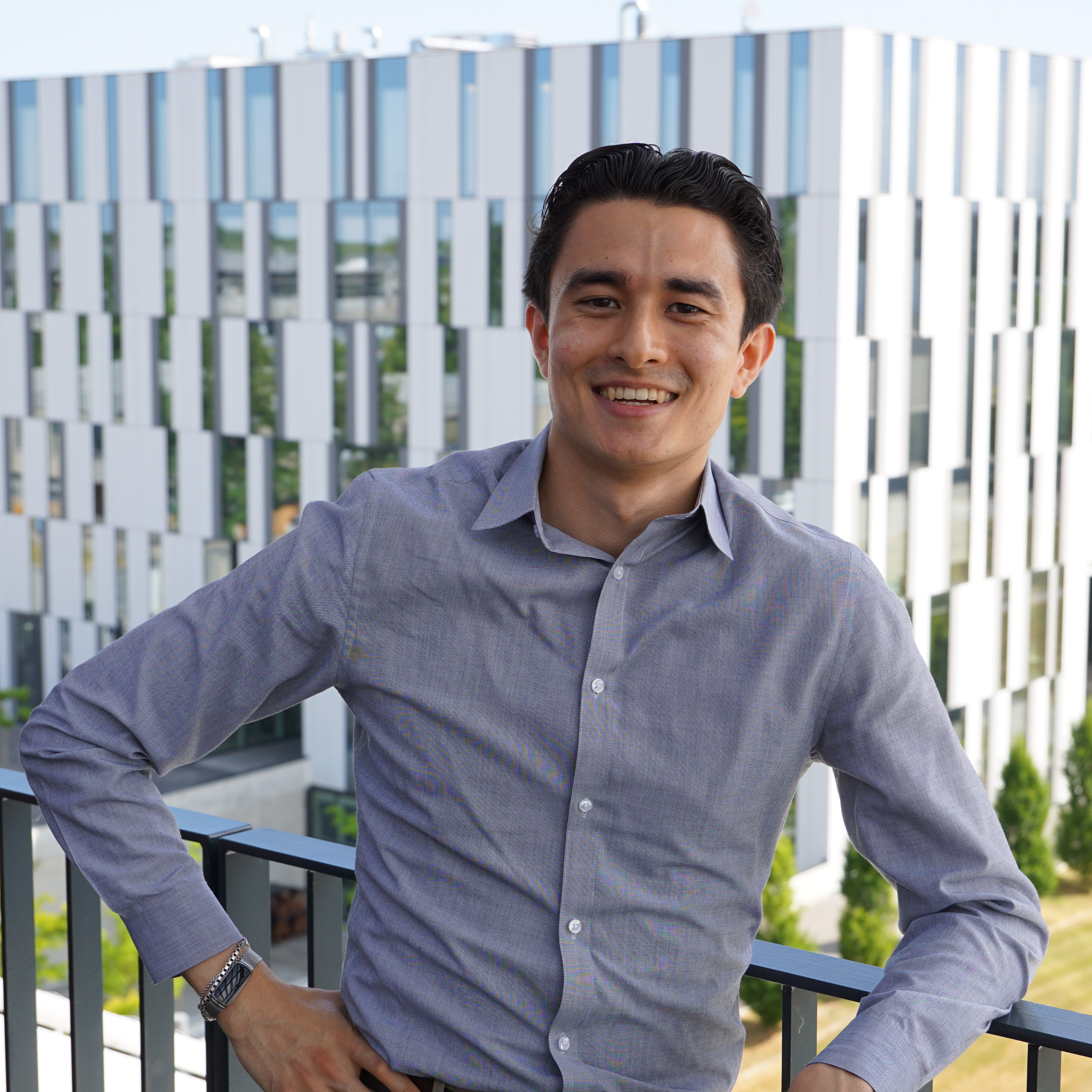
Stephen Meisenbacher is a Research Associate at the Technical University of Munich (TUM) , affiliated with the School of Computation, Information and Technology and the Department of Computer Science, I19 . He has been part of the Software Engineering for Business Information Systems (SEBIS) chair since March 2022. His research focuses on Privacy-Preserving Natural Language Processing (NLP) , Differential Privacy , and Privacy-Enhancing Technologies (PETs) , with a particular interest in their integration into software development and business applications. His work also explores Hybrid, Expert-Driven Classification Systems and Usable Privacy solutions. Stephen’s recent publications address trends in AI Privacy Risks , Text Rewriting with DP , Legal AI Use Cases , and Data Protection Compliance . He has contributed to GDPR-related research and PETs adoption in small enterprises. His teaching includes Natural Language Processing seminars and Software Engineering lecture courses for Master’s and Bachelor’s students at TUM. He also organizes Entrepreneurship for Small Software-Oriented Enterprises seminars. Stephen holds a Master’s in Informatics from TUM (DAAD Graduate Scholarship) and a Bachelor’s in Computer Science from the University of Notre Dame, with additional studies in German Language and Literature. Contact: stephen.meisenbacher@tum.de | LinkedIn
Dr. Ulrike Kuhl is a Researcher at the University of Bielefeld, serving as Project Coordinator for the AI Academy OWL at the Research Institute for Cognition and Robotics and as Scientific Project Coordinator within the Faculty of Engineering's Machine Learning Group. Her office is located at CITEC 2-412, and she can be reached at +49 521 106-12125. Dr. Kuhl's research spans several interconnected domains at the forefront of human-centered AI development: Explainable Artificial Intelligence (XAI) frameworks and their psychological impact Cognitive learning enhanced through AI technologies Counterfactual explanation methodologies and user behavior Human-AI interaction design principles Applications of machine learning in environmental monitoring and sports analytics Analysis of Dr. Kuhl's publication trajectory reveals a consistent focus on bridging the gap between sophisticated AI systems and human understanding. Her work particularly examines how different explanation types affect user trust and decision-making, with recent publications exploring counterfactual explanations in contexts ranging from water distribution networks to educational technology. She has developed experimental frameworks like the 'Alien Zoo' methodology for systematically studying explanation usability. Dr. Kuhl actively contributes to the Center for Cognitive Interaction Technology (CITEC) at the University of Bielefeld, an interdisciplinary hub where computer scientists, engineers, and cognitive scientists collaborate on next-generation interactive technologies. Through her coordination of the AI Academy OWL initiative, she facilitates regional collaboration between academic researchers and industry partners to advance artificial intelligence applications in the Ostwestfalen-Lippe region.
Vladimir Spokoiny is a Professor at the Departments of Mathematics and Economics of the Humboldt University of Berlin and Head of the Research Group "Stochastic Algorithms and Nonparametric Statistics" at the Weierstrass Institute for Applied Analysis and Stochastics (WIAS) in Berlin, Germany. His research spans multiple areas of statistics, machine learning, and financial mathematics, with significant contributions to nonparametric statistics, high-dimensional data analysis, and statistical methods in finance. Spokoiny received his M.Sc. in applied mathematics from the Moscow Institute of Railway Engineering in 1981 and his Ph.D. in mathematics from Lomonosov Moscow State University in 1988. He completed his Habilitation at Humboldt University in 1996. His academic career includes positions at the All-Union Institute of Railway Transport in Moscow, the Institute for Information Transmission Problems in Moscow, and the Institute for Applied Analysis and Statistics in Berlin before joining the Weierstrass Institute and Humboldt University where he has been a professor since 2002. Spokoiny's research focuses on adaptive nonparametric smoothing and hypothesis testing, high dimensional data analysis, statistical methods in finance, image analysis with applications to medicine, classification, and nonlinear time series. His work often addresses the challenges of nonstationarity in time series data and develops innovative methods for volatility estimation and risk management. He has made significant contributions to the development of adaptive weights smoothing procedures, which have applications in image processing, community detection, and manifold learning. His recent work has expanded into high-dimensional statistics, Bayesian inference, and optimization methods for machine learning, with publications demonstrating novel approaches to Gaussian approximation, Laplace methods, and statistical inference in non-Euclidean spaces. Spokoiny has supervised numerous PhD students including Oliver Reiss, Danilo Mercurio, Ying Chen, Elmar Diederichs, and Mstislav Elagin, whose research has focused on mathematical finance, time series analysis, and statistical methods. He serves as an Associate Editor for The Annals of Statistics (since 2004) and Statistics and Decisions (since 2002), and has previously served on the editorial board of the Journal of Statistical Planning and Inference. His professional activities include reviewing for major statistical journals including Annals of Statistics, Bernoulli, Econometrica, and Journal of American Statistical Association, as well as reviewing grant proposals for the National Science Foundation (USA), German Research Foundation, and Netherlands Organisation for Scientific Research. Spokoiny is a member of several professional societies including the International Statistical Institute, American Statistical Association, Institute of Mathematical Statistics, and Bernoulli Society. He is fluent in Russian (mother tongue), English, and German, and has good knowledge of French. His research group at WIAS focuses on developing novel statistical methodologies with applications across various scientific domains, particularly emphasizing adaptivity and robustness in complex data environments. The group's work has significant implications for financial risk management, medical imaging, and machine learning applications, with recent publications addressing fundamental questions in high-dimensional statistics and nonparametric inference.
Vijay Laxmi is a Professor in the Department of Computer Science and Engineering at Malaviya National Institute of Technology (MNIT) Jaipur, India. With over a decade of active research publication from 2014-2024, Dr. Laxmi has established themselves as a prominent researcher in network security, Android security systems, and Network-on-Chip architectures. Their work demonstrates consistent collaboration with Manoj Singh Gaur and numerous doctoral students at MNIT Jaipur. Dr. Laxmi's research interests span Network Security, Android Security, Malware Analysis, Network-on-Chip Architectures, Routing Protocols, Side-Channel Attacks, Wireless Networks, and Mobile Security. Their work bridges theoretical security frameworks with practical implementations, particularly in mobile and embedded systems. Recent publications indicate a growing focus on AI-based security approaches including GAN applications for fuzzing and deep learning for image dehazing. The research trajectory shows increasing sophistication in security analysis techniques, evolving from basic malware detection to advanced side-channel attack analysis and sophisticated network security protocols. Recent publications demonstrate expertise in both theoretical frameworks and practical implementations with applications in real-world security challenges. Dr. Laxmi has mentored numerous graduate students including Vineeta Jain, Anugrah Jain, Sonal Yadav, Mohit Singh, and Gaurav Singal, who appear as co-authors across multiple publications. Their collaborative network extends to researchers at international institutions, indicating strong academic connections beyond their home institution.
Warut Suksompong is an Assistant Professor in the School of Computing at the National University of Singapore (NUS), where he holds the NUS Presidential Young Professorship. Previously, he was a postdoctoral researcher at the University of Oxford, hosted by Edith Elkind, and completed his PhD at Stanford University under Tim Roughgarden. He holds bachelor's and master's degrees from MIT. His research focuses on algorithmic game theory, computational social choice, mechanism design, and interdisciplinary problems at the intersection of computer science, economics, mathematics, and operations research. He is particularly known for contributions to fair division, including envy-freeness, proportionality, and maximin fairness in both divisible and indivisible resource allocation contexts. Key awards include the IJCAI 2021 Distinguished Paper Award for work on dividing land with geometric constraints and the WINE 2021 Best Student Paper Award for research on funding public projects via the Nash product rule. His work bridges theoretical foundations with practical applications, addressing challenges such as connectivity constraints, budget allocation, and social choice mechanisms. He has authored over 100 publications in top conferences and journals, including SIAM Journal on Discrete Mathematics, Artificial Intelligence, and Games and Economic Behavior. His research has been supported by grants from NUS and international collaborations.
Michael Muehlebach leads the independent Learning and Dynamical Systems research group at the Max Planck Institute for Intelligent Systems in Tuebingen, Germany. His interdisciplinary work bridges machine learning, dynamical systems theory, and control engineering to develop algorithms for cyber-physical systems with theoretical guarantees and practical implementations. Dr. Muehlebach received his B.Sc. and M.Sc. in Mechanical Engineering from ETH Zurich in 2010 and 2013, specializing in robotics and control systems. He completed his Ph.D. at ETH's Institute for Dynamic Systems and Control under Prof. R. D'Andrea in 2018, followed by postdoctoral research with Prof. Michael I. Jordan at UC Berkeley. His research focuses on constrained optimization, reinforcement learning, and control theory with applications in robotics. He pioneered approaches that express constraints in terms of velocities rather than positions, enabling more efficient optimization algorithms. His work spans theoretical foundations to physical implementations, including the One-Wheel Cubli balancing robot and electromagnetic navigation systems. Recent publications reveal a strong trend toward physics-informed machine learning, particularly for robotics applications requiring real-time performance and safety guarantees. Dr. Muehlebach has received numerous prestigious awards: Outstanding D-MAVT Bachelor Award Willi-Studer prize for best Master's degree ETH Medal and HILTI prize for doctoral thesis Branco Weiss Fellowship (2018) Emmy Noether Fellowship (2020) Amazon Fellowship (2024) He actively mentors doctoral researchers including Hao Ma, Melis Ilayda Bal, and Onno Eberhard, with research supported by multiple grants. His group maintains strong collaborations with Bernhard Schölkopf's Empirical Inference group at the Max Planck Institute. The Learning and Dynamical Systems group develops innovative hardware and software platforms, including Floaty (a wind-harnessing flying robot), advanced electromagnetic navigation systems, and data-efficient learning methods for robotic table tennis. Their approach combines rigorous theoretical analysis with practical validation on physical systems, emphasizing the integration of known physical structure into machine learning algorithms to improve sample efficiency and ensure generalization.
Prof. Dr. Oliver Krüger is a behavioral ecologist and evolutionary biologist at Bielefeld University 's Faculty of Biology , where he leads the Department of Animal Behaviour since 2013. His research spans avian and marine mammal systems, focusing on life history strategies, parasite-host interactions, and environmental adaptation. Education: Biology studies at Bielefeld University (1994-1996) MSc in Oxford (1996-1997) PhD at Bielefeld University with Fritz Trillmich and Jan Lindström (1998-2000) Research Themes: Behavioral ecology, evolutionary biology, and population dynamics across tropical and temperate ecosystems. Key projects include NC³ (Niche Choice/Construction) and studies on Galápagos sea lions, common buzzards, and pinniped species. Scientific Leadership: Spokesperson, SFB TRR 212 "NC³" (2018-2025) Advisory Board member: German Ornithologists Union, IUCN SSC pinniped group, German Primate Centre Peer review roles: Humboldt Foundation, DFG, HFSP, NSF Awards: Leopoldina Prize (2001) Niko Tinbergen Award (2008) DFG Heisenberg Professorship (2010-2015)
Georg Martius is a Full Professor in the Department of Computer Science at the University of Tübingen's Faculty of Science and a Max Planck Research Group Leader at the MPI for Intelligent Systems. Since April 2023, he has been a core member of the DFG-funded Cluster of Excellence 'Machine Learning: New Perspectives for Science,' which received extended funding through 2032 for its mission to integrate machine learning into fundamental scientific discovery processes. His academic foundation includes a PhD from the University of Göttingen and Bernstein Center for Computational Neuroscience (2005), a Diploma in Computer Science from the University of Leipzig (2003), and a visiting research period at the University of Edinburgh's Division of Informatics. Postdoctoral positions followed at the Max Planck Institutes for Dynamics and Self-Organization (Göttingen, 2009), Mathematics in the Sciences (Leipzig, 2010), and IST Austria (2015). Professor Martius's research pioneers the intersection of reinforcement learning, robotics, and tactile sensing, with emphasis on developing autonomous systems capable of natural locomotion, dexterous manipulation, and physical-world understanding. His work bridges theoretical machine learning with practical hardware applications, particularly in creating differentiable simulators, superresolution tactile sensors, and biologically plausible learning frameworks for robotic control. Analysis of his 2024-2025 publications reveals dominant trends in offline reinforcement learning (especially goal-conditioned and diversity-maximization techniques), object-centric representation learning for video understanding, and tactile sensing innovations. A strong thread connects foundation models to world model construction, while his work on differentiable physics engines enables precise collision handling and contact dynamics for real-world robotic control. His leadership roles include directing the Distributed Intelligence research team at Tübingen and contributing to major collaborative initiatives like the Real Robot Challenge and Myochallenge 2022. The Cluster of Excellence appointment represents recognition of his contributions to transforming scientific methodology through machine learning, particularly in automating hypothesis generation and experimental design. Current projects focus on integrating large-scale machine learning with embodied intelligence, advancing tactile perception systems like the Minsight vision-based sensor, and developing neuroplasticity-inspired approaches for robust out-of-distribution detection. His work directly impacts fields requiring physical interaction intelligence, from autonomous navigation to medical robotics, with emphasis on sample-efficient learning from limited real-world data.
Prof. Dr. Martin Kronbichler is a faculty member at the Faculty of Mathematics , Ruhr University Bochum , leading the Numerics group. His research focuses on higher-order finite element methods, multigrid techniques, and high-performance computing for complex fluid and solid mechanics problems. Key Research Areas: Higher-order finite element methods, iterative solvers, multigrid algorithms, exascale mathematical software, and computational fluid dynamics. Notable Projects: EU-funded dealii-X (exascale digital twins), BMBF PDExa (optimized PDE solvers for exascale), and DFG grants for cut-discontinuous Galerkin methods and geometric multigrid. Publications Trends: Recent works emphasize matrix-free operators for hyperelasticity, diffuse-interface models for additive manufacturing, and multigrid smoothers for higher-order elements. Scientific Awards: Recipient of the Humboldt Research Award for his contributions to numerical methods and HPC. Team: Collaborates with researchers like Dr. Shubham Kumar Goswami, Dr. Richard Schussnig, and Natalia Nebulishvili.
Prof. Nicolas Perkowski is a Professor in the Department of Mathematics at Freie Universität Berlin, specializing in Stochastic Analysis and Probability Theory. He holds roles such as Vice Spokesperson of DFG CRC/TRR 388 (since 2024) and Chair of the Master of Mathematics Examination Board. His research focuses on stochastic partial differential equations (SPDEs), rough paths, and applications in mathematical physics. Notable contributions include work on singular SPDEs, fractional processes, and the KPZ equation. Perkowski has authored/co-authored numerous publications in top journals like the Annals of Probability and Communications in Mathematical Physics, and he serves as an associate editor for several journals. His institutional responsibilities include leadership in research collaborations and academic governance. Education: PhD and diploma in stochastic population models (details not explicitly provided in text). Research Interests: Stochastic Analysis, Probability Theory, SPDEs, Mathematical Physics, Nonlinear Filtering. Recent Articles: Focus on fractional processes, SPDEs with singular terminal conditions, and stochastic sewing lemmas. His work bridges theoretical probability with applications in physics and engineering, with a strong emphasis on rigorous mathematical frameworks for complex stochastic systems.
Atreyi Kankanhalli is a Professor at the National University of Singapore, specializing in Information Systems with a focus on knowledge management, healthcare IT, and digital innovation. Their research spans over three decades, with prolific contributions in top journals like MIS Quarterly, Journal of AIS, and Information & Management. They have co-authored over 150 papers addressing topics such as crowdsourcing, online communities, and the impact of AI on scholarly practices. Notable work includes studies on user adherence to health apps, innovation in public sector data utilization, and the ethical challenges of generative AI in peer review. Kankanhalli has also led research on global virtual teams and digital technologies' role in social justice, reflecting a commitment to both technical and societal dimensions of information systems. Education & Background: While specific degree details are not provided, their extensive publication history and academic roles imply advanced qualifications in Information Systems or related fields. They have collaborated with global researchers across institutions like NUS, University of Illinois, and Singapore Management University. Research Themes: Core areas include digital health interventions (e.g., fitness app adherence), organizational innovation via open data and crowdsourcing, and the socio-technical challenges of AI in academia. Their work often bridges theoretical frameworks with practical applications, such as healthcare decision support systems and policy-driven technology adoption. Impact & Influence: As an editorial board member and frequent conference contributor (e.g., ICIS, PACIS), Kankanhalli shapes the field's research agenda. Their recent focus on generative AI's implications highlights proactive engagement with emerging technologies' ethical and methodological challenges.
Prof. Alexander Pretschner is a Professor of Software & Systems Engineering at the Technical University of Munich (TUM) and Founding Director of the Bavarian Research Institute for Digital Transformation (bidt). He also serves as Scientific Director of fortiss, a Bavarian research institute for software-intensive systems. His research focuses on software engineering, testing, information security, and ethical software development. Pretschner holds a PhD from TUM and has held academic positions at Karlsruhe Institute of Technology (KIT) and TU Kaiserslautern. He is a co-editor of several prestigious journals, including IEEE Transactions on Reliability and the Journal of Software Testing, Verification and Reliability. Education: PhD in Computer Science, Technical University of Munich MSc in Computer Science, University of Kansas (on Fulbright Scholarship) Diplom in Computer Science, RWTH Aachen University Research Interests: His work spans testing methodologies, secure software design, and ethical considerations in agile development. Notable contributions include frameworks for metamorphic testing, distributed data usage control, and accountability mechanisms for cyber-physical systems. Awards: IBM Faculty Award (2012, 2013) Google Focused Research Award (2011, 2012) EARTO Innovation Prize (2014) 2nd Platz Supervisory Award (2020) Advising & Grants: Pretschner has supervised numerous PhD and Master’s students, contributing to over 200 publications. He leads projects like EDAP (Ethical Deliberation in Agile Processes) and collaborates with industry partners on cybersecurity and AI ethics initiatives. Labs & Teams: His work is anchored in bidt, fortiss, and TUM’s Chair of Software & Systems Engineering, focusing on societal impacts of digitalization and trustworthy AI systems.
Sotirios Liaskos is an Associate Professor in the School of Information Technology at the Faculty of Science, York University. He is a leading researcher in requirements engineering and conceptual modeling, with a focus on goal models, empirical evaluation, and model-driven engineering. Research Interests: Requirements Engineering Goal and Conceptual Modeling Empirical Software Engineering Model-Driven Design and Automation Uncertainty and Decision-Theoretic Reasoning in Models Applications in Blockchain and Reinforcement Learning His recent work emphasizes the empirical validation of modeling constructs, the integration of decision theory into goal models, and the automated generation of secure workflows and AI training environments. He has led and co-authored numerous experimental studies on model comprehensibility and semantic quality. Publication Trends: His publications consistently appear in top venues like ER, RE, and iStar. The last five years show a strong trend toward empirical evaluation of modeling languages, decision-theoretic goal models, and applications of goal modeling in emerging domains such as blockchain and reinforcement learning simulation design. Scientific Contributions: Developed frameworks for empirical evaluation of modeling language ontologies (Peira framework). Advanced decision-theoretic approaches to goal modeling under uncertainty. Pioneered model-driven methods for generating blockchain simulators and reinforcement learning environments. Conducted foundational empirical studies on the comprehensibility of contribution links and visualization alternatives in goal models. Advising and Collaboration: He has advised several researchers including Ibrahim Jaouhar, Wisal Tambosi, Mehrnaz Zhian, and Saba Zarbaf. He maintains a highly collaborative research profile with frequent co-authorship with John Mylopoulos, Shakil M. Khan, and other international researchers. He has served as a co-editor for multiple iStar workshop proceedings, indicating leadership in the goal-oriented requirements engineering community. Labs and Teams: While no specific lab name is mentioned, his work is closely associated with research groups focused on requirements engineering and conceptual modeling, likely within York University’s software engineering research cluster. His collaborations span institutions in Canada, Europe, and beyond.
Leo Schwinn is a Lecturer at the Technical University of Munich (TUM) within the Department of Computer Science (I26), working in the Data Analytics and Machine Learning group supervised by Prof. Stephan Günnemann at the TUM School of Computation, Information and Technology. His research focuses on robust machine learning with particular emphasis on data-efficient learning and robustness vulnerabilities of Large Language Models (LLMs). Dr. Schwinn's research interests span multiple critical areas in contemporary machine learning including: Robustness against adversarial attacks in LLMs Embedding space vulnerabilities and defenses Model unlearning and privacy preservation Efficient training methodologies for large models Time-series forecasting with probabilistic frameworks Graph-based machine learning approaches His work bridges theoretical understanding with practical security implications of modern AI systems. Analysis of his recent publications (2023-2025) reveals a strong focus on LLM security, with multiple papers accepted at premier conferences including ICML, CVPR, ICLR, and NeurIPS. His research demonstrates consistent innovation in identifying novel attack vectors while developing practical defense mechanisms, particularly through embedding space manipulation techniques. The work shows increasing sophistication in handling both theoretical aspects of model robustness and practical deployment concerns. His notable scientific achievements include: Receiving the ATE dissertation price for his PhD work at FAU Securing an oral presentation at ICLR 2025 Organizing the ICLR BlogPost Track Becoming a member of ELLIS (European Laboratory for Learning and Intelligent Systems) Dr. Schwinn has served as review process chair for the 2024 Conference on Lifelong Learning Agents (CoLLAs) and actively collaborates with researchers at Mila Quebec AI Institute. His research group at TUM focuses on addressing fundamental challenges in machine learning robustness, particularly as they apply to real-world deployment scenarios where security and reliability are paramount. He maintains active GitHub repositories related to LLM security research, including circuit-breakers-eval and LLM_Embedding_Attack, demonstrating his commitment to open science and reproducible research in the field of AI security.
Cristian Cadar is a Professor in the Department of Computing at Imperial College London, leading the Software Reliability Group . His research focuses on improving software reliability and security through practical techniques in software engineering, computer systems, and program analysis. Education: Ph.D. in Computer Science, Stanford University M.Eng. in Computer Science, MIT B.S. in Computer Science and Mathematics, MIT His research interests center on software engineering and software security , particularly symbolic execution , dynamic symbolic execution (DSE) , and multi-version execution . Current work explores techniques for scalability, constraint solving, and runtime security in software systems. Key trends in his recent articles include optimizing symbolic execution for testing, addressing path explosion in constraint-based test generation, and advancing multi-version execution for dynamic software updates. His publications also cover program analysis , automated testing , and formal methods for software reliability. Awarded prestigious honors such as the Humboldt Research Award (2024) , ERC Consolidator Grant (2018) , and IEEE New Directions Award (2022) . Other accolades include the BCS Roger Needham Award (2019) and SIGOPS Hall of Fame (2018) . Cadar supervises PhD and postdoctoral researchers in software reliability and security. His group has secured grants from the ERC and EPSRC , including a Consolidator Grant (2018) and Early-Career Fellowship (2013) . He actively contributes to conference organizing committees and editorial boards. The Software Reliability Group at Imperial College, led by Cadar, specializes in techniques like KLEE and EXE for automated testing. Their work has been adopted by industry partners such as Fujitsu, IBM, and Microsoft, particularly in runtime security tools like WIT .