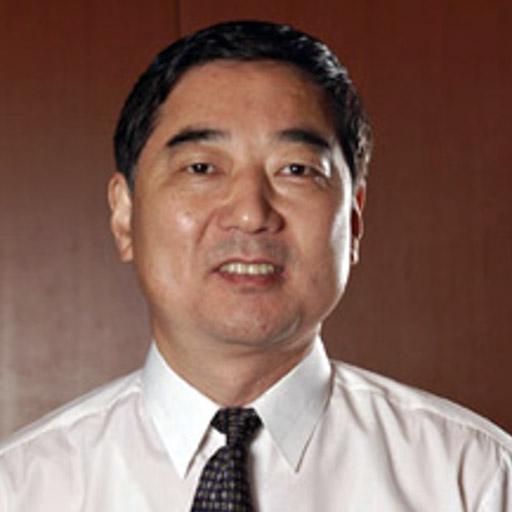
Xiaodong LiangView profile
Professor
Dr. Xiaodong Liang is a Professor in the Department of Electrical and Computer Engineering at the University of Saskatchewan, holding the prestigious Canada Research Chair in Technology Solutions for Energy Security in Remote, Northern, and Indigenous Communities. His research focuses on critical power system challenges with direct applications to remote community energy security. Education: Bachelor of Engineering (BEng) Master of Engineering (MEng) Master of Science (MSc) Doctor of Philosophy (PhD) Dr. Liang's research spans power systems dynamics, renewable energy integration, synchrophasor technology, smart grids, power electronics applications, and protection systems. His work addresses grid stability in renewable-rich environments, microgrid operation in remote areas, and corrosion issues in transmission infrastructure. Recent publications emphasize practical solutions for northern and indigenous communities, including inverter-based microgrid protection and machine learning applications for fault detection. Analysis of his 2023-2025 publications reveals dominant themes in microgrid protection (particularly for inverter-based systems), renewable integration challenges, advanced control techniques, and corrosion modeling. His work consistently targets remote community applications, with strong emphasis on real-time simulation validation using OPAL-RT platforms and practical field implementation. Scientific Awards: Canada Research Chair in Technology Solutions for Energy Security in Remote, Northern, and Indigenous Communities As a Canada Research Chair holder, Dr. Liang leads significant federally funded research addressing energy security gaps in remote communities. His program involves collaborations with indigenous groups, northern communities, and industry partners to develop deployable technology solutions. His lab utilizes advanced real-time simulation capabilities for testing microgrid control strategies and protection schemes under realistic conditions. Dr. Liang's research group operates within the University of Saskatchewan's Engineering Building, utilizing specialized power systems laboratories equipped with OPAL-RT real-time simulators for hardware-in-the-loop testing of microgrid components and protection systems. Current work focuses on enhancing resilience of remote microgrids through AI-driven control and novel protection architectures.