Falko Dressler is a Full Professor and Chair for Telecommunication Networks at the School of Electrical Engineering and Computer Science, Technische Universität Berlin. He holds a Ph.D. and M.Sc. in Computer Science from Friedrich-Alexander University of Erlangen-Nuremberg (1998-2003). His research focuses on next-generation wireless systems , distributed machine learning , edge computing , and applications in Internet of Things (IoT) , cyber-physical systems , and internet of bio-nano-things . Editorial roles: IEEE Trans. on Mobile Computing, Elsevier Computer Communications, IEEE/ACM Trans. on Networking Conference leadership: IEEE INFOCOM, ACM MobiSys, IEEE VNC Textbooks: Self-Organization in Sensor and Actor Networks (Wiley), Vehicular Networking (Cambridge) Recent publications highlight trends in Edge Computing Resilience and 6G Network Architecture , with a strong emphasis on Molecular Communication , Terahertz Band Synchronization , and Federated Learning in vehicular environments. Scientific contributions include multiple IEEE Fellow , ACM Fellow , and VDE ITG Prize 2023 recognitions. Advisory and professional activities include membership in the German National Academy of Science and Engineering (acatech), IEEE COMSOC Conference Council, and ACM SIGMOBILE Executive Committee. His work spans cooperative driving, ultra-low power sensor networks, and security in nano-communication systems.
Arnab Nandi is a Professor of Computer Science and Engineering at The Ohio State University, with a courtesy appointment in Biomedical Informatics. He holds leadership roles including Steering Committee Member for the Human-in-the-Loop Data Analytics (HILDA) Workshop and has served as Workshops co-chair for SIGMOD 2025-26 and Demonstrations co-chair for SIGMOD 2024. His research focuses on bridging human interaction and data infrastructure, spanning database systems, human-in-the-loop data analytics, and next-generation query interfaces. Nandi's work emphasizes interactive data exploration through projects like DICE (Distributed Interactive Cube Exploration), GestureDB (Querying Beyond Keyboards), and Omni (Multimodal Data Exploration). His recent research explores integrating LLMs into database education, augmented reality interfaces for data analytics, and multimodal approaches to video querying. Nandi has received numerous honors including the NSF CAREER Award, Google Faculty Research Award, IEEE TCDE Early Career Award, and the University's Alumni Award for Distinguished Teaching. He was also named to Columbus Business First's '40 under 40' and became an ACM Distinguished Member in 2024. As an educator, he teaches courses including CSE 3241 (Introduction to Database Systems), CSE 5242 (Advanced Database Systems), and CSE 5251 (Introduction to Software Startups). His educational innovations include DBTutor, which integrates LLMs into database systems education. At Ohio State, Nandi co-founded the OHI/O Program, which fosters tech culture through hackathons, and The STEAM Factory, an interdisciplinary research collaboration network. Prior to academia, he was founder and CEO of Mobikit, a connected vehicles data analytics startup acquired by Azuga Inc. (a Bridgestone company). His research has been supported by the NSF and industry partnerships, with applications spanning precision agriculture (CropFusion), clinical data pipelines (ICARUS), and interactive visualization systems (Perceptvis).
Waël Jaafar is a Professor in the Department of Software Engineering and IT at École de technologie supérieure (ETS), a constituent school of the Université du Québec system in Montreal, Canada. His research spans multiple critical domains in modern communications and computing infrastructure, with a particular focus on next-generation wireless networks and intelligent systems. Dr. Jaafar holds a B.Eng. from Sup'Com Tunisie, and both M.Sc.A. and Ph.D. degrees from Polytechnique Montréal. His academic background provides a strong foundation for his interdisciplinary research that bridges theoretical concepts with practical engineering solutions. His research interests center around wireless communications systems, with particular emphasis on 5G/6G networks, UAV communications, space telecommunications, and machine learning applications for networking. He has developed significant expertise in federated learning techniques for distributed networks, cybersecurity applications for next-generation mobile systems, and edge computing architectures. His work frequently explores the intersection of communication theory, artificial intelligence, and network security, with applications ranging from industrial IoT to public safety communications. Analysis of his recent publications reveals a strong trend toward integrating artificial intelligence with wireless networking infrastructure, particularly focusing on UAV-assisted communications, federated learning approaches for distributed networks, and security enhancements for 5G/6G systems. His research demonstrates increasing emphasis on practical implementation challenges including energy efficiency, communication overhead reduction, and reliability in non-ideal network conditions. As an academic supervisor, Dr. Jaafar actively mentors numerous graduate students across various projects. He currently supervises doctoral candidates working on blockchain-enhanced security for 5G networks, green network slice orchestration, and federated learning approaches for Open RAN architecture. His master's students are engaged in diverse topics including LiDAR-based power line monitoring, multimodal behavioral authentication, and 5G/6G security using AI techniques. Dr. Jaafar is affiliated with two prominent research laboratories at ETS: LASI (Computer System Architecture Research Laboratory) and LACIME (Communications and Microelectronic Integration Laboratory). At LASI, he contributes to research in AI-based systems engineering, resource orchestration in edge/cloud environments, and intelligent network design. Through LACIME, he engages with broader communications research spanning from microelectronic components to complex communication systems, with particular focus on wireless networks and signal processing applications.
Dr. Shuangshuang Jin is an Associate Professor in the School of Computing with a joint appointment in the Department of Electrical and Computer Engineering at Clemson University's College of Engineering, Computing and Applied Sciences. Previously, she served as a Senior Research Scientist at Pacific Northwest National Laboratory. Her educational background includes a Ph.D. in Computer Science (2007), M.S. in Computer Science (2003) from Washington State University, and a B.S. in Computer Science (2001) from Wuhan University. Ph.D., 2007 - Washington State University, Computer Science M.S., 2003 - Washington State University, Computer Science B.S., 2001 - Wuhan University, Computer Science Dr. Jin specializes in high-performance computing (HPC), distributed and parallel computing, general-purpose computation on graphical processing units (GPGPU), and HPC-based big data analysis, machine learning, scientific computation, and visualization. Her research focuses on applying these technologies to electrical engineering (power and energy systems, power electronics), automotive engineering, systems biology, and computer graphics. She leads the High-Performance Computing Enabled Science and Engineering (HPCeSE) Lab, where she supervises six PhD students working on HPC implementations for power system dynamic simulation, GridPACK application development, data-driven model-based smart control of power electronics converters, and other cutting-edge projects. Her recent publications demonstrate expertise in accelerating power system simulations, PV inverter reliability assessment, edge computing for power systems, and virtual prototyping of vehicle powertrain systems. The research trends show increasing focus on GPU acceleration, real-time simulation capabilities, and integration of HPC with emerging power system challenges. Junior Faculty Excellence in Teaching award (2021) Churchill Carter Fellowship (2022-2023) Zucker Graduate Education Center PhD Grant (2023) Doctoral Dissertation Completion Award (2023-2024) Outstanding Masters Student in Computer Science award (2022) Dr. Jin has successfully secured multiple grants from DOE, DOD, and other agencies for projects including 'Vehicle Propulsion Digital Twins', 'GridPACK-Wind', and 'Tool for Reliability Assessment of Critical Electronics in PV (TRACE-PV)'. She has advised numerous PhD and Master's students who have gone on to positions at national laboratories and industry. Her HPCeSE Lab maintains strong connections with Pacific Northwest National Laboratory, Fermi National Accelerator Laboratory, and other research institutions, providing students with valuable internship opportunities. Dr. Jin leads the High-Performance Computing Enabled Science and Engineering (HPCeSE) Lab at Clemson University, which focuses on developing optimized HPC-based parallel programming algorithms and architectures to solve complex scientific and engineering domain problems. The lab works on smart grid modeling and simulation, power electronics reliability assessment, ground vehicle systems prototyping, and advanced grid analytics, utilizing OpenMP, MPI, Pthreads, and CUDA/OpenCL on various computing platforms.
David Andrews is a Professor in the Department of Computer Science and Computer Engineering at the University of Arkansas College of Engineering. He holds the Mullins Endowed Chair of Computer Engineering and directs research through the Computer Systems Design Laboratory (CSDL). His work bridges hardware and software systems with a focus on practical implementation. His educational background includes: Ph.D. in Computer Engineering from Syracuse University Computer Engineer Degree from Syracuse University M.S.E.E. from University of Missouri-Columbia B.S.E.E. from University of Missouri-Columbia Andrews' research centers on embedded systems architectures from a holistic systems perspective, examining interactions between programming languages, runtime systems, and hardware components. His work spans reconfigurable computing, FPGA-based acceleration, and hybrid CPU/FPGA systems. A key contribution is the HybridThreads (hthreads) platform, which abstracts hardware/software boundaries to enable thread-based programming for heterogeneous systems. Recent publications demonstrate his focus on accelerating machine learning workloads on FPGAs, particularly transformer models and attention mechanisms, while addressing resource scheduling and real-time constraints. His publication trends reveal a consistent evolution from foundational work in parallel and distributed embedded systems toward specialized hardware acceleration for modern AI workloads. The research increasingly focuses on memory-centric architectures, computational overlays, and practical implementations for real-time applications across diverse domains including cultural heritage documentation and cybersecurity. As director of the Computer Systems Design Laboratory, Andrews leads interdisciplinary research in real-time embedded systems, reconfigurable computing, multiprocessor systems on chip, and hardware/software co-design. The lab integrates knowledge into undergraduate and graduate curricula covering digital design, computer organization, embedded systems, and systems modeling. CSDL supports a collaborative environment with undergraduate, master's, and PhD students working alongside visiting researchers from global institutions.
Paolo Prandoni is a Lecturer at École Polytechnique Fédérale de Lausanne (EPFL) in the School of Computer and Communication Sciences (IC). He serves as a Scientist in the Audiovisual Communications Laboratory (LCAV) and teaches in the SSC-ENS and SIN-ENS units, focusing on signal processing theory and practical applications in audiovisual communications. He earned his PhD from EPFL after completing all prior education there, driven by childhood fascination with long-distance telephony. His doctoral work established foundations in communication systems that continue to inform his research. Prandoni's research spans audio/image processing, machine learning for media analysis, and DSP education. Key areas include computational photography (e.g., spectral imaging, stained glass rendering), speech quality assessment via transfer learning, music information retrieval (e.g., fingering prediction), and audience analytics through his company Quividi. His work consistently bridges theoretical signal processing with real-world implementation. Recent publications reveal a strategic shift toward machine learning integration in signal processing tasks, particularly non-intrusive speech assessment and lensless imaging reconstruction. Simultaneously, he advances DSP pedagogy through MOOC development and hands-on teaching tools using off-the-shelf hardware, emphasizing accessibility and practical skill development. No scientific awards are documented in the provided materials. He has advised PhD student Thanikachalam Niranjan (thesis: Image Based Relighting of Cultural Artifacts , 2016) and teaches Communication Systems and Computer Science courses. His educational impact extends through the open-access textbook Signal Processing for Communications (2008) and tools like MultiPub for maintainable online classes. Industry engagement includes Quividi co-founding (2006) and ongoing CSO role in attention analytics. As a core LCAV laboratory member, he collaborates on interdisciplinary projects including cultural heritage digitization, embedded signal processing systems, and real-time audience measurement, leveraging EPFL's infrastructure for both academic and commercial applications.
Jennifer Shang is a Professor of Business Administration and Area Director for Business Analytics and Operations at the Katz Graduate School of Business , University of Pittsburgh. With a focus on healthcare analytics, operations management, and e-commerce, she applies data-driven methodologies to enhance patient care, hospital efficiency, and business productivity. Education: PhD in Operations Management, University of Texas at Austin MBA, University of Iowa Bachelor of International Business, National Taiwan University Her research integrates multi-criteria decision-making techniques (e.g., AHP/ANP, DEA) and combines human judgment with quantitative data to improve organizational outcomes. She has published over 140 papers, with recent trends emphasizing healthcare analytics, big data applications, and supply chain optimization in service industries. Scientific Awards: Distinguished Professor for EMBA class 32 (2004-2005) Excellence in Teaching Award for MBA program (2002-2004, 2009-2010) Excellence in Research Awards (2013-2015, 2017-2020, 2021-2022) Best Paper Award (2010) in Information Systems Research Professor Shang teaches courses in operations management, supply chain, statistical analysis, and multivariate data analysis at undergraduate, MBA, EMBA, DBA, and PhD levels. She serves on editorial boards for journals including International Journal of Revenue Management and International Journal of Productivity and Quality Management .
Professor Amr Rizk is the Director of the Networks and Communication Systems (NCS) Lab at the University of Duisburg-Essen, where he has been serving as Professor since April 2021. Previously, he was Assistant Professor at Ulm University (2019-2021) and completed his habilitation at TU Darmstadt in 2019. His academic journey includes research positions at prestigious institutions including University of Massachusetts Amherst, University of Warwick, and TU Darmstadt where he was an Athene Young Investigator. Professor Rizk's research spans multiple aspects of networking and communication systems with a particular focus on network performance analysis, stochastic modeling, and practical implementations. His work bridges theoretical foundations with real-world applications, especially in content delivery, video streaming, and network protocols. He has made significant contributions to network calculus, quality of experience optimization, and novel approaches to congestion control and caching mechanisms. His publication record demonstrates consistent high-impact contributions across top networking conferences and journals. Recent work shows a growing emphasis on programmable data planes, AI/ML applications in networking, and advanced techniques for network measurement and performance prediction. His research group at Duisburg-Essen maintains strong connections with both academic and industrial partners in the networking ecosystem. Best Paper Award at ACM MMSys Conference (2023) Distinguished TPC Member for IEEE INFOCOM (2020, 2022) Best Paper Award at ACM/USENIX Middleware Conference (2017) Athene Young Investigator Award, TU Darmstadt (2017) Professor Rizk serves as Associate Editor for Elsevier Computer Communications and has extensive experience with research funding bodies as a reviewer. His leadership extends to conference organization, including roles as PC Co-Chair for IEEE MIPR (2023) and Steering Committee member for Workshop on Network Calculus (2022). He maintains active participation in numerous top networking conferences as Technical Program Committee member, reflecting his standing within the international networking research community.
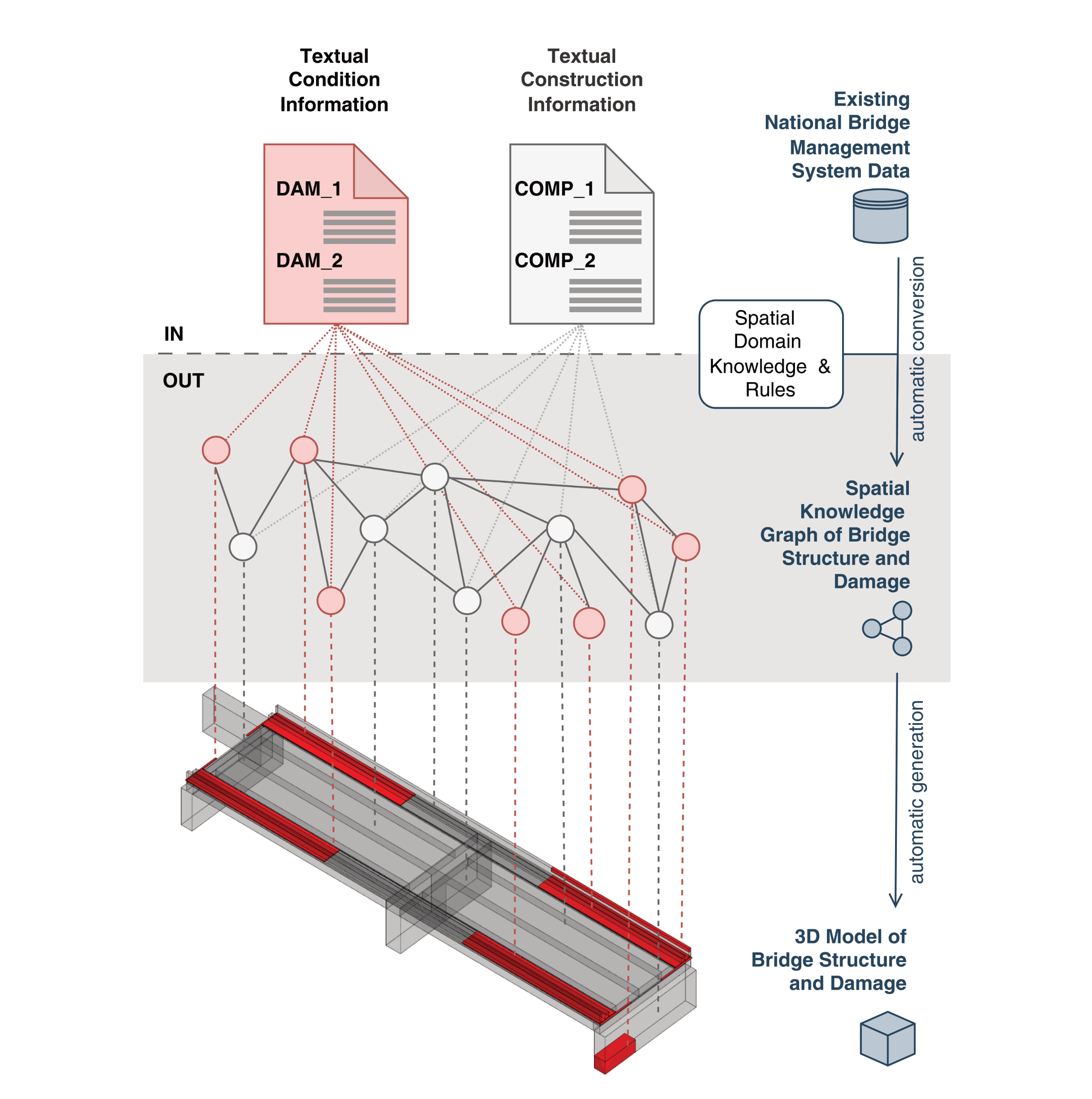
Prof. Dr. Jakob Beetz serves as a University Professor at RWTH Aachen University's Faculty of Architecture, leading the Design Computation (DC) research group. His work addresses critical challenges in sustainable built environments through digital innovation, focusing on integrating knowledge, information, and data across disciplines to reduce the sector's energy and material consumption—which accounts for over one-third of global totals—while advancing climate goals under the European Green Deal. His research spans Building Information Modeling (BIM), digital twins, and artificial intelligence, with emphasis on graph-based data federation, semantic web technologies, and large language models in construction. Key interests include evidence-based planning, parametric design optimization, building physics simulation, and networked knowledge modeling. Recent projects explore federated digital twin ecosystems for infrastructure management, intelligent damage assessment systems, and AI-driven solutions for wood structure preservation, directly contributing to sustainable development targets. Analysis of his 2024-2025 publications reveals a cohesive trajectory toward decentralized data environments and AI integration in Architecture, Engineering, and Construction (AEC). His work bridges theoretical foundations in knowledge representation with practical applications in bridge maintenance, road infrastructure, and timber construction, demonstrating consistent innovation in spatial data querying, federated issue management, and ontology-based process modeling. Prof. Beetz actively supervises PhD candidates, as evidenced by DC.Promotions 2024, and drives international collaboration through events like the Forum Construction Informatics 2025 and CIB W78 conferences. His research group engages with industry standards including Industry Foundation Classes (IFC) and Common Data Environments (CDEs), emphasizing open data principles and interoperability to transform construction workflows.
Anuj Pathania serves as an Assistant Professor in the Parallel Computing Systems (PCS) group within the Informatics Institute at the University of Amsterdam's Faculty of Science. His research pioneers sustainable computing systems operating under severe power, thermal, and reliability constraints, with significant contributions to energy-efficient hardware design and embedded systems. Education: PhD in Computer Science (2018), Karlsruhe Institute of Technology MSc in Computer Science (2012), National University of Singapore B.Tech in Computer Science (2009), Maharaja Agrasen Institute of Technology Pathania's research centers on low-power design and sustainable systems for constrained environments, with particular expertise in thermal management of 3D-stacked architectures and energy-efficient machine learning inference . His work bridges electronic design automation with real-world reliability challenges, developing novel power budgeting techniques like T-TSP that incorporate transient temperature effects ignored by conventional methods. Current projects include EU-funded initiatives on energy labeling for digital services, addressing ecological impacts through technological, behavioral, and legal frameworks. His publication trajectory reveals a strategic evolution toward zero-waste computing , with recent work (2023-2025) focusing on hardware-software co-design for edge AI, energy modeling across computing continua, and parameter-efficient neural adaptation. Key themes include thermal-aware scheduling for S-NUCA many-cores, cooperative processor utilization in heterogeneous systems, and sustainability metrics for digital services. Scientific Recognition: Best Paper Award Nomination at IEEE Computer Society Annual Symposium on VLSI 2023 for 3D-TTP power budgeting technique Pathania actively mentors 4 PhD students (Ehsan Aghapour, Saeedeh Baneshi, Sudam Wasala, Yixian Shen) and has successfully supervised 5 Master's theses (including Cum Laude defenses by Joris op ten Berg and Jurre Wolff). His research is supported by major grants including Energy Labels for Ecologically Sustainable Digital Services (2023-2024) and Towards Zero-Waste Computing (2021-2025), developing simulation frameworks like HotSniper and CoMeT for thermal analysis. The PCS group maintains strong industry collaborations with ARM and NVIDIA, particularly through tools like ARM-CO-UP for heterogeneous processor utilization.
Roderich Gross is a Senior Lecturer in the Department of Automatic Control and Systems Engineering at the University of Sheffield. He is also a Visiting Scientist at CSAIL, MIT, and leads the Enabling Technologies theme at Sheffield Robotics. His academic journey includes a Ph.D. in engineering science from Université libre de Bruxelles (2007), followed by postdoctoral fellowships as a JSPS Fellow (Tokyo Institute of Technology), Research Associate (University of Bristol), and Marie Curie Fellow (EPFL & Unilever). Research Interests : Swarm robotics, self-reconfigurable robots, multi-robot coordination, robotics software/tools (human-robot interaction interfaces, formal design tools), machine learning for behavior inference (Turing Learning, GANs), autonomous systems, natural computing (swarm intelligence, evolutionary algorithms). Scientific Contributions : Inventor of Turing Learning, a machine learning method for behavior inference. Key work includes swarm coordination, self-assembly, fault-tolerant quadcopters, energy-efficient drone delivery, and infrared-based swarm communication. Scientific Recognition : Held prestigious fellowships including JSPS and Marie Curie, and served as Associate Editor for leading robotics journals (IEEE Robotics and Automation Letters, Swarm Intelligence) and conference roles (General Chair DARS 2016, Program Co-Chair GECCO 2018). Grants : Principal Investigator on Horizon Europe OpenSwarm (£463,699), EPSRC Core Capital (£104,196), DSTL Multi Robot Systems (£98,781), and industry-funded modular robotics projects. Labs : Affiliated with the Natural Robotics Lab at the University of Sheffield.
Umar Iqbal is an Assistant Professor in the Department of Computer Science and Engineering at Washington University in St. Louis , where he investigates transparency and control mechanisms in computing systems to enhance user privacy and security. His work intersects computer security, privacy, and technology policy with a focus on web tracking, IoT, and agentic systems. Research Themes : Web security, emerging technology privacy, regulatory compliance under CCPA/GDPR, and tracking mitigation Scientific Awards : Best paper award at ACM Internet Measurement Conference (IMC), 2023 Caspar Bowden Award for Outstanding Research in PET Runner-Up, 2024 Best applied research paper (3rd) at CSAW NYU Tandon, 2020 Collaborations : Regularly works with researchers like Franziska Roesner, Tadayoshi Kohno, and Zubair Shafiq His publication portfolio spans 2016-2025 with impactful work on browser fingerprinting (IEEE Oakland 2021), ad blocking (IEEE Oakland 2020), and LLM platform security (AIES 2024). Current research includes privacy implications of AI systems and regulatory auditing frameworks.
Tobias Neckel is an Associate Professor at the Institute for Informatics at the Technical University of Munich (TUM), where he leads research projects and coordinates academic programs. He has been the project team leader of the IGGSE Project ExaNIML since 2018, main coordinator of the Ferienakademie since 2014, and Program Coordinator of the Bavarian Graduate School of Computational Engineering (BGCE) since 2009. Diploma in Technomathematik from TU München (2005) Dr. rer. nat. in Informatics from TU München (2009) Neckel's research focuses on Uncertainty Quantification, Random Differential Equations, and High Performance Computing. His work develops efficient numerical algorithms using hierarchic and adaptive methods such as octrees/spacetrees and sparse grids, with applications in fluid-structure interactions and incompressible fluid flow simulation. His research bridges theoretical mathematics with practical computational science, emphasizing robust and efficient implementations. His recent publications demonstrate a strong trajectory in multi-fidelity modeling, uncertainty quantification, and high-performance computing. Neckel has made significant contributions to scalable hierarchical approximation methods, dynamic resource management in HPC, and the application of machine learning techniques to computational science problems. His work spans diverse application domains including plasma physics, hydrology, and computational engineering. Lehrfonds prize of the TUM (2014) Ernst Otto Fischer prize of the TUM (2011) Promotionspreis des Bunds der Freunde der TU München (2009) Neckel has supervised numerous graduate students and has been actively involved in curriculum development and teaching innovation. His book "Bits and Bugs: A Scientific and Historical Review of Software Failures in Computational Science" (2019) represents a significant contribution to understanding software reliability in scientific computing. He has organized minisymposia at major conferences including SIAM CSE and SIAM UQ, and serves on program committees for various computational science conferences. As coordinator of the Ferienakademie and the BGCE, Neckel plays a central role in advanced computational engineering education in Bavaria. His research group develops software for exascale computing and contributes to the Transregional Collaborative Research Centre 89 on Invasive Computing. Neckel also maintains international collaborations, with research stays at institutions including the Australian National University and Tokyo Institute of Technology.
Mike Rubenstein is an Assistant Professor with joint appointments in the Department of Computer Science and Department of Mechanical Engineering at Northwestern University. He holds the Lisa Wissner-Slivka and Benjamin Slivka Professorship in Computer Science and is affiliated with the Center for Robotics and Biosystems. His educational background includes a Ph.D. in Computer Science from the University of Southern California, an M.S. in Electrical Engineering from USC, and a B.S. in Electrical Engineering from Purdue University. Prior to joining Northwestern, he completed a postdoctoral fellowship at Harvard University's Self-Organizing Systems Research Group. Rubenstein's research focuses on advancing multi-robot systems to enable capabilities beyond traditional single robots, emphasizing parallelism, adaptability, and fault tolerance at scale (hundreds to millions of robots). His work spans swarm shape control, modular self-reconfigurable robotics, bio-inspired satellite constellations, and novel sensing for air vehicle swarms. Key themes include algorithmic control for large-scale systems and hardware innovations to overcome current limitations in swarm robotics. His advising has produced notable student achievements, including Petras Swissler's Best Student Paper Award at DARS 2021 and Drew Curtis's NDSEG Fellowship. Research trends across his publications reveal a consistent emphasis on scalability, real-world applicability, and bridging hardware constraints with algorithmic innovation in swarm systems. Rubenstein actively mentors graduate students and leads projects involving swarm robotics platforms like FireAnt and PCBot. His lab focuses on developing systems where simplicity in individual robots enables emergent complexity at the swarm level, with applications ranging from space exploration to medical imaging.
Professor Ron Van der Meyden is a faculty member at the School of Computer Science and Engineering at the University of New South Wales, Sydney. His work focuses on the intersection of logic, security, and distributed systems, with particular expertise in blockchain technology and smart contracts. He leads the UNSW Interest Group in Blockchain, Smart Contracts and Cryptocurrency and organizes related seminar series. Professor Van der Meyden's research spans formal methods, computer security, and distributed systems. His work on epistemic logic has been influential in understanding knowledge-based systems and security protocols. He has made significant contributions to the formal verification of blockchain protocols and smart contracts, bringing rigorous mathematical approaches to these emerging technologies. His recent work explores the application of knowledge-based reasoning to consensus protocols and intersection management in autonomous systems. ACM Distinguished Scientist, 2009 As an advisor, Professor Van der Meyden has mentored numerous PhD and Masters students who have gone on to successful careers in academia and industry. His research is supported by grants including Australia's Economic Accelerator Grant for developing a commercial version of a software model checker and an AFOSR/DST Australia grant for verification and synthesis of fault-tolerant autonomous systems. He has received multiple ARC Discovery and Linkage grants over the years. Professor Van der Meyden leads the UNSW Interest Group in Blockchain, Smart Contracts and Cryptocurrency, fostering interdisciplinary research in this area. He has played key roles in major research centers including Smart Internet CRC and National ICT Australia (NICTA), where he established and led the Formal Methods program. His work on the formal verification of the seL4 microkernel and the Goanna static analysis tool has had significant practical impact.