Edgar Weippl is a Professor at the Faculty of Computer Science, University of Vienna, where he serves as Vice Dean and Head of the Research Group Security and Privacy. His work spans cybersecurity, blockchain, and machine learning, with teaching roles in information security and software security courses. Current Positions: Vice Dean (Faculty of Computer Science), Head (Security and Privacy Research Group), Deputy Head (Neuroinformatics & Knowledge Engineering Groups) Research Interests: Cybersecurity, blockchain, IoT security, code obfuscation, privacy technologies, reinforcement learning, and socio-technical systems security Selected Publications: Focus on blockchain privacy, VoWiFi security, code obfuscation, and reinforcement learning applications
Xiaobo Li is a Professor in the Department of Bio-Medical Engineering at New Jersey Institute of Technology. Holding a Ph.D. in Computer Aided Geometric Design from the University of Birmingham and a B.S. in Automation from Nanjing University of Aeronautics, their research bridges computational methods with neuroimaging and psychiatric disorder analysis. Ph.D., University of Birmingham (Computer Aided Geometric Design, 2004) B.S., Nanjing University of Aeronautics (Automation, 1999) Dr. Li’s work focuses on applying machine learning and graph theory to understand brain network abnormalities in conditions like ADHD , schizophrenia , and traumatic brain injury . Their studies analyze structural-functional connectivity , reward processing , and gut-brain axis interactions using fMRI , fNIRS , and diffusion tensor imaging . Recent publications highlight their development of tools like the GAT-FD MATLAB toolbox for brain network analysis and their exploration of multimodal MRI in schizophrenia diagnosis. They also investigate the neurobiological effects of photobiomodulation and vision therapy interventions.
Tej Chajed is an Assistant Professor in the Department of Computer Science at the University of Wisconsin-Madison, where he conducts research in formal verification of systems software. His work focuses on building and proving the correctness of critical systems, particularly file systems and concurrent software. Dr. Chajed earned his PhD from MIT in the PDOS group, followed by a one-year postdoc at VMware Research before joining UW-Madison. His academic journey reflects a strong commitment to bridging theoretical formal methods with practical systems implementation. Chajed's research centers on formal verification techniques for systems software, with particular emphasis on concurrent and crash-safe systems . His work aims to eliminate bugs in critical software through mathematical proofs of correctness. Key contributions include DaisyNFS (a verified concurrent file system), the Perennial framework for reasoning about crash safety, and Goose for connecting proofs to Go code. His research spans the intersection of programming languages, operating systems, and formal methods, developing practical tools that bring verification to real-world systems. His recent publications demonstrate a consistent trajectory toward more practical and scalable verification techniques for increasingly complex systems. The research shows progression from foundational verification frameworks to applied work on specific systems like file systems, journaling, and distributed protocols. A notable trend is the focus on making verification more accessible and practical for systems developers, bridging the gap between theoretical formal methods and real-world software engineering. Dr. Chajed serves on numerous program committees including OSDI 2025 PC, PLDI 2024 PC, SySDW 2023 PC, ECOOP 2023 ERC, CPP 2023 PC, POPL 2023 PC, PLDI 2022 PC, POPL 2022 AEC, EuroDW 2021 PC, POPL 2021 AEC, PLDI 2020 AEC, POPL 2020 AEC, and SOSP 2019 AEC, reflecting his standing in the systems and programming languages research community. In teaching, Chajed has developed and instructed courses on systems verification, operating systems, and protocol verification. He previously helped create MIT's 6.826 (Principles of Computer Systems) during his PhD. His passion for technical communication was cultivated during his time as a Communication Fellow in the EECS Communication Lab at MIT, where he continues to offer guidance to students on writing and presentation skills. His research group at UW-Madison focuses on advancing the state of the art in systems verification, with current projects centered around practical verification frameworks for concurrent and crash-safe systems.
Bryan S. Kim is an Assistant Professor in the Department of Electrical Engineering and Computer Science at Syracuse University. His research focuses on computer systems, particularly data storage systems, emphasizing performance, reliability, and scalability in the context of heterogeneous hardware. He holds a Ph.D. and M.S. in Computer Science and Engineering from Seoul National University and a B.S. in Electrical Engineering and Computer Science from UC Berkeley. Prior to academia, he worked as a postdoctoral researcher at Seoul National University and as a manager at SK Telecom. Key research interests include SSD reliability, storage system design, and overcoming hardware limitations through innovative architectures. Notable recent work includes projects on capacity-variant storage systems, CXL-enabled SSDs, and RAID adaptations for heterogeneous SSDs. He has been awarded two NSF grants: the DESC proposal (CHIPLETS360) in 2025 and a CAREER award for bridging memory/storage gaps in 2025. Education: Ph.D. in Computer Science and Engineering, Seoul National University M.S. in Computer Science and Engineering, Seoul National University B.S. in Electrical Engineering and Computer Science, UC Berkeley Recent Awards: NSF DESC Proposal Award (2025) NSF CAREER Proposal Award (2025) Teaching: CSE486: Design of Operating Systems CIS341: Computer Organization & Programming Systems CIS700: Storage Systems for Big Data His students include Shao-Peng Yang, Xiangqun Zhang, and Omkar Desai. He advises on projects related to storage systems, and his work has been published in top-tier conferences like FAST, ATC, EuroSys, and OSDI.
Gabriella Casalino is an Assistant Professor at the University of Bari Aldo Moro, Department of Computer Science, and a key researcher at CILAB - Computational Intelligence Lab. Her work focuses on Computational Intelligence methods for interpretable data analysis, particularly in eHealth, Data Stream Mining, and eXplainable Artificial Intelligence (XAI) within medical and educational domains. She has contributed to innovative approaches in smartphone-based health monitoring, fuzzy logic applications, and remote vital sign detection via photoplethysmography. Education : Ph.D. in Computer Science, with advanced training at institutions like Universitat de Girona and Université de Mons. Research Trends : Recent publications highlight applications of evolving granular computing, neuro-fuzzy systems, and explainable AI in hypertension prediction, bipolar disorder monitoring, and educational data analysis. Key subfields include remote health monitoring, medical data streams, and hybrid AI models. Grants : Research funded by AIRC (Italian Cancer Research Foundation), focusing on computational methods for healthcare challenges. Labs & Collaborations : Active in CILAB, collaborating on projects involving mHealth solutions, cardiovascular risk assessment, and intelligent educational systems.
Dr. George Karakostas is an Associate Professor in the Department of Computing and Software at McMaster University. His research focuses on Scientific Computing, Optimization, and Theoretical Computer Science, with a particular emphasis on algorithms, scheduling, and resource management in data centers and mobile networks. He is actively involved in advising graduate students and contributes to cutting-edge research in digital twins, edge computing, and approximation algorithms. Dr. Karakostas holds a PhD (implied by title) and has authored numerous publications addressing challenges in workload distribution, thermal management, and task scheduling under deadline constraints. His work often intersects with practical applications in IoT, wireless networks, and energy-efficient infrastructure. Key research trends include optimizing resource allocation in distributed systems, developing efficient offloading strategies for mobile devices, and leveraging digital twins for system performance enhancement. Despite the volume of his publications, the focus consistently revolves around theoretical rigor paired with real-world applicability. Dr. Karakostas is affiliated with the Digital & Smart Systems research cluster and teaches advanced courses such as CAS 744: Advanced Topics in Design of Algorithms (Theory). His contact information includes karakos@mcmaster.ca and a faculty profile page at www.cas.mcmaster.ca/~gk.
Hans Tompits is an Associate Professor in the Department of Knowledge-Based Systems at Technische Universität Wien (Vienna University of Technology). His research focuses on computational logic, declarative logic programming, and formal methods, with a particular emphasis on Answer-Set Programming (ASP). He coordinates the Master's program in Logic and Computation and leads projects in areas such as formal methods for optimization, fault-tolerant autonomous systems, and algorithmic composition. His work bridges theoretical advancements with practical applications, including tools like SeaLion (an ASP IDE with debugging support) and dlvhex (an ASP-based semantic web reasoner). He has contributed to foundational topics like program equivalence, debugging techniques, and integration of ASP with external systems. His recent projects address challenges in autonomous vehicle architectures, music composition algorithms, and safety-critical system design. Tompits has published extensively on topics ranging from nonmonotonic reasoning and modal logics to the development of declarative programming tools. His interdisciplinary approach spans computer science, mathematics, and AI, with applications in both academic and industrial contexts.
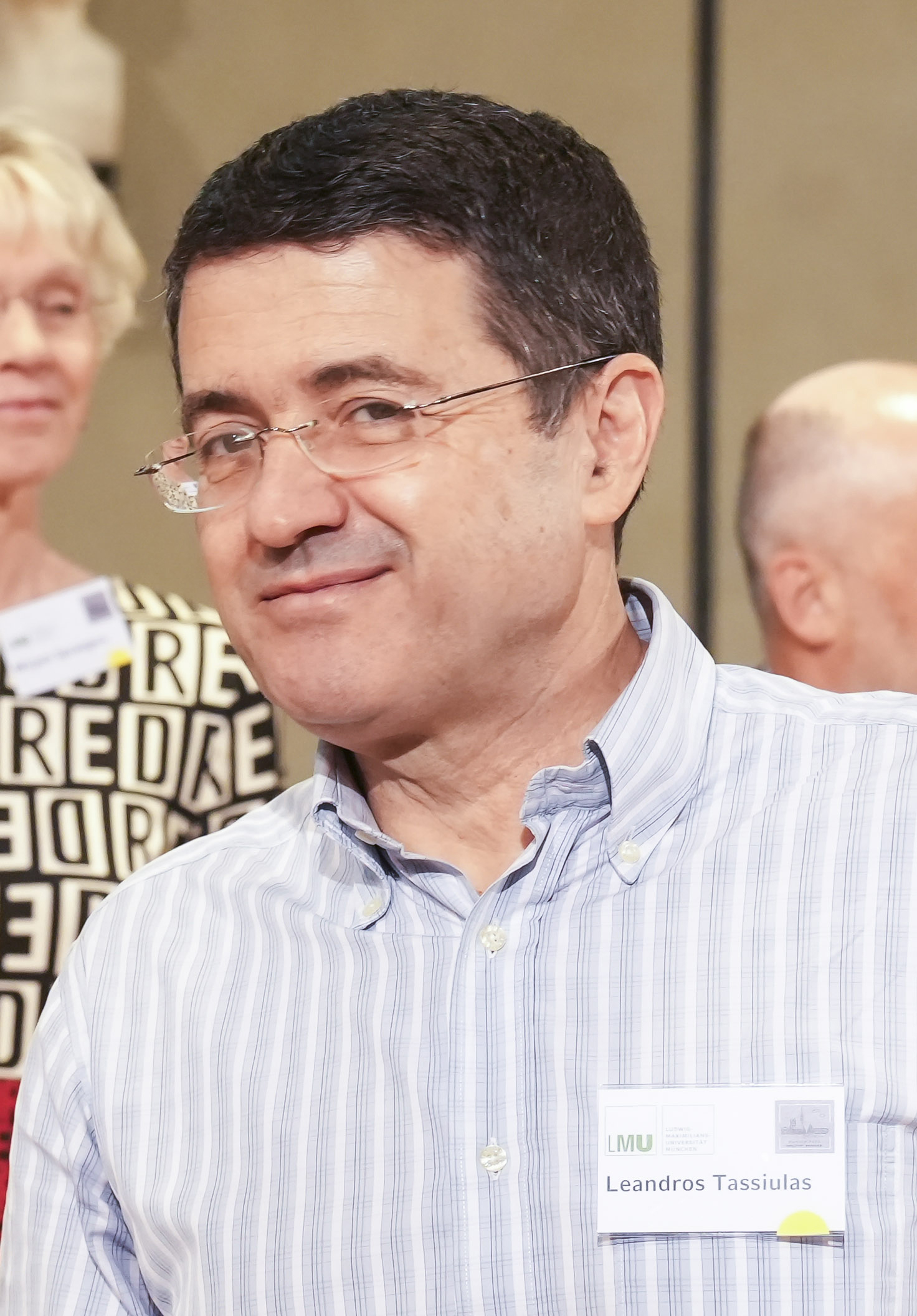
Leandros Tassiulas is the John C. Malone Professor of Electrical Engineering at Yale University, with additional appointments in Computer Science. His career spans faculty positions at the University of Thessaly, University of Maryland, University of Ioannina, and Polytechnic University. A Fellow of both IEEE (2007) and ACM (2020), he is renowned for contributions to network control theory, including the max-weight scheduling algorithm and back-pressure network policy. PhD in Electrical Engineering (1991) from the University of Maryland, College Park His research focuses on computer and communication networks , emphasizing mathematical models for complex networks , wireless system architectures , stochastic systems , and energy-efficient network design . Recent work explores quantum networking (Pant et al., 2019) and federated learning in edge environments (Jiang et al., 2022). Key publication trends include stability analysis (earlier works), mobile edge computing (2019), software-defined networking (2021), and smart grid optimization (2012-2013). The list includes monographs on network theory and patents for distributed bandwidth allocation (2011) and directional antenna protocols (2002). Scientific Awards ACM Fellow (2020) for network control contributions IEEE Koji Kobayashi Award (2016) for scheduling/stability analysis IEEE INFOCOM Achievement Award (2007) for resource allocation Bodossaki Foundation Prize (1999) for distributed systems NSF CAREER, ONR Young Investigator, and multiple best paper awards His work has been funded by the NSF, ONR, and IBM. Current projects bridge AI , quantum communication , and next-generation network architectures .
Univ.-Prof. Martin Pinzger is a Professor at the Department of Informatics Systems, Alpen-Adria-Universität Klagenfurt. He serves as Head of Department and Member of the Senate, actively contributing to academic governance. Research Focus: Automating Software Engineering Tasks, Mining Software Repositories, Program Analysis, Software Evolution and Visualization Recent Work: Developing tools for API evolution analysis, cybersecurity AI (CAI), robotics benchmarking (RobotPerf), and dependency validation His research combines empirical studies with tool development for software maintenance and security. Current projects address challenges in REST API breaking changes, cloud security certifications, and robotic system performance evaluation. Publications since 2023 demonstrate continued engagement with topics spanning AI-driven code segmentation, microservice API evolution, and cybersecurity tool development. Key trends include cross-disciplinary applications of NLP to software engineering and security-focused tool creation. Contact: martin.pinzger@aau.at
Otman Basir is a Professor in the Department of Electrical and Computer Engineering at the University of Waterloo. He serves as Associate Director of the Waterloo Institute for Health Informatics Research and Associate Director of the Pattern Recognition and Machine Intelligence Laboratory. Additionally, he is Director of Urban Informatics Corporation and founder/president/CEO of Intelligent Mechatronic Systems (IMS), a leader in telematics and infotainment technologies. Education: PhD in Systems Design Engineering (University of Waterloo, 1993), MSc in Electrical Engineering (Queen's University, 1989), BSc in Computer Engineering (Al-Fateh University, Libya, 1984). Research focuses on intelligent embedded systems, sensory systems design, biologically inspired systems, and human-computer interfaces. He has authored over 400 publications and holds 121 patents. Recent work includes blockchain applications, vehicular communication systems, and cybersecurity frameworks for IoT. His research emphasizes real-world applications in transportation and healthcare. Key awards include the Ontario Premier Research Excellence Award and Canada Foundation Innovation Award. Teaching includes courses like ECE 124 (Digital Circuits) and ECE 659 (Intelligent Sensors). IMS innovations drive connected car technologies, emphasizing driver safety and sustainability. Patents: 121 issued/pending Grants: Multiple awards supporting health informatics and intelligent systems research Labs: Pattern Recognition Lab, Waterloo Health Informatics Research
Pedro R. M. Inácio is an Associate Professor at the University of Beira Interior (UBI) , where he teaches information assurance, cybersecurity, and computer simulation courses in undergraduate and graduate programs. He serves as Pro-Rector for the Digital University and Data Protection Officer at UBI, and leads the Cross Cutting Skills Lab and the Network Security research group at Instituto de Telecomunicações. His work bridges academia and industry, including a PhD at Nokia Siemens Networks Portugal.
Dr. Luca Castiglione is a Research Associate in Resilience and Safety to Cyber Attacks at the Department of Computing, part of the Faculty of Engineering at Imperial College London. His work focuses on interdisciplinary cybersecurity challenges in cyber-physical systems (CPS), emphasizing the intersection of safety and security. Research interests include threat modeling for CPS, hazard analysis in smart grids and aviation systems, and secure file storage in cloud environments. His methodologies often combine systems theory with practical frameworks like assurance case generation and cooperative communication protocols over 5G. Recent publications explore automated detection of safety-critical attacks, impact analysis of cyber threats on flight management systems, and security-aware hazard analysis for infrastructure systems. While no awards or grants are explicitly mentioned, his research demonstrates expertise in cross-disciplinary approaches to system resilience. His location is listed as the Huxley Building on the South Kensington Campus, though no email or educational background details are provided in the available text.
Dr. Udayanto Atmojo is a Staff Scientist in the Department of Electrical Engineering and Automation at Aalto University. His research focuses on industrial automation systems, distributed control architectures, and IEC 61499 standard implementation. He holds a doctoral degree in Engineering from the University of Auckland. Research Focus: Distributed control systems using IEC 61499 standard OPC-UA integration for industrial interoperability Cybersecurity in Industry 5.0 environments Digital twin applications in industrial settings His publications demonstrate strong emphasis on industrial automation standards, secure data exchange, and virtual commissioning. Recent work addresses security challenges in human-intensive automated factories and confidential data sharing for life cycle assessments in process industries. Projects and Recognition: Principal investigator for TwinFlow project on distributed control systems (2024-2026) Contributor to CloViC project on cloud virtual commissioning Finalist in World Challenge Finland 2018 competition He develops laboratory test procedures for industrial applications and contributes to open science initiatives including FAIR principles for research software.
Eric TOTEL is a Professor at Telecom SudParis, specializing in cybersecurity and network security. His research focuses on intrusion detection systems, graph-based anomaly detection, machine learning applications in security, and data confidentiality in distributed systems. He has contributed to projects such as DAMS (DDoS mitigation using deep reinforcement learning), Sec2Graph (novelty detection on graph-structured data), and DAEMON (dynamic autoencoder-based anomaly detection). His work emphasizes scalable solutions for multi-step attack detection and privacy-preserving infrastructure for encrypted DNS logs. Key contributions include developing correlation engines for distributed systems, formalizing invariant-based attack detection in web applications, and exploring static analysis for information flow control. He has authored over 50 peer-reviewed publications and served on program committees for conferences like RAID, CRiSIS, and EuroS&P. His HDR (2012) formalized error-detection techniques applied to intrusion detection. Advising and grants: He collaborates on projects funded by French national research agencies and has mentored students in cybersecurity, AI for defense (CAID conferences), and cloud infrastructure security. His research often bridges theoretical models and practical implementations, with tools like STARLORD for 3D graph visualization of security data.
Eileen Martin is an Associate Professor in the Department of Geophysics and Applied Math and Statistics at the Colorado School of Mines. Her research focuses on near-surface geophysics, environmental monitoring, and the application of distributed acoustic sensing (DAS) technology. She leads projects involving fiber-optic sensing for permafrost degradation, urban seismic monitoring, and mining safety. Martin has developed open-source tools like DASCore and contributes to scalable computational methods for geophysical data analysis. Education: PhD (2018) in Computational and Mathematical Engineering from Stanford University; MS (2017) in Geophysics from Stanford; BS (2012) in Mathematics and Physics from UT Austin. Research interests include fiber-optic sensing systems, seismic imaging, data-intensive computing, and applications in environmental science. Her work bridges geophysics with computational methods, emphasizing real-world deployment in challenging environments like arctic permafrost sites and underground mines. Her recent work explores DAS for glacier monitoring, mine seismicity detection, and urban infrastructure assessment. Collaborative projects include Arctic permafrost monitoring and developing public datasets for geoscience research (PubDAS repository). Grants and lab activities include NSF CAREER funding for scalable computational seismology and partnerships with industry on fiber-optic monitoring solutions.