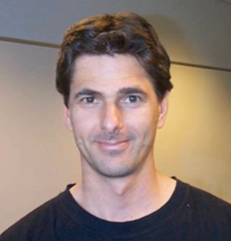
Dr. Jue (Grace) Xie is a Lecturer in the Department of Human Centred Computing at Monash University's Faculty of Information Technology. She is also a Senior Software Engineer and Research Fellow at Action Lab, with over 15 years of experience in applied research spanning software architectures, web systems, consumer health informatics, and conversational AI. Grace holds a PhD from Monash Faculty of Information Technology (2012) and has contributed to diverse interdisciplinary projects, including collaborations with Microsoft Research Asia and Monash research centers. Her teaching roles include Chief Examiner for units like FIT5183 Mobile and Distributed Computing Systems and Lecturer for Programming for Distributed Systems and Service-Oriented Computing . Research Interests Applied Conversational AI Human-Computer Interaction (HCI) Web Systems & Social Networks Knowledge Engineering Recent publications focus on AI-driven healthcare interventions, mental health support via chatbots, and stakeholder-inclusive design in aged care. Her work aligns with UN Sustainable Development Goals 3 (Good Health) and 9 (Innovation). Awards include the Future Women Leaders Conference 2019 . She is a Fellow of the Computer Society (IEEE) and the Association for Information Systems .
Rasheed Hussain is an Associate Professor of Intelligent Network Security at the Smart Internet Lab and Bristol Digital Futures Institute (BDFI), School of Electrical, Electronic and Mechanical Engineering at the University of Bristol, UK. Previously, he served as a Senior Lecturer at the same institution from December 2021 to July 2025. He has held academic positions at Innopolis University, Russia, where he served as Associate Professor and Director of the Institute of Information Security and Cyber-Physical Systems, and as a guest researcher at the University of Amsterdam, Netherlands. His educational background includes a PhD in Computer Engineering from Hanyang University, South Korea (2011-2015), an MS in Computer Engineering from the same institution (2008-2010), and a B.Sc in Computer Software Engineering from the University of Engineering and Technology, Peshawar, Pakistan (2003-2007). Hussain's research focuses on network and cybersecurity, particularly future network security including 6G, the role of Digital Twins in future networks and systems security, and Responsible AI including fairness, trustworthiness, and explainability. His work spans information security, privacy, applied cryptography, vehicular networks, Internet of Things, Content-Centric Networking, cloud computing, API security, and blockchain applications. Senior member of IEEE Member of ACM ACM Distinguished Speaker Editorial board member for IEEE Communications Surveys & Tutorials, IEEE Access, and other journals His recent publications demonstrate a strong focus on the intersection of AI, networking, and security, with particular emphasis on Digital Twins, blockchain applications, federated learning, and 6G security. His research shows a clear trajectory toward addressing security challenges in emerging network architectures while incorporating responsible AI principles. Scientific Recognition: ACM Distinguished Speaker Netherlands University Teaching Qualification (Basis Kwalificatie Onderwijs, BKO) Hussain serves as a reviewer for major IEEE transactions, Springer and Elsevier journals, and participates in technical program committees for conferences including IEEE VTC, IEEE VNC, IEEE Globecom, and IEEE ICC. He is also certified as a trainer for the Instructional Skills Workshop (ISW) and contributes to the ESRC Centre for Sociodigital Futures (CenSoF) at the University of Bristol. His laboratory work centers around the Networks and Blockchain Lab, which focuses on security solutions for next-generation networks, with particular emphasis on Digital Twins security, blockchain applications, and AI-driven network security solutions. His current projects involve developing secure frameworks for future networks, trustworthy AI models, and privacy-preserving federated learning approaches.
Dr. Wibowo Hardjawana is a Senior Lecturer in Telecommunications Engineering at the School of Electrical & Computer Engineering , University of Sydney. He holds a PhD from the University of Sydney and serves as an ARC DECRA Research Fellow. His research focuses on wireless network softwarisation, enabling programmable radio interfaces to address traffic elasticity in 5G/6G systems. Education : PhD (University of Sydney) Grants : ARC DP210100744 (2021), ARC DECRA DE140101114 (2014) His work spans 5G/6G network architectures , machine learning for wireless systems , and open radio interfaces . Key contributions include graph representation learning for interference management, Bayesian neural network detectors for OTFS modulation, and NOMA decoding techniques . Recent publications analyze ultra-reliable low-latency communications , UAV-enabled networks , and stochastic geometry in wireless systems . He has collaborated with institutions in China, Indonesia, and UAE, and engaged with industry partners like Telstra and Ausgrid.
Professor Raja Jurdak is a leading academic in distributed systems and applied data sciences at Queensland University of Technology (QUT), where he directs the Trusted Networks Lab. He holds dual roles as Professor of Distributed Systems and Chair in Applied Data Sciences, alongside leadership in the Centre for Data Science. His research focuses on dynamic network modeling, blockchain-based trust frameworks, and IoT applications, with particular emphasis on cybersecurity, energy efficiency, and mobility-driven diffusion processes. Jurdak formerly led CSIRO's Distributed Sensing Systems Group and maintains a visiting scientist role there. Education: PhD in Information and Computer Science, University of California, Irvine MS in Computer Networks and Distributed Computing, University of California, Irvine BE in Computer and Communications Engineering, American University of Beirut Research Interests: Network science, blockchain technology, IoT security, sustainable energy systems, and data-driven decision-making. His work bridges theoretical advancements with practical applications in smart grids, health surveillance, and urban mobility. Awards: Finalist for the 2019 Eureka Prize, multiple CSIRO accolades, and IEEE Senior Member status. His research has received industry recognition for interdisciplinary innovation, including the DiNeMo project's real-time disease surveillance system. Advisory & Grants: Leads high-impact projects funded by government and industry partnerships. Supervises PhD candidates in areas like decentralized data processing and privacy-preserving AI. Holds editorial roles at journals such as Ad Hoc Networks and PLoS ONE . Labs & Teams: Directs the Trusted Networks Lab at QUT, fostering collaborations with institutions like Oxford University and MIT. His work emphasizes cross-disciplinary teams to address global challenges in cybersecurity and sustainable systems.
Professor Ron Van der Meyden is a faculty member at the School of Computer Science and Engineering at the University of New South Wales, Sydney. His work focuses on the intersection of logic, security, and distributed systems, with particular expertise in blockchain technology and smart contracts. He leads the UNSW Interest Group in Blockchain, Smart Contracts and Cryptocurrency and organizes related seminar series. Professor Van der Meyden's research spans formal methods, computer security, and distributed systems. His work on epistemic logic has been influential in understanding knowledge-based systems and security protocols. He has made significant contributions to the formal verification of blockchain protocols and smart contracts, bringing rigorous mathematical approaches to these emerging technologies. His recent work explores the application of knowledge-based reasoning to consensus protocols and intersection management in autonomous systems. ACM Distinguished Scientist, 2009 As an advisor, Professor Van der Meyden has mentored numerous PhD and Masters students who have gone on to successful careers in academia and industry. His research is supported by grants including Australia's Economic Accelerator Grant for developing a commercial version of a software model checker and an AFOSR/DST Australia grant for verification and synthesis of fault-tolerant autonomous systems. He has received multiple ARC Discovery and Linkage grants over the years. Professor Van der Meyden leads the UNSW Interest Group in Blockchain, Smart Contracts and Cryptocurrency, fostering interdisciplinary research in this area. He has played key roles in major research centers including Smart Internet CRC and National ICT Australia (NICTA), where he established and led the Formal Methods program. His work on the formal verification of the seL4 microkernel and the Goanna static analysis tool has had significant practical impact.
Professor Brett Harris is a faculty member at Curtin University, affiliated with the School of Earth and Planetary Sciences (EPS) within the Faculty of Science and Engineering. He holds a prominent role in the Office of the Provost. His research focuses on subsurface resource technologies, including mineral exploration, CO2 sequestration, and geothermal energy. He has led major initiatives like the DET CRC and MinEx CRC projects, advancing in-hole electromagnetic sensing and distributed acoustic sensing techniques. His expertise spans hydrogeology, geophysics, and environmental geoscience, with notable contributions to aquifer characterization, fault zone dynamics, and CO2 storage monitoring. He coordinates undergraduate courses in electromagnetism, potential fields, and environmental geophysics, while supervising multiple PhD students. Key collaborations include work with government agencies on fractured aquifer detection and geothermal systems. Recent research emphasizes innovative sensor technologies for subsurface imaging, CO2 leakage monitoring, and groundwater sustainability. His work bridges geophysics with applied engineering solutions for resource exploration and environmental stewardship.
Kyle Moore is a Lecturer in Digital Media at Swinburne University of Technology's School of Social Sciences, Media, Film and Education. He holds a PhD in media and communications from the University of Sydney, focusing on games in urban environments. Current research: Mobile gaming distributions, location-based technology, augmented reality, and digital play cultures Teaching areas: Social media networks, media industries, and data communication Supervision: Available for PhD/Master's candidates in mobile technology and digital cultures His research explores intersections between location-based games and urban environments, examining how digital play shapes public space representation and access. Recent publications include analyses of Pokémon GO's haptic effects and Fortnite's cultural impact. Current grant: Supporting resilient HIV-positive community connections on digital platforms and technologies (2025-2026) at Swinburne University. Previously published in top-tier journals like Games and Culture , Convergence , and Media International Australia .
Dr. Rahat Masood is a Lecturer at the School of Computer Science & Engineering (CSE), UNSW Sydney. Her research focuses on cybersecurity, including privacy-preserving technologies, authentication mechanisms, critical infrastructure protection, and network security analysis. She holds a PhD in Information Security and Privacy from UNSW (Data61-CSIRO, Australia), an MS in Computer and Communication Security from NUST, Pakistan, and a B.Sc. in Software Engineering from the University of Engineering & Technology, Pakistan. Her academic contributions span theoretical and applied cybersecurity domains. Dr. Masood’s educational background includes: PhD: Information Security and Privacy (UNSW, Data61-CSIRO, Australia) MS: Computer and Communication Security (NUST, Pakistan) B.Sc.: Software Engineering (University of Engineering & Technology, Pakistan) Her research interests emphasize privacy technologies, authentication systems, and securing distributed energy resources. Recent work includes developing frameworks for quantifying privacy risks and analyzing social media manipulations. She employs data-driven methodologies and machine learning to address challenges such as WiFi device tracking and federated learning security. In her publications, she highlights trends in privacy controls usability, satirical news detection using multilingual models, and threat modeling for critical infrastructure. These studies underscore her commitment to bridging cybersecurity theory with real-world applications. No scientific awards are mentioned in the provided texts. Her teaching and supervision roles at UNSW are active, though specific student advisees or grant details are not listed. She is affiliated with Data61-CSIRO through her PhD and contributes to interdisciplinary cybersecurity efforts within CSE.
Professor Carsten Rudolph serves as Deputy Dean at Monash University's Faculty of Information Technology and directs the Oceania Cyber Security Centre (OCSC). He holds a PhD in Information Security from Queensland University of Technology (2002) and a Diplom in Computer Science from Goethe University Frankfurt (1997). His interdisciplinary research focuses on cybersecurity foundations, including cryptographic protocols, AI-driven security, human factors, and national cybersecurity policy. Key areas include securing smart grids, digital health systems, and transnational energy networks. Notable contributions include establishing the OCSC, leading Pacific region cybersecurity maturity reviews with Oxford University, and advancing frameworks for firmware security in virtual power plants. He chairs major projects like RAI4IoE (Responsible AI for Energy) and Post-Quantum Cryptography initiatives. Teaching responsibilities include cybersecurity modules like FIT3173 and FIT3168. Rudolph's research outputs (137+ publications) emphasize phishing detection via AI, blockchain-based energy trading, and resilient smart grid systems. He collaborates internationally on policy development and has advised 12 major research projects funded by agencies like the U.S. Bureau of East Asia and Pacific Affairs.
Zhe Hou is a Senior Lecturer at the School of Information and Communication Technology , Griffith University, Australia. His academic journey includes a PhD in automated reasoning for separation logic from the Australian National University (2015) and prior research roles at Nanyang Technological University, Singapore (2015-2017). He joined Griffith University in 2017 and became permanent faculty in late 2019. Research Interests : Formal methods for software verification Automated reasoning with logical frameworks Blockchain technology and security Quantum computing verification Integration of LLMs with rigorous reasoning Sports analytics via model checking Recent Publications demonstrate expertise in neural-symbolic reasoning, blockchain security, quantum SAT solvers, and runtime verification frameworks. His work combines formal logic with machine learning for applications in cybersecurity and AI trustworthiness. Scientific Awards : ACM SIGSOFT Distinguished Paper Award (2025) Supervision Roles : Principal/Associate Supervisor for 6+ doctoral projects in blockchain security, AI verification, and network security. Professional Activities : Editor for Springer-Nature and Formal Aspects of Computing special issues, conference chair for ICFEM, ICECCS, and ISACE symposia.
Dr. Hongsheng Hu is currently a Lecturer in the School of Information and Physical Sciences at the University of Newcastle, Australia, specializing in the Data Science and Statistics focus area. Prior to this position, he served as a Postdoc Research Fellow at CSIRO's Data61 from October 2022 to August 2024. His academic journey includes a Doctor of Philosophy in Computer Systems Engineering from the University of Auckland in New Zealand, establishing his foundation in advanced computing systems. Dr. Hu's research centers on enhancing the trustworthiness of machine learning systems, with particular emphasis on identifying critical privacy vulnerabilities within machine learning models and developing robust defensive strategies. His work spans several key domains including adversarial machine learning (30% focus), statistical data science (30% focus), and data and information privacy (40% focus). He investigates membership inference attacks, machine unlearning techniques, and privacy-preserving mechanisms in federated learning environments. His research addresses fundamental challenges in AI security, exploring how machine learning models can be compromised through sophisticated privacy attacks and developing methods to mitigate these vulnerabilities while maintaining model utility. Analysis of Dr. Hu's publication record reveals a strong research trajectory focused on machine learning security and privacy. His work consistently addresses vulnerabilities in machine learning systems, particularly examining membership inference attacks, machine unlearning mechanisms, and privacy-preserving techniques in federated learning. The research spans top-tier venues including IEEE Security & Privacy, USENIX Security, NDSS, NeurIPS, IJCAI, AAAI, and WWW, demonstrating both technical depth and recognition by the research community. His publications show an evolving focus from foundational privacy attacks to developing more sophisticated unlearning techniques and robust defense mechanisms, with increasing citation counts indicating growing impact in the field. Active Program Committee member for USENIX Security, NDSS, ICLR, IJCAI, WWW, ICDM, ECML, and PKDD Invited reviewer for IEEE Transactions on Information Forensics and Security (TIFS), IEEE Transactions on Dependable and Secure Computing (TDSC), IEEE Transactions on Pattern Analysis and Machine Intelligence (IPAMI), and ACM Computing Surveys (CSUR) Dr. Hu currently serves as Course Coordinator for STAT6020 and STAT2020 Predictive Analytics at the University of Newcastle. As an academic supervisor, he co-supervises one PhD student working on 'Identifying and Mitigating Vulnerability in Recommender Systems' at Macquarie University. His research collaborations span multiple countries, with significant publication counts in Australia (18), China (12), New Zealand (10), and the United States (7), reflecting an active international research network focused on AI security challenges.
Dr. Cheng-Chew Lim is a Professor in the School of Electrical and Mechanical Engineering at the University of Adelaide. He specializes in control theory, autonomous systems, and multi-agent reinforcement learning. His research focuses on trusted autonomous systems, secure cyber-physical networks, and decentralized decision-making models. He has published over 300 articles and supervised 50+ PhD and master’s students. Dr. Lim teaches courses in control systems, autonomous systems, and engineering project management. He has held editorial roles, including Associate Editor for IEEE Transactions on Systems, Man, and Cybernetics, and is actively involved in professional associations like the IEEE Control and Aerospace Electronic Systems Joint Chapter. His current projects include physics-informed neural networks for medical imaging, secure distributed autonomous systems, and resilient formation control under cyberattacks. Dr. Lim has secured research grants from ARC and industry partnerships, emphasizing practical applications in robotics, cybersecurity, and smart systems.
Associate Professor Benjamin Turnbull is Deputy Head of School at UNSW Canberra's School of Systems & Computing. His research focuses on cybersecurity, simulation, and emerging technologies, aiming to develop decision support systems for cyber resilience. He leads large-scale research projects funded by organizations like CSIRO, Australian Defence Force, and the US Naval Research Laboratory, totaling over $3 million AUD in grants. Teaching contributions include co-creating the Bachelor of Cyber Security program and directing multiple postgraduate cybersecurity offerings. His educational design emphasizes industry-relevant courses, from undergraduate to executive programs like the UNSW Online Cyber Security Masters. He has extensive experience in curriculum design, content development, and online education. Research interests span cyber situation awareness, secure simulation platforms, and automated learning from big datasets. Notable projects include the UNSW-MG24 microgrid cybersecurity dataset and frameworks like OQFL (quantum-based federated learning) for intelligent transportation systems. His work bridges theory and practice, with outputs including software tools and policy recommendations for cyber resilience in critical infrastructure. Key collaborations include the Cyber Cooperative Research Centre and DST Group. He has authored over 100 peer-reviewed publications, focusing on IoT security, blockchain-enabled learning, and cyber-physical-social systems resilience. His grants emphasize applied research with direct societal impact, such as mitigating supply chain cyber risks and enhancing microgrid cybersecurity.
Professor Asif Gill is Head of Discipline for Software Engineering at the School of Computer Science, University of Technology Sydney (UTS), where he was promoted to Professor of Computer Science in January 2024. He also serves as Director of the DigiSAS Research and Innovation Lab and is actively involved in the Global Big Data Technologies Centre at UTS. As a founder of both the DigiSAS Lab and the Future Generation Enterprise Architecture Community of Practice (FGEA CoP), he has established integrated teaching-research-engagement frameworks that translate academic research into practical applications while enhancing graduate employment opportunities. Professor Gill's research interests span Adaptive Enterprise Architecture , Agile Software Development , and Design Science Research & Innovation , with a particular focus on architecting large-scale data-intensive enterprise software systems. His work addresses challenges across academia, industry, government, and society, with significant contributions to AI systems architecture, digital identity management, and enterprise knowledge graphs. His applied research has resulted in numerous collaborations with organizations including the Reserve Bank of Australia, Revenue NSW, Capsifi, Data Zoo, and the NSW Department of Planning, Industry and Environment. His publication record includes 3 books and over 190 articles in major academic journals such as IEEE Transactions on Professional Communication, Information and Management, and Information Systems. His recent work demonstrates a consistent focus on cutting-edge topics in enterprise architecture, AI systems, and digital identity, with multiple publications appearing in 2024-2025. His research trajectory shows a clear evolution from foundational work in agile software development toward more sophisticated integration of AI, enterprise architecture, and data governance. Fellow of the Australian Computer Society (ACS) Fellow of DSE (ESCP Center for Design Science in Entrepreneurship) Senior Member IEEE Associate Editor, IEEE Transactions on Technology & Society Associate Editor, Springer Nature Discover Data journals Member, Data Sharing Committee, IFIP Technical Committee 8.1 Member, Standards Australia Software and Systems Engineering Committee IT-015 Professor Gill has successfully secured numerous research grants from 2019-2026, totaling significant funding for projects related to digital identity, enterprise architecture, and AI systems. His approach emphasizes industry-academia collaboration, with many projects involving direct partnerships with government agencies and industry organizations. He has supervised multiple PhD and Master's students through industry-sponsored scholarships and maintains active collaborations with researchers across multiple institutions. Leading the DigiSAS Research and Innovation Lab, Professor Gill has created an environment that bridges theoretical research with practical implementation. The lab focuses on developing frameworks and tools for adaptive enterprise architecture, with particular emphasis on AI-enabled systems, data governance, and digital identity solutions. His work on the Data Satellite Architecture represents a significant contribution to combating data pollution in federated digital ecosystems.
Associate Professor Iain MacGill at the University of New South Wales leads interdisciplinary research at the intersection of renewable energy integration , electricity market design , and policy frameworks for low-carbon transitions. As a core member of the Centre for Energy and Environmental Markets , he develops computational models for coordinating distributed energy resources in restructured power systems. PhD in Electrical Engineering (UNSW) B.Eng. & M.Eng.Sci. (University of Melbourne) His work examines technical-economic-commercial challenges of renewable integration, with recent focus on: 24/7 zero-emission energy tracking frameworks Temporal matching in renewable procurement Open-source tools for green hydrogen value chains Residential solar-battery interaction dynamics Current research projects involve smart grid technologies , community microgrid economics , and climate-resilient energy systems . He collaborates with institutions like ARENA , CSIRO , and ARC on grants addressing grid stability, cost allocation, and policy innovation.