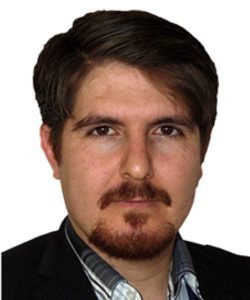
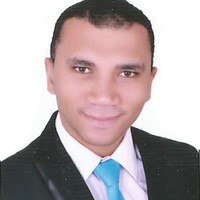
Position: Professor at the Department of Informatics, University of Cyprus. Director of the Data Management Systems Laboratory (DMSL). Affiliations: Editorial boards for Distributed and Parallel Databases (Springer), Big Data Research (Elsevier), and others. Evaluator for the European Commission and Hong Kong Research Grants Council. Education: Ph.D. & M.Sc. in Computer Science (2005, 2003) - University of California, Riverside, USA B.A. in Computer Science (2000) - University of Cyprus Research Interests: Big Data Management in Distributed/Blockchain Architectures Data from Mobile Devices and Sensors Spatio-Temporal Data & Privacy Management Network Data & Telecommunications Crowdsourcing and Indoor Data Systems Over 150 publications (3,800+ citations, h-index 30) with focus on scalable data systems for IoT, healthcare, and smart cities. Awards: ACM Distinguished Speaker (2017–2020) Humboldt Fellowship (2016–2017) Marie Curie Fellowship (2007) 12 International Awards including NSF grants and EU projects Grants/Projects: Led 20+ projects funded by NSF, EU, and private sectors. Coordinated industrial initiatives like Anyplace and Rayzit used by global users. Labs: Directs the DMSL , focusing on innovative data management solutions for real-world systems.
Hamed Tirandaz is a Lecturer at Hakim Sabzevari University and a PhD Candidate at the Department of Electrical and Computer Engineering , University of Cyprus . He also works as a researcher at the KIOS Center of Excellence . B.Sc. in Applied Mathematics from Hakim Sabzevari University (2006) M.Sc. in Mechatronics Engineering from Semnan University, Iran (2009) His research interests include chaos control , fault diagnosis , and fault tolerant control of distributed systems . His work focuses on applications in power distribution systems and software development for engineering challenges. At the University of Cyprus, he contributes to research projects at the KIOS Center of Excellence , specializing in electrical and computer engineering domains.
Professor Ioanna Dionysiou is a faculty member at the University of Nicosia, serving as a Professor of Computer Science in the School of Sciences and Engineering and holding the Associate Head of Department title. She is also a Member of the Senate and co-directs the Informatics Security Laboratory (ISL). PhD in Dynamic and Composable Trust (Washington State University, 2006) MSc and BSc in Computer Science (Washington State University, 2000 and 1997) Diploma in Computer Science (Higher Technical Institute, 1994) Her research focuses on trust modeling in collaborative environments, data privacy, active defense mechanisms, and cybercrime mitigation. Current projects include privacyTracker (data traceability), HoneyCY (honeypot systems), and BeWiser (wireless security frameworks). She has contributed to the Bologna Process re-engineering through ReProTool and MapQFTool. Recent publications explore blockchain-IoT integration for big data, neural network comparisons for location-based security analysis, and cloud computing risk frameworks. ISL research emphasizes intuitive cyberattack visualization, ISO 27001 standards, and multi-disciplinary security practices. Scientific leadership roles include: Vice-president of ACM Cyprus chapter Cyprus ECSC Advisory Board member Active participant in European Cyber Security Challenge Conference organizer and program committee member She has supervised multiple MSc and undergraduate students in security-related research while maintaining active collaborations in local and European projects.
A. Kokkinaki is a Professor and Dean at the School of Business, University of Nicosia. Her work spans E-business, Management Information Systems, Smart Cities, and Sustainability . She has led projects like the design of an ontology-based search engine for Cyprus and initiatives for smart city resilience. Education: Ph.D. in Computer Science, University of Louisiana at Lafayette (1995) M.Sc. in Computer Science, Northeastern University (1991) Diploma in Computer Engineering and Informatics, University of Patras (1987) Research Interests include AI-driven sustainability, distributed systems, and e-learning. She focuses on integrating AI into education and urban planning, with a strong emphasis on the UN Sustainable Development Goals. Recent Articles explore topics such as AI chatbots in sustainability, smart city resilience through open data, and blockchain applications in urban environments. Scientific Awards: Innovation Award, Republic of Cyprus Projects include the CRISIS initiative for smart city staff competences and PEPPY for youth education. She has received grants like the €180,892 for a Cyprus website search engine.
Charalambos Christou is a part-time lecturer at the Department of Computer Science, University of Cyprus. He holds a PhD in Electrical and Computer Engineering from New Jersey Institute of Technology. Bachelor of Science in Electrical Engineering, NJIT Master of Science in Electrical Engineering, NJIT PhD in Electrical and Computer Engineering, NJIT His research focuses on Artificial Intelligence in Education , emphasizing responsible AI use, ethical considerations, and data protection. He also investigates technical writing skills for non-native students, interdisciplinary education , and industry-driven learning through guest lectures and collaborations with industry specialists. Key publication trends include AI ethics in higher education, technical communication challenges, and industry-integrated curricula. His recent work addresses AIEd applications, wealth distribution in AI contexts, and intellectual property management for technology students. He has collaborated with institutions like New Jersey Institute of Technology and Down Neck Computers, serving as a systems engineer and lecturer. His work bridges academic research with practical industry applications in AI and technology management.
Assistant Professor Amr Abdelbari is affiliated with the Data Analytics Engineering Department at Near East University. His research focuses on wireless communication systems, signal processing, and machine learning applications in telecommunications. Academic Rank: Assistant Professor University: Near East University Department: Data Analytics Engineering Research interests include: Massive MIMO and 5G network optimization Direction-of-Arrival (DOA) estimation techniques Machine learning for wireless communication IoT applications in civil engineering Probabilistic and fuzzy logic-based signal processing Recent publications (2020-2025) demonstrate expertise in wideband signal processing, NOMA systems, and error probability modeling. Key trends in his work include integrating fuzzy logic for network optimization, improving DOA estimation for 5G systems, and applying neural networks to renewable energy modeling. Contact: amr.abdelbari@neu.edu.tr
George Papadopoulos is a Professor of Informatics at the University of Cyprus. He holds a Ph.D. from the University of East Anglia (1989) and has held academic and research roles at institutions including NCSR Demokritos, Aristotle University of Thessaloniki, and the University of East Anglia. His research focuses on Component-Based Systems, Parallel/Distributed Systems, and Cooperative Information Systems. He leads the Software Engineering and Internet Technologies (SEIT) Laboratory and has contributed to EU-funded projects like SciChallenge and AsTeRICS. Key contributions include development of adaptive middleware architectures, context-aware systems, and educational platforms such as the DIGICOMPASS training course. His work spans academic-service integration, assistive technologies for accessibility, and AI applications in healthcare and dementia care. Over 150 peer-reviewed publications reflect his expertise in software engineering, ubiquitous computing, and e-learning systems. Current roles include editorial board memberships for journals like Computing and IEEE Transactions on Education . Active in professional service through EU projects, he emphasizes interdisciplinary collaboration across computing, education, and healthcare domains.
Georgios Stavrinides serves as a Post-Doctoral Fellow at the KIOS Research and Innovation Center of Excellence, University of Cyprus, a leading research hub for intelligent systems and networks. Since joining in September 2022, he has driven cutting-edge research in cyber-physical infrastructure while mentoring doctoral candidates and advancing the Center's strategic vision through committee leadership. His academic credentials include a PhD in Informatics from Aristotle University of Thessaloniki (2014), an MSc in Advanced Computing from Imperial College London (2007), and a BSc in Informatics from Aristotle University of Thessaloniki (2006). Prior to his current role, he held postdoctoral and research collaborator positions within Aristotle University's Department of Informatics from 2014 to 2022. Dr. Stavrinides' research program pioneers performance optimization in edge-cloud continuum systems, specializing in real-time task scheduling for distributed multi-tier environments and ensemble-based classification techniques for imbalanced datasets. These dual thrusts address critical challenges in smart infrastructure resilience and data-driven decision systems, with applications spanning power grids, transportation networks, and industrial IoT. His scholarly impact is underscored by three best paper awards at premier international conferences, reflecting exceptional contributions to distributed systems and machine learning. Best Paper Award Best Paper Award Best Paper Award Beyond research, he actively shapes KIOS's future as a supervisor of PhD candidates and through strategic committee roles in the KIOS Open Science Committee and KIOS Open Science Strategic Committee, directly contributing to the Center's 10-Year Strategic Plan implementation and open science initiatives.
Mehmet Karay is an Assistant Professor at the Faculty of Economics and Administrative Sciences at Final University. Holding a Doctorate in Management Information Systems from Girne American University (2015), his academic background spans mathematics, computer science, and energy systems through his degrees from Eastern Mediterranean University. PhD: Management Information Systems (Girne American University, 2015) MS: Mathematics (Eastern Mediterranean University, 2005) MS: Secondary School Mathematics Teacher Education (Eastern Mediterranean University, 2008) BS: Applied Mathematics and Computer Science (Eastern Mediterranean University, 2001) Karay's research bridges computational intelligence with environmental and operational challenges. His work includes: Neural network applications in epidemiological modeling (Zika virus) Energy-economic analysis (CO2 emissions, renewable energy) Theoretical mathematics (Fixed Point Theorems) System modeling with Petri Nets Wireless network security analysis Recent publications emphasize neural network methodologies , mathematical modeling of complex systems, and security protocol evaluations . While his current affiliation shows no explicit awards in the provided data, his academic profile reflects interdisciplinary expertise in computational and mathematical approaches to real-world problems.
Jasmina Isakovic is a Lecturer in Histology at the European University Cyprus, School of Medicine, Frankfurt Branch. She actively contributes to academic leadership as Acting Vice-Chairperson while maintaining a research focus on neuroregeneration and electromagnetic field applications. Academic Appointment: Lecturer in Histology Institutional Affiliation: European University Cyprus Academic Role: Acting Vice-Chairperson Her research spans multiple neuroscience domains, particularly examining: Neural stem cell differentiation and regeneration Therapeutic applications of electromagnetic fields Mitochondrial dynamics in neurological disorders Development of automated imaging analysis tools (LUSCA) Neurodegenerative disease mechanisms Translational regenerative medicine approaches Recent publications highlight her work on electromagnetic field therapies for stroke rehabilitation, glial interactions, and computational modeling. She has developed open-source imaging tools to analyze cellular structures and investigates cross-organ regenerative mechanisms. While the text mentions Academic Advisory Services and Awards sections, specific details about scientific honors or advisory roles remain unlisted in the provided content.
Petros Aristidou is an Assistant Professor in Sustainable Power Systems at the Cyprus University of Technology (CUT), where he directs the Sustainable Power Systems Lab. His academic journey includes a PhD in Engineering Sciences from the University of Liège (2015) and a Diploma in Electrical & Computer Engineering from the National Technical University of Athens (2010). Previously, he held positions as Lecturer at the University of Leeds and Postdoctoral Researcher at ETH Zurich. His research focuses on three primary areas: power and energy system informatics, control of hybrid dynamical systems, and modeling/simulation of large-scale power systems. He specializes in addressing challenges related to low-inertia power systems, renewable integration, and grid stability. Award trends show consistent recognition from IEEE societies, with honors spanning best paper awards (TPWRS, ISGT-Europe), technical report awards, and scholarships. His publications demonstrate a progression from fundamental simulation methods toward applied solutions for renewable integration and grid resilience. TPWRS Best Paper Award (2021) IEEE PES ISGT-Europe Best Paper (2021) IEEE PES PowerTech High Quality Paper (2021) IEEE SEST Best Paper (2020) IEEE Outstanding Technical Report (2018) He leads multiple grants including the Horizon Europe MSCA ITN project Dependable Energy Systems (PI) and industrial collaborations on power system simulation methods. As lab director, he oversees research on power system dynamics and control, participating in international working groups addressing low-inertia system challenges.
Eleni Constantinou is an Assistant Professor at the University of Cyprus (UCY), affiliated with the Software Engineering and Internet Technologies (SEIT) group. Previously, she held an Assistant Professor position at the Eindhoven University of Technology (TU/e) from 2019–2022. She obtained her B.Sc., M.Sc., and Ph.D. from Aristotle University of Thessaloniki, Greece. Her research focuses on software ecosystems, mining software repositories, software evolution, and cybersecurity in software development. Key research interests include analyzing software health, dependency vulnerabilities in open-source ecosystems, and automated tools for developer collaboration. She has coordinated projects like SECOHealth, investigating interdisciplinary methodologies for software ecosystem health. Her work often bridges technical and social aspects of software development. Eleni’s scholarly contributions span over two decades, with notable studies on Docker security, Dependabot vulnerability mitigation, and bot activity in GitHub. She has also explored API evolution, library feature extraction, and developer practices in open-source platforms like OpenStack. No scientific awards are explicitly listed in the provided text. Her advisory role details and grant funding remain unspecified, though her involvement in interdisciplinary projects suggests active engagement in collaborative research. Eleni is part of the SEIT group at UCY and has contributed to initiatives like the Special Issue on Software Health of Software Ecosystems. Her research often leverages data from GitHub and Stack Overflow to understand developer behaviors and ecosystem dynamics.
Professor Takis Kasparis holds a PhD in Electrical Engineering from the City University of New York and has taught at institutions including the University of Central Florida (UCF), where he earned prestigious teaching awards like the Joseph M. Biedenbach Outstanding Engineering Educator Award (IEEE). He currently works at the Cyprus University of Technology (CUT) in the Department of Electrical Engineering. His research focuses on Digital Signal Processing with applications in Remote Sensing , Biomedical Engineering , Communications , and Audio Processing . Notable contributions include studies on precipitation measurement techniques, medical ultrasound imaging, and tele-echography systems. His recent publications (2013–2020) address topics like disdrometer calibration, carotid artery analysis via ultrasound, and meteorological instrumentation. These reflect interdisciplinary strengths in environmental science and healthcare technology. Scientific Awards: Joseph M. Biedenbach Award (2013) Teaching Excellence: Multiple UCF teaching awards His work bridges electrical engineering fundamentals with practical applications in climate science and medical diagnostics, supported by advanced signal processing methodologies.
George Pallis is a Professor in the Department of Computer Science at the University of Cyprus, where he also serves as Associate Director of the Laboratory of Internet Computing. He is a programme director for the Master in Data Science and leads major international research initiatives funded by the European Commission, national agencies, and industry partners such as Google. His academic foundation includes a BSc and PhD in Informatics from Aristotle University of Thessaloniki, Greece. PhD, Department of Informatics, Aristotle University of Thessaloniki, Greece, 2006 BSc, Department of Informatics, Aristotle University of Thessaloniki, Greece, 2001 Dr. Pallis’s research focuses on Distributed and Internet Computing , with specialized interests in Big Data Analytics, Cloud/Edge/Fog Computing, Content Delivery Networks, and Online Social Networks . His work bridges theoretical innovation and practical deployment, particularly in scalable and energy-efficient computing infrastructures. He has contributed to international standards through the German Institute for Standardization (DIN) and has developed frameworks for cloud elasticity, fog emulation, and misinformation detection. His 15 most recent publications reflect a strong trend in edge and fog computing, AI-driven analytics, privacy-preserving data processing, and misinformation detection . These works span high-impact venues such as IEEE IC2E, IEEE/ACM SEC, IEEE CloudCom, and IEEE BigData, with increasing integration of machine learning and human-in-the-loop systems. Dr. Pallis has received multiple scientific awards, including: Best Paper Award, IEEE CloudCom 2024 Best Paper Award (2nd place), IEEE/ACM UCC 2023 Best Paper Award, IEEE IoTDi 2022 Best Student Paper, IEEE ISCC 2022 Best Paper, IEEE BigData 2016 Best Paper, ICSOC 2014 Best Demo Award, ACM/IEEE SEC 2020 World’s Top 2% Scientists (Stanford) Golden Core Member, IEEE Computer Society He has supervised several PhD students in areas such as fog computing emulation, big data in entrepreneurship, and polarization detection. His research is supported by over 5.5 million euros in grants from the European Commission (e.g., RAINBOW, UNICORN, ICARUS), the Research Promotion Foundation in Cyprus, and industry. He has served as General Chair of IEEE/ACM SEC 2024 and IEEE IC2E 2024, and as Editor-in-Chief of IEEE Internet Computing (2019–2023), now holding the Emeritus title. He is currently Associate Editor for the Computing Journal (Springer). Dr. Pallis leads the Laboratory of Internet Computing, a hub for research in cloud, edge, and social computing. The lab develops tools like Fogify for emulation, RAINBOW analytics, and Check-It for fake news detection, fostering collaboration across academia and industry.
Demetris Zeinalipour is a Professor of Computer Science at the University of Cyprus, where he founded and directs the Data Management Systems Laboratory (DMSL). He holds a Ph.D. (2005) and M.Sc. (2003) in Computer Science and Engineering from the University of California - Riverside, CA, USA and a B.Sc. in Computer Science from the University of Cyprus (2000). His career includes research positions at Akamai Technologies, University of Athens (as a Marie-Curie Fellow), University of Pittsburgh, and the Max Planck Institute for Informatics (as a Humboldt Fellow). He is an ACM Distinguished Speaker (2017-2020), a Senior Member of ACM and IEEE, and serves on the editorial boards of ACM Transactions on Spatial Algorithms and Systems and Distributed and Parallel Databases. His primary research spans Data Management in Computer Systems and Networks, with expertise in Mobile, Sensor and Spatio-Temporal Data Management; Big Data Management in Parallel and Distributed Architectures; Network, Blockchain and Telco Data Management; Crowd, Web 2.0 and Indoor Data Management; Data Privacy Management; Data Management for Sustainability; and AI and Data Management. His work bridges theoretical foundations with practical applications, resulting in numerous systems including Anyplace Indoor Information Service, ChatUCY, GreenCap, EcoCharge, and Triabase. His research has evolved from early work in sensor networks to current focus on sustainable computing applications addressing climate change challenges. Professor Zeinalipour's publication record shows a strong trajectory toward sustainability-focused data management, with recent work on energy management for smart homes, electric vehicle charging, and solar self-consumption. His research integrates multiple disciplines including spatial databases, mobile computing, IoT systems, and blockchain technologies, with increasing emphasis on addressing real-world environmental challenges through computing solutions. Scientific Recognition IEEE ICDE'24 Outstanding Reviewer Award IEEE MDM'21 Best App Paper Award IEEE MDM'18 Best of MDM Award and Best Demo Award Humboldt Fellow (2016) ACM Distinguished Speaker (2017-2020) ACM and IEEE Senior Member status He has advised numerous PhD students and postdocs, many of whom have established successful careers in both academia and industry. His laboratory maintains strong industry connections and contributes to open-source development. Professor Zeinalipour is deeply committed to addressing real-world challenges through computing research, with recent work focusing on climate change mitigation and sustainable energy management solutions.