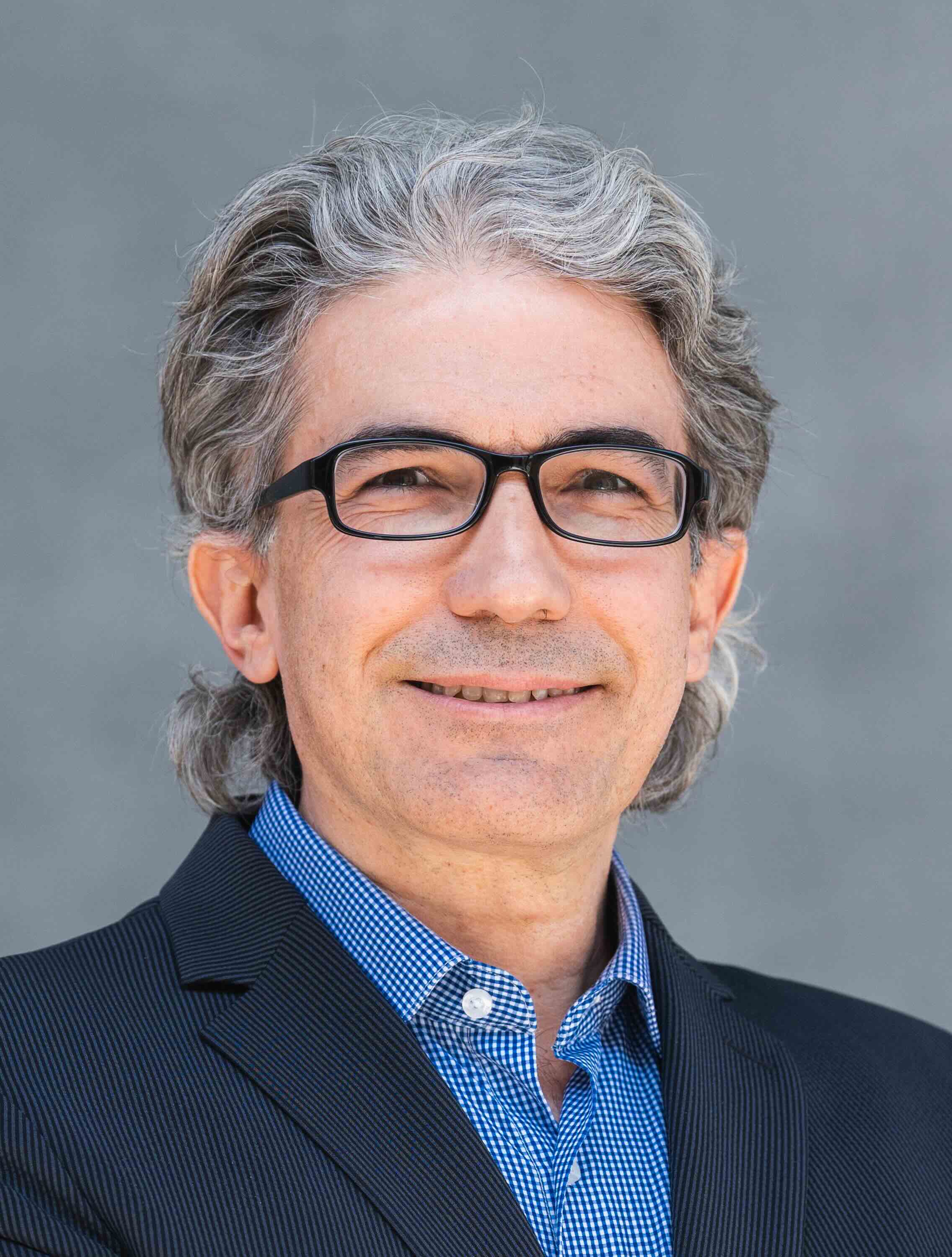
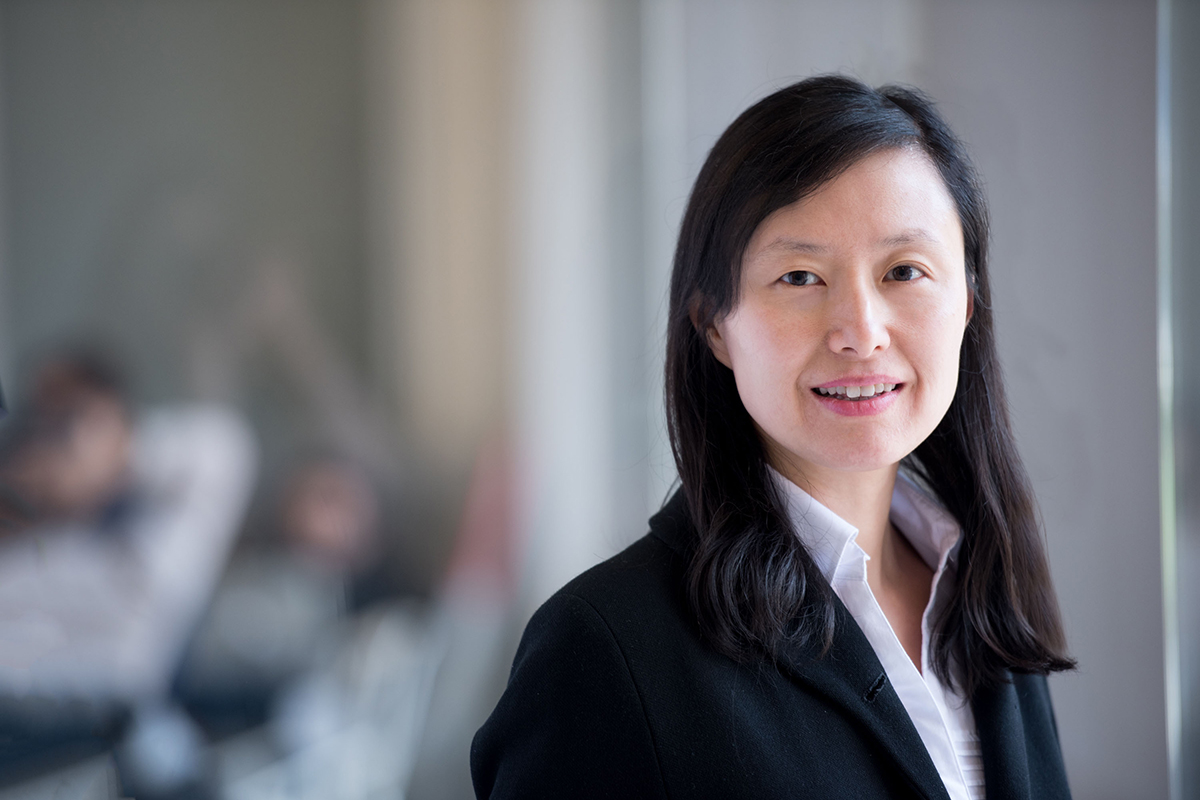
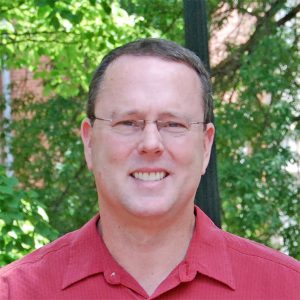
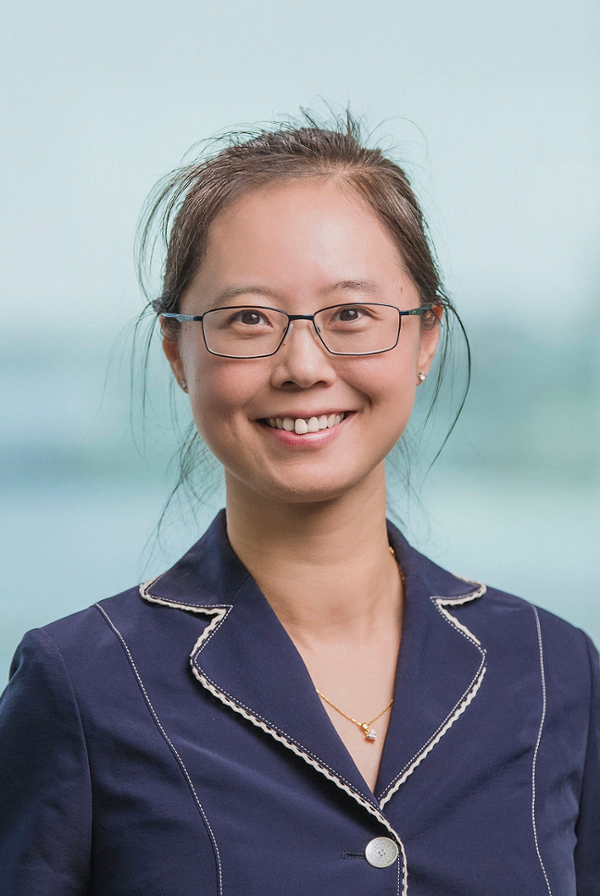
Eugene Wang is the Abby Aldrich Rockefeller Professor of Asian Art at Harvard University and Founding Director of Harvard FAS CAMLab. He specializes in Buddhist visual culture, medieval Chinese art, and contemporary Chinese art and cinema. His research explores intersections of art with cognitive science, ecology, and technology, particularly through CAMLab’s projects like Digital Gandhara and Shadow Cave. Wang earned recognition for Shaping the Lotus Sutra (2005), which received Japan’s Sakamoto Nichijin Award. His work bridges historical art analysis with modern interdisciplinary approaches, including motion capture for Dunhuang dance and quantum network simulations. He serves as art history editor for the Encyclopedia of Buddhism and has held a Guggenheim Fellowship (2005). Key Awards: Guggenheim Fellowship (2005), Sakamoto Nichijin Academic Award (2005) Labs/Teams: Harvard FAS CAMLab (Cognition-Aesthetics-Mindscape Lab) Grants/Projects: Digital Gandhara (Afghanistan/Pakistan Buddhist site mapping), Shadow Cave (cognitive Buddhist cave studies) Wang’s focus on biocentric art and cognitive frameworks redefines art historical methodologies. His recent work integrates sensorial media with spiritual experience, reflecting his commitment to pushing interdisciplinary boundaries.
Francesco Bullo is a Distinguished Professor of Mechanical Engineering at the University of California, Santa Barbara (UCSB), affiliated with the College of Engineering. He holds joint appointments in Electrical and Computer Engineering, Computer Science, and the Center for Control, Dynamical Systems, and Computation. His research focuses on distributed control, network systems, and neural networks, with notable contributions to contraction theory and social dynamics analysis. Education: Laurea (1994, University of Padova), PhD (1998, Caltech). Leadership roles: Former IEEE CSS President, SIAG CST Chair. Research interests include biological/artificial neural networks, distributed control of robotic networks, and synchronization in power grids. He authored books like Lectures on Network Systems and Contraction Theory for Dynamical Systems . His work spans 300+ publications, including impactful articles on Hopfield networks, power grid stability, and optimization. Awards include IEEE Fellow, ASME Fellow, and SIAM Fellow. Advising and grants: Mentored over 30 PhD students and led major projects like the NSF MURI on team behavior modeling. Current research includes neural synchronization and AI-driven control. Labs/teams: Directs the UCSB Center for Control, Dynamical Systems, and Computation, and collaborates on interdisciplinary initiatives like the Network Science for Medicine white paper.
Vincenzo Liberatore is an Associate Professor in the Department of Computer and Data Sciences at Case Western Reserve University’s Case School of Engineering, and currently serves as Associate Chair. His research focuses on smart grid technologies, real-time network control, distributed systems, and randomized algorithms. He holds a PhD and MS in Computer Science from Rutgers University (1998 and 1994), and a BS in Electrical Engineering from Sapienza University of Rome (1992). Dr. Liberatore developed the Energy Information Dashboard (EIDA) with FirstEnergy, an educational tool modeling electricity markets and grid dynamics. He has contributed to patents like the 2014 'High-Performance Streaming Dictionary.' His work spans publications in control systems, theoretical computer science, and energy grid communication. He has served on program committees for the Workshop on Factory Communication Systems (WFCS) and International Conference on Mobile Data Management (MDM). Teaching responsibilities include courses in computer science and engineering, reflecting his expertise in both academia and industry-relevant research.
Rocco Servedio is a Professor in the Department of Computer Science at Columbia University, where he leads research in theoretical computer science with a focus on computational complexity theory, learning theory, and the role of randomness in computation. He previously served as Chair of the Computer Science Department from 2018 to 2021. He holds a Ph.D., MS, and AB in Mathematics from Harvard University. His research interests include property testing, computational learning theory, and algorithmic lower bounds. He has contributed to foundational work in areas like junta testing, trace reconstruction, and convexity testing. Servedio has held leadership roles in major conferences such as STOC, CCC, and COLT, and has mentored students through courses like Unconditional Lower Bounds and Derandomization . Education: Ph.D. in Computer Science, Harvard University MS in Computer Science, Harvard University AB in Mathematics, Harvard University His research bridges theoretical computer science and applied mathematics, with recent work exploring the intersection of Gaussian processes, convex geometry, and algorithmic efficiency. Servedio's contributions to the field are exemplified through his involvement in high-impact conferences and his leadership in advancing fundamental computational theories.
Michael C. Johnson is a Professor in the Department of Civil and Environmental Engineering at Utah State University (USU), affiliated with the Utah Water Research Laboratory (UWRL). He holds a PhD in Fluid Mechanics and Hydraulics from USU (1996), with research focused on hydraulic modeling, flow meter performance, valve analysis, and dam/spillway design. His work bridges physical and numerical methods, addressing challenges in water resources engineering and infrastructure. Education: PhD, Fluid Mechanics and Hydraulics (Groundwater, Hydrology, Water Resources), Utah State University, 1996 MS, Fluid Mechanics and Hydraulics, Utah State University, 1994 BS, Civil and Environmental Engineering, Utah State University, 1992 Research Interests: Johnson specializes in hydraulic structures, physical and computational fluid dynamics, flow meter calibration, and energy dissipation systems. His work emphasizes practical applications like spillway design, low-head dam safety, and turbine testing. Notable projects include the Lower Baker Dam Spillway model and Archimedes Turbine evaluations. His research often combines laboratory experiments with CFD simulations to optimize water infrastructure performance. Recent Articles Trends: His publications (2019–2025) highlight advancements in CFD modeling for pressure recovery, flow meter accuracy under disturbed conditions, and valve performance optimization. Key themes include improving meter testing protocols, mitigating turbulence effects, and enhancing hydraulic infrastructure resilience. Awards and Recognition: Outstanding Graduate Mentor, 2020 Multiple AWWA Best Paper Awards (2007, 2010, 2012) Outstanding Teacher Awards (2002–2003) Advising & Labs: Johnson has mentored over 25 graduate students, guiding research in areas like valve performance, spillway hydraulics, and meter calibration. He leads the UWRL’s hydraulics team, overseeing projects such as the Orville Dam Spillway model and large-scale physical modeling initiatives. His lab facilities support both experimental and computational approaches to water engineering challenges.
Kartik Sreenivasan is Associate Professor of Psychology and Associate Program Head for Undergraduate Studies in Psychology at New York University Abu Dhabi (NYUAD), with an affiliation in Biology. He is also a Global Network Associate Professor of Psychology, reflecting his role across NYU’s global campuses. His research is centered on the neurobiological basis of working memory and goal-directed cognition. His educational background includes a BA in Psychology from Yale University and a PhD in Neuroscience from the University of Pennsylvania under Dr. Amishi Jha. He completed postdoctoral training at UC Berkeley with Dr. Mark D’Esposito and joined NYUAD in 2014. Sreenivasan’s research focuses on how the brain maintains and manipulates information in working memory. Key interests include dynamic neural coding, feature binding, effective connectivity, and the transformation of memory into action. His lab employs fMRI, MEG, EEG, TMS, and behavioral paradigms to study both healthy and clinical populations. The most recent publications highlight trends in distributed neural systems, phase-coding mechanisms in working memory, and the role of subcortical structures. His work increasingly emphasizes network-level interactions, oscillatory dynamics, and the flexibility of memory representations under interference and attentional demands. Sreenivasan has received no explicitly mentioned scientific awards in the provided text. He actively mentors PhD students (Ying Zhou, Shanshan Li, Hannah Chu) and supervises undergraduate capstone projects. His lab has been supported by institutional funding, though specific grants are not listed. He teaches core courses such as Biopsychology, Cognitive Neuroscience, and Capstone Research in Psychology and Biology. The Sreenivasan Lab at NYUAD is a vibrant research group focused on understanding the neural underpinnings of cognition. It includes postdocs, research assistants, PhD students, and undergraduates, and has produced numerous publications in high-impact journals. The lab investigates topics such as working memory organization, neural connectivity, and the interplay between perception and memory.
Armagan Bayram is an Associate Professor in the Industrial and Manufacturing Systems Engineering Department at the University of Michigan-Dearborn's College of Engineering and Computer Science . Previously a postdoctoral researcher at Northwestern University, she holds a Ph.D. in Management Science from the University of Massachusetts Amherst, alongside M.S. and B.S. in Industrial Engineering from Istanbul Technical University. Education: Ph.D., Management Science, University of Massachusetts Amherst (2014) M.S., Industrial Engineering, Istanbul Technical University (2009) B.S., Industrial Engineering, Istanbul Technical University (2007) Her research focuses on stochastic models for capacity and resource allocation in mobility, healthcare, and logistics systems. Recent work includes urban curb space optimization , omnichannel retail fulfillment , and virtual appointment management in chronic care. Her methodological expertise spans stochastic optimization, dynamic programming, and experimental operations research. Current grants include NSF support for Curb Spaces in Urban Mobility Systems (2022-2024) and Inland Waterway Network Optimization (2024-2027) . Publications appear in top journals like Operations Research , European Journal of Operational Research , and Health Care Management Science . Scientific Accolades NSF Engineering Research Initiation (ERI) Award (2022) UM-Dearborn Distinguished Teaching Award (2020) IISE Healthcare Track Best Student Paper Advisor (2019) INFORMS Finalist for Doing Good with Good OR (2013) Bayram contributes to teaching through courses like Engineering Probability and Statistics and Simulation in Systems Design . She leads the Community Based Operations Research Lab , applying operations management principles to socially impactful projects.
Baris Kasikci is an Associate Professor in the Paul G. Allen School of Computer Science & Engineering at the University of Washington. Previously (2017-2023), he was a Morris Wellman Assistant Professor in the Electrical Engineering and Computer Science Department at the University of Michigan. His research focuses on building efficient and trustworthy computer systems through innovative combinations of approaches from systems, computer architecture, and programming languages. Dr. Kasikci received his PhD in Computer Science at EPFL and has held research positions at Microsoft Research Cambridge, Google, Intel, and VMware. His work addresses critical challenges in system reliability, security, and performance in increasingly complex software ecosystems. His research interests center on improving the efficiency of datacenter applications and machine learning systems, analyzing and fixing failures, and enhancing hardware security. His lab develops techniques for automated bug detection, formal verification of distributed systems, and building systems support for heterogeneous hardware architectures. Recent projects include Whisper (profile-guided branch misprediction elimination), Huron (taming false sharing), and Agamotto (automatic detection and repair of bugs in persistent memory applications). Analysis of his recent publications shows a strong trend toward optimizing large language model serving, hardware security, and performance optimization for modern heterogeneous architectures. His work bridges traditional systems research with emerging AI infrastructure needs, particularly in efficient LLM serving, security vulnerabilities in modern hardware, and performance optimization for heterogeneous computing environments. NSF CAREER award Microsoft Research Faculty Fellowship Intel Rising Star Award VMware Early Career Faculty Grant Google Faculty Award Roger Needham PhD Award (best PhD thesis in computer systems in Europe) Patrick Denantes Memorial Prize (best PhD thesis at EPFL) Best Paper Award at OSDI'18 Best Paper Award at MICRO'22 Dr. Kasikci has advised numerous PhD students who have gone on to prestigious positions in academia and industry, including Tanvir Ahmed Khan (Assistant Professor at Columbia University), Akshitha Sriraman (Assistant Professor at CMU), and Jiacheng Ma (AMD). His research has been supported by significant grants from NSF, DARPA, Intel, Google, Microsoft, VMware, and Amazon. His lab, the EfesLab, focuses on building tools and techniques that make computer systems more reliable, secure, and efficient. The EfesLab, led by Dr. Kasikci, brings together postdocs, PhD students, and undergraduate researchers to tackle fundamental challenges in systems reliability and performance. The lab has developed numerous influential tools including Whisper, Huron, and Agamotto that address critical performance and reliability issues in modern computing systems. Current research directions include efficient LLM serving, security of emerging hardware technologies, and automated debugging techniques.
Mahdi Soltanolkotabi is a Professor in the Departments of Electrical and Computer Engineering, Computer Science, and Industrial and Systems Engineering at the University of Southern California's Viterbi School of Engineering. He serves as the inaugural Director of the USC Center on AI Foundations for Science (AIF4S). His academic journey includes a Ph.D. in Electrical Engineering from Stanford University (2014) under Emmanuel Candes, followed by a postdoctoral position at UC Berkeley's AMPLAB mentored by Ben Recht and Martin Wainwright. Dr. Soltanolkotabi's research spans both theoretical and applied dimensions of data science. On the theoretical side, he develops mathematical foundations for modern data science, focusing on generative AI, deep learning, machine learning, signal processing, and computational imaging. His work draws upon nonconvex optimization, high-dimensional probability, statistical estimation, empirical processes, and learning theory. On the applied side, he develops reliable AI systems for healthcare and scientific applications, collaborating with physicians and domain scientists to enhance AI reliability, develop new architectures, and create rigorous evaluation frameworks. His recent publications demonstrate strong focus on medical AI applications, image reconstruction, and theoretical foundations of deep learning. His work bridges the gap between theoretical guarantees and practical implementations, particularly in medical imaging where reliability is critical. His research group has made significant contributions to understanding the behavior of nonconvex optimization algorithms in high-dimensional settings. David and Lucile Packard Fellow Information Theory Society Best Paper Award NIH Director's new innovator award Sloan Research Fellowship NSF Career award Airforce Office of Research Young Investigator award (AFOSR-YIP) Viterbi school of engineering junior faculty research award Faculty awards from Google and Amazon Dr. Soltanolkotabi has received multiple research grants including Amazon Research Awards for projects on "Artificial intelligence for fast and portable medical imaging" and "Reliable AI for Generation of Medical Reports from MRI Scans." He actively collaborates with medical professionals and leads educational outreach initiatives with local schools through USC's Viterbi Adopt-a-School program. His work demonstrates a strong commitment to translating theoretical advances into practical healthcare solutions while maintaining rigorous mathematical foundations.
Sairaj Dhople is the Oscar A. Schott Professor in the Department of Electrical and Computer Engineering at the University of Minnesota. His research focuses on renewable energy systems, particularly modeling and control of grid-connected inverters, power-system reliability, and distributed energy resources. University: University of Minnesota Department: Electrical and Computer Engineering Academic Rank: Professor His work spans power systems, power electronics, and control theory, with recent publications examining grid-forming inverters, stability analysis, and hybrid computing solutions for optimization problems. Key research themes include: Equivalent-circuit modeling for renewable systems Large-signal stability assessment inverter-based resources Grey-box system identification of power networks Interoperability standards for grid-forming technologies Scientific awards include the Institute for Advanced Study Faculty Fellowship (2018). Current projects funded by the National Science Foundation and U.S. Department of Energy explore analog/hybrid computing and universal interoperability for grid-forming inverters (UNIFI Consortium). His Dhople Research Group investigates power-system architecture and sustainability challenges.
Lili Qiu is a Professor in the Department of Computer Science at The University of Texas at Austin, where she has been a faculty member since January 2005. She is an active member of the Wireless Networking and Communications Group (WNCG) and has made significant contributions to the field of networking research. Dr. Qiu previously spent 2001-2004 as a researcher at Microsoft Research in Redmond, WA, before joining UT Austin. Dr. Qiu's research spans Internet and wireless networking with a current focus on wireless network management and content distribution in mobile networks. Her work extends into diverse applications including acoustic imaging, metasurface applications, healthcare sensing technologies, and AI systems. She has pioneered research in areas such as acoustic motion tracking, passive RFID sensing, and wireless network optimization. Her research demonstrates a consistent pattern of innovation that bridges theoretical networking concepts with practical real-world applications, particularly in mobile and wireless systems. Her extensive publication record shows a clear evolution from fundamental networking research to increasingly interdisciplinary work that combines wireless systems with healthcare applications, AI, and novel sensing technologies. Recent publications demonstrate growing integration of machine learning techniques with traditional networking problems, as well as expansion into healthcare applications like Parkinson's disease modeling and non-invasive glucose monitoring. ACM Fellow IEEE Fellow National Academy of Inventors (NAI) Fellow ACM Distinguished Scientist NSF CAREER award Google Faculty Research Award Best paper award at ACM MobiSys'18 Best paper award at IEEE ICNP'17 Dr. Qiu has supervised numerous students, including a PhD dissertation that won the SIGMOBILE best dissertation award in 2020. She has served in significant leadership roles including chair of ACM SIGMOBILE, General co-chair for ACM MobiCom 2025, and various conference chair positions for IEEE ICNP, ACM CoNEXT, and other major networking conferences. Her research has been supported by substantial grants from NSF, Google, and other organizations, enabling her to lead cross-disciplinary research teams. As a member of the Wireless Networking and Communications Group at UT Austin, Dr. Qiu leads research efforts that combine networking expertise with innovations in sensing technologies, metasurfaces, and AI systems. Her lab has produced numerous influential results in mobile networking, wireless sensing, and network management, with applications spanning healthcare, consumer electronics, and communication infrastructure.
Arnab Nandi is a Professor of Computer Science and Engineering at The Ohio State University, with a courtesy appointment in Biomedical Informatics. He holds leadership roles including Steering Committee Member for the Human-in-the-Loop Data Analytics (HILDA) Workshop and has served as Workshops co-chair for SIGMOD 2025-26 and Demonstrations co-chair for SIGMOD 2024. His research focuses on bridging human interaction and data infrastructure, spanning database systems, human-in-the-loop data analytics, and next-generation query interfaces. Nandi's work emphasizes interactive data exploration through projects like DICE (Distributed Interactive Cube Exploration), GestureDB (Querying Beyond Keyboards), and Omni (Multimodal Data Exploration). His recent research explores integrating LLMs into database education, augmented reality interfaces for data analytics, and multimodal approaches to video querying. Nandi has received numerous honors including the NSF CAREER Award, Google Faculty Research Award, IEEE TCDE Early Career Award, and the University's Alumni Award for Distinguished Teaching. He was also named to Columbus Business First's '40 under 40' and became an ACM Distinguished Member in 2024. As an educator, he teaches courses including CSE 3241 (Introduction to Database Systems), CSE 5242 (Advanced Database Systems), and CSE 5251 (Introduction to Software Startups). His educational innovations include DBTutor, which integrates LLMs into database systems education. At Ohio State, Nandi co-founded the OHI/O Program, which fosters tech culture through hackathons, and The STEAM Factory, an interdisciplinary research collaboration network. Prior to academia, he was founder and CEO of Mobikit, a connected vehicles data analytics startup acquired by Azuga Inc. (a Bridgestone company). His research has been supported by the NSF and industry partnerships, with applications spanning precision agriculture (CropFusion), clinical data pipelines (ICARUS), and interactive visualization systems (Perceptvis).
James H. Anderson is the Kenan Distinguished Professor and Department Chair in the Department of Computer Science at the University of North Carolina at Chapel Hill, where he has been a faculty member since 1993. A leading researcher in real-time systems and distributed computing, he previously served at the University of Maryland (1990-1993). His educational background includes: B.S. in Computer Science from Michigan State University (1982) M.S. in Computer Science from Purdue University (1983) Ph.D. in Computer Sciences from the University of Texas at Austin (1990) Anderson's research focuses on real-time systems, distributed and concurrent algorithms, multicore computing, and operating systems. His work addresses fundamental challenges in scheduling, resource management, and reliability in time-critical environments, with recent emphasis on GPU acceleration for AI workloads and heterogeneous platforms. He investigates novel approaches to budget enforcement, processing graph scheduling, and timing predictability in complex systems. Analysis of his recent publications reveals a strong trend toward applying real-time scheduling principles to GPU and heterogeneous computing architectures. Key research thrusts include enabling predictable AI acceleration, managing timing uncertainties in autonomous systems, and developing composable resource partitioning techniques for safety-critical applications. His distinguished honors include: U.S. Army Research Office Young Investigator Award (1995) Alfred P. Sloan Research Fellowship (1996) Seven Computer Science Student Association Teaching Awards (1995-2019) Fellowships from IEEE (2012), ACM (2013), AAAS (2020), and AAIA (2022) IEEE TCRTS Outstanding Technical Achievement and Leadership Award (2018) Anderson actively mentors through the TOPICS Club, a reading group for undergraduate students that he co-leads with Cynthia Sturton and Danielle Szafir. His professional leadership includes chairing IEEE TCRTS (2016-2017) and ACM SIGBED (2019-2021), plus service as program/general chair for major conferences including RTSS, PODC, ECRTS, and RTAS. He directs ongoing research initiatives in real-time systems through collaborative projects and the TOPICS Club, which provides undergraduates with hands-on research experience in cutting-edge computer science topics.
Duong Nguyen serves as an Assistant Professor in the School of Electrical, Computer and Energy Engineering at Arizona State University. His research integrates operations research, artificial intelligence, economics, and engineering to develop mathematical models for decision-making in large-scale networked systems including cloud/edge computing, smart grids, and crowdsourcing. He directs the NEMO research group focused on building intelligent multi-agent platforms through optimization and market design. His educational credentials include: Ph.D. in Electrical and Computer Engineering from the University of British Columbia (2020) M.Sc. in Telecommunications from INRS, University of Quebec (2014) B.Sc. in Electronic and Telecommunications from Hanoi University of Science and Technology (2011) Dr. Nguyen's research spans Operations Research, Artificial Intelligence, Decision-Making, Market Design, and Optimization with applications in edge computing, power systems, and network economics. His work emphasizes robust algorithms for uncertain environments and secure multi-agent platforms, recently expanding into quantum machine learning and privacy-preserving distributed systems. Current projects address decentralized federated learning, dynamic pricing, and EV charging network design. Analysis of his publication record reveals consistent focus on distributed optimization techniques for edge/cloud systems, with increasing integration of game theory and quantum computing. His work demonstrates strong methodological innovation in handling spatio-temporal uncertainty while addressing practical challenges in energy flexibility and secure genomic computation. His scientific recognition includes: Finalist for Best Student Paper Award at American Control Conference (ACC) 2024 Finalist for Best Paper Award at International Symposium on Modeling and Optimization in Mobile, Ad Hoc, and Wireless Networks (WiOpt) 2023 Dr. Nguyen actively mentors Ph.D. students including Jiaming Cheng and Long Vu, with student-led research achieving significant recognition. His NEMO group collaborates with institutions including ETH Zurich on projects spanning autonomous driving, edge AI, and quantum optimization. Current research directions emphasize fair resource allocation, privacy-preserving learning, and dynamic pricing frameworks for next-generation networked systems.
Dr. Shuangshuang Jin is an Associate Professor in the School of Computing with a joint appointment in the Department of Electrical and Computer Engineering at Clemson University's College of Engineering, Computing and Applied Sciences. Previously, she served as a Senior Research Scientist at Pacific Northwest National Laboratory. Her educational background includes a Ph.D. in Computer Science (2007), M.S. in Computer Science (2003) from Washington State University, and a B.S. in Computer Science (2001) from Wuhan University. Ph.D., 2007 - Washington State University, Computer Science M.S., 2003 - Washington State University, Computer Science B.S., 2001 - Wuhan University, Computer Science Dr. Jin specializes in high-performance computing (HPC), distributed and parallel computing, general-purpose computation on graphical processing units (GPGPU), and HPC-based big data analysis, machine learning, scientific computation, and visualization. Her research focuses on applying these technologies to electrical engineering (power and energy systems, power electronics), automotive engineering, systems biology, and computer graphics. She leads the High-Performance Computing Enabled Science and Engineering (HPCeSE) Lab, where she supervises six PhD students working on HPC implementations for power system dynamic simulation, GridPACK application development, data-driven model-based smart control of power electronics converters, and other cutting-edge projects. Her recent publications demonstrate expertise in accelerating power system simulations, PV inverter reliability assessment, edge computing for power systems, and virtual prototyping of vehicle powertrain systems. The research trends show increasing focus on GPU acceleration, real-time simulation capabilities, and integration of HPC with emerging power system challenges. Junior Faculty Excellence in Teaching award (2021) Churchill Carter Fellowship (2022-2023) Zucker Graduate Education Center PhD Grant (2023) Doctoral Dissertation Completion Award (2023-2024) Outstanding Masters Student in Computer Science award (2022) Dr. Jin has successfully secured multiple grants from DOE, DOD, and other agencies for projects including 'Vehicle Propulsion Digital Twins', 'GridPACK-Wind', and 'Tool for Reliability Assessment of Critical Electronics in PV (TRACE-PV)'. She has advised numerous PhD and Master's students who have gone on to positions at national laboratories and industry. Her HPCeSE Lab maintains strong connections with Pacific Northwest National Laboratory, Fermi National Accelerator Laboratory, and other research institutions, providing students with valuable internship opportunities. Dr. Jin leads the High-Performance Computing Enabled Science and Engineering (HPCeSE) Lab at Clemson University, which focuses on developing optimized HPC-based parallel programming algorithms and architectures to solve complex scientific and engineering domain problems. The lab works on smart grid modeling and simulation, power electronics reliability assessment, ground vehicle systems prototyping, and advanced grid analytics, utilizing OpenMP, MPI, Pthreads, and CUDA/OpenCL on various computing platforms.