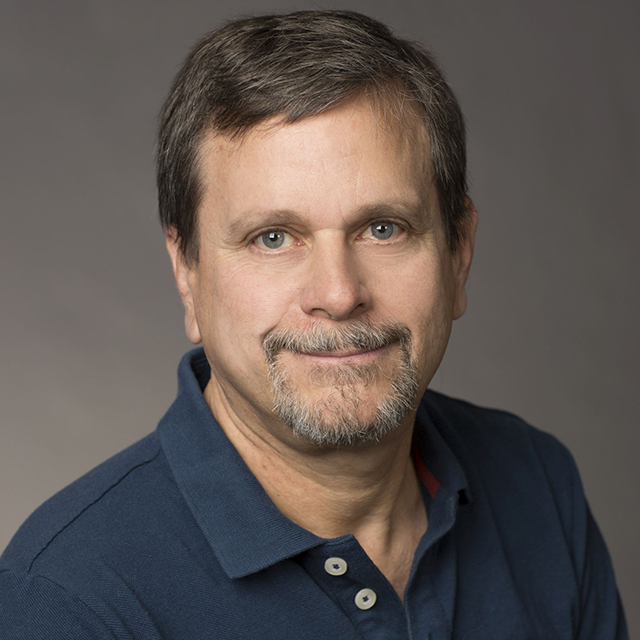
Cornelius Barry is an Associate Professor in the Department of Horticulture at Michigan State University, with affiliations to the Plant Breeding, Genetics and Biotechnology program, AgBioResearch, and the Molecular Plant Sciences Graduate Program. He joined MSU in July 2007 with a 75% research and 25% teaching appointment. Education: PhD and BSc from the University of Nottingham and University College of Wales Current roles: Director of NSF REU Site: Plant Genomics @ MSU His research focuses on the evolution of biochemical diversity within the Solanaceae family , particularly specialized metabolites like terpenoids, flavonoids, and alkaloids. He investigates their roles in plant defense, pollinator attraction, and human applications through genomics, metabolite profiling, and synthetic biology. Recent publications show expertise in alkaloid biosynthesis , trichome chemistry , and metabolic pathway engineering . Key collaborations include teams at Boyce Thompson Institute, Texas A&M, and University of Nottingham. He advises graduate students in Genetics , Biochemistry & Molecular Biology , and Molecular Plant Sciences programs.
Professor Annette Byrne is a leading academic at RCSI University of Medicine and Health Sciences , where she serves as Professor of Physiology and Head of the Precision Cancer Medicine (PCM) Group. She has held this position since 2019 after progressing through roles as Lecturer (2008), Senior Lecturer (2013), and Associate Professor (2017). Her research focuses on precision medicine approaches for colorectal and brain cancers , integrating multi-modality molecular imaging , Next Generation Sequencing , and patient-derived xenograft models . PhD in Cell Biology (University of York, 1999) John Kerner Fellowship in Gynaecologic Oncology (UCSF, 1999-2001) Scientist at Pharmacyclics Inc. (2001-2003) Senior Scientist at Angion Biomedica Corp. (2003-2005) Principal Investigator at UCD Conway Institute (2005-2008) Her research interest lies in precision cancer medicine , particularly elucidating predictive biomarkers (genomic, transcriptomic, proteomic) and identifying novel therapeutic targets . Key methodologies include radiomics , fluorescence-guided surgery , and systems modeling of apoptosis pathways. She has pioneered Ireland's first Tumour Xenograft Facility and Translational In Vivo Imaging Centre . Recent publications highlight her work on cross-species radiomics , cell-free DNA analysis , and glioblastoma microenvironment subtyping . Her Marie Curie networks (Gliotrain, Glioresolve) and COLOSSUS project have trained 25+ PhD researchers in brain cancer therapeutics. Over €45M in national/international grants Member of Royal Irish Academy (2025) Highly cited in Cancer Discovery , Annals of Oncology , and Nature journals She supervises multiple PhD candidates and leads the RCSI Precision Cancer Medicine Group , which utilizes computational approaches and molecular imaging to improve cancer treatment outcomes. Her GLIORESOLVE and EDIReX projects focus on tumor microenvironment manipulation and distributed PDX infrastructure.
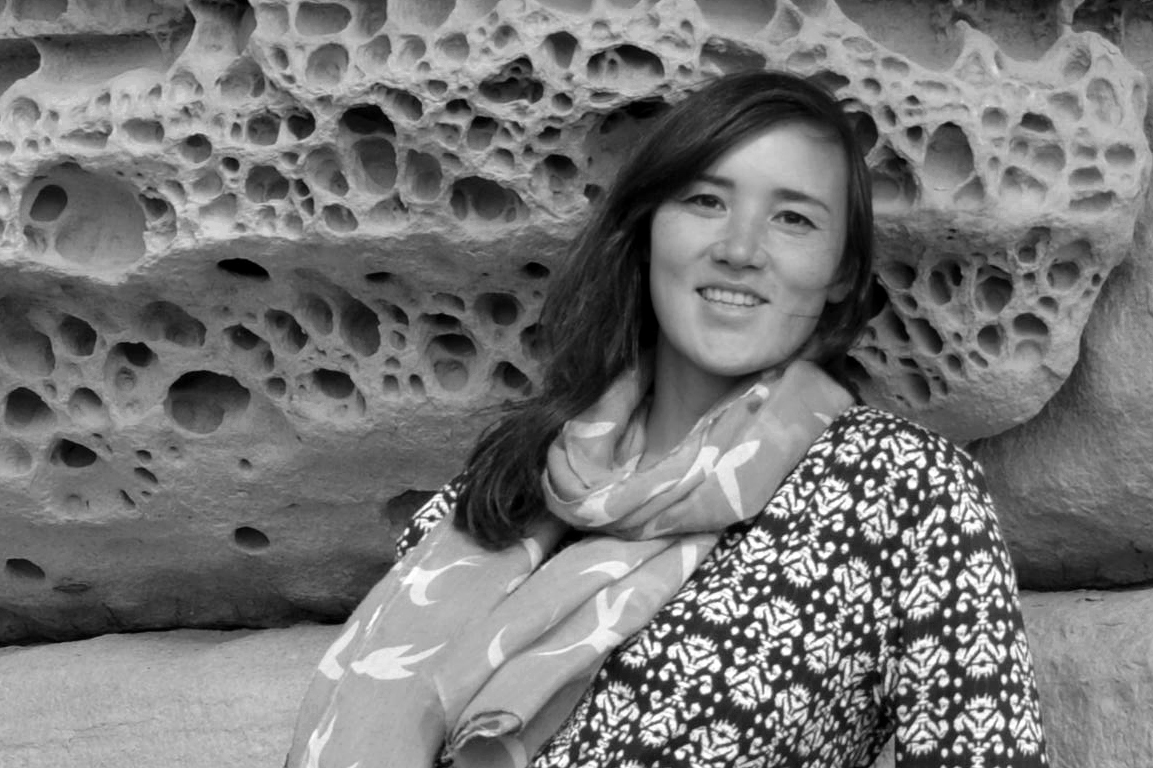
B. B. Cael is an interdisciplinary climate and ocean scientist affiliated with the Department of the Geophysical Sciences at the University of Chicago and the Climate Systems Engineering Initiative . His work integrates data analysis and theoretical models to investigate global-scale questions about Earth's carbon cycle and climate system. Cael's research interests span climate mitigation , climate sensitivity , climatic extremes , ocean biogeochemistry , plankton ecology , remote sensing , and paleoclimate . His publications focus on ocean carbon fluxes, climate feedbacks, and marine ecosystem dynamics, with recent work applying machine learning to oceanographic data. His academic journey includes a PhD from the MIT-WHOI Joint Program , a Simons Foundation Postdoctoral Fellowship at the University of Hawai’i at Manoa, and a Principal Scientist role at the UK's National Oceanography Centre. Current research at UChicago addresses both carbon dioxide removal and solar geoengineering strategies. Scientific Awards Simons Foundation Postdoctoral Research Fellow
Aneta Iordanova is a Lecturer at the University of Illinois at Chicago (UIC), affiliated with the College of Engineering . She can be contacted at aiorda1@uic.edu , located in SES 2344 . Her research lies at the intersection of Particle Physics , Nuclear Physics , and Quantum Chromodynamics (QCD) , focusing on Heavy-Ion Collisions , Quark-Gluon Plasma , and Experimental Physics . Key trends in her work include measurements of Elliptic Flow , Jet Substructure , Meson Production , and Direct Photon Anisotropy across varying collision energies and rapidities. Dr. Iordanova's publications highlight her expertise in High-Energy Physics , with a focus on Collision Dynamics , Hadron Correlations , and Parton Energy Loss . Her work spans both Relativistic Heavy-Ion and Proton-Proton Collisions , utilizing data from experiments like PHENIX at RHIC.
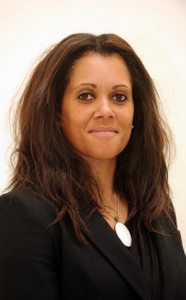
Rachel J. Anderson is a Professor of Law at the William S. Boyd School of Law, University of Nevada, Las Vegas (UNLV), where she serves as Director of the International, Transnational & Comparative Law Program and Co-Director of the Business & Commercial Law Concentration. Her academic and professional work bridges legal scholarship, public service, and institutional leadership. University: University of Nevada, Las Vegas School: William S. Boyd School of Law Rank: Professor of Law Email: rachel.anderson@unlv.edu Phone: 702-895-5806 Education: J.D., University of California, Berkeley, School of Law M.A., Stanford University, International Policy Studies Zwischenprüfung, Humboldt-Universität zu Berlin Professor Anderson teaches Business Organizations, International Business Transactions, and International Law. Her research centers on good governance across public and private sectors, with emphasis on business law, international law, and poverty law and policy. She explores how legal frameworks can promote equity, human rights, and sustainable development, particularly in transnational contexts. Her recent scholarship spans topics such as global corporate citizenship, gender equality in the workplace, transnational corporate accountability, and colonial reparations. The publications reflect a consistent engagement with structural inequities and the role of law in addressing them. Her work appears in journals like Denver University Law Review , Michigan State Journal of International Law , and California Law Review , as well as in edited volumes and policy commentaries. Scientific Awards and Honors: UNLV 2024 Community Engagement Service-Learning Award Outstanding Non-Traditional Career Award, National Bar Association Women Lawyers Division, 2024 State Bar of Nevada, Medal of Justice, 2012 Lawyers of Color Magazine, Law School Diversity 50 Under 50 List, 2014 Multiple congressional and state-level recognitions for public service Professor Anderson has held significant public service roles, including General Counsel for the Office of the Nevada Attorney General (2019–2021) and Director of the Poverty Law & Policy Clinic (2023–2025). She is active in professional organizations such as the Association of American Law Schools (AALS), where she was elected Chair-Elect of the Section on Poverty Law in 2025, and serves on the Board of Directors for Nevada Legal Services. She also contributes to national conversations on democracy, voting rights, and diversity in the legal profession. Labs, Teams, and Professional Affiliations: Member, American Society of Comparative Law’s Board of Directors Member, Nevada Supreme Court’s Access to Justice Commission Board Member, Nevada Legal Services Leadership roles in AALS Sections on Poverty Law and Clinical Legal Education Contributor to National Bar Association initiatives on racial equity and mental health
Professor Shanlin Fu is a distinguished academic at the University of Technology Sydney (UTS), holding the position of Professor in the School of Mathematical and Physical Sciences and affiliated with the Centre for Forensic Science. He serves as the Program Director for the Bachelor of Forensic Science program and is a Research Integrity Adviser for the Faculty of Science. With over $10 million in competitive research funding from ARC, NHMRC, and other national and international schemes since 2008, Professor Fu leads the Drugs and Toxicology Group, focusing on developing sensitive methods for clinical diagnosis, therapeutic drug monitoring, and drugs of abuse testing. Professor, UTS School of Mathematical and Physical Sciences (2019-present) Associate Professor, UTS School of Chemistry and Forensic Science (2015-2019) Senior Lecturer, UTS School of Chemistry and Forensic Science (2008-2014) Professor Fu earned his PhD in Medicinal and Pharmaceutical Chemistry from the University of Sydney (1989-1992), an MSc in Phytochemistry from Peking Union Medical College (1982-1985), and a BSc in Biology from Nanjing Normal University (1978-1982). Prior to his academic career at UTS, he served as a Senior Hospital Scientist at the Northern Sydney Area Health Service (2000-2008) and as a Senior Research Scientist at The Heart Research Institute (1993-2000). Professor Fu's research spans analytical chemistry, forensic chemistry, medical biochemistry, pharmacology, pharmaceutical sciences, forensic toxicology, and clinical toxicology. His work focuses on three main areas: Forensic Chemistry concerning identification of drugs of abuse including new psychoactive substances; Forensic Toxicology focusing on detection of drugs in biological matrices for clinical and medico-legal purposes; and Clinical Toxicology aiming to understand mechanisms of substance abuse harms. His research has strong real-world applications, with his patented 'Cathinone Test' already commercialized for law enforcement and potential healthcare settings. Analysis of Professor Fu's recent publications reveals a strong emphasis on developing innovative analytical methods for drug detection, particularly for new psychoactive substances. His work increasingly incorporates multi-omics approaches (metabolomics, lipidomics, proteomics) and machine learning techniques to enhance detection capabilities. There's a clear trend toward translating laboratory research into practical field applications, with numerous color spot tests and portable detection methods being developed for law enforcement use. His research also shows expanding applications in equine doping control and postmortem analysis. Vice-Chancellor's Medal for Research Excellence through Collaboration or Partnership (2023) UTS Teaching and Learning Award for Team Teaching (2022) MAPS Research Translation Award (2022) As a member of the HDR Panel since 2022, Professor Fu actively supervises Masters Research and PhD students in forensic science. His extensive grant portfolio includes leadership of the ARC Research Hub for Integrated Device for End-user Analysis at Low-levels and the Australian Centre for cannabinoid clinical and research excellence (ACRE). He has established key collaborations with Australian Federal Police, NSW Forensic and Analytical Science Service, Racing NSW, and international institutions including University of Copenhagen and University of Dundee. His research impact extends beyond academia through commercialization of detection technologies that improve efficiency and accuracy of illicit drug detection. Professor Fu heads the Drugs and Toxicology Group at the Centre for Forensic Science, which maintains strong industry partnerships with forensic laboratories and law enforcement agencies. His group is currently developing a multiplexer device that can simultaneously detect multiple new psychoactive substances including cathinones, NBOMEs, piperazines, and fentanyl analogues. The group's work bridges fundamental research with practical applications, with several technologies moving from the laboratory to real-world implementation in forensic and healthcare settings.
Kate Laskowski is an Associate Professor in the Department of Evolution and Ecology at University of California, Davis , focusing on behavioral diversity and plasticity. Her research explores how evolutionary processes shape developmental mechanisms generating individual variation. Education: B.S. in Biological Sciences (2006, UMBC), Ph.D. in Integrative Biology (2013, University of Illinois) Her work integrates ultimate and proximate perspectives to analyze how genetic, parental, and experiential cues build phenotypes. Recent research emphasizes clonal fish models to study non-genetic origins of behavior, eco-evolutionary dynamics, and collective behavior across scales. Publications from 2023-2025 highlight themes in behavioral repeatability , predation risk responses , genetic life-history trade-offs , and social conformity vs. individuality . Her methods combine experimental studies with statistical modeling and meta-analytic frameworks. Scientific Awards: Sloan Fellow (2023) Kate collaborates with the Center for Population Biology and advises in the Animal Behavior and Population Biology graduate programs. Her lab investigates behavioral individuality in clonal systems, with applications to conservation and evolutionary theory.
Martin Mayer serves as Associate Professor at the University of Inland Norway within the Faculty of Applied Ecology, Agricultural Sciences and Biotechnology and the Department of Forestry and Outback Studies. Based at the Evenstad study location, his research focuses on large mammal ecology in human-dominated landscapes across Scandinavia and Europe. His primary research interests center on Wildlife Ecology and Large Mammal Conservation , with particular emphasis on human-wildlife conflict resolution, road ecology, and carnivore management. Mayer investigates how species like moose, deer, and beavers adapt to anthropogenic landscapes through habitat selection, movement patterns, and population dynamics. His work integrates cutting-edge methodologies including GPS telemetry, drone surveillance, and citizen science data to address conservation challenges in agricultural and urban settings. Analysis of Mayer's recent publications reveals strong trends in using roadkill data for population monitoring, examining spatial constraints on wildlife movement, and developing mitigation strategies for human-wildlife conflicts. His research increasingly incorporates cross-border European perspectives on wildlife management while maintaining a strong foundation in Scandinavian field ecology. Mayer actively contributes to the LARGE research group (ecology of large animals), which conducts field studies on ungulate behavior, predator-prey dynamics, and landscape-scale conservation planning in Norway's boreal ecosystems.
Michael Webster is a Professor of Psychology at the University of Nevada, Reno, serving as Co-Director of the Graduate MS/PhD Neuroscience Program and Undergraduate BS Neuroscience Program, and Director of the NIH-funded COBRE for Integrative Neuroscience. His research focuses on visual perception, particularly how perception adapts to environmental and physiological changes. He leads major initiatives like the $10 million COBRE grant establishing an fMRI facility and neuroscience programs. Education: Ph.D., Psychology, University of California, Berkeley (1988); B.A., Psychology, University of California, San Diego (1981). Research Interests: Cognitive neuroscience of vision, visual adaptation mechanisms, color and face perception, and cultural/environmental influences on perception. Notable contributions include discoveries about face adaptation, color constancy, and blur correction. His work is funded by NIH grants and recognized through awards like the Outstanding Researcher Award. Grants/Awards: NIH COBRE Directorship, foundation professorship, grants for radiology adaptation studies. His lab (Visual Perception Lab) explores neural and cognitive bases of visual processing.
Emily Whiting is an Associate Professor of Computer Science at Boston University and Director of the Shape Design & Computation Lab. She also serves as Director of PhD Admissions and Co-Director of the BU Computer Graphics Lab. Her research focuses on computational fabrication, architectural geometry, and computer-aided design, bridging digital geometry processing, engineering mechanics, and rapid prototyping. She holds a PhD from MIT (2012), an SM in Design & Computation from MIT (2006), and a BASc in Engineering Science from the University of Toronto (2004). Previously, she was faculty at Dartmouth and a Marie Curie Postdoctoral Fellow at ETH Zurich. Her research interests include 3D printing optimization, structural design for fabrication, and tools for functionally-valid object creation. Notable projects include work on elastic garments, climbing experience replication, and print-wind instrument design. Her work has been featured on TEDx and PBS NOVA, and she has received awards such as the NSF CAREER Award and Sloan Research Fellowship. Education: PhD (MIT), SM (MIT), BASc (University of Toronto) Labs: Shape Design & Computation Lab, BU Computer Graphics Lab Key Projects: Knitting 4D garments, Environment-Scale Fabrication, Thermal-comfort casts Recent professional activities include program committee roles at SIGGRAPH 2025 and UIST 2024, and serving as Program Co-Chair for Pacific Graphics 2024. She advises a team of PhD and MS students, with alumni now in academia and tech industries.
Professor Michael De Volder is a Fellow and College Lecturer at St John's College, University of Cambridge, holding the position of Professor of Advanced Materials Engineering in the Department of Engineering. His research focuses on energy storage solutions, nanotechnology, and scalable manufacturing methods for sustainable battery technologies. Belgian Royal Academy Laureate Co-founder of Echion Technologies (niobium-based anode materials) Expert in Li-ion/Zn-ion battery innovation Research activities center on improving battery sustainability through novel synthesis techniques, extending battery lifetime via structural optimization, and developing high-energy-density materials. His work spans nanoscale engineering, electrode design, and fundamental electrochemical investigations. Scientific publications from 2022-2025 demonstrate expertise in: Li-ion/Zn-ion battery systems, nanotube integration, electrode manufacturing, and degradation analysis. Recent work explores mechanochromic displays, dual-gradient electrodes, and aqueous-organic electrolyte formulations. Belgian Royal Academy Laureate Co-founder of battery technology startup Echion Technologies
Paolo Prandoni is a Lecturer at École Polytechnique Fédérale de Lausanne (EPFL) in the School of Computer and Communication Sciences (IC). He serves as a Scientist in the Audiovisual Communications Laboratory (LCAV) and teaches in the SSC-ENS and SIN-ENS units, focusing on signal processing theory and practical applications in audiovisual communications. He earned his PhD from EPFL after completing all prior education there, driven by childhood fascination with long-distance telephony. His doctoral work established foundations in communication systems that continue to inform his research. Prandoni's research spans audio/image processing, machine learning for media analysis, and DSP education. Key areas include computational photography (e.g., spectral imaging, stained glass rendering), speech quality assessment via transfer learning, music information retrieval (e.g., fingering prediction), and audience analytics through his company Quividi. His work consistently bridges theoretical signal processing with real-world implementation. Recent publications reveal a strategic shift toward machine learning integration in signal processing tasks, particularly non-intrusive speech assessment and lensless imaging reconstruction. Simultaneously, he advances DSP pedagogy through MOOC development and hands-on teaching tools using off-the-shelf hardware, emphasizing accessibility and practical skill development. No scientific awards are documented in the provided materials. He has advised PhD student Thanikachalam Niranjan (thesis: Image Based Relighting of Cultural Artifacts , 2016) and teaches Communication Systems and Computer Science courses. His educational impact extends through the open-access textbook Signal Processing for Communications (2008) and tools like MultiPub for maintainable online classes. Industry engagement includes Quividi co-founding (2006) and ongoing CSO role in attention analytics. As a core LCAV laboratory member, he collaborates on interdisciplinary projects including cultural heritage digitization, embedded signal processing systems, and real-time audience measurement, leveraging EPFL's infrastructure for both academic and commercial applications.
Fabrizio Falchi is a researcher at the Artificial Intelligence for Media and Humanities (AIMH) Lab of the Institute of Information Science and Technologies (ISTI) within Italy's National Research Council (CNR). He also maintains an associate position at the Biorobotics Institute of Scuola Superiore Sant'Anna. His work focuses on developing advanced multimedia retrieval systems, with the VISIONE platform being his most notable contribution, which has won international competitions including the Video Browser Showdown in 2024 and placed second in 2023. Falchi's educational background includes: Ph.D. in Information Engineering from University of Pisa (Italy) Ph.D. in Informatics from Faculty of Informatics of Masaryk University of Brno (Czech Republic) M.B.A. from Scuola Superiore Sant'Anna in Pisa His research spans deep learning, convolutional neural networks, deep features extraction, similarity search algorithms, distributed indexing systems, multimedia information retrieval, computer vision applications, and peer-to-peer systems. Falchi has made significant contributions to fine-grained visual understanding, cross-modal retrieval (particularly image-text matching), and robustness of deep learning systems against adversarial attacks. His work demonstrates a strong focus on practical applications of these technologies, particularly in video retrieval systems and safety monitoring solutions. Analysis of Falchi's recent publications reveals a strong focus on video and image retrieval systems, with the VISIONE platform being central to his work. His research shows increasing emphasis on fine-grained understanding in computer vision, cross-modal retrieval, and addressing practical challenges like cross-resolution face recognition. Recent work demonstrates innovation in making these systems more efficient through techniques like knowledge distillation (ALADIN) and leveraging virtual worlds for training data. His publications consistently bridge theoretical advances with practical applications in surveillance, safety monitoring, and multimedia search. Falchi's work has received significant recognition: Best paper award at CBMI 2024 for 'Is ClLIP the main roadblock for fine-grained open-world perception?' VISIONE 2024 won the Video Browser Showdown competition in Amsterdam VISIONE obtained second place at Video Browser Showdown 2023 in Bergen Best Paper Award for 'Learning Safety Equipment Detection using Virtual Worlds' at CBMI 2019 Falchi collaborates extensively with researchers at ISTI-CNR, particularly within the AIMH Lab. His work on VISIONE involves collaboration with Giuseppe Amato, Paolo Bolettieri, Fabio Carrara, Claudio Gennaro, Nicola Messina, Lucia Vadicamo, and Claudio Vairo. As co-chair of Ital-IA 2023, the 3rd National Conference on Artificial Intelligence, he plays an active role in the academic community. He is a member of ACM (since 2012), the Computer Vision Foundation, the Italian Association for Computer Vision Pattern Recognition and Machine Learning (CVPL), and the CINI Lab on Artificial Intelligence and Intelligent Systems. Falchi is a key member of the Artificial Intelligence for Media and Humanities (AIMH) Lab at ISTI-CNR, where he leads research on video retrieval systems. The lab has developed the award-winning VISIONE platform, which combines multiple scientific results in content-based video retrieval. His team focuses on developing systems that enable users to search for target videos using textual prompts, drawing objects and colors, or images as query examples. The lab's work demonstrates strong interdisciplinary collaboration, bridging computer science with practical applications in media, safety monitoring, and urban environments.
Ana Elfers is a Research Associate Professor at the University of Washington's College of Education, specializing in educational policy, teacher workforce dynamics, and school leadership systems. Her research directly informs Washington state policymakers on equity in education access and teaching quality improvement initiatives. Her educational background includes: Ph.D. in Education from the University of Washington M.A. from the University of Belgrade B.S. from Washington State University Dr. Elfers employs qualitative research methods to investigate professional development systems, school community dynamics, and leadership structures that support effective teaching. She maintains specialized expertise in international education with focus on Central and Eastern Europe, drawing from extensive overseas professional experience. Her work consistently bridges academic research with practical policy applications for state and district educational leaders. Her publication record demonstrates sustained focus on Washington state's teacher retention, mobility patterns, and evaluation systems since 2006. Collaborative work with the Center for the Study of Teaching and Policy reveals consistent emphasis on equity issues - particularly for teachers of color and early career educators - while analyzing how policy implementation affects classroom practice and student outcomes across diverse school settings. Scientific Awards: No scientific awards mentioned in the provided text Dr. Elfers has not listed specific advisees in the provided materials, but her research program involves significant grant-funded work commissioned by the Washington State Office of the Superintendent of Public Instruction. These projects examine teacher and principal retention, evaluation systems, and workforce development, indicating substantial external funding for policy-relevant educational research. She conducts research through the Center for the Study of Teaching and Policy at the University of Washington, collaborating with colleagues like Margaret Plecki on multi-year studies examining educational leadership, teacher evaluation frameworks, and workforce equity initiatives within Washington's public education system.
Erik Demaine is a Professor in the Department of Electrical Engineering and Computer Science at MIT, affiliated with the Computer Science and Artificial Intelligence Laboratory (CSAIL), the Theory of Computation group, and the Algorithms Group. His research spans algorithms, computational geometry, folding, robotics, complexity theory, and interdisciplinary connections between mathematics and art. He received the MacArthur Fellowship ("genius grant") for his work on folding and computation. Demaine's work includes co-authoring books such as Geometric Folding Algorithms and Games, Puzzles, and Computation . His art collaborations with his father Martin Demaine, including curved-crease sculptures, are in the permanent collections of the Museum of Modern Art (MoMA) and the Renwick Gallery. He is also involved in software projects like Coauthor and Cocreate, supporting collaborative research and education. His research interests include folding and unfolding of geometric structures, computational complexity of games, protein folding, and algorithm design. He has contributed to areas like data structures, robotics, and network computing, with a focus on bridging theoretical computer science and tangible applications. Demaine holds patents and has been recognized with numerous awards, including the NSERC Doctoral Prize and the Gödel Prize. His work often involves supercollaboration, emphasizing open problem-solving and interdisciplinary approaches.