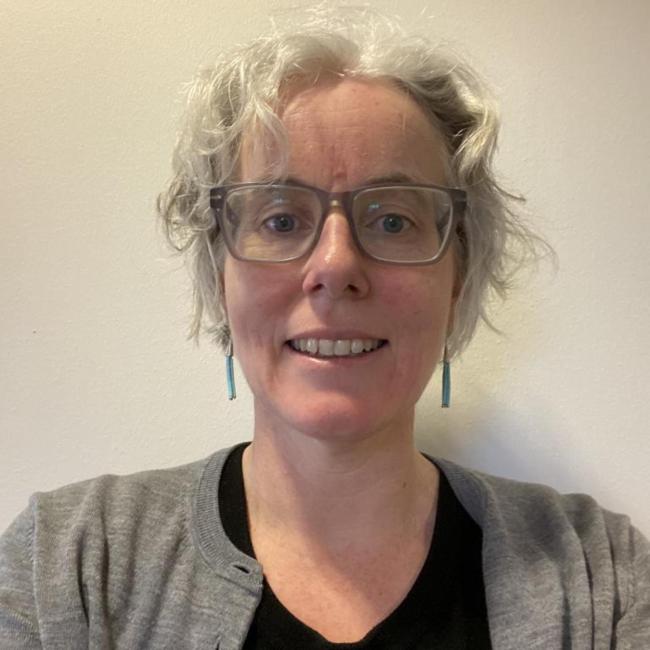
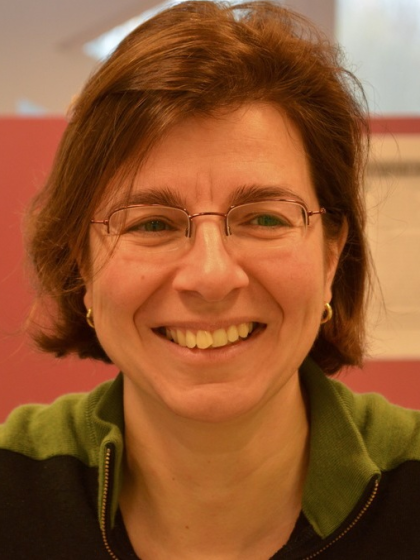
Antti Kolehmainen is a Professor at the Law School, Faculty of Social Sciences and Business Studies, University of Eastern Finland. His research focuses on civil law, particularly contract law, inheritance law, and family law. He has authored numerous publications analyzing legal precedents, contractual validity, inheritance disputes, and property rights in marital dissolution. His work emphasizes practical legal solutions for partition delays, housing compensation in divorces, and economic violence implications in family law. Key research areas include: Contract termination and validity Inheritance rights and succession disputes Marital property division and economic violence Legal interpretation of prenuptial agreements Guardianship and autonomy rights in family law Recent articles address housing compensation delays post-divorce, testamentary formalities, and secondary heir rights. His analyses often bridge legal theory with practical judicial applications, contributing to Finnish civil law jurisprudence.
Charilaos Platanakis is an Assistant Professor of Greek & Roman Political Thought at the Department of Political Science & Public Administration, University of Athens. He holds a PhD from the University of Cambridge (Clare College), with earlier degrees from the University of Crete and the University of Edinburgh. His research bridges ancient political thought and modern systematic political philosophy, focusing on egalitarianism, democratic theory, and political authority. He has taught at institutions including the University of Cambridge, University College London, Koç University, and others as a visiting professor. Education: B.A. (Ptychion), Department of Philosophy & Social Studies, University of Crete M.Sc. by Research, Department of Philosophy, University of Edinburgh PhD in Political Theory (Aristotle’s Concept of Equality), University of Cambridge Research Interests: Historical: Ancient Greek and Roman political thought Systematic: Egalitarianism, distributive justice, political obligation, and democratic legitimacy Publications: Over 15 peer-reviewed articles in journals like History of Political Thought , Philosophy of Management , and Deukalion , plus encyclopedia entries and edited volumes Work published in English, Greek, and Turkish Awards: No awards explicitly mentioned in the text Advising/Grants: No students listed; no grants specified Labs/Teams: Associated with the University of Athens’ research institutes (e.g., Institute of Greek Politics)
Thomas Gutmann is a Professor of Civil Law, Legal Philosophy, and Medical Law at the University of Münster (Westfälische Wilhelms-Universität). He leads the Institute for Legal Philosophical Research and holds the Chair for Civil Law, Legal Philosophy, and Medical Law since 2006. His academic roles include directorships, editorial leadership in legal journals, and leadership in research clusters like the Cluster of Excellence 'Religion and Politics.' Education: Habilitation in Law and Philosophy (LMU Munich, 2005/2006), PhD in Law (LMU Munich, 2000), and studies in Law, Political Science, and Philosophy (Munich, 1985–1990). Research focuses on legal theory, medical law, private law, and norm justification in pluralistic societies. Key projects include 'Modernization Dynamics in Politics, Law, and Religion' and 'Pluralism and Norm Justification in Modernity.' His work bridges law, ethics, and social theory, addressing topics like autonomy, secularization, and healthcare ethics. Publications span books, articles, and edited volumes on legal philosophy, medical ethics, and normative frameworks. Recent works include discussions on law and literature, triage ethics during the pandemic, and contractual autonomy. He supervises doctoral students in legal and ethical domains and has been a visiting scholar at the National University of Singapore. Active in academic governance, he chairs editorial boards and serves on advisory councils, including the Alfried Krupp Kolleg Greifswald.
Dr. Michael Frye is a tenured Professor of Electrical Engineering and the Jones Endowed Chair of Engineering at the University of the Incarnate Word (UIW), where he directs the AVS Lab. With extensive industry experience at Continental Airlines, Lockheed Martin Skunkworks, NASA, and Southwest Research Institute, his expertise spans flight controls and modeling of fixed/rotorcraft vehicles. His educational credentials include: Ph.D. in Electrical Engineering, University of Texas at San Antonio (2006) M.S. in Electrical Engineering, University of Southern California (1999) B.S. in Electrical Engineering, University of Houston (1996) Dr. Frye's research integrates Science of Autonomy, Large Decentralized Networks, and Nonlinear Controls with Artificial Intelligence to develop robust autonomous systems. His work bridges theoretical control engineering with practical applications in drone technology, emphasizing real-world solutions for infrastructure and agriculture. Analysis of his 2021-2025 publications reveals a dominant focus on drone-based computer vision and AI applications, particularly in precision agriculture (pest monitoring, crop mapping) and critical infrastructure inspection (powerline vegetation management, insulator fault detection). Key methodologies include SLAM, RTK-NTRIP georeferencing, transformer networks, and swarm navigation. As Director of the AVS Lab, he leads projects like the megaGEMS Coding Academy and AEOP research apprenticeships, securing funding for STEM education initiatives and drone technology development. His mentorship extends through curriculum design and hands-on research programs targeting underrepresented engineering students. The AVS Lab under his leadership pioneers autonomous vehicle systems, with current emphasis on micro-drone AI implementations, e-scooter autonomous mobility, and real-time UAV control architectures for complex operational environments.
Ronald W. Cox is a Professor in the Department of Politics and International Relations at Florida International University (FIU), within the School of International and Public Affairs. He has been a key figure in the department, serving as Director of Graduate Studies (2008–2011) and Associate Chair (2012–2016). His academic work spans critical international political economy, US foreign policy, and the political economy of baseball. BA, University of Missouri-Columbia, Political Science, 1984 MA, University of Missouri-Columbia, Political Science, 1986 PhD, University of Wisconsin-Madison, Political Science, 1991 Professor Cox’s research centers on corporate power, class conflict, globalization, and the military-industrial complex . He critically examines the intersection of business interests and state policy, particularly in US foreign relations and labor dynamics. His work also extends to the political economy of professional sports, especially Major League Baseball, where he analyzes competitive balance and owner-player relations. He is known for integrating Marxist and critical theory into mainstream international relations scholarship. His recent publications, from 2020 to 2025, reflect a consistent focus on neoliberalism, transnational capital, academic labor, and the rise of neofascist tendencies under late capitalism . These works appear in journals and public platforms, demonstrating both scholarly rigor and public engagement. Themes include corporate influence on democracy, the crisis of capitalism via global value chains, and critical assessments of liberalism and identity politics. Scientific awards include: Several teaching awards at FIU Founder of the open-access journal Class, Race, and Corporate Power (2013) Lead writer for Just Baseball (2021–present) Professor Cox has advised graduate students, including James Cole Bucy, and has secured academic visibility through editorial leadership and public intellectual work. His grants and funding are not explicitly detailed, but his sustained publication and journal founding suggest active research support. He has authored or edited multiple books, such as Corporate Power, Class Conflict and the Crisis of the New Globalization (2019) and Free Agency and Competitive Balance in Baseball (2006). He is affiliated with critical academic networks and has contributed to labor solidarity discourse through work on the International Labor Solidarity Center and the Occupy Movement. His scholarship often bridges academic and activist communities, advocating for revolutionary socialism and democratizing knowledge. No formal lab or research team is mentioned, but his editorial role in Class, Race, and Corporate Power suggests leadership in a scholarly collective.
Dr. Mien Van is a Senior Lecturer (a.k.a. Associate Professor) in Robotics and Control Engineering at Queen's University Belfast, UK. He leads multiple research projects in autonomous systems, human-robot collaboration, and underwater robotics. His work spans resilient control for autonomous vehicles, in-process manufacturing quality control, and bio-inspired robotics design. Education: Research Fellowships at National University of Singapore (2015-2017) and University of Exeter (2018-2019). Research Interests: Resilient Autonomy, Human-Robot Interaction, Underwater Vehicles, Fault Diagnosis. Awards: IET Premium Award (2017), Best Paper Awards from BK21 and ICROS. Key Projects: ORCA (Dstl/MOD-funded), Digital Twins for Underwater Operations (EPSRC), Offshore Wind Turbine Blade Monitoring (Innovate UK). Dr. Van has authored/co-authored over 75 journal papers with an h-index of 34 and >3,700 citations. He serves as Associate Editor for multiple top-tier journals including IEEE Transactions on Automation Science and Engineering.
Elizabeth Van Couvering is an Assistant Professor of Media and Communication Studies at Karlstad University, Sweden. She holds a PhD from the London School of Economics and Political Science, an MBA from the Open University, and a BA in Cultural Anthropology from Bryn Mawr College. Her research focuses on the political economy of digital platforms, search engines, algorithmic gatekeeping, and gig economy labor dynamics. She also explores data visualization and climate communication. Teaching responsibilities include media theory, strategic communications, science and technology studies, and data visualization courses. Current research projects include 'Algorithms and media organisations' and 'SWEGIG' (job intermediary platforms in Sweden). Her work draws from over three decades of industry experience in digital media, including roles at early internet companies like Cyberia, Easynet, and Webmedia. Education: PhD, London School of Economics and Political Science (2002) MBA, Open University BA, Bryn Mawr College Her research highlights platform power structures, algorithmic accountability, and the socio-economic impacts of digital transformation. Recent work examines AI chatbots' political information retrieval and gig workers' resistance to algorithmic management. She has co-authored influential studies on search engine bias, media literacy, and VR immersion theory. Professional activities include advising projects for Nielsen Online and IAB Europe, while personal interests bridge technology and textile crafts—she has hacked knitting machines using Arduino chips. She collaborates with Karlstad colleagues on interdisciplinary projects and teaches in Swedish ("och svenska!").
Professor Lang White is a faculty member at the University of Adelaide, holding the position of Professor of Electrical Engineering within the School of Psychology and Faculty of Health and Medical Sciences. His research focuses on statistical signal processing, control systems, optimization, and multi-agent systems with applications in defense, AI-human interaction, and communication networks. He leads projects on hidden reciprocal chain modeling, sensor array processing, and game-theoretic resource allocation strategies. Collaborations include institutions in Italy, France, and the U.S., and he is actively involved in defense-funded initiatives. Current research areas include Bayesian rationality in satisfaction games, Stackelberg game models for asymmetric conflict, and adaptive reinforcement learning algorithms. He has secured postdoctoral positions in human-AI interaction and maintains expertise in MIMO radar waveform design and TCP congestion control. His work bridges engineering and psychology, addressing interdisciplinary challenges in decision-making and system optimization. Professor White seeks consultancy opportunities in signal processing and control systems for defense clients and contributes to academic outreach through conference presentations and journal publications. He advises on emerging trends in distributed optimization and maintains a lab focused on temporal modeling and stochastic processes.
Dr. Ornella Porcu is a Research Fellow at the Faculty of Arts, University of Groningen, affiliated with the Media and Journalism Studies department. Her work focuses on journalism, organizational culture, and innovation dynamics within newsrooms. Key areas include newsroom innovation, resilience, creative autonomy, and transformation processes. Her research explores how organizational structures and cultural factors influence innovation in media environments. Notable themes include the impact of hierarchy on creative behavior, trust distribution among journalists, and strategies for fostering resilient newsroom cultures. She employs both qualitative and quantitative methods, analyzing perceptions of learning cultures and measuring innovative potential through empirical studies. Porcu's publications span academic journals and conference proceedings, with recent work emphasizing the interplay between emotions (trust/fear) and idea exchange in newsrooms. Her 2024 doctoral thesis further elaborates on unlocking newsroom cultural potential. Despite no listed awards, her work receives attention through media coverage like the 2024 article on newsroom innovation cultures. She advises on media organizational development and collaborates with peers like Prof. Broersma and Dr. Hermans. Her research contributes to understanding how creative cultures are vital for media survival in evolving landscapes.
Abdelaali El Maghraoui is a researcher and academic administrator at the Center for Islamic Theology, Eberhard Karls University of Tübingen. He has held research and teaching positions at the University of Tübingen, Goethe University Frankfurt, and the University of Fribourg. His work bridges Islamic theology, law, and contemporary ethical challenges. Research Interests: His scholarship focuses on Islamic law, the normativity of the Quran, financial and economic ethics in Islam, Islamic banking, interreligious dialogue, and Islamic social ethics. He explores how classical Islamic legal reasoning applies to modern economic and social realities. The recent publications reflect a strong engagement with Quranic hermeneutics, Islamic legal theory (Usul al-Fiqh), and the ethical dimensions of finance and labor. Key themes include profit-and-loss sharing, the prohibition of interest (riba), women's rights in family law, and the role of religious obligation in worship and social justice. His work often employs interdisciplinary and comparative approaches. Scientific Awards: Promotionspreis der Gesellschaft für Arabisches und Islamisches Recht e.V. (GAIR), 2020 Promotionspreis der Eberhard Karls Universität Tübingen, 2019 Nomination for Deutscher Studienpreis der Körber-Stiftung, 2019 Advising and Grants: While no formal students are listed, El Maghraoui has supervised academic projects through his role in the Mercator Foundation's Graduate School of Islamic Theology. He has been supported by fellowships from the Mercator Foundation and has contributed to collaborative research initiatives such as the long-term project on the 'Normativity of the Quran in the Context of Social Change' at Goethe University Frankfurt. Labs and Teams: He is affiliated with the Center for Islamic Theology at the University of Tübingen and has been a key member of the research group 'Normativity of the Quran in the Context of Social Change' at Goethe University Frankfurt. He actively participates in academic networks including the Society for Arabic and Islamic Law (GAIR), the German Society for Islamic Theological Studies (DEGITS), and the Ethics Network Christianity-Islam.
Daniel Souleles is an Associate Professor in the Governance, Culture & Learning Unit within the Department of Business, Humanities and Law at Copenhagen Business School (CBS). He holds a PhD in Applied Anthropology from Columbia University and conducts ethnographic research on financial capitalism, economic value, political systems, and social inequality in the United States. Research Interests: His work spans Economic and Political Anthropology , Cultural Anthropology , and Applied Research Methods . He investigates how wealth, work, and worry are produced and distributed under financial capitalism, with fieldwork on private equity, venture capital, employee-owned firms (ESOPs), algorithmic trading, and legislative institutions. A central theme is the cultures of finance and the creation and destruction of social inequality . His recent publications reveal a strong focus on the epistemology of financial markets, the moral dimensions of economic life, and the possibilities for alternative economic models. Themes across his work include value theory , subjectivity formation , ignorance and knowledge distribution , and democratic innovation . He often employs ethnographic humor and narrative to unpack elite financial cultures. Scientific Contributions: Author of Songs of Profit, Songs of Loss (2019) and Whoosh Goes the Market (2024) Editor of People before Markets: An Alternative Casebook (2022) Published in leading journals: Economy and Society , Economic Anthropology , Critique of Anthropology , Current Anthropology Advising and Grants: While no specific students or grants are listed in the provided text, Daniel Souleles is actively engaged in research leadership through editorial roles and special issues. He co-edits thematic collections and contributes to shaping discourse in economic anthropology. His research projects include work on design return on investment (DROI) and data-driven finance, suggesting involvement in interdisciplinary and policy-relevant research initiatives. Labs and Teams: No formal lab or research team is mentioned, but he collaborates closely with scholars such as Johan Gersel and Morten Sørensen Thaning, particularly in editing and co-authoring works that challenge market-centric paradigms and advocate for human-centered economic alternatives.
Andres Moles is an Associate Professor at Central European University (CEU), holding positions across multiple departments and schools. He serves as Dean of Undergraduate Studies and holds academic ranks in the Department of Political Science, Department of Philosophy, and the Doctoral School of Political Science, Public Policy, and International Relations. He is also affiliated with the Center for Ethics and Law in Biomedicine. His interdisciplinary work bridges political theory with social science insights, focusing on liberal democratic frameworks and distributive justice. Moles earned his BA in Philosophy from the National University of Mexico (UNAM), followed by an MA in Philosophy and Social Theory and a PhD in Politics from the University of Warwick. His research explores how liberal political arguments align with modern behavioral science findings, addressing topics like choice architecture, neuroethics, and the ethics of public policy interventions. Recent work includes debates on discrimination, biotechnological equity, and the legitimacy of nudging in liberal societies. He frequently participates in academic events, such as the 2025 Roundtable on Migration in Political Theory and the 2022 Constitutionalism conference honoring Nenad Dimitrijevic. Moles’s academic contributions emphasize the practical implications of political theory, particularly in balancing individual autonomy with collective societal goals. His work often critiques perfectionist assumptions in liberalism while advocating for evidence-based policy design. He has no listed scientific awards but maintains active involvement in CEU’s governance and educational programs.
Anne Nortcliffe is currently Dean of the Faculty of Arts, Computing and Engineering at Wrexham University, a role she has held since June 2024. Previously, she was Head of the School of Engineering, Technology and Design at Canterbury Christ Church University (2018–2024) and Director of Engineering Curriculum (2017–2018). Prior to that, she served as Programme Lead in Engineering and Maths at Sheffield Hallam University from 2000 to 2017. She holds a PhD in Automatic Control and Systems Engineering from the University of Sheffield, awarded in 2003. PhD in Automatic Control and Systems Engineering, University of Sheffield (2003) Anne Nortcliffe's research focuses on the integration of technology in engineering and higher education. Her primary interests include smart learning technologies, audio feedback systems, student engagement through personal devices, curriculum innovation, and enhancing employability in engineering education. She has extensively explored how smartphones and audio tools can transform feedback mechanisms and support student-centered learning. Her recent publications highlight a strong trend toward leveraging mobile and audio technologies to improve educational outcomes. Articles such as 'Smartphone feedback' and 'Audio feedback design' reflect her pioneering work in digital assessment, while studies on self-assessment and smart-device learning demonstrate her commitment to student autonomy and engagement. The body of work consistently bridges engineering education with pedagogical innovation. Anne Nortcliffe has not been publicly associated with specific scientific awards in the provided text. She has supervised and collaborated on various educational research initiatives, particularly in the development of audio feedback and smart learning frameworks. While no formal list of advisees is available, her collaborative publications suggest mentorship and team-based academic leadership. There is no mention of research grants, but her sustained publication record across conferences and journals indicates active research engagement. Anne Nortcliffe has contributed to shaping engineering curricula and pedagogical practices across multiple institutions, particularly through her leadership roles. Her work in blending audio and mobile technologies into learning environments represents a significant contribution to modern educational practice in engineering and technology fields.
Katarzyna Jereczek-Korzeniewska is an Adjunct Professor at the Department of Hydrology, Faculty of Oceanography and Geography, University of Gdańsk. Her research focuses on hydrology, wetland ecology, and coastal zone management, with an emphasis on Baltic bogs, nutrient loading, and water level dynamics. She has contributed to studies on urban catchment impacts, peatland degradation, and sediment analysis in the southern Baltic region. Affiliation: University of Gdańsk, Faculty of Oceanography and Geography Department: Department of Hydrology Email: katarzyna.jereczek-korzeniewska@ug.edu.pl Her recent publications address hydrological challenges in degraded wetlands, nutrient transport from urban areas, and sedimentology of coastal canals. Research trends highlight interdisciplinary approaches to Baltic bog conservation and water balance modeling. No scientific awards or student advisement details are explicitly mentioned in the provided texts.
Nancirose Piazza is an Adjunct Professor in the Electrical & Computer Engineering and Computer Science Department at the Tagliatela College of Engineering, University of New Haven. Her research focuses on cybersecurity, multi-agent systems, adversarial machine learning, and reinforcement learning applications. She explores topics such as cyber deception strategies, adversarial communication mitigation, and algorithmic trading security. Her work bridges theoretical foundations like the Chinese Remainder Theorem with modern AI challenges, including adversarial policy imitation and natural language processing analysis. Her recent publications emphasize defense mechanisms against adversarial attacks in autonomous systems, mitigation strategies for emergent adversarial behaviors, and applying large language models to cyber deception planning. She also investigates communication protocols in multi-agent reinforcement learning and financial system vulnerabilities in algorithmic trading policies. While no formal advising relationships or grants are documented here, her research portfolio demonstrates active engagement with cutting-edge challenges in AI security and computational systems.