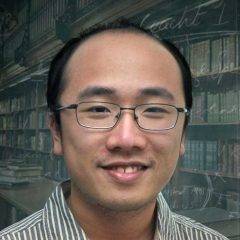
Yin Tat Lee is an Associate Professor at the Paul G. Allen School of Computer Science & Engineering , University of Washington, and a Senior Principal Researcher in Microsoft AI. His research spans convex optimization , convex geometry , graph algorithms , online algorithms , and differential privacy , with applications in machine learning and theoretical computer science.
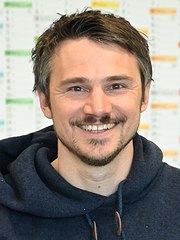
Holger Fröning is a full professor at Heidelberg University’s Institute of Computer Engineering (ZITI), where he leads the Hardware and Artificial Intelligence (HAWAII) Lab. His research focuses on embedded machine learning , high-performance computing , and hardware-software co-design , with emphasis on resource efficiency, power optimization, and emerging architectures like analog , photonic , and resistive memory systems. He has held leadership roles including Managing Director of ZITI (2023–present) and Dean of Studies for Computer Science (2019–2022) , and has collaborated with institutions such as NVIDIA Research, Chinese Academy of Sciences, and Graz University of Technology. Research Trends : His recent publications explore Bayesian neural networks , green machine learning , analog computing noise mitigation , and GPU/FPGA optimization . Articles highlight photonic computing for AI , memory-efficient training , and hardware-aware DNN compression . Scientific Awards : 2025 HiPEAC Paper Award (Nature Computational Science) 2014 Google Faculty Research Award Multiple Best Paper Awards (IPDPS, ICPP, ECML-PKDD workshops) Leadership & Service : Organized workshops (WEML, ITEM, F4HD), chaired tracks at EuroPar and ISC, and served on program committees for ICPR, ECAI, and FPL. Education & Affiliations : PhD and MSc from University of Mannheim (2007/2001). Sponsors include DFG, FWF, FFG, NVIDIA, SAP, and XILINX.
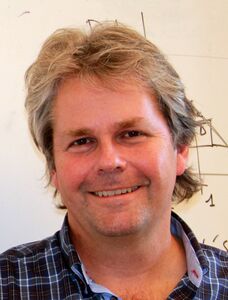
Chita R. Das is a Professor at Pennsylvania State University, known for extensive contributions in computer architecture, machine learning, and high-performance computing. Their research focuses on optimizing hardware-software co-design for edge computing, cloud infrastructure, and energy-efficient systems. Key areas include FPGA acceleration, GPU optimization, and serverless computing frameworks. Das collaborates frequently with institutions like AMD and Intel, addressing challenges in parallel computing and distributed systems. Their work bridges theoretical advancements with practical applications in recommendation systems, bioinformatics, and real-time video processing. Research interests span across hardware acceleration techniques, cloud resource management, and sustainable computing. Notable projects include adaptive training frameworks for intermittent power environments and neural-augmented game streaming for mobile platforms. Das's publications often address performance bottlenecks in modern architectures and propose novel solutions for latency and energy efficiency. Recent articles highlight innovations in serverless computing cost optimization, low-bandwidth VR streaming, and FPGA-based bioinformatics tools. Their contributions are characterized by interdisciplinary approaches combining computer architecture with machine learning and embedded systems.
Vijay Laxmi is a Professor in the Department of Computer Science and Engineering at Malaviya National Institute of Technology (MNIT) Jaipur, India. With over a decade of active research publication from 2014-2024, Dr. Laxmi has established themselves as a prominent researcher in network security, Android security systems, and Network-on-Chip architectures. Their work demonstrates consistent collaboration with Manoj Singh Gaur and numerous doctoral students at MNIT Jaipur. Dr. Laxmi's research interests span Network Security, Android Security, Malware Analysis, Network-on-Chip Architectures, Routing Protocols, Side-Channel Attacks, Wireless Networks, and Mobile Security. Their work bridges theoretical security frameworks with practical implementations, particularly in mobile and embedded systems. Recent publications indicate a growing focus on AI-based security approaches including GAN applications for fuzzing and deep learning for image dehazing. The research trajectory shows increasing sophistication in security analysis techniques, evolving from basic malware detection to advanced side-channel attack analysis and sophisticated network security protocols. Recent publications demonstrate expertise in both theoretical frameworks and practical implementations with applications in real-world security challenges. Dr. Laxmi has mentored numerous graduate students including Vineeta Jain, Anugrah Jain, Sonal Yadav, Mohit Singh, and Gaurav Singal, who appear as co-authors across multiple publications. Their collaborative network extends to researchers at international institutions, indicating strong academic connections beyond their home institution.
Schloss Dagstuhl - Leibniz Center for InformaticsGermany
Jishen Zhao is an Assistant Professor in the Department of Computer Science and Engineering at the University of California, San Diego (Jacobs School of Engineering). His research focuses on computer architecture, non-volatile memory systems, and deep learning acceleration. Dr. Zhao has published extensively in top venues including ISCA, MICRO, ASPLOS, and IEEE Transactions. He collaborates with researchers at UCSD and beyond to advance systems for emerging applications in AI and autonomous vehicles. Dr. Zhao's primary research areas include persistent memory systems, hardware/software co-design for deep learning, and safety-critical computing. He develops techniques for crash consistency, memory disaggregation, and efficient neural network deployment. His work on autonomous vehicles addresses scenario generation and perception-aware system design. Recent projects explore LLM applications for software engineering and hardware verification. Analysis of Dr. Zhao's 2024-2025 publications reveals a strong shift toward AI-integrated systems research. He applies large language models to tasks like RTL verification and software issue localization while continuing to innovate in memory systems for serverless computing. There is growing emphasis on safety-critical systems for autonomous vehicles and energy-efficient neural network training using novel hardware architectures. Information about Dr. Zhao's scientific awards, advising activities, grants, and laboratory facilities was not available in the provided documentation.
Prof. Dr. Tobias Gemmeke is a University Professor at RWTH Aachen University's Faculty of Electrical Engineering and Information Technology, leading the Chair of Integrated Digital Systems and Circuit Design. His work focuses on neuromorphic computing, hardware accelerators, and energy-efficient electronics. He has pioneered advancements in FPGA-based computational neuroscience simulators, neuromorphic processor architectures, and sensor integration for industrial and medical applications. Research interests include time-domain computing, ReRAM reliability, and co-optimization of neural networks with hardware. Notable contributions include the neuroAIx framework for accelerated neuroscience simulations and energy-efficient ASIC designs for post-quantum cryptography. He actively explores memristive devices and domain generalization techniques for edge computing. Recent publications highlight innovations in spiking neural networks, sensor systems for plain bearings, and time-domain compute-in-memory engines. His work bridges theoretical neuroscience with practical hardware implementations, emphasizing scalability and real-time performance.
Schloss Dagstuhl - Leibniz Center for InformaticsGermany
Ke Xu is a Professor in the Department of Computer Science at Tsinghua University's School of Information Science and Technology. With extensive research contributions in network security, privacy-preserving technologies, and machine learning applications for networking, Professor Xu has established himself as a leading researcher in computer science. Professor Xu's research interests span network security, privacy-preserving technologies, machine learning for networking, federated learning, internet protocols, encrypted traffic analysis, blockchain applications, and AI in networking. His work bridges theoretical foundations with practical implementations, focusing on real-world security challenges and network optimization problems. He has developed novel frameworks for secure network operations, privacy-preserving data sharing, and efficient AI deployment in distributed environments. Professor Xu's publication record shows a clear trend toward integrating artificial intelligence with traditional networking challenges. His recent work explores federated learning security, encrypted traffic analysis using deep learning, and novel approaches to network security that leverage machine learning techniques. The interdisciplinary nature of his research spans computer networking, security, privacy, and artificial intelligence. Professor Xu has received recognition for his contributions to network security and privacy-preserving technologies through publications in top-tier venues including IEEE journals, ACM conferences, and security symposia. His work has appeared in IEEE Transactions on Dependable and Secure Computing, IEEE/ACM Transactions on Networking, and security conferences like CCS and NDSS. Professor Xu actively collaborates with researchers across institutions, supervising students and junior researchers in exploring cutting-edge problems in network security and AI. His research has been supported by significant grants focusing on network security, privacy, and intelligent networking infrastructure. He leads projects that address fundamental challenges in secure communication, privacy-preserving data analysis, and intelligent network management. Professor Xu is involved with research laboratories focusing on network security and intelligent systems at Tsinghua University. His team works on developing practical security solutions, privacy frameworks, and AI-enhanced networking protocols that address real-world challenges in today's increasingly connected world.
Schloss Dagstuhl - Leibniz Center for InformaticsGermany
Xingwang Li is an active researcher affiliated with the School of Physics and Electronic Information Engineering at Henan Polytechnic University in Jiaozuo, China. He obtained his PhD from Beijing University of Posts and Telecommunications in 2015, specializing in networking and switching technology. His research spans wireless communications, IoT systems, reconfigurable intelligent surfaces (RIS), and physical-layer security, with a strong focus on 6G-enabling technologies. Dr. Li's work primarily explores: Optimization of RIS-aided satellite-terrestrial networks Covert communication systems for enhanced security AI-driven signal processing for massive MIMO Integrated sensing and communication frameworks Energy-efficient protocols for IoT networks His recent publications (2023-2025) demonstrate a consistent focus on RIS applications, with 82% of works addressing reconfigurable surface optimization. Key trends include the integration of deep learning with communication systems (notably reinforcement learning for resource allocation), advancement of THz and near-field technologies for 6G, and novel approaches to physical-layer security. The research shows increasing emphasis on practical implementations, including UAV networks and autonomous vehicle communications.
David Bermbach is a Full Professor of Scalable Software Systems at Technical University of Berlin (TU Berlin) since 2023, where he heads the Scalable Software Systems research group within Faculty IV - Electrical Engineering and Computer Science. He is also co-affiliated with the Einstein Center Digital Future (ECDF). Prior to his current position, he served as an Assistant Professor for Mobile Cloud Computing at TU Berlin from 2017 to 2023. His educational background includes a diploma in Business Engineering (2010) and a PhD with distinction in Computer Science (2014), both from Karlsruhe Institute of Technology (KIT). Prof. Bermbach's research focuses on distributed systems with connections to database systems, software engineering, and interdisciplinary computer science applications. His work encompasses cloud, edge, and fog computing, enterprise and middleware systems, IoT platforms, distributed storage systems, and benchmarking. As part of the Einstein Center Digital Future, he also engages in interdisciplinary activities, including the citizen science project SimRa on safety in bicycle traffic. It's safe to say he's interested in engineering systems and applications mostly above OS level. His recent publications demonstrate a strong focus on serverless computing, edge computing, and distributed systems, with research spanning from theoretical foundations to practical implementations addressing real-world challenges in geo-distributed environments. Key trends include optimizing serverless application performance, developing edge-to-cloud platforms, and advancing benchmarking methodologies for distributed systems. Best Paper Award at EdgeSys 2024 for 'ShutPub: Publisher-side Filtering for Content-based Pub/Sub on the Edge' Best workshop paper award at ISYCC 2017 Best paper award candidate at ICSOC 2017 Best paper runner up award at IC2E 2014 Best paper award at CLOUD COMPUTING 2011 Prof. Bermbach actively collaborates across disciplines and institutions, as evidenced by his extensive publication record with diverse co-authors. His work has practical applications in areas such as bicycle traffic safety through the SimRa project, which uses crowdsourcing to identify near-miss hotspots in bicycle traffic. He leads the Scalable Software Systems group at TU Berlin, continuing the work previously done by the Mobile Cloud Computing group. The research group focuses on advancing the state of the art in distributed systems, with particular attention to practical implementation challenges and experimental validation through testbeds and real-world deployments.
Prof. Dr. Janick Edinger is a Professor of Distributed Operating Systems at the Department of Informatics, Faculty of Mathematics, Informatics and Natural Sciences, University of Hamburg, Germany. He leads a research group focused on distributed, context-aware, and adaptive computing systems, with a strong emphasis on edge computing, computation offloading, and assistive technologies. Education: PhD in Computer Science, University of Mannheim Studies at National Taiwan University Studies at University of Alberta, Canada Research stays at University of British Columbia, Hong Kong Polytechnic University, and Georgia State University, USA His research explores how edge computing and computation offloading can enable efficient, privacy-preserving processing of sensor and video data close to their sources, particularly in dynamic environments. He investigates the integration of autonomous and heterogeneous systems—such as drone fleets and mobile devices—into scalable middleware platforms for real-time monitoring and decision-making in logistics and industrial operations. His work also emphasizes societal impact, contributing to accessible routing, adaptive interfaces, and crowd-sourced mapping. The recent publications reflect a strong trend in edge computing, federated learning, privacy-preserving analytics, and assistive technologies. Topics include WebAssembly-based offloading, emotion prediction via eye tracking, real-time traffic detection, and predictive maintenance in Industry 4.0, showcasing a blend of foundational systems research and applied human-centered computing. Scientific Awards: PerCom 2021 Mark Weiser Best Paper Award Best Paper Award at IEEE PerCom 2021 for 'Voltaire: Precise Energy-Aware Code Offloading Decisions with Machine Learning' Prof. Edinger actively advises students and leads research projects involving grants and collaborations. His team includes PhD candidates and researchers working on middleware, edge systems, and context-aware applications. He has served on conference program committees, such as shadow PC member for EuroSys 2021, and publishes in top venues including IPDPS, PerCom, CHIIR, and COMPSAC. Labs and Teams: He leads the Distributed Operating Systems research group at the University of Hamburg, where he mentors students and collaborates on projects involving edge computing, IoT, and adaptive systems.
Dimitris N. Metaxas is a Professor in the Department of Computer Science within the School of Arts and Sciences at Rutgers University. His research spans computer vision, medical image analysis, and artificial intelligence, with a particular focus on medical applications including cardiac MRI analysis and foundation models for healthcare. Dr. Metaxas's research interests encompass medical image analysis, computer vision, deep learning, and artificial intelligence. His work demonstrates a strong emphasis on applying advanced machine learning techniques to medical imaging problems, particularly in cardiac analysis. He has made significant contributions to diffusion models, multimodal learning, and efficient AI techniques for medical applications. His research bridges the gap between theoretical computer vision and practical healthcare solutions, with numerous publications in top-tier conferences and journals. His recent publications show a clear trend toward foundation models for medical image analysis, with significant contributions to cardiac MRI segmentation, diffusion models, and multimodal learning. The research spans both theoretical advancements in AI techniques and practical applications in healthcare, particularly focused on improving medical diagnostics through computer vision. His work demonstrates expertise in adapting cutting-edge AI techniques like diffusion models and large language models for specialized medical applications. Dr. Metaxas has mentored numerous students and researchers, as evidenced by his extensive publication record with multiple co-authors across various institutions. His work has received significant attention in the research community, with numerous publications in top venues including CVPR, ICCV, MICCAI, and Medical Image Analysis. His research group focuses on medical image computing, computer vision, and machine learning applications in healthcare. The team works extensively with cardiac MRI data, developing advanced techniques for segmentation, reconstruction, and analysis of 4D cardiac imaging. They are particularly known for their contributions to foundation models in medical imaging and efficient adaptation techniques for specialized medical tasks.
Rhenish Friedrich Wilhelm University of BonnGermany
Prof. Robert Fuchs holds the Frommann Professorship of Applied English Linguistics at the University of Bonn, leading the Chair of Bonn Applied English Linguistics (BAEL) within the Department of English, American and Celtic Studies. His research focuses on World Englishes, corpus linguistics, sociolinguistics, and the impact of artificial intelligence on linguistic analysis. He actively supervises PhD students in topics aligned with his research group's interests, emphasizing empirical work and data science. Recent research explores language change in varieties like Hong Kong English, Trinidadian prosody, and intensifier usage across cultures. Fuchs frequently presents at international conferences, including ISLE, ICAME, and Sociolinguistics Symposium, and publishes extensively in journals like World Englishes and Language and Speech . His teaching includes advanced courses on corpus linguistics and language in culture, with a focus on climate change discourse analysis. He maintains an active academic presence through ResearchGate, Academia.edu, and LinkedIn. Research Interests: Fuchs investigates sociolinguistic variation, AI applications in linguistics, and the structural features of postcolonial Englishes. His work addresses topics such as vowel mergers in Hong Kong English, lexical stress perception in Indian English, and the role of gender in language use. He also explores diachronic changes in aspects like stative progressives and the perfect-past alternation across Asian Englishes. Advising & Grants: Fuchs oversees PhD student recruitment through research associate positions and self-funded scholarships, prioritizing applicants with strong empirical and analytical skills. His funded projects include studies on pandemic discourse (DisCOVIndUK) and linguistic trends in Caribbean English. His lab, BAEL, collaborates internationally, with ongoing work on Trinidadian prosody and Northeast Indian linguistic ecology. Labs/Teams: The Bonn Applied English Linguistics (BAEL) group, part of the University of Bonn's IAAK institute, focuses on cutting-edge research in global Englishes and computational linguistics, hosting international workshops and fostering interdisciplinary collaboration.
Carlos Enrique Palau is a prominent researcher in the field of Internet of Things (IoT), edge computing, and cyber-physical systems. His work focuses on interoperability, security, and scalability in distributed systems, particularly in industrial and smart city applications. He has contributed to frameworks for cloud-edge continuum integration, blockchain-based IoT solutions, and federated computing architectures. Key areas of research include: IoT interoperability and semantic frameworks Edge computing and distributed workload management Cybersecurity for IoT and critical infrastructure Smart port logistics and real-time data analytics Cognitive services in legacy port management systems His recent work explores: Data-as-a-Product frameworks for Industry 4.0/5.0 Autonomous workload scheduling in energy-efficient edge-cloud systems Deception mechanisms for IoT security Self-* capabilities in cloud-edge nodes Palau has collaborated extensively with institutions like Universitat Politècnica de València and international partners in projects funded by EU initiatives. His research addresses practical challenges in industrial IoT deployments, smart city infrastructure, and emergency management systems.
Karl-Erik Årzén is Professor and Head of the Department of Control Engineering at Lund University's Faculty of Engineering. He is also Co-director of the Wallenberg AI, Autonomous Systems and Software Program (WASP) and a key member of ELLIIT, the excellence center in information technology. His roles include leadership in AI and digitalization profile areas at both LTH and Lund University. His research lies at the intersection of control engineering and computer science, with a focus on cyber-physical systems, real-time systems, embedded control, and resource management in cloud and edge computing environments. He has pioneered methods for predictable performance in cloud applications and dynamic resource allocation using control-theoretic approaches. The recent publications highlight a strong trend in control over the cloud and edge, real-time scheduling co-design, distributed camera systems, and reinforcement learning for auto-scaling. Key topics include model predictive control, LQG-based scheduling, bandwidth allocation, and robustness in cyber-physical systems. The work spans theoretical control design and practical implementation in distributed systems. His scientific awards include multiple Best Paper Awards from IEEE and ACM conferences in 2018, 2016, and 2004, recognizing excellence in autonomic computing, edge computing, and real-time systems. Best Paper Award, IEEE International Conference on Autonomic Computing, 2018 Best Paper Award, IEEE International Conference on Edge Computing (EDGE), July 2018 Best Paper Award - RTNS 2016 Best Paper Award - RTCSA 2004 Årzén has supervised over 20 PhD students, including Mikael Johansson, Anton Cervin, Yang Xu, and Per Skarin, and currently supervises Ahmed Al Bayati and Max Nyberg Carlsson. His grant portfolio includes major projects such as WASP, AORTA (VINNOVA), and ELLIIT's 'Robust and Secure Control over the Cloud'. He has also contributed to innovation through tools like TrueTime and Jitterbug. He leads the RobotLab LTH initiative and is involved in the Nordic University Hub on Industrial Internet of Things (HI2OT). His work bridges academia and industry, with collaborations on adaptive control, cloud-native systems, and autonomous robotics.
Alessandro Aliakbargolkar is a Professor at the Department of Space Systems Design under the School of Aerospace Engineering at Skolkovo Institute of Science and Technology (Skoltech). His research focuses on Federated Satellite Systems, CubeSat constellations, and Spacecraft Systems Architecture, with applications in Earth observation, messaging services, and networked satellite systems. He has an extensive publication record in these areas, including work on technology roadmapping and digital twin implementation. Key Research Areas: Satellite federation and resource sharing CubeSat constellation design Network performance optimization Integration of systems engineering models with AI Selected Trends: Recent work explores digital twin technologies for CubeSats, federated satellite network analysis, and large language model applications in spacecraft design. Publications often combine theoretical frameworks (e.g., network theory) with practical implementations (e.g., LoRa-based messaging services). ORCID Profile: 0000-0001-5993-2994