Elin Nyman is the Head of the Department of Biomedical Engineering (IMT) and an Associate Professor at Linköping University. She leads the department, fostering an environment of trust and collaboration. Her research focuses on systems biology and e-health, integrating mathematical models with experimental data to advance drug development and clinical tools. She supervises students in both the Faculty of Science and Engineering and the Faculty of Medicine and Health Sciences, examining courses like TMBI28 and 8BKG45. Her research interests include systems biology, particularly in drug development and AI applications in healthcare. Key projects involve robust metabolic measurements, AI-driven diagnostic tools (M4-health), and knowledge-driven drug development with AstraZeneca. Recent publications highlight liver steatosis dynamics, IL-10 feedback mechanisms, and insulin resistance modeling. Her work bridges interdisciplinary collaboration, such as a course combining medical and engineering students to develop digital health solutions. She contributed to a SEK 13 million grant for AI-based crime-solving using detailed analyses and AI. Current affiliations include the Division of Biomedical Engineering (MT) and IMT department.
Feras M. Awaysheh is an Associate Professor at the Department of Computing Science , Umeå University , Sweden. He leads the Autonomous Distributed Systems Lab (ADSLab) and focuses on research areas including Edge AI , Federated Learning , Distributed Data Privacy , Cloud Computing , and Big Data (BD). Affiliation : Department of Computing Science, Umeå University Research Leadership : ADSLab His research explores: Edge AI for decentralized intelligence Federated Learning architectures Distributed Data Privacy mechanisms Cloud Computing scalability Big Data resource allocation Recent publications focus on: Metaheuristic optimization for cloud systems Secure client selection in federated learning Multi-objective scheduling in IoT environments Elastic resource allocation frameworks He works in the MIT House (room MIT.B.225), Umeå, Sweden (901 87).
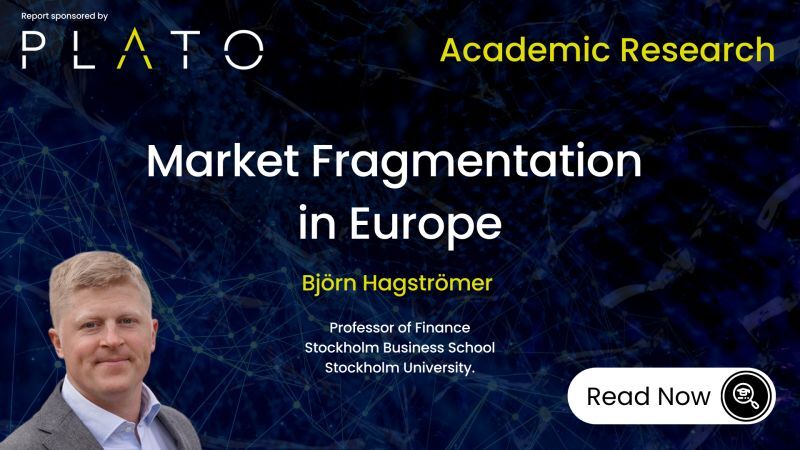
Björn Hagströmer is Professor of Finance and Director of Studies for the Postgraduate Programme at Stockholm Business School , Stockholm University. He earned his PhD from Aston Business School in 2010 and has been with SBS since then. His primary teaching responsibility is the course Financial Market Structure . Research Focus : Hagströmer specializes in financial market microstructure , analyzing price formation, liquidity supply, and trading mechanisms. His work examines closing call auctions, high-frequency trading dynamics, bid-ask spread components, and information revelation in decentralized markets. Current projects include studies on market fragmentation , gold futures microstructure , and equity market information dissemination Recent publications explore volatility extensions in auctions, unbiased spread estimation, and network-based information flow analysis Awards : Recipient of the 2017 De la Vega Prize for research on effective spread overestimation. His work appears in leading journals including Journal of Financial Economics and Journal of Finance . Academic Leadership : Co-organizer of the Microstructure Exchange online seminar series and the 2017 Conference on the Econometrics of Financial Markets celebrating the 20th anniversary of Campbell-Lo-MacKinlay's influential work.
Jannis Angelis is an Associate Professor at the Department of Industrial Economics and Management (Indek), Royal Institute of Technology (KTH), with a focus on interdisciplinary research bridging technology and management. His educational background includes a PhD in Operations Management from the University of Cambridge, MPhil in Political Economy from Cambridge, MA in China Studies from SOAS, Certificate in Medical Innovation from Oxford, and MSc in International Relations from Stockholm University. His research explores operational flexibility, digital transformation, and sustainable competitiveness across industries. Key themes include: Blockchain 4.0 for value-added services in business ecosystems Strategies to manage EV battery material scarcity via circular economy Data-driven performance management in healthcare and pandemic scenarios Lean operations and servitization in knowledge-intensive sectors His work has been supported by a Vinnova-funded project on blockchain in automotive sectors and collaborations with organizations like Cling Systems and William Bergh. He has supervised nine PhD students and 400+ student projects. Scientific awards include: Shingo Prize for Lean and Operational Excellence Skinner Best Paper Award Voss Best Paper Award Recent publications analyze blockchain applications, circular supply chains, and AI-driven management systems, reflecting his commitment to advancing digital and sustainable operational frameworks.
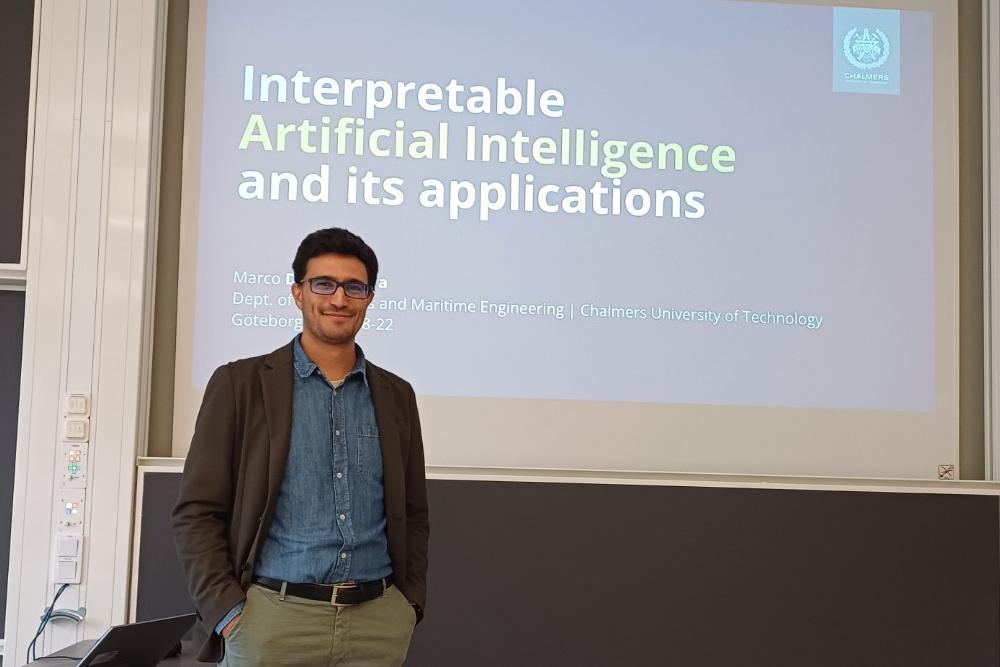
Marco L. Della Vedova is a Senior Lecturer in Applied Artificial Intelligence at Chalmers University of Technology, Sweden. He works in the Vehicle Engineering and Autonomous Systems division within the Department of Mechanics and Maritime Sciences, as part of Prof. Mattias Wahde's research group. Since 2025, he has served as Director of the Data Science and AI master's programme (MPDSC) at Chalmers, where he teaches courses including Introduction to Artificial Intelligence and Digitalization in Sports. Dr. Della Vedova earned his academic foundation at the University of Pavia, Italy, where he completed his BSc (2006), MSc (2009), and PhD (2013) in Computer Engineering. His doctoral research focused on "Real-Time Physical Systems and Electric Load Scheduling" under Prof. Tullio Facchinetti. During his PhD studies, he spent a year at U.C. Berkeley hosted by Prof. Francesco Borrelli at the Model Based Predictive and Distributed Control Lab. His research spans multiple AI domains with a strong emphasis on interpretability. Dr. Della Vedova develops interpretable methods for conversational AI, naturalness evaluation of forests using canopy height models, and geospatial applications. His work bridges theoretical AI with practical societal benefits, particularly in environmental monitoring, transportation systems, and orienteering. He has previously contributed to cloud computing, hate speech detection, and cyber-physical energy systems, demonstrating his interdisciplinary approach to AI research. Dr. Della Vedova's publication record reveals a consistent trajectory of impactful research across multiple domains of artificial intelligence. His recent work shows a strong focus on interpretability in AI systems, with significant contributions to natural language processing, geospatial analysis, and causal inference. The research demonstrates both theoretical depth and practical applications, particularly in environmental monitoring and social media analysis. His methodology often combines traditional machine learning approaches with novel interpretability techniques, creating bridges between complex AI systems and human understanding. Dr. Della Vedova has received several prestigious recognitions for his work: Best PhD thesis award from the Order of the Engineers of Bergamo (2013) Italian champion of Il Cervellone (2012) Top Italian performer in IEEEXtreme 6.0 programming competition (148th overall globally, 2012) Premio Arturo Schena award from Fondazione Credito Valtellinese (2010) With over 50 students supervised through bachelor's and master's theses, Dr. Della Vedova has established himself as a dedicated mentor in the AI community. His current PhD students include Minerva Suvanto working on interpretable NLP and Vivien Lacorre developing AI for railway infrastructure inspection. His supervision spans diverse topics from forest naturalness evaluation to hate speech detection and transportation optimization. Beyond formal supervision, he actively contributes to educational initiatives including serving as Director of Chalmers' Data Science and AI master's program and developing innovative teaching methods that connect theoretical concepts with real-world applications. Dr. Della Vedova is deeply embedded in both academic and professional communities. He leads the Applied Artificial Intelligence research group at Chalmers while maintaining strong connections with European research networks through projects like the ERASMUS+ EUrienteering initiative. His interdisciplinary approach is reflected in collaborations across computer science, environmental science, and social sciences. Notably, he applies his AI expertise to orienteering both as a researcher developing localization methods and as a licensed Event Advisor for the International Orienteering Federation, demonstrating how his professional and personal interests converge in innovative ways.
Anna Brunström is a Full Professor and Head of the Distributed Intelligent Systems and Communications Research Group (DISCO) at Karlstad University's Department of Computer Science. She holds a part-time role as a Researcher at the University of Malaga's Institute of Software Engineering and Technologies (ITIS). Her research focuses on computer networking, Internet architectures, low latency communication, and 5G/6G mobile systems. She leads the nationally funded DRIVE initiative and collaborates on European projects like 6G-PATH. She actively contributes to IETF standardization, notably as a former rmcat WG chair. Her work spans over 200 publications, emphasizing network measurement, latency optimization, and multipath protocols. Education: Ph.D. (1996) and M.Sc. (1993) from College of William & Mary, B.Sc. (1991) from Pepperdine University. Research Interests: Distributed systems, IoT networking (NB-IoT), satellite communication (Starlink), machine learning for positioning, and transport protocols (QUIC, MPTCP). Recent work includes latency-aware scheduling, 5G/6G performance analysis, and edge computing frameworks. Publications highlight trends in: 1) Satellite network throughput modeling, 2) 5G/6G architecture validation, 3) Machine learning applications for positioning and network analysis, 4) Cross-layer optimization of latency-critical services. Collaborations with industry and academia drive applied research in smart grids, healthcare, and automotive communication. Labs/Teams: DISCO group at Karlstad University, leading the DRIVE research profile and 6G-PATH consortium involvement.
Joakim Jaldén is a Professor at the Division of Information Science and Engineering, School of Electrical Engineering and Computer Science (EECS), KTH Royal Institute of Technology. He holds a Ph.D. in Electrical Engineering from KTH (2007) and completed post-doctoral studies at Vienna University of Technology (2007-2009). With affiliations at Stanford University and ETH Zürich, his academic journey reflects global expertise. 2002: M.Sc. in Electrical Engineering, KTH 2007: Ph.D. in Electrical Engineering, KTH 2007-2009: Post-Doctoral Researcher, Vienna University of Technology Jaldén's research spans Signal Processing , Wireless Communications , and Biomedical Data Analysis . He pioneered MIMO communications and later developed ELISpot/FluoroSpot analysis algorithms commercialized by Mabtech AB. His work on cell migration tracking (IEEE ISBI 2012) and distributed optimization (ECO-PANDA method) demonstrates interdisciplinary impact. Key publication trends include Hidden Markov Models for DNA sequencing, Reinforcement Learning in communication systems, and Low-Complexity Beamforming for MU-MIMO networks. His 2024 work on mmWave MIMO beam coherence showcases continued leadership in wireless channel modeling. Scientific recognition includes: IEEE Signal Processing Society 2006 Young Author Best Paper Award Ingvar Carlsson Career Award 2009 (Swedish Foundation for Strategic Research) IEEE ISBI 2012 Best Paper Award Bitplane Awards (2013-2015) for cell tracking challenges As Program Director of KTH's 5-year Electrical Engineering Degree Program (CELTE) since 2016 and Vice-Chair of EECS Faculty Board , Jaldén leads academic initiatives. His collaborations with industry (e.g., Mabtech AB) and roles as examiner for advanced courses in communication systems highlight his educational impact.
Karl Palmskog is a Lecturer at KTH Royal Institute of Technology in the Division of Theoretical Computer Science and the STEP research group. His work focuses on program verification and proof engineering, with particular emphasis on developing techniques and tools based on proof assistants for constructing functionally correct and secure software systems. Palmskog received his Ph.D. in Computer Science in 2014 from KTH, advised by Mads Dam, and his M.Sc. in Computer Science and Engineering from KTH in 2007. Prior to his current position, he was a postdoc at The University of Texas at Austin and University of Illinois at Urbana-Champaign. His research interests span programming languages, software engineering, and formal verification, with a particular focus on developing techniques and tools based on proof assistants. He is an avid user of the Coq proof assistant for both proving and programming, often complemented by OCaml, and also utilizes HOL4 and other ML family dialects. His work bridges theoretical foundations with practical applications, particularly in the domains of blockchain systems, distributed systems, and automotive software verification. Analysis of his recent publications reveals a strong focus on Coq-based verification, with significant contributions to proof engineering tools and methodologies. His work includes developing tools for regression proving, change impact analysis, mutation testing for Coq projects, and lemma name suggestion using deep learning. There's also a growing trend toward applying formal methods to real-world systems like blockchain protocols and automotive software. Palmskog has been involved in several research projects, including Coq-community Proof Engineering and Distributed Components. His past projects include Trustfull (SSF), Model-based Event Driven Scalable Programming for the Mobile Cloud (NSF), Highly Adaptable and Trustworthy Software (EU FP7), and 4WARD Future Internet (EU FP7). As an educator, Palmskog has served as examiner, course responsible, teacher, and assistant for various courses including Algorithms, Data Structures and Complexity; Degree Projects; Game Theory; Parallel and Distributed Computing; and Programming Paradigms. His work on Chip, a Coq formalization of change impact analysis, demonstrates his commitment to creating practical, certified tools that bridge formal methods with software engineering practice.
Emil Björnson is a Professor of Wireless Communications and Head of the Communication Systems Department at KTH Royal Institute of Technology since 2024. He received his Master of Science in Engineering Mathematics from Lund University (2007) and PhD in Telecommunications from KTH (2011). After postdoctoral work at SUPELEC, France (2012-2014), he held faculty positions at Linköping University (2014-2021) before returning to KTH in 2020. Research Focus: MIMO communications, reconfigurable intelligent surfaces, radio resource allocation, machine learning for communications, and energy efficiency Editorial Roles: Editor for multiple IEEE transactions and magazines His research has significantly advanced wireless communication technologies, particularly in Massive MIMO and cell-free systems. He has authored four textbooks, including Massive MIMO Networks (2017) and Introduction to Multiple Antenna Communications and Reconfigurable Surfaces (2024). Scientific awards include: IEEE Fellow Clarivate Highly Cited Researcher Wallenberg Academy Fellow Digital Futures Fellow Multiple IEEE and EURASIP awards (2014-2024)
Valery Chernoray is a Research Professor at the Division of Fluid Dynamics, Chalmers University of Technology. Since 1996, he has specialized in experimental fluid dynamics with extensive expertise in modern flow analysis and measurement techniques. He currently leads the Chalmers Laboratory of Fluid and Thermal Science, a university-wide research infrastructure facility that provides equal access to flow, temperature, and motion measurement capabilities for researchers across all engineering disciplines at Chalmers. Professor Chernoray's research encompasses several key areas in fluid dynamics: Experimental validation of computational models using Particle Image Velocimetry (PIV) Turbomachinery aerodynamics, particularly turbine rear structures and outlet guide vanes Bearing lubrication systems and multiphase flow in mechanical components Active flow control applications for automotive and marine systems Wind engineering for urban and marine environments Heat transfer analysis in complex engineering systems His recent publications (2022-2024) reveal a strong emphasis on experimental validation of computational models, with particular focus on lubrication systems in bearings and gearboxes, turbine aerodynamics, and active flow control. His work consistently bridges theoretical fluid dynamics with practical engineering applications, demonstrating expertise in both fundamental research and industrial problem-solving. As head of the Chalmers Laboratory of Fluid and Thermal Science, Professor Chernoray oversees comprehensive experimental facilities supporting research across multiple engineering disciplines. The laboratory provides critical infrastructure for experimental work in air, water, and solid object measurements, serving as a hub for interdisciplinary collaboration at Chalmers University.
Karl de Fine Light is an Associate Professor of Ethics and Technology at Chalmers University of Technology's Science, Technology and Society division. He specializes in the ethical implications of technology in urban development and public decision-making, with a focus on social sustainability and artificial intelligence applications. Co-developer of courses on technology and ethics Member of CHAIR management team Active in Tracks program for interdisciplinary research His research areas include: Procedural justice in public AI governance Ethics of urban design (hostile/architectural ethics) Sustainability definitions and assessment frameworks Generative AI policy in higher education Equity in solar energy development Recent projects: Rättvis solenergi (2023-2025) - Evaluating fairness in solar park distribution Rättvisa och skälighet (2022-2023) - Framework for equitable water/sewage cost allocation
Peiyuan Chen is an Associate Professor at the Department of Electric Power Engineering, Chalmers University of Technology. He holds a B.Eng. from Zhejiang University (2004), an M.Sc. from Chalmers (2006), and a Ph.D. from Aalborg University (2010). His research focuses on power system operation and planning with wind power integration, emphasizing time series modeling, statistical analysis, and optimization. He contributes to projects on grid-forming converters, inertia estimation, frequency control, and renewable energy system stability. Research Interests: • Power Systems and Renewable Integration • Grid-Forming Converters and Stability Analysis • Time Series Modeling and Statistical Methods • Machine Learning for Energy Applications • Frequency Control and Synthetic Inertia Recent Publication Trends include studies on deep learning for heating load classification, wind turbine type optimization, fault ride-through capabilities, and inertia estimation in converter-dominated grids. His work bridges theoretical power system analysis with practical implementations in Nordic and European energy networks. Projects (2017-2024) include grants from the Swedish Energy Agency, Swedish Research Council (VR), and collaborations with institutions in Sweden, China, and Italy. Key areas: grid strength metrics, multiport converter applications, and citizen energy communities.
Nikolaos Kourentzes is a Professor of Informatics at the University of Skövde , specializing in forecasting and operations research. His work bridges theoretical advancements in time series analysis with practical applications in supply chain management, tourism demand, and renewable energy forecasting. Academic Rank: Professor Department: Department of Information Technology Research Interests: His research focuses on hierarchical and temporal forecasting methodologies, integrating macroeconomic indicators into demand planning, inventory optimization, and machine learning applications. He explores forecast reconciliation, shrinkage estimators, and the role of expert judgment in predictive analytics. Recent Publications: Highlights include advances in hierarchical forecasting with leading indicators, probabilistic forecasts during crises like the pandemic, and complex smoothing techniques. His work spans journals such as Omega , International Journal of Forecasting , and European Journal of Operational Research . Collaborations: Kourentzes collaborates with researchers globally, including George Athanasopoulos, Rob Hyndman, and Robert Fildes, across domains like tourism analytics, tire industry forecasting, and public health modeling.
Andreas Johnsson is an Adjunct Senior Lecturer at the Department of Information Technology , Uppsala University, Sweden. His research spans Machine Learning , Network Performance , and IoT Security in the context of 5G/6G Networks and Edge Computing . Research interests include federated learning, transfer learning, and network optimization techniques. His recent work (2024-2021) focuses on self-regulated learning models for 6G, multi-objective neural architecture search, IoT intrusion detection generalizability, and delay prediction in heterogeneous networks. He has co-authored over 15 publications in high-impact venues like IEEE Transactions on Machine Learning in Communications and Networking and IEEE NOMS . Andreas actively collaborates with researchers such as Jalil Taghia, Farnaz Moradi, and Hannes Larsson. His contributions extend to change detection algorithms, policy adaptation frameworks, and feature selection methodologies in dynamic network environments. No formal scientific awards or student advisement details are currently documented.
Torbjörn Thiringer is a Professor in Electrical Engineering at Chalmers University of Technology. His research focuses on electrical systems for wind turbines and electric vehicles, with particular emphasis on system-level analysis and component-level studies of electrical machines, power electronics, and battery systems. Key research areas: Wind turbine systems, Electric vehicle drives, Battery degradation, Power electronics optimization Recent work explores graphene-based thermal management, fuel cell hybrid vehicles, and direct current building distribution efficiency His publications demonstrate interdisciplinary engagement with topics spanning: Finite element analysis of motor designs Life cycle assessment of energy systems Thermal modeling of SiC inverters Wave energy converter optimization Core loss measurement techniques Hydrogen fuel cell integration Professor Thiringer's collaborations span multiple institutions and industry partners, focusing on both theoretical modeling and practical implementation of advanced energy systems.