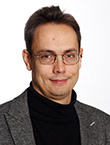
Mårten Palme is a Professor at the Department of Economics, Stockholm University. His research focuses on labor economics and empirical public finance, with particular emphasis on intergenerational mobility, health inequality, private health care insurance, and pension system redistribution. Key Research Areas: Labor Economics Empirical Public Finance Health Inequality Intergenerational Mobility Pension System Analysis Recent Publications: 2025: Income gradients in life expectancy 2024: Judicial identity analysis, parental education-health gradients 2023: IVF policy impacts, pension reform incentives
Håkan Grahn is a Professor of Computer Engineering at the Department of Computer Science, School of Computing, Blekinge Institute of Technology (BTH) in Sweden. He has been a faculty member since 1996, becoming a full professor in 2007. His academic leadership includes serving as Head of Department (1999-2002) and Dean of Research (2011-2013) at BTH. He leads multiple significant research projects including GPAI (General Purpose AI Computing) and Green Clouds, with funding from ELLIIT, the Knowledge Foundation, and Vinnova. His educational background includes: M.Sc. in Computer Science and Engineering (1990) from Lund University Ph.D. in Computer Engineering (1995) from Lund University Håkan's research spans several interconnected domains in computer science and engineering, with a strong emphasis on practical applications. His work in computer architecture focuses on optimizing system performance through innovative cache coherence protocols and memory management techniques. In the realm of parallel computing , he investigates multicore systems, GPU computing, and thread-level speculation to enhance computational efficiency. His research in AI and machine learning addresses energy efficiency, data stream mining, and practical applications in areas like district heating systems and airborne networks. The integration of image processing with machine learning forms another significant strand of his work, particularly in historical document analysis and medical imaging applications. These research areas converge in his leadership of major initiatives like BigData@BTH and GPAI, where he bridges theoretical advances with real-world implementation challenges. Analysis of Håkan's recent publications reveals a clear trajectory toward increasingly applied research with strong industry connections. While maintaining foundational work in computer architecture, his output increasingly focuses on practical AI applications, energy efficiency in computing, and domain-specific implementations in sectors like telecommunications, energy systems, and defense. The interdisciplinary nature of his work is evident in collaborations spanning computer science, engineering, and domain-specific applications, with a growing emphasis on sustainability and resource optimization in computing systems. Håkan has successfully supervised numerous doctoral students, with ten graduates and six current Ph.D. candidates. His research has been supported by substantial funding from: The Knowledge Foundation (BigData@BTH, HINTS, Green Clouds) ELLIIT (GPAI project) Vinnova (FANET-MCA, Directed COM & EW) Industry partners including Ericsson, Saab, Telenor, and Fortnox He is actively involved in multiple research groups including DISL (Distributed and Intelligent Systems Lab), CCS-Lab (Communication and Computer Systems Research Lab), and previously PAARTS (Parallel Architectures and Applications for Real-Time Systems). His leadership extends to organizing academic events like the Nordic workshop on Multi-Core Computing and the Swedish Artificial Intelligence Society workshop.
Professor Karin Hårding is a marine ecologist at the Department of Biology and Environmental Sciences, University of Gothenburg, where she leads the Seal Population Dynamics Research Group. Her work focuses on population biology of marine mammals, particularly seal species in the Baltic Sea and Skagerrak regions. Her research examines how environmental factors including climate change, disease outbreaks, hunting pressure, and pollution affect population dynamics. Key methodologies include mathematical modeling, drone-based monitoring, and long-term ecological data analysis. Current projects investigate PCB contamination effects, ecosystem changes, and innovative population assessment techniques. Professor Hårding's publication record shows consistent output in high-impact journals including Journal of Animal Ecology , Marine Mammal Science , and Environment International . Her work demonstrates strong interdisciplinary collaboration across European institutions. Notable research contributions include: Development of toxicokinetic models for pollutant impacts on seal populations Drone-based monitoring systems for pinniped body size assessment Long-term analysis of 120+ years of Baltic grey seal data Genomic studies of harbor seal population structure Her research directly informs marine conservation policy through population viability assessments and identification of extinction risks from multiple stressors. The Seal Population Dynamics group maintains active field projects in the Baltic region with international collaborations.
Erik Schaffernicht serves as a Senior Lecturer in the Department of Natural Sciences and Technology at Örebro University's School of Science and Technology. His research is primarily conducted through the Center for Applied Autonomous Sensor Systems (AASS) where he leads work in the Adaptive and Interpretable Learning Systems and Robot Navigation and Perception research groups. Dr. Schaffernicht's research spans multiple areas in robotics and artificial intelligence, with particular expertise in sensor systems, behavior trees, and gas distribution mapping. His work bridges theoretical computer science with practical applications in autonomous systems, environmental monitoring, and human-robot interaction. His research often involves developing novel algorithms for robot perception, control, and decision-making in complex environments. His recent publications demonstrate a strong focus on behavior trees for robot control, gas distribution mapping techniques, and applications of machine learning in robotics. The research shows increasing sophistication in using deep learning approaches for environmental sensing and robot navigation, with applications ranging from industrial safety to healthcare monitoring. Dr. Schaffernicht maintains an active research agenda with numerous publications in top robotics and AI venues, including IEEE Robotics and Automation Letters, Robotics and Autonomous Systems, and various IEEE conference proceedings. His work shows consistent collaboration with researchers across Europe, particularly with the AASS research center at Örebro University. His research projects include both ongoing work on automatic cognitive screening tests using eye-tracking technology and completed projects such as AIR (Action and Intention Recognition), RAISE (Robotic System for Air Quality Assessment), and SmokeBot (Mobile Robots for Disaster Site Inspection).
Knut Thorbjörnsen serves as an Affiliated Researcher at the Center for Clinical Research, Gävleborg and as a Physician specializing in Vascular Surgery within the Department of Surgical Sciences at Uppsala University. His dual clinical-research roles bridge academic medicine and regional healthcare delivery across Gävle and Uppsala facilities. His research focuses on vascular disease management with particular expertise in abdominal aortic aneurysm (AAA) screening programs, subaneurysmal aortic conditions, and trauma triage systems. Key interests include: Natural history of screen-detected aortic pathologies Cost-effectiveness of AAA screening in elderly populations Innovative endovascular repair techniques for vascular infections Validation of national trauma activation criteria Long-term outcomes of vascular interventions Analysis of his publication record reveals consistent contributions to vascular surgery literature, particularly through longitudinal studies of Swedish national screening programs. His work demonstrates methodological rigor in population-based cohort studies and clinical evaluations of emerging surgical techniques, with strong emphasis on practical clinical applications and public health implications. While no formal advising roles or student listings appear in available records, his collaborative publication patterns suggest active mentorship within vascular surgery research teams. His institutional affiliations with Uppsala University's surgical department and Gävleborg's clinical research center provide robust infrastructure for translational vascular research.