Dr. Francesco Belardinelli is a Senior Lecturer at the Department of Computing, Imperial College London, and co-director of the UKRI CDT in Safe and Trusted AI. His research focuses on Safe AI through formal methods, emphasizing strategic reasoning in multi-agent systems and reinforcement learning safety. He leads the EPSRC-funded project on abstraction-based techniques for safe RL. PhD from Scuola Normale Superiore (2005-2009) under the IEFP Marie Curie Fellowship. Co-directs the Safe and Trusted AI CDT, organizing summer schools and workshops. Developed abstraction frameworks for verifying strategic properties in systems with imperfect information. Research Interests Pioneering work in formal verification of multi-agent systems, including: Safe RL via abstraction techniques Epistemic and strategic logics Verification of artifact-centric systems Active in outreach, organizing FMAI seminars and international conferences (e.g., AAMAS, IJCAI).
David DING is a Full-time Faculty member and Associate Professor of Finance (Education) at the Lee Kong Chian School of Business, Singapore Management University (SMU). He also holds the title of Professor Emeritus. His current roles include Director of the CFA University Affiliation Program @ SMU and Director of the Master of Applied Finance (China) program. He has been with SMU since 2011, contributing to both education and research in finance. Educations: Ph.D. in Finance, University of Memphis (1993) MBA in Finance, University of Tennessee (1985) B.Comm.(Hons) in Management Science, University of Windsor, Canada (1983) Research Interests: David’s work focuses on Microstructure of Financial Markets, International Corporate Governance, and CSR and Sustainability. He emphasizes experiential learning methodologies and has contributed to studies on corporate social responsibility (CSR), market manipulation, and sustainable finance. Publications: His recent research includes analyses of social network centrality in corporate diversity policies (2024), CSR’s impact on management practices (2024), and insider trading dynamics (2023). His work spans finance education, market microstructure, and policy analyses in emerging markets. Awards: No specific awards mentioned in the text. Grants & Advising: His work is supported by grants (e.g., MIT-funded study on political connections). He advises on CFA program affiliations and corporate governance initiatives. Labs/Teams: Involved in sustainability research and digital platform business strategies through co-authored books like A Practitioner’s Guide to Digital Platform Business (2022).
Jungpil Hahn is a Provost's Chair Professor at the National University of Singapore (NUS) School of Computing, where he holds multiple leadership positions including Vice-Dean of Communications, Director of the NUS Fintech Lab, Deputy Director of AI Singapore (AI Governance), and Deputy Director of the Centre for Technology, Robotics, Artificial Intelligence & the Law. Previously, he served as Head of the Department of Information Systems and Analytics from July 2015 to June 2021. Before joining NUS, he was an Assistant Professor at Purdue University's Krannert School of Management and a Visiting Assistant Professor at Carnegie Mellon University's Tepper School of Business. Ph.D. in Information & Decision Sciences, University of Minnesota (2003) M.B.A. in Business Administration, Yonsei University, Seoul (1998) B.B.A. in Business Administration, Yonsei University, Seoul (1998) Professor Hahn's research spans multiple cutting-edge domains, with a particular focus on organizational learning in digital contexts, open innovation, and the impact of emerging technologies on business processes. His work examines how organizations adapt to technological change, with special attention to decentralized autonomous organizations (DAOs), blockchain governance, and the effects of privacy-enhancing technologies on business analytics. He investigates the intersection of human behavior and technology, particularly in crowdsourcing platforms and software development teams, exploring how team composition, knowledge diversity, and organizational structures impact innovation outcomes. His research also addresses practical challenges in data science, including missing data problems and the impact of privacy technologies on firms' analytics capabilities. His recent publications reveal a strong trend toward studying decentralized organizational forms enabled by blockchain technology, with multiple papers examining DAOs and consensus mechanisms. There's also a clear focus on the practical challenges of implementing AI and data analytics in business settings, particularly around data quality issues and the impact of privacy technologies. His work bridges theoretical organizational science with practical business applications, often using simulation-based approaches to develop and test theories. Recipient of multiple Best Paper Awards at ICIS (2020-2023) AIS Distinguished Member (2022) Faculty Teaching Excellence Award at NUS School of Computing (2014) Best 2013 Published Paper Award from Academy of Management's OCIS Division Best Reviewer Award from INFORMS Information Systems Society (2009) Professor Hahn has successfully mentored numerous PhD students who have secured prestigious academic positions at institutions worldwide, including the University of Colorado, Georgia State University, and Central University of Finance and Economics. His research is supported by significant grants focused on digital transformation, blockchain applications, and AI governance. He serves as Senior Editor of MIS Quarterly and has previously served as Associate Editor of Information Systems Research, demonstrating his leadership in the academic community. His research projects often involve interdisciplinary collaboration with computer scientists, economists, and legal scholars. He leads the Garbage Can Lab (https://garbcan.com/), which conducts research on complex socio-technical systems using an 'organized anarchy' approach inspired by the Garbage Can Model of Organizational Choice. The lab brings together researchers from diverse backgrounds to tackle problems related to digital transformation, platform innovation, computational social science, and data science. Current projects include studying organizational learning in DAOs, AI-enabled organizational decision-making, interventions for crowdsourcing platforms, and the impact of privacy technologies on business analytics.
Shruti Tople is a Principal Researcher at Microsoft Research in the Azure Research – Security and Privacy group. She holds a Ph.D. from the School of Computing at the National University of Singapore (NUS) , where she received the Dean's Graduate Research Excellence Award . Her work focuses on quantifying and mitigating information leakage in machine learning models while preserving their utility. Key Research Areas include: Systems Security Privacy in Machine Learning Differential Privacy Causal Learning Transfer Learning for Vision & Language Models Recent Publications address challenges such as membership inference attacks, federated backdoor defense, and privacy-enhanced deep learning. Her open-source projects like Analyzing PII Leakage and RobustDG provide practical tools for differential privacy and domain generalization. She collaborates with interns from institutions like NUS , University of Waterloo , and Imperial College London . Scientific Awards : Dean's Graduate Research Excellence Award (NUS)
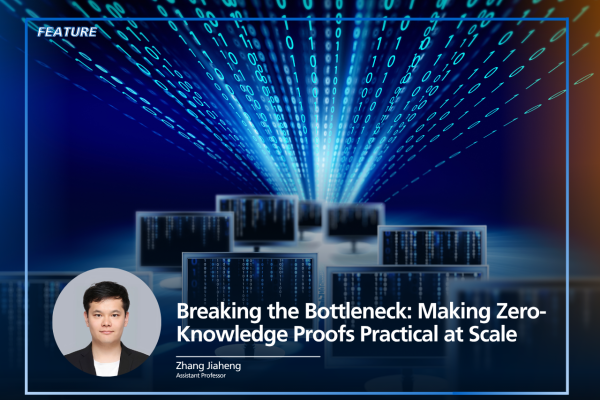
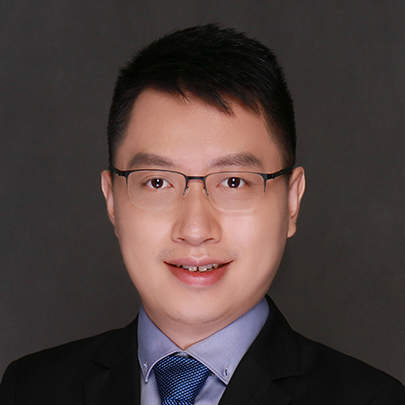
ZHANG Jiaheng is an Assistant Professor in the Department of Computer Science at the National University of Singapore (NUS), School of Computing. His work bridges cryptography, artificial intelligence, and system security, with a focus on scalable and privacy-preserving technologies. He teaches CS3235 – Computer Security and leads research in zero-knowledge proofs, LLM safety, and trustworthy AI. Research Interests: His research spans Cryptography , Security , Machine Learning & AI , Privacy , and Algorithms & Theory . He specializes in making zero-knowledge proofs practical at scale and securing large language models against jailbreaking, backdoors, and privacy leaks. His recent projects include zkGPT, BatchZK, and Guardreasoner, highlighting his dual focus on theoretical foundations and real-world applications. The recent publications show a strong trend toward scalable zero-knowledge systems and AI security , particularly in verifying and protecting LLMs. These works integrate cryptographic rigor with modern AI challenges, reflecting a cohesive research vision at the frontier of trustworthy computing. Scientific Contributions: Developed scalable collaborative zk-SNARKs for efficient proof generation. Pioneered techniques for secure LLM inference and jailbreak detection. Advanced GPU-accelerated and distributed zero-knowledge proof systems. Advising & Grants: While specific students and grants are not listed, his active publication record in top-tier venues suggests ongoing research supervision and external funding in cybersecurity and AI. He is likely involved in advising PhD and Master’s students in cryptography and AI security. Labs & Teams: He is part of the NUS School of Computing research ecosystem, potentially affiliated with cybersecurity or AI labs, contributing to Singapore’s leadership in privacy-preserving technologies.
Roger Zimmermann is a Full Professor at the School of Computing, National University of Singapore (NUS), where he is also a Co-PI at the Grab-NUS AI Lab and leads the Location AI project. He previously served as Deputy Director of the NUS Smart Systems Institute (SSI) and Co-Director of the Centre of Social Media Innovations for Communities (COSMIC), both funded by Singapore’s National Research Foundation (NRF). Before joining NUS, he was a Research Area Director and Research Assistant Professor at the University of Southern California (USC). Ph.D. in Computer Science, University of Southern California (1998) M.S. in Computer Science, University of Southern California (1994) His research focuses on multimedia systems , spatio-temporal data management , streaming media architectures (especially DASH), machine learning applications , AR/VR , and location-based services . He leads the Media Management Research Lab (MMRL) at NUS, which conducts cutting-edge work in distributed multimedia and intelligent systems. His work combines theoretical depth with real-world applications in urban computing, smart mobility, and immersive media. The recent publications reflect a strong trend toward multimodal learning , spatio-temporal AI , adaptive streaming , and urban intelligence . His team explores zero-shot learning, 3D scene understanding, traffic forecasting, and open-vocabulary audio-visual segmentation, often leveraging foundational models and deep neural architectures. There is a clear emphasis on real-time, scalable systems for smart cities and immersive experiences. Dr. Zimmermann has received numerous accolades, including: DASH-IF Excellence in DASH Award (multiple years) Best Paper Awards at ACM SIGSPATIAL, IEEE ICME, and ACM MMSys Silver Award at ACM MMSys 2020 Grand Challenge IEEE Communications Society Best Editor Award (2017) ACM Distinguished Member (2017) Top 1% Publons Reviewer in Computer Science (2018) He has advised numerous students and led major research initiatives funded by MOE, NRF, A*STAR, NSF, and industry partners like Seagate, Intel, and HP. He has served as General Chair for IEEE MIPR 2023, ACM Multimedia 2020, and IEEE ISM 2015, and as TPC Co-Chair for several top-tier conferences. His editorial roles include Associate Editor for IEEE Transactions on Multimedia (TMM), ACM TOMM, and IEEE OJ-COMS. He leads the Media Management Research Lab (MMRL) , which focuses on intelligent multimedia systems, spatiotemporal data mining, and immersive media technologies. The lab develops scalable solutions for real-world challenges in urban computing, smart transportation, and interactive media.
Yi Li is an Associate Professor at the College of Computing and Data Science (CCDS) , Nanyang Technological University (NTU) , focusing on the security, reliability, and sustainability of modern software systems. Their work bridges blockchain-based decentralized applications and software evolution management. Research Interests : Sustainability of evolving software systems, security/reliability of blockchain applications, semantic history slicing, and compositional analysis. Academic Roles : Associate Professor (2024–Present), Assistant Professor (2018–2024) at NTU, and research internships at Google and Microsoft Research . Scientific Awards : Distinguished Paper Award at NDSS'25 ACM SIGSOFT Distinguished Paper Award at ASE'23 Professional Activities : Co-Chair, Journal-First Track at FSE'25 and APSEC'25 Program Committee roles at ICSE, FSE, ASE, FM, and others (2016–2025) Organizing and reviewing for IEEE/ACM journals Key Publications : 2025: ICSE (SpecGen), FSE (invariant analysis), ISSTA 2024: INFOCOM (LightCross), ASE, ACM Computing Surveys 2023–2014: SPLC, ASE, FM, Dagstuhl Reports Student Advising : Chenguang Zhu (UT Austin, advisor Sarfraz Khurshid), Tai D. Nguyen (SMU, advisor Jun Sun).
Chung Piaw Teo is the Stephen Riady Professor and Executive Director of the Institute of Operations Research and Analytics (IORA) at the National University of Singapore (NUS) Business School. He has held significant academic roles including Head of Department, Acting Deputy Dean, Vice-Dean of Research and Ph.D. Programs, and Chair of the Ph.D. Committee at NUS. PhD in Operations Research from MIT (1996) Bachelor of Science (Honors) in Mathematics from NUS (1990) Research Interests: Optimisation Under Uncertainty Discrete Choice Modeling Social Choice Theory Inventory Theory Supply Chain Management Combinatorial Optimisation Operations Research Publications focus on stochastic optimization, supply chain resilience, and network design, with recent works spanning 2020–2015 in journals like Management Science , Operations Research , and Mathematical Programming . Key themes include urban logistics, risk mitigation, and decision analytics. Scientific Awards: Stephen Riady Professor (2024) Provost’s Chair (2014) Faculty Outstanding Researcher Awards (2014, 2006, 2003) Nominee for University Outstanding Researcher Award (2006) Grants & Leadership: Served on international committees (INFORMS, LANCHESTER Prize, Fudan Prize) and held visiting/fellow positions at MIT, Northwestern, and Sungkyunkwan University. Currently a department editor for Management Science and associate editor for multiple journals.
WANG Xinrun is an Assistant Professor and Lee Kong Chian Fellow at the School of Computing and Information Systems, Singapore Management University, where he joined in July 2024. He holds a PhD from Nanyang Technological University (2020). His research spans: Fundamental decision making (single/multi-agent reinforcement learning) Applied decision systems (FinTech, urban security, scientific AI) Foundation agents (computer control, automated research) with emphasis on unified frameworks for complex problem-solving. His publication portfolio (15 most recent shown) demonstrates consistent focus on reinforcement learning innovations, multi-agent game theory, and financial AI applications, with papers in ICLR, NeurIPS, AAAI, and KDD. Key trends include foundation model integration, decision-making unification, and real-world deployment. Awards include the Lee Kong Chian Fellowship. He advises PhD student ZHOU Shunchao and leads a research group developing: Reinforcement learning for FinTech Multi-agent systems for urban security Foundation agents for scientific discovery while actively recruiting students and collaborators for these initiatives.
Prof. Hanqin Zhang is a Professor in the Department of Analytics And Operations at the National University of Singapore (NUS Business School). He holds a Doctor of Science from the Chinese Academy of Sciences (1991) and a Master of Science from Xian Jiaotong University (1985). His research focuses on applied mathematics, statistics, strategy, transportation logistics, control engineering, and numerical methods. He has served as an associate editor for journals like European Journal of Operational Research and TOP , and has reviewed for top-tier journals including Operations Research and Queueing Systems . His recent work addresses optimal inventory policies, queueing systems, and stochastic control, with notable contributions to dual-sourcing strategies, staffing optimization in ticket queues, and fluid models of parallel service systems. He has supervised students in stochastic processes and inventory management, reflecting his expertise in bridging theoretical advancements with practical applications in operations research. Notable research trends include leveraging order-tracking information for inventory systems, analyzing ergodicity in Markov chains, and optimizing multi-source supply chains under uncertainty. His publications span high-impact journals such as Operations Research and Queueing Systems , showcasing a focus on stochastic systems and operations management.
Chaithanya Bandi is an Associate Professor at the National University of Singapore (NUS) in the Analytics and Operations Department of the NUS Business School, with a joint appointment in the Department of Mathematics. His research focuses on decision-making under uncertainty, robust optimization, and their applications in operations management, healthcare, e-commerce, and energy systems. He develops robust optimization models for queueing control, risk optimization, and mechanism design. Key research areas include robust queue inference, two-stage distributionally robust optimization, and multi-item auction mechanisms. He has contributed to operational challenges in healthcare (e.g., patient re-entry scheduling), energy systems (electricity generation optimization), and e-commerce (price optimization for fashion products). His work integrates theoretical advancements with practical implementations in large-scale systems. Recent publications emphasize adversarial evaluation of large language models, dynamic scheduling algorithms, and robust policies for uncertain environments. His methodologies often involve novel optimization frameworks and scalable computational approaches. Dr. Bandi holds a PhD in Operations Research and has collaborated with industry leaders like Flipkart and healthcare providers to apply his models in real-world settings. His contributions bridge theoretical rigor and practical applicability in complex operational systems.