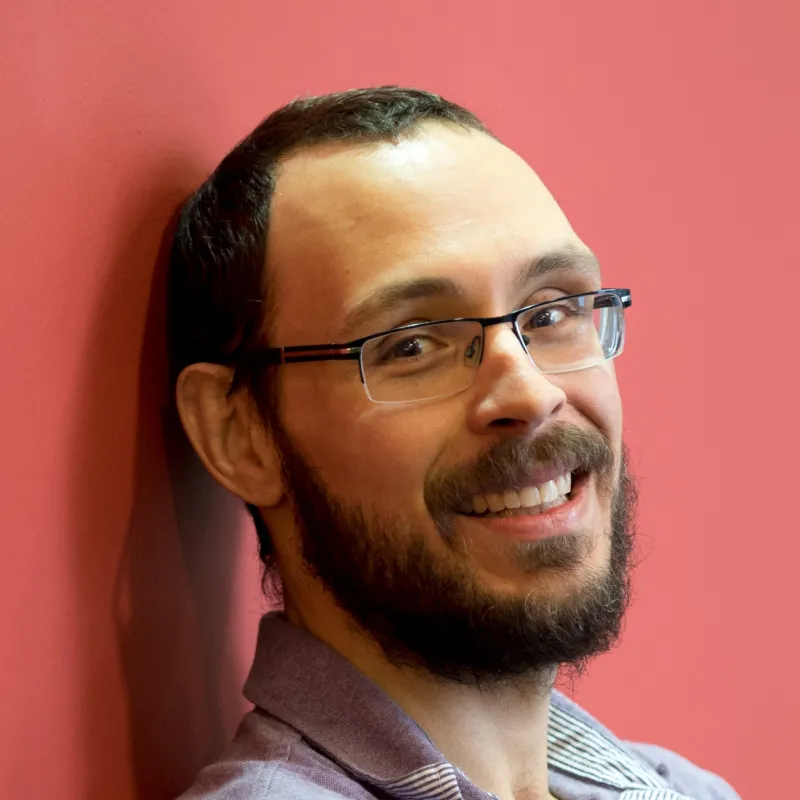
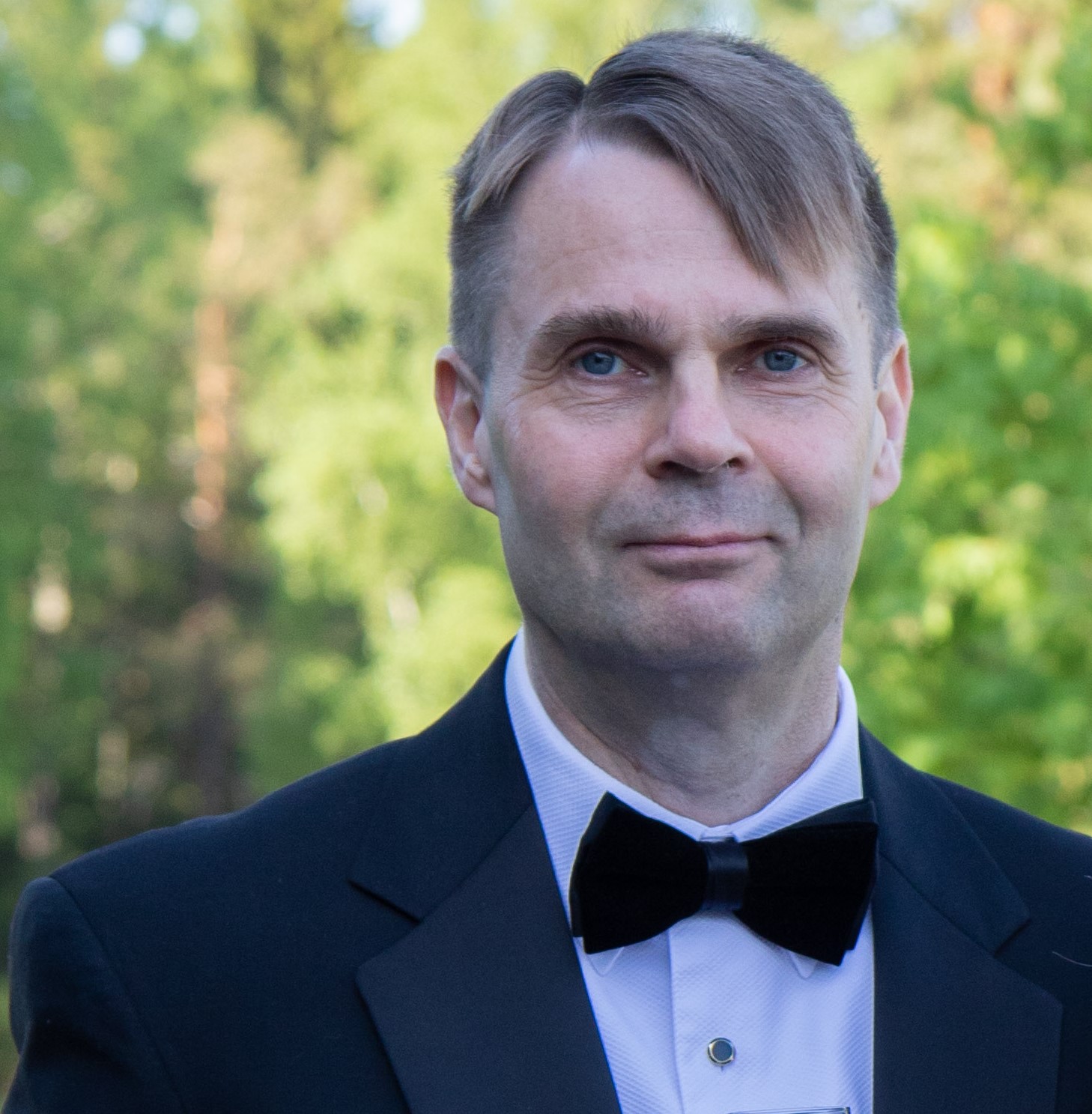
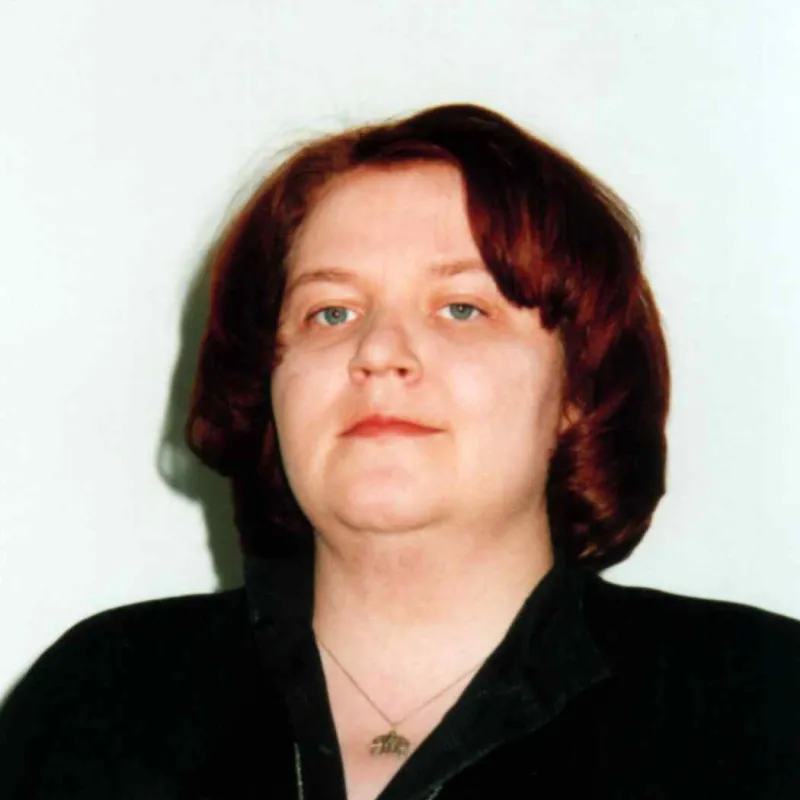
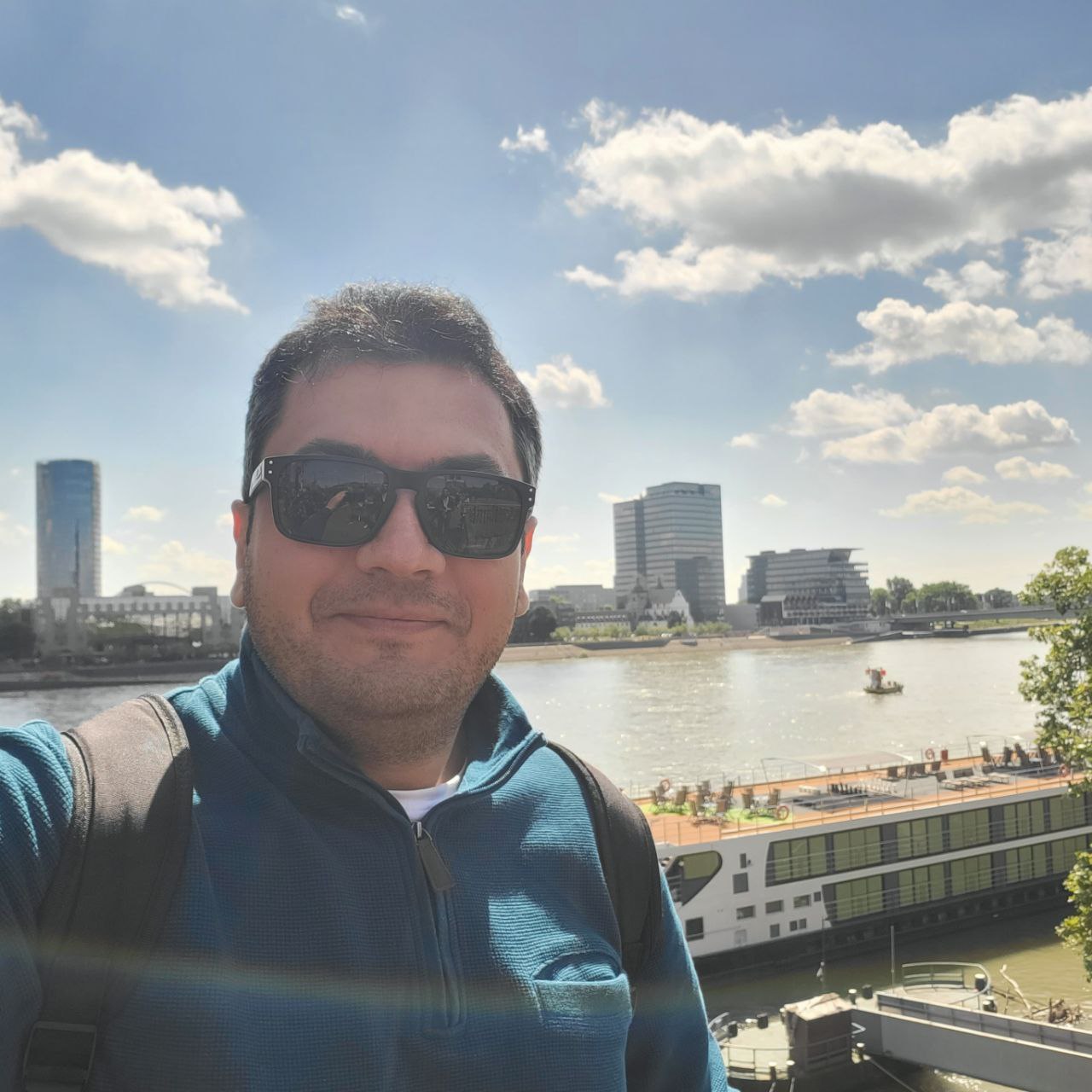
Chunhao Gu is a Doctoral Researcher at Aalto University's Department of Bioproducts and Biosystems. His work intersects Microbial Physiology , Systems Biology , and Machine Learning , focusing on bacterial metabolism under antibiotic stress and computational approaches to biological systems. The 2021 article highlights his integration of metabolic network modeling and machine learning to study bacterial stress responses, while the 2012 work demonstrates expertise in distributed computing for image retrieval systems using Hadoop and Lucene. His research spans interdisciplinary domains, combining bioinformatics with computational methods to address both biological and data-intensive challenges.
Ondrej Krejci is a researcher in the Department of Applied Physics at Aalto University, specializing in computational and theoretical approaches to surface science, scanning probe microscopy, and materials discovery. His work bridges advanced simulation techniques with experimental validation. Research interests include: Density Functional Theory (DFT) Scanning Probe Microscopy (SPM) simulations Molecular adsorption on surfaces X-ray spectroscopy simulations Condensed matter physics Atomic and molecular physics Recent publications highlight trends in machine learning for catalyst discovery, probe-particle model innovations, and on-surface synthesis of novel carbon allotropes and frameworks. Collaborative work spans computational modeling, experimental validation, and instrumentation development.
Pedro Nardelli is a Full Professor (tenured) of IoT in Energy Systems at the LUT School of Energy Systems, Lappeenranta University of Technology (Finland). He holds a double doctoral degree in electrical engineering from the University of Campinas (Brazil) and communications engineering from the University of Oulu (Finland). As a Docent in Information Processing and Communications Strategies for Energy Systems, he leads research in cyber-physical systems, smart grids, and 6G-enabled energy networks. Research Interests : His work focuses on integrating IoT, AI, and communication technologies into energy systems. Key areas include cyber-physical systems, UAV-enabled networks, sustainable energy management, and cybersecurity in critical infrastructure. He emphasizes interdisciplinary approaches to address challenges in the green-digital transition. Projects & Leadership : He is Principal Investigator for projects such as 'Energy-Conscious Operation: Network Efficiency for Wireless Sustainability' (2024–2026) and coordinates the Finnish-Brazilian AI and 5G training program. Past roles include leadership in the 'Hydrogen and Carbon Value Chains in Green Electrification' initiative (2021–2024). Publications : Recent work explores topics like hybrid optimal power flow models, UAV-IRS NOMA systems, and energy-centric analysis. His research bridges theoretical frameworks with practical applications, emphasizing sustainability and resilience in energy networks. Labs & Teams : Leads the IoT Solutions group within LUT's MORE SIM research platform, focusing on simulation-driven innovation for energy systems.
Alexandre Mercat is an Assistant Professor in the Department of Computer Engineering at Tampere University, within the Faculty of Information Technology and Communication Sciences. His research focuses on video coding, energy-efficient encoding, and real-time multimedia systems. He leads projects on open-source video encoders and standards, including contributions to HEVC, VVC, and V-PCC technologies. His work emphasizes machine learning integration, low-power hardware optimizations, and scalable distributed encoding frameworks. Key technical interests include improving video compression efficiency through algorithmic innovations, developing open-source tools like the UVG dataset and Kvazaar encoder, and addressing challenges in volumetric video communication and 3D point cloud encoding. His research spans theoretical algorithm design to practical implementations, with applications in virtual reality, live streaming, and edge computing. Recent projects include real-time saliency-guided video coding frameworks, energy reduction techniques for HDR streaming, and multi-layer VVC coding schemes for hybrid machine-human consumption. He also explores FPGA acceleration and parallelization strategies for distributed video encoding systems. No scientific awards are explicitly mentioned in the provided texts. While no formal advisees are listed, his research group likely involves students through open-source development and collaborative projects. His work integrates closely with industry standards bodies and open-source communities, emphasizing reproducible evaluation frameworks and end-to-end software tools.
Niko Mäkitalo is an Assistant Professor at the University of Jyväskylä's Faculty of Information Technology and a member of the University Consortium Chydenius. His research focuses on advancing cyber-physical systems through innovative software architectures for AI, IoT, and the Cloud-Edge Continuum, with significant emphasis on hardware and network infrastructures. He teaches and mentors graduate students in these areas. Research Interests: Mäkitalo's work centers on creating intelligent environments via novel software frameworks, engineering methodologies for distributed AI/ML applications, and addressing ethical/privacy challenges in edge computing. He explores the intersection of agile development practices, third-party code management, and industry standards like IDSA/GAIA-X for AI integration. Key Contributions: His recent work includes studies on software ownership dynamics, regulatory-aware AI deployment, and liquid AI systems. He leads the Empirical Software Engineering Research group and collaborates on initiatives like 6GSoft for edge-cloud software solutions. Advising & Grants: Mäkitalo supervises Master's and Ph.D. candidates in software engineering and systems architecture. His projects often involve industry partnerships to address real-world challenges in smart manufacturing, autonomous systems, and networked environments. Labs/Teams: Active in the Empirical Software Engineering Research group, contributing to cross-disciplinary projects at the University of Jyväskylä's tech innovation ecosystem.
Hossam H. H. Mousa is a Doctoral Researcher at Aalto University's Department of Electrical Engineering and Automation, School of Electrical Engineering. He also serves as an Assistant Lecturer at South Valley University's Department of Electrical Engineering since 2020. B.Sc. in Electrical Engineering (2017), South Valley University M.Sc. in Electrical Power and Machines Engineering (2020), South Valley University His research focuses on electrical power engineering, including maximum power point tracking (MPPT) for renewable energy, power systems analysis, energy management, and machine learning applications in grid optimization. He has published extensively on topics like hosting capacity estimation, unbalanced microgrids, and hydrogen storage integration. The 15 most recent articles emphasize modern power systems optimization through machine learning (2025), smart inverter applications in renewable integration (2025), and hydrogen storage's role in cold climate energy management (2025). Earlier works include best practice studies on capacitor allocation (2024) and photovoltaic system controls (2024), earning him the 2024 Best Paper Award in the International Journal of Electrical Power & Energy Systems. Best Paper Award (2024), International Journal of Electrical Power & Energy Systems His scholarly activities span energy conversion, microgrid stability, and applied machine learning, contributing to sustainable energy transition solutions. He has collaborated on international research books addressing distribution network hosting capacity (2025) and future energy systems challenges.
Visa Koivunen is a Distinguished Professor of Signal Processing at Aalto University (since 1999), with positions as Academy Professor (2010) and Aalto Distinguished Professor (2020). He holds an honorary D.Sc. (Tech.) from the University of Oulu and has held visiting roles at Princeton University, the University of Pennsylvania, and EPFL. His research focuses on statistical signal processing, wireless communications, radar systems, and integrated sensing and communications (ISAC). He has published over 490 papers, including award-winning works, and advised 31 doctoral theses. Key roles include leadership in conferences (e.g., Asilomar 2018 General Chair) and technical committees (IEEE SPS). Recognitions include the EURASIP Technical Achievement Award (2015), IEEE Signal Processing Society Best Paper Awards (2007, 2017), and EURASIP Fellow status (2020). He co-chairs NATO panels on cognitive radars and ISAC. His research interests span signal processing fundamentals and applications in radar, communications, and machine learning. Recent work emphasizes ISAC, reinforcement learning for resource allocation, and causal inference in federated systems. He has pioneered waveform design techniques using GANs and Bayesian methods for spatial signal analysis. Educations: D.Sc. (Tech.) with honors from the University of Oulu (1994), Primus Doctor Award (1989-1994). Awards: IEEE Fellow, EURASIP Fellow, Member of Academia Europaea. Service: Associate Editor for IEEE Transactions, Chair of IEEE SPAWC and Asilomar conferences. His work bridges theory and practice, addressing challenges in radar-communication coexistence, energy-efficient edge computing, and secure distributed inference. He has delivered over 50 invited talks globally and actively contributes to NATO initiatives on cognitive radar systems.
Miina Rautiainen is a Full Professor in Remote Sensing at Aalto University, leading the Remote Sensing Research Team in the Department of Built Environment, School of Engineering. She holds dual professorships in Geoinformatics and the Department of Built Environment. Her research focuses on remote sensing and spectroscopy of forests and peatlands, with emphasis on albedo dynamics, vegetation structure, and climate change impacts. She has led major projects including the ERC Consolidator Grant (2018-2024) and multiple Research Council of Finland grants. Education: Doctoral degree in Forest Sciences from the University of Helsinki (2005). Completed university pedagogy studies in the Faculty of Behavioural Sciences, University of Helsinki. Research interests span remote sensing methodologies, forest ecology, peatland monitoring, and spectral analysis. Key projects include PEATSPEC (spectral characterization of boreal peatlands), ARTISDIG (digital twins for forest biodiversity), and BOREALITY (albedo-climate linkages). Awards include ERC funding and leadership in Finnish Society for Forest Sciences (2017-2020). Publications emphasize spectral modeling, LiDAR applications, and climate-relevant vegetation dynamics. Supervised 8 doctoral theses including work on LiDAR-based biomass estimation, peatland rehabilitation, and wolverine habitat analysis. Team members include researchers like Aarne Hovi, Jussi Juola, and Iuliia Burdun. Labs/Teams: Remote Sensing Research Team at Aalto, collaborating with VTT, Natural Resources Institute Finland, and international partners. Instrumentation includes spectral measurement devices, terrestrial LiDAR, and lab setups for leaf analysis.
Charul Rajput is a Research Fellow at Aalto University's Department of Mathematics and Systems Analysis, School of Science. Their research focuses on Information Theory, Coding Theory, Discrete Mathematics, and Algebra, with a particular emphasis on caching systems and network optimization. Recent work includes advancements in hierarchical coded caching, hotplug models, and error probability analysis in communication channels. Publications span topics like function-correcting codes, private information retrieval, and locally recoverable codes. Rajput's research also intersects with systems analysis, addressing challenges in distributed storage and network efficiency. Research interests include the theoretical foundations of coding and information theory, with applications to modern communication systems. Key contributions address the design of efficient caching schemes and error-correcting codes for high-performance networks. No scientific awards or grants are explicitly mentioned in the provided texts. Rajput is affiliated with the Algebra and Discrete Mathematics research group at Aalto University, contributing to interdisciplinary projects that bridge pure mathematics and practical network systems.
Jenni Niku is a Senior Lecturer at the Department of Mathematics and Statistics, University of Jyväskylä, specializing in multivariate statistical modeling and computational methods for ecological data. She is actively involved in the Predictive Community Ecology Group and leads research projects on latent variable models for complex ecological structures. Research Focus: Latent variable models for community ecology Spatial-temporal pattern analysis Statistical methodology for multivariate data Joint species distribution modeling Computational tools for ecological datasets Recent Publications: Jenni has contributed to advancements in analyzing compositional count data, fungal dispersal dynamics, chronic disease modeling, and peatland restoration. Her work bridges statistical innovation with ecological applications, particularly in handling high-dimensional data. Collaborations: She works extensively with researchers from Biological and Environmental Science departments, focusing on interdisciplinary applications of her statistical models.
Jara Uitto is an Assistant Professor in the Department of Computer Science. His research focuses on Massively Parallel Computation, Distributed Computing, and Sublinear Computing, with a particular emphasis on graph algorithms and distributed systems. Research Interests: Massively Parallel Computation (MPC) Distributed Algorithms and Symmetry Breaking Graph Theory and Edge Processing Algorithm Design for Sparse Graphs Approximation and Optimization in Streaming Models Key Project: Massively Parallel Algorithms for Large-Scale Graph Problems (2020-2024) , where he led research on optimizing algorithms for distributed and parallel computing environments. Publications highlight contributions to symmetry breaking, parallel coloring, and approximation algorithms in dynamic streams. His work bridges theoretical foundations with practical distributed computing challenges.
Dr. Almas Shintemirov is a Research Fellow at Aalto University's Department of Electrical Engineering and Automation, specializing in robotics, control systems, and human-robot interaction. His research focuses on intelligent robotics, with emphasis on Real-time motion prediction for collaborative robots Nonlinear control algorithms for safe human-robot interaction Open-source robotic hardware design Deep learning applications in autonomous systems
Satu-Pia Reinikainen is a tenured Professor in Computational Engineering at the Lappeenranta-Lahti University of Technology (LUT) School of Engineering Sciences . With expertise in chemometrics and multivariate analysis, her work bridges statistical modeling, spectroscopy, and environmental monitoring. Research Focus Development of advanced kernel-based methods for process control Application of hyperspectral imaging in material and environmental analysis Microplastic pollution dynamics in aquatic systems Integration of spectroscopic techniques for real-time monitoring Conservation of geological and heritage materials through data-driven approaches Her research combines chemometric algorithms, environmental data analysis, and industrial process monitoring to solve complex analytical challenges.
Jussi Kangasharju is a Professor in the Department of Computer Science at the University of Helsinki and leads the Collaborative Networking research group . He is also a supervisor for the Doctoral Programme in Computer Science and a member of IEEE and ACM . Research Interests: Edge Computing Information-Centric Networking Content Distribution Green Networking Future Internet Development Scientific Awards: Best Paper Award (2015) Winner of 9th Helsinki Science Slam Competition (2016) Best Paper Award (2004) Key Projects: He has led initiatives like ELLIS-instituutti (2025–2032) and University Profiling Funding (2025–2030), focusing on transdisciplinary networks and future Internet sustainability. Academic Visits: Notable visits include Seoul National University (2012) and the International Computer Science Institute (2013), further enriching his collaborative work.
Sajjad Fattaheian Dehkordi is a Postdoctoral Researcher in the Department of Electrical Engineering and Automation at Aalto University, Espoo, Finland. His research focuses on advanced energy management systems for modern power grids, with emphasis on distributed and transactive control approaches for resilient and efficient grid operations. His core research interests include: Power system resilience under high renewable penetration Microgrid and energy community optimization Distributed energy resource integration Electric vehicle-grid interaction and V2G systems Real-time congestion and ramping management Analysis of his 2022-2024 publications reveals a dominant trend toward multi-agent transactive frameworks addressing grid stability challenges. His work consistently targets voltage regulation, asymmetrical power flows, and ramping events in distribution systems, leveraging optimization techniques like MILP while incorporating flexibility concepts for renewable integration. Key innovations include distance-driven P2P/P2G transactions and incentive-based congestion management. No scientific awards are documented in the available records. Information regarding student advising, research grants, or leadership roles is not provided in current documentation.