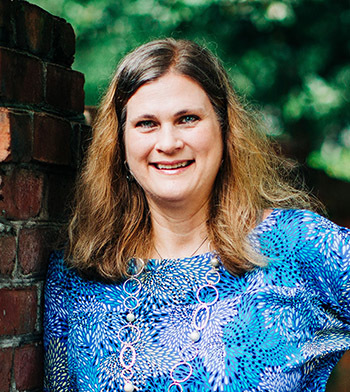
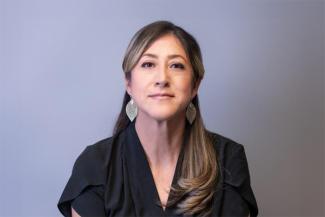
Dr John H. Gerdes Jr. is Professor and IIT Graduate Director in the Department of Integrated Information Technology at the University of South Carolina's Molinaroli College of Engineering and Computing. His research spans web-based data mining, knowledge management, and cybersecurity protocols. He teaches software development, database management, and web systems design. Current projects include virtual training environments for networking technicians and privacy-preserving certificate systems. He holds U.S. patents in temperature measurement and cryptographic certificates. Contact: jgerdes@sc.edu; phone: 803-777-8529.
Lara Lomicka Anderson is a Professor of French and Applied Linguistics at the University of South Carolina's Department of Languages, Literatures and Cultures, within the College of Arts and Sciences. She serves as Faculty Principal of Preston Residential College and teaches undergraduate and graduate courses in French and language education. She holds a PhD from Penn State University and has held leadership roles including Graduate Director and Director of Teacher Education. Her research focuses on technology-enhanced language learning, intercultural communication, and innovative pedagogical strategies. She has published extensively in journals like Computer Assisted Language Learning , Foreign Language Annals , and CALICO Journal , and edited two influential books on technology in language education. Her work emphasizes integrating digital tools (e.g., social media, mobile apps) into language teaching to foster cultural awareness and proficiency. Notable awards include the ACTFL Award for Excellence in Technology-Enhanced Language Instruction (2008) and Chevalier dans l'ordre des palmes academiques (2011). Her recent research explores residential college pedagogy, digital semiotics in CALL, and intercultural learning through virtual exchanges. Anderson has advised numerous grants and initiatives, including projects on study abroad pedagogy and faculty engagement in living-learning communities. She actively contributes to professional organizations like CALICO (Past President), AATF, and NFMLTA, advocating for technological innovation in language education.
Dr. Christopher Dawson is a Senior Lecturer and Year One Tutor at Manchester Metropolitan University (MMU), based in the Department of Languages, Information and Communications within the Faculty of Humanities and Social Sciences . He serves as Subject Leader for the Combined Honours Programme and focuses on teaching computer processing, networks, databases, programming, Management Information Systems, and Knowledge Management. His pedagogical approach combines theoretical understanding with practical application to empower students in shaping technological advancements. Dr. Dawson's research spans Computer-Aided Language Learning (CALL) , Online and Distance Learning , and the intersection of music and literature, particularly the works of Erik Satie and early 20th-century French modernism. He has developed commercial language-teaching websites and contributed to an early iPhone phrasebook app. His doctoral research (University of Oxford, 1993) centered on Erik Satie’s writings and music, with subsequent publications in this area. Education: DPhil in French Literature (University of Oxford, 1988–1993) MSc Information Management (University of Sheffield, 2002–2003) BA (Hons) French Studies (University of Reading, 1984–1988) He maintains a personal website ( http://www.realfrench.net ) and emphasizes the role of technology in shaping societal progress.
Dr. Frances Fan is an Associate Professor at the University of Tasmania's School of Education. She completed her PhD at UTAS in 2011, specializing in web-based technology for higher education. Research spans online pedagogy, teacher education, early childhood education, and language instruction. Research Impact: Developed frameworks for student engagement in online learning environments and cross-cultural adaptation strategies. Recent work includes predictive analytics for student performance and social media applications in education. Contact: Rivers Edge Building, Inveresk Campus, Launceston TAS 7250. Phone: +61 3 6324 3054. Fax: +61 3 6324 3048.
Carol Murphy is a Senior Lecturer and Assistant Dean of Higher Degree Research (HDR) at the University of Tasmania's School of Education. She holds a PhD in Education from the University of Exeter and has extensive experience in mathematics education, spanning roles in the UK, New Zealand, and Australia. Her research focuses on dialogic pedagogies, early years mathematics, teacher development, and inquiry-based learning in STEM. She has led internationally funded projects, including studies on exploratory talk in Qatari classrooms and the use of digital technology in mathematics education. Administratively, she has over 25 years of experience, from coordinating primary school mathematics to leading graduate research teams. Her teaching responsibilities include courses on pedagogical content knowledge for mathematics, inclusive education, and qualitative research methods. She collaborates with institutions globally, including the University of Waikato, Qatar University, and Monash University. Notable projects include the Australian Research Council-funded 'Talking Maths' initiative addressing socioeconomic gaps in mathematics performance. Her work emphasizes participatory methodologies, aiming to transform classroom practices and student learning. She is a member of professional organizations such as the Mathematics Education Research Group of Australasia and the International Group for the Psychology of Mathematics Education.
Dr Carole Maddern is a full-time Lecturer in English Literature at Goldsmiths, University of London, specializing in Old English and medieval literature. She has over 20 years of teaching experience across London University colleges and adult education institutes. Her research focuses on medieval romance, gender studies, and the development of the English language. Maddern currently leads courses like Old English and Literature of the Later Middle Ages, and she is Deputy Programme Director for the University of London’s International Programme in English. Education: BA (Hons) English, London University, 1989 M.A. Medieval English Language and Literature, King’s College London, 1991 PhD, King’s College London, 2001 Research Interests: Medieval literature, gender studies, stylistics, and essay writing pedagogy. She is preparing a book on women in medieval romance emphasizing female mobility and transgression. Publications: Includes textbooks like Literature of the Later Middle Ages (2014) and York Notes Companions: Medieval Literature (2010), focusing on medieval literary analysis and educational resources.
Stanley Dubinsky is a Professor in the Department of English Language and Literature at the University of South Carolina's College of Arts and Sciences. His work bridges syntactic theory, semantics, and sociolinguistic issues, with a focus on language and politics. PhD in Linguistics from Cornell University (1985) MA in East Asian Literature (Chinese) from Cornell University (1981) BA in East Asian Studies (Chinese) and Spanish and Latin American Studies from Hebrew University of Jerusalem (1978) His research spans syntactic theory, the syntax-semantics interface, and ethnolinguistic conflict. He explores how linguistic differences fuel political tensions and how language shapes identity. Recent work examines language education tools like Wordification® and historical syntax patterns in Classical Greek and Korean. Publications include empirical studies on Korean morphology and theoretical analyses of Russian non-referentiality, reflecting his interest in cross-linguistic variation and its sociopolitical implications. He actively investigates language's role in conflicts, such as the Israeli-Arab conflict and post-Soviet linguistic nationalism. Scientific Awards Finalist, Mungo Graduate Teaching Award (2007) Russell Research Award for Humanities and Social Sciences (2006) Finalist, Mungo Graduate Teaching Award (2006) Excellence in Teaching Award (Mortar Board, 2002) Sims Teaching Excellence Award (2002) Dubinsky co-leads the Language Conflict Project , analyzing linguistic distance in political conflicts, and the Wordification® Project , which develops spelling instruction tools for dialect speakers and non-native English learners.
Jose Ramirez-Marquez is an Associate Professor and Division Director of Enterprise Science and Engineering at Stevens Institute of Technology's Charles V. Schaefer, Jr. School of Engineering and Science. He holds a PhD in Industrial and Systems Engineering from Rutgers University (2004), along with advanced degrees in Statistics and Actuarial Science. His research focuses on three key areas: Urban Informatics (analyzing city systems and infrastructure resilience), Data Visualization for Decision Making (using visual techniques to address complex societal issues), and AI/ML Techniques (applied to urban and architectural challenges). Dr. Ramirez-Marquez has over 25 years of research experience, with over 100 publications in technical journals and industry reports. Notable honors include the 2010 Davis Memorial Award for Research Excellence. He leads projects funded by agencies like NSF, the Department of Defense, and the Volvo Research Foundation, totaling over $2M in grants since 2020. Current initiatives include AI tools for defense acquisition reform, NLP-based talent management systems, and resilience strategies for smart cities. He teaches courses in reliability engineering, data visualization, and socio-technical systems. Institutional roles include membership in the Faculty Senate, NSF-Aspire diversity committee, and doctoral review committees. His work bridges computational methods with societal challenges, emphasizing equity in urban systems and disaster response.
Chihoon Lee is a Professor in the School of Business at Stevens Institute of Technology, holding dual roles as Professor and former Associate Dean of Graduate Studies (2020–2024). He holds a PhD in Statistics from the University of North Carolina at Chapel Hill (2008) and a BS in Statistics and Mathematics from Seoul National University (2003). His research bridges applied probability and statistics with applications in operations management, stochastic networks, financial engineering, and infectious disease modeling. Notable contributions include analytical tools for large-scale service systems, stochastic control, and sequential learning for stochastic processes. As Associate Dean, Lee oversaw strategic growth of 10 Master’s and 3 MBA programs, managing 1,400–1,600 graduate students. He chairs the School Graduate Curriculum Committee and collaborates across disciplines, including quantum computing and epidemiology. His work has been recognized with awards such as the 2022 EURO Best Paper Award and the Early Career Statistician Award (2012). Financially, his grants include $200K+ in projects addressing quantum finance and stochastic networks. Lee’s research emphasizes interdisciplinary impact, spanning queueing theory, stochastic control, and statistical learning. He actively serves on editorial boards (e.g., Journal of Korean Statistical Society) and professional committees. His teaching includes courses in multivariate analytics, statistical models, and experimental design.
Dave Ellis is a Senior Lecturer and Course Coordinator (Secondary Undergraduate Programs) in the Faculty of Education at Southern Cross University (SCU). He holds a BEd from the University of Sydney and an MUDS from Bond University. His research focuses on teacher professional learning, technology education, and interdisciplinary approaches like STEM/STEAM/Maker. He has 20 years of school teaching experience and 16 years in higher education, with projects in Asia and the Pacific. Ellis also works as an international consultant and is a member of SEAE (Sustainability, Environment and the Arts in Education) Research Cluster and the national Design and Technology Teacher Association (DATTA). Ellis teaches across multiple education units at SCU and actively collaborates with schools to enhance teacher expertise. His work emphasizes contextualized education, including design technology and ecological systems theory. He co-supervises Masters and Honours students in areas like teacher development and curriculum design. Ellis has contributed to the development of virtual learning resources and explored adaptive solutions for rural education challenges. His articles highlight innovations in STEM integration, socioecological learning, and the use of narrative frames in multilingual education. Ellis advocates for equitable access to education through digital tools and international partnerships, reflecting his commitment to sustainable and inclusive pedagogies.
Dr. Justin D. Lane is an Associate Professor of Special Education and Co-Director of the ABA Program at the University of Kentucky's Department of Early Childhood, Special Education, and Counselor Education. His work focuses on designing interventions for children with low-incidence disabilities, emphasizing naturalistic language interventions, social behavior promotion, and training professionals in data analysis. He holds an affiliation with the College of Education and is based at the Taylor Education Building. Dr. Lane's research interests include early intervention strategies for children with autism spectrum disorder, intellectual disabilities, and communication delays. He emphasizes evidence-based practices such as naturalistic teaching methods, caregiver coaching, and single-case research design. His work bridges clinical practice and research, advocating for rigorous methodologies and interdisciplinary collaboration between behavior analysts and speech-language pathologists. Recent research trends in his publications highlight advancements in single-case research evaluation, remote intervention delivery, and ethical research practices. His articles frequently address challenges in data reliability, visual analysis of behavioral outcomes, and the practical implementation of interventions in inclusive settings. Dr. Lane's contributions to teaching include training pre-service professionals in data collection and analysis, particularly in early childhood special education contexts. He has been actively involved in evaluating interventions for social-communication delays, promoting family-centered care, and advancing methodologies for assessing intervention effectiveness. His work underscores the importance of contextual factors in early childhood environments and the need for scalable, evidence-based practices.
Dr Gonzalo Pérez Andrade is a Senior Lecturer in English Language Teaching and Course Leader for the MA English Language Teaching and MA English Language Teaching (Distance Learning) programs at London Metropolitan University. He holds a PhD in Applied Linguistics from the University of Southampton, where he was affiliated with the Centre for Global Englishes. His professional background includes teacher training in Chile and an MA in Applied Linguistics and English Language Teaching from King’s College London. His academic focus centers on applied linguistics, global Englishes, and pedagogical approaches in language education. Dr Pérez Andrade’s work bridges theoretical research and practical teaching methodologies, particularly in distance learning contexts. No specific awards, grants, or publications are detailed in the provided materials.
Jiang Song is an Associate Professor in the Department of East Asian Languages & Literatures at the University of Hawai‘i at Mānoa. She serves as Director of the Chinese Language Flagship Center and holds a PhD in Chinese Linguistics from the University of Hawai‘i at Mānoa, along with an MA in Theoretical Linguistics from Peking University and a BA in Chinese Language and Literature from Tianjin Normal University. Her research focuses on Chinese linguistics with emphases on lexical semantics, cognitive linguistics, and innovative pedagogical approaches in language teaching. She has pioneered work on classifier systems' cognitive implications, technology-enhanced language learning, and theme-based instructional methods. Specific areas include linguistic relativity, online course design for beginners, and intercultural web-based learning practices. Her publications span Routledge handbooks, peer-reviewed journal articles, and edited volumes addressing topics like Chinese for Specific Purposes, advanced language program evaluation, and digital pedagogical innovations. Recent work emphasizes applied linguistics intersections with cognitive science and educational technology. Jiang has developed impactful language programs using platforms like Blackboard Learn and led intercultural exchange initiatives. Her pedagogical research bridges theoretical insights from cognitive linguistics with practical classroom applications. Current projects explore advanced proficiency development and curriculum design for heritage learners.
Anel Brandl is a Teaching Professor of Spanish and Linguistics and Assistant Director of the Spanish Basic Language Program at Florida State University's College of Arts and Sciences, within the Department of Modern Languages and Linguistics. She specializes in Spanish bilingualism, heritage language maintenance, and second language acquisition. Dr. Brandl developed FSU’s Spanish Heritage Track and designed courses for bilingual learners, including Spanish for Specific Purposes . She holds a Ph.D. in Second-Language Acquisition in Spanish from FSU. Her research focuses on heritage speaker bilingualism, instructed second language acquisition, and the integration of social presence in remote language instruction. She is a founding member of the Spanish Heritage Language Direction Network , collaborating nationally to improve heritage language programs. Courses taught include Spanish Phonetics , Second Language Instruction , and heritage language-specific courses. Dr. Brandl advocates for inclusive teaching practices that value bilingualism as an asset. Her work emphasizes the importance of culturally responsive pedagogy and has contributed to pandemic-era innovations in online language education. She mentors students in maintaining and leveraging their heritage languages for professional and academic success. Education: Ph.D. in Second-Language Acquisition (FSU), M.A. in Linguistics (FSU) Key Contributions: Spanish Heritage Track program founder, asset-based curriculum design, pandemic-era online pedagogy Affiliations: Spanish Heritage Language Direction Network, Department of Modern Languages and Linguistics
Dr. Dianna Hardy is a Senior Lecturer at the Indigenous Education and Research Centre and a Research Fellow at The Cairns Institute, both at James Cook University. She is also a member of the Tropical Archaeology Research Lab. Her academic role is complemented by her position as a Casual Academic, reflecting her active engagement in teaching and research. Dr. Hardy’s research focuses on co-design methodologies, leveraging technology to address community challenges. Key areas include: 1) co-design of social and technical solutions for diverse communities, 2) data sovereignty for Indigenous peoples, and 3) machine learning (ML/DL) applications in social sciences. She specializes in cultural interface theory to bridge Indigenous knowledge systems and technology. Notably, she co-facilitates the North Queensland AI Indigenous Datathon, using AI and drone imagery for environmental stewardship initiatives. Her work integrates design thinking, participatory research, and ML to enhance wellbeing and cultural sustainability. She collaborates with organizations like DevNQ and Smart Precinct NQ, emphasizing tech startup ecosystems. Dr. Hardy seeks research students (MPhil/PhD) focused on co-design with communities, ML-driven socio-technical solutions, and technology for historical/cultural preservation. Dr. Hardy’s publications span education technology, co-design frameworks, and Indigenous cultural heritage preservation, with notable contributions to AI ethics and participatory design in disability contexts.