Paula Figueiredo is a Professor at Universidade Lusófona, specializing in leadership development, human resource management, and integrating artificial intelligence into sustainable business practices. She holds a PhD in Management and an Integrated Master’s in Human Resource Management, with additional postgraduate qualifications in business consultancy and advanced HRM. Education: Doutoramento (PhD) in Gestão Mestrado Integrado in Gestão de Recursos Humanos Pós-Graduação in Consultoria de Empresas Pós-Graduação in Gestão Avançada de Recursos Humanos Her research explores AI dynamics in management, eco-leadership frameworks, psychological capital in multicultural teams, and business continuity resilience. Recent publications include works on diversity policies, green HRM, and leadership models in virtual environments. She actively contributes to edited volumes and conference proceedings, focusing on disruptive innovation and sustainability challenges. While no explicit awards or grants are listed, her extensive publication record demonstrates significant scholarly impact. She has not advised any named students in this dataset but maintains an active research profile through collaborations with institutions like IGI Global and Springer Nature.
Jan Siwiec, MD, PhD, is an Assistant Professor and Chair of the Department of Pneumology, Oncology and Allergology at the Faculty of Medicine, Medical University of Lublin. His academic and clinical work centers on respiratory diseases, with a strong focus on asthma, occupational lung disorders, lung cancer, and immunological mechanisms involving interleukin-18 and TH1 cell responses. Institution: Medical University of Lublin School: Faculty of Medicine Department: Department of Pneumology, Oncology and Allergology Position: Assistant Professor and Department Chair Dr. Siwiec’s research spans immunology, genetics, occupational health, and clinical pulmonology. His work investigates how genetic polymorphisms (especially in IL-18), environmental exposures (such as wood and organic dust), and occupational settings influence respiratory disease development and progression. He has contributed significantly to understanding asthma in both general and occupational contexts, lung cancer risk among exposed workers, and immune responses in chronic respiratory conditions. The 15 most recent publications reflect a consistent focus on respiratory health, with strong emphasis on occupational exposures, genetic susceptibility, and inflammatory pathways. Research trends show integration of molecular biology with epidemiological and clinical data, particularly in Polish populations. Key themes include biomarker discovery (e.g., IL-18), public health implications of workplace hazards, and the interplay between infection, immunity, and chronic airway disease. While no formal scientific awards are listed in the provided text, Dr. Siwiec has one recorded achievement and maintains an active research profile with 48 documented publications. His work likely involves collaboration across clinical, research, and public health domains. Dr. Siwiec advises or mentors graduate students in medical and scientific research, though specific names are not listed. His department likely functions as a research and teaching hub within the Faculty of Medicine, engaging in multicenter studies and contributing to national data on respiratory diseases. Research may be supported by institutional or national grants, particularly in occupational health and respiratory epidemiology. The Department of Pneumology, Oncology and Allergology serves as the primary research and clinical team under his leadership, focusing on patient care, education, and investigation into lung diseases. The team appears to collaborate on multi-center projects, especially those involving occupational exposure, genetic studies, and pandemic-related respiratory impacts.
Professor Giancarlo Corsetti is a leading academic in international economics and open economy macroeconomics, based at the Faculty of Economics, University of Cambridge, and a Fellow of Clare College. He also holds the prestigious Pierre Werner Chair at the European University Institute, reflecting his significant contributions to European economic policy research. Research Interests: International Economics Open Economy Macroeconomics Monetary and Fiscal Policy Interactions Sovereign Debt and Financial Crises Exchange Rate Dynamics Pandemic and Disaster Macroeconomics His recent publications analyze critical global economic issues such as debt sustainability, social distancing during pandemics, pricing-to-market, and international risk sharing. The articles show a consistent focus on macroeconomic stabilization, policy coordination, and the transmission of global shocks across economies, with strong empirical and theoretical foundations. Scientific Awards: Fellow of the British Academy (2020) Professor Corsetti has led major research initiatives funded by the Economic and Social Research Council (ESRC) and the European Union’s Horizon 2020 program, including the Centre for Macroeconomics and ADEMU (A Dynamic Economic and Monetary Union). These projects have shaped policy debates on fiscal-monetary coordination, debt sustainability, and institutional reform in the Eurozone. While no formal students are listed in the provided texts, his extensive collaboration network suggests active mentorship and academic leadership. He is frequently invited to speak at central banks and international conferences, including the Bank of Spain, the Norwegian Ministry of Finance, and the European Central Bank, underscoring his influence in both academic and policy circles.
André Courchesne serves as Associate Professor and holder of the Carmelle and Rémi-Marcoux Chair of Arts Management at HEC Montréal. His academic leadership focuses on strategic arts administration within Canada's cultural sector. His educational background includes: Ph.D. in Administration from HEC Montréal M.Sc. in Management from HEC Montréal BAA from University of Quebec License from Sorbonne Nouvelle University, Paris Courchesne's research examines critical intersections of arts management, cultural policy, and sustainable development. His work investigates audience engagement strategies in evolving cultural landscapes, with particular attention to the economic challenges facing performing arts organizations and the integration of sustainability principles into cultural production. His scholarship bridges theoretical frameworks with practical applications for arts administrators navigating digital transformation and shifting audience expectations. Analysis of his recent publications reveals a strong emphasis on sustainability in arts management, audience development in fragmented media environments, and innovative funding models for cultural institutions. His work consistently addresses the tension between artistic integrity and market demands while exploring how digital technologies reshape cultural consumption patterns. His notable recognition: Carmelle and Rémi-Marcoux Chair of Arts Management Courchesne actively mentors graduate students through thesis supervision, with recent coaching focusing on cultural policy implementation, immigrant integration through cultural centers, artist status in Quebec, and funding strategies for regional orchestras. His teaching portfolio includes advanced courses in cultural policies and marketing of cultural organizations, reflecting his commitment to developing future arts administrators. He maintains strong connections between academic research and practical industry challenges through his ongoing engagement with cultural organizations.
Carolyn Bramante, MD, MPH, serves as an Assistant Professor of Medicine within the Division of General Internal Medicine at the University of Minnesota Medical School. Clinically active in both the Adult and Pediatric Weight Management Clinics, she specializes in evidence-based obesity treatment across the lifespan while maintaining a robust research portfolio focused on pandemic-related health outcomes. Dr. Bramante's research program centers on three interconnected domains: obesity medicine (particularly pediatric/adolescent interventions), Long COVID pathophysiology, and health equity. Her work examines metabolic consequences of SARS-CoV-2 infection, weight trajectory disruptions in children post-COVID, and disparities in obesity care access. She employs advanced methodologies including target trial emulation, machine learning, and large-scale EHR analysis through the National COVID Cohort Collaborative (N3C). Analysis of her recent publications reveals a dominant focus on Long COVID prevention and treatment, with landmark contributions to the ACTIV-6 and COVID-OUT clinical trials testing metformin's efficacy. Her research consistently integrates metabolic health perspectives, demonstrating how obesity and diabetes modify COVID-19 outcomes while identifying therapeutic opportunities through drug repurposing. Methodologically, she pioneers approaches for analyzing complex real-world data to address critical questions in pandemic medicine. Dr. Bramante actively collaborates within major national research infrastructures including the N3C, ACTIV-6, and RECOVER initiatives. Her work bridges clinical practice in weight management with epidemiological research, particularly through analyses of gut barrier integrity biomarkers, rural-urban mortality disparities in autoimmune conditions, and data model enhancements for multicenter studies. Current efforts focus on predictive modeling for Long COVID risk stratification and optimizing hybrid care delivery models for underserved populations.
Roshanak Nateghi is an Associate Professor in the College of Engineering at Purdue University, specializing in Industrial and Environmental Ecology Engineering. Her research focuses on climate change resilience, infrastructure systems, and data-driven modeling of urban energy-water interactions. Climate Change Adaptation Infrastructure Resilience Urban Systems Analysis Machine Learning Applications Her recent work explores post-disaster urban recovery, cooling demand optimization in heatwaves, and climate-induced shifts in energy-water nexus dynamics. She employs interdisciplinary methods combining statistical learning and physics-based models. Scientific awards and recognitions are not explicitly listed in the provided text, but her leadership in critical infrastructure resilience research is evident through numerous publications and grants. She serves as an academic advisor and collaborates with interdisciplinary teams on climate risk analytics.
Han Xia is an Associate Professor of Finance and Managerial Economics at the University of Texas at Dallas' School of Management. His research program centers on incentive distortions in financial markets, examining credit rating agencies, securitization practices, household debt management, and institutional investor behavior. Dr. Xia maintains an active research agenda with recent publications in top finance journals including Journal of Financial Economics, Review of Financial Studies, and Management Science. Education includes: PhD in Business Administration from University of North Carolina at Chapel Hill (2011) MSc in Financial Economics from University of Oxford (2007) BA from Guangdong University of Foreign Studies (2006) His research investigates incentive problems across financial systems, including: Conflicts in credit rating models (issuer-paid vs investor-paid) Securitization's impact on lender monitoring Regulatory effects on financial institution risk management Household debt overhang effects on human capital investment Technology spillovers from R&D tax credits This work spans corporate finance, household finance, and innovation economics. Publication analysis reveals evolving research streams: early work (2014-2016) focused on credit rating agencies and securitization, while recent publications (2020-2025) address household finance (student loans, debt overhang), innovation policy, and gender disparities in financial shock resilience. Methodologically, studies combine theoretical modeling with empirical analyses using institutional datasets. Awards and recognitions include: Best Paper Award in Corporate Finance (Midwestern Finance Association 2010) Best Paper Award at Entrepreneurial Finance and Innovation Conference (2015) Dean's List at Saïd Business School, University of Oxford (2007) Distinguished Graduate Honor from Guangdong University of Foreign Studies (2006) Research has been supported by competitive grants including $62,003 from Hong Kong's Research Grants Council (2010-2012). His work receives attention from media outlets including Bloomberg, NPR, and LSE blogs. Current projects examine student loan repayment incentives and gender performance gaps during financial disruptions.
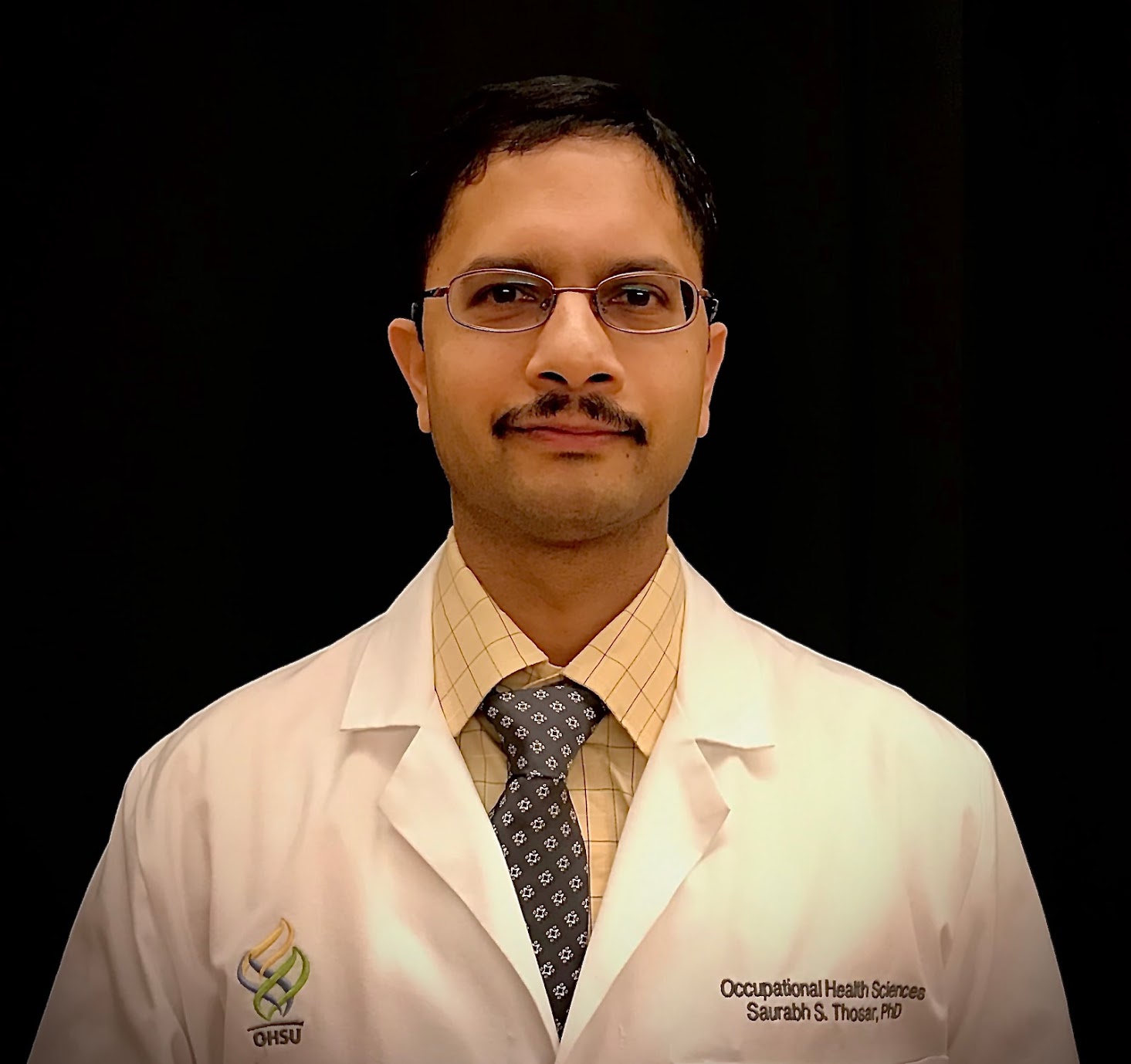
Dr. Saurabh S. Thosar is an Associate Professor at the Oregon Institute of Occupational Health Sciences with secondary appointments in the Schools of Nursing, Medicine, and Public Health at Oregon Health & Science University (OHSU) . His research explores the interplay between sleep , circadian rhythms , and physical inactivity in relation to cardiovascular disease and occupational health . Funded by an NIH R01 grant , his work bridges clinical research, exercise physiology, and public health. Education: B.Sc. in Occupational Therapy (Maharashtra University of Health Science), M.S. in Movement Sciences (University of Illinois at Chicago), Ph.D. in Human Performance (Indiana University Bloomington) Dr. Thosar's research program focuses on circadian physiology , vascular function , and sedentary behavior interventions . His work spans clinical studies on coronary flow reserve , population analyses of workplace health , and mechanistic investigations into sleep-cardiovascular links . Articles in journals like Frontiers in Public Health and Am J Physiol Heart Circ Physiol highlight trends in circadian-modulated cardiovascular biomarkers and sedentary risk mitigation. Scientific Awards: APS Select Award (2019) Sleep Research Society Travel Award (2016) OHSU Research Week First Place (2016) Implementation Science Workshop Travel Award (2015) AASM/NIH Young Investigator Awardee (2015) A culturally aware mentor trained by the OHSU Mentoring Academy , Dr. Thosar investigates chronobiology and occupational health while analyzing ambulatory blood pressure protocols and workplace wellness programs . His lab operates at the intersection of circadian medicine and preventive cardiology .
Andrew Lauland is a Senior International/Defense Researcher and Professor of Policy Analysis at the RAND School of Public Policy. He holds dual roles as an academic and researcher, focusing on homeland security, emergency management, and climate change impacts on critical infrastructure. His expertise includes crisis leadership, public safety technology, law enforcement strategies, and disaster response, with a strong emphasis on data-driven performance management systems. Education: Graduate of Georgetown University and Harvard University's Kennedy School of Government. Research Interests: Climate change risks to National Critical Functions, pandemic preparedness, critical infrastructure resilience, cyber incident response, and law enforcement innovation. His work bridges policy analysis with practical applications, such as designing FEMA's Vanguard Executive Crisis Leaders Program and improving emergency management frameworks. Notable Contributions: Developed Maryland's "Homeland Security Stat" performance management system. Led assessments of climate change threats to critical infrastructure through RAND's Homeland Security Research Division. Authored strategies for disaster recovery in U.S. Virgin Islands and Puerto Rico post-hurricanes. Advocated for technology integration in law enforcement (e.g., wearable tech, broadband communication). Grants and Advising: His research has been applied to federal and state policies, including improving emergency management systems and mitigating risks from technological and climatic threats. He has advised on public safety strategies during crises such as Hurricane Katrina and the 2020 pandemic. Labs/Teams: Active in the RAND Homeland Security Research Division and collaborates with federal agencies like FEMA and the Department of Homeland Security.
Sourindra Banerjee is an Associate Professor of Marketing at Leeds University Business School, University of Leeds. He is actively involved in research, teaching, and leadership, serving as Deputy Director of the Global and Strategic Marketing Research Centre and Chair of the Marketing Division Advisory Board. His educational background includes a PhD from the University of Cambridge, an MSc in International Marketing Management (with Distinction) from the University of Leeds, an MBA from Xavier Institute of Management, and a Bachelor of Engineering from Jadavpur University. Dr. Banerjee’s research focuses on integrating marketing and strategy with advanced analytics, artificial intelligence, and machine learning to solve managerial challenges in international marketing, innovation, and emerging markets. He applies econometric models to large datasets from countries including India, Bangladesh, the UK, USA, Korea, and Germany. His work emphasizes data-driven decision-making in global business contexts. His recent publications span top-tier journals such as Journal of Marketing , Research Policy , Journal of Product Innovation Management , and Stanford Social Innovation Review , reflecting a strong trend toward interdisciplinary research at the intersection of marketing, technology, and emerging economies. His scientific awards include: American Marketing Association’s Excellence in Global Marketing Research Award American Marketing Association’s Innovation, Technology and Interactivity Award for Best Research Paper Dean’s Highly Commended Best Journal Article Award Finalist for the Sheth Foundation Journal of Marketing Award Finalist for the H. Paul Root Award (2020 and 2016) Dr. Banerjee has advised postgraduate researchers including Rafid Ur Rahman, Ali Obaidan, and Ming Cheng. He has received multiple scholarships including the Cambridge Commonwealth Trust Scholarship, British Petroleum Scholarship, Smuts Memorial Scholarship, and Maurice Keyworth Scholarship. He teaches Global Marketing Management in the MBA program and Marketing Strategy in MSc programs. He is affiliated with the Global and Strategic Marketing Research Centre and is a member of professional organizations such as the American Marketing Association, Marketing Science Institute, European Marketing Academy, and Academy of International Business.
Tui McKeown is an Associate Professor in the Department of Management at Monash Business School, Monash University. They are actively engaged in research and teaching, with a strong focus on small and medium enterprises (SMEs), the future of work, and non-standard employment arrangements. Tui is accepting PhD students and contributes significantly to academic and professional discourse in management and industrial relations. Their research interests include SMEs, nano businesses, independent professionals (IPros), contracting, workplace dignity, and the changing nature of work. These areas are explored through empirical studies, policy analysis, and theoretical contributions, often aligned with broader societal goals such as the UN Sustainable Development Goals, particularly those related to decent work and economic growth. Recent publications and projects highlight a consistent focus on regulatory challenges for small businesses, disaster resilience in SMEs, industrial relations reforms, and dignity in work-integrated learning. Their work spans journal articles, book chapters, textbooks, and edited volumes, reflecting both academic rigor and practical relevance. Scientific awards received include: ANZAM Life Fellow (2022) Wilford L. White Fellow (2022) Tui McKeown leads and collaborates on significant research projects such as 'New Technologies, the Future of Work, Skills and Industrial Relations' and 'WIL Dignity,' which explore critical issues in modern employment. They also serve in external leadership roles, notably as President of the Small Enterprise Association of Australia and New Zealand Ltd. Their teaching includes courses like MGC3250 Managing Small Firms and MGF5680 Managerial Problem Solving and Decision Making, contributing to the development of future business leaders. Research labs or teams are not explicitly mentioned, but collaborative projects indicate strong network ties across disciplines and institutions, particularly in industrial relations, education, and small business policy.
Dr. Benjamin Daniels is a Senior Research Fellow and Cancer Institute NSW Early Career Fellow at the School of Population Health , University of New South Wales. His work specializes in leveraging linked administrative health data for cancer treatment analysis, policy evaluation, and pharmacoepidemiological research. Pharmacoepidemiology Cancer Outcomes Research Health Policy Analysis Real-World Data Utilization Education PhD in Pharmacoepidemiology, UNSW MA in Sociology & Statistics, McGill University BSc in Psychology, Drexel University Research Focus Daniels' research explores biologic cancer therapies, polypharmacy impacts, opioid prescription policies, and real-world evidence generation. His work bridges population health science with clinical decision-making frameworks. Publication Trends Recent publications demonstrate expertise in 2024 with methodological innovations in instrumental variable application, dispensing data analysis, and opioid policy evaluation, followed by 2023 studies on HER2-targeted therapies, cancer-cardiovascular interactions, and post-pandemic treatment patterns. Awards 2020 UNSW Medicine ECAN Best Paper Award in Public Health Supervision & Grants Currently supervising Jun Ni Ho (PhD candidate on biologic medicine risk management). Holds active grants including: Cancer Institute NSW Early Career Fellowship (2022-2025): $345,000 UNSW Cancer Seed Grants (2022, 2023): $50,000 each Co-investigator on NHMRC Ideas Grant ($480,000)
Peter Winkler serves as a University Professor in the Department of Communication Science at Paris Lodron University Salzburg. His academic profile demonstrates extensive engagement with contemporary communication challenges, particularly focusing on digital transformation's impact on strategic and organizational communication systems. With continuous scholarly output from 2008 through projected 2025 publications, he maintains active research leadership in the field. Professor Winkler's research interests center on strategic communication in digital environments, with particular expertise in organizational communication, public relations evolution, and digital media strategies. His work critically examines the political dimensions of integrated communication systems, exploring how micro-political dynamics and ideological frameworks shape corporate communication practices. He investigates the paradoxical nature of digital transformation in public relations, analyzing tensions between control demands and flexibility requirements in contemporary communication strategies. His recent publication trajectory reveals a pronounced focus on digitalization challenges in strategic communication, with increasing attention to political dimensions of corporate communication and organizational emergence through communication processes. The VUCA framework appears as a significant conceptual tool in his latest work, reflecting adaptation to volatile, uncertain, complex, and ambiguous communication environments. Dissertationspreis der DGPuK Fachgruppe Public Relations und Organisationskommunikation (2015) EUPPRERA Best Paper Award (2016, 2020, 2022, 2023) Professor Winkler actively contributes to academic discourse through substantial peer review activities for journals including Journal of Communication Management, Business & Society, and Journal of Business Ethics. He serves as project manager for multiple significant research initiatives, notably DigInfluAd Austria and the DIGISKILLS series examining digital competencies in Austria. His advisory activities include participation in habilitation committees and expert assessments, demonstrating institutional leadership beyond direct research contributions.
Yiğit TAŞTAN is a Researcher at Kastamonu University's Faculty of Engineering and Architecture, Department of Environmental Engineering. He holds a Ph.D. in Aquaculture (2024), M.Sc. in Aquatic Products Engineering (2018), and B.Sc. in Fisheries Engineering (2014). Education: Ph.D., Aquaculture, Kastamonu University (2024) M.Sc., Aquatic Products Engineering, Akdeniz University (2018) B.Sc., Fisheries Engineering, Akdeniz University (2014) Professional Experience: Researcher, Environmental Engineering, Kastamonu University (2023–Present) Researcher, Environmental Sciences, Kastamonu University (2023–Present) Research Assistant, Aquaculture, Kastamonu University (2018–2023) His research focuses on water quality and pollution , fish immunology , and environmental toxicology . Key projects include TÜBITAK-funded studies on microplastics-heavy metal interactions in the Marmara Sea and BAP projects evaluating antifungal properties of plant extracts in rainbow trout eggs. With 61 publications and 366 citations (h-index: 11), his work spans pesticide toxicity , microplastic contamination , and natural feed supplements for fish health. Collaborations include researchers from Turkey, Czech Republic, and Philippines.
Damien Motte serves as a Senior Lecturer at the Department of Design Sciences within Lund University's Faculty of Engineering (LTH), Sweden. His role integrates teaching innovation with research in engineering design and product development methodologies across industrial contexts. His academic credentials include: PhD in Product Development from Lund University Research Master in Industrial Engineering from École Centrale Paris MSc in Industrial Engineering from École des Mines d’Albi Motte's research spans production engineering, human work science, and ergonomics with emphasis on agile transformation in manufacturing, 3D food printing applications, and AI-enhanced failure analysis. His work bridges technical design processes with organizational behavior and business model innovation, particularly examining knowledge boundaries in large-scale transformations and emerging technologies' impact on traditional engineering practices. Recent publications reveal an interdisciplinary trajectory connecting engineering design with business strategy and organizational dynamics. Key trends include applying agile principles to hardware development, leveraging additive manufacturing for sustainable food systems, and integrating large language models into reliability engineering frameworks—demonstrating consistent focus on methodological innovation at the intersection of human factors and technical systems. No scientific awards were documented in available sources. Motte actively contributes to academic development through PhD supervision and editorial work. He has served as second supervisor for four doctoral candidates while maintaining editorial board membership for the International Journal of Design Creativity and Innovation, reflecting commitment to both research mentorship and scholarly discourse. No dedicated laboratory or research team affiliations were specified in the source material.