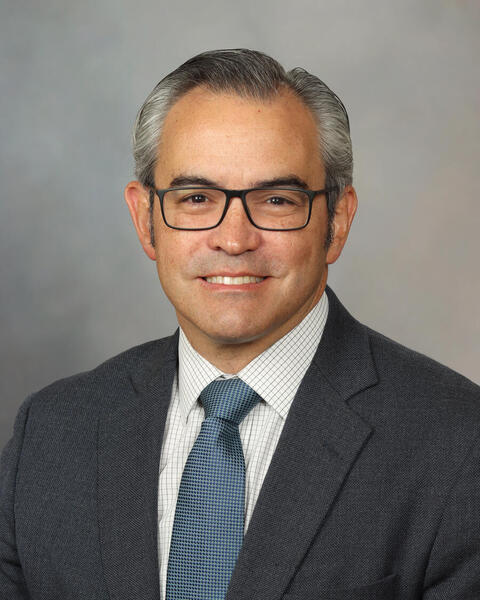
Mu-Jeung YangView profile
Assistant Professor
Mu-Jeung Yang is an Assistant Professor of Entrepreneurship and Strategy at the Leeds School of Business, University of Colorado, Boulder. Previously, he held a tenured Associate Professor position in Economics at the University of Oklahoma, Norman. His research focuses on strategic decision-making in startups and corporations, leveraging novel methodologies like field experiments and structural models to analyze innovation, venture capital dynamics, and the impact of emerging technologies like AI on business strategy. He also investigates macroeconomic phenomena such as trade liberalization effects and pandemic economic impacts through rigorous quantitative frameworks. Key research interests include corporate strategy formulation, R&D investment strategies, AI-driven decision-making, and the interplay between economic policies and firm performance. His work on CEO management practices, innovation spillovers, and global competition has contributed to understanding how organizations adapt to strategic complexities. He has collaborated with institutions like the University of Washington and the University of Utah, teaching advanced courses in econometrics, corporate finance, and machine learning applications in business. Yang's articles span diverse topics such as the productivity implications of industrial AI, the role of board networks in fostering innovation, and pandemic-related economic shifts like tax revenue dynamics during the COVID-19 crisis. His research consistently bridges theory and practice, offering actionable insights for policymakers and business leaders through evidence-based analysis. Teaching: Ph.D. courses in econometrics, corporate finance, and machine learning for business decision-making. Undergraduate classes on venture capital, investments, and firm dynamics. Current Projects: Field experiments on startup financing, data-driven performance pay systems, and the strategic implications of technological uniqueness. Labs/Teams: Collaborates with interdisciplinary teams on real-time economic analysis and pandemic tracking initiatives.