Dr. Rebecca Connolly is an Adjunct Professor at the Sydney Law School, University of Sydney, specializing in International Space Law, Technology Law, and Biotechnology Regulation. Her research addresses global governance challenges in outer space militarization, commercialization, and sustainability, while contributing to agricultural biotechnology policy frameworks. She is affiliated with the Space Law Council of Australia and New Zealand and the International Law Association. Education: LL.B (Hons), LL.M, Ph.D. (Sydney University). Teaching focuses on International Space Law and Technology Law. Recent publications (2023) emphasize regulatory gaps in near-space military activities and outer-space advertising, reflecting her expertise in emerging legal frontiers. Publications span over two decades, with early work addressing WTO disputes over genetically modified foods and AUSFTA environmental cooperation. No scientific awards listed, though her contributions to space law are notable. She supervises in space law and technology law domains, contributing to interdisciplinary legal scholarship.
Ronald J. Colombo is Professor of Law and Associate Dean for Distance Education at Hofstra University's Maurice A. Deane School of Law. He teaches courses in Business Organizations, Securities Regulation, Contracts, and corporate law seminars. He has been on the faculty since 2006 and previously served as Associate Dean for Academic Affairs (2013–2015). Education: JD, New York University School of Law (magna cum laude, Order of the Coif), 1998 BS, Cornell University, 1994 Clerkship: Judge Jerry E. Smith, U.S. Court of Appeals for the Fifth Circuit Professor Colombo’s research focuses on corporate law, securities regulation, financial regulation, and the constitutional rights of corporations, especially First Amendment protections. His work explores the moral and philosophical underpinnings of corporate personhood, religious liberty in business, and the role of trust in financial systems. He is particularly known for bridging legal doctrine with ethical and theological perspectives. His recent scholarly publications reveal a strong thematic trend: the intersection of religion, corporate governance, and constitutional law. He has also contributed to legal education, especially in online teaching methodologies, and continues to publish on financial regulation and corporate ethics. Scientific Awards: Stessin Prize for Outstanding Scholarly Publication Lawrence A. Stessin Prize for Outstanding Scholarly Publication (2008) Professor Colombo has been actively involved in professional service, including serving on the editorial review board of the Review of Business and as an arbitrator for the Financial Industry Regulatory Authority (FINRA). He has not listed any formal research grants or PhD students, but his influence extends through media engagement—quoted in The New York Times , Wall Street Journal , and Bloomberg —and through his widely read op-eds in The Financial Times and Huffington Post . He has held leadership roles in academic administration and is a recognized expert in both practitioner and scholarly legal communities. His treatise Law of Corporate Officers and Directors is republished annually by Thomson Reuters, indicating sustained scholarly and practical impact.
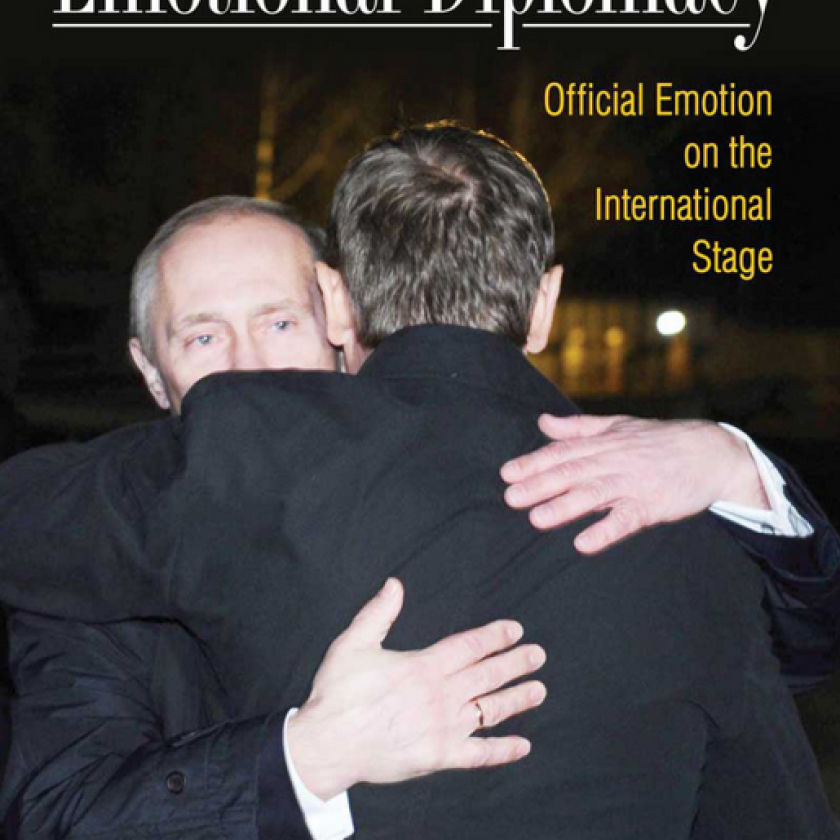
Todd H. Hall is a Professor of International Relations at the University of Oxford's Department of Politics and International Relations (DPIR) and a Tutorial Fellow in Politics at St Anne's College. He directs the University of Oxford China Centre and holds affiliations with the International Relations Network and the Centre for International Studies (CIS). His research focuses on international relations theory, emotional dimensions of diplomacy, and Chinese foreign policy, with particular emphasis on Sino-Japanese relations and East Asian security dynamics. Education: PhD in Political Science from the University of Chicago (2008). Postdoctoral fellowships at Princeton and Harvard Universities, and visiting scholar appointments at Free University of Berlin, Tsinghua University, and University of Tokyo. Research interests include the role of emotions in international politics, China's foreign policy, and the historical parallels between early 20th-century European tensions and contemporary East Asian geopolitics. His award-winning book *Emotional Diplomacy* (2015) explores how states strategically deploy emotion in international relations. Recent publications analyze Huawei's 5G policy dilemmas, China's Belt and Road Initiative, and dispute escalation mechanisms. He advises on East Asian security, including repeated tensions in the South China Sea and Sino-Japanese territorial disputes. Awards include the ISSA 2016 Diplomatic Studies Book Award. Active in policy commentary, his op-eds address Taiwan Strait tensions, China's diplomatic rhetoric, and historical memory conflicts. Labs/Teams: Leads the Oxford China Centre's research initiatives on modern Chinese diplomacy and emotional geopolitics. Collaborates with institutions like the National University of Singapore and Missouri S&T on East Asian security studies.
Dr. Melanie Brunner is a Lecturer in Medieval Studies at the School of History, University of Leeds, and has served as Editorial Director of the International Medieval Bibliography since October 2024. She studied at the University of Augsburg and the University of Edinburgh before completing her part-time PhD at the University of Leeds (2006). Her roles at Leeds include Project Editor of the IMB (2007–present) and teaching in Medieval Studies (2013–present). Education MA in Medieval History, Modern History, and English Language, University of Augsburg PhD in Medieval Studies, University of Leeds (part-time) Melanie's research focuses on late medieval ecclesiastical and religious history, particularly the intersections of theology, canon law, and papal administration. Her work explores the mendicant orders (especially Franciscans), voluntary poverty, religious reform, and papal court dynamics in Avignon (1305–1378). She has contributed to collaborative projects such as Imitation: Mechanismen eines kulturellen Prinzips im Mittelalter (DFG-funded) and Stilus Curiae (DFG), and previously participated in the EU COST Action New Communities of Interpretation . Her recent publications analyze decision-making in the Avignon papal curia, Franciscan polemics, and ecclesiastical authority structures. She supervises PhD students in areas including mendicant orders, bishop administration, and medieval religious discourse, often in co-supervision with colleagues.
Andrew Miller is an Associate Professor in the Electrical and Computer Engineering department at the University of Illinois, specializing in Programming Languages, Formal Methods, Software Engineering, Security and Privacy, and Systems and Networking. His research focuses on blockchain technologies, cryptography, and secure systems. Professor Miller's research spans multiple critical areas in modern computer security. His work primarily focuses on blockchain technologies , where he has made significant contributions to understanding and improving the security, privacy, and performance of systems like Bitcoin and Ethereum. He has conducted empirical analyses of privacy in the Lightning Network and developed protocols for confidential smart contracts. His work in cryptography includes research on multiparty computation, zero-knowledge proofs, and formal methods for cryptographic protocol design. Miller also investigates security vulnerabilities in proof-of-stake systems and resource exhaustion attacks, contributing to the robustness of decentralized systems. His applied security research extends to privacy-preserving health applications, as evidenced by his work on the Safer Illinois platform for COVID-19 contact tracing. Miller's publication record demonstrates consistent contributions to top security and systems venues including IEEE Security & Privacy, ACM CCS, Financial Cryptography, and USENIX Security. His research shows a clear trajectory from foundational work in blockchain security to more applied systems addressing real-world privacy and security challenges. Recent work focuses on making multiparty computation services publicly auditable and developing decentralized identity solutions that maintain compatibility with existing systems. Distinguished Reviewer Award, IEEE Security & Privacy 2018 Professor Miller has advised students including Vivek Nair, who joined the prestigious Hertz Fellows program in 2022. He has taught various courses including Introduction to Algorithms & Models of Computation, Advanced Computer Security, Cryptography, Applied Cryptography, and Ideal Functionality in Cryptography. His research has received support through grants including the SaTC: CORE: Medium project on "Automated Support for Writing High-Assurance Smart Contracts" in 2018. Miller is actively involved in research groups focusing on blockchain security, cryptographic protocols, and privacy-preserving systems. His lab appears to collaborate extensively with researchers across multiple institutions, as evidenced by the diverse author lists on his publications. Current work seems to be focused on making decentralized systems more secure, privacy-preserving, and accessible for real-world applications.
Keith Ewing is a Professor of Public Law at The Dickson Poon School of Law, King's College London since 1989. Previously, he held visiting professorships at the University of Western Australia (1992), University of Alberta (1987-88), and Osgoode Hall Law School (1982). Earlier roles included positions at the University of Edinburgh (1978-83) and University of Cambridge (1983-1989). His research focuses on labour law and constitutional reform, particularly the intersection of social rights and constitutional frameworks. He teaches undergraduate Public Law and graduate European Labour Law. His publications span constitutional law, human rights, and labour rights, with recent works addressing post-Brexit legal frameworks, trade agreements' labour provisions, and emergency governance during the pandemic. Notable books include MI5, the Cold War, and the Rule of Law (2020) and co-edited volumes on the Right to Strike in International Law (2020). His articles frequently analyze judicial roles, electoral democracy, and transnational legal challenges. Ewing has led projects such as the CONPRE initiative (2015-2017) on parliamentary human rights protections and a British Academy-funded study on counter-terrorism and human rights (2007). His work contributes to UN SDGs related to justice, equality, and sustainable development through legal reforms.
Erik P.M. Vermeulen is a Full Professor of Business and Financial Law at Tilburg University and a key researcher at the Tilburg Law and Economics Center (TILEC) in the Netherlands. He also serves as Senior Counsel Corporate/Vice President at Philips International B.V. , focusing on corporate governance, M&A, and securities law. His academic work spans comparative company law, innovation, and sustainable legal frameworks. Current Affiliation: Professor at Tilburg Law School Practice: Corporate governance and venture capital at Philips His research explores how legal structures influence corporate competitiveness and innovation, particularly in digitalization and AI. He emphasizes the intersection of Law & Technology , Responsible Organizations , and Entrepreneurial Finance . Recent article trends include insights on: 2025: AI-driven corporate transformation and global compliance 2024: Gen X's tech struggles and urban well-being 2020: Evolution of governance frameworks He directs Tilburg's International Business Law Program and advises SMEs through the International Venture Club . His global teaching spans institutions in Colombia, Belgium, Japan, and Israel.
Dag Henrik Tuastad is a Professor of Middle East Studies at the Department of Culture Studies and Oriental Languages (IKOS) at the University of Oslo. His research focuses on kinship dynamics in Palestinian politics, rebel governance (notably Hamas rule in Gaza 2007–2023), political representation crises, and the intersection of sports and politics in the Middle East. Current projects include senior research at Football and Religion in the Middle East (FORM) , funded by the Norwegian Research Council (2021–2026) Former project leader for Rebel Governance in the Middle East (2017–2021) PhD in Social Anthropology (2008) on kinship in Palestinian politics His recent publications analyze Hamas’s symbolic authority, football’s role in Jordanian-Palestinian identity formation, and the erosion of legal frameworks in the West Bank. He critiques media bias (e.g., in Qatar World Cup coverage) and explores how football culture reflects broader political tensions. Teaching: Courses on Middle East history, cultural anthropology, and conflict resolution Regional Focus: Palestine, Jordan, Gaza, and the Levant
Catherine Anne Brown is a Professor at the Faculty of Law, University of Calgary with extensive international experience, having held visiting professorships at Stanford University (as a Fulbright Fellow), University of Toronto, UCLA, McGeorge School of Law, and Whittier Law School. Her expertise spans taxation, international trade law, and estate planning across multiple jurisdictions. Her research focuses on the critical intersection of tax and trade agreements, particularly how non-discrimination principles operate within services trade frameworks. Current work examines tax treaty mechanisms for addressing discriminatory practices in cross-border commerce, building on her 2017 monograph "Tax Discrimination and Trade in Services". She actively explores evolving regulatory challenges in digital services taxation and international compliance. Professor Brown's scholarship demonstrates consistent engagement with practical legal applications, bridging academic theory and professional practice through textbooks, treatises, and policy-oriented analyses. Her publications reveal progressive specialization in tax-trade interfaces while maintaining foundational contributions to estate planning education. Her distinguished career has been recognized through: Lifetime Achievement Award (Canadian Tax Foundation, 2017) Doug Sherbaniuk Award for Distinguished Writing (Canadian Tax Foundation, 2014) Award for Distinguished Service in Legal Scholarship (Law Society of Alberta/Canadian Bar Association, 2011) Widdifield Award for estate planning scholarship (2006, 2012) Induction into the International Academy of Estate and Trust Law (2012) As an educator, she directed the Business Clinical program until 2014, providing practical training in business law applications. She maintains active professional engagement through appointments to the NAFTA Chapter 19 roster (2018), STEP Canada's Public Policy Committee (2016), and the Canada Revenue Agency's Offshore Compliance Advisory Committee (2016), while serving on the Legal Education Society of Alberta's Board of Directors.
Dr. Gavin Mount is a researcher at UNSW Canberra , specializing in non-traditional security studies , ethnic conflict , and the sociopolitical implications of emerging technologies . His work bridges theoretical analysis with practical applications in conflict transformation and defense studies. Research Focus: Global politics of ethnic conflict, hybrid peace/war frameworks, and socio-political impacts of drone technology. Teaching: Courses like Ethnic Conflict in World Politics and Law, Force and Legitimacy , with a focus on military education and strategic studies. Publications: Recent work includes contributions to Thinking Swarms (2025) and Hybridity on the Ground in Peacebuilding and Development (2018). Grants: Leads the Curricula Integration of Student Wellbeing Resources project under HERDSA. Key Themes across his research include the intersection of technology and conflict, evolving defense paradigms, and pedagogical innovations in security studies.
George Triantis is the Richard E. Lang Professor of Law and Dean of Stanford Law School. He joined Stanford's faculty in 2011 and has held leadership roles including Senior Associate Vice Provost for Research (2020–2024), Charles J. Meyers Professor of Law and Business (2015–present), and inaugural director of the Stanford Cyber Initiative (2014–2017). Prior to Stanford, he was the Eli Golston Professor of Law at Harvard Law School and held positions at the University of Chicago, University of Virginia, and University of Toronto. His expertise lies in contracts, commercial law, bankruptcy, and the intersection of law with economics and business. Education: B.A. (University of Toronto, 1980), LL.B. (University of Toronto, 1983), LL.M. (University of Virginia, 1986), J.S.D. (Stanford Law School, 1989). Research focuses on contract design principles, bankruptcy processes, and bargaining power dynamics. He has pioneered applying options theory to contracts and authored foundational work on debtor-in-possession financing. His scholarship addresses how economic theories influence legal frameworks in commercial transactions and public policy. Awarded memberships include the American Academy of Arts & Sciences, World Commerce and Contracting Association, and American Law Institute. He taught courses such as bankruptcy law, contract design, and global legal practices, including a program in São Paulo with FGV Brazil. Led initiatives in research integrity, international engagements, and risk management at Stanford. Collaborates with the Rock Center for Corporate Governance and contributes to legal policy debates on innovation and disruption in transactional law.
Dr. Rajesh Sharma is an Associate Professor in the School of Global, Urban and Social Studies (GUSS) at RMIT University, Melbourne, Australia. He specializes in Dispute Resolution, Investment Arbitration, and International Trade Law. His research focuses on arbitration laws in Asia, WTO-related issues, and mediation innovations. He holds a PhD in Law from China's Chinese University of Political Science and Law, complemented by degrees from Monash University and the University of Delhi. Dr. Sharma has advised governments and transnational companies on trade policies and has conducted trainings in over 20 countries. He is a winner of the ADR Teacher Award 2022 in Australia. His professional roles include: Associate Editor of the Manchester Journal of International Economic Law Editorial Board member of China and WTO Review and Asia-Pacific Mediation Journal Member of ICC Australia National Committee and Singapore Convention preparation He has designed unique moot competitions, including the Asia-Pacific Vis Pre Moot, promoting disability inclusion in legal advocacy. His current projects include a book comparing China-India investment laws and commentary on the Singapore Convention. Dr. Sharma's service engagements include roles as Panel Arbitrator for the Shanghai Arbitration Commission and leadership in organizations like the Hong Kong Basic Law Education Association.
David Parrott is a Professor of Early Modern European History at New College, University of Oxford, and serves as Penry Williams Fellow, Tutor in History, and Precentor. He holds a MA (M.A. DPhil Oxf) and completed his BA and DPhil in History at Oxford (Christ Church and Wolfson College) before joining the University of York as a lecturer. Returning to New College in 1992, he specializes in teaching European history between 1500-1700, with a focus on France, Italy, and political/military/cultural themes. His courses include historiography, methodology, and specialized topics like the Thirty Years' War and early modern court culture. His research focuses on 17th-century France and Northern Italy, particularly military history, mercenaries, and private military organizations. Current work explores France’s mid-17th-century crisis. He has published extensively on early modern warfare, including Richelieu’s Army (2001) and The Business of War (2012). No scientific awards are listed, though his scholarly contributions are significant. His teaching and research highlight interdisciplinary approaches to military and political history. While no grants or advising activities are detailed here, his academic roles emphasize mentorship through tutorials and college governance. He contributes to New College’s academic and chapel life as a Tutor and Precentor.
Alessandro Monsutti is a Professor of Anthropology and Sociology at the Graduate Institute of International and Development Studies in Geneva. He holds additional roles as Faculty Associate at the Centre on Conflict, Development and Peacebuilding, Global Migration Centre, and Albert Hirschman Centre on Democracy. His research focuses on transnational networks, forced migration, and conflict dynamics in Afghanistan, Iran, Pakistan, and Europe. Education: PhD in Social Anthropology from the University of Neuchâtel (2002). Prior roles include Research Fellowships at Yale University (2008–2010) and the School of Oriental and African Studies (1999–2000), and Visiting Professorships at the University of Vienna and Arizona State University. Research Interests: Migration studies, border studies, political economy of post-conflict reconstruction, diaspora dynamics, and the intersection of globalization with local practices. His fieldwork spans Afghanistan, Pakistan, Iran, and Western countries, emphasizing the agency of displaced populations and the socio-economic strategies they employ. Scientific Contributions: Over 30 peer-reviewed articles and authored/edited books including Homo itinerans: Towards a Global Ethnography of Afghanistan (2021) and War and Migration (2005). His work bridges ethnographic rigor with policy relevance, addressing themes like refugee integration, urban migration, and global governance. Grants & Awards: MacArthur Foundation Grantee (2004–2006), Swiss National Science Foundation grants for projects on urban cohabitation and Afghan crisis analysis. Co-led initiatives on adolescent migration and border policy in South Asia. Labs/Teams: Collaborates with the Refugee Studies Centre (Oxford), Global Migration Centre (Geneva), and international NGOs like UNHCR. Active in editorial boards of journals like Tsantsa and ethnographiques.org .
Abdi Aidid is an Assistant Professor at the University of Toronto Faculty of Law , teaching Civil Procedure and First Year: Tort Law . He is also a Visiting Associate Professor at Yale Law School (2024–2025) and a Faculty Affiliate at the Centre for Ethics and the Future of Law Lab, focusing on interdisciplinary research at the intersection of law and artificial intelligence. Education: LL.M, University of Toronto J.D., Yale Law School B.A., University of Toronto His research explores access to justice , legal ethics , and the transformative potential of artificial intelligence and machine learning in legal systems. He has published extensively on topics including AI regulation, procedural fairness, and the ethical challenges of integrating technology into legal practice. Recent publications span juridification , human-computer labor division , and generative AI in legal contexts, reflecting his focus on the convergence of law, ethics, and technology. His work has been recognized with awards such as the PROSE Award and a Donner Prize nomination. Scientific Awards: PROSE Award (Association of American Publishers) The Donner Prize (finalist)