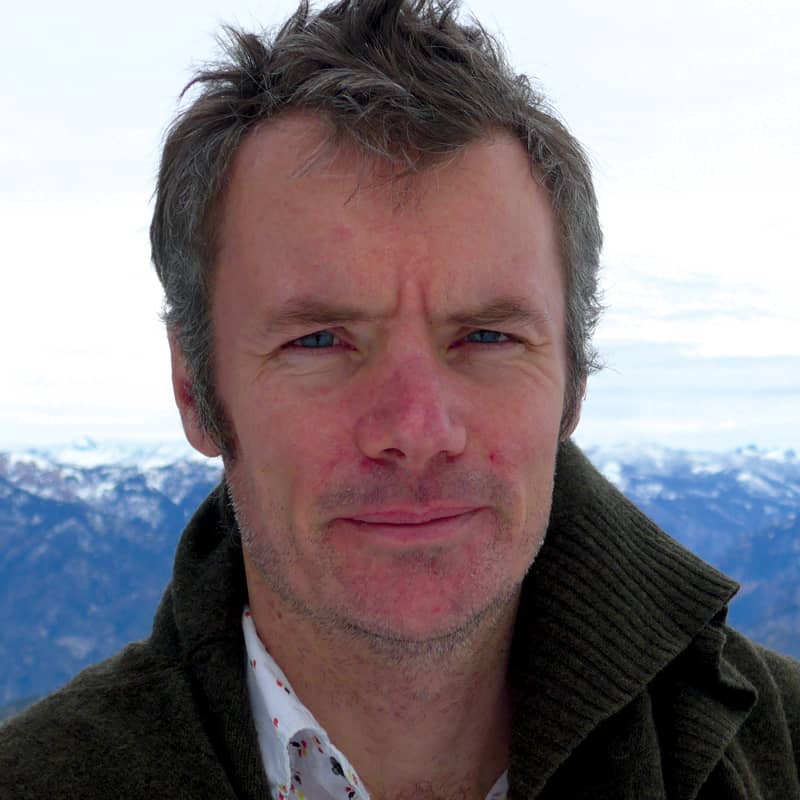
Dr. Jonathan Davies is an Associate Professor at the University of British Columbia's Faculty of Forestry, with dual affiliations in the Department of Botany and Department of Forest and Conservation Sciences. His research focuses on phylogenetic ecology, integrating evolutionary biology with ecological systems to address biodiversity conservation and climate change challenges. Academic Rank: Associate Professor Departments: Botany; Forest and Conservation Sciences Research Center: Biodiversity Research Center Email: j.davies@ubc.ca Research Interests : At the intersection of ecology and evolution, Davies' work explores phylogenetic approaches to conservation science, climate change biology, and disease ecology. His lab investigates: Climate change impacts on biodiversity and disease emergence Phylogenetic dilution effects in forest pest dynamics Evolutionary patterns in plant-herbivore interactions Statistical methods for phylogenetic analysis Global biodiversity patterns and diversification rates Eco-phylogenetics of protected area effectiveness
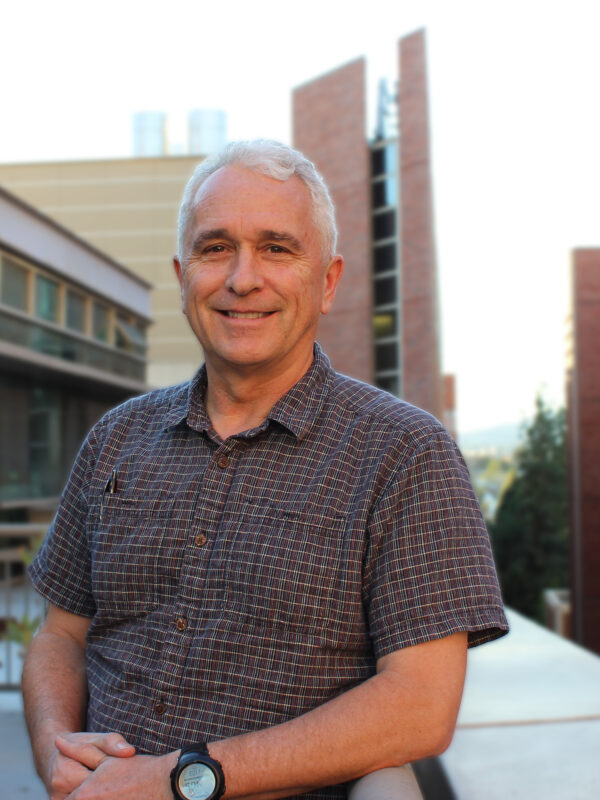
Professor Neil Harris is a leading expert in atmospheric informatics and environmental science at the Cranfield Environment Centre , Cranfield University, where he has served as Chair in Atmospheric Informatics since April 2016. His work bridges atmospheric research with policy, focusing on ozone depletion, climate modeling, and environmental monitoring. Education: BA in Chemistry (Oxford University), PhD (University of California, Irvine). Research Leadership: Co-chair of the Stratosphere-troposphere Processes and their Role in Climate (WCRP) from 2014–2022; currently a member of the WCRP Safe Landing Lighthouse. Research Interests center on atmospheric chemistry, climate change, and environmental policy. Key projects include: Quantifying UK methane emissions using localized measurements. Measuring terrestrial isoprene emissions in Wytham Woods and Southeast Asia. Studying oceanic dimethylsulfide emissions in the Arctic and Antarctic. Developing autonomous instruments for reactive compound monitoring. Investigating aviation's non-CO2 climate impacts (contrails, NOx emissions). Article Trends reflect his focus on atmospheric data analysis, climate modeling, and environmental informatics, with significant contributions to understanding ozone variability, halocarbon transport, and biogenic VOC emissions. Scientific Awards include: NERC 50th anniversary International Impact Award. NERC 50th anniversary Overall Impact Award (Montreal Protocol contributions). Collaborations span NERC, DEFRA, the Royal Society, the European Union, and Newton Fund. He maintains a personal blog on climate and science issues.
Anders Forsman is a Professor in the Department of Biology and Environmental Science at Linnaeus University's Faculty of Health and Life Sciences. He serves as the subject coordinator for doctoral education in Ecology, demonstrating his leadership role in academic training. His research spans evolutionary ecology, population dynamics, and conservation biology with a focus on understanding how evolutionary processes contribute to biodiversity across various taxa including insects, fish, amphibians, and mammals. Forsman's research interests center on evolutionary processes that generate diversity in form, color, function, and behavior among living organisms. He investigates how individual variation in functionally important traits affects ecological success of populations and species in changing environments. His work combines behavioral studies, experiments, genetic markers, and theoretical modeling to address fundamental biological questions with applications for conservation biology and sustainable resource management. His research has significant implications for developing more sustainable agricultural, fishing, and forestry practices in the face of climate change. Analysis of Forsman's recent publications reveals a strong focus on climate change impacts across multiple ecosystems. His work spans terrestrial systems (oak forests, moth populations), freshwater environments (riverine fish, pike ecology), and marine contexts (Baltic Sea microbiomes). A recurring theme is examining how biodiversity responds to environmental stressors, with particular attention to spatial patterns, adaptive capacity, and conservation implications. His methodological approach integrates field observations, experimental manipulations, and molecular techniques to provide comprehensive insights into ecological and evolutionary processes. Forsman leads multiple research initiatives including the Evolutionary Ecology group, Fish Ecology research focusing on Baltic coastal predatory fish, and the Linnaeus University Centre for Ecology and Evolution in Microbial model Systems (EEMiS). His current projects address critical environmental challenges such as climate change impacts on coastal ecosystems, adaptation of forest ecosystems to changing conditions, and effects of river fragmentation on fish populations. His collaborative approach is evident in numerous co-authored publications across diverse ecological topics, demonstrating his ability to bridge disciplinary boundaries to address complex environmental questions.
Professor Natascha Kljun is a leading academic at Lund University , affiliated with the Centre for Environmental and Climate Science (CEC) and the Department of Physical Geography and Ecosystem Science. She serves as Assistant Director and Manager at CEC, and is a Principal Investigator for the BECC: Biodiversity and Ecosystem services in a Changing Climate initiative. Kljun coordinates the MERGE: ModElling the Regional and Global Earth system project and contributes to the LTH Profile Area: Aerosols and LU Profile Area: Nature-based future solutions . Her research focuses on boundary layer meteorology , land-surface-atmosphere interactions , and footprint modelling to determine the upwind surface area of influence for atmospheric flux measurements. She developed the widely used Flux Footprint Prediction (FFP) model, which scales crosswind distribution and improves greenhouse gas budgeting. Her work addresses vegetation-atmosphere carbon and water vapour exchange and upscaling local flux measurements to regional scales, considering heterogeneous surfaces and complex terrain. Current projects include CLIMB-FOREST (European Commission Horizon Europe) and JACOBIAn (atmospheric CO2 and black carbon transport modelling). Kljun is a Web of Science Highly Cited Researcher (top 1% in 2024 and 2025), and her work contributes to UN Sustainable Development Goals 13 (Climate Action), 15 (Life on Land), and 11 (Sustainable Cities). Her recent publications include studies on post-wildfire soil respiration and carbon emissions from Nordic boreal forests.
Dr. Xuliang Li is a Postdoctoral Research Fellow at the School of Mechanical and Mining Engineering, The University of Queensland, within the Faculty of Engineering, Architecture and Information Technology. His work focuses on advanced materials processing, particularly in precision machining of brittle solids and nanoscale surface engineering. Research Themes: Brittle material machining, graphene oxide applications, machine learning integration in manufacturing, and multiscale modeling of deformation mechanisms Recent Publications: 14 studies (2019-2024) covering nanoscratch mechanics, laser 3D-printed ceramics, and innovative polishing techniques Funding: Currently developing ductile grinding techniques for dental prostheses applications (2025-2026) Expertise: Available for supervision in advanced manufacturing and materials science domains Key areas include computational modeling of grinding processes, hybrid nanoparticle suspensions, and ductile-to-brittle transition analysis. His collaborations span multiple disciplines in mechanical engineering and materials science.
Thomas B. Smith is a distinguished Research Professor in the Department of Ecology and Evolutionary Biology and the Institute of the Environment and Sustainability at UCLA. As a founding Co-Director of the Center for Tropical Research and the Congo Basin Institute in Cameroon, he has led interdisciplinary efforts in biodiversity conservation, evolutionary ecology, and climate change mitigation across tropical regions for over 35 years. His work spans Central and West Africa, the Amazon, and beyond. Research Focus: Tropical biodiversity, avian ecology, human-altered ecosystems, and climate change impacts. Awards: Recognized with multiple academic honors, though specific titles are not listed. Collaborations: Partnerships with National Geographic Society, International Institute for Tropical Agriculture, and global conservation teams.
Panagiotis Chatzipantelidis is an Associate Professor and Associate Chair at the University of Crete. He earned his Ph.D. from the same institution in 1998. His office is located in E-318 and he can be contacted via email at p.chatzipa@uoc.gr or by phone at 39-3871. His primary research focuses on numerical analysis and numerical methods for differential equations , with specialized expertise in finite element and finite volume techniques. Key areas include error analysis, positivity-preserving schemes, and adaptive methods for solving parabolic, elliptic, and hyperbolic partial differential equations. Analysis of his 15 most recent publications (2012-2022) reveals consistent work on theoretical foundations of numerical PDE solvers, with particular emphasis on stability analysis and error estimation for finite element/volume methods. Recurrent themes include heat equations, transport phenomena, and chemotaxis systems. No scientific awards or honors are mentioned in the available records. There is no available information regarding student mentorship, research grants, laboratory affiliations, or collaborative teams in the provided materials.
Paul Bergin is a Professor of Economics at the University of California, Davis. He holds affiliations as a Research Associate with the National Bureau of Economic Research, a Visiting Scholar at the Federal Reserve Bank of San Francisco, and an International Research Fellow at the Kiel Institute. Bergin’s editorial roles include Associate Editor at the Journal of International Economics and membership on the editorial boards of the Pacific Economic Review and Contemporary Economic Policy . Education: Ph.D. in Economics (Yale University, 1996), B.A. (Carleton College, 1989, magna cum laude with Harrison Prize in economics) His research centers on international macroeconomics, focusing on topics such as international price dispersion, exchange rate pass-through, monetary policy in open economies, and structural changes driven by trade and globalization. Recent work includes analyses of tariff shocks, capital account policies, and sectoral adjustments in the context of global economic integration. Bergin’s recent publications explore the macroeconomic stabilization of tariff shocks, currency undervaluation, and the role of financial frictions in trade dynamics. His studies often bridge theoretical models with empirical validation, contributing to debates on policy coordination and exchange rate regimes. Scientific Awards: Harrison Prize in economics, magna cum laude at Carleton College Bergin advises graduate students and collaborates with researchers on projects spanning international economics and macroeconomic policy. His teaching includes courses on intermediate macroeconomic theory and international macroeconomics.
James Rising is an Associate Professor at the University of Delaware's School of Marine Science & Policy within the College of Earth, Ocean & Environment, with additional affiliation at the Data Science Institute. His academic journey includes a Ph.D. in Sustainable Development from Columbia University (2015), building on earlier MA and MPhil degrees from the same institution (2013), and a BS in Philosophy from MIT (2003). Dr. Rising's research focuses on the economics of environmental systems, with particular emphasis on climate change impacts, social cost of carbon estimation, and agricultural resilience. His work bridges empirical climate data with economic modeling to assess risks and develop policy solutions for complex environmental challenges, especially in food systems and marine resources. His publication record reveals a strong trend toward increasingly sophisticated integration of climate science with economic analysis, with recent work focusing on meta-analytical approaches to social cost of carbon estimation, climate impacts on agricultural systems (particularly perennial crops like coffee), and cross-boundary effects in marine ecosystems. His methodological contributions include developing practical climate econometrics tools and advancing integrated assessment models. Dr. Rising actively mentors students through project-based courses, guiding research on topics including marine conservation, offshore wind development, and coral reef management. His work with the Climate Impact Lab and other research groups demonstrates his commitment to translating complex climate economics into actionable policy insights. His research has significant policy implications, particularly in climate risk assessment for national economies (including the UK and Delaware), with findings regularly informing discussions about appropriate carbon pricing and adaptation strategies. His work on the social cost of carbon suggests substantially higher values ($283 per ton of CO2) than official estimates, with important ramifications for climate policy.
Max C. N. Castorani is an Associate Professor in the Department of Environmental Sciences at the University of Virginia . As a marine ecologist, he focuses on population and community ecology in coastal ecosystems such as kelp forests, seagrass meadows, and oyster reefs. His research combines long-term observations, experiments, and models to address biodiversity patterns and inform coastal conservation. Ph.D., University of California, Davis and San Diego State University, 2014 Research Interests : The lab investigates ecological dynamics across multiple spatial scales, including disturbance ecology, nutrient cycling, biodiversity conservation, and ecosystem recovery. Key habitats studied are kelp forests, seagrass meadows, and oyster reefs, with interdisciplinary collaborations in biogeochemistry, oceanography, and mathematical modeling. Publication Trends : Recent work emphasizes disturbance regimes in coastal ecosystems, meta-analysis of restoration success, and spatial synchrony mechanisms. Studies often integrate climate change impacts, invasive species interactions, and ecological modeling. Teaching : He teaches courses in Fundamentals of Ecology , Coastal and Estuarine Ecology , Spatial Ecology , and Messy Data: Statistical Methods in Ecology . Research Group : The lab operates in the Department of Environmental Sciences, conducting interdisciplinary research that connects ecological theory with conservation applications.
Annett Junginger is a researcher at the University of Tübingen's Department of Geosciences, leading the Micropaleontology research group and contributing to the Senckenberg Center for Human Evolution and Paleoenvironment (HEP Tübingen). With a career spanning over two decades, she specializes in paleoclimatology, micropaleontology, and environmental-geochemical analysis of rift lakes. Education: Dr.rer.nat. in Paleoclimatology (2011) and Diploma in Geosciences (2006) from University of Potsdam/FU Berlin Key Projects: Hominin Sites and Paleolakes Drilling Project (HSPDP), Chew Bahir Basin studies, Suguta Valley hydrology Her research focuses on paleoclimate dynamics in East Africa, using lake sediments , isotope geochemistry , and micropaleontological proxies to understand climate variability across Quaternary periods. She investigates how hydroclimate fluctuations impacted hominin evolution and dispersal routes, particularly during the African Humid Period (15–5 ka BP) and MIS 12 glacial stage. Recent publications (2024) examine Lake Albert biodiversity via environmental DNA, Lake Naivasha metal sources , and Chew Bahir strontium isotopes . Earlier work includes volcano-tectonic fragmentation of Turkana-Suguta Megalake (2023), paleo-hydrology of Greece (2021), and Angolan diatom studies (2020). She employs multi-sensor remote sensing and phytolith analysis for climate modeling. Teaching responsibilities include BSc/MSc courses in Micropaleontology, Paleontology, and field practicals in Austria. She organizes African fieldtrips (Kenya, Tanzania, Ethiopia, etc.) for paleoenvironmental data collection.
Robert Lonsinger is an Adjunct Assistant Professor at Oklahoma State University's Department of Natural Resource Ecology and Management. He also serves as an Assistant Unit Leader of the U.S. Geological Survey's Oklahoma Cooperative Fish and Wildlife Research Unit. With a PhD from the University of Idaho (2015), he specializes in wildlife ecology, focusing on carnivore behavior, predator-prey dynamics, and conservation genetics. His research emphasizes practical applications for wildlife management, including occupancy modeling and population viability analysis. Education: PhD, Natural Resources, University of Idaho (2015) MS, Wildlife Science, New Mexico State University (2010) BS, Biology, Gannon University (2002) Key Research Interests: Quantitative wildlife monitoring Carnivore ecology and conservation Genetic tools for population assessment Landscape-level habitat dynamics Dr. Lonsinger leads the Lonsinger Wildlife Ecology & Management Lab, collaborating with agencies to address conservation challenges. Recent grants focus on species like pronghorns, skunks, and mussels. He has authored over 40 peer-reviewed articles, emphasizing innovative methods like machine learning for occupancy modeling and camera trap surveys. Teaching responsibilities include graduate courses on occupancy modeling, statistical inference, and scientific writing. He also conducts ATV safety training for professionals. Editorial roles include Associate Editor for the Journal of Mammalogy and Wildlife Society Bulletin . His work bridges academic research with applied management, contributing to biodiversity conservation in changing landscapes.
Nils Henrik Risebro is a Professor in the Department of Mathematics at the University of Oslo, specializing in Partial Differential Equations and Computational Mathematics. His research focuses on conservation laws, numerical methods for hyperbolic systems, traffic flow models, and stochastic processes. He has contributed extensively to the analysis of nonlinear PDEs, with a particular emphasis on well-posedness, numerical schemes, and applications in fluid dynamics and vehicular traffic. Recent work includes studies on continuum limits of non-local Follow-the-Leader models, non-local traffic flow models, and multilevel Monte Carlo methods for random conservation laws. He collaborates frequently with researchers like Helge Holden, Kenneth Karlsen, and Ulrik Fjordholm. His publications span high-impact journals such as SIAM Journal on Numerical Analysis , ESAIM: Mathematical Modelling and Numerical Analysis , and Zeitschrift für Angewandte Mathematik und Physik . Risebro’s articles often bridge theoretical analysis and computational methods, addressing challenges in fluid dynamics, porous media flow, and stochastic PDEs. His work demonstrates a strong focus on rigorous mathematical frameworks with practical engineering applications.
Lisandra Flach serves as Head of the ifo Center for International Economics and Professor of Economics, especially Economics of Globalization, at the Faculty of Economics, Ludwig Maximilian University of Munich since July 2020. Previously, she held positions as Temporary Academic Councillor (2014-2020) and Postdoctoral Researcher (2011-2012) at LMU. Her educational background includes a PhD in Economics (summa cum laude) from the University of Mannheim (2007-2012), an Affiliate Graduate Student position at UC San Diego (2010), and dual undergraduate degrees in Economics and Business Administration from Brazilian universities (UFSC and UDESC/ESAG, 2001-2006). Flach's research focuses on empirical foreign trade economics, with particular expertise in trade policy, global value chains, supply chain resilience, and the economic effects of trade agreements. Her work bridges theoretical trade models with empirical analysis of real-world trade dynamics, examining how firms respond to trade policy changes and global disruptions. Analysis of her publication record reveals consistent contributions to top international economics journals, with recent work increasingly addressing contemporary challenges including supply chain disruptions, geopolitical trade tensions, and the economic implications of US-China trade relations. Her research demonstrates methodological sophistication in analyzing multi-product firm behavior and trade price formation. Capital Top 40 under 40 (2021, 2022) Handelsblatt 100 Frauen die Deutschland bewegen (2021) Wirtschaftswoche 10 Deutschlands spannende Nachwuchs-Ökonomen (2021) Modigliani Research Grant (2018) DFG Research Grant (2016-2018) Brazilian Prize in Economics (2007) Flach leads numerous research projects funded by entities including the European Commission, German Federal Ministry for Economic Affairs and Climate Action, and industry associations. Her current projects examine semiconductor industry economics, resource substitution trade, German industry global value chains, and EU internal market integration. She serves as Associate Editor for the Journal of Comparative Economics and Review of International Economics, and participates in multiple scientific advisory boards including the Research in International Economics and Finance network. Her leadership extends to directing the ifo Center for International Economics, where her team produces influential policy analysis on trade policy, supply chain resilience, and Germany's position in global trade networks. Recent work includes high-impact studies on German dependency on Chinese imports, maritime chokepoint vulnerabilities, and the economic consequences of potential Trump administration trade policies.
Azliyana Azhari is a Lecturer at the Malaysia School of Arts & Social Sciences, Monash University Malaysia. She holds a PhD in Environment and Development from Universiti Kebangsaan Malaysia (2018) and an MSc in Technology Management from Universiti Tun Hussein Onn Malaysia (2012). Her expertise spans climate change communication, public health impacts, and sustainable development. She leads and collaborates on projects addressing climate change adaptation in Malaysia and Indonesia, including WHO-funded research on climate health methods and a National Planetary Health Action Plan survey. Her research focuses on understanding public perception of climate change, health impacts, and policy gaps. Key projects include advancing climate communication frameworks and assessing adaptive capacity in the Asia-Pacific. She actively participates in international conferences and workshops, such as the IAMCR Conference 2023 and the International Conference on Climate Change 2024. Media engagements include commentaries on sea level rise, air quality indices, and indigenous communities' climate resilience. Her 16+ publications span climate literacy surveys, health impact reviews, and environmental policy analyses. She accepts PhD students and emphasizes interdisciplinary approaches combining social sciences with environmental science to address global challenges aligned with UN Sustainable Development Goals.