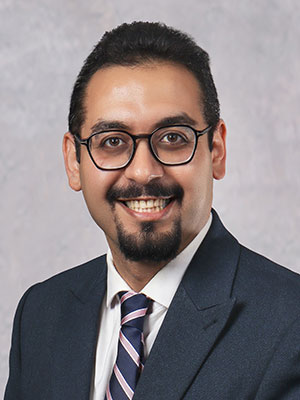
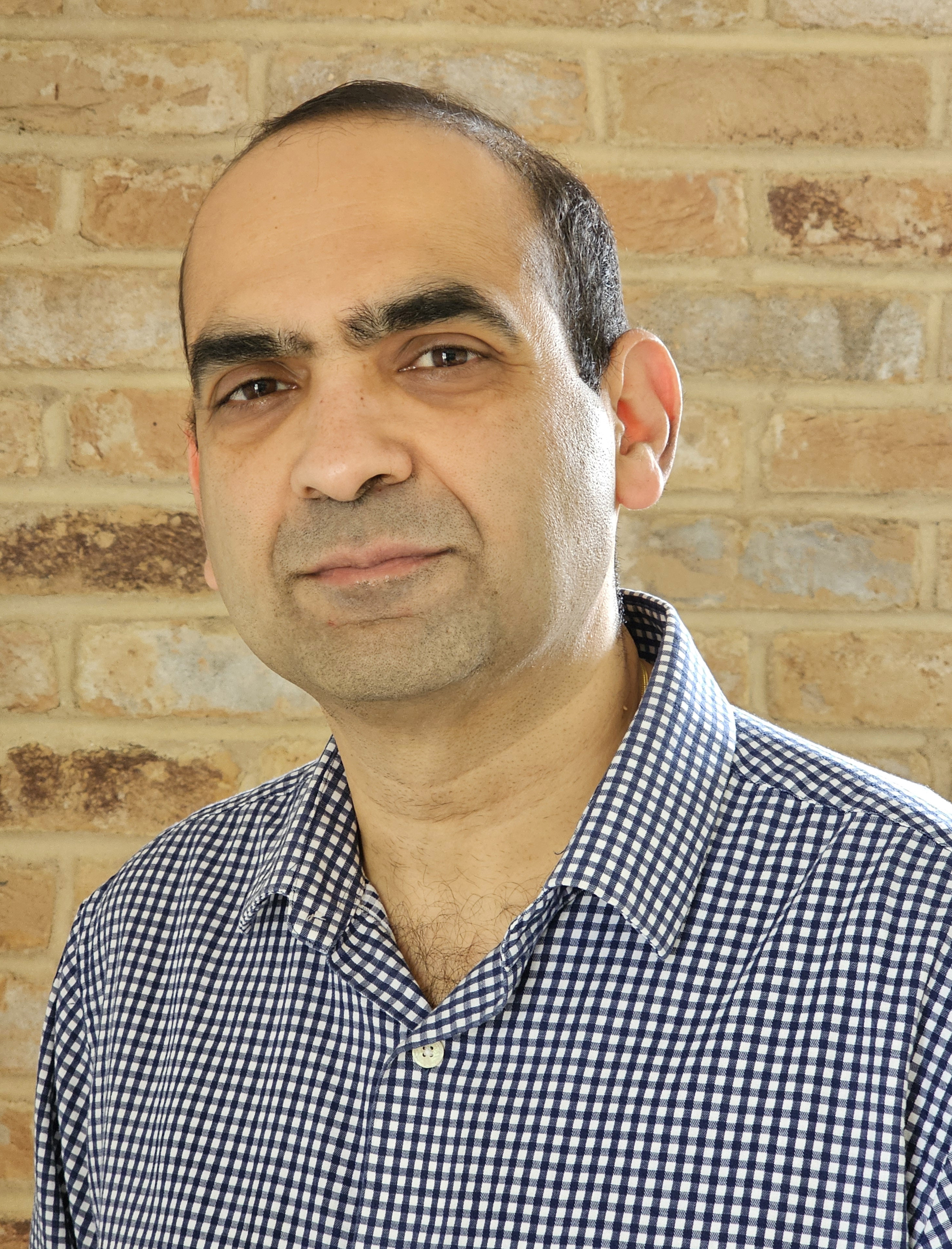
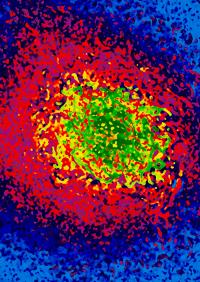
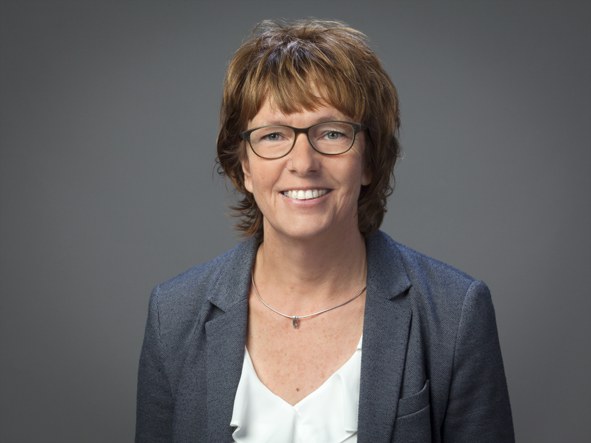
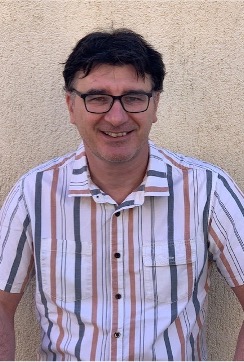
James S. Speck is the Seoul Viosys Professor of Solid State Lighting in the Department of Materials at the University of California, Santa Barbara (UCSB), within the College of Engineering. His research focuses on the materials science of wide bandgap semiconductors such as GaN and β-Ga₂O₃, emphasizing epitaxial growth, defect engineering, and device applications. He holds over 725 publications and has co-founded Soraa, a company commercializing GaN-based lighting technologies. Education: Sc.D. in Materials Science (MIT), S.M. in Metallurgy (MIT), B.Sc.Eng (University of Michigan). Research Interests: GaN-based semiconductors, nitride materials, epitaxial growth mechanisms, nonpolar/semipolar GaN, and β-Ga₂O₃. His work addresses threading dislocations, defect dynamics, and optoelectronic device performance. Awards: IEEE Photonics Society Aron Kressel Award, APS Fellowship, MRS Fellowship, and multiple best paper awards. Key Contributions: Pioneered MBE growth of GaN, developed V-defect engineering for LEDs, and advanced β-Ga₂O₃ research. Collaborates on Soraa’s high-brightness LED technologies. Lab/Teams: The Speck Group studies GaN heterostructures, defect mitigation, and wide bandgap semiconductor applications. Recent work includes V-defect-controlled LEDs and β-Ga₂O₃ etching techniques.
Mohsen Taheri Andani is an Assistant Professor in the Department of Mechanical Engineering at Texas A&M University. He holds a Ph.D. in Mechanical Engineering from the University of Michigan (2022), an M.Sc. in Materials Science and Engineering from the University of Michigan (2018), an M.Sc. in Mechanical Engineering from the University of Toledo (2015), and a B.Sc. in Mechanical Engineering from Isfahan University of Technology (2012). His research focuses on the processing-structure-properties relationships of advanced materials, additive manufacturing, physical/ mechanical metallurgy, and mechanical behavior of materials, with a particular emphasis on grain boundary engineering and crystallographic texture control in metals processed via additive manufacturing methods. Dr. Andani has received prestigious awards including the 2022 Robert M. Caddell Memorial Award for Research, the 2021 Richard and Eleanor Towner Prize for Outstanding Ph.D. Research, and the 2020 Ivor K. McIvor Award, all from the University of Michigan. His work bridges fundamental materials science with advanced manufacturing technologies, aiming to optimize material performance through multiscale control of microstructures. His research group, the Multiscale Manufacturing and Mechanics of Materials (M4) Lab, explores the interface between additive manufacturing and materials mechanics. Current projects include the Center for Scientific Machine Learning for Material Sciences (AFSOR), reducing qualification time in additive manufacturing (America Makes), and structural evaluation via non-contact sensors (DARPA). He actively seeks motivated Ph.D. students for Fall 2025 and welcomes undergraduate/master’s students to join his team. Dr. Andani’s publications emphasize experimental and computational studies of microstructural evolution in additively manufactured metals, including grain boundary effects on dislocation dynamics, crystallographic texture control in NiTi alloys, and thermomechanical property optimization of materials like 316L stainless steel and Cu-Cr-Zr alloys. His work integrates in situ characterization techniques with advanced modeling to predict and enhance material performance.
Roy Johnsen is a Professor in the Department of Mechanical and Industrial Engineering at the Norwegian University of Science and Technology (NTNU), specializing in corrosion and surface technology. With a Dr.ing. degree from NTH (1984), he has extensive industry experience from Statoil Research Centre (1985-1991) and CorrOcean (1991-2004), where he expanded the company globally. His current research focuses on hydrogen embrittlement, corrosion protection, and integrity management in offshore systems, with collaborations across Europe, Asia, and the Americas.
Grethe Winther is a Professor and Head of Section in the Department of Civil and Mechanical Engineering at the Technical University of Denmark (DTU), specializing in Materials and Surface Engineering. Her research is centered on the analysis and modeling of microstructure and mechanical properties of metals, with a strong emphasis on dislocation structures, deformation textures, and recrystallization processes. Her research interests include: Dislocation structures and boundary analysis in deformed metals Crystal plasticity modeling using synchrotron data (3DXRD) Orientation relationships in recrystallization Prediction of mechanical properties in industrial metal forming Multiscale modeling of plastic deformation and surface roughening The recent articles (2025) highlight a consistent focus on advanced characterization techniques like dark-field X-ray microscopy and discrete dislocation dynamics simulations. These works explore the formation of geometrically necessary boundaries, dislocation cell evolution, and multiscale surface deformation, reflecting a strong integration of experimental and computational methods in materials science. Key themes include plastic deformation mechanisms, microstructure evolution, and predictive modeling in metallic systems. Grethe Winther actively supervises multiple PhD projects, including those on dislocation dynamics, X-ray microscopy, and ductile failure simulations. She collaborates extensively with researchers such as H.F. Poulsen and C.V. Nielsen. Her work is supported by ongoing research projects at DTU, focusing on fundamental and applied aspects of metal deformation and microstructure. She is affiliated with the Materials and Surface Engineering section at DTU, where she leads research efforts combining advanced experimental techniques with theoretical modeling to understand and predict metal behavior under deformation.
Vikram Deshpande is a Professor in the Department of Engineering at the University of Cambridge, UK, where he has been employed since 2010. He also maintains significant international connections, having served as a Visiting Professor at the Technical University of Eindhoven (2009-2017) and previously holding positions at the University of California, Santa Barbara and Brown University. His research spans multiple disciplines within solid mechanics and materials science, focusing on fundamental mechanisms that govern material behavior across different scales. His research interests encompass Mechanobiology , where he explores cellular organization mechanisms; Solid mechanics with applications to impact and failure; Data-driven mechanics approaches; Microarchitectured solids including mechanical metamaterials; Fluid-structure interaction in impact scenarios; Chemo-mechanics of battery materials; and Dislocation mechanics for understanding material deformation. His work uniquely bridges fundamental physics with practical engineering applications, particularly in developing materials with tailored mechanical properties. The analysis of his recent publications reveals a strong focus on mechanical metamaterials, cellular mechanics, and electro-chemo-mechanical phenomena in energy storage systems. His research demonstrates a consistent pattern of addressing fundamental scientific questions while maintaining strong connections to practical engineering applications, particularly in materials design, protective systems, and energy technologies. His publications frequently combine experimental approaches with sophisticated modeling techniques across multiple scales. 2024 Zdeněk P. Bažant Medal for Failure and Damage Prevention 2023 Fellow, Royal Academy of Engineering and International Member US National Academy of Engineering 2022 Warner T. Koiter Medal and William Prager Medal 2022 European Research Council (ERC) Advanced Grant 2021 Gili Agostinelli Prize and IIT Bombay Distinguished Alumnus Award 2020 Fellow, Royal Society of London and Rodney Hill Prize Professor Deshpande has served on numerous editorial boards including the Journal of the Mechanics and Physics of Solids (current Associate Editor), Modelling and Simulation in Materials Science and Engineering, and Proceedings of the Royal Society A. He chairs the Royal Society Sectional Committee 4 and serves on the Advisory Board of the European Mechanics Society EUROMECH. His leadership extends to directing the International Conference on Fracture and chairing the EUROMECH Mechanics of Materials Conference committee. His research group at Cambridge, accessible through cambridgesolidmechanics.co.uk, focuses on developing fundamental understanding of material behavior to enable the design of next-generation engineering materials.
Oleg Shpyrko is a Professor and Department Chair in the Department of Physics at the University of California, San Diego (UCSD). He leads a research group focused on nanoscale structural dynamics using advanced x-ray scattering techniques. His work bridges hard and soft condensed matter systems, including magnetic materials, energy storage materials, and biophotonic nanostructures. Shpyrko earned his Ph.D. in Physics from Harvard University in 2004. His research leverages national facilities like the Advanced Photon Source (APS) and Linac Coherent Light Source (LCLS). Key areas include coherent x-ray imaging, domain dynamics in magnetic systems, and operando studies of battery materials. His research interests span: Coherent X-ray Scattering and Imaging Magnetic Domain Dynamics Nanostructured Materials Energy Storage (battery cathodes) Biophotonic Structures Phase Transitions Notable achievements include pioneering X-ray Photon Correlation Spectroscopy (XPCS) for antiferromagnetic domain studies and revealing dislocation dynamics in battery materials. His work has been featured in Nature , Science , and Physical Review Letters . Shpyrko has mentored over 15 graduate students and postdocs, many of whom have become faculty at top institutions. Awards include the NSF CAREER Award (2010), Hellman Fellowship (2009), and the Rosalind Franklin Young Investigator Award (2008). His group operates facilities including Dynamic Light Scattering labs, AFM/EFM microscopes, and collaborates with synchrotron and neutron sources globally.
Jorge Viñals is a Professor at the School of Physics and Astronomy , University of Minnesota, and Director of Graduate Studies. His research focuses on theoretical and computational studies of nonequilibrium phenomena in extended systems, with applications to Soft Matter Physics, Materials Science, and Biomechanics. Affiliation: Director of Graduate Studies, School of Physics and Astronomy Institution: University of Minnesota Collaborations: Minnesota Supercomputing Institute, University of Oslo, Cornell, Carnegie Mellon His work examines mesoscale theories of systems outside thermodynamic equilibrium, particularly unstable interfaces and moving topological defects. Current projects include studies of chiral symmetry breaking in nematic liquid crystals, field dislocation mechanics in defected solids, and biomechanics of epithelial tissue with orientational order. Recent publications highlight computational approaches to nematic defect structure , topological charge quantification , and plasticity modeling . Key journals include Soft Matter , Proceedings of the Royal Society A , and Physical Review B . Key collaborators: Lucas Myers, C.D. Schimming, Luiza Angheluta, Manas Upadhyay Grants: NSF-funded projects on active matter and liquid crystal dynamics, Department of Defense research on intraosseous catheters
Dr. Nianhua Peng is a Liaison Fellow at the Advanced Technology Institute , University of Surrey. His research focuses on experimental manipulation of solid-state materials under extreme conditions such as temperature, pressure, and ion beam irradiation. Key interests include defect engineering in semiconductors, oxygen nonstoichiometry in perovskites, and ion-beam synthesis of novel materials. His work bridges fundamental physics and applied technologies, with applications in energy storage, superconductors, and quantum photonics. Research Interests: Manipulation of physical properties of novel solid-state materials Ion beam synthesis and implantation effects Superconductivity and material degradation under irradiation Energy materials for batteries and electrocatalysis Publications Trends: Recent work emphasizes ion-implantation-induced modifications (e.g., compressive stress in SSEs, ferromagnetism in ZnO) and radiation effects on superconductors. Collaborations span fusion technology, battery chemistry, and quantum photonics. Grants & Advising: Engaged in EPSRC-funded projects and international collaborations, though specific grant details or student advisees are not explicitly listed. Labs/Teams: Active within the Advanced Technology Institute, contributing to interdisciplinary research in materials science and energy systems.
Dr. Xianghai An is a Senior Lecturer and Robinson Fellow at the School of Aerospace, Mechanical, and Mechatronic Engineering at The University of Sydney. He holds the position of Associate Head of School (Research Education). His research focuses on nanostructure design, nanomechanics, and advanced materials processing. Dr. An received his PhD from the Institute of Metal Research, Chinese Academy of Sciences in 2012 and has held prestigious fellowships, including the DECRA and Alexander von Humboldt awards. Education: PhD in Materials Science, Shenyang National Laboratory for Materials Sciences, 2012 Research Interests: Design of light, strong, and damage-tolerant materials Nanomechanics and nanoplasticity Mechanical behavior under extreme conditions Additive manufacturing of metallic materials Awards and Grants: Robinson Fellow and DECRA Fellowships Australian Research Council grants (LIEF, DP, etc.) Recognition for outstanding reviewer contributions Advising: Supervises students in projects related to high-entropy alloys, additive manufacturing, and microstructural engineering. Active in collaborative grants with institutions like Sydney Nano Institute. Labs: Member of The University of Sydney Nano Institute, focusing on advanced materials research.
Stephan Rosenkranz is a Research Fellow and Group Leader at the Materials Science Division of Argonne National Laboratory, where he has been a key figure in advancing neutron and synchrotron x-ray scattering techniques since 2002. He holds a Ph.D. in Physics from ETH Zurich (1997) and a Diploma in Experimental Physics (1992) from the same institution. Educational Background Ph.D. in Physics, ETH Zurich (1997) Diploma (with distinction) in Experimental Physics, ETH Zurich (1992) His research focuses on probing short-range spin, charge, and lattice correlations in strongly correlated electron systems using neutron and x-ray scattering methods. He has led the development of the CORELLI instrument at Oak Ridge National Laboratory's Spallation Neutron Source and pioneered novel approaches to model correlated disorder from diffraction data. Recent publication trends highlight his expertise in charge density waves, spin density waves, and geometrically frustrated magnets. His work integrates experimental scattering with machine learning for big data analysis, particularly in quantum materials like nickelates, iron pnictides, and superconductors. Scientific Awards ETH Pólya Prize (1992) ETH Zurich Medal (1997) University of Chicago Distinguished Performance Award (2006) Fellow of the American Physical Society (2013) Fellow of the Neutron Scattering Society of America (2018) As Co-Director of the National School on Neutron and X-ray Scattering (2018–2024) and former President of the Neutron Scattering Society of America (2013–2016), Rosenkranz plays a pivotal role in training and governance in scattering sciences. He has contributed to beamline reviews, grant panels, and international workshops on competing interactions in transition metal compounds. His leadership extends to the development of advanced x-ray and neutron instrumentation and fostering collaborations between Argonne, Northern Illinois University, and the University of Illinois Chicago through graduate faculty appointments.
Prof. Dr. Regina Dittmann is the Director of the Electronic Materials division (PGI-7) at the Peter Grünberg Institute (PGI), part of the Research Center Jülich. Her research focuses on memristive systems, resistive switching phenomena, and neuromorphic computing architectures. She leads a team exploring novel oxide materials and their applications in advanced electronics, including memristive heterostructures, nanoelectronics, and energy-efficient computing systems. Her work integrates materials science, device physics, and computational modeling to develop next-generation memory and neuromorphic hardware. Key research areas include the design and characterization of memristive devices, understanding ion migration in perovskite materials, and optimizing thermal and electronic stability in nanoscale systems. Recent studies emphasize the role of space charge effects in metal exsolution, the development of fault-tolerant neuromorphic architectures, and the application of synchrotron-based techniques for in-situ material analysis. Her contributions have advanced the theoretical and practical foundations of resistive switching mechanisms and their implementation in energy-efficient computing systems.
Professor Michael Preuss is a leading academic in the Department of Materials Science & Engineering at Monash University, Faculty of Engineering, where he joined in August 2020. He also holds a 20% continuing position at the University of Manchester, UK, where he previously served in multiple leadership roles. His research focuses on the relationship between manufacturing, processing, and performance of structural materials, particularly titanium and zirconium alloys, nickel-base superalloys, and steels for high-temperature and nuclear applications. First Degree: Technical University Berlin, Germany PhD: Technical University Hamburg-Harburg, Germany Michael Preuss’s research interests lie at the intersection of materials processing and performance prediction. He investigates how microstructural evolution during manufacturing affects mechanical behavior, with a focus on reducing safety margins in safety-critical components such as aeroengine parts and nuclear fuel claddings. His work emphasizes in-situ characterisation using advanced tools like synchrotron X-ray , neutron diffraction , digital image correlation , and 3D X-ray tomography . The research is highly interdisciplinary, combining experimental data with modelling to understand degradation mechanisms under stress, temperature, and irradiation. The recent publications highlight a strong focus on irradiation damage in zirconium alloys , plasticity in Ni-base superalloys , and advanced alloy development . These works employ cutting-edge diffraction and imaging techniques to probe dislocation structures, phase evolution, and mechanical onset at micro scales, reflecting a trend toward physically based lifetime prediction models. His work is closely tied to large-scale facilities and national initiatives like the European Spallation Source and the Sir Henry Royce Institute. Scientific awards include: Grunfeld Memorial Medal (IOM3, 2013) ASTM Kroll Medal (lifetime achievement in zirconium research) EPSRC Leadership Fellowship (2011) Fellow of Materials, Minerals and Mining (2016) MWA Research Activation Fund (2024) Michael Preuss actively supervises PhD students and leads major research projects, including those funded by EPSRC and focused on fuel cladding (MIDAS) and advanced manufacturing. He collaborates extensively with researchers across institutions and industries. He chairs the Scientific Advisory Committee of the European Spallation Source and serves on panels for neutron facilities like ILL and ISIS. His labs and research teams are equipped for solid-state additive manufacturing, in-operando micromechanical testing, and advanced microstructural analysis, forming a robust ecosystem for materials innovation.
Cristian Ciobanu serves as Professor in the Department of Mechanical Engineering at Colorado School of Mines, where he has maintained continuous faculty appointment since 2004. His academic journey includes postdoctoral research at Brown University prior to joining Mines, with progressive promotions from Assistant to Associate to full Professor by 2014. Educational background: PhD in Physics, The Ohio State University (2001) MS in Physics, The Ohio State University (1998) BS in Physics, University of Bucharest (1995) His research program integrates computational and experimental approaches to address fundamental challenges in nanoscale surface physics and two-dimensional materials . Specialized expertise includes evolutionary algorithms for atomic structure optimization, development of materials for renewable energy applications, and investigation of self-organized nanostructures on crystal surfaces. Current work emphasizes machine learning applications in high-entropy alloy design and piezoelectric property engineering of layered systems. Publication trends reveal sustained focus on transition metal dichalcogenides, computational materials discovery, and piezoelectric response enhancement through alloying. Recent work increasingly incorporates machine learning for materials design while maintaining strong experimental validation through advanced microscopy and spectroscopy techniques. Key recognitions include: NSF Career Award (2009-2014) Research Excellence Award at Colorado School of Mines (2013) Fellow of the Institute of Physics (elected 2014) Ohio State Presidential Fellowship (2000-2001) Research funding has been secured through competitive mechanisms including the NSF Career Award, supporting his authorship of over 60 technical publications and a coauthored book on atomic structure determination. He actively advises graduate students in computational materials science and nanotechnology research within the Mechanical Engineering department. His scholarly activities are complemented by professional memberships in the Materials Research Society, American Physical Society, and American Vacuum Society. While specific laboratory facilities aren't detailed in source materials, his publication record indicates capabilities in computational modeling, scanning probe microscopy, and thin film characterization relevant to nanoscale materials research.
James Roscow is a Senior Lecturer in the Department of Mechanical Engineering at the University of Bath, affiliated with the Centre for Integrated Materials, Processes & Structures (IMPS), IAAPS, and the Institute of Sustainability and Climate Change. His research focuses on developing ferroelectric composites for energy harvesting, sensing, and energy storage, with expertise in material fabrication, property tuning, and numerical modeling. He holds a PhD in Mechanical Engineering from the University of Bath and a BSc in Materials Science from the University of Manchester. Research interests include porous ferroelectric ceramics, piezoelectric and pyroelectric materials, and their applications in renewable energy and sensors. He has led or contributed to 12 projects funded by organizations like EPSRC and Innovate UK, exploring topics such as low-cost transducers, nanofluid cooling for solar panels, and phase transformations in ceramics. Key publications (2021–2025) address piezoelectric energy harvesting, porous material design, and advanced manufacturing techniques. His work aligns with UN SDGs, particularly sustainable energy and innovation. Roscow supervises PhD students in functional ceramics, energy storage, and sensor technologies. Notable collaborations include projects on hydraulic energy harvesters, SONAR transducers, and self-healing materials. He has contributed datasets on piezoelectric composites and energy storage systems, emphasizing reproducibility and applied research.
Sir Harshad Bhadeshia is a renowned Indian-British metallurgist and Professor of Metallurgy at Queen Mary University of London since 2022. Previously, he held the Emeritus Tata Steel Professorship at the University of Cambridge, where he worked from 1980 until his move to Queen Mary. His research focuses on the theory of solid-state transformations in multicomponent steels , aiming to create novel alloys and processes with minimal resource use. Education: BSc from City of London Polytechnic, PhD from University of Cambridge (1980) under David V. Edmonds Research Areas: Phase transformations in steel, computational modeling, neural networks, Bainite, welding technology, hydrogen embrittlement resistance, nanostructured materials Scientific Awards: Bessemer Gold Medal (2006), Hume Rothery Prize (1992), Rosenhain Medal (1994), Knight Bachelor (2015), Adolf Martens Medal (2017), William Menelaus Medal (2025) Editorial Roles: Editor for Materials Science and Engineering: A , Materials Science and Technology , and Science and Technology of Welding and Joining Students: Roger Reed, Rachel Thomson His Google Scholar publications (over 650) cover topics in metallurgy, phase transformations, computational modeling, hydrogen resistance, and AI in materials science, with a significant emphasis on Bainite, welds, and nanostructured steels. The SKF University Technology Centre (2009-2019) and Computational Metallurgy Laboratory (2005-18) highlight his leadership in industrial collaborations and international research. His scientific awards and fellowships (Royal Society, Royal Academy of Engineering, Institute of Materials, Minerals and Mining) underscore his global recognition.