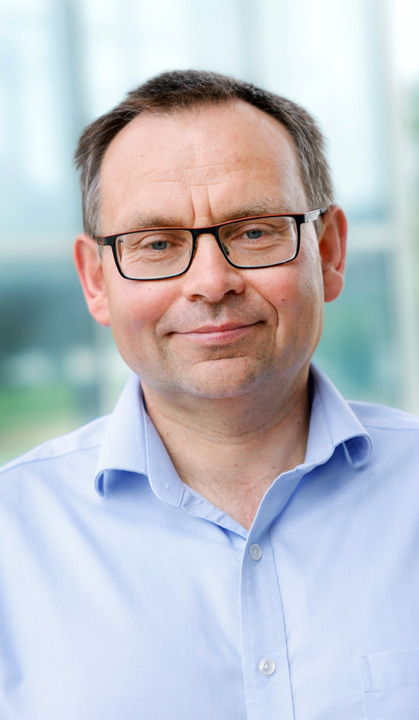
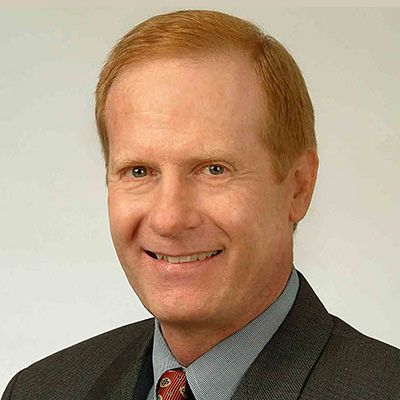
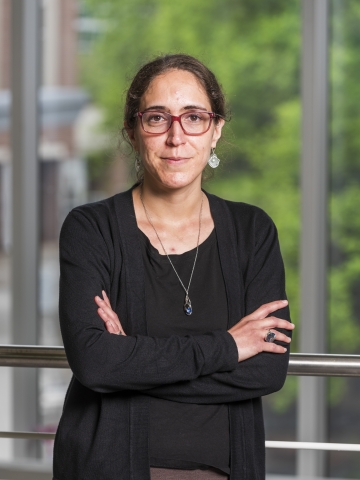
Daniel Hawiger is a Professor at the School of Medicine , Saint Louis University , specializing in the Department of Molecular Microbiology and Immunology . With a career spanning both clinical and basic science research, he has made seminal contributions to immunology through his work on dendritic cells, T cells, and immunomodulation strategies.
Stein Aerts is a full professor at the Faculty of Medicine of KU Leuven and head of the Laboratory for Computational Biology (VIB-KU Leuven). He is affiliated with multiple institutes including VIB.AI Center for AI & Computational Biology, the Leuven Brain Institute, Leuven.AI, LIMNI, LISCO, and the Leuven Cancer Institute. He also serves on the Faculty Council of Medicine and departmental boards. Research Focus: Regulatory genomics and gene regulatory networks Single-cell transcriptomics and epigenomics Deep learning for genomics and enhancer design Neurodevelopmental genomics and evolution Cancer genomics and synthetic biology Comparative genomics across species (Drosophila, octopus, mammals, birds) His recent work emphasizes using AI-driven approaches to decode enhancer logic, model cell-type-specific gene regulation, and understand brain evolution. He leads multiple large-scale projects funded through 2029–2030, including SpaceTimeOmics and enhancer-targeted glioblastoma modeling. Scientific Output: Aerts has a prolific publication record with over 15 high-impact papers in 2024–2025 alone, including in Science , Cell Genomics , Nature Reviews Bioengineering , and eLife . His work spans methodological advances (e.g., HyDrop, CREsted, GAME) and biological discoveries in enhancer function, cell-type evolution, and neurodegeneration models. Institutional Roles & Collaborations: Principal investigator in 10+ active grants (2024–2030) Founder and head of the Computational Biology Laboratory at VIB-KU Leuven Member of steering committees for HPC curriculum and bioinformatics POC Active collaborator across European and international consortia
Jennifer E. Phillips-Cremins, Ph.D. , is an Associate Professor of Genetics and Bioengineering at the University of Pennsylvania, where she leads the Laboratory of Chromatin and Spatial Neurobiology. A member of the Penn Epigenetics Institute and NIH 4D Nucleome Consortium, her research investigates how three-dimensional chromatin organization governs neural specification, synaptic plasticity, and disease pathogenesis. Her lab integrates 3D genome mapping, single-cell imaging, and computational tools to dissect chromatin-synapse communication in Alzheimer's disease, fragile X syndrome, and schizophrenia. Education : B.S. in Chemical Engineering (Clarkson University, 1999), Ph.D. in Biomedical Engineering (Georgia Tech, 2007) Postdoctoral Training : University of Massachusetts (Dekker Lab) and Emory University (Corces Lab, 2008-2013) Her lab has developed groundbreaking technologies including LADL for optogenetic chromatin control, FISHnet for single-cell spatial genomics, and MASTR-seq for repeat expansion analysis. Key discoveries demonstrate that cohesin-mediated loops regulate replication origins and synaptic gene expression, while BREACHes link repeat instability to neurodevelopmental defects. Scientific Recognition : NIH Pioneer Award (2021) NSF CAREER Award (2020) Chan-Zuckerberg Neurodegenerative Disease Awardee (2020) New York Stem Cell Foundation Robertson Investigator (2015-2020) Mentorship : Creator of the SEEDs program for undergraduate/post-baccalaureate training, with 100% of alumni pursuing advanced scientific degrees. Her lab currently trains 3 SEEDs scholars and advises graduate students in Cell and Molecular Biology, Neuroscience, and Bioengineering programs.
Zehang Richard Li is an Assistant Professor in the Department of Statistics at the University of California Santa Cruz. His research focuses on statistical methods for demography, epidemiology, and global health, with expertise in latent variable modeling, space-time models, survey sampling, data integration, and weakly supervised learning. He develops workflows and pipelines for complex statistical analysis and real-world data-driven decision-making. Ph.D. in Statistics from the University of Washington (advisor: Tyler McCormick) Postdoctoral Researcher at Yale School of Public Health (Department of Biostatistics, advisor: Forrest Crawford) His work emphasizes high-dimensional data and uncertainty quantification in prevalence mapping. He leads the development of the SUMMER R package and SAE4Health platform, including ShinyApps for subnational health indicator analysis. Current projects address farmworker health under climate change through a UCOP grant and Bayesian frameworks for integrating verbal autopsy data via NIH funding. Recent publications highlight methodological advances in small area estimation, verbal autopsy analysis, and pandemic modeling. Key article themes include: Bayesian hierarchical modeling and tensor decomposition (2025) Domain adaptation for cross-population cause assignment (2024) Verbal autopsy validation and diagnostic accuracy (2023) Bayesian multilevel poststratification for disease prevalence (2022) Respiratory virus transmission dynamics and immune mechanisms (2021) Grants supporting his research include: National Institutes of Health Melinda and Bill Gates Foundation Vital Strategies Hellman Fellows Program University of California Office of President (UCOP) UCSC Committee on Research He advises Ph.D. students Yu (Zoey) Zhu, Qianyu Dong, Sho Kawano, and Toshiya Yoshida, all of whom have received academic recognition for their work on Bayesian models, small area estimation, and prevalence mapping.
Jody Reimer is an Assistant Professor jointly appointed in the Department of Mathematics and the School of Biological Sciences at the University of Utah. Her interdisciplinary work bridges mathematical theory with ecological applications, focusing on extreme environments including polar regions and Great Salt Lake. She maintains offices in both the Mathematics building (LCB 301) and South Biology building (227), reflecting her dual departmental affiliation and commitment to collaborative research across disciplines. Dr. Reimer's research explores the intersection of mathematics, ecology, and statistical/computational methods to connect models with data. Her work leverages advances in uncertainty quantification, optimal control theory, and data science to understand ecological phenomena. Much of her research is motivated by questions in polar marine biology and Great Salt Lake ecology, with additional collaborative projects spanning diverse biological systems. She develops mathematical approaches to study sea ice ecosystems, polar bear navigation in warming Arctic, and long transient dynamics in ecological systems. Analysis of Dr. Reimer's recent publications reveals a strong focus on mathematical approaches to pressing ecological questions. Her work spans theoretical developments in uncertainty quantification and transient dynamics, alongside applied research on polar ecosystems, wildlife management, and disease modeling. A recurring theme is the development and application of optimal control theory to ecological problems, particularly in understanding animal behavior under environmental change. Her interdisciplinary approach consistently bridges mathematical theory with empirical ecological challenges. Shortlisted for the Robert May Prize for her paper "Matrix methods for stochastic dynamic programming in ecology and evolutionary biology" Dr. Reimer actively mentors a diverse group of students across multiple disciplines, including PhD candidates in Mathematics and Biology, as well as numerous undergraduate researchers. Her lab recently received a 1U4U Seed Grant to support data collection on Great Salt Lake microbialites. She co-organizes significant research initiatives including the ICERM Workshop on Uncertainty Quantification for Mathematical Biology (May 2025) and the SLMath graduate summer school on Mathematics of Climate, Sea Ice, and Polar Ecosystems (June 2025). Current funding supports research on polar bear navigation, sea ice ecology, and Great Salt Lake microbial communities. The Reimer lab operates at the interface of mathematics and biology, with members working on diverse projects spanning polar ecology, Great Salt Lake research, and theoretical ecology. The lab maintains strong connections with field researchers in the Arctic and collaborates with biologists, statisticians, and applied mathematicians across institutions. Recent work includes the "Mathpedition" project documenting academia in the Arctic and collaborative efforts with Polar Bears International on educational initiatives.
Dr. Srinivasan Beddhu serves as a Professor and Dialysis Research Foundation Presidential Endowed Chair in the Department of Internal Medicine at the University of Utah School of Medicine. He also holds an adjunct professorship in Population Health Sciences and serves as the Clinical Research Medical Director in the Department of Internal Medicine. Dr. Beddhu is Scientific Director of the Cardio-Renal & Metabolism Center (CRMC) alongside Dr. Stavros Drakos, demonstrating his leadership in interdisciplinary research. Dr. Beddhu's research focuses on cardiovascular disease, nutritional status, and lifestyle factors in chronic kidney disease (CKD) and dialysis patients. His work encompasses studies of large national databases using advanced statistical techniques and investigator-initiated randomized controlled trials. His research program investigates blood pressure control, diabetes management, nutritional interventions, and physical activity in kidney disease populations, with particular emphasis on how these factors influence cardiovascular outcomes and mortality. Analysis of Dr. Beddhu's recent publications reveals a strong focus on diabetes management in kidney disease, SGLT2 inhibitors, blood pressure control strategies, and innovative interventions targeting sedentary behavior. His work frequently appears in high-impact journals including the New England Journal of Medicine, Journal of the American Society of Nephrology, and Diabetes Care, demonstrating both clinical relevance and methodological rigor. Dialysis Research Foundation Presidential Endowed Chair Dr. Beddhu has received substantial research funding exceeding $10 million from NIH, VA, and industry sources. He has mentored numerous junior faculty, post-docs, fellows, residents, graduate students, and medical students, with several mentees developing into independent, funded investigators. His leadership extends to major clinical trials including the NHLBI-funded Systolic Blood Pressure Intervention Trial (SPRINT), where he served as Co-Director of the Utah Clinical Center Network for 9 years. Dr. Beddhu leads a robust research team conducting studies on cardiovascular outcomes in kidney disease patients. His lab focuses on analyzing large national databases and conducting randomized controlled trials to address critical questions in nephrology and hypertension management. The team's work bridges clinical practice and research, with findings directly impacting treatment guidelines for patients with chronic kidney disease.
Dr. Valerie M. Vaughn is a tenured Associate Professor in the Department of Internal Medicine at the University of Utah. She serves as Director of Clinical Research and holds the Bertram H. and Janet M. Schaap Presidential Endowed Chair. Dr. Vaughn is a national leader in hospital medicine, focusing on reducing diagnostic error and curbing antibiotic overuse during transitions of care. Her collaborative work spans physician decision-making, cognitive error, organizational culture, and quality measure development. Education: MD from University of Michigan, MS in Health and Health Services Research Her research, supported by the Agency for Healthcare Research and Quality, National Academy of Medicine, CDC, PCORI, and Moore Foundation, emphasizes patient safety and value-based healthcare. Dr. Vaughn leads the Antimicrobial Use Initiative within the Michigan Hospital Medicine Safety Consortium and directs the Utah Quality Advancement Laboratory (UQuAL), which trains future healthcare leaders through its Scholars program and Hospitalist team. Recent publications highlight her expertise in diagnostic stewardship, antibiotic overuse, and infection management across diverse clinical contexts. Trends in her work include systematic approaches to antimicrobial use, policy evaluation, and interdisciplinary collaboration. Scientific Awards: Society of Hospital Medicine Fellow (SFHM), American College of Physicians Fellow (FACP), Bertram H. and Janet M. Schaap Presidential Endowed Chair Dr. Vaughn's grants from AHRQ, CDC, NAM, PCORI, and Moore Foundation fund her work in patient safety. She mentors trainees through UQuAL Scholars and leads national collaborations like the ROAD home trial to reduce antibiotic overuse at discharge. Her leadership roles include directing clinical research and quality initiatives.
Professor Christopher Goldring serves as Deputy Executive Dean of the Institute for Systems, Molecular and Integrative Biology at the University of Liverpool's Department of Pharmacology and Therapeutics. He co-directs the Human Liver Research Facility and the Joint Centre for Pharmacology and Therapeutics with XJTLU in Suzhou, China, while holding advisory roles with the MHRA Herbal Medicines Advisory Committee and MRC DiscoveryMedicineNorth doctoral training program. Goldring's research centers on translational drug safety , focusing on developing humanised biologically-relevant models for predicting adverse drug reactions. Key initiatives include: Leading UKRI's 3Dbionet project to enhance 3D in vitro liver models Establishing pipelines for human primary liver cells (>380 samples since 2011) Developing industry-adopted roadmaps for pharmaceutical safety assessment Creating precision-cut tissue slice models for drug metabolism studies Investigating cholangiocarcinoma genomics and targeted therapies Analysis of his 2020-2025 publications reveals three dominant trends: biomarker validation for drug-induced liver injury (DILI), physiological refinement of complex in vitro models (organoids, 3D cultures), and translational oncology focusing on biliary tract cancers. His work bridges academic research with pharmaceutical industry needs through twelve industry partnerships. Recognition includes: Fellow of the British Pharmacological Society Goldring supervises PhD research on stem cell-derived hepatocyte models, DILI biomarkers, and NRF2-mediated immune responses while securing major funding including: TransBioLine consortium (EU Commission, 2019-2025): $22M for translational biomarker development AMMF Charity projects (2017-2026): Cholangiocarcinoma immunosuppression studies NW Cancer Research (2023-2027): Uveal melanoma metastasis modeling MRC/BBSRC grants: Liver model reproducibility and physiological relevance He co-directs the Centre for Drug Safety Science and Human Liver Research Facility, leading teams that include pharmaceutical partners (Janssen, Pfizer, Merck) and international academic collaborators to establish standards for preclinical safety assessment.
Brian Koos, M.D., Ph.D., is a Professor in the Department of Obstetrics and Gynecology at the University of California, Los Angeles (UCLA). He also serves as Vice Chair for Obstetrics and Gynecology and is a member of the Brain Research Institute. His primary affiliation is with the UCLA OB GYN division, where he focuses on fetal physiology and pregnancy complications. His research spans fetal hemodynamics, metabolomics in gestational diabetes and preterm birth, respiratory control mechanisms in neonates, and maternal-fetal interactions in high-risk pregnancies, including those complicated by HIV and congenital heart disease. Key methodologies include animal models (e.g., fetal sheep), metabolomic profiling, and clinical outcome analysis. His publications highlight collaborations with the IMPAACT 1077BF/1077FF PROMISE Study Team, American Heart Association, and interdisciplinary partners. Articles focus on fetal programming, pregnancy biomarkers, and medical guidelines for managing complex maternal conditions.
Helle F Jørgensen is an Associate Professor at the University of Cambridge, based at the Victor Phillip Dahdaleh Heart and Lung Research Institute (VPD-HLRI). She is a Principal Investigator in the Cardiovascular and Respiratory Medicine (CaRM) section of the Department of Medicine and a key member of the Cambridge Cardiovascular Interdisciplinary Research Centre and the British Heart Foundation (BHF) Cambridge Centre of Excellence. Dr. Jørgensen earned her PhD in molecular biology from Aarhus University in 2000 under Professor Brian Clarke. Her postdoctoral training included research on DNA-methylation-binding factors with Professor Sir Adrian Bird at the University of Edinburgh and investigations into transcription factors and epigenetic mechanisms in embryonic stem cell maintenance with Professor Dame Amanda G Fisher at the London Institute of Medical Research. Her research focuses on vascular smooth muscle cell (VSMC) plasticity and heterogeneity in vascular health and disease. She has demonstrated that a small number of pre-existing VSMCs undergo extensive proliferative expansion to generate the majority of cells in atherosclerotic lesions, with similar clonal expansion observed in other vascular disease models. Using single-cell transcriptome profiling, her group has revealed substantial VSMC heterogeneity both in lesions and healthy arteries. This work has significant implications for understanding VSMC behavior and developing selective targeting strategies for disease-associated VSMCs. Her laboratory employs single-cell approaches, lineage tracing, and global epigenetic profiling to study how gene expression programs are regulated and impact phenotypic plasticity in genetic disease models and human tissue. They investigate how VSMCs contribute to atherosclerosis development, the disease underlying heart attack and stroke, with focus on how these cells downregulate their contractile phenotype in response to injury and inflammation. British Heart Foundation Senior Basic Science Research Fellow Dr. Jørgensen's work has important translational implications for cardiovascular medicine. Her research on VSMC heterogeneity and clonal expansion provides critical insights into atherosclerosis pathogenesis and identifies potential therapeutic targets. As part of the BHF Cambridge Centre of Excellence, her research contributes to the broader mission of improving cardiovascular and lung health worldwide through collaborative research across university, NHS, commercial, and charitable sectors. The Jorgensen Group operates within the Victor Phillip Dahdaleh Heart and Lung Research Institute, a state-of-the-art facility that brings together researchers and clinicians to advance understanding of cardiovascular and respiratory diseases. Her work bridges fundamental molecular mechanisms with clinical applications in vascular medicine.
Vivian Loo is a Professor at the Faculty of Medicine and Health Sciences , McGill University , and an Associate Investigator at the RI-MUHC (Glen site) under the Infectious Diseases and Immunity in Global Health Program . She specializes in hospital epidemiology and infectious disease research. McGill University RI-MUHC, Glen site MUHC (Division of Infectious Diseases) Research Interests Dr. Loo's work focuses on Clostridium difficile infections (CDI) , examining epidemiological risk factors, asymptomatic colonization, environmental control strategies, and rapid diagnostic test evaluation. Her studies address healthcare-associated infection prevention, transmission dynamics, and host-pathogen interactions. Scientific Contributions Her research includes: Epidemiology of CDI acquisition Environmental control measures Diagnostic test optimization Host DNA biomarkers in feces Strain typing effects on detection
Sophia K. Smith, PhD, MSW is an Associate Professor at Duke University School of Nursing and a senior scientist in the Duke Clinical Research Institute's Cancer Care Research Program (DCCRP) and Center of Learning Health Care (CLHC). Her work pioneers mHealth and psychosocial solutions to improve cancer survivorship outcomes, with emphasis on non-Hodgkin lymphoma survivors' quality of life and PTSD. Her educational background includes: PhD and MSW from University of North Carolina School of Social Work BS in Business Administration (Information Systems) from State University of New York at Albany Dr. Smith's research integrates behavioral mHealth interventions, comparative effectiveness analysis, and patient-centered outcomes to address cancer care quality gaps. She focuses on survivorship needs across rural/non-rural populations and develops evidence-based supportive care frameworks through program evaluation methodologies. Her 2024-2025 publications reveal three dominant trends: (1) Leadership in NCCN Survivorship Guidelines updates addressing PTSD and palliative care disparities; (2) Biomarker-driven approaches to infection response and cardiac complications in cancer patients; (3) Rigorous examination of racial inequities in hematologic cancer palliative care access. Scientific Awards: No awards documented in provided materials As faculty in Duke's MSN and DNP programs, Dr. Smith mentors nursing students while leading grant-funded initiatives through DCCRP and CLHC. Her research ecosystem leverages integrated data systems for patient-reported outcomes, clinical trial design, and policy studies to advance survivorship care models. She operates within Duke's Oncology Nursing Center of Excellence and collaborates with multidisciplinary teams across DCCRP to develop technology-enhanced symptom monitoring tools and implement evidence-based supportive care services.
James Martin is an Associate Professor in Applied Health Sciences with extensive research activity spanning multiple disciplines including maternal health, obesity prevention, and health economics. His work primarily focuses on cluster randomized trials, cost-effectiveness analysis, and implementation science across global health contexts. His research interests form a distinctive fingerprint centered around Cluster Randomized Trials (100%), Randomized Controlled Trials in Medicine and Dentistry (69%), Cost-effectiveness analysis (35%), and Obesity Prevention (27%). Dr. Martin has made significant contributions to understanding Body Mass Index applications (26%) and Childhood Obesity interventions (26%) in diverse healthcare settings. Recent publication trends reveal a strategic shift toward integrating technological innovations with traditional health research, particularly evident in his 2025 work on Generative AI applications in health research education and data analysis. His research output shows consistent productivity with 49 total publications, including significant contributions to high-impact journals such as The Lancet Obstetrics, Gynaecology and Women's Health and Nature Medicine. Dr. Martin has received notable recognition with publications picked up by 9 news outlets, referenced in 2 policy sources, and shared across multiple social media platforms including 36 X users and 1 Facebook page. His work has attracted substantial academic attention with 157 readers on Mendeley. As a collaborative researcher, he serves as Co-Investigator on multiple major projects including the E-MOTIVE study funded by The Bill & Melinda Gates Foundation, the APT-Sepsis Programme funded by the Medical Research Council, and several other initiatives addressing critical global health challenges in maternal care and childhood obesity prevention.
Tormod Rogne, MD, PhD, is an Assistant Professor Adjunct in Chronic Disease Epidemiology at the Yale School of Public Health. His research focuses on perinatal epidemiology, with particular interest in how climate change affects pregnancy, modifiable risk factors on reproductive health, and the long-term health consequences of being born preterm. He applies modern epidemiological methods including Mendelian randomization, negative controls, and genetic epidemiological approaches to address clinically relevant questions using high-quality population-based data. MD from Norwegian University of Science and Technology, NTNU (2015) PhD from Norwegian University of Science and Technology, NTNU (2016) Residency at Akershus University Hospital and Ski Municipality (2018) Fulbright Scholar at Yale School of Public Health (2019) Postdoctoral Scholar at Norwegian University of Science and Technology, NTNU (2021) Dr. Rogne's research spans several key areas of perinatal and environmental epidemiology. He investigates how environmental factors like climate change and temperature extremes affect pregnancy outcomes and child health. His work also explores the genetic and environmental determinants of reproductive health and adverse pregnancy outcomes. Of particular note is his research on how being born preterm affects long-term risk of cardiovascular and infectious diseases. Dr. Rogne emphasizes the use of high-quality data from population-based cohorts and national registries, applying sophisticated methods like negative controls, inverse-probability weighting, and genome-wide association analyses to ensure robust findings. His recent publications reveal a strong methodological focus on Mendelian randomization techniques to establish causal relationships in perinatal health. His work spans cardiovascular epidemiology, infectious disease epidemiology, and environmental health, with consistent themes including climate change impacts on pregnancy, socioeconomic determinants of health outcomes, and the developmental origins of disease. The geographic scope of his research includes both high-income settings like Norway and global health contexts in Africa. Fulbright Scholarship (2017) Tom Wilhelmsen Foundation's Research Stipend (2013) Dr. Rogne maintains active collaborations with multiple researchers including Andrew DeWan, Xiaomei Ma, Joshua Warren, Kai Chen, Rong Wang, and Zeyan Liew. His work is supported by various research initiatives including the Fulbright Program and the Tom Wilhelmsen Foundation. He is affiliated with the Yale Center for Perinatal, Pediatric and Environmental Epidemiology, where he contributes to advancing research on women's and children's health through epidemiologic studies investigating environmental, genetic, and clinical factors. As part of the Yale Center for Perinatal, Pediatric and Environmental Epidemiology, Dr. Rogne works within a collaborative team focused on promoting women's and children's health through rigorous epidemiologic research. The Center, originally founded in 1979 as the Yale Perinatal Epidemiology Unit, continues to be a leader in investigating how environmental, genetic, and clinical factors impact pregnancy, birth, and childhood development.
Lynn Kamerlin is a Professor at the Georgia Institute of Technology and co-leads the Kamerlin Laboratory, which operates across Georgia Tech and Lund University. Her work integrates computational chemistry and biophysics to address fundamental questions in enzyme evolution, catalysis, and protein design. Education MNatSc in Chemistry, University of Birmingham (UK) PhD in Chemistry, University of Birmingham (UK) Her research spans computational biophysics , focusing on mechanistic biochemistry , protein evolution , and enzyme engineering . Key methodologies include machine learning , molecular dynamics simulations , EVB/QM/MM modeling , and natural language models for protein structure prediction. Recent publications highlight trends in AI-driven enzyme design , conformational dynamics , and mechanistic studies of phosphoryl transfer reactions . Tools like WatCon and Q-RepEx demonstrate her commitment to method development in computational biology. Scientific Awards Georgia Research Alliance Eminent Scholar (2022-Present) Wallenberg Scholar (2020-2024) ERC Starting Grant (2012-2017) Wallenberg Academy Fellowship (2014-2019, prolonged 2019-2024) Young Academy of Europe Chair (2014-2015) Fellow of the Royal Society of Chemistry (2017) Her lab collaborates with experimental groups worldwide, leveraging enhanced sampling techniques and structural bioinformatics to engineer enzymes with tailored properties. Grants from the Swedish Research Council and European Research Council underpin her research on enzyme evolution and catalytic mechanisms. Current projects include computational design of thermostable enzymes , allosteric modulators for biomedical targets, and modular protein scaffolds . The lab also investigates non-canonical amino acid incorporation and FAIR data principles in biomolecular simulations.