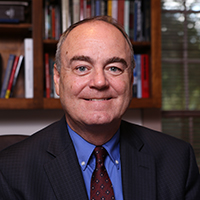
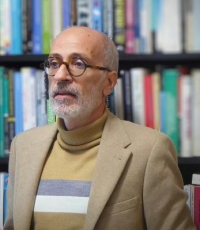
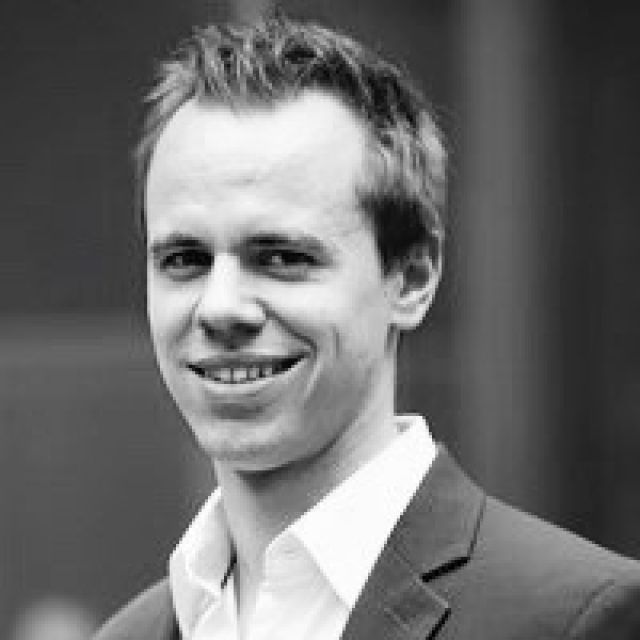
Christos Dimas serves as an Adjunct Lecturer in Economics at the School of Business Administration. He holds a PhD in European Political Economy from the London School of Economics, an MSc in Comparative Politics from LSE, and law degrees from the University of Athens and Queen Mary University of London. His research examines European integration, privatization policies (particularly in telecommunications), and institutional reforms. Publications analyze consumer behavior, political discourse during economic crises, and Greek privatization frameworks. Additional roles include Deputy Minister of Development and Investments (2019) and membership in OSCE and Mercator European Dialogue delegations. He completed specialized training in Internet Governance through Oxford's Google-sponsored program.
Brita Backlund Rambaree is a Lecturer at the University of Gävle specializing in corporate social responsibility (CSR) and sustainability governance. Her doctoral research examined discursive constructions of CSR within institutional contexts, establishing frameworks for analyzing corporate sustainability reporting practices. Rambaree's current research investigates: Health and wellbeing dimensions in CSR reporting Environmental justice in global contexts Disaster governance frameworks Stakeholder engagement methodologies Her publications employ case study methodologies to examine sustainability practices across industries and nations, with particular focus on food/beverage sector reporting and disaster governance in Mauritius. Recent work proposes innovative metrics for assessing health impacts in CSR frameworks. Research collaborations include comparative environmental justice studies across Mauritius, Peru and Sweden, examining how institutional configurations affect sustainability outcomes. Methodologically, her work combines critical discourse analysis with stakeholder theory to deconstruct power dynamics in corporate sustainability narratives.
Dr Kamil Aksiuto is an Assistant Professor at the Department of Communication and Media Studies, Faculty of Political Science and Journalism, Maria Curie-Skłodowska University (UMCS). He specializes in political philosophy, media studies, and liberal democratic theory. Academic Rank: Assistant Professor Department: Communication and Media Studies University: Maria Curie-Skłodowska University His research interests focus on: Political philosophy, particularly analyzing liberalism through the works of thinkers like John Stuart Mill, Isaiah Berlin, and Richard Rorty Democratic theory, including deliberative democracy and critiques of modern governance Media studies, examining public sphere dynamics and cultural politics Social capital and civic participation in Central European contexts Critique of concepts like political correctness and multiculturalism Recent publications include analyses of: Richard Rorty's cultural philosophy (2025, 2022) Liberal theories of secession and multiculturalism (2019, 2017) Alasdair MacIntyre's critique of modern state and natural law (2020, 2016) Political dimensions in music (2021) Evolution of sacred concepts in Habermas's thought (2023)
Katarina Ståhlkrantz is a Senior Lecturer in Pedagogy at the Department of Education, Linnaeus University. She is affiliated with the Studies in Curriculum, Teaching and Evaluation (SITE) research group, focusing on curriculum theory and didactics. Her research explores school governance, educational leadership, and how principals contribute to school development through pedagogical leadership. She holds a PhD in Education (2019) and teaches in the Principal's Program, specifically the Governance, Organization and Quality course. Her work critically analyzes Swedish educational policy documents from the 1920s to present, tracing shifts in expectations of school leaders. Current research examines multilevel governance structures and the role of trust in school improvement. She frequently collaborates with the Centrum för pedagogisk ledning (Center for Educational Leadership) and has published widely on boundary spanning leadership, accountability-professional autonomy tensions, and the implications of national professionalization programs. Key themes in her 30+ publications include leadership agency in policy contexts, the translation of standards-based curricula, and the interplay between administrative structures and pedagogical practices. Her work bridges theoretical frameworks like discursive institutionalism with practical educational challenges.
Stephen E. Hanson is the Lettie Pate Evans Professor in the Department of Government at William & Mary, where he also served as Vice Provost for Academic and International Affairs from 2011 to 2022. He previously led the Reves Center and held leadership roles at the University of Washington. His academic background includes a Ph.D. in Political Science from UC Berkeley and a B.A. from Harvard University. B.A. in Social Studies, Harvard University (1985) Ph.D. in Political Science, University of California, Berkeley (1991) Hanson’s research centers on comparative politics, particularly democratization, political ideology, and institutional change in post-communist societies. His work emphasizes Russia, Eastern Europe, and Central Asia, with a strong methodological focus on qualitative analysis and historical comparison. He has contributed extensively to debates on the legacies of empire, the design of democratic institutions, and the role of ideology in shaping political systems. The 15 most recent articles reflect a sustained engagement with post-communist transitions, democratic theory, and comparative institutional analysis. His publications span major journals in political science and area studies, demonstrating interdisciplinary reach and theoretical depth. Recurring themes include ideological persistence, authoritarian resilience, civil society development, and the challenges of democratic consolidation in post-Soviet contexts. Notable scientific awards include the Wayne S. Vucinich Book Award, University of Washington’s Distinguished Teaching Award, and the Outstanding Undergraduate Mentor Award. William & Mary received the Senator Paul Simon Award for Campus Internationalization during his tenure as Vice Provost. Wayne S. Vucinich Book Award (1998) UW Distinguished Teaching Award (2004) UW Outstanding Undergraduate Mentor Award (2005) Senator Paul Simon Award (2016, institutional) Hanson has advised major academic initiatives, including serving as Academic Director of PONARS and team lead on Russian domestic politics for the Obama 2008 foreign policy advisory group. He has secured research funding from the Social Science Research Council, U.S. Department of State, U.S. Department of Education, and the Henry M. Jackson Foundation. His visiting appointments at Harvard, Yale, Oxford, and the Wilson Center highlight his international scholarly impact. He has been actively involved in academic governance, serving on editorial boards of Slavic Review , Comparative Politics , Comparative Political Studies , and Demokratizatsiya . From 2002 to 2009, he was Assistant General Editor of Cambridge University Press’s Series in Comparative Politics, contributing to the dissemination of high-impact scholarship.
Franco Zappettini is an Associate Professor in the Department of Political Science at Sapienza University of Rome. He teaches courses in English Language and Communication and English Language and Linguistics, with a focus on political and international contexts. His academic work bridges political science, linguistics, and media studies. His research interests include critical discourse analysis, political communication, media emotionalization, Euroscepticism, and identity construction in European politics. He examines how language shapes political narratives, particularly around Brexit, migration, and EU disintegration. His work employs corpus-based, big data, and discursive methodologies to analyze media, political speeches, and public debates. Zappettini's recent publications explore the normalization of hate speech, the branding of Brexit, Twitter communication strategies, and the tabloidization of political discourse. His work appears in leading journals such as Critical Discourse Studies , Journal of Language and Politics , and European Journal of Communication , reflecting a strong thematic focus on the intersection of language, power, and ideology in contemporary politics. Scientific Awards: No scientific awards mentioned in the provided text. Advising and Grants: While formal student advising is not detailed, Zappettini supervises student research through course-based assessments requiring independent analysis of political texts. There is no mention of specific research grants, but his publication output suggests active research engagement. Labs and Research Teams: No specific lab or research team is mentioned, but his work implies collaboration within discourse and political communication research networks, likely involving digital text analysis and corpus development.
Jeffrey Murer is a Senior Lecturer in Collective Violence at the School of International Relations, University of St Andrews. He serves as Deputy Head of School and is affiliated with multiple research centers, including the Handa Centre for the Study of Terrorism and Political Violence. His work intersects sociology, politics, and psychoanalysis to examine identity formation through violence and political conflict. Ph.D., University of Illinois Urbana-Champaign (1999) B.A., University of Wisconsin-Madison (1988) Research focuses on collective violence, political psychology, and identity dynamics in post-communist Europe, the Balkans, and immigrant communities in the UK. His recent publications analyze symbolic violence against Romani women and border theories in multimodal art. Scientific awards include the Annual Graduate Dissertation Prize (University of Illinois at Chicago, 2000), Founding Scholar of the British Psychoanalytic Council (2016), and Fellowships at Cambridge and Paris VII. He has supervised 13 advisees and led projects funded by the British Council and Carnegie Trust.
A/Prof Fanny Salignac is the Acting Dean of the Graduate Research School and Director of Research at the Transdisciplinary School at the University of Technology Sydney (UTS). With a PhD in International Business (Business Ethics) from the University of Sydney, her career spans European and Australian institutions including Kedge Business School (France) and UNSW Sydney. She received the 2016 UNSW Business School UN PRME Excellence in Teaching Award. Current roles focus on social justice, sustainability, and transdisciplinary collaboration Expertise in Social Change, Impact, Policy, and Systems Thinking Supervises Masters and PhD students at UTS Research interests center on: Social Policy and Systems Thinking Circular Economy and Sustainable Innovation Gender Equality in Male-Dominated Industries Financial Wellbeing and Resilience Institutional Logics and Policy Dynamics Recent publications show consistent focus on: Circular Economy (4/15 papers) Gender Dynamics (3/15 papers) Financial/Social Resilience (3/15 papers) Institutional Change (3/15 papers) Collaborative Ecosystems (2/15 papers) Scientific recognition : UN PRME Excellence in Teaching Award (2016) 20+ publications with 500+ total citations Active grants on parental-care integration (2025) and academic transitions (2024) Academic contributions include: Founding 'Council for the Advancement of Career and Parental-Care Integration' (2025) Teaching Social Impact and Business Ethics for 10+ years Leadership in transdisciplinary research and graduate education
Sébastien Billioud is a Professor at University of Paris Cité and researcher at the French Institute of East Asian Studies (IFRAE) . His work bridges anthropology, sociology, and philosophy to analyze Confucianism's contemporary revival , Yiguandao religious dynamics , and cross-strait cultural/political interactions . Key Research Areas: Modern/contemporary Confucianism New Religious Movements in East Asia Politics-religion interplay in China/Taiwan Charisma and leadership structures Billioud's fieldwork across Hong Kong, Taiwan, and mainland China (2009–present) underpins his ethnographic approach. He meticulously documents Yiguandao's expansion , its syncretic practices , and state-religion negotiations , while tracing Confucianism's grassroots resurgence. Selected Publications: Reclaiming the Wilderness (Oxford 2020) Le Sage et le Peuple (CNRS 2014) Thinking Through Confucian Modernity (Brill 2012) Confucianism for the 21st Century (Göttingen 2023) His research reveals interdisciplinary trends in Confucian revivalism, showing how education , ritual innovation , and transnational networks reshape East Asian cultural landscapes. Scientific Recognition: Recipient of Prix Bernheim 2015 (Académie des Inscriptions et Belles-Lettres)
Dr. Federico Davila Cisneros is a Research Director and Senior Lecturer in Food Systems at the Institute for Sustainable Futures, University of Technology Sydney (UTS). Joining UTS in 2018, he has established himself as an interdisciplinary social scientist specializing in systems-based approaches to food and nutrition security. His work focuses on understanding and addressing the complex links between human and environmental systems in the context of social and climate change, with particular emphasis on Pacific Islands agriculture and coastal fisheries. Dr. Davila Cisneros' educational background includes: PhD in Human Ecology from the Australian National University (2019) Master of Environment (Research) from the Australian National University Bachelor of Interdisciplinary Studies (Sustainability) from the Australian National University His research interests span food systems transformations, sustainability science, and climate change adaptation. Dr. Davila Cisneros applies systems thinking methodologies to understand the integration of biophysical and socio-economic knowledge in food systems, with a focus on Pacific Island contexts. His work examines regenerative agriculture, urban sustainability transformations, and the water-food nexus, always considering power dynamics and social equity dimensions. He employs transdisciplinary research approaches that bring together academic, private, and public sector partners to address complex sustainability challenges. Dr. Davila Cisneros has secured significant research funding from organizations including DFAT, ACIAR, World Vision, WWF, and the Pacific Community. His collaborative projects span Australia and multiple Pacific countries, addressing food security, climate resilience, and sustainable agricultural development. His research has directly influenced strategies and funding decisions of Australian and international agencies seeking to support food systems undergoing radical change. He currently supervises four PhD students researching regenerative agriculture, urban transformations, food packaging and circular economy, and performance evaluation in the development sector. His supervision portfolio includes: Fiona Lord - Sustainable development transformations in Southeast Asia's urban environments (Co-supervisor) Ethan Gordon - Regenerative agriculture in Australia (Co-supervisor) Anja Bless - The politics of regenerative agriculture (Principal Supervisor) Dr. Davila Cisneros is deeply involved with the Institute for Sustainable Futures at UTS, where he leads research teams working at the intersection of food systems, climate change, and social equity. His team collaborates with key stakeholders across academic, private, and public sectors, maintaining long-term partnerships with organizations including the Pacific Community, Australian state agriculture and fisheries agencies, WWF, AWP, CSIRO, ACIAR, World Vision, and DFAT.
Audrey Cartron serves as Lecturer in English Studies at the Faculty of Foreign Languages and Cultures (FLCE) of the University of Nantes, teaching specialized English courses across undergraduate and graduate levels including Business, Marketing, and Corporate English (L1-L3, M2 LEA), British and American Civilization, oral translation, and spoken English for the Trilingual Lawyer program. Her doctoral research completed at Aix-Marseille University in 2022 established foundational work in police English as a specialist language. Key research areas include: Discursive approaches to specialized language teaching Police discourse analysis (suspect interviews, affidavits, humor functions) Business English lexicon and cultural dimensions Didactic transposition of specialized knowledge Dictionarization processes in professional contexts Cartron's publication trajectory (2019-2025) reveals progressive specialization in police linguistics, with increasing methodological sophistication in genre analysis. Her 2023-2025 work shifts toward refining discursive teaching frameworks while maintaining empirical focus on American police discourse. The research consistently bridges theoretical linguistics with practical pedagogical applications for LEA programs. No scientific awards are documented in the available information. As a lecturer, Cartron likely supervises student projects in specialized English domains though specific advisees aren't listed. Her research appears institutionally supported through her academic position, with publications in reputable journals like ASp and Languages, but no explicit grant information is provided. Collaborations with scholars across French institutions indicate active academic networking.
Helena Wahlström Henriksson is Professor in Gender Studies at Uppsala University's Centre for Gender Research, where she also holds a Docent qualification in American Literature. Her academic career spans over two decades with significant contributions to feminist theory, masculinity studies, and family/kinship research. Education: BA (Fil Kand) in English and Comparative Literature (1991) PhD (Fil Dr.) in American Literature (1997) Docent in American Literature (2010) Professor in Gender Studies (2016) Professor Wahlström Henriksson's research combines literary and cultural studies methodologies with feminist theory and masculinity studies. Her work primarily focuses on representations of family and kinship, particularly fatherhood and gendered parenthood, childhood and orphanhood. She has led significant research projects including The Swedish Network for Family and Kinship Studies (2014-2019) and currently chairs the FAMKIN research group. Her ongoing collaborative project 'Single Parents in Swedish Media: On "Lone" Parenthood 2010-2020' with Professor Disa Bergnehr examines how single parents are represented in Swedish newspapers, film, television, and life writing. Her recent publications demonstrate a clear trajectory toward analyzing contemporary Swedish family structures and representations, particularly focusing on single parenthood. The 15 most recent articles reveal a strong emphasis on media representations of lone mothers and single fathers, breastfeeding narratives, and the intersection of gender equality policies with family life. Her work consistently bridges American literary studies with contemporary Swedish cultural contexts. Professor Wahlström Henriksson has secured substantial research funding, including multiple grants from the Swedish Research Council (2009-2011, 2017-2020) and FORTE (2016-2018). She has collaborated extensively with researchers at Karlstad University, Södertörn University, and Linnaeus University. Her leadership roles include heading The Swedish Network for Family and Kinship Studies and chairing the FAMKIN research group at the Centre for Gender Research. She maintains an active presence in the Centre for Gender Research at Uppsala University, with regular contact information listed and ongoing research projects that continue to shape discourse around gender, family, and kinship in Swedish society.
Ragnar Weilandt is a postdoctoral research fellow at the Norwegian University of Science and Technology (NTNU) in Trondheim, conducting research within the Reconfiguring EU Democracy Support (REDEMOS) project. His work centers on European Union external action with specific focus on Euro-Mediterranean relations and political dynamics in West Asia and North Africa. Education: PhD in EU democracy promotion in Tunisia, jointly awarded by Université libre de Bruxelles and University of Warwick through the GEM programme Dr. Weilandt's research examines the complex interplay between security imperatives, stability concerns, and democratic governance in EU external relations. His scholarship critically analyzes EU democracy promotion efforts in Tunisia and Morocco, investigating how crises like the Covid-19 pandemic accelerate democratic backsliding while exploring the contested reception of EU norms in recipient states. His work reveals persistent tensions between EU normative aspirations and practical implementation challenges in volatile political contexts. Analysis of his 2018-2025 publications shows consistent thematic focus on democracy support mechanisms in the Mediterranean and Eastern neighbourhood, with increasing attention to conceptual frameworks for evaluating success/failure in democracy building. His interdisciplinary approach bridges political science, international relations, and area studies, frequently employing comparative case analysis of Tunisia, Morocco, and Eastern European states to expose limitations in EU democracy promotion strategies. Scientific Awards: No awards documented in available sources As a postdoctoral fellow, Dr. Weilandt currently serves as a researcher within the REDEMOS project framework rather than as a primary advisor. His work receives institutional support through NTNU's research infrastructure and project-specific funding for the REDEMOS initiative, which examines EU democracy support reconfiguration in response to global democratic challenges. Dr. Weilandt operates within the REDEMOS project team at NTNU's Dragvoll campus, collaborating with international researchers including Anna Khakee and Madalina Dobrescu. His research contributes to NTNU's political science expertise in EU external relations, with particular emphasis on developing more nuanced frameworks for understanding democracy support effectiveness in complex political environments.
Trine Øland is an Associate Professor in Educational Research at the Department of Communication, Faculty of Humanities, University of Copenhagen. She serves as Head of Section for Education (2013-) and Head of the research group The History and Sociology of Welfare Work (2014-). Øland is also chairman of the Consortium for Education and professional welfare work and a member of the steering group for the Advanced Migration Studies research center (AMIS). Her educational background includes a PhD in Educational Science (2007) and MA degrees in Educational Science & Political Science (1997) from the University of Copenhagen and University of Aarhus respectively. Her research spans multiple historical periods and focuses on the intersection of pedagogy, power, and inequality. Øland's research explores how pedagogical concepts and efforts to develop, emancipate, integrate and socialize individuals create hierarchies between human beings. She examines progressive pedagogy across the 20th and 21st centuries, welfare work with refugees since the 1970s, and theoretical understandings of pedagogy as a relation where power appears in affective and geopolitical genres. Her work critically analyzes how dominance is sustained through institutionalized pedagogy while also documenting resistance and critique in educational encounters. Her publication record shows consistent focus on welfare state pedagogy, with recent work examining colonial logics in Danish welfare systems and racial capitalism. Øland's research demonstrates an evolving trajectory from historical analyses of progressive pedagogy to contemporary critical examinations of welfare work with refugees and immigrants. As an academic leader, Øland has supervised numerous PhD students whose work examines educational guidance, welfare work practices, intersectionality in marginalized housing areas, and affective economies in well-being pedagogies. She has led significant research projects including RESTORE (2021-2025), funded by The Independent Research Council Denmark, which constructs new narratives of the Danish welfare state through refugees' stories. Øland leads the research group The History and Sociology of Welfare Work and is actively involved in the Consortium for Education and professional welfare work, a collaboration between University College Copenhagen and Section of Education, Faculty of Humanities, University of Copenhagen. Her work bridges historical analysis with contemporary critical perspectives on welfare state pedagogy and refugee integration.