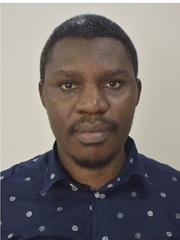
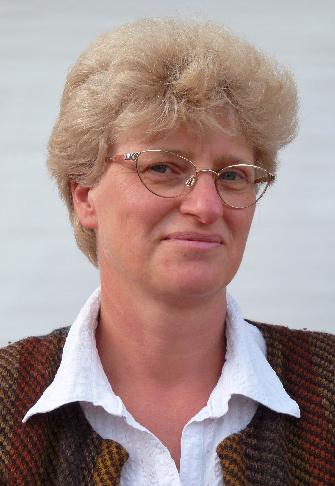
Mahadi Ddamulira is a Lecturer in the Department of Mathematics at Makerere University, Kampala, Uganda, holding a permanent faculty position. His roles include teaching, research supervision, mentoring junior staff, and departmental administration. Previously, he was a Postdoctoral Researcher at the Max Planck Institute for Software Systems (MPI-SWS) in Saarbrücken, Germany, and a University Project Assistant at Graz University of Technology, Austria. His research focuses on Diophantine equations involving holonomic sequences and linearly recurrent sequences like Fibonacci and Lucas numbers. He was funded by the Austrian Science Fund (FWF) through projects F5510, P26114, and W1230. His academic journey includes work under Prof. Joël Ouaknine (MPI-SWS) and Prof. Robert F. Tichy (Graz University of Technology). He contributes to both theoretical and applied aspects of number theory, with emphasis on discrete mathematics and computational methods.
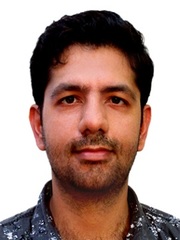
Khushraj Madnani is a postdoctoral researcher at the Max Planck Institute for Software Systems (MPI-SWS), Kaiserslautern, Germany, under Prof. Rupak Majumdar and Prof. Georg Zetzsche. His research focuses on formal logics, infinite-state models, and their applications in formal methods and verification. Previously, he was a postdoctoral researcher at Delft University of Technology (2020–2021) and a visiting fellow at the Tata Institute of Fundamental Research (2019–2020). He holds a PhD in Computer Science from the Indian Institute of Technology Bombay (2013–2019). Research Interests : Specification and Verification of Timed Systems Scheduler Synthesis for Networked Control Cyber-Physical Systems Formal Logics and Models of Computation Recent Contributions : His work spans decidability of timed logics, formal verification of real-time systems, and control theory. Key themes include metric temporal logic extensions, decidability boundaries, and applications in cyber-physical systems. Recent articles explore quantifier elimination in Presburger arithmetic and decidability of timed temporal logics with advanced quantifiers. Professional Roles : He collaborates with leading research institutes and has contributed to international conferences such as CONCUR, MFCS, and CDC. His work bridges theoretical foundations with practical verification challenges in real-time systems and networked control.
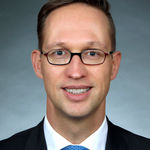
Prof. Dr. Dietmar Bauer holds the Chair of Econometrics at the Faculty of Business Administration and Economics at Bielefeld University. He maintains multiple affiliations including the Department of Empirical Methods, Center for Statistics, Institute for Technological Innovation, Market Development and Entrepreneurship, BIGSEM (Bielefeld Graduate School of Economics and Management), and the Bielefeld Graduate School in Theoretical Sciences. His academic credentials include a Habilitation in Econometrics (2007), Doctorate in Technical Mathematics (1998), and Diploma in Technical Mathematics (1995), all from TU Wien, Austria. Prior to his position at Bielefeld, he served as Senior Scientist at the Austrian Institute of Technology (2005-2014) and Assistant at TU Wien (1995-2005), with additional postdoctoral positions at Yale University, University of Linköping, and University of Newcastle. Prof. Bauer's research focuses on two primary areas: time series analysis and discrete choice models. His work in time series investigates subspace methods for state space models, particularly for integrated and seasonally integrated processes. In discrete choice modeling, he examines computational efficiency in Probit models and transportation mode choice, with special attention to the MACML approach. His publications demonstrate consistent contributions to both theoretical econometrics and applied transportation research. Multa Scripsit Award from Econometric Theory (2013) Best paper awards at UrbComp 2012 (with Jameson Toole, Marta Gonzalez, and Michael Ulm) Oskar Morgenstern Award of IHS, Vienna (with Martin Wagner) Prof. Bauer teaches numerous courses across four institutes including Software Applications for Economists, Data Analysis, Statistical Methods, and Econometrics. He supervises diploma theses, master's theses, and doctoral dissertations. His research has been supported by funding from DFG, FWF, FFG, and EU-level projects, reflecting his strong record in securing competitive research funding. He is actively involved with the Center for Statistics and the Bielefeld Center for Data Science, contributing to interdisciplinary research initiatives.
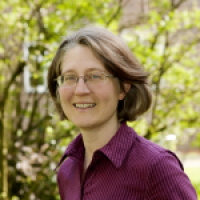
Patrizia Scandurra is a Professor affiliated with the University of Bergamo, Italy. Her research focuses on formal methods, software architecture, self-adaptive systems, and model-driven engineering. She has contributed extensively to the development of rigorous system design frameworks like ASMETA and has led work on resilience engineering in cyber-physical systems. Scandurra has co-authored numerous papers in top venues such as ECSA, ABZ, and IEEE Transactions, and has served as editor for conference proceedings including ECSA 2024 and ABZ 2024. Her work emphasizes practical applications of formal methods in safety-critical systems, IoT, and medical devices, with a recent focus on explainable AI and trustworthiness in autonomous systems. Areas: Formal Methods, Self-Adaptation, Cyber-Physical Systems Tools: ASMETA, HYPpOTesT Toolkit Key Projects: MVM-Adapt, RAMSES, IPSOS emergency response system Her research spans theoretical advancements and practical implementations, often bridging gaps between model-driven approaches and real-world system deployment. Current trends include addressing uncertainty in self-adaptive systems, trust analysis for medical devices, andexplainability in robotics.
Prof. Dr. Felix Lindner is a Professor in the Department of Analysis and Applied Mathematics at the University of Kassel. His research focuses on stochastic partial differential equations (SPDEs), numerical analysis of stochastic processes, and their applications in computational mathematics and mechanics. He holds a PhD in Mathematics from Dresden and has contributed extensively to the study of SPDE regularity, numerical schemes for stochastic dynamics, and convergence analysis of approximation methods. Research Interests: Stochastic Analysis and Numerics Stochastic Partial Differential Equations (SPDEs) Numerical Methods for PDEs/SDEs Convergence and Stability of Numerical Schemes Applications in Material Science and Mechanical Engineering Recent Publications Trends: Advances in weak and strong convergence rates for SPDE approximations Stochastic modeling of fiber dynamics and composite materials Development of adaptive numerical methods for SPDEs Analysis of singular behavior in stochastic heat equations Students: Current doctoral advisees include Quinten Kürpick, Manuel Lorenz, Felipe Trolldenier, and P. Tobias Werner. Former student Saeed Hadjizadeh completed his research under Lindner's supervision. Labs/Teams: Lindner leads a research group focused on stochastic computational methods, collaborating with industry partners on fiber dynamics modeling and numerical analysis of mechanical systems.
Tim Lohse is a Professor of Applied Microeconomics at the Berlin School of Economics and Law , leading the Department of Business and Economics. He concurrently serves as Deputy Director of the Berlin Centre for Empirical Economics (BCEE) and holds an affiliation with the Max Planck Institute for Tax Law and Public Finance in Munich. His academic journey includes a PhD in Economics from Leibniz University Hannover (2007, summa cum laude) and a Habilitation in Economics from Free University Berlin. Lohse's research focuses on experimental economics, public finance, tax compliance, and behavioral public policy, with notable contributions to understanding public goods provision, defense policy preferences, and deception mechanisms in economic contexts. Education: PhD in Economics, Leibniz University Hannover (2007) Habilitation in Economics, Free University Berlin MSc in Economics, Bocconi University, Milan Diploma in Economics & Business Administration, University of Hannover Research Interests: Experimental methods applied to public policy analysis Behavioral aspects of tax evasion and compliance Public goods financing and defense policy preferences Decision-making under uncertainty and time pressure Gender differences in economic behavior Teaching Responsibilities include advanced courses in behavioral economics, public finance, and policy analysis at both Berlin School of Economics and Law and Freie Universität Berlin. He has held visiting positions at institutions like Harvard University and UC San Diego. Labs/Teams: Active in the Berlin Behavioral Economics (BBE) Group and collaborates with the Max Planck Institute's Public Economics Department.
Prof. Tim Lohse is a Professor of Economics, specializing in Applied Microeconomics, at the Berlin School of Economics and Law. He serves as Deputy Director of the Berlin Centre for Empirical Economics and holds affiliations with institutions like the Max Planck Institute for Tax Law and Public Finance. His research focuses on public finance, behavioral economics, tax policy, and defense economics, with a particular emphasis on experimental methods to analyze compliance, deception, and public goods financing. Education includes a Diplom from Universities of Münster and Hannover, an MSc from Bocconi University, a PhD (summa cum laude) from Leibniz University Hannover, and a habilitation from Freie Universität Berlin. Awards include the University of Hannover’s Science Prize. Key research explores interdependencies between public goods provision and financing, defense policy preferences, and tax compliance mechanisms. Recent articles address defense financing strategies, deception behavior, and team compliance dynamics. His work has been featured in journals like European Journal of Political Economy and Journal of Economic Behavior & Organization . Teaching spans applied microeconomics, behavioral economics, and public finance at both HWR Berlin and Freie Universität Berlin. He has held visiting roles at Harvard, UC San Diego, and LUISS Università in Rome. Awards and recognition highlight his contributions to public finance and behavioral research.
Rolf Möhring is a Professor at the Department of Mathematics, Technische Universität Berlin. He earned his Dr. rer. nat. from Rheinisch-Westfälische Technische Hochschule Aachen (RWTH Aachen) in 1975, with a dissertation titled Untersuchungen zur Homomorphietheorie von Relationalsystemen , advised by Rolf Kaerkes and Walter Oberschelp. His academic lineage spans over 43 direct students and 237 descendants, reflecting his significant influence in mentoring researchers. His research focuses on Operations Research , Discrete Mathematics , and Algorithm Design , with contributions to graph theory and combinatorial optimization. His work bridges theoretical foundations and practical applications in scheduling, network design, and computational methods. Möhring’s advising record highlights his role in guiding students across institutions like TU Berlin, RWTH Aachen, and Kaiserslautern. His academic network includes prominent scholars such as Martin Skutella and Nicole Megow, who have further expanded his research legacy. Though no specific grants or labs are detailed, his extensive mentorship underscores his institutional and disciplinary impact.
Dr. Steffen Brinckmann is a researcher in materials science, specializing in metal degradation, nanotribology, and fracture mechanics. He holds a PhD from the University of Delft and the University of Groningen, Netherlands, and completed postdoctoral research at Purdue University and the California Institute of Technology. His work bridges experimental and numerical methods, focusing on multiscale modeling (e.g., the AtoDis model), micrometer-scale deformation studies, and powder compaction. He collaborates internationally with institutions like Sandia National Labs and Boise State University. Education: PhD in Mechanical Engineering/Applied Physics (Delft/Groningen), postdoctoral studies at Purdue University (Mechanical Engineering) and Caltech (Materials Science). Research interests include tribology-induced wear mechanisms, fracture mechanics at micro/nanoscales, and interdisciplinary projects in plasma disinfection (biology) and urban economics. His numerical expertise spans Finite Element Methods, Discrete Dislocation Dynamics, and Python-based data analysis. He has led the Sandia Fracture Challenge project, outperforming international teams in macroscopic fracture prediction. Labs/teams: Department of Structure and Nano-/Micromechanics at Max Planck Institute, Materials Science Department at Ruhr-University Bochum (RUB).
Barbara König is a Professor at the University of Duisburg-Essen, affiliated with the Department of General Computer Science within the Faculty of Computer Science. Her research focuses on theoretical computer science, with a strong emphasis on formal methods, graph transformation systems, coalgebraic semantics, and behavioral metrics. She leads a team of researchers including postdocs and PhD students like Rebecca Bernemann and Sebastian Gurke. Her work integrates mathematical rigor with practical applications in formal verification, probabilistic systems, and automated reasoning. König has organized and contributed to numerous international conferences such as CSL, CONCUR, and ICGT, highlighting her role in advancing the field’s research agenda. Key research themes include fixpoint theory, coalgebraic modal logics, and the development of tools like CoReS for graph analysis. Her current projects explore quantitative logics, behavioral distances, and abstraction-refinement techniques for complex systems analysis. König actively contributes to academic communities through editorial roles and serves as a mentor in the university’s theoretical computer science department. Her interdisciplinary approach bridges foundational theory with applied challenges in software engineering and system modeling.
Prof. Alessandro Reali is a Full Professor of Mechanics of Solids and Structures at the University of Pavia and a Hans Fischer Senior Fellow at the Technical University of Munich's Institute for Advanced Study (TUM-IAS). His research focuses on computational mechanics, particularly isogeometric methods, structural analysis, and biomechanics. He has authored over 90 journal articles and received prestigious awards such as the ERC Starting Grant and IACM John Argyris Award. His work spans applications in engineering, materials science, and biomedical systems. Education: Laurea (MSc equivalent) in Civil Engineering, University of Pavia (2001) MSc and PhD in Earthquake Engineering, University of Pavia and Institute of Advanced Study of Pavia (2004–2005) Research Interests: Isogeometric Analysis Constitutive Models for Advanced Materials Finite Element Methods Fluid-Structure Interaction Biomechanical Simulations Key Contributions: Developed novel isogeometric collocation methods for structural dynamics and fluid mechanics. Advanced computational frameworks for patient-specific biomedical applications, such as heart valve modeling and stent flexibility analysis. Contributed to eigenvalue problem solutions and numerical stabilization techniques in complex systems. Awards: 2018 Bruno Finzi Prize 2017 Commander of the Order of Merit of Italy 2014 IACM John Argyris Award 2010 ERC Starting Grant Grants & Projects: Funded by ERC, MIUR, ONR, and industry partners (e.g., Total, Nokia). Coordinated projects on computational mechanics and materials science. Labs/Teams: Focus Group Lead: Computational Mechanics: Geometry and Numerical Simulation Collaborations with institutions like the University of Texas at Austin and TUM.
Dr. Patrick Scholz is a researcher in Climate Dynamics at the Alfred Wegener Institute, focusing on ocean modeling, the Atlantic Meridional Overturning Circulation (AMOC), and climate system interactions. He leads the development of the FESOM2.0 ocean model and contributes to the TRR181 Energy Transfer project. His work emphasizes high-resolution simulations, parameterization improvements, and mesh generation for climate models. Research interests include deep-water formation, numerical mixing, and the impact of climate change on ocean circulation. He collaborates on projects like the AWI-CM3 coupled climate model and participates in the HighResMIP initiative. His studies address AMOC slowdown effects, Antarctic ice shelf melt, and Arctic Ocean dynamics. Located in Bremerhaven, he also engages in climate model intercomparison efforts (OMIP-2) and contributes to understanding climate extremes linked to ocean-atmosphere interactions.
Annegret Glitzky is a Research Professor at the Weierstrass Institute for Applied Analysis and Stochastics (WIAS) in Berlin, Germany. She specializes in the Department of Partial Differential Equations, focusing on mathematical modeling and numerical analysis in semiconductor technology, reaction-diffusion systems, and energy models. Her work integrates advanced analytical techniques with computational methods, particularly Voronoi finite volume discretization. With a Dr. rer. nat. habil., she has contributed extensively to the understanding of spin-polarized systems, electrochemical processes, and material interfaces through interdisciplinary research. Her research emphasizes energy estimates, stability analysis, and numerical simulations for complex systems, including semiconductor devices and optoelectronic applications. Notable contributions include studies on the uniform exponential decay of free energy in discretized reaction-diffusion systems and the development of discrete Sobolev-Poincaré inequalities for finite volume approximations. She has presented her findings at major international conferences such as the GAMM Annual Meetings and the International Congress of Mathematicians. Glitzky collaborates with academic and industrial partners, applying mathematical tools to solve real-world problems in energy technology and material science. Her work bridges theoretical analysis and practical engineering, reflecting a commitment to advancing computational methods in applied mathematics.
Desheng Liu is a Professor in the Department of Civil, Environmental and Geodetic Engineering at The Ohio State University's College of Engineering. With over two decades of research experience, Dr. Liu has established himself as a leading expert in remote sensing, geospatial analysis, and satellite imagery processing. His interdisciplinary work bridges engineering, computer science, and environmental applications. Dr. Liu's research interests primarily focus on remote sensing technologies, satellite mission planning, geospatial data analysis, and privacy-preserving algorithms. His work demonstrates a consistent evolution from foundational remote sensing applications to sophisticated machine learning integration in earth observation systems. Early in his career, he contributed to urban-rural fringe analysis and fractal urban form studies, later transitioning to advanced satellite data processing techniques. An analysis of his recent publications reveals a strong emphasis on optimization algorithms for satellite mission planning, with significant contributions to bilevel programming approaches for multi-satellite cooperative observation. His work spans medical image segmentation, ecological monitoring, and industrial IoT applications, demonstrating remarkable versatility while maintaining a core focus on geospatial technologies. The interdisciplinary nature of his research is evident in collaborations across environmental science, computer vision, and transportation engineering domains. Dr. Liu has secured consistent research funding and has mentored numerous graduate students who have gone on to publish with him as principal investigator. His research group maintains active collaborations with NASA, USGS, and various international research institutions focused on earth observation technologies. His laboratory specializes in developing advanced computational methods for processing satellite imagery, with particular expertise in sensor anomaly detection, digital terrain modeling, and cross-platform data integration. Current projects include developing AI-driven approaches for environmental monitoring and creating privacy-preserving geospatial recommendation systems.
Jie Su is a researcher affiliated with Zhejiang University of Technology, College of Information Engineering, Institute of Cyberspace Security. Their work spans interdisciplinary areas including machine learning, control systems, medical imaging, environmental science, and computer vision. Notable contributions include advancements in reinforcement learning for sepsis treatment, prescribed-time control theory, and Arctic sea-ice motion analysis using satellite data. They also contribute to medical AI applications like bone marrow image analysis for hematological disorders and adversarial robustness in object tracking systems. Research interests emphasize applying machine learning to solve real-world challenges in healthcare, environmental monitoring, and engineering systems. Recent work focuses on neural dynamics models for decision-making, energy-efficient hybrid vehicle systems, and vibration analysis in urban infrastructure. Their interdisciplinary approach bridges theoretical foundations (e.g., control systems, signal processing) with practical applications in biomedical and environmental domains. Publications reflect a strong focus on AI-driven solutions, including medical image analysis, adversarial machine learning, and physics-informed algorithms. Collaborations span multiple disciplines and institutions, evidenced by frequent co-authorships on topics ranging from biomedical engineering to civil engineering applications.