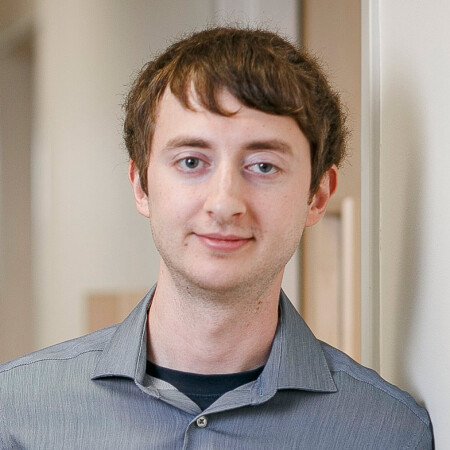
Benjamin Raichel is an Associate Professor in the Department of Computer Science at the University of Texas at Dallas, affiliated with the Erik Jonsson School of Engineering and Computer Science. His research focuses on computational geometry and geometric approximation algorithms, with contributions to areas such as Voronoi diagrams, Fréchet distance, clustering, and algorithmic efficiency. Dr. Raichel holds a PhD from the University of Illinois Urbana-Champaign under the supervision of Sariel Har-Peled. He currently teaches Computational Geometry (CS 6319) and has advised multiple PhD students, including Md. Billal Hossain and Jonathan James Perry. His work is supported by NSF grants such as 'Shape Matching in a Messy World Using Fréchet Distance' and 'Metric Violation Distance: Hardness and Approximation.' He is a member of the Algorithms and Theory Group at UT Dallas.
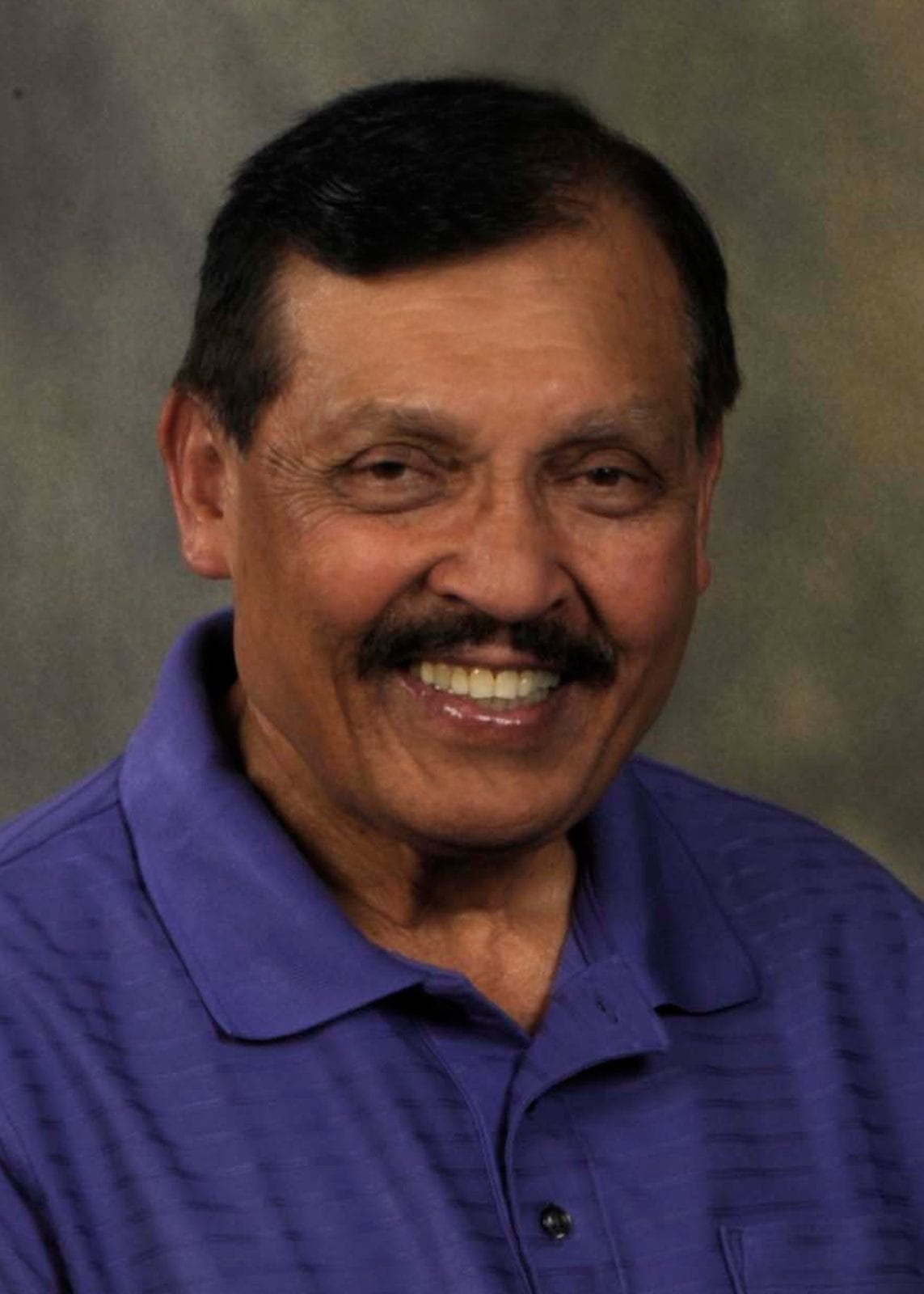
Ram Mohapatra is a Professor in the Department of Mathematics at the University of Central Florida (UCF), part of the College of Sciences. His research interests span mathematical analysis, operator theory, variational inequalities, approximation theory, cybersecurity, and fluid dynamics. He has published extensively on topics including inverse scattering problems, generalized inverses, and optimal control theory. His work often intersects with applications in engineering and data science. Recent research focuses on operator theory applications, tensor decompositions, and mathematical modeling of physical systems. He has contributed to advancements in frame theory, numerical radius studies, and cybersecurity methodologies. His academic activities include teaching undergraduate and graduate courses in mathematics, such as MAC 1105C and MAC 2311C, and maintaining active collaborations in interdisciplinary research areas. Professional contributions include over 150 peer-reviewed articles and editorial roles in mathematics journals. While no explicit awards are listed in the provided texts, his prolific publication record underscores his scholarly impact in applied and theoretical mathematics.
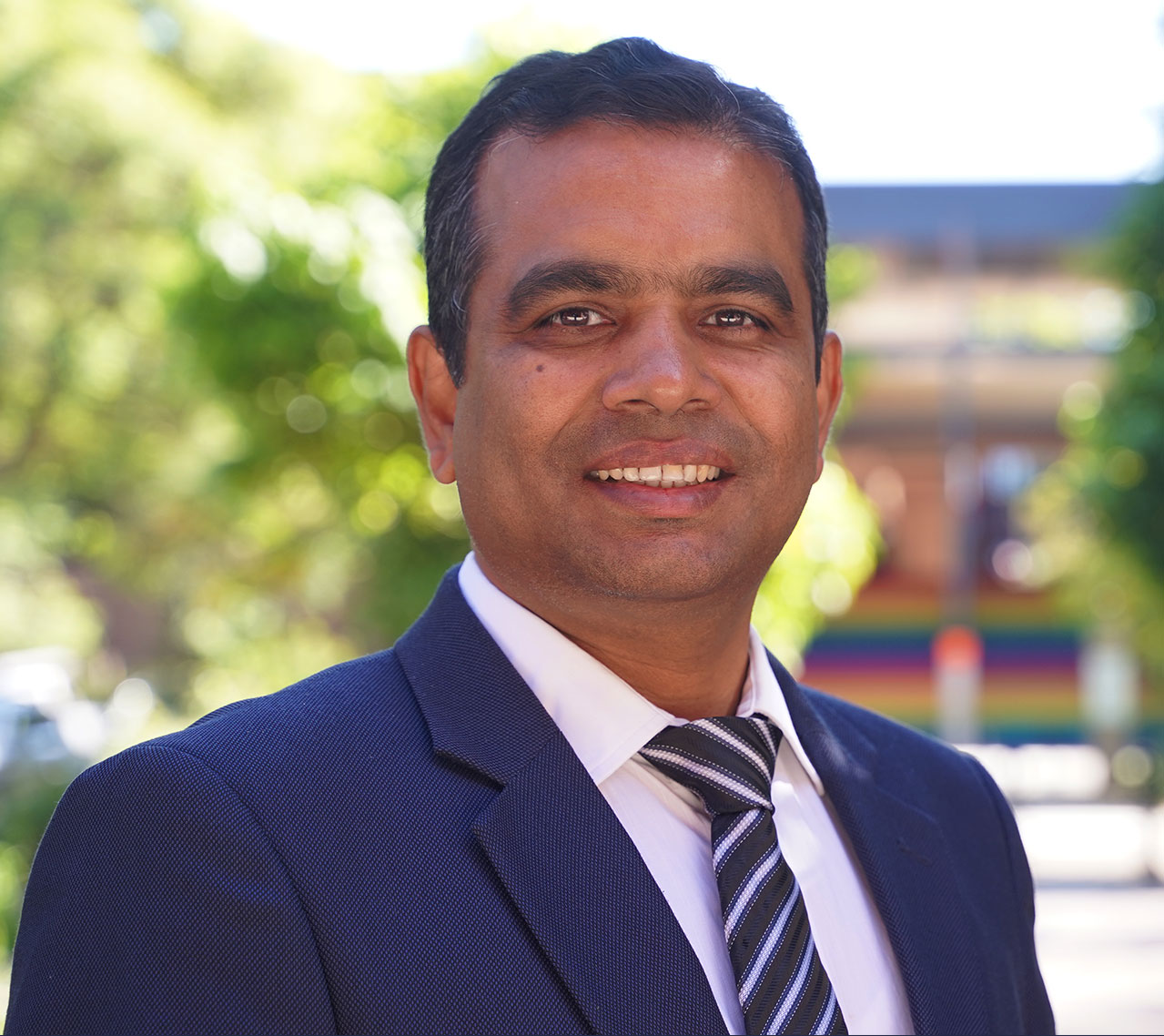
Dr. Gea Rahman is a Lecturer in Computing at Charles Sturt University (CSU), specializing in data science and machine learning. He holds a PhD in Computer Science from CSU, and MSc/BSc degrees from Rajshahi University, Bangladesh, where he was awarded a Gold Medal for academic excellence. With over 20 years of teaching experience, he previously served as Professor and Programme Director at Bangladesh Agricultural University. Education: PhD in Computer Science (Data Science/ML), Charles Sturt University (2011-2015) MSc in Computer Science & Engineering, Rajshahi University (2002-2003) BSc (Hons) in Computer Science & Technology, Rajshahi University (1998-2002) Research Interests: Data science applications in agriculture, healthcare, and environmental monitoring Machine learning techniques including ensemble/deep learning, transfer learning, and incremental learning Data preprocessing methods (missing value imputation, outlier analysis) AI ethics and healthcare consent strategies Awards: Global Research Impact Recognition Award 2020 Best Researcher Award Gold Medal for Academic Excellence (2003) Advising & Grants: Principal supervisor for multiple postgraduate students Recipient of grants including: Ai-Enabled Segmentation of Brain MRI (2024) Adaptive Federated Learning Framework (2024) Unusual Behaviour Detection in Aged Care (2023) He is part of the Data Mining Research Group (DaMRG) and actively contributes to conferences/journals as a reviewer and editorial board member.
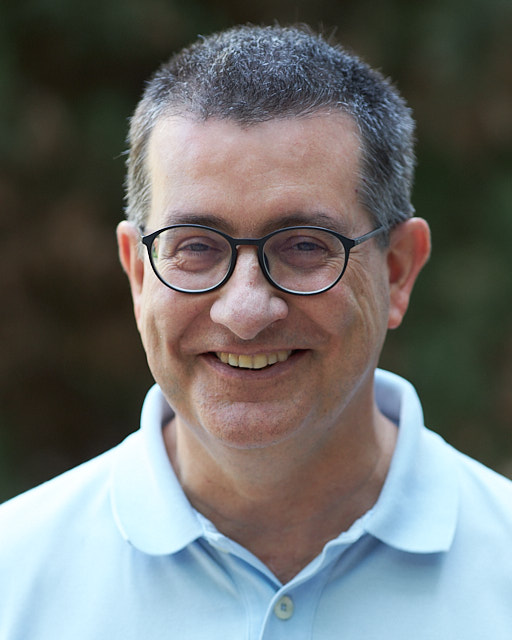
Sergio Gómez Jiménez is an Associate Professor in the Department of Computer Engineering and Mathematics at Rovira i Virgili University (URV), Tarragona, Spain. He joined URV in 1995 and has held his current position since 1997. He obtained degrees in Physics (1990) and Mathematics (1995) and a PhD in Physics (1994) from the Universitat de Barcelona. His research focuses on complex networks, including community structure analysis, epidemic spreading, urban congestion, and applications to biology, medicine, and social systems. He has authored over 100 publications in high-impact journals like Nature Methods and Physical Review Letters. He coordinates the interuniversity Master's in Biomedical Data Science and the PhD Program in Bioinformatics. His editorial roles include Associate Editor of Complexity and Review Editor of Frontiers in Physics. Notable awards include the American Physical Society's Outstanding Referee (2015) and the Web Science Trust's Test of Time Award (2024). His work on modeling the spatiotemporal spread of epidemics, such as the 2020 COVID-19 pandemic, has received significant attention. He also contributed to urban traffic congestion analysis and developed algorithms for hierarchical clustering (e.g., MultiDendrograms). Collaborations span institutions like the University of Oxford and CERN, reflecting his interdisciplinary approach to complex systems.
Dr. Jun Yan is a Professor in the Department of Statistics at the University of Connecticut. His research spans network analytics, spatial extremes, survival analysis, and statistical computing with applications in public health, finance, and environmental science. His core research interests include: network modeling and analysis, spatial statistics for climate extremes, survival analysis methodologies, statistical computing frameworks, and applications in interdisciplinary domains including sports analytics. Dr. Yan has developed significant statistical methodologies for network analysis, climate change detection, financial modeling, and health analytics. His recent publications demonstrate innovation in modeling complex network structures, analyzing climate extremes, developing computational approaches for massive datasets, and creating specialized statistical methods for health and finance applications. He maintains active collaborations across disciplines and contributes to open-source statistical software. Honors include: Guggenheim Fellowship, multiple Fromm Foundation commissions, and Barlow Endowment recognition.
Dr. Walter Lucia is an Associate Professor at the Concordia Institute for Information Systems Engineering, Concordia University. His research focuses on secure and resilient control of cyber-physical systems and model predictive control strategies for autonomous vehicles. He supervises MASc and PhD students in programs such as Information Systems Security, Electrical and Computer Engineering, and Information and Systems Engineering. His research interests encompass cybersecurity in control systems, including strategies against false data injection and setpoint attacks. He develops resilient control architectures and applies model predictive control to autonomous systems like self-driving cars and mobile robots. Recent work emphasizes data-driven safety mechanisms, encrypted control systems, and collision-free platooning of mobile robots. No scientific awards or grants are explicitly mentioned in the provided text. Dr. Lucia's advising roles include overseeing multiple graduate programs, though specific student names are not listed. His publications reflect a strong focus on control theory applications, cyber-physical system security, and optimization techniques. Labs or collaborative teams are not explicitly detailed in the text, but his research themes suggest involvement in interdisciplinary projects at the intersection of engineering and cybersecurity.
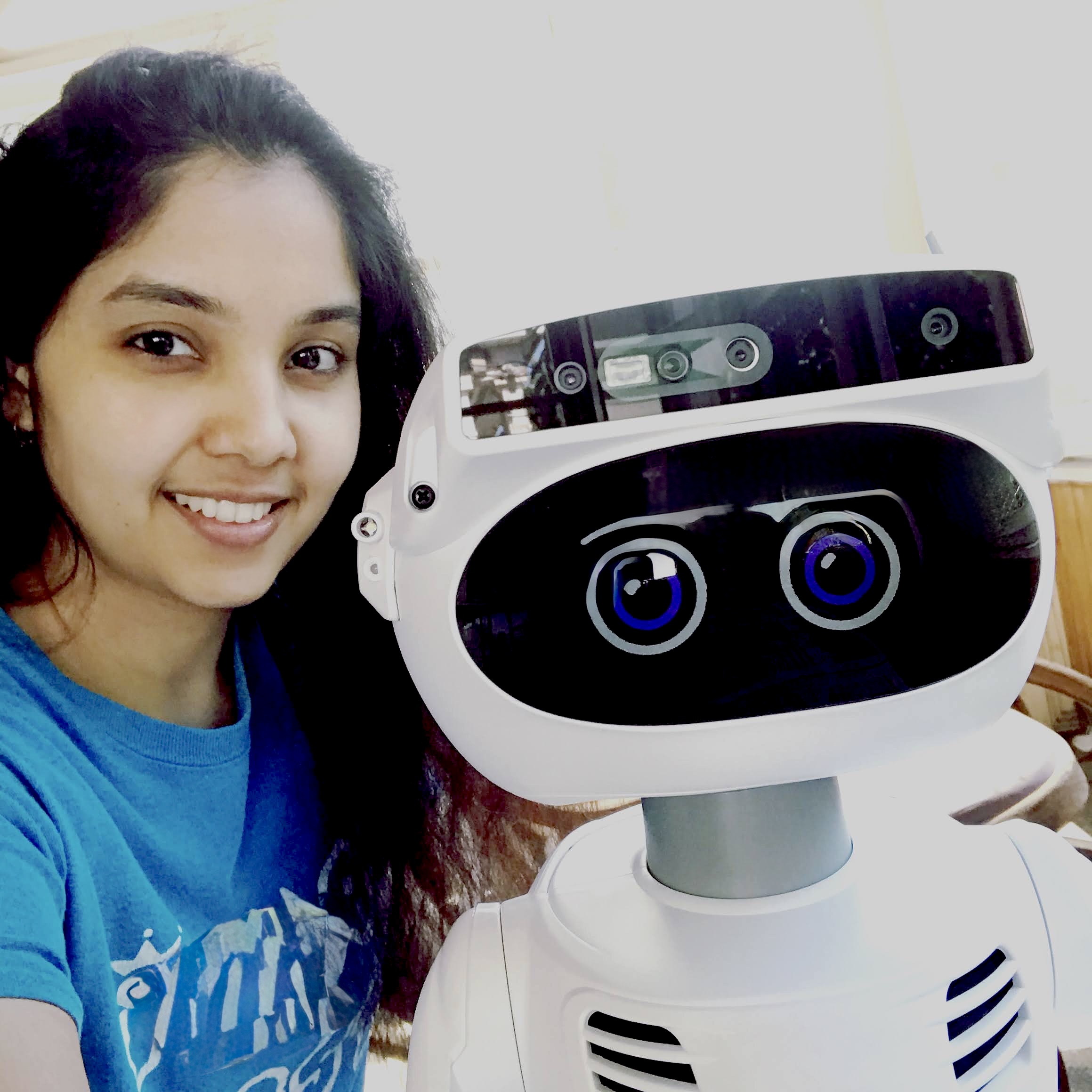
Aakriti Upadhyay is a Research Fellow at the Colorado School of Mines (CSM), working in the Dynamic Automata Lab (DyALab) under Dr. Neil T. Dantam. She holds a Ph.D. in Computer Science from the University at Albany, SUNY, where she was part of the Robotics Algorithms and Computable Systems (RACS) lab under Dr. Chinwe P. Ekenna. Her research integrates Computational Geometry, Applied Mathematics, Machine Learning, and Topological Data Analysis (TDA) to advance motion planning for robotics and computational biology applications. Her work focuses on optimizing robot motion paths using topological methods, with extensions to identifying protein interaction sites. Key areas include robust path planning, fault tolerance in robotic systems, and topological modeling of biomolecular surfaces. Her research trends emphasize interdisciplinary applications of TDA, bridging robotics and computational biology. Collaborations include developing tools for Intrinsically Disordered Proteins (IDPs) analysis and enhancing path planning algorithms through geometric and topological insights. Aakriti has contributed to academic initiatives like the Student Activities Committee and advocated for women in engineering during the pandemic. Her work reflects a commitment to advancing both technical and community-oriented academic goals.
Hemanshu Kaul is an Associate Professor of Applied Mathematics at Illinois Institute of Technology (IIT), part of the College of Computing. He serves as Co-Director of the M.S. in Computational Decision Science and Operations Research (CDSOR) program. His expertise spans Discrete Mathematics, Operations Research, Graph Theory, and Network Optimization, with applications in transportation, computer science, and engineering. Education: PhD in Mathematics from the University of Illinois at Urbana-Champaign (UIUC), MS in Mathematics from the Indian Institute of Technology Bombay. He has held roles including Distinguished Teaching Fellow (2016–2018) and AMS Project NExT Fellow (2007–2008). Research Interests : Focus on Graph Packing, DP-coloring, List Coloring, and algorithmic solutions for discrete optimization problems. His work bridges theoretical foundations with practical applications such as transportation networks and computer science systems. Publications & Grants : Over 50 publications in combinatorics and optimization, including NSF/NSA-funded projects like the EXCILL III Conference (2016–17). Recent work explores spectral Turán problems, DP-coloring algorithms, and longitudinal network models. Awards : Board of Trustees Award for Excellence in Teaching (2019) Excellence in Teaching Award (2017, College of Science, IIT) Interdisciplinary Research Grant (2009–2010, Transportation Networks) Advising & Leadership : Co-advisor for IIT's SIAM Student Chapter. Led restructuring of the Applied Math M.Sc. program (2018–19). Advised teams in the Mathematical Contest in Modeling (MCM), including a 2019 Meritorious Winner team for a disaster response system design. Labs & Collaborations : Involved in interdisciplinary projects combining applied math with computer science and engineering, including work on equitable public transit systems and network optimization.
Wladek Forysiak is a Professor at Aston University, holding the EFFECT Photonics / Royal Academy of Engineering Chair in Highly Integrated Coherent optical fiber Communications. He is affiliated with the Aston Institute of Photonic Technologies (AiPT) within the College of Engineering and Physical Sciences. His research focuses on high-speed optical fiber communication systems, optical devices, and enabling technologies for ultra-wideband networks. He has held roles including Royal Society Industry Fellow, EPSRC Manufacturing Fellow, and served as Programme Director for Applied Physics. Forysiak has developed courses in Electromagnetism, Mathematical Methods II, Digital Transmission, and Digital Communications & Information Theory. His work emphasizes Raman amplification, multi-band transmission systems, and hybrid amplification techniques. Key achievements include record-breaking data rates in ultra-wideband systems and contributions to bismuth-doped fiber amplifiers. Awards include the Royal Academy of Engineering Chair and EPSRC Fellowships. Forysiak’s research spans 122 publications and 18 datasets, with collaborations in photonics, fiber optics, and network engineering.
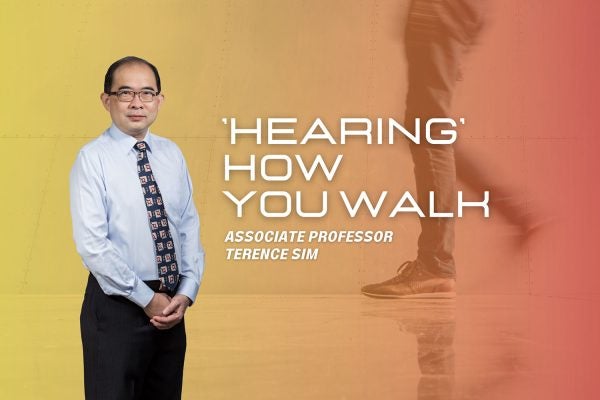
Dr. Terence Sim Mong Cheng is an Associate Professor at the Department of Computer Science within the School of Computing, National University of Singapore . He serves as Vice Dean for Admissions and previously held Vice Dean roles for Communications and Second Vice President of the International Association for Pattern Recognition. His academic journey includes degrees from MIT, Stanford, and Carnegie Mellon University. Ph.D. in Electrical & Computer Engineering (Carnegie Mellon University) M.S. in Computer Science (Stanford University) S.B. in Computer Science & Engineering (MIT) His research focuses on Biometrics and Visual Computing , spanning Deepfake synthesis/detection , Facial image analysis , Continuous authentication , and Multimodal biometrics . He integrates machine learning with physics-based modeling to address complex challenges in these domains. Recent publications highlight advancements in deepfake detection (2023), multi-task learning (2022), and gait-based authentication (2020-2022). These works intersect biometrics, privacy, and machine learning. Face and Gesture 2017 : Test of Time Award Computer Analysis of Images and Patterns 2017 : Best Paper Award NUS Faculty Teaching Excellence Award (2003, 2005) Temasek Young Investigator Award (2005) Dr. Sim has taught diverse courses including Biometrics Authentication , Computer Vision , and Discrete Structures . He provides biometric consultancy in areas like technical assessments and feasibility studies .
Gennady Samorodnitsky is a Professor in the School of Operations Research and Information Engineering (ORIE) at Cornell University. He holds a B.S. from the Moscow Steel and Alloys Institute (1978), M.S. from Technion – Israel Institute of Technology (1983), and a D.Sc. from Technion (1986). He joined Cornell in 1988 and has held visiting positions at the University of North Carolina at Chapel Hill and Boston University. His research focuses on stochastic processes, particularly heavy-tailed distributions, long-range dependence, and extreme value theory, with applications in finance, teletraffic, and climate modeling. Education: B.S., Moscow Steel and Alloys Institute, USSR, 1978 M.S., Technion – Israel Institute of Technology, 1983 D.Sc., Technion – Israel Institute of Technology, 1986 Samorodnitsky’s research interests span stochastic modeling, including heavy-tailed processes, self-similar processes, and extreme value analysis. He examines the behavior of financial and telecommunication systems under long memory and non-Gaussian conditions. Key areas include the statistical analysis of extremes in climate data and the theoretical foundations of stable and infinitely divisible processes. His work bridges probability theory with applications in risk management, network traffic analysis, and climate science. His publications explore topics such as high-level excursion sets in random fields, tail inference, and the interplay between ergodic theory and stochastic processes. He has contributed to books like Stochastic Processes and Long Range Dependence and authored numerous technical reports on topics like ruin probabilities and multivariate extremes. Samorodnitsky teaches advanced courses, including ORIE 7590: Martingales in Discrete and Continuous Time , and maintains an active role in academic conferences and collaborations. His research group investigates cutting-edge problems in high-dimensional extremes, privacy-aware learning, and topological data analysis.
Professor Chien Ming Wang is the Transport and Main Roads Chair Professor of Structural Engineering at the University of Queensland (UQ) since 2017. He also holds an Adjunct Professor position at Monash University and contributes to the Centre for Marine Science within UQ’s Faculty of Science. Alumnus of the Year 2015, Monash University Chartered Structural Engineer Educational Background : Bachelor of Civil Engineering (First Class Honours), Monash University, 1978 M.Eng.Sc. and Ph.D., Monash University, 1980 & 1982 Research Focus : Pioneering Very Large Floating Structures (VLFS) with applications in floating bridges, oil storage, and aquaculture systems. His work spans structural stability, vibration analysis, optimization of arches, and nonlocal theories for nanostructures. He developed Hencky bar-chain models and Shooting-Optimization Technique for boundary value problems. Scientific Leadership : Authored 500+ journal papers, 6 books, and 4 edited volumes with over 26,000 citations. Led $10M+ in industrial projects including Blue Economy CRC initiatives. Holds multiple patents in floating structures and aquaculture systems. 2019 Nishino Medal 2019 JN Reddy Medal IStructE Singapore Structural Award for Sustainability 2016 Minister of National Development R&D Special Mention 2017 Advising & Collaborations : Supervised 28 PhD and 20 MEng students, including work with NUS , SINTEF , and PolyU . Current projects involve offshore seaweed farms, self-healing concrete, and hybrid timber-cardboard composites.
Dr. Siamak Shahandashti is a Senior Lecturer in the Department of Computer Science at the University of York, UK. He leads the Cyber Security & Privacy Research Group and is actively involved in academic governance roles including Chair of the Physical Sciences Ethics Committee and Programme Lead for the MSc Cyber Security programme. His research focuses on applied cryptography, privacy-preserving technologies, electronic voting systems, and blockchain applications. He holds a PhD in Computer Science and has contributed to over 40 peer-reviewed publications. Education: PhD in Computer Science, MSc in Telecommunications Engineering, BSc in Electrical Engineering. Professional qualifications include a PGCert in Academic Practice. Research interests span cyber security fundamentals, usable security mechanisms, and the intersection of cryptography with real-world systems. Notable projects include verifiable electronic voting systems and DoS-resilient blockchain protocols. He has led funded projects on e-voting scalability and contributed to standards reviews for ISO/IEC protocols. Award-winning educator in cyber security curriculum development, with active roles in admissions and academic ethics compliance. His work bridges theoretical cryptography with practical implementations, emphasizing user-centric security design principles. Labs/Teams: Cyber Security & Privacy Research Group (lead), Departmental Ethics Team (lead). Collaborations include institutions in Australia, France, and across Europe.
Evimaria Terzi is a Professor and Department Vice Chair at Boston University (BU), affiliated with the Data Management Lab@BU. Her research focuses on algorithmic data mining with applications in network analysis, recommendation systems, ranking, and clustering. She holds a PhD from the University of Helsinki and has held prior roles at IBM Almaden Research Center (2007–2009) and the Helsinki Institute for Information Technology (HIIT) before 2007. Her work spans theoretical and applied domains, including team formation algorithms, fairness in AI, and large language model evaluation. Notable contributions include studies on LSM tree optimization, counterfactual explanations for auditing fairness, and the dynamics of memorization in LLMs. Her recent publications emphasize flexibility in database systems and ethical AI practices. Evimaria’s research has been recognized through her contributions to conferences like WSDM and KDD, where she has served in organizing roles. The themes of her work consistently bridge algorithmic innovation with real-world applications in social networks, healthcare, and collaborative systems.
Andrew Suk is a Professor in the Department of Mathematics at the University of California, San Diego (UCSD). He holds an NSF CAREER Award and an Alfred P. Sloan Research Fellowship. His research focuses on Combinatorics, Discrete Geometry, Ramsey Theory, and Extremal Combinatorics, supported by grants such as NSF FRG Collaborative Research (DMS-1952786) and NSF (DMS-2246847). He completed his Ph.D. at New York University's Courant Institute in 2011, followed by an NSF Postdoctoral Fellowship at MIT under Jacob Fox. Education: Ph.D., Mathematics, New York University, 2011 Research Interests: Suk's work spans Geometric Combinatorics, Ramsey Theory, and extremal problems in discrete structures. Notable contributions include resolving the Erdős-Szekeres convex polygon problem asymptotically and advancing Ramsey-type results for semi-algebraic relations. His research bridges combinatorial geometry with graph theory and hypergraphs. Recent Contributions: His articles explore topics like cliques in point-line arrangements, semi-algebraic Ramsey numbers, and geometric Ramsey problems. Key themes include extremal configurations, topological graphs, and applications of VC-dimension. Awards: NSF CAREER Award Alfred P. Sloan Research Fellowship Service & Mentorship: Suk advises Ph.D. students and serves as an editor for SIAM Journal on Discrete Mathematics and Studia Scientiarum Mathematicarum Hungarica . He organizes workshops and chairs program committees for conferences like SoCG and GD. Teaching: Recent courses include Calculus for Science and Engineering at UCSD.