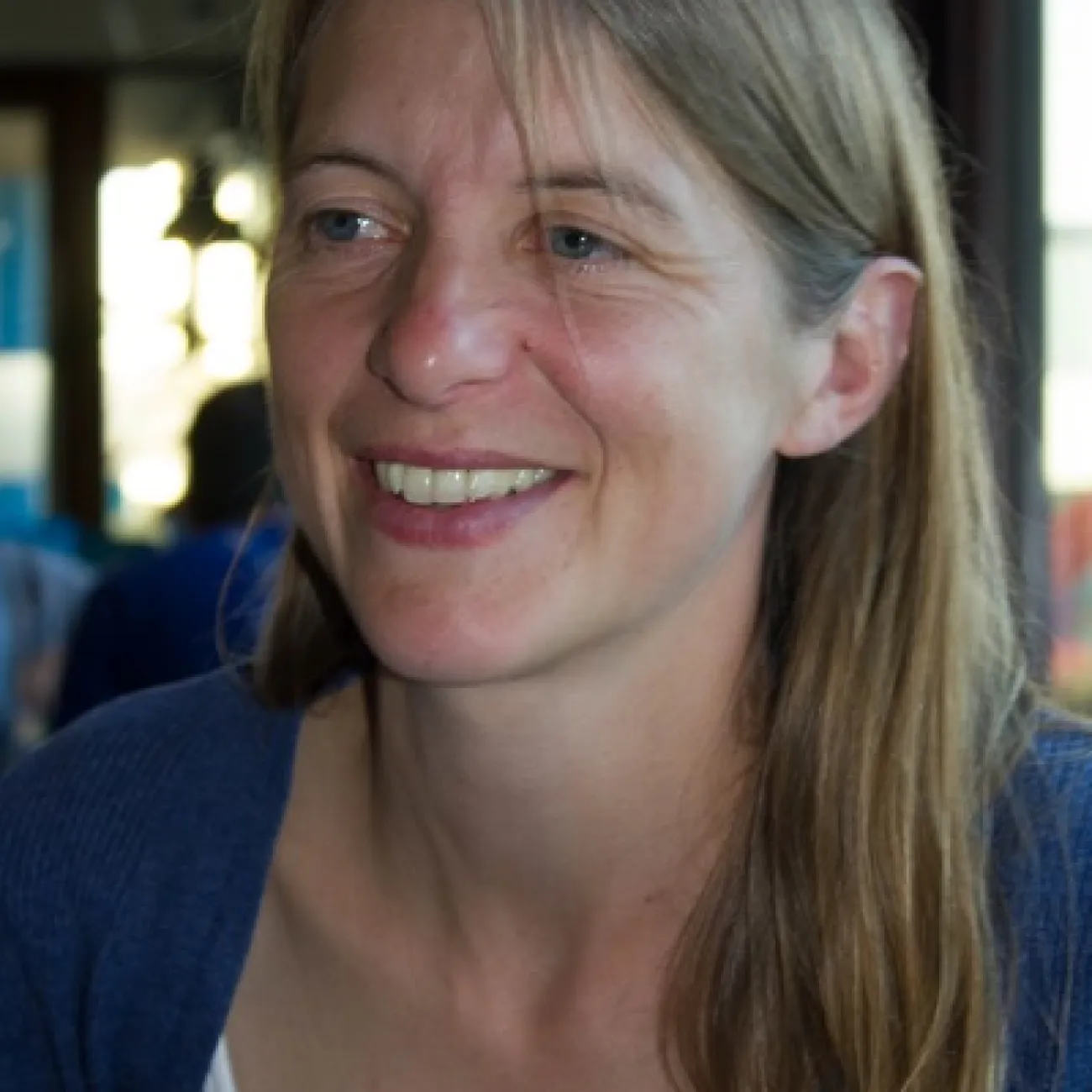
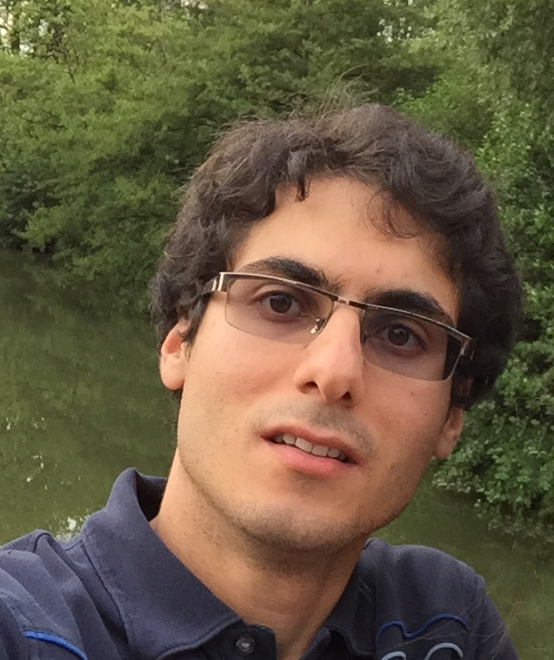
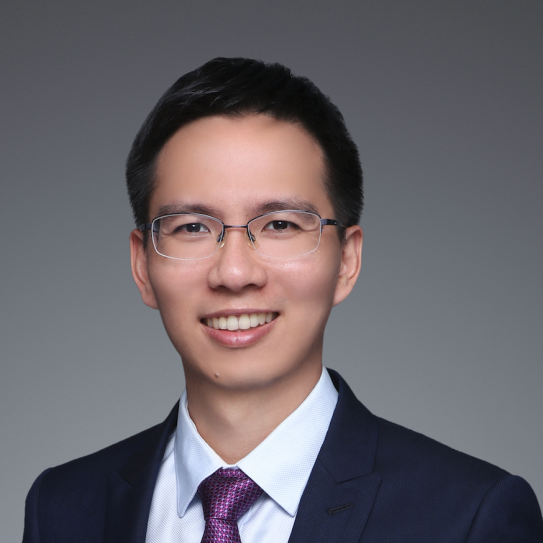
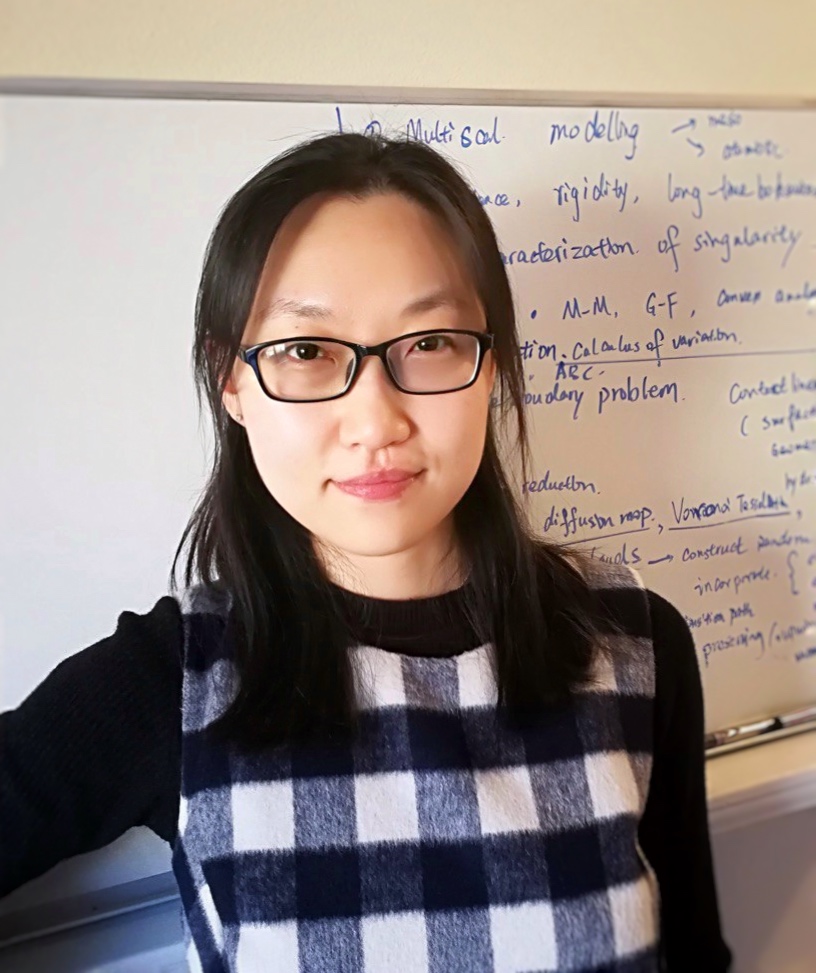
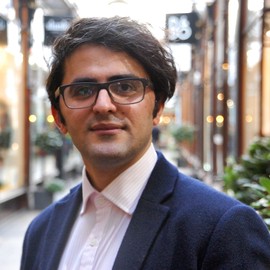
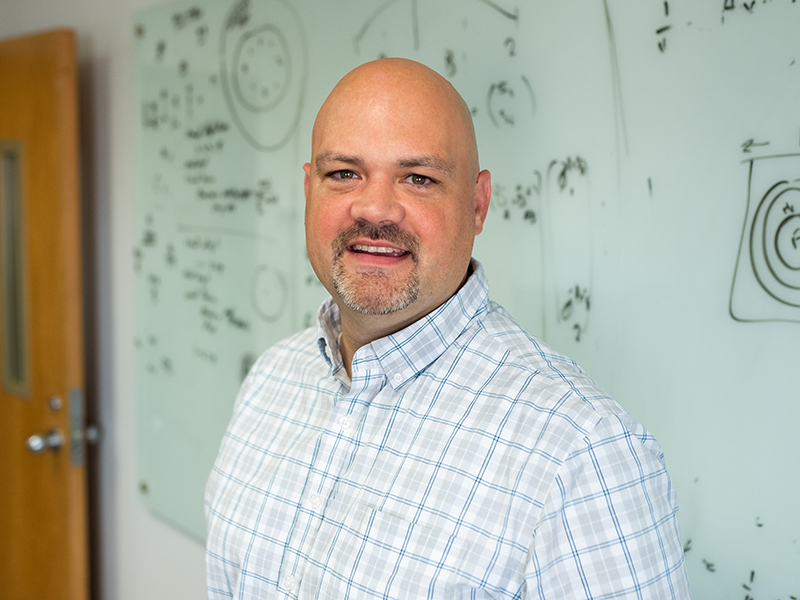
Carl Tropper is Professor Emeritus of Computer Science at McGill University, specializing in parallel discrete-event simulation. His research develops synchronization algorithms for large-scale systems including VLSI circuits, gravitational N-body simulations, and neuronal reaction-diffusion models. Education: BSc, McGill University PhD, Polytechnic Institute of New York Professional Experience: Former positions at Boeing, MITRE, and Caltech's Jet Propulsion Laboratory
Professor Christine Currie is a Professor of Operational Research within the School of Mathematical Sciences at the University of Southampton. She is a Fellow of the Alan Turing Institute and previously served as Director of the Centre for Operational Research, Management Science and Information Systems (CORMSIS). Her research is primarily funded by EPSRC and spans healthcare, disaster relief, and pricing optimisation. Research Interests: Simulation Optimisation Healthcare Management Decision Making Under Uncertainty Disaster Relief Logistics Optimal Pricing and Revenue Management Her recent work focuses on real-time simulation for emergency departments, infectious disease modelling, patient flow optimisation, food relief procurement in Indonesia, and robust pricing models in transportation and leisure sectors. The trend in her publications shows a strong emphasis on applied operational research with societal impact, particularly in digital twin integration and stochastic optimisation under uncertainty. Scientific Awards: Companion of Operational Research (2024) Professor Currie actively supervises PhD students and has secured multiple research grants, primarily from EPSRC. She has led projects such as 'Dial-a-Ride', 'CREST-OR', and 'Designing a resilient food supply network for natural disasters in West Java, Indonesia'. She also collaborates with external organisations and has supervised student projects with industry partners. Leadership and Editorial Roles: Editor-in-Chief, Journal of Simulation (2015–2024) Member, Editorial Board, Royal Society Open Science (2021–present) Co-chair, OR63 National Operational Research Conference (2021) Member, Operational Research Society Research Panel She is actively involved in the operational research community and leads interdisciplinary research teams including the Operational Research group, Institute for Life Sciences, CORMSIS, and the Centre for Healthcare Analytics.
Vera Pantelic is an Adjunct Assistant Professor in the Department of Computing and Software at McMaster University. Her research focuses on software engineering practices for model-based development in automotive systems, particularly centralized Electrical/Electronic (E/E) architectures, Simulink modeling, and supervisory control of probabilistic discrete event systems. Education: Not explicitly mentioned in the text. Her scholarly activity includes extensive contributions to conferences and journals in automotive software engineering, model transformation, and real-time systems. Her work addresses challenges in modularity, documentation, and compliance within automotive embedded systems. Her recent publications emphasize advancements in centralized E/E architectures, model-driven testing, and assurance cases for automotive safety. She collaborates on topics integrating software engineering principles with automotive domain requirements. Scientific Awards: No specific awards mentioned in the text. She serves as an advisor in software engineering, though specific student names are not listed. Her projects involve simulation-based testing, model refactoring, and compliance frameworks, supported by industry partnerships and academic grants. Her work contributes to labs and teams focused on automotive software reliability and model-driven engineering. No explicit lab or team affiliations are detailed in the provided text.
Le Khanh Ngan Nguyen is a Chancellor’s Fellow and Lecturer in the Department of Management Science at the University of Strathclyde. Her research focuses on hybrid simulation models (system dynamics, agent-based, and discrete-event) to evaluate health and social care policies. Previously, she conducted systems thinking research at University College London. She holds a PhD from the University of Strathclyde (2022), a Master of Public Health from the University of Sydney, and a Bachelor of Pharmacy. Research Interests: Combining simulation techniques like system dynamics and agent-based modeling to enhance decision-making in healthcare systems. Specializes in hybrid models for evaluating interventions against healthcare-associated infections and pandemic responses (e.g., COVID-19). Key Focus Areas: Healthcare Policy, Sustainability, Pandemic Modeling, Infection Control UN SDG Contributions: Aligns with goals related to Good Health & Well-being and Sustainable Cities Recent work highlights include analyzing kidney replacement therapy policy in Thailand using causal loop diagrams and exploring unsustainable pressures in UK health systems via qualitative system dynamics. Her research bridges operational research with real-world policy implementation challenges. Recent Awards: Finalist for 2022 EURO Prize for OR in Common Good, SBS Knowledge Exchange Award (2023) Collaborations involve projects on data value chains for evidence-based policymaking and collaborative research cultures in academia. Active in conferences like the Royal Statistical Society Conference (2025) and workshops on occupational health innovations.
Sofie Haesaert is an Assistant Professor in the Control Systems group at the Department of Electrical Engineering, Eindhoven University of Technology. Her work focuses on formal verification and control synthesis methods for cyber-physical systems, particularly through stochastic simulation relations and temporal logic specifications. Education: BSc (cum laude) and MSc (cum laude) in Mechanical Engineering and Systems & Control from Delft University of Technology; PhD from Eindhoven University of Technology (2017) Experience: Postdoctoral researcher at Caltech (2017-2018), then returned to TU/e as Assistant Professor Her research interests include: Cyber-physical systems verification Stochastic control methods Temporal logic specification Markov decision processes Formal methods in control engineering Model abstractions and simulation relations Recent publications show strong focus on: Stochastic temporal logic control Robust and risk-aware control Multi-agent system verification Formal synthesis via simulation relations AI integration in control systems Software tools for formal control Scientific achievements: Veni Grant recipient (2020) Co-developer of the SySCoRe toolset for stochastic control synthesis Contributor to formal verification benchmarks through ARCH-COMP reports She contributes to education through courses on: Control principles for engineered systems Control challenges in autonomous racing Supervisory control of cyber-physical systems Haesaert collaborates across disciplines including computer science, applied mathematics, and robotics, with over 750 citations and significant contributions to formal control theory for stochastic systems. Her work bridges theoretical developments with practical applications in autonomous systems and complex control architectures.
David Baqaee is a Professor of Economics at the University of California, Los Angeles (UCLA), affiliated with the Department of Economics in the College of Letters and Science. His research focuses on aggregation and heterogeneity in macroeconomics, particularly examining how resource misallocation from market power, nominal rigidities, and increasing returns to scale impacts aggregate productivity. He has contributed to prestigious journals such as Econometrica and the American Economic Review. Education: Ph.D. Economics, Harvard University; B.Sc. Mathematics and Economics, University of Canterbury His research interests span applied economic theory, industrial organization, macroeconomics, and network economics. Recent work explores trade wars, sanctions' long-term effects, energy import dependencies, and the interplay between monetary policy and supply-side dynamics. He has served as an associate editor for Econometrica and the Quarterly Journal of Economics. His publications reflect a focus on policy-relevant macroeconomic questions, including the consequences of geopolitical events, trade restrictions, and pandemic impacts on global supply chains. His methodologies emphasize disaggregated models and input-output networks to capture microeconomic foundations of aggregate phenomena.
Anne-Cécile Orgerie is a permanent CNRS Research Scientist (Directrice de recherche) at the Magellan Team within IRISA in Rennes, France. She holds a PhD from École Normale Supérieure de Lyon (2011) and previously worked as a postdoctoral researcher at the University of Melbourne. Current roles: Director of GDRS EcoInfo (CNRS service group on ICT environmental impact), member of multiple editorial boards (e.g., IEEE TPDS, IJDSN), and TPC member for conferences like SC, IPDPS, and CCGrid. Research Focus: Her work centers on energy efficiency and environmental impacts of distributed systems, including cloud infrastructures, telecommunications networks, and smart grids. She explores renewable energy integration, resource optimization, and co-simulation frameworks for smart grid management. Key Projects: Leads initiatives like CARECloud (PEPR Cloud project reducing cloud environmental impacts, 2023–2030) and DECORUS (CNRS 80Prime project on renewable-powered edge computing). Co-leads the RennesGrid ADEME project (2017–2021) for smart grid demonstrators. Supervision: Advises/co-advises over 20 PhD students and postdocs, focusing on topics like energy-efficient fog infrastructures, co-optimization of electrical/communication networks, and edge computing models.
Zhibin Chen is an Assistant Professor of Engineering at NYU Shanghai and concurrently a Global Network Assistant Professor within the broader New York University system. Since January 2019 he has led research and teaching activities at the Division of Engineering and Computer Science in Shanghai, while maintaining university-wide collaborations through his Global Network appointment. Education Ph.D. in Transportation Engineering, University of Florida (2017) Research Interests Dr. Chen’s scholarship centres on Transportation Network Modeling and Optimization , Intelligent Transportation Systems , and Discrete Optimization . He integrates operations research, data science, and engineering to address emerging challenges in electric mobility, autonomous vehicles, and large-scale urban networks. Recent thrusts include: Data-driven analytics of electric-vehicle charging behaviour under usage heterogeneity. Optimization of charging and swapping infrastructure for electric buses and trucks. Network-level deployment and control strategies for connected and automated vehicles. Day-to-day traffic dynamics and equilibrium models with elastic demand. Pricing, policy, and incentive design for sustainable transportation systems. Scientific Awards Stella Dafermos Best Paper Award – awarded at the 95th Transportation Research Board Annual Meeting. Ryuichi Kitamura Paper Award – also conferred at the 95th TRB Annual Meeting. Editorial & Professional Service Dr. Chen currently serves on the Editorial Advisory Board of Transportation Research Part C: Emerging Technologies , shaping the editorial direction of the leading journal in his field. Grants & Collaborations While specific grant identifiers are not disclosed in the provided text, Dr. Chen’s extensive publication record in top-tier journals ( Transportation Science , Transportation Research Parts B, C, D , IEEE ITS , Applied Energy ) and his editorial role indicate sustained research funding and active collaboration with international partners across North America and China. Laboratories & Teams Operating within the Division of Engineering and Computer Science at NYU Shanghai , Dr. Chen leads a research group focused on next-generation mobility analytics, leveraging the university’s interdisciplinary ecosystem and NYU’s Global Network resources to advance smart and sustainable transportation.
Yuan Gao is an Assistant Professor of Mathematics at Purdue University's Department of Mathematics (College of Science). His research focuses on analysis and computations of PDEs in materials science, biology, and microfluidics, with recent emphasis on optimal control, Hamilton-Jacobi equations, and non-equilibrium chemical reactions. His work is supported by NSF awards DMS-2204288 and DMS-2440651. Previously, he held the William W. Elliott Assistant Research Professor position at Duke University (2019-2021). Research interests include PDE analysis in materials science (crystal growth, dislocation dynamics), numerical methods for interface dynamics, applied stochastic analysis (Langevin dynamics, transition path theory), and mean-field games for fluid systems. He organizes the PSU-Purdue-UMD Joint Seminar on Mathematical Data Science. Key publications span topics like dislocation evolution, Wasserstein gradient flows, and stochastic algorithms for rare events. Awards include NSF CAREER funding recognizing his contributions to mathematical analysis of non-equilibrium systems.
Bahman Rostami-Tabar is Professor of Analytics and Decision Sciences at Cardiff Business School, Cardiff University, UK. He is the founder and director of the Data Lab for Social Good and the founder and chair of the Forecasting for Social Good (F4SG) initiative sponsored by the International Institute of Forecasters. He also leads the 'Uncertainty & the Future' theme at the Digital Transformation Innovation Institute. His research spans probabilistic forecasting, operational research, and data science with applications in healthcare, humanitarian logistics, and sustainable development. Research Interests: His work emphasizes transforming data into insights for decision-making under uncertainty. His research is structured into three pillars: (1) Conceptual work on forecasting for social good and the UN Sustainable Development Goals; (2) Methodological innovations in temporal aggregation, hierarchical forecasting, and machine learning for time series; and (3) Applications in healthcare operations, global health, and humanitarian supply chains. He has collaborated with organizations such as the NHS, USAID, ICRC, and JSI. Publication Trends: His recent publications (2023–2025) focus on probabilistic forecasting in healthcare (e.g., emergency department arrivals, trauma networks), hybrid machine learning models for humanitarian demand, and the societal role of forecasting. There is a strong emphasis on real-world impact, with applications in public health, supply chain resilience, and data-driven policy. Scientific Awards: Goodeve Medal, Operational Research Society, UK (2024) Fellowship, Institute of Advanced Studies, Montpellier, France (2024) Public Value Fellow, Cardiff Business School (2021) Associate Fellow, NHS-R community (2021) MIM best paper award (IFAC, 2013) Best Track Paper Award, International Symposium on Industrial Engineering and Operations Management (2017) Supervision and Grants: He actively supervises PhD students in forecasting, healthcare systems, and supply chains. He leads the 'Democratising Forecasting' project, delivering free R-based forecasting training in developing countries. He also chairs the F4SG Research Grant program, awarding $5,000 to researchers in low- and lower-middle-income countries for socially impactful forecasting research. Labs and Teams: He founded and directs the Data Lab for Social Good at Cardiff Business School and leads the international Forecasting for Social Good network, which includes learning labs, hackathons, and a forecasting book club to foster global collaboration.
Alborz Shokrani Chaharsooghi is a Professor at the University of Bath's Department of Mechanical Engineering. He leads research in advanced manufacturing technologies, with a focus on sustainable and circular manufacturing, innovative machining processes, and digital manufacturing systems. He is actively involved in projects funded by EPSRC, Innovate UK, and EU Horizon, including initiatives like the Made Smarter Innovation Centre for People-Led Digitalisation and the I-Break ATI with Airbus collaboration. Education: Doctor of Philosophy in Mechanical Engineering (University of Bath, 2014) Research Interests: His work bridges traditional manufacturing with emerging technologies, emphasizing cryogenic machining of titanium alloys, additive manufacturing optimization, and machine learning applications in intelligent manufacturing. Recent projects explore energy-efficient processes and data analytics for process monitoring. Grants & Projects: EPSRC-funded research on additive layer manufacturing of high-performance alloys Horizon Europe-funded Twinning IZTECH in Robotics Manufacturing Systems Innovate UK project on cost modeling for additive manufacturing Teaching: Specializes in manufacturing processes, discrete event simulation, and optimization techniques for engineering systems.
Patrick Dallasega is an Associate Professor in the Department of Industrial Plants at the Faculty of Science and Technology of the Free University of Bolzano (Italy). He holds a PhD from the University of Stuttgart and has been a Visiting Scholar at Chiang Mai University (Thailand) and Worcester Polytechnic Institute (USA). His expertise spans supply chain management, Industry 4.0 integration in SMEs, lean construction methodologies, and sustainable production planning in ETO/MTO environments. He teaches Project Management and Industrial Plants courses in Industrial Mechanical Engineering programs. His research focuses on digital transformation in manufacturing, including smart mobile factories, augmented reality applications for training, and synchronization of production and on-site assembly processes. Collaborative projects like the AR-enhanced industrial training initiative with Memc aim to reduce errors and costs in complex industrial setups. His work emphasizes human-centered technology integration, sustainability, and real-time data utilization for adaptive production strategies. Education Bachelor/Master: Free University of Bolzano (Italy) MSc: Polytechnic University of Turin (Italy) PhD: University of Stuttgart (Germany) Research Interests Professor Dallasega’s research explores the intersection of Industry 4.0 technologies with lean manufacturing principles, particularly in complex Engineer-to-Order (ETO) and Make-to-Order (MTO) sectors. He investigates how digital twin frameworks, augmented reality (AR), and real-time data analytics can enhance supply chain resilience, reduce operational losses, and improve workforce training efficiency. His work also addresses sustainability challenges in mobile and distributed manufacturing systems, emphasizing eco-friendly logistics and smart factory design. Key Projects Recent collaborations include: Development of an AR-based training module to boost procedural knowledge retention in machinery setups Comparative studies on Industry 4.0 adoption in SMEs across Europe and Asia Framework for digital twin-driven quality control in precast manufacturing Grants & Advising No specific grants or student advisees are listed in the provided data. His focus remains on collaborative industry projects and institutional teaching responsibilities. Labs & Teams Involved in cross-disciplinary teams at the Free University of Bolzano, particularly in the NOI Techpark innovation hub. Leads initiatives on smart mobile factories and human-centered robotics applications in manufacturing environments.
Kevin Clarno is a tenured Associate Professor in the Department of Nuclear and Radiation Engineering at the University of Texas at Austin, holding the Charlotte Maer Patton Centennial Fellowship in Engineering. His research focuses on computational nuclear energy, multiphysics reactor simulation, and high-performance computing (HPC). Previously, he spent 15 years at Oak Ridge National Laboratory (ORNL), where he led major initiatives such as the Consortium for Advanced Simulation of Light Water Reactors (CASL) and contributed to the development of software tools like SCALE, CTF, and VERA. Education and Career: Assistant Professor at University of Tennessee-Knoxville (2010–2016) Senior Research Scientist at ORNL (2006–2021) Research Interests: Multiphysics coupling methods for reactor simulation Multiscale neutronics and thermal-hydraulics modeling Advanced reactor design (e.g., molten salt reactors) HPC-driven software integration for nuclear analysis Uncertainty quantification in coupled simulations Grants and Projects: Lead of CASL’s Physics Integration Focus Area Development of the Advanced Multi-Physics (AMP) fuel code ORNL-led strategic research projects in reactor simulation Labs and Tools: VERA: Virtual Environment for Reactor Applications CTF: Thermal-hydraulic solver for PWR analysis MPACT: Neutronics simulation tool within SCALE
Stefan Kowalewski serves as Professor of Embedded Software at RWTH Aachen University, leading the Chair of Embedded Software (Informatik 11) within the Department of Computer Science. His research spans critical domains including medical cyber-physical systems, automotive software, and industrial automation, with over 150 publications demonstrating sustained scholarly impact. Professor Kowalewski's work focuses on three interconnected research pillars: Embedded Systems Verification: Pioneering model checking techniques for PLC code, particularly addressing state space challenges in GRAFCET-based specifications Medical Cyber-Physical Systems: Developing safety-critical software for mechanical ventilation, extracorporeal membrane oxygenation, and ARDS diagnosis systems with strong clinical collaborations Automotive Software: Creating verification frameworks and safety architectures for automated vehicles through projects like UNICARagil Recent publications reveal an increasing integration of AI techniques with traditional verification methods, particularly for medical applications involving neonatal care and critical respiratory support. His 2024-2025 work shows particular emphasis on timing isolation in vehicle communication systems, middleware performance evaluation, and robust AI models for medical diagnosis. Professor Kowalewski maintains active collaborations with RWTH Aachen University Hospital's medical departments and automotive industry partners. His laboratory operates specialized facilities including the Cyber-Physical Mobility Lab for vehicle research and in-vivo testing setups for medical device validation. He has supervised numerous doctoral candidates, with recent students focusing on topics like ARDS classification algorithms, GRAFCET verification techniques, and safety architectures for software-defined vehicles. His educational contributions include developing remote teaching platforms for cyber-physical systems education.
Ahmed Saeed is an Assistant Professor in the School of Computer Science at Georgia Institute of Technology, specializing in scalable computer networks and systems. His research spans congestion control, operating systems, LEO satellite networks, and formal methods, with a strong record of publications and active mentorship. Education: PhD in Computer Science, Georgia Institute of Technology (2019) Bachelor's in Computer and Systems Engineering, Alexandria University (2010) Postdoctoral Associate, MIT (with Prof. Mohammad Alizadeh) Research Interests: Ahmed's work focuses on the theory, design, and implementation of scalable networked systems. Key themes include: Congestion control algorithms for datacenter and WAN traffic Overload control mechanisms for microsecond-scale RPCs Performance debugging tools for datacenter applications LEO satellite network modeling and policy analysis Formal verification of network protocols and resource schedulers Recent Publications Trend: His 2024-2025 papers emphasize LEO satellite resilience and datacenter performance , with contributions to emergency failover modeling, latency debugging tools, and congestion control protocols. These works combine empirical measurement, formal modeling, and policy recommendations. Awards & Funding: NSF CAREER Award (2024) – LEO satellite variability ($600k) NSF CNS Core Awards (2022) – Edge server stacks & formal verification (total $2.38M) Google Research Award (2022) – Scalable edge systems ($80k) DARPA Risers Top 5 Poster (2022) Spec Tech Award (2023) – Nanomodular electronics routing ($40k) Teaching & Service: He regularly teaches Computer Networking I (CS 3251) and Datacenter Networks & Systems (CS 8803) . Service includes PC roles for SIGCOMM, NSDI, CoNEXT, and Networking area co-chair for JSys. Lab & Students: Ahmed leads an active research group with PhD students Peidi Song, Bhaskar Pardeshi, Sherif Abdelrazek; MS students Dhyey Thummar, Pratyush Sahu, Sammy Kapoor; and undergraduate Demi Lei. Alumni have joined industry leaders like Juniper, Microsoft, and Snowflake.