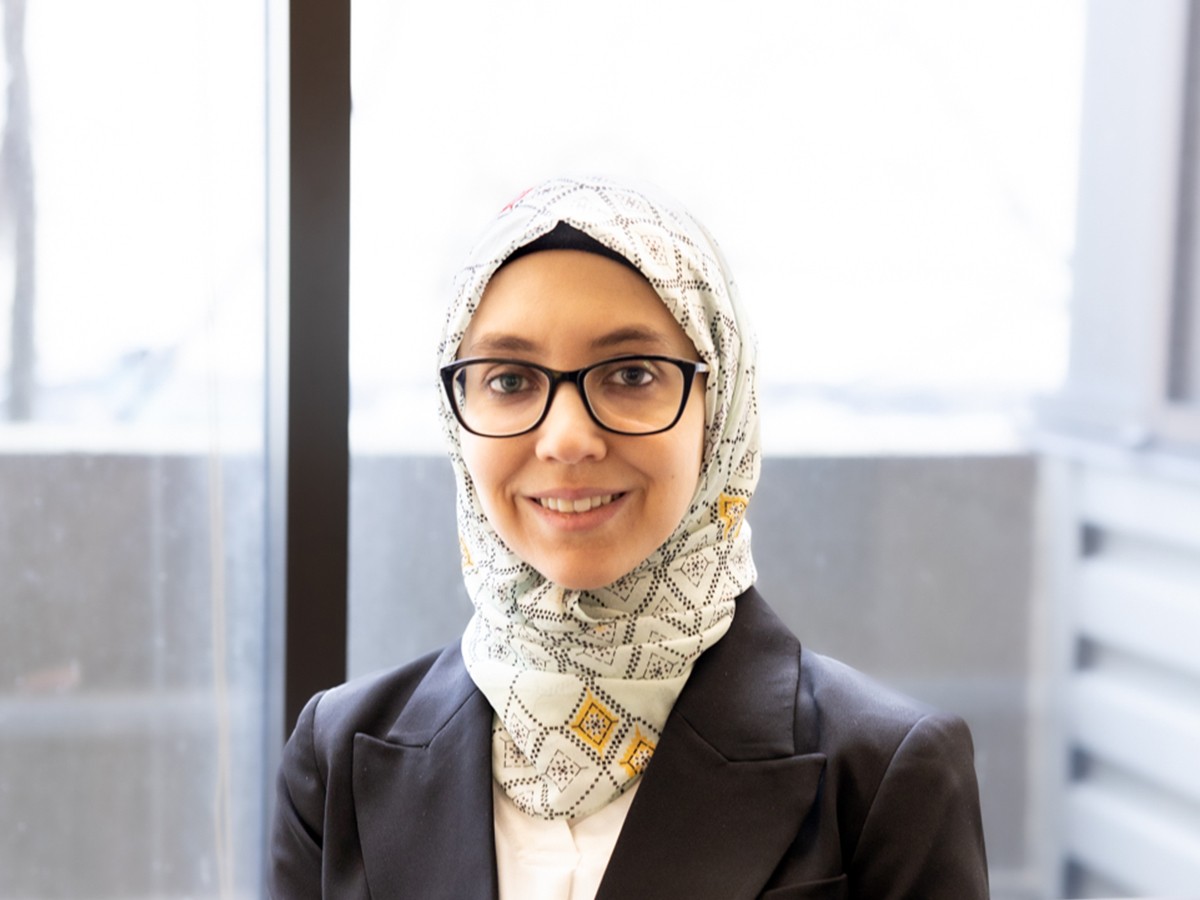
Dr. Aliaa Alnaggar is an Assistant Professor of Industrial Engineering at the Department of Mechanical, Industrial, and Mechatronics Engineering at Toronto Metropolitan University. Her research focuses on operations research, optimization under uncertainty, supply chain logistics, sharing economy, and healthcare operations management , leveraging mathematical modeling and probability theory to address complex decision-making challenges. She holds a PhD from the University of Waterloo (2021) and completed a postdoctoral fellowship at the Rotman School of Management (University of Toronto, 2022). Education details include a BSc from Kuwait University (2010), MASc from the University of Waterloo (2017), and a PhD in Industrial Engineering (2021). She teaches IND 604: Operations Research II and actively contributes to professional organizations like INFORMS, CORS, and WORMS. Her research addresses societal challenges such as hospital resource allocation during surges, gig-economy workforce management, and energy storage optimization. Key achievements include the NSERC Postdoctoral Fellowship and collaborative work on probabilistic driver repositioning in crowdsourced delivery systems. She emphasizes interdisciplinary approaches to balance technical rigor with real-world applicability.
Stephen Chen is an Associate Professor in York University's School of Information Technology, specializing in metaheuristic optimization techniques. His research investigates particle swarm optimization, evolutionary computation, and hybrid search algorithms for complex problems. Research Focus: Algorithm behavior analysis, dimensionality challenges in optimization, swarm intelligence frameworks, and real-world applications in energy/scheduling systems. Education: PhD in Robotics (Carnegie Mellon), BASc (Toronto). Grants & Projects: NSERC-funded research on selection-based metaheuristics; Mitacs collaborations on healthcare/energy optimization; Industry partnerships developing optimization platforms. Student Advising: Supervises graduate students in metaheuristics applications across healthcare, energy systems, and computational intelligence.
Nathaniel Osgood is a Professor in the Department of Computer Science at the University of Saskatchewan, with additional appointments as Associate Faculty in the Department of Community Health & Epidemiology and the Bioengineering Division. His work bridges computer science, public health, and epidemiology, focusing on developing computational tools to improve health decision-making through the integration of Data Science, Systems Science, and Computational Science. Professor, Department of Computer Science Associate Faculty, Department of Community Health & Epidemiology Associate Faculty, Bioengineering Division Office: 254.4 Thorvaldson Building (Computational Epidemiology and Public Health Informatics Lab) Dr. Osgood completed his entire formal education at MIT, earning a B.Sc. in Computer Science and Engineering (1990), an Sc.M. in Electrical Engineering and Computer Science (1993), and a Ph.D. in Computer Science (1999). Prior to joining the University of Saskatchewan, he served as a Senior Lecturer and Research Associate at MIT from 2003 to 2005. His research program centers on Computational Epidemiology and Public Health Informatics , with a distinctive approach that combines Data Science, Systems Science, Computational Science, and Applied Mathematics to improve health decision-making. Dr. Osgood's work emphasizes the development and application of dynamic modeling techniques including Agent-Based Models, System Dynamics, and discrete event simulation, often enhanced with particle filtering and machine learning approaches. His recent work has incorporated Applied Category Theory as a foundation for more powerful tools for studying complex systems. He has developed the Ethica epidemiological data collection system, which leverages smartphones and wearable devices for health surveillance while maintaining strong privacy guarantees. Dr. Osgood's research spans multiple health domains including infectious disease modeling (particularly COVID-19), chronic disease management (especially diabetes in pregnancy), mental health and suicide prevention, substance use disorders, and health systems operations. His publications show a clear trajectory toward increasingly sophisticated integration of modeling approaches with real-time data streams for more reliable policy planning. Google Scholar: Over 100 publications (2017-2025) Notable contributions to particle filtering methods for dynamic models Development of Ethica/iEpi mobile data collection system As an educator, Dr. Osgood teaches CMPT 858 (Dynamic Modeling for Public Health), Software Project Management (CMPT 371), and Advanced Software Engineering (CMPT 470 & CMPT 816). He has developed extensive teaching materials including numerous video lectures available on his YouTube channel and has organized multiple bootcamps on computational modeling for health applications. Dr. Osgood leads the Computational Epidemiology and Public Health Informatics Lab, where he supervises undergraduate, M.Sc., and Ph.D. students. His lab focuses on training students in computational modeling techniques and their application to public health problems. He has mentored numerous students who have gone on to careers in academia, public health agencies, and the tech industry.
Angel Ruiz is a Full Professor at Laval University’s Faculty of Medicine, specializing in healthcare operations and optimization. He co-directs CIRRELT’s Laboratory on Health Service Networks and contributes to CERVO’s Clinical and Cognitive Neuroscience research axis. Laval University, Faculty of Medicine CIRRELT’s Laboratory on Health Service Networks (Co-Director) CERVO Brain Research Centre (Researcher) His research focuses on mathematical modeling, logistics optimization, and simulation frameworks to improve healthcare systems, including pandemic planning, emergency medical services, and biomedical sample transportation. He has developed systematic review tools and prioritization frameworks for rehabilitation services. Recent publications emphasize location-allocation models for vaccination facilities, stochastic programming for food bank networks, and real-time patient transport systems. While no awards or student lists are explicitly mentioned in accessible content, his work bridges healthcare management with operational research.
Dr. Gyanendra Pokharel serves as an Associate Professor in the Department of Mathematics and Statistics at the University of Winnipeg. He concurrently holds an adjunct appointment as Assistant Professor in the Department of Community Health Sciences at the University of Manitoba. His educational qualifications include: Ph.D. in Applied Statistics from the University of Guelph, Canada M.Sc. in Applied Mathematics from Wilfrid Laurier University, Canada M.Sc. in Pure Mathematics from Tribhuvan University, Nepal B.Sc. in Mathematics from Tribhuvan University, Nepal Dr. Pokharel's research spans Biostatistics , Cancer Epidemiology , Bayesian & Computational Statistics , and Infectious Disease Modeling . He develops advanced methodologies for spatial infectious disease surveillance, including emulation-based inference and ensemble learning techniques. His cancer epidemiology work focuses on breast cancer stage-shifting through simulation studies, while his rheumatology research employs network meta-analysis to evaluate treatment effectiveness. His expertise in Statistical Learning enables innovative classification and clustering approaches for complex health data. Analysis of his 15 most recent publications (2014-2024) reveals a dominant focus on infectious disease modeling (60% of articles), particularly spatial-temporal methods and machine learning applications. Biostatistics contributions (40%) center on cancer epidemiology and rheumatology, featuring network meta-analyses and discrete-choice experiments for patient preference studies. His work consistently integrates computational statistics with real-world health challenges. No specific scientific awards are documented in the provided materials, though his research is competitively funded. Dr. Pokharel actively mentors students through his NSERC Discovery Grant-funded projects. He teaches advanced statistical computing courses (STAT 2903/3904) and core statistics courses (STAT 1301/1302), with past instruction in statistical learning (STAT 4103). Prospective graduate students in biostatistics, spatial statistics, or machine learning applications are encouraged to contact him for research opportunities.
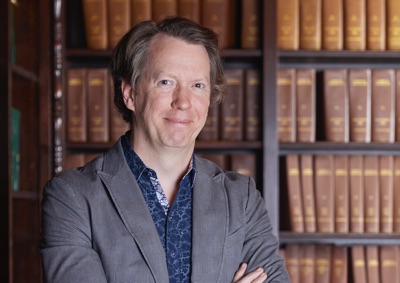
Sean Carroll is the Homewood Professor of Natural Philosophy at Johns Hopkins University and holds the Fractal Faculty position at the Santa Fe Institute. His research focuses on foundational questions in quantum mechanics, spacetime, statistical mechanics, complexity, and cosmology. He explores interdisciplinary connections between physics and philosophy, emphasizing topics like the nature of reality, consciousness, and scientific metaphysics. His popular works include The Biggest Ideas in the Universe and the Mindscape podcast, which engage audiences with accessible explanations of complex scientific and philosophical concepts. Carroll’s academic contributions span theoretical physics and philosophy, addressing challenges such as the quantum measurement problem, the arrow of time, and the interpretation of quantum mechanics. He critiques speculative ideas like Boltzmann brains and advocates for naturalism in understanding existence. His work bridges technical research and public communication, making advanced topics accessible to broader audiences without sacrificing depth.
Amir-hassan Ghaseminejad-tafreshi is a faculty member at Capilano University within the Faculty of Business and Professional Studies, School of Business. He holds a PhD from Simon Fraser University's Faculty of Communication, Art and Technology (2019), an M.Sc. in Electrical Engineering in Computer Hardware from Sharif University of Technology (1989), and a B.Sc. in Electronic Engineering from the same institution (1986). His educational background spans engineering, technology, and communication studies, reflecting his interdisciplinary approach to research and teaching. He has taught courses in operations management, statistics for business, business decision making, database administration and design, business management, information management, and various technology-related subjects. Ghaseminejad's research focuses on the intersection of society and technology, with particular emphasis on how advanced information and communication technologies influence collective decision making, voting systems, and citizen engagement in democracies. His work also extends to modeling the criminal justice system, computational criminology, data science, and the philosophy of science and technology. He employs interdisciplinary mixed methodology research, combining statistical analysis and mathematical process modeling with qualitative understanding of social phenomena. His publications demonstrate a clear trajectory of research that bridges technical data analysis with social science applications, particularly in criminal justice system modeling and democratic processes. The publications show increasing sophistication in handling complex social systems through quantitative methods while maintaining a critical perspective on technology's societal impacts. Graduate Fellowship (PhD) Award, 2013 Graduate Fellowship (PhD) Award, 2010 Ghaseminejad has been actively involved in multiple research centers including the Institute for Canadian Urban Research Studies (ICURS) at SFU, where he develops statistical and process models of British Columbia's criminal justice system; the Interdisciplinary Research in the Mathematical and Computational Sciences (IRMACS); and the Center for Policy Research on Science and Technology (CPROST). His teaching philosophy is learner-centered, motivational, inclusive, and participatory, informed by ability-based pedagogy and active participation learning models.
Dr. Eugene Syriani is a Professor at the Department of Computer Science and Operations Research , Faculty of Arts and Sciences , University of Montreal . He leads the GEODES research group and teaches software engineering at undergraduate, Master's, and PhD levels. His work combines Model-Driven Engineering (MDE) and Simulation to improve software engineer productivity and cross-disciplinary system design. Research interests span two axes: (1) Software Engineering focusing on Domain-Specific Languages (DSLs) , Model Transformations , Code Generation , Collaborative Modeling , and Customizable Modeling Environments ; (2) Simulation addressing Digital Twins , Discrete-Event Simulation , and Co-Simulation for applications in agriculture, automotive, and smart systems. His recent work explores AI-assisted modeling and prompt engineering . Key projects include Digital Twins for Vertical Farming (funded by NSERC, MITACS, and industry partners) and Domain-Specific Environments (NSERC Discovery Grant). He has received multiple best paper awards at international MDE and modeling conferences. Scientific contributions include: Best Paper, ACM/IEEE International Conference on Model Driven Engineering Languages & Systems (2023, 2018) NSERC Discovery Grant (2020-2027) Visiting Professor Fellowships (University of L'Aquila, TU Wien, University Cote d'Azur) Guest Editor for Software & Systems Modeling and JOT He supervises 13 graduate students and postdocs, with expertise in DSL development , collaborative modeling , digital twin frameworks , and model consistency . His tools include Gentleman (projectional editor), ReLiS (systematic review tool), and AToMPM (cloud-based modeling environment).
Professor Gabriel A. Wainer holds a Ph.D. from the Universidad de Buenos Aires and is a Full Professor at Carleton University's Department of Systems and Computer Engineering, Faculty of Engineering and Design. His research focuses on Discrete-Event Modeling and Simulation (DEVS), Real-Time Systems, and Parallel/Distributed Simulation. He leads the Advanced Real-Time Simulation (ARS) Lab at Carleton's V-Sim Centre, collaborating with industry partners like Ericsson Canada on projects such as channel reconstruction for wireless networks and AI-driven spectrum sharing. Wainer is a Fellow of the Society for Modeling and Simulation International (SCS) and an ACM Distinguished Speaker, with over 450 publications and significant grant funding. He has mentored numerous students and researchers, contributing to Carleton's academic and research excellence. Education: Ph.D. (Computer Science, Universidad de Buenos Aires, 1998), M.C.S. (Universidad de Buenos Aires, 1993). He has held visiting roles at institutions worldwide, including INRIA and the University of Nice. Research interests include DEVS formalism, cellular models, and real-time operating systems. His work bridges theory and application, addressing challenges in embedded systems, IoT, and pandemic modeling. Awards include the McLeod Founder Award (2022), SCS Outstanding Professional Achievement (2020), and IEEE Outstanding Engineering Award (2019). Labs/Teams: Advanced Real-Time Simulation Lab (ARS), part of Carleton's V-Sim Centre. Grants: Over $4.3M as PI and $1.2M as co-applicant, totaling $30M+ in collaborative funding. Advising: Supervised 12 postdocs, 19 PhDs, 16 RAs, 71 MSc students, and 150+ undergrads since 1997.
Kudret Demirli, PhD, PEng, is a Professor in the Department of Mechanical, Industrial and Aerospace Engineering at Concordia University. His research focuses on Lean Manufacturing, Lean Supply Chain, and Lean Healthcare, with a strong emphasis on integrating simulation and fuzzy logic techniques for process optimization. He teaches courses including Production Engineering (INDU 320), Lean Manufacturing (INDU 321), and graduate-level Production and Inventory Management (INDU 6211). His work bridges operational research and healthcare systems, addressing challenges in patient flow efficiency, resource utilization, and waste reduction in outpatient clinics and manufacturing systems. Dr. Demirli’s recent research highlights the application of lean principles to healthcare, such as developing frameworks for outpatient departments and oncology centers. He has also contributed to aerospace manufacturing through scheduling optimization in composite production systems. His methodologies often employ discrete-event simulation and fuzzy logic for uncertainty management, as seen in studies on steel rolling industries and automated defect detection in manufacturing processes. Dr. Demirli’s publications demonstrate expertise in both theoretical and applied aspects of lean systems, including maturity models, genetic algorithms for scheduling, and system modeling. His interdisciplinary approach spans healthcare, aerospace, and industrial engineering, emphasizing practical solutions for operational efficiency.
Fabiano Armellini is a Full Professor at the Department of Mathematics and Industrial Engineering , Polytechnique Montréal, with expertise in technology management , open innovation , and Industry 4.0 . He serves as Director of the Research Group on Globalization and Technology Management (GMT) and contributes to multiple research centers including the Poly-Industries 4.0 Laboratory and Interuniversity Research Center for Science and Technology (CIRST) . His research focuses on: Strategic integration of innovation ecosystems Technology roadmapping for digital transformation Entrepreneurial behavior in engineering contexts Sustainable industrial development The articles in his portfolio reflect trends in Industry 4.0 , open business models , and ecosystem-based strategic planning , with methodological emphasis on simulation, agent-based modeling, and ecosystem analysis. Recent work explores lean manufacturing adaptations and public policy impacts on innovation networks. Scientific Awards : SSHRC Knowledge Grant (2022) for ecosystem thinking research As an advisor, he has supervised 12 Ph.D. and 16 Master's students, with ongoing supervision of 11 graduate researchers. His teaching portfolio includes courses in technological entrepreneurship, strategic management, and innovation ecosystems. Collaborative projects span institutions in Canada, France, and Brazil.
Nadia Lahrichi is a Full Professor in the Department of Mathematics and Industrial Engineering at Polytechnique Montréal, where she holds a Tier 1 Canada Research Chair in Healthcare Analytics and Logistics (HANALOG). She serves as Deputy Director at CIRRELT and is an active member of multiple research centers including IVADO (Institute for Data Valorization) and the Interuniversity Research Center on Enterprise Networks, Logistics and Transport. Her research focuses on applying operational research and mathematical modeling techniques to healthcare systems, with particular emphasis on patient flow optimization, resource allocation, scheduling, and logistics. She has developed innovative approaches that integrate machine learning with traditional optimization methods to address complex healthcare challenges. Her work spans multiple healthcare domains including radiology, chemotherapy scheduling, emergency department operations, and pandemic response systems. Professor Lahrichi's publications demonstrate consistent growth in applying advanced analytics to healthcare problems, with recent work focusing on pandemic response systems (particularly related to COVID-19 testing in Nepal), integration of machine learning with optimization techniques, and resilience planning for healthcare systems. Her research bridges theoretical operations research with practical healthcare applications, resulting in tangible improvements to healthcare delivery systems. Tier 1 Canada Research Chair in Healthcare Analytics and Logistics (HANALOG) Deputy Director at CIRRELT Member of CIRRELT (Interuniversity Research Center on Enterprise Networks, Logistics and Transport) Member of IVADO (Institute for Data Valorization) Professor Lahrichi has supervised an impressive number of graduate students throughout her career, including 5 PhD students and 34 Master's students, demonstrating her commitment to training the next generation of researchers in healthcare analytics. Her research has been supported by significant grants that have enabled large-scale projects addressing critical healthcare system challenges. She collaborates extensively with healthcare institutions to ensure her research has direct practical applications and impacts real-world healthcare delivery systems.
Camila de Souza is an Associate Professor in the Department of Statistical and Actuarial Sciences within the Faculty of Science at Western University. She serves as Vice-director of Western Data Science Solutions (WDSS) and interim director of the Master of Data Analytics professional program, bridging advanced statistical methodology with real-world applications across healthcare, environmental science, and engineering domains. Her educational foundation includes a PhD in Statistics from the University of British Columbia, complemented by Master's and Bachelor's degrees in Statistics from Brazil's University of Campinas. This international training informs her interdisciplinary approach to complex data challenges. De Souza's research program develops cutting-edge statistical methods for analyzing large-scale complex data structures, with particular expertise in Bayesian variational inference, clustering algorithms, hierarchical mixture models, and survival analysis. Her work on hidden Markov models and nonparametric regression enables breakthroughs in fields ranging from ICU patient monitoring to astronomical data interpretation, consistently addressing methodological gaps in handling high-dimensional and heterogeneous datasets. Recent publications reveal a pronounced trend toward healthcare analytics applications, particularly in intensive care settings where her survival analysis models predict mechanical ventilation duration and patient flow optimization. Simultaneously, she extends statistical frameworks for environmental risk assessment (tornado-flood hazards) and energy systems through functional data analysis, demonstrating remarkable methodological versatility across disciplines. Her scientific recognition includes: 2014 Journal of Nonparametric Statistics Best Student Paper Award De Souza actively mentors doctoral candidates Ana Carolin Da Cruz and Chengqian Xian alongside MSc student Renan S. Barbosa, while securing research funding from natural sciences and health councils. Her supervisory approach emphasizes methodological rigor coupled with domain-specific application, preparing students for careers at the statistics-data science interface. Through WDSS, she leads a team providing statistical consulting services across Western University's research ecosystem, while shaping the Master of Data Analytics curriculum to meet industry demands for advanced modeling capabilities in an era of exponential data growth.
Dr. Mohamed Al-Hussein is a Professor and NSERC Industrial Research Chair in the Industrialization of Building Construction at the University of Alberta’s Department of Civil and Environmental Engineering. His work focuses on advancing modular and offsite construction technologies through automation, lean principles, and Building Information Modelling (BIM). PhD, Construction Engineering & Management, Concordia University (1999) MASc, Construction Engineering and Management, Concordia University (1995) MSc, Civil Engineering, University of Architecture & Civil Engineering, Bulgaria (1988) BSc, Civil Engineering, University of Architecture & Civil Engineering, Bulgaria (1983) Dr. Al-Hussein’s research spans five key domains: Modular Construction: Pioneering high-efficiency offsite building systems, including rapid assembly of student dorms and mid-rise residential buildings. BIM & Digitalization: Developing 3D/4D modeling frameworks, automated design systems, and digital twin applications for construction optimization. Environmental Sustainability: Quantifying CO2 emissions, exploring nano energy storage, and advancing solar PV integration in residential construction. Urban Planning: Specializing in age-restricted community design, municipal infrastructure maintenance, and housing affordability analysis related to paving standards. Construction Safety: Applying ergonomic risk assessment tools and virtual reality to enhance worker safety and reduce construction-related hazards. His 400+ peer-reviewed publications reflect cutting-edge applications of AI, deep learning, and simulation across construction processes. Recent work explores metaverse integration, blockchain collaboration tools, and advanced crane operation optimization using reinforcement learning. As Editor-in-Chief of the International Journal of Industrialized Construction , Dr. Al-Hussein remains a global authority in this field. He has developed industry-transforming technologies like the Quikmod-2 modular lift frame and PCL lift frame project , with real-world implementations ranging from Shell Scotford complex equipment replacement to CBC News and Forbes featured projects.
Maher Ahmed is an Associate Professor at the Faculty of Science, Wilfrid Laurier University. His research focuses on pattern recognition, artificial neural networks, and expert systems. He has contributed to diverse fields including robotics, medical informatics, network security, and computer vision. Key research interests include developing algorithms for shape representation, improving network anomaly detection, and applying machine learning to financial fraud prevention. His work bridges theoretical computer science with practical applications in healthcare and autonomous systems. Publications span robotics localization, medical literature reviews, encryption techniques, and sign language recognition, reflecting a cross-disciplinary approach. He currently holds no listed awards but maintains an active research agenda with a focus on applied artificial intelligence.