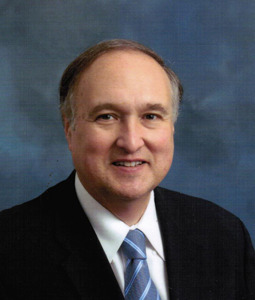
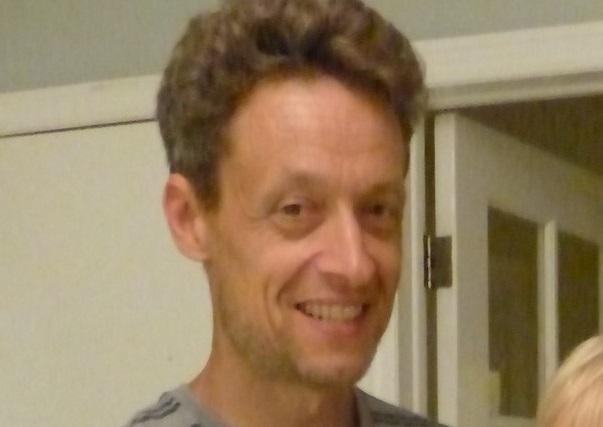
Dr. Jeonghun Lee is an Associate Professor of Mathematics at Baylor University's College of Arts & Sciences. His research focuses on numerical methods for partial differential equations—particularly finite element techniques—preconditioners for multiphysics problems, and computational methods for solid/fluid mechanics. He develops robust discretization schemes for complex physical systems like poroelasticity and wave propagation. He holds a Ph.D. from the University of Minnesota and completed postdoctoral research at Aalto University, University of Oslo, and UT Austin's Institute for Computational Engineering and Sciences. His publications advance computational mathematics through error analysis, hybridizable methods, and multiphysics solvers, with applications in geomechanics and materials science.
Dr. Amanda Diegel is an Assistant Professor of Mathematics at Mississippi State University's Department of Mathematics and Statistics. Her research develops numerical methods for partial differential equations with applications in physics, biology, and materials science. Specializes in finite element methods, multigrid solvers, and stability analysis for complex systems including Cahn-Hilliard models, fluid-structure interactions, and liquid crystal dynamics. Published in leading computational mathematics journals on convergence analysis and numerical schemes for multiphysics problems. Holds PhD in Mathematics from University of Tennessee (2015) and completed postdoctoral research at Louisiana State University. Current work advances computational techniques for phase field models and coupled physical systems.
Andrew V Makeev is a Professor and Jenkins Garrett Professor in the Department of Mechanical and Aerospace Engineering at the University of Texas at Arlington (UTA). He directs the Advanced Materials and Structures Lab (AMSL), a world-class facility for composite materials research. Prior to UTA, he served as Assistant Professor at Georgia Tech and Principal Engineer at Delta Air Lines. His work bridges theoretical and experimental research in composite materials, structural diagnostics, and predictive manufacturing, funded by US Army, Navy, Air Force, NASA, and industry leaders like Boeing and Sikorsky. Education: PhD in Aerospace Engineering, Georgia Tech (1997) MS in Aerospace Engineering, University of Cincinnati (1993) BS in Aerospace Engineering, Bauman Moscow State Technical University (1991) Research focuses on composite materials, advanced manufacturing, and structural integrity. Key themes include: Integration of design/manufacturing for composite performance Material characterization via X-ray CT and Digital Image Correlation (DIC) Fatigue prognosis and damage tolerance analysis Additive manufacturing of fiber-reinforced polymers Lightning strike protection and thermal systems Publications span 2016-2025, emphasizing computational models for composite damage, DIC data-driven methods, and predictive tools for void/wrinkle analysis. His work has been featured in Aerospace America , Composites World , and peer-reviewed journals. Honors include 7 Best Paper Awards, the Cheeseman Award (European Rotorcraft Forum), and grants exceeding $10M from federal and industry sponsors. He mentors students and postdocs in composite mechanics, serves on NSF panels, and leads the Vertical Lift Consortium's Advanced Materials Technology program.
James Adler is a Professor in the Department of Mathematics at Tufts University, within the School of Arts and Sciences. He is currently on academic leave. His research focuses on scientific computing and numerical analysis, particularly in developing efficient computational methods for complex fluids, plasma physics, electromagnetism, and multi-scale physical systems. He holds a PhD in Applied Mathematics from the University of Colorado at Boulder (2009), an MS in Applied Mathematics from the same institution (1996), and dual BAs in Mathematics and Physics (with a concentration in Atmospheric Science) from Cornell University (2004). Dr. Adler’s research emphasizes adaptive finite-element discretizations and multigrid solvers for nonlinear PDEs, aiming to preserve physical properties like energy conservation while optimizing computational efficiency. His work spans applications in magnetohydrodynamics, particle transport, and soft materials. He has developed tools like Morpho, a programmable environment for shape optimization and shapeshifting problems, and contributed to preconditioning techniques for Biot’s model and linear elasticity systems. His recent articles highlight advancements in numerical methods, including oscillation-free schemes for Biot’s model, physics-informed models for dynamical systems, and stable mimetic finite-difference methods. These contributions underscore his focus on bridging computational efficiency and physical accuracy across diverse applications. Adler has advised no listed students but actively collaborates on grants and research initiatives in computational mathematics. His lab work involves Morpho and related frameworks, advancing computational tools for engineering and material science challenges.
Dr. Ismail Adeniran is a Senior Lecturer at Manchester Metropolitan University, with a research focus on integrating Physics, Computational Science, and Scientific Machine Learning to address complex problems in cardiovascular, neurological, and musculoskeletal diseases. His academic background includes an undergraduate degree in Chemical Engineering from UMIST, an MSc in Computation, and a PhD in Biological Physics from the University of Manchester. Doctor of Philosophy (Biological Physics), University of Manchester Master of Science (Computation), UMIST Bachelor of Science (Chemical Engineering), UMIST His research expertise spans Computational Physiology, Scientific Software Development, Optimal Control, Deep Reinforcement Learning, Quantum Computing, and Mathematical Optimization. He applies these methodologies to understand pathophysiological mechanisms in conditions like Hypertrophic Cardiomyopathy, Atrial Fibrillation, and Heart Failure with Preserved Ejection Fraction, while developing therapeutic frameworks for these conditions. Recent publications emphasize in silico modeling of cardiac arrhythmias, particularly Short QT Syndrome and Atrial Fibrillation, using biophysically detailed models. His work investigates genotype-phenotype relationships, electromechanical coupling, and the impact of mutations on ion channels and myocardial mechanics. Dr. Adeniran also explores computational methods for Cryptoasset valuation, aiming to address volatility through novel quantum and classical algorithms. His full research portfolio includes collaborations in biophysical modeling, ECG analysis, and interdisciplinary approaches bridging physics, computation, and clinical applications.
Zhen Chen is a Professor in the Department of Civil and Environmental Engineering and the Nuclear Engineering Program at the University of Missouri, with an adjunct appointment in the Department of Mechanical and Aerospace Engineering. He specializes in blast-resistant design, nanotechnology, and simulation-based engineering science. His research focuses on material failure under extreme conditions, multi-scale modeling, and computational mechanics. He has received prestigious awards including the NSF CAREER Grant and ASME Fellowship. Education: PhD (University of New Mexico), MS (University of New Mexico), BE (Shanghai University). Prior to MU, he worked at Sandia National Laboratories and the New Mexico Engineering Research Institute. Research Interests: Blast-resistant structural systems Nanoporous materials and nanotechnology Material point method (MPM) and computational modeling Multi-scale simulation of materials Failure mechanisms in metals and composites Recent work emphasizes fluid-solid interactions in explosion-resistant designs, strain localization in laminated glass, and atomistic studies of nanoporous materials. Over 200 peer-reviewed articles demonstrate his contributions to computational mechanics and material science. Awards and Grants: NSF CAREER Award (2015) ASME Fellow (2019) Funding from NSF, AFOSR, ARO, and Sandia National Labs His work bridges micro- and macro-scale phenomena, with applications in aerospace, civil infrastructure, and defense systems. Active collaborations span mechanical, nuclear, and materials engineering disciplines.
Professor Pedro Diez is a faculty member at the Universitat Politècnica de Catalunya (UPC), specializing in computational mechanics and reduced-order modeling. He holds a BSc and PhD in Civil Engineering from UPC (1989 and 1996, respectively). His research focuses on error estimation, extended finite element methods (X-FEM), and applications in automotive and geophysical systems. He co-organizes the International Conference in Adaptive Modeling and Simulation since 2003, with the next edition in 2023. Key research areas include: Reduced Order Models (POD/PGD) Goal-oriented adaptivity in numerical simulations Geophysical inversion and thermal modeling Automotive structural dynamics and NVH analysis Sustainable materials for civil engineering His work bridges computational methods with real-world applications, such as earth dam monitoring, hydraulic fracturing modeling, and biomechanical simulations. Recent publications emphasize real-time risk analysis, parametric solutions for nonlinear systems, and inverse problem techniques in geophysics. His contributions to numerical methods have advanced high-fidelity, low-cost simulations across engineering disciplines. Publications span over 30 years, with a focus on: Efficient parametric solutions for transient coupled systems Nonintrusive reduced basis methods Thermo-hydro-mechanical modeling of geological media Advances in error estimation and model order reduction underpin much of his work, enabling applications in structural health monitoring, crashworthiness analysis, and geophysical exploration.
Sonia Fernández-Méndez is a Professor (Catedrática de Universidad) at Universitat Politècnica de Catalunya (UPC), affiliated with the Department of Civil and Environmental Engineering (DECA) and the Escola Tècnica Superior d'Enginyeria de Camins, Canals i Ports de Barcelona (ETSECCPB) . She also holds a lecturer position at the Facultat de Matemàtiques i Estadística (FME). Her research focuses on computational modeling in solid mechanics, material interfaces, electroactive materials, 4th-order PDEs, and advanced discretization methods like HDG and X-FEM. She leads the Laboratori de Càlcul Numèric (LaCàN) , a top research group in applied numerical methods. Education: Licenciatura en Matemàtiques (UPC, 1996), PhD in Applied Mathematics (UPC, 2001) under Antonio Huerta. Her awards include the Jacques Louis Lions Award 2010 and Juan Carlos Simó Award 2009. She has supervised 7 PhD students, including Rubén Sevilla and Alba Muixí. Her work bridges high-order methods with industrial applications in energy and materials science. Key contributions: Pioneered hybridizable discontinuous Galerkin (HDG) methods for fracture mechanics and flexoelectric metamaterials. Published extensively in Computer Methods in Applied Mechanics and Engineering , Journal of Scientific Computing , and International Journal for Numerical Methods in Engineering . Active in EU-funded projects on computational mechanics and energy materials.
Robert L. Mullen is a Professor in the Department of Civil and Environmental Engineering at the Molinaroli College of Engineering and Computing, University of South Carolina. His work bridges computational mechanics, uncertainty quantification, and interdisciplinary applications in biomechanics and transportation systems. Ph.D. in Applied Mechanics, Northwestern University (1981) M.S. in Structural Mechanics, University of Illinois (1977) B.S. in Structural Engineering, University of Illinois (1976) Research focuses on: Computer modeling of engineering systems Biomechanics Mechanical behavior of micro electro-mechanical systems Coupled field problems Interval methods for uncertainty Key trends in his 2018-2025 publications include: Advancements in interval finite element methods for structural analysis Machine learning integration in transportation infrastructure monitoring Uncertainty quantification across mechanical and civil engineering domains Innovations in data fusion for traffic management Biotechnological applications (vaccine stabilization) Durability studies in transportation assets Scientific recognition includes: Fellow, American Society of Civil Engineers Professional contributions extend to patents in material science, biotechnology, and structural systems.
Dr. Marcus Garvie is an Associate Professor of Mathematics in the Department of Mathematics & Statistics at the University of Guelph, within the College of Engineering and Physical Sciences. His research focuses on computational geometry, numerical analysis, and mathematical biology, with a particular emphasis on polyomino tiling problems, predator-prey dynamics, and reaction-diffusion equations. He collaborates extensively with researchers like John Burkardt and Catalin Trenchea, publishing in journals such as Theoretical Computer Science and Contributions to Discrete Mathematics . Garvie's teaching experience spans secondary education, community colleges, and Arizona State University, where he funded his PhD through teaching roles. At Guelph, he teaches large undergraduate courses in Business Mathematics, Linear Algebra, and Numerical Methods, emphasizing real-world applications and textbook-independent workbooks. His MATLAB-based repositories on Zenodo highlight practical implementations of his research. His academic journey includes doctoral training in numerical analysis of parabolic PDEs and finite element methods. Current projects explore linear programming approaches to tiling puzzles like the Eternity puzzle, while prior work addressed optimal control theory and Turing patterns in ecological systems. Publications span computational mathematics, ecology, and algorithm design, with a focus on bridging theoretical insights and computational tools. His work often integrates numerical methods with biological applications, reflecting a dual commitment to mathematical rigor and applied problem-solving.
Dr. Nejat Rahmanian is an Associate Professor in Chemical and Petroleum Engineering at the University of Bradford's School of Engineering, part of the Faculty of Engineering & Digital Technologies. He leads the MSc Program in Advanced Chemical and Petroleum Engineering and holds professional certifications as a Chartered Engineer, Chartered Scientist, and Fellow of the Higher Education Academy. His expertise spans over 24 years in academia and industry, including 8 years at Petropars Ltd collaborating with major firms like Shell and Total on the South Pars Gas Field project. Education: PhD in Chemical Engineering, University of Leeds (2010) MBA (Executive) with Distinction MSc (1997) and BSc (1993) in Chemical Engineering Research Interests: Process modeling/simulation for hydrocarbon processes (CO2 capture, LNG production) Powder technology (particle characterization, granulation scale-up) Multi-disciplinary applications (diabetic shoe design, self-cleaning fabrics) Carbon sequestration and CCS technologies Professional Engagement: Member of Senate (2019-2022), Faculty Board, and PGR committee (2017-2023) Committee roles in IChemE Particle Technology SIG (2016-2022) Active in UK CCS Group and IOM3 Teaching: Courses include Heat Transfer, Mass & Energy Balances, Reaction Engineering, and Particle Technology. Supervises PhD projects in areas like AI-driven granulation and hydrogen flow measurement.
Mustafa Ucgul is a Senior Lecturer and Course Coordinator in the Faculty of Science and Engineering at Southern Cross University. He holds a PhD in Mechanical Engineering from the University of South Australia (UniSA), alongside a Master of Engineering and Graduate Diploma in Education from UniSA, and a Master of Applied Science from Kahramanmaraş Sütçü İmam University. His expertise spans computational mechanics, agricultural machinery design, and thermal analysis of agricultural systems. Dr. Ucgul has over 17 years of academic and research experience in Turkey and Australia, with a focus on soil-engaging tool simulations and desalination systems. Education: PhD (Mechanical Engineering), University of South Australia MEng/ME (Mechanical Engineering), University of South Australia Grad DipEd (Education), University of South Australia MSc (Applied Science), Kahramanmaraş Sütçü İmam University BSc (Engineering), Cukurova University Research Interests: Dr. Ucgul’s work integrates computational modeling (DEM/FEM/CFD) to optimize agricultural machinery design and thermal efficiency in greenhouses and desalination systems. His research has been supported by industry partnerships (GRDC, DPIRD) and focuses on soil-tillage dynamics and mechanical system design. Awards: 2024 Inspiring Educator Award (Southern Cross University) Teaching & Supervision: Teaches Engineering Technology, Dynamics, Advanced Manufacturing, and Energy Systems. Supervises research students and consults on agricultural machinery projects. Serves as a reviewer for journals like Biosystems Engineering and Transactions of ASABE . Labs & Affiliations: Member of the Institution of Engineers Australia (MIEAust) and the Turkish Chamber of Mechanical Engineers. Active in university committees and industry-linked research initiatives.
Katharine Long is a Professor in the Department of Mathematics and Statistics at Texas Tech University (TTU), where she has served since 2007. Her research focuses on scientific computing, mathematical modeling, numerical methods for partial differential equations, uncertainty quantification, and high-performance computing. She has held prior positions at Sandia National Laboratories, SUNY Brockport, and UMass Amherst. Her work spans interdisciplinary applications in physics, biology, engineering, and medicine, with recent emphases on inverse problems in medical imaging and implicit Runge-Kutta methods for PDEs. Education: PhD in Astrophysics from Princeton University (1990), BS in Astronomy from the University of Maryland (1986), and coursework at Prince George's Community College (1981-82). Research interests include numerical optimization, structural sensitivity analysis, astrophysical dynamics (e.g., barred galaxies), and ecological modeling. She collaborates extensively, including with Victoria Howle on computational methods for PDEs and interdisciplinary teams on biomedical applications of infrared thermography. Teaching spans graduate and undergraduate courses in numerical analysis, mathematical methods for physics, and computational mathematics. She has advised numerous PhD, MS, and undergraduate students, many of whom now hold academic or industry positions. Labs/Teams: Co-developer of the Sundance and Trilinos software frameworks for PDE-constrained optimization. Active in professional organizations such as SIAM and AWM.
Ivano Benedetti is a Professor of Aerospace Constructions and Structures at the Department of Engineering, University of Palermo. He coordinates the Master's Degree in Aerospace Engineering and is part of the Teaching Board of the Doctorate in Mechanical, Manufacturing, Management and Aerospace Innovation, as well as the PhD in Civil, Environmental and Materials Engineering. His academic roles include being an invited professor at INSA Rouen and having held visiting positions at Northwestern University (Fulbright Scholar) and Imperial College London (Marie Curie Fellow). Education background includes a PhD in Aerospace Engineering from the University of Pisa (2008) and a Master's in Aerospace Engineering from the University of Palermo (2001). Research focuses on aerospace structures, computational mechanics, composite materials, and fracture analysis. Key areas include aeroelastic analysis, damage modeling in composites, and polycrystalline material behavior using advanced numerical methods like discontinuous Galerkin and boundary element techniques. His work addresses sustainable aviation (e.g., hydrogen storage), morphing technologies, and structural health monitoring. Publications span computational frameworks for aeroelastic simulations, high-order structural models, and micro-mechanical homogenization. He has supervised thesis projects on topics such as composite wing analysis, additive manufacturing fracture, and UAV applications. No scientific awards explicitly mentioned, but his research has been supported by international fellowships (Fulbright, Marie Curie). He contributes to editorial boards of journals in aerospace and materials science.
George Abdou is an Associate Professor in the Department of Mechanical and Industrial Engineering at the New Jersey Institute of Technology (NJIT). His research focuses on advanced manufacturing systems, robotics, and optimization techniques. Notable areas include palletization optimization, waterjet technology for surgical applications, and milling process parameters. He has contributed to linear motor dynamics, finite element analysis, and logistics systems design. Abdou's work spans from foundational engineering challenges like tool life analysis in machining to interdisciplinary applications such as medical devices leveraging waterjet technology. His research integrates simulation, optimization algorithms, and experimental validation to address real-world manufacturing and automation problems. His recent studies (2019) explore waterjet technology for surgical procedures, advancing biomedical engineering through precise incision techniques using physical experimentation on animal skin. Earlier contributions include optimizing high-speed milling operations (2001) and developing 3D palletization strategies that enhance storage and logistics efficiency. Research Themes: Palletization, Robotics, Waterjet Applications, Milling Optimization, Linear Motors Key Publications: Over 30 peer-reviewed articles since 1988, with notable works in International Journal of Production Research and International Journal of Computer Integrated Manufacturing . Abdou teaches courses in industrial engineering and project management at NJIT, reflecting his expertise in both theoretical and applied aspects of manufacturing systems.