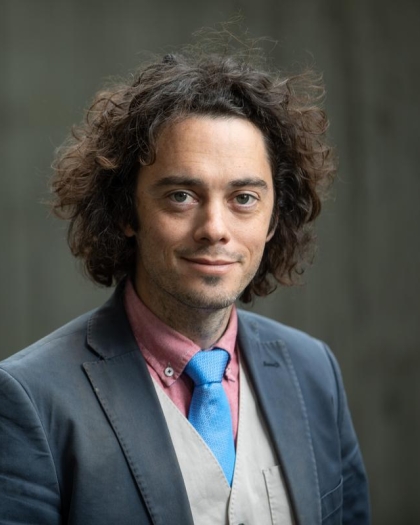
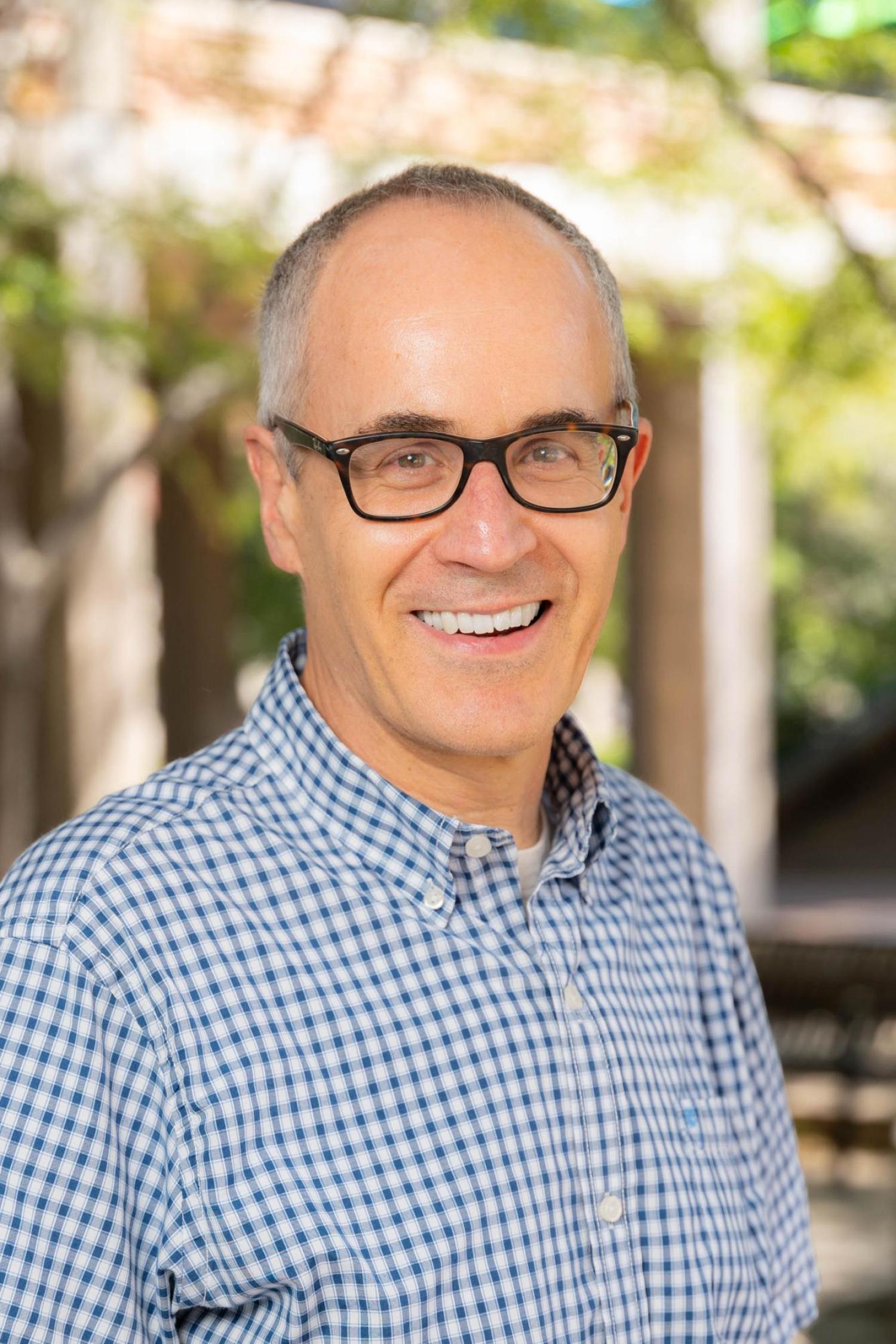
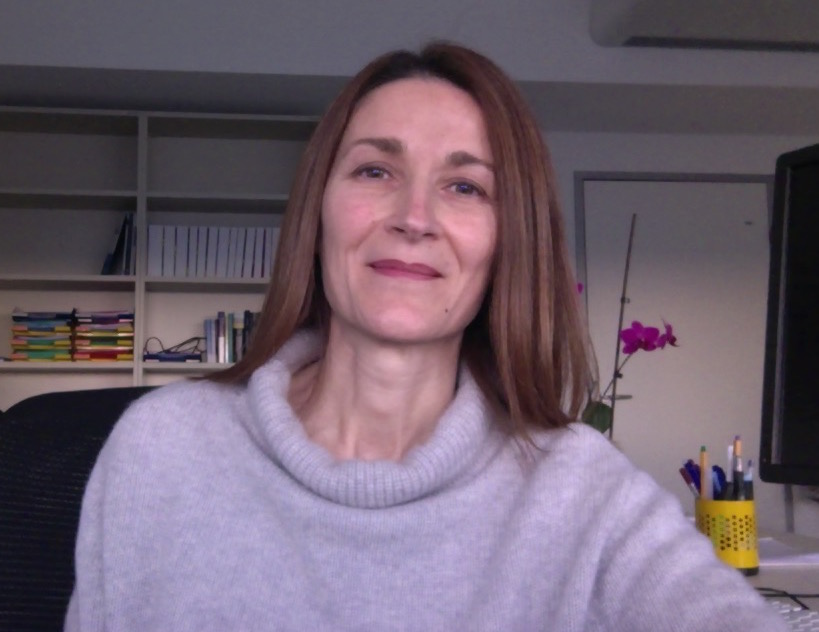
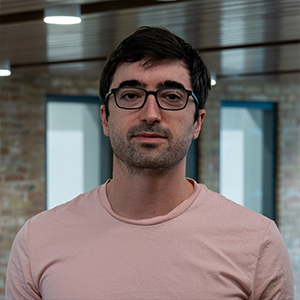
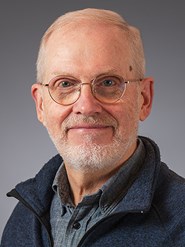
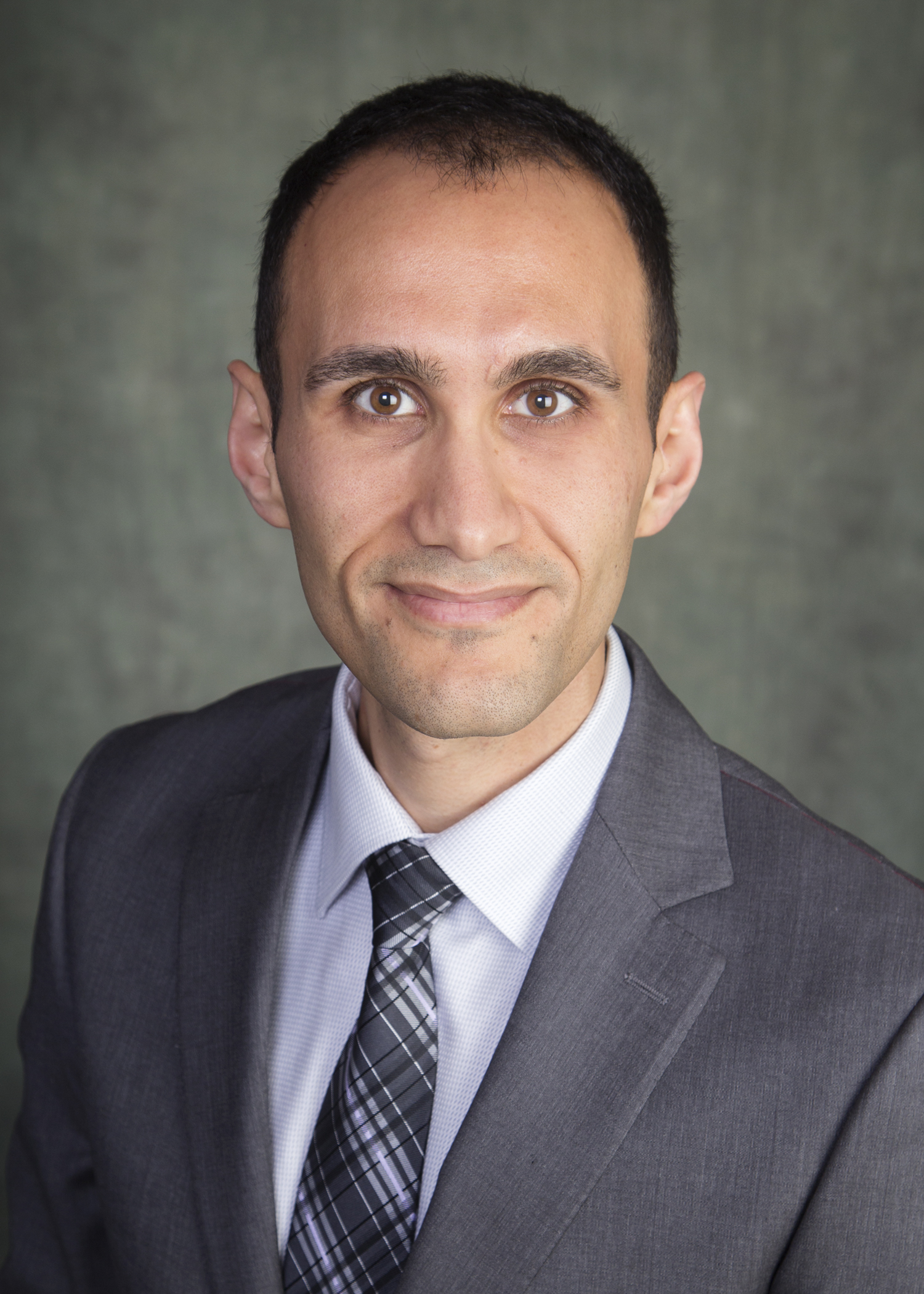
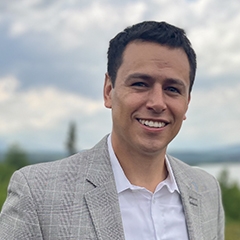
Philipp Eichmeir is a Researcher at the Research Center Wels within the Upper Austria University of Applied Sciences . His work focuses on optimal control , multibody dynamics , and adjoint methods applied to robotics and automotive systems. Expertise in adjoint gradient computation for extremal value optimization Active in automotive/mobility and smart production domains Philipp's research spans computational mathematics , robotics , and mechanical engineering , utilizing advanced numerical methods and simulation modeling for complex dynamic systems. His recent publications focus on multibody dynamics , adjoint optimization , and inequality constraint handling in control systems. Collaborative projects include IOMMS (Innovative Optimization Methods for Multibody Systems) and JR-Centre for Thermal NDE of Composites . Scientific Awards Best Paper Award (2020) Automatisierte Körperschallauswertung (2015)
Jan Martin Nordbotten is a full-time Professor at the Department of Mathematics, University of Bergen (UiB), with adjunct positions at Princeton University and NORCE. His research focuses on applied mathematics, particularly in porous media, CO2 storage, fluid dynamics, and interdisciplinary applications in hydrology, biomedicine, and ecology. He completed his PhD at UiB in 2004 and became Norway's third youngest professor in 2007. His work emphasizes numerical methods, multiscale modeling, and experimental validation. Affiliations: UiB (full-time), Princeton (adjunct), NORCE (adjunct) Research Group: Center for Sustainable Subsurface Resources Research interests span mathematical modeling of subsurface processes, including flow in fractured media, geomechanics, and phase-field fracture. Notable contributions include analytical and numerical solutions for CO2 leakage, multiphase flow, and development of tools like DarSIA for image processing in porous media. Publications highlight advancements in mixed-dimensional models, finite element methods, and experimental validation of CO2 storage forecasts. His work bridges theoretical mathematics with practical applications in energy and environmental systems.
Kurt Maute is a Professor and Palmer Engineering Chair at the University of Colorado Boulder’s College of Engineering and Applied Science (CEAS). He currently serves as Associate Dean for Undergraduate Education. His academic journey includes a PhD in Civil Engineering (University of Stuttgart, 1998) and a Dipl.-Ing. in Aerospace Engineering (University of Stuttgart, 1992). He has held progressively senior roles at CU Boulder, including Associate Dean for Research (2012–2014), Associate Professor (2006–2012), and Assistant Professor (2000–2006). Maute’s research focuses on structural topology optimization, multi-disciplinary optimization, and aeroelastic systems. He has pioneered methods integrating XFEM, level-set techniques, and isogeometric analysis for complex engineering problems. His work spans fluid-structure interaction, hypersonic vehicle design, and additive manufacturing. His notable contributions include advancements in immersed boundary methods, multi-material optimization, and uncertainty quantification. Awards include the NSF Career Award (2004) and Palmer Endowed Chair (2016–present). Maute’s lab (Aerospace Mechanics Research Center, AMREC) addresses challenges in computational mechanics and multi-physics systems. He has advised numerous students and led grants in battery modeling, topology optimization, and aerospace systems. His research bridges theory and application, emphasizing industrial relevance and computational innovation.
Prof. David Ham is a Professor of Computational Mathematics at the Department of Mathematics, Faculty of Natural Sciences, Imperial College London. His research focuses on high-level abstractions for scientific computation, particularly in geophysical fluids and numerical software. He leads the Firedrake project and co-developed the dolfin-adjoint framework, which received the 2015 Wilkinson Prize for Numerical Software. Ham holds a BSc (Mathematics) and LLB from The Australian National University, and a PhD from TU Delft. His career includes roles as a NERC Independent Research Fellow and Grantham Research Fellow at Imperial College. He is affiliated with the Grantham Institute, Mathematics of Planet Earth, and Software Performance Optimisation groups. His research spans computational science, including finite element methods, adjoint-based inversion, and parallel computing. Recent work emphasizes differentiable programming integration with machine learning and geophysical modeling. Ham has contributed to numerous grants and projects, including EPSRC and NERC-funded initiatives. He leads development of software tools like Firedrake and Thetis, advancing computational methods for oceanography and geodynamics.
Teng-Fong Wong is a Research Professor in the Department of Geosciences at Stony Brook University, where he has been a faculty member since 1982. His research focuses on the intersection of rock mechanics, earthquake processes, and environmental applications, making significant contributions to understanding deformation mechanisms in geological materials. Education: Sc.B., Brown University, 1973 M.S., Harvard University, 1976 Ph.D., Massachusetts Institute of Technology, 1981 Research Interests: Professor Wong's research centers on rock mechanics with emphasis on earthquake mechanics, energy resources, and environmental applications. He investigates both phenomenological and micromechanical aspects of rock deformation and fluid flow using an integrated approach combining high-pressure deformation experiments, quantitative microstructure characterization, and theoretical analysis. His work spans brittle-ductile transitions in porous rocks, permeability evolution, strength properties of fault zone materials from SAFOD and TCDP drilling projects, and submarine groundwater discharge systems. Publication Trends: Wong's recent publications (2006-2008) demonstrate a consistent focus on strain localization mechanisms in porous rocks, particularly examining compaction bands and deformation bands in sandstones. His work integrates advanced imaging techniques (X-ray radiography, CT scanning) with mechanical testing to understand the micromechanics of rock failure. A significant thread connects his research on fault zone properties from major drilling projects (SAFOD, TCDP) with fundamental rock deformation processes. Scientific Recognition: U.S. Patent 6,874,371 for Ultrasonic Seepage Meter (2005) U.S. Patent 7,107,859 for Ultrasonic Seepage Meter (2006) Co-author of "Experimental Rock Deformation - The Brittle Field" (2nd Edition, Springer-Verlag, 2005) Professional Activities: Professor Wong maintains an active international research profile with numerous visiting appointments including at Australian National University, MIT, ETH Zurich, and institutions in China and France. His work involves extensive collaboration with USGS and international research teams on major fault zone drilling projects. He has developed specialized equipment like the ultrasonic seepage meter for measuring submarine groundwater discharge. Research Infrastructure: Wong's laboratory utilizes advanced capabilities including high-pressure deformation equipment, 3D visualization through laser scanning confocal microscopy and synchrotron microCT, and integrates these with analytic modeling and numerical simulation techniques (finite element and discrete element methods) to investigate micromechanics of dilatant and compactant failure in geological materials.
Ilaria Perugia is a University Professor (Univ.-Prof.) and Chair of Numerics of PDEs at the Department of Mathematics, Faculty of Mathematics, University of Vienna. She also serves as Deputy Head of the Research Platform Erwin Schrödinger International Institute for Mathematics and Physics. Her research focuses on numerical methods for partial differential equations with applications in computational physics and engineering. Professor Perugia's primary research interests include: Numerical methods for PDEs Finite element methods Discontinuous Galerkin methods Trefftz methods Virtual element methods Space-time methods Computational electromagnetics Wave propagation problems Nonlinear reaction-diffusion problems Her work spans theoretical analysis, algorithm development, and practical implementation of numerical methods for solving complex physical phenomena. Her recent publications demonstrate a strong focus on space-time methods, virtual element methods, and structure-preserving discretizations for wave equations, heat equations, and other PDEs. She has made significant contributions to the development of stable and efficient numerical schemes that preserve important physical properties of the underlying continuous problems, particularly in the context of wave propagation and computational electromagnetics. Professor Perugia leads a research group comprising several researchers and students including Mattia Corti, Matteo Ferrari, Monica Nonino, Andrea Scaglioni, Paul Stocker, Enrico Zampa, and Marco Zank. Her group actively collaborates on projects related to numerical analysis and scientific computing, with particular emphasis on developing novel discretization techniques for challenging PDE problems.
Arthur Bousquet is an Associate Professor of Mathematics at Lake Forest College, affiliated with the Math and Computer Science department. He holds a PhD in Applied Mathematics from Indiana University (Bloomington, IN) and a MS in Engineering in applied mathematics and scientific computing from SuP Galilee Engineering School (Paris, France). His research focuses on numerical methods for partial differential equations, including finite volume and finite element techniques, with applications to geophysical fluid dynamics, climate modeling, and biomedical problems like viral shell mechanics. Notable areas include shallow water equations, phase field modeling, and computational methods for atmospheric dynamics. Bousquet has published extensively on topics such as numerical weather prediction, electrokinetic equations, and virus nanoindentation modeling. His work often combines theoretical analysis with computational simulations to address complex systems in fluid dynamics and materials science. He has received the Rothrock Award for teaching excellence (2014) and held research fellowships including an NSF Graduate Fellowship (2009-2013). His teaching includes courses like Computational Mathematics, Multivariable Calculus, and Real Analysis.
Martin Berggren is a Professor at the Department of Computing Science , Umeå University , Sweden. His work focuses on Computational Design Optimization , combining computer simulations and numerical optimization to enhance engineering designs for devices like antennas, microwave components, and loudspeakers. Berggren is also active in mathematical modeling of physical phenomena, particularly wave propagation and fluid mechanics, with a strong emphasis on finite-element methods . His research addresses large-scale conceptual design problems using thousands to millions of design variables, relying on gradient-based algorithms and adjoint-based computations of design sensitivities—similar to back-propagation in deep learning. Key application areas include acoustic and electromagnetic devices, where he investigates damping mechanisms, boundary conditions, and material distribution. Other interests, though less active, involve flow control and unsteady fluid–structure interaction . Berggren collaborates extensively on projects such as Structured Regularization , Topology Optimization of Acoustic Black Holes , and Design of Microstrip-to-Waveguide Transitions . His publications span journals like Journal of Computational Physics , Pattern Analysis and Applications , and IEEE Transactions on Antennas and Propagation , often co-authored with researchers like Linus Hägg , Eddie Wadbro , and Disi Lin .
Matthias Schlottbom is an Associate Professor specializing in Mathematics of Computational Science, with a focus on numerical methods and their applications in physics, biology, and engineering. His research integrates advanced computational techniques with interdisciplinary problems, including radiative transfer, photonic crystals, and chemotaxis modeling. Research Interests: Schlottbom’s work spans numerical analysis, finite element methods, and machine learning. He develops high-order discretization schemes, iterative solvers for anisotropic transport, and mathematical frameworks for biological network formation. Publications: Recent articles highlight his contributions to accelerating radiative transfer simulations, extending component mode synthesis for Helmholtz equations, and analyzing diffusion limits in kinetic models. His work often bridges computational mathematics with practical applications in photonics and multiscale systems. Collaborations: He actively collaborates on datasets for optical simulations, radiative transfer algorithms, and photonic crystal modeling, contributing to open-access repositories like 4TU.Centre and Zenodo. Activities: Schlottbom has organized workshops such as the Kinetic Theory Workshop in the Netherlands and delivered keynotes on residual minimization and data-driven methods for transport equations. Scientific Awards: No specific awards or fellowships are mentioned in the provided materials. Advising & Grants: Details about students, advising roles, or grant funding are not included in the available data.
Houman BOROUCHAKI is a Professor at the University of Technology of Troyes (UTT), France, with over 20 years of academic leadership. He has served as Head of the Automatic Mesh Generation and Advanced Methods (GAMMA3) project team since 2008 and previously led the Laboratory of Mechanical Systems and Concurrent Engineering (LASMIS) (2005-2007). His work bridges academic research and industrial applications through collaborations with INRIA , French Petroleum Institute (IFPEN) , Dassault Aviation , and others. Research Interests: A pioneer in adaptive meshing , he focuses on finite element methods , geometric modeling , and numerical simulations . His innovations underpin mesh generation algorithms , 3D triangulation software , and industrial applications in metal forming, composite simulation, and subterranean modeling. Scientific Trends: His recent work emphasizes metric-based meshing , high-order geometric validity , and parallel processing for mesh generation , with applications in petroleum reservoirs, aviation surfaces, and nanomaterials. His Google Scholar profile reflects 25+ years of contributions to meshing and simulation. Teaching: With 22 years of experience, he teaches courses on meshing , numerical analysis , geometric modeling , and computer graphics at UTT, covering undergraduate to PhD levels. Labs & Teams: He leads the interdisciplinary GAMMA3 team and has contributed to LASMIS (mechanical engineering), L2n (CNRS-UMR 7076) (nanomaterials), and LIST3N (computer science).
Professor Yanghua Wang is a leading academic in Geophysics at Imperial College London's Faculty of Engineering. He serves as Principal of the Resource Geophysics Academy and Director of the Centre for Reservoir Geophysics. His career spans over four decades, with roles including Research Manager at Robertson Research and a PhD from Imperial College London (1995–1997). He holds prestigious awards such as Fellow of the Royal Academy of Engineering (2021) and membership in the Chinese Academy of Engineering (2023). Education highlights include a BSc (1983) and MSc (1994) in Geophysics, followed by a PhD in Geophysics (1997). His research focuses on seismic inversion, reservoir geophysics, and time-frequency analysis, with notable monographs on seismic inversion and signal processing. He leads interdisciplinary projects combining machine learning with geophysical modeling, addressing challenges in reservoir characterization and seismic data processing. Research interests emphasize geophysical inversion techniques, anisotropic media analysis, and applications in energy exploration. He has pioneered methods like the W transform for seismic signal analysis and contributed to advancements in physics-informed neural networks. His work bridges theoretical geophysics with practical reservoir engineering solutions. Prof. Wang’s lab, the Resource Geophysics Academy, focuses on innovative geophysical methodologies for subsurface characterization. His recent projects include AI-driven data assimilation for large-scale systems and high-resolution seismic imaging techniques. Collaborations span academia and industry, addressing global energy and resource challenges.
Glaucio H. Paulino holds the Margareta Engman Augustine Professorship in Civil and Environmental Engineering at Princeton University, where he also serves as a Professor at the Princeton Institute for the Science and Technology of Materials (PRISM). His work bridges computational mechanics, topology optimization, and materials science. Paulino leads a research group focused on advancing structural design methodologies, fracture mechanics, and functionally graded materials. His team has pioneered polygonal finite elements and multiresolution topology optimization techniques, addressing challenges in mesh bias and computational efficiency. He has published over 240 peer-reviewed articles and mentored 19 PhD and 11 MS students. Notable contributions include the PPR cohesive model for fracture analysis and adaptive mesh refinement for dynamic simulations. Paulino's research extends to practical applications such as high-rise building design and sustainable construction materials. Awards include election to the European Academy of Sciences and Arts and ASME’s Melville Medal. Current projects involve functionally graded cement-based materials, extrusion processing, and digital image correlation for material characterization. His lab collaborates with industry partners like Skidmore, Owings & Merrill LLP to translate topology optimization into real-world engineering solutions. Paulino’s interdisciplinary approach integrates computational modeling with experimental validation, fostering innovations in civil infrastructure resilience.
Dr. Keivan Ahmadi is an Associate Professor in the Department of Mechanical Engineering at the University of Victoria (UVic), serving as Graduate Program Director. He holds a PhD from the University of Waterloo (2012), followed by postdoctoral positions at UBC and Pratt & Whitney Canada. His research focuses on dynamics and vibrations in machining processes, robotic manufacturing, and advanced manufacturing systems. Education: BSc (Tehran Polytechnic), MSc (IUST), PhD (Waterloo) Affiliations: Dynamics and Digital Manufacturing Lab (DDML), UVic Mechanical Engineering Research interests include vibration suppression in machining, chatter prediction, robotic milling dynamics, and high-speed manufacturing systems. His work combines experimental modal analysis, Bayesian modeling, and data-driven approaches to enhance manufacturing precision and sustainability. Key projects include vibration compensation in 3D printing, dynamic modeling of robotic arms for milling, and optimization of thin-walled structure machining. Over 20 peer-reviewed articles showcase his contributions to machining stability, FRF estimation, and additive manufacturing. Advised 19 graduate students (9 alumni, 10 current) Collaborations with industries like GM, Linamar, and CanEV Labs/Teams: Leads the Dynamics and Digital Manufacturing Lab (DDML), focused on sustainable manufacturing through dynamic systems innovation. Hosts a diverse team prioritizing underrepresented groups in engineering.
Associate Professor Chengguo Zhang is a researcher at the University of New South Wales (UNSW Sydney) specializing in Mining Engineering and Geomechanics . His work focuses on improving mining safety and sustainability through fundamental and applied research on dynamic rock mass failures , groundwater-mining interactions , and data-driven visualization technologies . He currently serves as the Postgraduate Research Coordinator for the School of Mining Engineering. PhD in Mining Engineering from UNSW Sydney (2015) Coordinates postgraduate research programs Recipient of multiple teaching and research awards Research Interests: Zhang's work addresses critical mining industry challenges through: Quantification of energy sources and dissipation in rock masses for rockburst management Integration of AI data analytics and 3D visualization for geotechnical risk assessment Mine subsidence and coupled hydro-mechanical behavior of rock discontinuities Development of digital ground control management systems Article Trends: His recent publications demonstrate expertise in: Numerical modeling of rock fracturing mechanisms Nonlinear fluid flow analysis in fractured rock masses Shotcrete and ground support system evaluation Hydro-mechanical coupling during shear processes Energy-based coal burst risk classification Scientific Awards: Tim Shaw Award for Innovation in Teaching (2024) International Outstanding Young Scholar Award (2023) UNSW Education Excellence Award (2021) UNSW Research Excellence Award (2018) Research Supervision: Supervises 12 active PhD students (9 as primary/joint supervisor) and has guided 11 PhD completions (7 as primary/joint supervisor), including 3 Dean's Award recipients. Focuses on numerical modeling, data visualization, and machine learning applications in mining geomechanics.
Dr. Daniel Oropeza is an Assistant Professor in the Materials Department at the University of California, Santa Barbara (UCSB), within the College of Engineering. His research focuses on advancing materials and manufacturing technologies for aerospace systems and extreme environments, emphasizing process-microstructure-property relationships. He leads the Materials and Manufacturing for Aerospace and Extremes (MMAX) Lab, which develops novel techniques for powder synthesis, additive manufacturing, and ceramic processing. Education: Ph.D. in Mechanical Engineering (MIT, 2021) M.S. in Aeronautics and Astronautics (Stanford, 2014) B.S. in Aerospace Engineering (UT Austin, 2012) Research Interests: His work spans powder synthesis (e.g., ultrasonic atomization of refractory alloys), additive manufacturing (porous materials, reactive binder jetting), and functional ceramics for applications in hypersonics, space propulsion, and robotics. The MMAX Lab integrates material science, mechanical engineering, and advanced manufacturing testbeds to enable responsive manufacturing solutions. Awards & Grants: LLNL Early Career UC Faculty Initiative Award (2024) Global Young Investigator Award (ACerS, 2025) ONR Grant for Ultrasonic Atomization Research (2024) CNSI Challenge Grant for UC M 2 ADE Consortium (2024) Advising & Labs: He mentors a team of graduate and undergraduate students in the MMAX Lab, focusing on projects like NASA-funded research on refractory metal alloys for space propulsion. The lab collaborates with national labs (e.g., LLNL) and industry partners to bridge fundamental research and applied technologies. Labs/Teams: MMAX Lab develops custom equipment for powder bed fusion, nanoparticle jetting, and reactive binder jetting systems. Current projects include ultra-high temperature ceramics (UHTCs) for extreme environments and multi-material manufacturing for defense and energy applications.