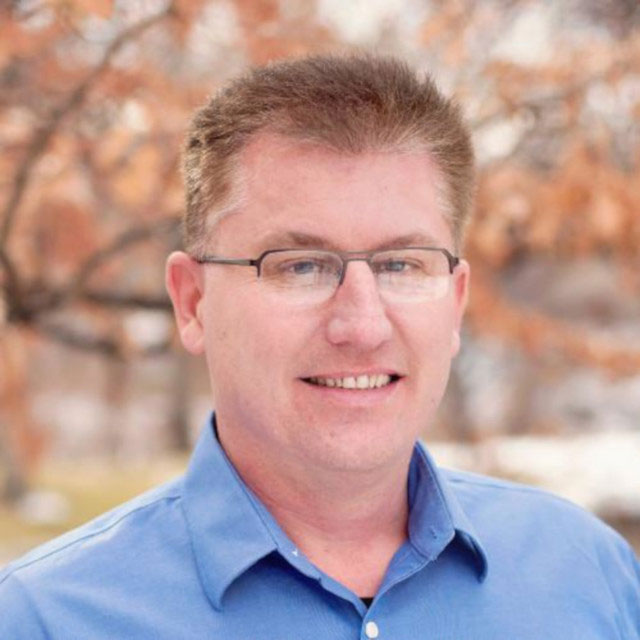
Jens H. Kasper is a Researcher in the Physics of Fluids department at the University of Twente, specializing in wind energy systems and granular material dynamics. His current research investigates atmospheric interactions with wind farms and viscosity effects on particulate flows. He is expected to complete his PhD thesis titled 'Large-scale Interactions between Wind Farms and the Atmosphere' in 2025. Research interests focus on two primary domains: Wind Energy : Optimizing turbine configurations and modeling atmospheric boundary layer impacts on power generation Granular Materials : Analyzing flow transitions and viscosity effects in wet particulate systems using discrete element methods Publications demonstrate consistent focus on renewable energy optimization (2024) and granular flow mechanics (2019-2021), employing computational modeling and experimental analysis techniques. Collaborates with the Physics of Fluids research group, presenting work at international conferences including studies on wind farm wakes, turbine tilt effects, and atmospheric boundary layer simulations.
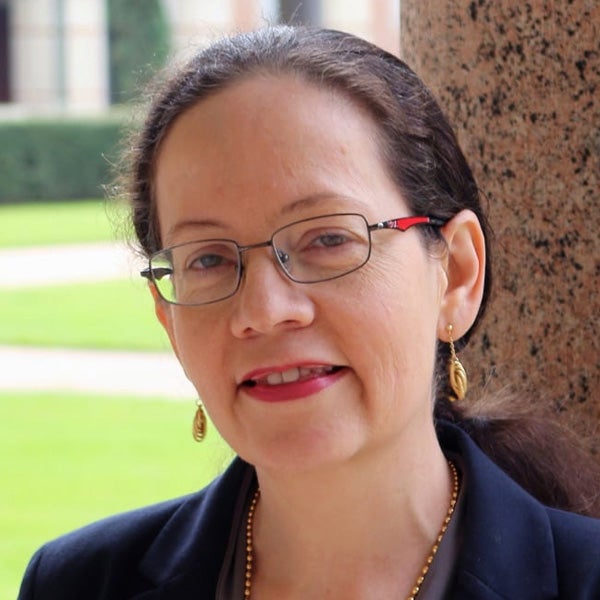
Pavel Solin is a Professor in the Department of Mathematics and Statistics at the University of Nevada, Reno (UNR), within the College of Science. His work focuses on computational mathematics, numerical analysis, and innovative approaches to mathematics and computer science education. He has developed advanced finite element methods (FEM), including hp-FEM and discontinuous Galerkin techniques, with applications in engineering, physics, and porous media modeling. His research also emphasizes integrating computational tools into education, such as self-paced programming courses in Python, SQL, and linear algebra. Dr. Solin is the creator of the Hermes2D library, a C++ framework for adaptive hp-FEM and DG solvers, and has contributed to software for multiphysics simulations. His educational efforts include experimental curricula blending mathematics with programming and STEAM principles. Despite no listed scientific awards, his work has been published in numerous journals, reflecting his expertise in both computational methods and pedagogical innovation. His articles span adaptive methods, numerical simulations of physical phenomena, and educational methodologies. He has collaborated on projects involving electromagnetic stirring, thermal conduction, and fluid dynamics. While no advising or grant details are provided, his research lab and team focus on advancing computational techniques and their practical applications in academia and industry.
Beatrice Riviere is the Noah Harding Chair and Professor in the Department of Computational Applied Mathematics and Operations Research at Rice University. Her research focuses on numerical methods for fluid mechanics and porous media, including high-order methods for multiphase flows and biomedical applications. She leads the Computational Optimization and Modeling of Porous Media (COMP-M) group, funded by the NSF and industry partners. Riviere holds an AWM Fellowship (2022), SIAM Fellowship (2021), and IACM Fellowship (2024). She has advised over 20 Ph.D. students, many of whom pursue academic or industry roles in computational science. Education: Ph.D. (2000, UT Austin), M.Sc. (1996, Penn State), Diplome d’Ingenieur (1995, Ecole Centrale Lyon). Leadership: SIAM Board of Trustees Chair, President of SIAM TX-LA Section (2020-2022), former Department Chair (2015-2018). Publications: Over 100 peer-reviewed articles and two books on discontinuous Galerkin methods and numerical analysis. Her research interests span numerical methods for PDEs, scientific machine learning, and pore-scale modeling. Recent work includes PDE-based neural networks for medical image segmentation and high-performance computing for multiphase flow simulations. Grants & Funding: NSF awards, collaborations with oil/gas industry, and Gulf Coast Consortia for Quantitative Biomedical Sciences. Labs/Teams: COMP-M develops algorithms for energy, biomedical, and environmental applications. Collaborates on cardiovascular mechanics and computational biomedicine.
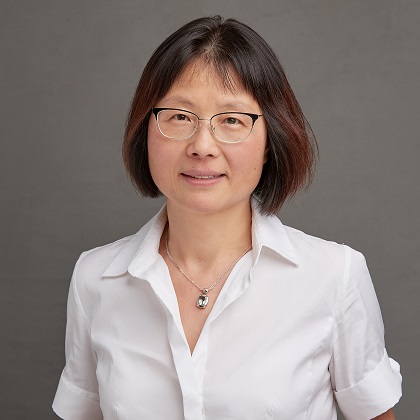
Dr. Kyriakos Alexandros Chondrogiannis is a Researcher affiliated with ETH Zurich's Department of Civil, Environmental and Geomatic Engineering. He holds a PhD from ETH Zurich (2024) focusing on seismic protection using nonlinear mechanisms and metamaterials, preceded by a diploma in Structural Engineering from the National Technical University of Athens (2019). He received the ETH Pioneer Fellowship in 2024 to commercialize technologies from his doctoral research. Education: PhD, ETH Zurich (2024): Research on seismic protection with nonlinear metamaterials Diploma in Civil Engineering, NTUA (2019): Specialization in structural engineering of wind turbine towers Research Interests: His work centers on nonlinear mechanical systems for vibration attenuation, including metamaterial design, geometric nonlinearities, and impact dynamics. He explores applications in structural health monitoring, seismic protection, and energy dissipation through experimental and computational methods. Key Contributions: His research bridges theoretical concepts like negative stiffness and locally resonant metamaterials with practical applications in vibration control. Experimental validations and numerical analyses form the core of his methodologies. Awards: ETH Pioneer Fellowship (2024): Supports technology commercialization of his PhD-developed vibration mitigation systems Labs/Teams: He is part of the Structural Mechanics and Monitoring group at ETH Zurich, focusing on advanced structural dynamics and metamaterial innovation.
Dr. Abhinav Naga is a Research Fellow at the University of Edinburgh's School of Engineering, affiliated with the Multiscale Thermofluids Institute. His research examines interfacial phenomena and droplet dynamics on engineered surfaces. He specializes in computational modeling of wetting behavior, friction reduction, and fluid-surface interactions using coupled lattice Boltzmann and discrete element methods. Current investigations focus on superhydrophobic surfaces, lubricant-infused interfaces, and nanoscale fluid behavior. Recent publications analyze droplet-particle interactions, plastron design for bubble capture, viscous dissipation in lubricant layers, and polarity-induced wetting mechanisms. Work contributes to developing zero-friction surfaces and optimized liquid-repellent materials.
Hongqiu Chen is a Professor in the Department of Mathematical Sciences at the University of Memphis, where he has been since 2000, advancing to full professor in 2018. His research focuses on partial differential equations and fluid mechanics, particularly nonlinear dispersive wave phenomena. He has held visiting positions at institutions including Université Bordeaux 1, Tohoku University, and National Taiwan University, and has organized significant conferences like the Differential Equations Weekend. Ph.D. in Mathematics, University of Texas at Austin (1998) M.S. in Mathematics, Institute of Systems Science, Academia Sinica, China (1988) B.S. in Applied Mathematics, Chengdu University of Sciences and Technology (1983) Chen’s research spans the existence, stability, and numerical analysis of solitary and periodic traveling-wave solutions for equations like BBM, KdV, and Boussinesq-type systems. His work addresses well-posedness, boundary-value problems, and the interplay between dispersion and nonlinearity, with applications to fluid dynamics and coastal engineering. His refereed publications include studies on conservative numerical methods, orbital stability of waves, and long-period limits of dispersive equations. Collaborations with prominent mathematicians like Jerry L. Bona and Ohannes Karakashian highlight his interdisciplinary approach. Scientific Awards: Alfred Sloan Dissertation Fellowship (1997) NSF-AWM Travel Award (2004) Nonlinearity Most Highly Downloaded Article (2004) Invited Professor at University of Reading (2005) Chen has advised a postdoctoral researcher (Xiaojune Wang, 2014-2015), a Master’s student (Tai Nguyen, 2020), and a Ph.D. candidate (Pamela Guerrero, expected 2025). He has secured external funding from the National Science Foundation and internal grants for research and conference organization.
Danielle TAN S is a Senior Lecturer in the Department of Mechanical Engineering at the National University of Singapore (NUS), affiliated with the College of Design and Engineering. Her research focuses on fluid mechanics, granular materials, and computational modeling techniques. She holds a Ph.D. in Theoretical & Applied Mechanics from Cornell University (USA), a Master of Engineering (1st Class Honours) from Imperial College London (UK), and a Diploma from the City and Guilds of London Institute. Her research interests include the rheology of granular mixtures, discrete element method (DEM) modeling, and fluid dynamics. She has published extensively on topics such as moisture effects in granular materials, DEM simulation accuracy, and flow dynamics around cylinders. Her work bridges computational mechanics with experimental validation, contributing to geotechnical engineering and environmental fluid mechanics. Recent publications (2013-2014) highlight her focus on DEM applications in pavement engineering, granular segregation dynamics, and fluid-structure interactions. She maintains an active Google Scholar profile and is based at E1-05-30, NUS.
Steven Dargaville is a Research Fellow in the Department of Earth Science & Engineering at Imperial College London, part of the Faculty of Engineering. His research focuses on numerical methods for energy systems, including battery chemistry modeling and Boltzmann transport applications. He holds an Orcid identifier (0000-0002-8890-7437) and is affiliated with the Royal School of Mines campus. His work emphasizes parallel computing, adaptive mesh refinement, and finite element methods applied to nuclear science and radiative transfer. Research Interests: Modeling phase transitions in LiFePO₄ batteries Numerical methods for Boltzmann transport (e.g., multigrid, adaptive angular discretization) Applications in civil nuclear energy, radiative transfer, and lattice Boltzmann methods Publications Trends: Recent work (2020–2025) emphasizes scalable algorithms for Boltzmann transport, AI integration in nuclear modeling, and angular adaptivity techniques. Earlier research (2010–2015) centered on LiFePO₄ cathode phase behavior using phase-field models. Awards: None explicitly listed in the provided text. Advising/Grants: No student names or grant details provided. His research is likely funded through Imperial College projects or external grants in computational physics/engineering. Labs/Teams: Likely affiliated with Imperial’s Energy Futures Lab or Nuclear Energy Systems Group, though exact lab names are unspecified.
Nathaniel Morgan serves as an Adjunct Professor affiliated with a Mechanical Engineering department. He is currently a researcher at Los Alamos National Laboratory's X-Computational Physics Division, where he has worked since 2010. His career at LANL spans multiple divisions including Applied Physics (2005-2010), Theoretical Division (2003), and Engineering Sciences and Applications Division (2001-2002). Dr. Morgan received his academic training in Mechanical Engineering: Ph.D., Mechanical Engineering, Georgia Institute of Technology, 2005 M.S., Mechanical Engineering, Georgia Institute of Technology, 2003 B.S., Mechanical Engineering, University of Arizona, 2000 His research focuses on computational physics and engineering, specializing in developing advanced numerical methods for simulating complex physical phenomena. Dr. Morgan's work centers on creating transformative numerical approaches suitable for predictive simulations of multidimensional high-speed flows with shocks, contact discontinuities, disparate materials, complex strength models, and diverse equations of state. He has made significant contributions to high-order discontinuous Galerkin methods for simulating large deformation flows and developing explicit gas and solid dynamics codes optimized for heterogeneous supercomputing architectures including GPUs. Analysis of Dr. Morgan's recent publications reveals a strong focus on Lagrangian hydrodynamic methods, particularly discontinuous Galerkin approaches. His work spans computational physics, fluid dynamics, and high-performance computing, with applications in gas and solid dynamics. Key themes include mesh motion stability, multi-material flow simulation, and optimization of numerical methods for modern supercomputing architectures. His research demonstrates a consistent trajectory toward higher-order, more accurate simulation methods for complex physical systems. Dr. Morgan collaborates extensively with researchers at Los Alamos National Laboratory and likely supervises graduate students through his adjunct professorship, though specific advisees are not listed in the available information. His work appears to be supported by LANL resources and potentially external grants related to computational physics and high-performance computing. As a member of LANL's X-Computational Physics Division, Dr. Morgan contributes to advanced computational research teams focusing on hydrodynamics, material science simulations, and high-performance computing applications. His work supports LANL's mission in computational physics and national security-related research.
Dr. Shadi Saadeh is a Professor in the Department of Civil Engineering and Construction Engineering Management at California State University, Long Beach, College of Engineering. He joined CSULB in 2007 after research positions at Texas Transportation Institute (2003-2005) and Louisiana Transportation Research Center (2006-2007). His research focuses on experimental characterization and modeling of highway materials, with emphasis on sustainable infrastructure development. Education includes: BSc Civil Engineering - University of Jordan (1997) MSc Civil Engineering - Washington State University (2002) PhD Civil Engineering - Texas A&M University (2005) Research spans granular material behavior, asphalt technology, and advanced characterization using X-ray CT and image analysis. Recent work emphasizes sustainable materials including recycled plastics, biochar additives, and permeable pavements to reduce environmental impact. Publications demonstrate strong focus on pavement performance testing (82% of recent articles), recycling technologies (43%), and advanced material characterization (37%). Trends show increasing emphasis on sustainability aspects since 2020.
Dr. Ning Wang is an Assistant Professor at the Department of Concrete and Construction Management within the School of Concrete and Construction Management at Middle Tennessee State University (MTSU). He holds a Ph.D. in Design, Construction, and Planning from the University of Florida (2022), an M.S. in Civil Engineering from the University of Illinois at Urbana-Champaign (2014), and a B.S. in Construction Management from Hebei University of Technology (2013). His research focuses on Building Information Modeling (BIM) , Artificial Intelligence (AI) , Machine Learning , Natural Language Processing (NLP) , and their applications in construction technology. Notable areas include Construction Robotics , Geographic Information Systems (GIS) , and Ontology-Based Integration of BIM and GIS . Recent work emphasizes AI-driven solutions for infrastructure maintenance, such as pavement structural analysis using object detection models and nondestructive testing. Dr. Wang has published extensively in journals like Automation in Construction and Journal of Computing in Civil Engineering , and his work spans BIM-based conversational AI systems, NLP for construction information extraction, and smart materials testing using advanced sensors. He serves as a reviewer for journals including ASCE Journal of Computing in Civil Engineering and conferences like the International Conference on Construction Engineering and Project Management. He teaches courses in architectural CAD, software applications for virtual design, and construction management at MTSU. His professional affiliations include the American Society of Civil Engineers (ASCE).
Dr. Wenwen Du is a Professor in the Department of Science and Mathematics at Glenville State University. He joined the faculty in 2014 and teaches a wide range of mathematics courses, from introductory to advanced levels. His research focuses on continuum mechanics, polycrystalline materials, and micromechanics of advanced materials with notable contributions to orientation distribution functions, crystallographic texture, and material behavior analysis. In 2022, he was honored with the Glenville State University Faculty Award of Excellence. Education: Ph.D. in Mathematics, University of Kentucky M.A. in Secondary Mathematics Education, University of Kentucky M.S. in Materials Science, University of Kentucky M.E. in Materials Science and Engineering, Southeast University, China B.E. in Materials Science and Engineering, Southeast University, China Research Interests: His work integrates advanced mathematical techniques with materials science, addressing challenges in material deformation, texture analysis, and anisotropic behavior. Recent studies emphasize tensorial analysis of orientation distributions and mechanical behavior of polycrystalline systems. Publications: Dr. Du's research spans over two decades, with contributions to journals like Journal of Elasticity , Philosophical Transactions of The Royal Society A , and Materials Science and Engineering . His work bridges theoretical frameworks (e.g., tensor analysis) with applied materials science (e.g., aluminum alloys). Awards: 2022 Glenville State University Faculty Award of Excellence Teaching & Advising: He teaches courses ranging from introductory mathematics to specialized topics like Abstract Algebra and Discrete Mathematics. While no formal advisees are listed, his interdisciplinary expertise supports student research in mathematics and materials science.
Susanna Fishel is an Associate Professor in the School of Mathematical and Statistical Sciences at Arizona State University (ASU), specifically within the Department of Mathematics. Her research focuses on enumerative and algebraic combinatorics, with applications in discrete mathematics, mathematical physics, and computer science. She holds a Ph.D. from the University of Minnesota-Minneapolis (1993). Her work includes studies on Catalan objects, Cherednik algebras, and hyperplane arrangements, with notable contributions to the theory of Shi regions and core partitions. Fishel has been awarded multiple Simons Collaboration Grants for Mathematicians (2015–2025) and has led NSF-funded projects such as the MCTP program fostering collaborations between ASU and Maricopa County Community Colleges. She actively participates in academic service, including roles in AWM committees and organizing workshops in algebraic combinatorics. Her teaching spans advanced courses like Combinatorics, Enumerative Combinatorics, and Discrete Mathematics, reflecting her deep engagement with both research and education.
Benjamin Marussig is an Associate Professor at the Institute of Structural Mechanics, Graz University of Technology. His work focuses on computational mechanics, particularly in isogeometric analysis, boundary element methods, and integration of CAD models with engineering simulations. He develops advanced numerical techniques for handling trimmed geometries, nonlinear solid mechanics, and fluid-structure interactions. His research emphasizes improving computational efficiency and accuracy in simulations involving complex geometries and inclusions. Key research areas include: Isogeometric Analysis (IGA) for structural and electromagnetic problems Boundary element methods for electrostatic and magnetostatic computations Fast algorithms for fictitious domain and immersed boundary methods Integration of design and analysis workflows using CAD-compatible models Recent work highlights advancements in multi-level Bézier extraction, weighted quadrature for cut cells, and automated correction systems for mechanics education. His contributions address challenges in meshing requirements, nonlinear behavior modeling, and efficient matrix assembly techniques for trimmed CAD geometries. Marussig collaborates on applications in geomechanics, tunneling simulations, and elasto-plastic material analysis. He holds teaching responsibilities in mechanics and structural analysis, emphasizing computational methods. His research portal lists over 40 peer-reviewed articles since 2012, demonstrating sustained innovation in computational mechanics and CAD-integrated simulation technologies.
Dr. Ado Farsi is a Research Fellow in Computational Mechanics at Imperial College London and University College London. He holds a PhD in Computational Mechanics from Imperial College and leads research on discrete element modeling of complex materials. His work develops FDEM (Finite-Discrete Element Method) simulations for industrial applications including catalyst pellet design, geothermal drilling, and fiber-reinforced concrete structures. He maintains collaborations with Johnson Matthey, Petronas, and Transport for London, translating computational models into engineering solutions for energy and infrastructure sectors. Dr. Farsi secured over £734k in research funding and contributes to open-source computational mechanics software development. He serves on the Royal Society's RAMP committee during the COVID-19 pandemic.