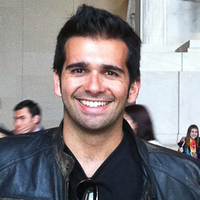
Scott L. Pratt is Professor and Department Head of Philosophy at the University of Oregon. His work spans American philosophy, logic, and Indigenous thought, with a focus on decolonial methodologies and educational philosophy. As co-director of the Central European Pragmatist Forum and PLURILOG research project, he bridges interdisciplinary studies of logic and cultural plurality. Beloit College (BA) University of Minnesota (PhD) His research examines how logic shaped colonization and informs anti-colonial efforts, as seen in his forthcoming book Against Critical Reason . Articles highlight intersections of pragmatism, Indigenous agency, and critiques of Eurocentric epistemologies. Academic leadership includes past roles as Vice Provost and Dean of the Graduate School. Scientific Awards: 2024 Joseph L. Blau Prize 2022 Inter-American Philosophy Prize Pratt teaches courses on American philosophy, Native American philosophy, and advanced logic. He co-founded the Josiah Royce Society and served as President of the Society for the Advancement of American Philosophy, contributing to faculty union organizing at the University of Oregon.
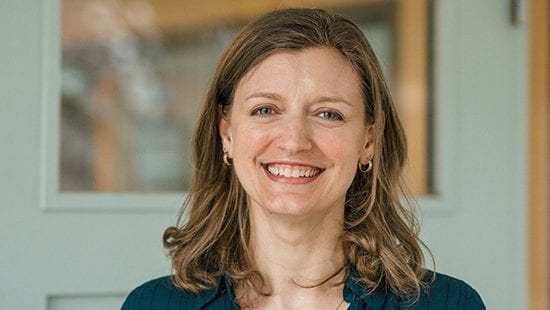
Laura Madokoro is an Associate Professor in the Department of History at Carleton University, Faculty of Arts and Social Sciences. Her research centers on migration, refugee history, and humanitarianism, with a focus on settler colonialism, race, and human rights. She leads key research initiatives including The Disaster Lab and Sites of Sanctuary , and is actively involved in public history and policy discourse. Education: PhD in History, University of British Columbia, 2012 MA in History, University of Toronto, 2000 Her research explores the intersections of migration, race, and state power, particularly in Canada and the broader Anglo settler world. She is deeply engaged with settler colonial studies, diaspora formation, and the historical role of humanitarianism. Her work often examines how archives and visual culture reveal emotional and embodied experiences of displacement. Her recent publications span topics such as Eurocentrism in refugee regimes, Japanese Canadian internment, medical exclusion of Chinese migrants, and the politics of sanctuary. Collectively, these works reflect a strong commitment to decolonizing migration history and centering marginalized voices. The articles demonstrate a consistent focus on transnational flows, state surveillance, and the moral dimensions of refuge. Scientific Awards: Association of Asian American Studies’ Best Book in the Social Sciences (2018) Chinese Canadian Historical Society’s Ed Wickberg Prize 2016 Mershon Center Furniss Book Award SSHRC Early Researcher Award (2021) Laura supervises multiple MA and PhD students on topics related to race, migration, and refugee history. She has received funding from SSHRC and the Trudeau Foundation. Her editorial roles include co-director of Histoire Sociale / Social History and membership in the ActiveHistory.ca editorial collective and the Critical Race and Migration Studies Collective . She is currently leading The Disaster Lab , which investigates diasporic disaster citizenship, and is working on a second book, Sanctuary in Pieces , to be published in 2024. Her public engagement includes contributions to The Conversation and advisory roles in community-based historical projects.
Jim Crutchfield is a Distinguished Professor of Physics at the University of California, Davis, where he also serves as Director of the Complexity Sciences Center. He holds additional affiliations as President and Scientific Director of the Art & Science Laboratory in Santa Fe, External Faculty at the Santa Fe Institute, General Member of the Telluride Science Research Center, and Visiting Scholar at the Redwood Center for Theoretical Neuroscience. His work bridges physics, computation, and complex systems. Education: B.A. summa cum laude in Physics and Mathematics, University of California, Santa Cruz (1979) Ph.D. in Physics, University of California, Santa Cruz (1983) Crutchfield's research centers on computational mechanics , a framework he pioneered to quantify how natural systems store, process, and transmit information. His interests span nonlinear dynamics, evolutionary dynamics, information engines, quantum computation, and pattern discovery. He explores how structure emerges in complex systems, from cellular automata to biological evolution and neural networks. His recent work focuses on thermodynamic computing, causal inference, and the physics of intelligence. His publications reveal a consistent focus on the interplay between information, energy, and computation in physical systems. Themes include the thermodynamics of information engines, causal architecture in time series, emergent organization, and intrinsic computation in quantum and classical domains. These works span disciplines such as physics, computer science, biology, and cognitive science. Scientific Recognition: Postdoctoral Fellow, Miller Institute for Basic Research in Science IBM Postdoctoral Fellow, Condensed Matter Physics Distinguished Visiting Research Professor, Beckman Institute Bernard Osher Fellow, San Francisco Exploratorium NSF Graduate Fellow UCB Chancellor’s Fellow Crutchfield has advised over two dozen PhD students in physics, computer science, and mathematics, contributing significantly to the next generation of complexity scientists. He has led major interdisciplinary initiatives, including NSF-funded museum exhibits and workshops on network dynamics, collective cognition, and evolutionary dynamics. He has also been active in public discourse through talks, films, and publications on the philosophy of complexity. He leads research groups exploring the dynamics of learning, pattern discovery, and distributed intelligence, often in collaboration with institutions like the Santa Fe Institute and Caltech. His work continues to shape the theoretical foundations of complex systems science.
Mia Hakovirta is a Professor in the Department of Social Work at the University of Turku, Finland. Her work is centered on family policy, child support, lone parenthood, child poverty, and financial social work. She holds a PhD from the University of Turku (2006) and an MA from the University of Tampere (1994). MA, University of Tampere (1994) PhD, University of Turku (2006) Her research focuses on the economic well-being of families after separation, particularly in shared care arrangements, and the impact of child support policies across welfare states. She has led major research projects including EconShared (Academy of Finland), TALSOS (Ministry of Social Affairs), and Children First (NordForsk). Her expertise extends to international comparative studies, with visiting scholar experience at SPRU (UK), Rutgers University, University of Wisconsin–Madison, and RMIT University. Her recent publications explore joint physical custody, child support systems, financial abuse of children, and cross-national comparisons between Finland and the US. These works reveal a strong trend toward analyzing the intersection of legal frameworks, economic support mechanisms, and child well-being in post-separation families. Although no specific scientific awards are listed, her leadership in externally funded research projects highlights her scholarly recognition. She has contributed significantly to policy-relevant research in Nordic and international contexts. Mia Hakovirta advises students and leads research teams focused on family economics and social policy. She has secured grants from the Academy of Finland, NordForsk, and the Finnish Ministry of Social Affairs. Her collaborative network spans multiple countries, reflecting her role in advancing comparative family policy research. She has also contributed to public discourse through blog posts and commentaries on the social impacts of the pandemic on children. She is actively involved in research groups and projects that examine financial social work, child support enforcement, and the economic integration of lone-parent families. Her work bridges academic research and practical social work interventions, particularly in supporting families with children facing economic hardship.
Dr. Solvejg Nitzke is an Acting Professor of General and Comparative Literature at Ruhr University Bochum since April 2024. She holds a habilitation from TU Dresden (2023) and a PhD from Ruhr University Bochum (2015). Her research focuses on ecocriticism, plant studies, climate narratives, and knowledge communication in literature. She has led major interdisciplinary projects like the TUDiSC-funded 'Disrupt!Research' (2020-2023) and the Fritz Thyssen Foundation-supported 'Strange Kinship' (2021). Teaching: Lectures/seminars on ecological storytelling, catastrophes in literature, and arboreal poetics at Ruhr University and TU Dresden since 2011. Recognition: E-Learning Jewel nomination (2020) for digital teaching innovation. Research Projects: Includes 'Precarious Natures' (2017-2020) and 'Time of Climate' (2015-2017). Editorships: Co-editor of Brill's 'Plant Poetics' (2025), De Gruyter's 'Literature & Ecology' handbook (2025), and multiple special journal issues on ecocritical topics.
Dr. Jessica C. Fisher is a Research Fellow at the Durrell Institute of Conservation and Ecology (DICE), University of Kent. Her work focuses on the intersection of human health, environmental change, and social inequalities, particularly exploring how biodiversity influences well-being through nature-based interventions. She holds a BSc in Zoology from Newcastle University, an MRes in Biodiversity, Evolution, and Conservation from University College London, and a PhD from DICE, where she examined human-nature interactions in urban Guyana. Her research employs mixed-methods approaches, including participatory visual methods, structural equation modeling, and data visualization. Key areas include the design of nature-based health programs, the socio-cultural dimensions of biodiversity conservation, and the impacts of environmental changes on marginalized communities. She has contributed to projects funded by the Woodland Trust and European Research Council (ERC), such as the 'RELATE' initiative analyzing biodiversity's role in human well-being across socio-economic gradients. Dr. Fisher is a Professional Associate Fellow of the Higher Education Academy and chairs the Women’s Researcher Network. Her publications span high-impact journals like Nature Ecology and Evolution and Environmental Research , with a focus on topics including robotic biodiversity monitoring, participatory video in conservation, and equitable access to nature. She actively engages in policy advocacy, emphasizing the integration of social and ecological sciences to address planetary health challenges. Education: BSc Zoology, Newcastle University MRes Biodiversity, Evolution, and Conservation, University College London PhD in Human-Nature Interactions (Urban Guyana), DICE, University of Kent Affiliations: Member, Durrell Institute of Conservation and Ecology (DICE) Co-chair, Women’s Researcher Network Member, IUCN Commission on Ecosystem Management Grants & Projects: ERC-funded 'RELATE' project (2020–present) Woodland Trust-funded 'Woodland Biodiversity for Human Health and Wellbeing' (2020)
Julia Wurr is a Junior Professor of Postcolonial Studies at the Institute for English and American Studies, Carl von Ossietzky University of Oldenburg, within the School of Linguistics and Cultural Studies. Her research spans postcolonial theory, gender studies, medical humanities, and Anglophone literatures, with a strong focus on reproduction, biocapitalism, and neo-orientalism. Her research interests include postcolonial medical humanities, biocapitalism, reproductive studies, gender and sexuality, Indian and Arab Anglophone writing, and literary theory. She critically examines how literature engages with medical, demographic, and security discourses, particularly in postcolonial and diasporic contexts. The recent articles highlight a consistent engagement with themes of reproductive labor, surrogacy, racial capitalism, and narrative ethics. Her work bridges literary analysis with critical theory, feminist studies, and global health, often analyzing how fiction reflects and challenges structural inequalities in medicine, demography, and security. Associate Editor, Journal of Postcolonial Writing (2024–) Vice-President, GAPS (Association for Anglophone Postcolonial Studies) (2023–2025) Member, DFG Network 'Bioethik und strukturelle Ungerechtigkeit' Member, Gesellschaft für Anglophone Postcolonial Studies (GAPS) Member, Anglistikverband Julia Wurr advises emerging scholars and promotes PhD opportunities in German-speaking countries through her involvement with GAPS. She has delivered numerous invited talks at international institutions including Columbia University, UC Berkeley, IISER Bhopal, and the University of Washington, reflecting her growing academic influence. Her work is supported by interdisciplinary networks and collaborative research initiatives. She is also active in public scholarship and teacher training, as seen in her workshop on Sarfraz Manzoor’s memoir.
Dr. Rafael Schacter is an Associate Professor in Anthropology and Material Culture at University College London . His research bridges public art , global street art , and anthropological theory , with a focus on the Material, Visual, and Digital Culture subsection he leads in the Department of Anthropology. PhD in Anthropology (2011), MRes (2007), MA (2005) - all from UCL Bachelor of Arts from SOAS (2002) Schacter's work redefines graffiti and street art through the lenses of ornamentation , ritualized practice , and public sphere theory . His publications reveal trends in urban visual culture , curatorial anthropology , and political resistance through art , particularly in cities like London, Manila, and Heerlen. His scientific award for the World Atlas of Street Art and Graffiti (2013) highlights his contribution to global street art scholarship . Major projects include the Regrowth Degrowth public mural initiative (2016-2021) in Heerlen and curated exhibitions at Tate Modern, Somerset House, and SOAS's Brunei Gallery.
Dr. Paul Levinson is a Professor at Fordham University in the Communication and Media Studies department. He holds a PhD from New York University and has taught courses such as Politics and New Media , Digital Media & Public Responsibility , and Interactive Media . His research spans media theory , social media , science fiction , and ethics of digital communication . Levinson's recent academic work focuses on robotics and AI ethics , media consolidation , and teaching methodologies during the pandemic . He is a Locus Award winner for his science fiction novel The Silk Code . His scholarship often intersects with McLuhan's media theories Alternate history frameworks Post-Covid educational models He maintains a blog, Infinite Regress , and his music career includes albums like Twice Upon a Rhyme (1972) and Welcome Up: Songs of Space and Time (2020), with remixes by QRock 639 in 2021. His work has been featured on CBS News, CNN , and NPR .
Chrisanthi Avgerou is Professor of Information Systems at the London School of Economics and Political Science (LSE), affiliated with the Department of Management Science and Technology in the School of Business. She chairs IFIP Technical Committee 9 on Social Implications of Information Technology and serves as Associate Editor for Information Systems Research Journal and The Information Society Journal. Her educational background includes: Ph.D. in Information Systems, London School of Economics, 1989 M.Sc. in Computer Science, Loughborough University of Technology, 1978 B.Sc.(Hons) in Mathematics, University of Athens, Greece, 1977 Professor Avgerou's research examines ICT's relationship with organizational transformation and socio-economic development, with emphasis on critical perspectives and developing country contexts. Her work bridges technical implementation with social theory, exploring power dynamics in socio-technical change and institutional barriers to ICT adoption. She pioneered studies on computers in developing countries through IFIP WG 9.4 leadership (1996-2003). Analysis of her 1998-2007 publications reveals consistent focus on three interconnected domains: (1) socio-technical change in organizations using institutional theory, (2) ICT's role in development contexts through critical policy analysis, and (3) philosophical foundations of information systems research. Her editorial work in The Oxford Handbook of ICT (2007) synthesizes global perspectives on digital transformation. Her scientific recognition includes: Fellow of the British Computer Society Fellow of the Association for Information Systems She coordinates the BSc Information Systems and Management program for the University of London External Programme and teaches Social Study of IS (IS470) and Information Society, Theory and Policy (IS412/478). Her research is conducted through LSE's Information Systems and Innovation Group, which examines technology's societal impacts through interdisciplinary collaboration. She currently organizes the Human Choice and Computers conference series, advancing discourse on technology ethics.
Elizabeth A. Koebele serves as Associate Professor of Political Science and Director of Graduate Studies at the University of Nevada, Reno, where her research centers on environmental policy with emphasis on collaborative governance, western U.S. water management, and disaster policy. Her methodological expertise combines qualitative and mixed approaches to analyze policy processes and outcomes. Her educational background includes: Ph.D. in Environmental Studies, University of Colorado Boulder (2017) M.S. in Environmental Studies, University of Colorado Boulder (2014) B.A. in English Literature, Arizona State University (2010) B.A. in Secondary Education, Arizona State University (2010) Dr. Koebele's research investigates how collaborative policymaking shapes environmental governance, particularly in water resources and disaster contexts. She examines coalition dynamics, narrative power in policy frameworks, and institutional arrangements enabling adaptive responses to climate challenges. Her work bridges political science with environmental studies through rigorous mixed-methods analysis. Analysis of her recent publications reveals consistent focus on polycentric governance systems, especially in western U.S. water basins. Key trends include studying collaborative forums in the Colorado River Basin, urban water management transitions in cities like Miami and Las Vegas, and the interplay between narrative strategies and policy change. Her scholarship increasingly integrates climate adaptation with equity considerations in resource governance. Her notable recognitions include: 2021 NSF CAREER award for Colorado River water governance research 2022 NSHE Board of Regents Rising Researcher award Dr. Koebele has secured significant external funding from the U.S. National Science Foundation and U.S. Department of Agriculture. As Director of Graduate Studies, she oversees the Political Science department's graduate program while maintaining an active research group focused on environmental governance. Her editorial role as co-editor of Policy & Politics further demonstrates her leadership in the field.
Juan Medina Contreras is a faculty member at the Faculty of Communication, University of Salamanca . He holds a Doctorate in Communication , a Degree in Journalism , an Expert in Gender and Communication , and a Master in Screenwriting and Political Image Consulting . His career spans academic research, teaching, and professional training in communication. His research focuses on film studies , political communication , gender representation , and visual rhetoric . Notable contributions include analyzing female archetypes in the [REC] saga, the portrayal of defense organizations in the Marvel Cinematic Universe, and the role of cinematic editing in shaping political and cultural narratives. His 15 most recent publications span 2014–2021 , with recurring themes in Spanish cinema , gender dynamics , political advertising , and historical memory . He has also explored digital photography ethics and citizen journalism challenges. While no scientific awards are explicitly mentioned, his work includes a research study on quality of life for disabled women in Palencia (2014). He has supervised theses and contributed to books like Género negro sin límites (2019) and La estética televisiva en las series contemporáneas (2018).
Kristin A Andrews serves as Professor of Philosophy and York Research Chair in Animal Minds at York University in Toronto, Canada. She is a CIFAR Fellow in the Future Flourishing program and will join the CUNY Graduate Center as Professor in Fall 2025. Her interdisciplinary work bridges philosophy, cognitive science, and animal ethics to investigate nonhuman animal capacities. Her educational background includes a PhD in Philosophy from the University of Minnesota and an MA in Philosophy from Western Michigan University. Professor Andrews' research centers on the cognitive, affective, social, and cultural capacities of nonhuman animals. She pioneers frameworks for identifying social norms in animal communities, arguing these predate human language. Her work spans animal consciousness, morality, legal personhood, and conservation implications—challenging anthropocentric views through empirical and theoretical analysis. She actively develops implications for animal welfare policy and multispecies ethics. Recent publications (2023-2025) reveal three dominant trends: (1) Advocating for the 'All Animals Are Conscious' hypothesis to shift consciousness science's null hypothesis; (2) Developing dimensional frameworks for cross-species normativity studies; (3) Addressing methodological biases like the WEIRD problem in comparative cognition. Her interdisciplinary approach integrates philosophy, primatology, and cognitive neuroscience. Key honors include: York Research Chair in Animal Minds CIFAR Fellowship (Future Flourishing program) Royal Society of Canada’s College of New Scholars membership (2015) Visiting Professorships at LSE (2021-2022), Ruhr-Universität Bochum (2022-2025), and Università Degli Studi di Cagliari (2023) Professor Andrews coordinates the Greater Toronto Area Animal Cognition Discussion Group and serves on the Borneo Orangutan Society Canada board. She co-authored the New York Declaration on Animal Consciousness—endorsed by 39 scholars—and engages public discourse through media like TVO interviews. Her grant activity focuses on CIFAR-funded projects examining animal social cognition and norm evolution. She leads collaborative initiatives including the 'week of animal social norms' research with international teams studying chimpanzees, dolphins, and rats. Her upcoming book on social norm evolution and ongoing work with the OCTOPUS Act advocacy group demonstrate active research expansion into policy applications.
Jennifer Richards serves as a Research Assistant Professor at Northwestern University's School of Education and Social Policy, Evanston, IL. Her work bridges science education research and K-12 classroom practice through research-practice partnerships focused on teacher learning and responsive pedagogy. Her educational background includes: PhD in Science Education, University of Maryland (2013) MEd in Secondary Science Education, University of Maryland (2008) BA in Biology and Political Science, University of Delaware (2006) Richards' research examines responsive learning environments that center students' ideas and experiences, alongside teacher practice dynamics across contexts. She employs discourse analysis and situative perspectives to investigate how teachers develop responsiveness to student thinking, particularly in science education settings. Her collaborative approach involves co-designing professional learning with educators to foster equitable classroom practices. Analysis of her 2020-2025 publications reveals consistent focus on teacher noticing, video-based professional development, and responsiveness mechanisms. Key trends include developing tools for analyzing classroom discourse (e.g., framing analysis lite), examining aesthetic dimensions of teaching, and exploring how teachers learn from self-captured classroom videos across mathematics and science contexts. No scientific awards were documented in the provided materials. Richards actively cultivates research-practice partnerships (RPPs) with school districts, evidenced by projects like expanding understanding of video-mediated teacher learning. While specific grant details are absent, her collaborative publications (e.g., Thompson et al., 2019 on networked PLCs) demonstrate sustained engagement with educational institutions to improve teaching practices. She collaborates extensively with scholars like Miriam G. Sherin in the Learning Sciences community, contributing to professional learning communities and video analysis initiatives. Her current work involves studying mechanisms for teacher learning from classroom video, though no dedicated lab name is specified in the materials.
Prof. Dr. Matthias Bruhn is a Professor of Art History and Media Theory at the Karlsruhe University of Arts and Design (HfG Karlsruhe), where he leads the DFG priority program project "Designing Habits" (2023–2025) and its predecessor "Adaptive Images" . He is also a co-editor of the series Image Worlds of Knowledge: Art Historical Yearbook for Image Criticism and a member of the DFG Cluster of Excellence "Matters of Activity" . His academic journey began with studies in art history and philosophy in Hamburg, culminating in a 1997 doctorate on Nicolas Poussin's correspondence. Co-founded ArtHist network (2001) Directed Berlin's "The Technical Image" research unit (2005) His research spans art history, media theory, and digital humanities, focusing on the intersection of technology, visual culture, and critical theory. His recent work in The Digital Image DFG program explores adaptive images as social interfaces and their role in shaping digital interaction patterns. He also co-founded the KIM research group on AI and media philosophy (2018), addressing societal impacts of artificial intelligence. His publications include monographs like The Image: Theory - History - Practice (2008) and edited volumes such as Images of Precision: Practices of Refinement in Technology, Art, and Science (2018). He has participated in international conferences like After Memory – Recalling and Foretelling (2024) and Image Servitude: New Dependencies in the Digital Age (2019). Current affiliations include membership in the advisory board of the Stiftung Forum Recht and leadership roles in DFG-funded projects. His teaching emphasizes the relationship between traditional arts, media technology, and electronic production processes, aligning with HfG Karlsruhe's mission as a reform university.