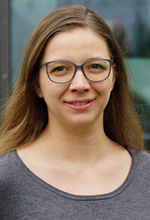
Julian Hölzel is an Associate Researcher at the Humboldt Institut für Internet und Gesellschaft (HIIG) and research assistant at Humboldt University of Berlin's Chair for Computer Engineering. His work centers on legal frameworks for digital technologies, particularly data privacy, blockchain regulation, and smart government evolution. Education: Law studies at Humboldt University of Berlin specializing in intellectual property and antitrust law Participant in Humboldt Law Clinic on IT Law Research Focus: Hölzel investigates anonymization techniques under GDPR , regulatory challenges of cryptographic currencies , and behavioral economics in digital markets . His interdisciplinary approach bridges legal scholarship with computer engineering, emphasizing Privacy by Design principles and the transition from e-government to adaptive smart governance systems. Publication Trends: Recent works analyze double delegation in technology regulation, GDPR-compliant anonymization, and Big Data's impact on consumer autonomy. His research consistently addresses tensions between innovation and fundamental rights, with growing emphasis on decentralized systems and digital identity frameworks. Professional Engagement: Hölzel actively shapes policy discourse through presentations at TILTing Perspectives and PET-CON conferences, organization of HIIG events on digital democracy, and media contributions to major German publications on data manipulation in e-commerce.
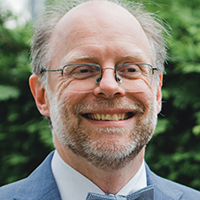
Katherine Gürtler serves as Professor of Intercultural Communication and English at Regensburg University of Applied Sciences, where she has been Dean of the Faculty of Applied Natural and Cultural Sciences since 2021. Her administrative roles include University Foreign Language Officer, Head of the AW Language Program, and membership on multiple academic committees including the International Relations Examination Board. Her research centers on critical media literacy through the Media & Democracy Lab (MEDDEM), English language acquisition in STEM fields via The Pepita Project, and transnational communication studies. She investigates gender dynamics in education, comparative educational systems, and intercultural competence development, with particular focus on engineering contexts and digital communication environments. Her publication trends reveal three interconnected strands: 1) Technical English pedagogy for engineers emphasizing domain-specific communication, 2) Critical analysis of media framing in political contexts including disinformation campaigns, and 3) Post-pandemic adaptations in language education leveraging digital tools. Recent work increasingly examines emotional dimensions of social media engagement and cross-border educational mobility. Preis für gute Lehre (2020) Erster Preis 'Preis für herausragende Lehre während des Corona-Semesters' (2020) Zertifikat Hochschullehre Bayern (2018) Nominierung Rosenheimer Lehrpreis (2013) Genderprojekt Förderpreis (2020) Guertler directs the Media & Democracy Lab and Pepita Project while advising the BA International Relations and Management program. Her teaching innovations include H5P quiz systems for digital motivation and negotiation technique frameworks, supported by grants from the Bavarian State Ministry and university foundations. Current research examines vaccine meme engagement and RT DE's framing of geopolitical events.
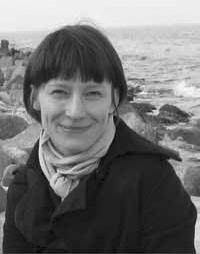
Dr.-Ing. Stefanie Brünenberg is an architectural historian and researcher at the Leibniz Institute for Research on Society and Space (IRS), where she has been affiliated with the 'Contemporary History and Archives' research focus since 2019. She currently leads the DFG-funded project 'Value of GDR Architecture' (2023-2027), investigating how post-reunification property management influenced perceptions of East German architectural heritage. Previously, she contributed to the DFG project 'Architectural and Planning Collectives of the GDR'. Brünenberg holds a doctoral degree from the Technical University of Darmstadt (2019) where she analyzed Wolfgang Rauda's postwar urban planning theories. She completed her architecture studies at Bauhaus University Weimar (2007-2013) and subsequently worked as a research assistant at TU Darmstadt. Her research spans: Architectural and urban design theory Modernism and postwar modernism GDR architecture and urban planning history Contemporary urban development debates Her scholarly publications demonstrate consistent focus on GDR architecture, collective design processes, and postwar urbanism. Recent works increasingly incorporate digital methodologies like 3D reconstruction while maintaining strong historical analysis of socialist architectural production and heritage valuation. Brünenberg participates actively in academic discourse through lectures at institutions including TU Munich, Bauhaus University Weimar, and University of Cambridge. She contributes to public history through online exhibitions and maintains scholarly engagement via critical reviews of architectural exhibitions and publications.
Prof. Dr. Gabriela B. Christmann is a Senior Researcher at the Leibniz Institute for Research on Society and Space (IRS), where she heads the research group "Social Innovations in Rural Areas" within the research focus "Economy and Civil Society." She also serves as an Adjunct Professor for the sociology of space, knowledge, and communication at the Institute of Sociology, Faculty of Planning, Building, and Environment at the Technical University of Berlin. Education: Social Work at Ravensburg-Weingarten University of Applied Sciences (1981-1985) Sociology and Political Science at the University of Konstanz (1985-1991) Doctorate from the Faculty of Social Sciences at the University of Konstanz (1996) Habilitation at the Faculty of Philosophy at the Technical University of Dresden (2003) Prof. Christmann's research focuses on the sociology of space, rural and urban development, social innovations, and digital transformation. Her work examines how spatial constructions are communicatively formed and how this impacts community development, particularly in rural contexts. She investigates the dynamics of social innovations in disadvantaged areas, the role of key players in innovation processes, and the effects of digitalization on spatial knowledge and planning practices. Her recent work emphasizes cross-cultural comparisons of rural space constructions in countries including Germany, Chile, China, and others. Her scholarly contributions demonstrate a consistent trajectory examining spatial sociology, with increasing focus on digital transformation in rural and urban contexts in recent years. Her work bridges theoretical frameworks of space sociology with practical applications in community development and planning. The interdisciplinary nature of her research connects sociology, urban planning, and digital studies, creating a unique perspective on how spaces are constructed and transformed in the digital age. Prof. Christmann has been actively involved in numerous research projects since 2008 at the IRS, including the current "Post-Office" project (2022-2025) addressing transformation processes in knowledge-generating forms of cooperation, and the "Peripheralized Rural Areas" project examining digitalization and space constructions in rural regions of China and Chile. She has supervised various PhD and Master's students, though specific names are not provided in the available information. She is a member of several professional associations including the German Sociological Association (DGS), the European Sociological Association (ESA), and the International Sociological Association (ISA). From 2009 to 2014, she served on the board of the DGS's Sociology of Knowledge section. Since 2013, she has been a member of the expert panel on "Climate Change" at FORMAS in Stockholm and has served as a section editor for the "Encyclopedia for Urban and Regional Studies."
Dr. Cord Schmelzle is a Senior Researcher at the Research Institute Social Cohesion (FGZ) at Goethe University Frankfurt, where he coordinates the politics department and leads research on Polarization and Political Legitimacy. He previously served as Interim Professor of Politics and Law at Freie Universität Berlin during the 2023-2024 academic year. His work bridges political theory, democratic studies, and social cohesion research, with a focus on conceptual and normative issues in contemporary politics. Dr. Schmelzle's educational background includes: PhD in Political Science from Freie Universität Berlin (2012, summa cum laude) Diploma in Political Science from Freie Universität Berlin (2006) Visiting scholar at Columbia University (2008) Dr. Schmelzle's research focuses on conceptual and normative issues of political legitimacy and authority, the role of moral arguments in public discourse, and freedom of speech in the age of social media. His work examines how polarization affects democratic processes, how moral arguments shape political debates, and how social cohesion can be maintained in increasingly fragmented societies. He approaches these topics through conceptual analysis and theory formation, often engaging with contemporary political challenges like the rise of right-wing populism and the changing media landscape. His scholarly output demonstrates a consistent engagement with questions of political legitimacy across different contexts - from domestic democratic institutions to global governance structures. Recent work shows increasing attention to the moral dimensions of political discourse, particularly how moral arguments are deployed in debates about social cohesion, polarization, and democratic legitimacy. His research connects theoretical frameworks with practical political challenges, making significant contributions to understanding contemporary democratic crises. Dr. Schmelzle has received significant recognition for his scholarly contributions: Best First Book Award of the German Political Science Association (DVPW) for "Politische Legitimität und zerfallene Staatlichkeit" (2015) Best Dissertation-in-Progress Award of the SFB 700 (10,000€ research grant) (2010) Dr. Schmelzle has been actively involved in major research projects including "Polarization and Political Legitimacy" and "Moral Arguments and the Charge of Moralism in Public Discourses" at the FGZ. He is currently writing a book on moral arguments in public discourse for publication in 2026. His work often bridges academic research with public engagement, as evidenced by his frequent contributions to major media outlets like Frankfurter Allgemeine Zeitung and Der Spiegel, where he has written on topics including how media should cover right-wing populist parties. At the Research Institute Social Cohesion, Dr. Schmelzle coordinates the politics department, overseeing research on democratic cohesion, political legitimacy, and related topics. His work connects with interdisciplinary teams examining social cohesion from multiple perspectives, including sociology, political science, and philosophy, contributing to a comprehensive understanding of contemporary social and political challenges.
Maik Fielitz is a researcher at the Jena Institute for Democracy and Civil Society (IDZ), an Early Career Research Fellow at the Centre for Analysis of the Radical Right (CARR), and a member of the International Expert Network at the Center for Research on Extremism (C-Rex) at the University of Oslo. He holds a multidisciplinary educational background in political science, history, and peace and conflict research from the Universities of Jena, Marburg, and Athens, and is completing his PhD at Goethe University Frankfurt. Research Focus: Fielitz investigates social movements, digital cultures, and extremism through a transnational lens. His work examines how online platforms facilitate far-right radicalization, with specific expertise in deplatforming effects and hate speech regulation. Key themes include the interplay between digital activism, societal polarization, and counter-extremism strategies. Projects: From 2018–2020, he contributed to the PANDORA project analyzing narratives and social media's role in radicalization processes. His publications consistently explore the operational dynamics of far-right networks across digital and physical spaces.
Kathia Serrano is a Professor at Heidelberg University, where she works at the Max Weber Institute of Sociology. With a distinguished academic career spanning over fifteen years, she has established herself as a leading scholar in the sociology of organizations, higher education policy, and research funding systems. Her work bridges theoretical sociological perspectives with practical implications for academic governance and policy-making in European contexts. Dr. Serrano earned her PhD (Dr. phil.) from Humboldt Universität zu Berlin in 2007 with a dissertation on "the emergence of a German market for quality assurance agencies." Following her doctoral studies, she served as a post-doctoral fellow at the Centre de Sociologie des Organisations in Paris from 2007 to 2008 before joining the Max Weber Institute of Sociology at Heidelberg University. Since 2008, she has also served as secretary of research committee 17 (sociology of organization) at the International Sociological Association (ISA). Professor Serrano's research program focuses on three interconnected areas of inquiry: (1) new modes of financing and organizing research, particularly examining how competitive funding mechanisms shape academic practices and knowledge production; (2) policy discourses in higher education and research, with attention to European integration processes and the Bologna reforms; and (3) volunteering and civic participation, exploring how informal learning occurs within formal organizational settings. Her methodological approach combines qualitative analysis with historical and comparative perspectives, yielding rich insights into organizational transformations in academic and public sectors. With 52 publications to her name, including influential articles and books on higher education policy and organizational sociology, Serrano's scholarly output reveals consistent engagement with critical questions about academic governance, evaluation practices, and the changing nature of research work. Her recent work increasingly examines crisis management in academic organizations, learning processes in grant writing, and the socializing effects of competition in science. The interdisciplinary nature of her research bridges sociology, education policy, and public administration, making significant contributions to understanding how organizational fields evolve under external pressures. While specific scientific awards are not prominently featured in available information, Professor Serrano's extensive publication record (with over 441 citations and 8,016 reads on ResearchGate) demonstrates significant scholarly impact. Her work appears in leading journals across sociology, higher education research, and policy studies, reflecting broad recognition of her contributions to understanding organizational transformations in academic settings. As an academic mentor, Professor Serrano has likely guided numerous doctoral and master's students through their research journeys, though specific names of advisees are not documented in the available information. Her research projects on third-party funding mechanisms and evaluation practices suggest deep engagement with questions of academic career development and the challenges researchers face in securing external funding. Her recent work on "learning processes in scientific third-party funding careers" particularly highlights how researchers develop resilience and expertise through repeated grant application experiences, including dealing with rejection. Professor Serrano is actively involved with the Max Weber Institute of Sociology at Heidelberg University, contributing to its research profile in organizational sociology and higher education studies. Her leadership role as secretary of the ISA's research committee on sociology of organizations connects her to a global network of scholars examining similar questions about organizational change. Her current research trajectory suggests continued focus on understanding how academic organizations navigate multiple competing demands in increasingly marketized and evaluation-driven environments.
Professor Elizabeta Jonuz serves at Hannover University of Applied Sciences and Arts within the Faculty of Diaconia, Health and Social Affairs, Department of Social Work. Her academic career spans over two decades with significant contributions to migration sociology and critical Roma studies. Previously holding lecturer positions at the University of Cologne (2010-2017), she maintains active research collaborations including the Research Center for Intercultural Studies (FiSt). Her educational background includes a Dipl.-Soz.-Päd. (Grade: sehr gut ) from Cologne University of Applied Sciences (2004) and a doctoral degree summa cum laude from the University of Cologne (2009) with dissertation Migration, Minderheit und Minderwertigkeit. Marginalisierungs- und Ethnisierungsprozesse am Beispiel der Roma . Additional training includes psychoanalytic-systemic counseling certification (2002-2004). Jonuz's research examines systemic racism through multiple lenses: ethnicization processes in migration contexts, biographical narratives of marginalized communities , and institutional antiziganism in education and social work. Her work challenges essentialist representations of Roma communities while documenting structural barriers in educational systems. Recent scholarship increasingly integrates feminist perspectives through Romnja-centered analyses of empowerment strategies. Her publications consistently address critical migration studies racism in educational institutions post-Holocaust memory politics decolonial approaches to social work intersectional identity formation policy interventions for minority inclusion with particular attention to German and European contexts. Significant honors include the Hans Böckler Foundation Scholarship (2005-2008) and appointment to the German Bundestag's Independent Commission on Antiziganism (2019-2021), where she co-authored the landmark Perspektivwechsel report. Current major projects include the Freudenberg Foundation study on Sinti and Roma women's educational pathways (since 2015) and the 2024-2025 initiative Nicht ohne uns über uns funded by Zukunft and Kultur und Medien. Jonuz actively participates in national discourse through the Council for Migration (since 2018) and serves as Advisor to the Commissioner against Antiziganism (since 2023). Her advisory work focuses on developing anti-racist frameworks for social work education and institutional policy reform, particularly regarding Southeast European migration within EU frameworks.
Prof. Dr. Anne Niessen serves as Professor of Music Education and Dean of Faculty 5 at the Cologne University of Music and Dance. She has held this professorship since 2013, following her appointment as substitute professor in 2009. Prior to this, she worked as a scientific assistant at the University of Siegen (2001-2003) and as a civil servant at the Institute for Music Education at the University of Cologne (2003-2009). Her educational background includes teacher training for secondary education in Music and German, completing her first state examination in 1992 and second state examination in 1994. She earned her doctorate from the Cologne University of Music and Dance in 1998 with a dissertation on girls' musical experiences during National Socialism, for which she received the Sigrid Abel-Struth Prize. She completed her habilitation at the University of Siegen in 2005 on "Individual Concepts of Music Teaching" and received her venia legendi in Music Education from the University of Cologne in 2009. Prof. Niessen's research focuses on music pedagogical classroom research using qualitative empirical methods, particularly Grounded Theory Methodology and Situational Analysis, with an emphasis on interview studies with students and teachers. Her work explores heterogeneity in music education, teacher education, and methodological approaches to understanding music teaching and learning processes. She has made significant contributions to understanding individual teaching concepts, performance assessment in music education, and the implementation of cultural education projects. Her recent publications (2019-2024) demonstrate a consistent research trajectory examining music education through qualitative lenses, with increasing focus on teacher perspectives, assessment practices, and methodological innovation. The publications reveal her evolving interest in situational analysis as a research methodology, power dynamics in music classrooms, and the practical implementation of music education concepts in diverse educational settings. Sigrid Abel-Struth Prize for her doctoral dissertation Prof. Niessen has secured substantial external funding for multiple research projects, including the current MULEM-EX study (2023-2024) on music teacher shortages, the Musikprofil evaluation project (2022-2025), and previous projects on adaptivity in music teaching (AdaptiMUS, 2012-2015) and individualized instruction in the "Jedem Kind ein Instrument" program (GeiGE, 2009-2012). These projects, funded by the German Federal Ministry of Education and Research and the North Rhine-Westphalia Ministry of Culture, demonstrate her ability to lead large-scale collaborative research initiatives addressing critical issues in music education. Her research team work focuses on qualitative approaches to understanding music teaching and learning processes, particularly through interview-based studies with both teachers and students. She has developed expertise in applying situational analysis to complex educational contexts and has contributed significantly to methodological discussions in music education research.
Sidney W.A. Dekker is a prominent Professor at Griffith University in Brisbane, Australia, specializing in safety science, human factors, and organizational safety. With an extensive publication record spanning safety management systems, just culture, and work-as-imagined versus work-as-done frameworks, Dekker has established himself as a leading voice in contemporary safety science. His research bridges theoretical frameworks with practical applications across diverse sectors including healthcare, aviation, and industrial settings. Dekker's research interests focus on the sociology of safety, examining how organizational culture, bureaucracy, and power dynamics influence safety outcomes. His work critically analyzes traditional safety approaches, challenging concepts like zero-accident visions and advocating for restorative justice frameworks instead of punitive systems. He explores the paradoxes of safety bureaucracy, where well-intentioned safety measures can actually undermine safety by creating symbolic compliance without addressing root causes. His research on 'safety theater' and 'audit masquerade' reveals how organizations often prioritize documentation and procedural compliance over substantive safety improvements, creating a dangerous illusion of safety. An analysis of Dekker's recent publications reveals a consistent theme of challenging conventional safety paradigms and exposing the unintended consequences of bureaucratic safety management. His work demonstrates how safety documentation can become 'enabling devices' that paradoxically increase risk by creating a false sense of security. He advocates for moving beyond retributive justice toward restorative approaches that focus on learning and systemic improvement rather than individual blame. Dekker's contributions to the 'Safety Differently' movement emphasize understanding work-as-done rather than imposing rigid work-as-imagined frameworks, recognizing that frontline workers often develop necessary adaptations to complex systems. Dekker's influence extends through his numerous books, including multiple editions of 'Just Culture' and 'Safety Differently,' which have shaped contemporary safety thinking globally. His work has been instrumental in developing the theoretical foundations for restorative approaches to incident investigation and safety management. Through his research on safety professional identity and role, he has highlighted the tensions safety practitioners face between being perceived as organizational burden versus safety benefactors, and between enforcing rules versus facilitating frontline agency. As an academic leader, Dekker has mentored numerous researchers in safety science and contributed significantly to advancing the field through his critical examinations of safety bureaucracy, organizational power dynamics, and the philosophical foundations of safety management. His work continues to challenge the safety community to move beyond superficial compliance toward authentic safety practices that genuinely improve organizational resilience.
Jan Gorisch is a Researcher in the 'Oral Corpora' program area of the Pragmatics Department at the Leibniz Institute for the German Language (IDS Mannheim). He holds a PhD from the University of Sheffield (2012) and has conducted postdoctoral research at Aix-Marseille Université and Nanyang Technological University. His research focuses on oral corpora, interactional phonetics, conversation analysis, and automatic speech recognition. He collaborates on projects like the SegCor ANR-DFG initiative and contributes to the development of the 'German Today' corpus. Key contributions include advancing corpus segmentation techniques, analyzing turn-taking dynamics in multi-party interactions, and developing frameworks for multimodal dialogue analysis. His work bridges computational methods with empirical linguistic research, emphasizing practical applications in corpus curation and speech technology.
John (Jack) Duff is a postdoctoral researcher at Saarland University’s Department of Language Science and Technology, working with Prof. Vera Demberg’s group on the ERC-funded project Individualized Interaction in Discourse since January 1, 2024. He will join UCLA’s Department of Linguistics as an Assistant Professor in Fall 2025. His research spans psycholinguistics, computational modeling, and cross-linguistic studies, particularly focusing on Santiago Laxopa Zapotec. Research Interests Psycholinguistics Computational Linguistics Discourse Analysis Pragmatics Cognitive Science Language Processing His recent publications highlight work on pragmatic reasoning, computational models of cognition, Zapotec language structures, and experimental analyses of comprehension dynamics. He earned his Ph.D. in Linguistics from UC Santa Cruz in 2023, advised by Pranav Anand and Amanda Rysling.
Matthias Hausmann serves as Acting Chair of French and Italian Literature at the Institute of Modern Languages/Romance Studies, University of Würzburg since May 2024, succeeding Brigitte Burrichter. His academic career spans multiple German and Austrian institutions including substitute professorships at Cologne, Münster, and Würzburg universities between 2018-2024. His educational background includes a 2017 Habilitation (Venia legendi in Romance Literary Studies) at University of Vienna with thesis 'Herausforderung durch den Film und Herausforderung an den Film: Adolfo Bioy Casares und das Kino' 2008 PhD (summa cum laude) from Friedrich-Alexander-University Erlangen-Nuremberg on 'Die Ausbildung der Anti-Utopie im Frankreich des 19. Jahrhunderts' which received the Lilli-Bechmann-Rahn-Preis Hausmann's research focuses on the intersection of literary and film studies, particularly examining grotesque aesthetics, narrative theory, intermediality, and utopian/dystopian literature. His work frequently analyzes Latin American literature (especially Bioy Casares, Borges) alongside European traditions, with emphasis on cinematic adaptations and urban representations. Current projects explore media theory, dialogic structures, and fantastic genres across cultural contexts. His scholarly output reveals consistent engagement with narrative innovation across centuries—from 18th century dialogues to contemporary digital storytelling—with recurring themes of spatial representation, gender dynamics in Latin American cinema, and the evolution of utopian thought. Recent publications increasingly address AI, media theory, and the grotesque in digital contexts. Awarded the Lilli-Bechmann-Rahn-Preis for his doctoral work, Hausmann has co-edited numerous volumes including 'Visionen des Urbanen' (2012) and 'Cine global, televisión transnacional y literatura universal' (2022), demonstrating sustained international collaboration. As an active academic organizer, he has coordinated multiple international conferences on grotesque aesthetics, utopian studies, and Hispanic cinema, while maintaining research partnerships with institutions in Argentina, Spain, and France. His teaching includes courses on Latin American literature, film adaptation, and narrative theory across German and Austrian universities.
Małgorzata Rajtar, PhD, is an Associate Professor at the Institute of Philosophy and Sociology of the Polish Academy of Sciences and Head of the Rare Disease Social Research Center (RDSRC). Her work bridges medical anthropology, bioethics, and global health, focusing on rare diseases, religious identity in healthcare, and socio-cultural dimensions of chronic illness. She leads interdisciplinary projects on rare diseases in the Baltic Sea region and has held prestigious fellowships including the EURIAS Senior Fellowship (2018–2019). Research interests include the interplay between biomedical practices and cultural norms, vulnerability in healthcare policies, and the ethical implications of religious refusals (e.g., blood transfusions among Jehovah’s Witnesses). Her recent projects analyze global health frameworks and decolonial approaches to migration and healthcare access. Rajtar has secured major grants as Principal Investigator (PI) or Co-PI, including Polish-Austrian collaborative projects and funding from the National Science Center. She co-edited volumes on rare diseases and global health, and her articles appear in Social Science & Medicine , Medical Anthropology , and Ethnologia Polona . Her work emphasizes ethnographic engagement with marginalized communities, particularly those affected by rare diseases, and critiques biomedical reductionism through socio-cultural lens.
Prof. Chris Biemann is a Professor for Language Technology at the Department of Informatics, University of Hamburg (MIN Faculty). He leads the Language Technology Group, focusing on unsupervised methods, lexical semantics, and NLP applications including speech processing. His work emphasizes open science principles, releasing publications and software in open access/source formats. Education: Dr. rer. nat. and Computer Science Diploma from University of Leipzig. Professional Experience: Co-founded Powerset (acquired by Microsoft for Bing), TU Darmstadt (2011-2016), and currently heads Hamburg's Language Technology group since 2016. Active in ERC Synergy Grant CultCryo (2023) and develops tools like the D-WISE suite for discourse analysis. Research interests span computational linguistics, multimodal analysis, and ethical AI applications. Notable projects include hate speech detection systems, comparative question answering frameworks (CAM), and cross-modal benchmarks (GIMMICK). Recent work emphasizes large vision-language models' multilingual capabilities and human-AI collaboration tools. Awards: None explicitly listed, but group members have received accolades like GSCL master's thesis awards. Grants include EU-funded projects in computational sociology. Supervised students: Not listed in provided texts. Labs/Teams: Language Technology Group (LT) and D-WISE project collaboration network. Tools developed: Discourse Analysis Tool Suite, Golden Retriever (multimodal search), and CAM comparative analysis system.