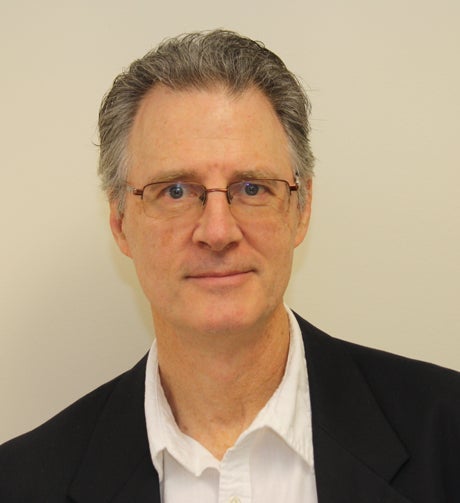
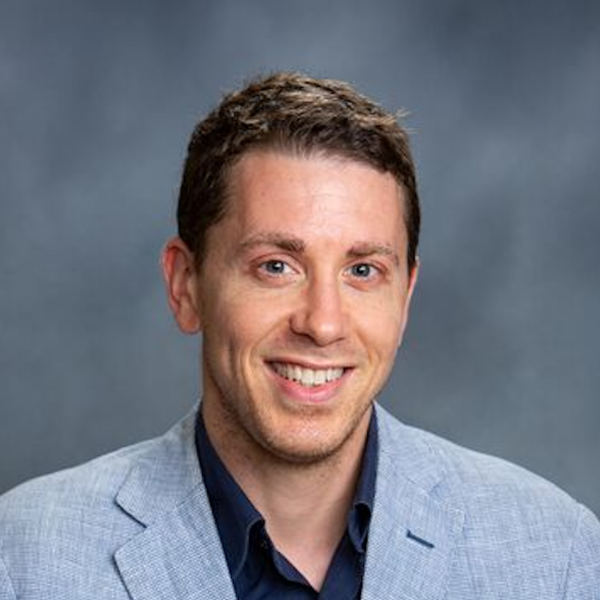
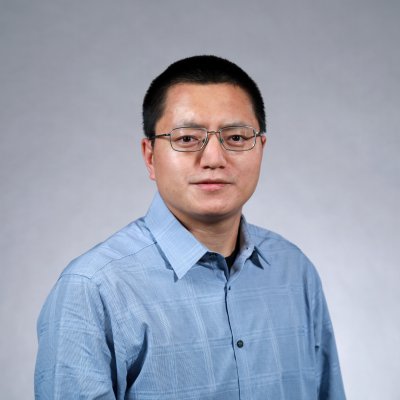
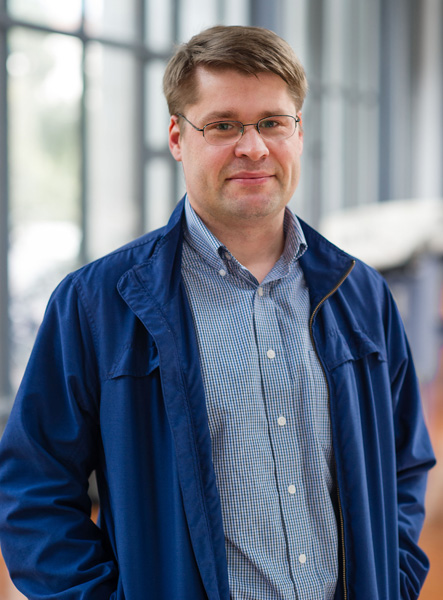
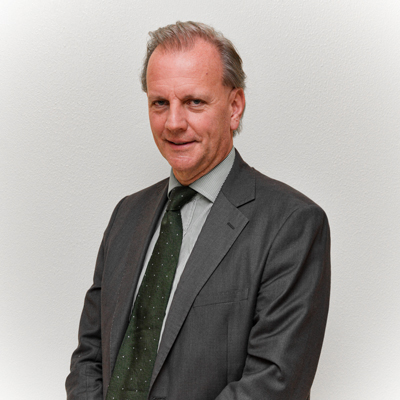
Randy Harris is a Professor in the Department of English Language and Literature at the University of Waterloo, with a cross-appointment to the David Cheriton School of Computer Science. His career spans over three decades, focusing on the intersection of rhetoric , cognitive science , and computational linguistics . He holds a PhD in Communication and Rhetoric from Rensselaer Polytechnic Institute, with postdoctoral experience at the University of Alberta. Education : PhD (Rensselaer), MSc (Rensselaer, Alberta), MA (Dalhousie), BA (Queen's) Research Interests : Cognitive Rhetoric, Computational Rhetoric, Rhetorical Figures, Construction Grammar, Rhetoric of Science, and Neurocognitive Stylistics. His work explores how rhetorical figures like chiasmus and antimetabole reflect brain structure and cognitive processing. Recent projects involve building the Rhetoricon , a collocational database of rhetorical figures, and investigating their role in large language models . He has received numerous awards, including the University of Waterloo Arts Award for Excellence in Research (2023) and Fellow of the Royal Society of Canada (2022) . Harris has supervised graduate students in professional communication , linguistics , and science writing . His grants include NSERC Discovery Horizon (2024-2029) and multiple SSHRC grants for Computational Rhetoric and Rhetorical Figure Ontology . He actively organizes interdisciplinary workshops like Computing Figures and contributes to media discussions on language, AI, and rhetoric.
Miranda Belarde-Lewis is an Assistant Professor and the inaugural Jill and Joe McKinstry Endowed Faculty Fellow of Native North American Indigenous Knowledge at the University of Washington’s Information School. As an independent curator, she collaborates with tribal communities, museums, and academic institutions to center Native artists and their work. Her research focuses on Indigenous knowledge systems, Native American art, and cultural heritage preservation. She has curated major exhibitions like Preston Singletary: Raven and the Box of Daylight and Sho Sho Esquiro: Doctrine of Discovery , emphasizing Indigenous sovereignty and storytelling. 2020-present: Curator for Museum of Glass, University of Washington 2017-2021: Curator for Frye Art Museum exhibitions 2018: Co-curator for Nature’s Nations catalog Her publications and exhibitions have earned recognition, including the College Art Association’s 2020 Alfred H. Barr Jr. Award. She is enrolled at Zuni Pueblo and a member of the Tlingit Ta k deintáan Clan.
Dr. Jasmijn van Gorp is a Senior Lecturer in the Department of Media and Culture Studies at Utrecht University's Faculty of Humanities. She specializes in Digital Humanities , Audiovisual Heritage , and Digital Culture with a focus on Television History and Eastern European Media . As co-founder of the CLARIAH Media Suite, she develops digital research infrastructure for audiovisual heritage in the Netherlands. PhD in Social Sciences from the University of Antwerp (Belgium) MA in Communication Sciences from KU Leuven (Belgium) Her research examines digital methods for film and television studies , metadata in digital archives , and AI-generated analysis of broadcast schedules . She leads projects like Re-Frame (2021-2025) and AI TaDa , exploring the reuse of audiovisual archives in journalism and algorithmic metadata generation. Recent work includes tutorials on Data Visualization and Flow Analysis using the Media Suite. She advocates for critical digital tool literacy in education and co-authored the Digital Skills learning trajectory for Utrecht's BA programs. Her teaching includes Digital Television History and Programming and Curation at BA and MA levels, supervising theses in film and television studies. As workpackage leader for CLARIAH-PLUS WP5 , she integrates computer vision , automatic speech recognition , and linked data into sustainable tools for cross-media research. She trains researchers via the Media Suite Learn initiative and collaborates on digital infrastructure projects with institutions like NISV and CLARIAH.
Kristian Stokke is a Professor at the Department of Sociology and Human Geography , University of Oslo. His research focuses on Political Geography , Democratization , and Social Movements in South and Southeast Asia, particularly Myanmar, Indonesia, Sri Lanka, and Nepal. He is affiliated with the Center for South Asian Democracy (CSAD) and has led comparative studies on citizenship politics in Indonesia and Myanmar. Academic Interests : Democratization, Autocracy, Social Movements, Citizenship, Civil War, Peacebuilding Teaching : SGO2400 - Political Geography, HGO4401 - Democratization and Civil Society, SOSGEO4801 - Social Movements His recent publications analyze autocratization resistance in Tunisia and Myanmar, hybrid regime dynamics , and transformative citizenship frameworks . He has contributed to key debates in Political Geography , Democratization , and Development Studies . Scientific Awards : 2015 Progress in Human Geography Best Paper Prize 2013 Progress in Human Geography Essay Prize Stokke's work emphasizes contextual democracy , peacebuilding in post-conflict societies, and civil society's role in global development. He has published extensively in Palgrave Macmillan , Routledge , and Political Geography journal.
Charles L. Leavitt IV is the William Payden Associate Professor of Italian and Film at the University of Notre Dame, serving as Director of Graduate Studies in Italian. His research focuses on modern and contemporary Italian literature and film, with specialties in post-war cultural history, Fascism/Resistance studies, and minoritized cultures. He co-directs the Primo Levi Digital Commentary project and holds affiliations with the Kellogg Institute for International Studies and the Nanovic Institute for European Studies. Leavitt’s work has been honored with major awards, including the 2020 AAIS Visual Studies Book Prize for Italian Neorealism: A Cultural History and the 2022 Society for Italian Studies Essay Prize. Education: Ph.D. (Literature), M.A. (Italian Studies), and B.A. (Comparative Literature) from the University of Notre Dame and University of Oregon. His teaching spans Italian literature, cinema, and comparative studies, with a focus on post-war and contemporary contexts. He organizes the Italian Research Seminar and Modern Roads to Rome lecture series, and serves on editorial boards for Italian Studies , Italianist , and Annali d'italianistica . Key research areas include Italian Jewish culture, African American-Italian cultural intersections, and the legacy of Fascism. His current book project examines African American soldiers’ roles in Allied-Occupied Italy. Leavitt’s scholarship bridges film, literature, and history, emphasizing transnational cultural flows and Italian contributions to global culture. Award-winning educator, Leavitt has received teaching excellence awards from the University of Reading and University of Notre Dame. His work integrates interdisciplinary approaches, combining close textual analysis with broader historical and cultural frameworks to explore identity, memory, and resistance in 20th-century Italy.
Shiguo Jiang is a tenured Associate Professor in the Department of Geography, Planning, and Sustainability at the University at Albany's College of Arts and Sciences. Currently on sabbatical during Fall 2025, he maintains active research leadership through the Spatial Analysis Laboratory. His affiliations extend to the PhD Program in Information Science (College of Emergency Preparedness, Homeland Security and Cybersecurity) and the MS Program in Biodiversity, Conservation, and Policy (Department of Biological Sciences), reflecting his interdisciplinary approach. Dr. Jiang's educational background includes a PhD from Ohio State University (2012), an MS from Peking University (2004), and dual BS/BA degrees from Peking University (2001). His research integrates geospatial technologies with spatial statistics to investigate land use dynamics, forest ecosystems, and human-environment interactions. Key application areas include urban systems analysis, climate change modeling, and crime pattern detection, with notable fieldwork in the Maya Forest of Belize. His publication portfolio reveals an evolution from urban fractal analysis (early Beijing studies) toward integrated socio-ecological research, with recent emphasis on crime geospatial modeling and climate-ecosystem interactions. The 15 most recent articles demonstrate methodological innovation in remote sensing reconstruction and spatial statistics, applied across environmental, criminological, and public health domains. Dr. Jiang actively mentors graduate students across departments including Geography, Sociology, Information Science, and Criminal Justice. While currently unable to fund Graduate Research Assistants, he collaborates with students who secure external funding. His Spatial Analysis Laboratory requires technical proficiency in programming (Python/R/Matlab) and geospatial software, welcoming undergraduates through postdoctoral researchers with relevant skills.
Lisbeth Truelstrup Hansen is a Professor and Head of the Research Group for Food Microbiology and Hygiene at the National Food Institute, Technical University of Denmark (DTU), where she leads research in microbial food safety, environmental hygiene, and pathogen survival mechanisms. She is also affiliated with the DTU Microbes Initiative and actively contributes to projects addressing food safety, Arctic sanitation, and public health. University: Technical University of Denmark School: National Food Institute Department: Research Group for Food Microbiology and Hygiene Role: Professor and Research Group Head Her research focuses on microbial food safety, with particular emphasis on Listeria monocytogenes , biofilm formation, hygiene in food production, and innovative preservation and detection methods. She also investigates water and environmental hygiene, including sewage management in Arctic regions under climate change. Her work supports UN Sustainable Development Goals related to clean water, sanitation, and good health. The recent publications highlight a strong trend in applying genomics, machine learning, and predictive modeling to food safety challenges. Her team investigates disinfectant resistance in Listeria , growth modeling of Bacillus cereus , and quality assessment in seafood and processed foods, demonstrating a multidisciplinary approach combining microbiology, environmental science, and data science. Scientific Contributions: Lead researcher in multiple national and international projects Active contributor to food safety policy and public discourse Regular media and conference speaker on hygiene and food safety topics Lisbeth Truelstrup Hansen supervises several PhD students and collaborates across disciplines on grants related to foodborne pathogens, climate impact on water quality, and sustainable food production. She has led or co-led projects such as 'ArcticSewlution' and 'ILLUQ. PERMAFROST – POLLUTION - HEALTH', which integrate environmental engineering with microbiology for public health outcomes. She is involved in key research labs and teams including the Research Group for Food Microbiology and Hygiene and the DTU Microbes Initiative, which focus on pathogen detection, biofilm dynamics, and hygiene solutions for the food industry.
Yuriy Gorodnichenko serves as the Quantedge Presidential Professor in the Department of Economics at the University of California, Berkeley since 2018. His extensive academic affiliations include being a Faculty Research Associate at the National Bureau of Economic Research (2014-present), Research Fellow at the Institute for the Study of Labor (2007-present), International Fellow at the Kiel Institute for the World Economy (2011-present), and Research Consultant for both the European Central Bank (2018-present) and European Investment Bank (2017-present). He also serves as Editor of the Journal of Monetary Economics (2018-present) and Member of the Executive Committee of the Association for Comparative Economic Studies (2019-present). Education: Ph.D., Economics, University of Michigan, 2007 M.A., Statistics, University of Michigan, 2004 M.A., Economics (high honors; valedictorian), Economics Education and Research Consortium at National University of Kyiv-Mohyla Academy, Kiev, Ukraine, 2001 B.A., Economics (honors; valedictorian), National University of Kyiv-Mohyla Academy, Kiev, Ukraine, 1999 Gorodnichenko's research spans multiple subfields of economics with particular emphasis on monetary economics, public finance, international economics, and macroeconomics . His scholarly approach typically combines both macroeconomic and microeconomic data with rigorous theoretical and statistical analyses. His work is organized into five major categories: monetary economics, aggregate implications of informational frictions, business cycles, development/productivity/income differences, and inequality. As an applied macroeconomist, he frequently bridges methodological approaches across different economic subdisciplines. His publication record demonstrates consistent high-impact research across top economics journals including American Economic Review, Journal of Political Economy, and Review of Economic Studies. The trajectory of his work shows increasing focus on the microfoundations of macroeconomic phenomena, particularly how information frictions affect economic behavior and policy transmission mechanisms. His recent publications have increasingly addressed the distributional consequences of monetary policy and the role of cultural factors in economic development. Scientific Awards and Honors: Fellow, Econometric Society (2021) Highly Cited Researcher, Clarivate (2021) Distinguished Teaching Award, Social Science Division, UC Berkeley (2020) World Junior Prize in Monetary Economics and Finance (2018) NSF CAREER award (2012) Sloan Research Fellowship (2013) Multiple #1 rankings among young economists by RePEc (2014-2021) Best paper award, American Economic Journal: Economic Policy (2015) Gorodnichenko has received consistent recognition for his teaching and advising from UC Berkeley's Economics Department, including multiple runner-up positions and a win for the Best Advisor Award (2014). His research has been supported by prestigious grants including the NSF CAREER award and Sloan Research Fellowship. His impact metrics are substantial with over 19,000 citations and an h-index of 54, reflecting significant influence in the economics profession. While the scraped text doesn't specify dedicated research laboratories, Gorodnichenko maintains active research collaborations through his affiliations with major economic research institutions including NBER, IZA, and Kiel Institute. His editorial roles at leading journals position him at the center of contemporary macroeconomic research discourse.
Alberto Gambino serves as Full Professor of Private Law (IUS/01) and Deputy Vice-Rector at the European University of Rome. He holds multiple prestigious positions including Commissioner of the European Commission against Racism and Intolerance (ECRI) of the Council of Europe in Strasbourg, Member of the National Bioethics Committee, and Judge of the Patent and Trademark Appeals Commission at the Ministry of Enterprise and Made in Italy (MIMIT). Additionally, he is President of the Science & Life Study Center, CEI, and the Italian Academy of the Internet Code (IAIC). As a civil cassation lawyer, he owns the Gambino law firm and participates in managing research organizations and implementing national and international research projects. Professor Gambino's research spans numerous legal domains with particular emphasis on Civil Law, Corporate Law, Mergers and Acquisitions, Corporate Governance, and Intellectual Property. His work bridges traditional legal frameworks with emerging digital and technological challenges, particularly in the areas of bioethics, data protection, and internet governance. He has made significant contributions to understanding the intersection of law with information technology, media, telecommunications, and consumer protection in both national and European contexts. His scholarly output reveals a consistent focus on evolving legal challenges in the digital age, with recent publications examining antitrust issues in digital markets, sports governance, intellectual property in AI systems, and data protection frameworks. His work demonstrates a sophisticated understanding of how traditional legal principles must adapt to contemporary technological and social realities while maintaining core legal values. Commissioner of the European Commission against Racism and Intolerance (ECRI) of the Council of Europe Member of the National Bioethics Committee Judge of the Patent and Trademark Appeals Commission at MIMIT President of the Science & Life Study Center President of CEI President of the Italian Academy of the Internet Code (IAIC) Professor Gambino actively contributes to legal practice through his law firm while maintaining a robust academic profile. His editorial work with prestigious scientific journals and involvement in national and international research projects demonstrate his commitment to advancing legal scholarship. His expertise in both theoretical and applied law positions him as a key figure in shaping contemporary legal discourse, particularly in the intersection of traditional legal frameworks with emerging digital challenges.
Dimitra Fimi is Professor of Fantasy and Children’s Literature at the University of Glasgow , where she co-directs the Centre for Fantasy and the Fantastic . She is a leading Tolkien scholar and expert in fantasy literature, with a particular focus on mythopoeia, medievalism, and Celtic influences. Key affiliations: University of Glasgow, Centre for Fantasy and the Fantastic, Perspectives on Fantasy book series Her research explores: Tolkien’s myth-making and linguistic creativity Celtic myth in modern fantasy Historical intersections between fantasy and academia World-building methodologies Racial and cultural discourse in fantasy Recent publications analyze Sir Gawain chronology, The Gnomobile , and fantasy languages. She has contributed to BBC’s Bargain Hunt and TLS, and co-edited Realms of Imagination for the British Library exhibition. Major awards: Mythopoeic Scholarship Award (Inklings Studies, 2010) Tolkien Society Award (Best Book, 2017) Mythopoeic Scholarship Award (Myth and Fantasy Studies, 2019) Tolkien Society Outstanding Contribution Award (2021) Active in public engagement, she curated the Tiny Treasures miniature book exhibition and contributes to podcasts, documentaries, and media discussions on fantasy literature.
Susan Fussell is a Professor at Cornell University in both the Department of Communication and Department of Information Science. She received her Ph.D. in psychology from Columbia University and directs graduate studies in Communication. Key research areas: Computer-Mediated Communication, Intercultural Communication, Human-Computer Interaction, Multilingual Collaboration, and Collaborative Intelligence Analysis. Teaching focus: Theories of communication, research methods in social computing, and behavioral foundations of technology. Her publications from 2015-2025 reveal trends in cross-cultural communication technology , AI-mediated interaction , and collaborative problem-solving . Scientific awards include NSF grants #1025425, #1318899, #1314778 Google Faculty Gift She advises students like Nanyi Bi, Ge Gao, and Bin Xu. Notable collaborations include work with Claire Cardie, Sara Kiesler, and Dan Cosley. Projects include Tools for multilingual collaboration Energy conservation through social computing Telepresence robotics and human-robot interaction Contact: 226 Gates Hall, Ithaca, NY 14853 | sfussell@cornell.edu
Michelle Perry is a Professor in Educational Psychology at the University of Illinois, Urbana-Champaign, with appointments at the Beckman Institute for Advanced Science and Technology. Her research focuses on children's acquisition of mathematical concepts in elementary classrooms, teacher professional development through online platforms, and equity in STEM education. She has received NSF funding for projects examining gesture-based learning and statistical concept development. Education: Ph.D., The University of Chicago Research Interests: Mathematics education and cognitive development Online learning environments and teacher professional development Equity in STEM for underrepresented students Gesture-speech integration in education Statistical reasoning and virtual manipulatives Scientific Awards: Richard C. Anderson Professor of Cognitive Science of Teaching & Learning Recent Publications: 2025: Gesturing to understand abstract mathematical concepts 2025: Online video instruction and student engagement 2024: Teacher mindset theories and classroom observation skills 2023: Digital help-seeking and social presence Advising & Grants: Mentored NSF-funded projects on teacher development Collaborated with University of Chicago and NYU researchers
David Atkinson serves as an Associate Professor in the Department of History at Purdue University, where he specializes in the interconnected histories of American and British imperialism, migration, and international relations. His academic trajectory reflects deep engagement with the mechanisms of racial exclusion and empire-building across the Anglo-American world. Atkinson earned his Ph.D. in History from Boston University, establishing the foundation for his research in transnational historical frameworks. His scholarly contributions focus on the historical construction of borders and racial hierarchies within imperial systems, particularly examining how white supremacist ideologies shaped migration policies across settler colonies. His research program centers on American foreign relations and migration history, with particular expertise in the containment of Asian labor migration during the early twentieth century. Atkinson's work analyzes how governments in Australasia, North America, and Southern Africa implemented exclusionary policies against Japanese and South Asian migrants, revealing the global architecture of white supremacy. His current project investigates America's commercial empire in the nineteenth century, tracing how economic expansion intertwined with racialized border controls and citizenship definitions. Analysis of Atkinson's recent publications (2018-2024) demonstrates sustained scholarly engagement with border permeability, imperial legacies, and the racial foundations of modern citizenship. His work consistently connects historical processes of exclusion to contemporary political movements, such as through examinations of the alt-right's historical roots. The publications reveal a methodological commitment to transnational history, frequently comparing Anglo-American settler societies while highlighting Pacific and Atlantic migration corridors. Atkinson's scholarly impact extends beyond original monographs to critical engagement with historiography through book reviews on pivotal works in imperial and migration history. His publications in venues like Journal of American History and American Historical Review demonstrate rigorous analysis of how race, empire, and migration shaped national identities across the British and American worlds.
Yan Cong is an Assistant Professor at Purdue University, focusing on Chinese linguistics and computational linguistics. Their work bridges natural language processing (NLP), semantics, and pragmatics, with applications in artificial intelligence (AI), language education, and healthcare. Research Focus: Developing text analysis models to quantify and improve language learning, assessing semantic/pragmatic competence in language models, and applying computational methods to speech and language fluency. Background: Former NLP researcher at the Feinstein Institutes, with a PhD in Linguistics from Michigan State University. Research Themes: Yan Cong integrates linguistic theory with AI to explore language understanding in humans and machines. Key areas include Computational modeling of semantics and pragmatics Application of NLP to second language acquisition Development of interpretable AI systems for education and healthcare Analysis of speech disturbances in clinical contexts (e.g., schizophrenia, aphasia) Awards: No specific honors mentioned in the provided text.
Rainer Winter is a Professor at the Institute for Media and Communication Studies at Alpen-Adria-Universität Klagenfurt. He specializes in Cultural Studies, Media Research, Media Education, and Qualitative Research Sociology. His work bridges critical theory with contemporary media analysis, focusing on mediatization processes, resistance studies, and the societal implications of media narratives.