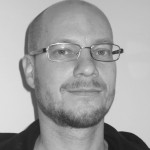
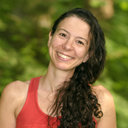
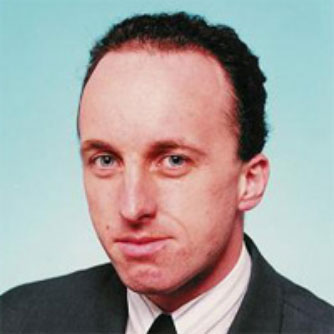
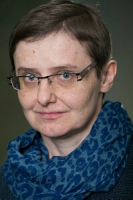
Clemens Steiner-Mayr is Professor of Semantics and Pragmatics at the University of Göttingen's Department of English Philology, where he has been teaching since 2017. His office is located in Käte-Hamburger-Weg 3 (Room 0.252), and he can be contacted via phone (+49 551 39-27576) or email. Office hours are by appointment. Education includes a Mag. phil. in General Linguistics and Russian from the University of Vienna (2005), a Ph.D. in Theoretical Linguistics from Harvard University (2010), and Habilitation from Humboldt-Universität zu Berlin (2017). Research focuses on formal semantics and pragmatics, with emphasis on quantifier interpretation, question embedding, intervention effects, and semantic-pragmatic interfaces. Key projects include PI roles in Semantic constraints on interrogative embedding (ZAS Berlin, 2016-present), Questions and entailment (ZAS Berlin, 2013-2016), and the Emmy Noether Group Interpretation of quantifiers (ZAS Berlin, 2010-2012). Publications primarily explore semantics of questions, negation, quantification, and context dependence. Recent work (2016-2024) demonstrates consistent focus on formal analysis of interrogatives, exception phrases, and intervention phenomena using trivalent logic and cross-linguistic data. No awards or student advisees are documented. Professional history includes a visiting position at the University of Potsdam (2012).
Olivier DUPLÂTRE is a Lecturer specializing in the interplay between linguistics, Germanic studies, and computer science. His research focuses on the syntactic and semantic analysis of Germanic languages, particularly investigating modal particles, focus particles, and discourse markers within clauses. He explores the classification of adverbs and parts of speech, the structure of German clauses, tense-mood systems, and the morphological behavior of verb prefixes. Research specialties: Modal particles, Focus particles, Discourse markers, Adverbs, German clause syntax, German tenses/moods, Verb prefixes
Prof. Dr. Malte Zimmermann is a Full Professor of Semantics and Theory of Grammar at the Department of Linguistics, University of Potsdam. He is also a faculty and board member of the African Linguistics School (ALS), which biannually convenes in West African countries to advance formal linguistics knowledge among African scholars. His editorial roles include Associate Editor for Natural Language and Linguistic Theory and former Associate Editor for Linguistics and Philosophy . His educational background includes: Ph.D. in General Linguistics, Universiteit van Amsterdam (2002) M.A. in German Language and Linguistics/English/Anglistic/Philosophy, Universität zu Köln (1998) Abitur, Gymnasium Athenaeum, Stade/Niedersachsen (1989) Zimmermann's research centers on the interface between linguistic form and meaning, with specialization in formal semantics and grammar theory. His work spans quantification, tense, question semantics, discourse particles, and information structure, with particular emphasis on semantically under-researched West African languages (Chadic, Kwa, Grassfield Bantu). His research combines theoretical analysis with experimental methods, notably through projects like 'ExQ' examining embedded question interpretation across European and Non-European languages. He has led field research in Ghana, Cameroon, and Nigeria, challenging assumptions about language universals through empirical investigation of linguistic diversity. His publication trajectory reveals consistent focus on cross-linguistic semantic variation, particularly in focus interpretation, quantifier scope, and information structure phenomena. Recent work demonstrates growing integration of experimental methodologies with traditional formal approaches, with frequent comparisons between German, English, and diverse African languages. His investigations into serial verb constructions have been especially influential, uncovering hidden syntactic variability beneath surface similarities across languages like Akan and Igbo. As a supervisor, Zimmermann has guided numerous doctoral students to completion, with recent graduates including Giuliano Armenante (2024), Eva Shipova (2024), and Mareike Philipp (2023). His research has been supported by substantial funding including: SFB1287 Limits of Variability in Language, 'Limits of variability in interpretation' (2017-2021) SPP 1727 XPRAG.de, 'Exhaustiveness in embedded questions across languages' (2017-2020) SPP 1727 XPRAG.de, 'Exhaustivity in it-clefts' (2014-2017) DFG-Network 'Questions in Discourse' (2012-2016) SFB632 Information Structure projects (2007-2015) He leads the Potsdam semantics group (including Peter Sutton, Giuliano Armenante, Jeanne Lecavelier, Anna Struck, and Carla Bombi) which conducts fieldwork in West Africa. Currently, he co-directs the SFB-project on the 'Limits of Variability in Interpretation,' examining scope ambiguities, reconstruction, and bare NP interpretation across German, English, Akan, Igbo, and Medumba. His collaborative work with Edgar Onea (Graz) and Tatjana Scheffler exemplifies his commitment to bridging theoretical linguistics with empirical fieldwork and experimental validation.
Vitoria Piai is a Principal Investigator specializing in language function and dysfunction at the Donders Institute for Brain, Cognition, and Behaviour, Radboud University in Nijmegen, Netherlands. With over 135 publications and 2,595 citations, her research focuses on the neural mechanisms underlying language production using electrophysiological methods including EEG and MEG. Dr. Piai's research interests center on speech production, particularly examining the temporal dynamics of lexical and phonological processing. Her work investigates how brain oscillations relate to different stages of speech planning, how cognitive control mechanisms operate during language production, and how language networks adapt following brain damage. She employs various paradigms including picture-word interference, context-driven word production, and sentence comprehension tasks to explore these questions. Analysis of her recent publications (2024-2025) reveals consistent focus on neural oscillations during speech production, particularly examining alpha and beta band activity. Her work increasingly bridges cognitive neuroscience with clinical applications, investigating language production in aging populations, individuals with aphasia, and those with neurological conditions. She frequently employs multimodal approaches, combining behavioral measures with electrophysiological recordings to provide comprehensive insights into language processing. Dr. Piai has established significant research collaborations across institutions, particularly with colleagues at Radboud University, University of California Berkeley (where she completed postdoctoral work), and various clinical centers. Her work contributes to both theoretical understanding of language production mechanisms and practical applications for language assessment and rehabilitation.
Jan Heegård Petersen serves as an Associate Professor in the Department of Nordic Studies and Linguistics at the Faculty of Humanities, University of Copenhagen. His research focuses on Danish language evolution in diaspora communities, phonetic reduction phenomena, and documentation of the endangered Kalasha language of Pakistan. His academic credentials include: PhD in Linguistics (2006), University of Copenhagen MA in General Linguistics (1998), University of Copenhagen BA in General Linguistics (1993), University of Copenhagen Petersen's scholarly work spans heritage language dynamics, examining phonetic, morphological, and syntactic changes in Danish spoken by immigrant communities across the Americas. His investigations into phonetic reduction explore the spectrum between maximally expanded and extremely compressed speech forms, linking sound reduction to grammatical and pragmatic functions. The Kalasha language documentation project represents decades of fieldwork on this Indo-Aryan language's phonology, grammar, and cultural context. Recent publications (2024-2025) reveal concentrated research on heritage Danish varieties, with significant attention to grammatical gender systems, code-switching patterns, and phonetic innovations among diaspora speakers. These studies frequently employ corpus-based statistical methods and reflect international collaboration, particularly with Karoline Kühl of Hamburg. As an educator, Petersen supervises BA/MA projects across Danish linguistics domains. His research has received funding from the Carlsberg Foundation, A.P. Møller Foundation, and University of Copenhagen. Professional service includes editorial roles for NyS journal and treasurer position for the Linguistic Circle of Copenhagen.
Prof. Jonathan J. Wylie serves as a Professor at City University of Hong Kong, holding a PhD from King's College, University of Cambridge, UK. His academic trajectory includes a Junior Research Fellowship at King's College, followed by research appointments at Cornell University, Woods Hole Oceanographic Institution, and the University of Toronto prior to his current position. His research expertise spans fluid mechanics , granular materials , suspension mechanics , and mathematical modeling of geophysical systems , with seminal contributions to viscous thread dynamics and coupled partial differential equations. His interdisciplinary work bridges industrial applications with fundamental physics. Analysis of his recent publications reveals dominant research threads in granular flow intermittency , thermal effects in viscous filaments , and mathematical neuroscience . His methodology consistently combines asymptotic analysis with computational modeling to address complex multiphysics problems, demonstrating strong cross-disciplinary collaboration between physics, engineering, and life sciences. His distinguished scientific recognition includes: Junior Research Fellowship from King's College, Cambridge Wylie has secured major research funding from the National Science Foundation (USA), Australian Research Council, and Hong Kong's Research Grant Council. As associate editor of the IMA Journal of Applied Mathematics , he actively shapes scholarly discourse. His extensive publication record in high-impact journals like Journal of Fluid Mechanics and Physical Review E demonstrates sustained research productivity without explicit mention of advisees in available materials. While specific laboratory facilities aren't documented, his international collaborations with institutions across North America, Europe, and Asia indicate participation in global research networks addressing industrially relevant fluid dynamics challenges.
Mats Eskhult is Professor in Semitic Languages at Uppsala University's Department of Linguistics and Philology, holding a PhD in Semitic languages (1990), associate professorship (2002), and full professorship (2012). His academic career spans 35 years of university teaching with focus on grammatical phenomena beyond standard rules. Educational milestones include: PhD in Semitic Languages (1990) Associate Professor (Docent) (2002) Full Professor of Semitic Languages (2012) His research interests center on biblical and post-biblical Hebrew , Syriac lexicography (particularly particles), Arabic Bible translation , early Christian literature , and Semitic languages in early modern Europe . Eskhult emphasizes grammatical phenomena that resist standard rule-based descriptions, bridging historical linguistics with textual analysis across Jewish and Christian traditions. His work reveals how Semitic languages evolved through translation practices and cross-cultural contact. Analysis of his publication trends (1981-2018) shows persistent focus on Hebrew verb systems (Qumran/Biblical), Syriac particles, and translation techniques in Christian texts. Key thematic developments include increasing attention to historical lexicography (especially Gesenius' influence) and interdisciplinary connections between linguistics, theology, and urban history in Late Antiquity. His work consistently examines how grammatical features reflect broader cultural and historical contexts. Eskhult has supervised students in Hebrew, Syriac, and Bible translation projects , emphasizing practical application of linguistic analysis. While specific grants aren't detailed, his 35-year teaching career and extensive publication record indicate sustained research funding support typical of senior professors at major research universities. His editorial work on Orientalia Suecana demonstrates leadership in Scandinavian Semitic scholarship, fostering academic collaboration through journal editing and symposium organization (e.g., 400-year Semitic Languages professorship commemoration).
Forogh Hashabeiky serves as Senior Lecturer/Associate Professor in Iranian Languages at Uppsala University's Department of Linguistics and Philology, where she maintains an active research profile in Persian linguistics and literature. Her academic work bridges historical and contemporary perspectives on Iranian languages. Her research focuses on historical linguistics , Persian orthography evolution , and post-revolutionary Persian literature , particularly examining grammatical structures in classical texts and narrative patterns in women's writing. Recent publications demonstrate sustained investigation into New Persian development (16th-18th centuries), sociopolitical influences on language change, and textual analysis of literary anthologies. Publications reveal consistent specialization across three interconnected domains: (1) grammatical analysis of historical Persian texts including Tārikh-e Beyhaqi and post-classical literature, (2) orthographic reforms between 1850-2000, and (3) typological studies of post-1979 Iranian women's fiction. Her editorial work on Arash journal stories and Shāhnāme conference proceedings highlights commitment to preserving literary heritage. Professional activities include significant contributions to Encyclopaedia Iranica and development of Swedish-Persian lexicographical resources through LEXIN. While no formal advising roles or research grants are documented in available materials, her extensive publication record demonstrates ongoing scholarly engagement with Persian language evolution across sociohistorical contexts.
Dr. Anna Socka is an Assistant Professor at the Institute of German Philology within the Faculty of Languages at the University of Gdańsk, a position she has held since December 2003. Her academic work focuses on theoretical and contrastive linguistics with special emphasis on modality, evidentiality, and Polish-German language comparison. Education: PhD in German Linguistics from University of Cologne (1995-2003), nostrified by University of Gdańsk MA in German Philology from Catholic University of Lublin (1988-1994) Dr. Socka's research centers on the intricate relationships between modality and evidentiality, particularly reportative expressions, and their connections to aspectuality. Her work extensively explores pragmatic dimensions including conversational implicatures, contrastive Polish-German linguistics, and specialized areas like Mennonite cemetery epigraphy. She employs both theoretical frameworks and corpus-based methodologies to analyze how modal and evidential markers function across discourse contexts and grammatical structures. Her publication record demonstrates consistent scholarly output with significant contributions to understanding reportative constructions, hearsay particles, and the syntax-semantics interface in German and Polish. Recent work (2020-2025) shows increasing focus on corpus-based analysis of modal-aspectual interactions and evidential marking systems. Scientific Recognition: Individual Rector's Award of the third degree for doctoral dissertation Dr. Socka maintains active scholarly engagement through numerous international conference presentations (over 25 between 2004-2025), particularly at events organized by the Societas Linguistica Europaea and German linguistics associations. She has served on research teams with notable linguists like Prof. Björn Wiemer and participates in multiple scholarly organizations including the Mitteleuropäischer Germanistenverein and Societas Linguistica Europaea. Her methodological approach combines rigorous theoretical analysis with empirical corpus studies, contributing significantly to the understanding of modal and evidential phenomena in Germanic and Slavic languages.